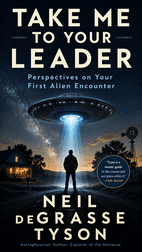
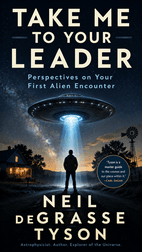
Neil deGrasse Tyson's Take Me to Your Leader explores the profound challenges and biases in humanity's first contact with extraterrestrial life, arguing we're ill-equipped for such a meeting. Written for curious readers who enjoy popular science, it systematically dismantles assumptions about alien biology, intelligence, and technology while holding a mirror to humanity's own priorities and biases.
Feature
Insta.Page
Blinkist
Shortform
Summary Depth
Full Chapter-by-Chapter
15-min overview
Section-by-section guides
Audio Narration
✓
✓
✓
Visual Mindmaps
✓
✕
✕
AI Q&A
✓
✕
✕
Quizzes
✓
✕
✕
PDF Downloads
✓
✕
✓
Price
$89.99/yr
$146/yr (PRO)
$199/yr
*Competitor data last verified July 2026.
1 Page Summary
Based solely on the provided chapter summaries, the book explores the profound challenges and biases inherent in humanity's first encounter with extraterrestrial life. Neil deGrasse Tyson argues that humans are ill-equipped for such a meeting, as we instinctively project our own biology, culture, and intelligence onto the unknown. The book systematically dismantles these assumptions, from the impossibility of a humanoid alien—given that it would share zero genes with Earth life—to the universal constants of physics that would bind any advanced technology. The work critiques our tendency to fill gaps in understanding with "aliens of the gaps," highlighting the difference between a truly unidentified object and evidence of extraterrestrial visitation.
The author's approach is distinctive for its blend of rigorous science and accessible, often humorous, cultural critique. He uses thought experiments—such as life on a neutron star or a species 2% more intelligent than humans—to deflate human exceptionalism. The book grounds fantastical concepts like telepathy or invisibility in real physics, while also analyzing classic science fiction to reveal our own anxieties. A recurring theme is how our actions, from the Pioneer plaque to our spending priorities, would appear to an objective observer, forcing readers to see themselves through an alien's eyes.
The intended audience is curious readers who enjoy popular science and a skeptical, reality-based take on a classic sci-fi trope. Readers will gain a framework for thinking critically about alien encounters, moving past Hollywood tropes to consider real constraints like evolution and universal physics. Ultimately, the book offers more than speculation about aliens; it holds up a mirror to humanity's priorities, biases, and emotional nature, suggesting that the most profound lesson from an alien encounter might be what we learn about ourselves.
Chapter 1: Alien to Us
Overview
Meeting an extraterrestrial for the first time is a minefield of human assumptions—grabbing its extended appendage for a handshake could be a grievous insult, given that even on Earth a raised palm might signal aggression. The safe move is to leave all habits at home until those of the alien are understood. That instinct to project human norms onto the unknown runs far deeper than etiquette. Humans share roughly 25% of their genes with a banana, yet they comfortably call chimpanzees the closest relatives. An alien that evolved on another planet would share zero genes with anything on Earth—so it would look at least as different from humanity as a banana does. Yet most Hollywood aliens are humanoid inside and out, a bias driven by the practical need for human actors in suits and a lazy reliance on land-vertebrate body plans. From the Star Wars cantina to the xenomorph in Alien, the human form persists. Only a few exceptions—like the Burgess Shale fossils or Rick and Morty’s gaseous entities—hint at truly alien biology.
Physics imposes further constraints. An insect-sized alien race might exist, but building interstellar spacecraft would be impossible because weight scales with the cube of size while bone strength scales with the square; a creature that can carry fifty times its own weight is still too feeble to bend a paper clip. At the opposite extreme, a solar-system-sized alien would suffer an eight-hour delay for a scratch reflex, rendering it non-functional. So realistic aliens likely fall within a human-sized range. Meanwhile, abduction reports and hypnotic regressions have produced a dozen archetypes—Grays, Nordics, Reptilians, Insectoids—but these may say more about the limits of human creativity than about cosmic diversity. Ancient art from cave paintings to Egyptian carvings is filled with bubble-headed figures, leading the Ancient Aliens franchise to claim extraterrestrial influence. But simpler explanations exist: toddlers drawing, people on psychedelic mushrooms, or the human tendency to personify natural forces. Invoking aliens robs ancestors of their own ingenuity.
The “aliens did it” fallacy extends to crop circles, cattle mutilations, the Nazca lines, and the Egyptian pyramids. Many crop circles were hoaxes; cattle mutilations match predator behavior; the Nazca lines can be reproduced with a simple grid technique; and the idea that ancient Africans couldn’t build pyramids carries a racist undertone that ignores real historical engineering. On the storytelling side, the poles of alien tropes were set by H. G. Wells’ murderous Martians (defeated by Earth germs, a template recycled in Independence Day) and the sexy Venusian alien—from Queen of Outer Space to Katy Perry’s “E.T.”—which mirrors medieval incubi and succubi. That 1968 Star Trek kiss between Kirk and Uhura sparked outrage not over alien biology but over human prejudice, a reminder that the species’ own hang-ups often overshadow the extraterrestrial. By the 1970s, the Gray alien had crystallized into a bald, big-eyed figure, so ingrained that few stopped to ask why they keep imagining aliens that look like them.
That bias runs deeper than appearance, extending to biology itself. Earth’s life shares a single origin—the DNA double helix—but true cosmic diversity would mean life that doesn’t share that code. The Blob and The Andromeda Strain offered glimpses of gelatinous or silicon-based life. Silicon sits below carbon on the periodic table and could form similar molecules, but carbon is ten times more abundant and makes more flexible bonds. Even the search for life in the Goldilocks Zone assumes liquid water is essential, yet Jupiter’s moon Europa, far outside that zone, hides a subsurface ocean teeming with potential. The upcoming Project Hail Mary challenges that assumption with an alien that thrives in ammonia. Perhaps the most honest rendering of an alien is no rendering at all—as in 2001 or Contact, where the form remains imagined, waiting for evidence. Giordano Bruno was burned at the stake in 1600 for suggesting other worlds might host life; by 2009 the Vatican held a conference on extraterrestrials. And if the alien one meets is made of antimatter, tossing a coin would cause an explosion equivalent to two hundred million sticks of dynamite—a stark reminder that the most alien thing might be the very stuff of existence, reversed.
Key Takeaways
Our alien imaginings are riddled with human biases: humanoid forms, carbon-based biochemistry, and liquid water dependence.
Genuine alien life could be radically different: non-DNA, silicon-based, ammonia-breathing, or entirely unknowable.
Historical and cultural factors (racism, the Red Scare, religious dogma) shape our fear of the "other"—whether alien or human.
The most scientifically honest approach may be to admit we don't know what an alien looks like until we find one.
Key concepts: Chapter 1: Alien to Us
1. Chapter 1: Alien to Us
Human Bias in Imagining Aliens
Hollywood aliens are humanoid due to practical constraints
We project human norms onto unknown extraterrestrial life
Ancient art figures explained by simpler human factors
Alien archetypes reveal limits of human creativity
Physical Constraints on Alien Life
Size extremes make interstellar travel or function impossible
Realistic aliens likely fall within human-sized range
Physics limits body plans more than imagination suggests
The 'Aliens Did It' Fallacy
Crop circles, cattle mutilations have natural explanations
Nazca lines reproducible with simple grid techniques
Pyramid claims carry racist undertones ignoring real history
Invoking aliens robs ancestors of their ingenuity
Diverse Possible Biochemistries
Earth life shares single DNA origin, aliens need not
Silicon-based life possible but carbon is more abundant
Life could thrive outside Goldilocks Zone, e.g., Europa
Wells' Martians and sexy Venusians reflect human fears/desires
Star Trek kiss outrage was about human prejudice, not aliens
Gray alien crystallized by 1970s without questioning bias
Giordano Bruno burned for suggesting other worlds host life
💡 Try clicking the AI chat button to ask questions about this book!
Chapter 2: Alien to Them
Overview
From humanity's stubborn belief that the universe revolves around us—shown in everyday language, astrology, and even religion—to the letdown from Voltaire's giant alien, this chapter forces us to see ourselves through alien eyes. It starts with our awkward body plan compared to other life on Earth, then explores thought experiments like life on a neutron star where a pinhead-sized scientist would find our atomic existence impossibly slow, or Terry Bisson's story where beings can barely understand “meat” that communicates by flapping its own flesh. What we look like to an objective observer is humbling: we might be mistaken for the cars that seem to birth us, our brains are unimpressive by several measures, and our daily habits—sleeping, kissing, swearing, spending fortunes on changing our appearance—could strike any visitor as bizarre or even pathetic. The chapter then flips the script, showing that in classic science fiction, we are often the threat our nuclear weapons pose to the galaxy, or the unintentional invaders in a Twilight Zone twist where the “giants” are just us. We have already announced our presence in the most arrogant ways: the Pioneer plaque with its human figures and now-inaccurate pulsar map might baffle or mislead any finder, while the ever-growing cloud of orbital debris turns near-Earth space into a lethal shooting gallery for incoming ships. Worse still, the radio bubble of our earliest broadcasts—Nazi speeches, racist sitcoms, threats of domestic violence—has been leaking into the cosmos since the 1930s, painting a deeply unflattering and irrational first impression across thousands of star systems. Taken together, the chapter suggests that if aliens ever do arrive, their most probable report will be that no intelligent life exists here.
The Ego of Geocentrism
Humanity's insistence on being the center of everything is laughable if it weren't so common. We still ask "When is sunrise?" instead of acknowledging Earth's rotation. Astrology, horoscopes, the belief that stars control our love lives—all show how much we think of ourselves. Even religion betrays this: a 2021 National Review article insisted UFOs don't cancel out Christianity, as if two thousand years of doctrine could be shaken by the mere existence of aliens. But if your faith matches the pre-1600 Catholic Church—the one that burned Giordano Bruno—then aliens would shatter it. Imagine two extraterrestrials staring at our star from across the galaxy: "On its third rock, there's a species certain the whole universe was made for them."
The Anatomy of Hubris
To visiting aliens, we're just one more awkward body plan among Earth's endless variations: insects with six legs, snakes with infrared vision, octopuses with eight. To imagine how they see us, we must abandon every preconceived notion. We might like to think we'd be fascinating study subjects, but aliens might just be behaving like natural history museum curators, cataloging Earth's strangest primates.
Voltaire's Micromegas: Size Matters
The eighteenth-century philosopher Voltaire already wrecked this conceit in Micromegas. His Sirian alien, 120,000 feet tall with a thousand senses and 10 million years of life, finds a Saturnian friend—a mere 6,000 feet tall with only seventy-two senses. They journey to Earth, wade ankle-deep in our oceans, pull out microscopes, and discover a sailing ship. The Saturnian says, "Here is a very different animal." The humans, microscopic to them, then confidently declare that the entire universe was made for mankind. The voyagers nearly die laughing: these tiny beings had enormous pride.
Neutron Star Aliens and Meat-Based Life
Frank Drake imagined the tiniest aliens: life on neutron stars, where surface gravity is so immense that climbing half an inch requires more energy than a human metabolism produces in a lifetime. These tiny beings live fractions of a second, with generations passing in moments. Drake inverted our perspective: "For all we know, out there on a neutron star there's a scientist the size of a pinhead describing something even more bizarre—like atoms, almost empty space, where life would be impossible because everything happens so slowly."
Terry Bisson's 1991 story "They're Made Out of Meat" went further: two aliens debate how "meat" beings can possibly transmit radio signals. "They talk by flapping their meat at each other. They can even sing by squirting air through their meat." It's enough to make you embarrassed to be human.
What We Look Like to Them
Land in Los Angeles and you'd conclude Earth's dominant life-form is the automobile. They eat through windows, haul away injured ones, carry smaller ones inside when "pregnant." A human exiting is just the vehicle's squishy middle emerging from its shell. Land on the ocean and you'd focus on whales, whose brains are seven times larger than ours. By brain-to-body-mass ratio, we're fifth—behind ants, tree shrews, crows, and elephant fish. Brain-focused aliens wouldn't even look at us.
If aliens are plant-based, they'd be horrified that we kill other life-forms for food. If they're chickens, America is in deep trouble: we slaughter a million chickens per hour. And then there's the fact that we spend one-third of each rotation in a limp, semiconscious state, dreaming fantasies. We communicate by vibrating air molecules, sometimes using sounds that we call "curse words." Do we develop in caskets and then shrink? Do children grow into adults? None of this is obvious from a first glance.
We Are the Threat
In The Day the Earth Stood Still (1951), aliens arrive because our nuclear arsenal threatens the galaxy. We're the danger. In the 2008 remake, they want to annihilate us to protect Earth's rare biodiversity. This explains why UFO sightings cluster over military installations—they're monitoring our worst tendencies.
Our Strange Rituals
Aliens would notice we spend vast resources changing our appearance: heels, surgeries, lasers, makeup, gyms. They'd conclude we think we're hopelessly ugly. And as a show of affection, we press our mouths together and exchange saliva. Meanwhile, Earth itself is mostly lethal to us—drop a naked human at random and you die within hours. We survive only by wrapping ourselves in artificial shelters and clothing. And we speak seven thousand languages, often incomprehensible to each other. In our guts, trillions of microbes feast on our waste—to bacteria, we're simply dark containers of waste matter.
The Twilight Zone Reversal
My favorite episode is "The Invaders" (1961): a farm woman fights two tiny invaders, kills one, smashes their saucer. The surviving alien radios home: "Incredible race of giants here. No counterattack. Too powerful. Stay away." The camera pans to reveal a US Air Force insignia—we were the invaders, and they were the terrified victims. In "Third from the Sun," (1960) workers flee an imminent nuclear war, aiming for the third planet around a distant star. That star is our Sun. That planet is Earth.
Pioneer's Message
We've already announced our location. The Pioneer plaques, affixed to spacecraft escaping the solar system, carry cryptic symbols telling aliens exactly where we are—just in case our ego needed a galaxy-wide broadcast.
The Plaque’s Flawed Messaging
The Pioneer plaque’s most human-centric feature—the naked figures of a man and woman—might be utterly illegible to non-humanoid aliens. If the aliens are humanoid and fashion-conscious, they’d simply conclude that Earthlings are strangely nude and hairless. Worse, the pulsar map meant to serve as our cosmic return address now feels like an invitation we’d never hand out on a street corner. By 2006, Pluto’s demotion threw the plaque’s nine-planet solar system into irrelevance; actual observations of our system would show eight planets plus six moons larger than Pluto, leaving any map-reading aliens baffled. Pluto’s downgrade may have accidentally saved us from invasion by confusing our would-be overlords.
Orbital Debris: A Shooting Gallery for Visitors
The sheer volume of junk we’ve lofted into Earth’s orbit has turned near-Earth space into a lethal obstacle course. NASA tracks over 25,000 objects larger than a softball, with a half-million marble-sized bits and more than 100 million pinhead-sized fragments—all traveling at 18,000 mph. A single pinhead at that speed packs a hundred times the kinetic energy of an AR-15 bullet. Together, this debris exceeds 10,000 metric tons. Any alien ship attempting to approach Earth would have to navigate this field of high-velocity shrapnel, which raises serious doubts about our ability to travel in space.
The Radio Bubble: Our Worst First Impression
Since the 1930s, Earth has been leaking radio and television signals into space, with no way to recall them. The strongest early broadcasts included Nazi rally speeches from Hitler’s Germany, sitcoms like Amos ‘n’ Andy and The Honeymooners (the latter featuring a husband threatening to punch
Key Takeaways
Humans assume the universe revolves around us, but alien perspectives show we are
Key concepts: Chapter 2: Alien to Them
2. Chapter 2: Alien to Them
The Ego of Geocentrism
Humanity insists universe revolves around us
Astrology and horoscopes show self-centered thinking
Religion could be shattered by alien existence
We assume the cosmos was made for us
Voltaire's Micromegas: Size Matters
Giant alien finds humans microscopic and laughable
Humans confidently declare universe made for them
Aliens nearly die laughing at our pride
Our perspective is absurdly self-important
Neutron Star Aliens and Meat-Based Life
Tiny aliens live fractions of a second on neutron stars
Our atomic existence seems impossibly slow to them
Terry Bisson's story: beings are just 'meat'
We communicate by flapping our own flesh
What We Look Like to Them
Aliens might mistake cars for dominant life-form
Our brains are unimpressive by several measures
We spend one-third of life in limp semiconscious state
Kissing, swearing, and vanity seem bizarre
We Are the Threat
Our nuclear arsenal endangers the galaxy
Aliens monitor military installations for our worst tendencies
In sci-fi, we are the dangerous invaders
Earth's biodiversity needs protection from us
Our Arrogant Cosmic Announcements
Pioneer plaque may baffle or mislead finders
Orbital debris creates lethal shooting gallery
Radio bubble leaks Nazi speeches and racist sitcoms
First impression across thousands of star systems is ugly
The Humbling Verdict
Objective observer sees no intelligent life here
Our body plan is awkward among Earth's variations
We are just one strange primate species
Aliens would catalog us as bizarre specimens
Chapter 3: Alien Intelligence
Overview
We tend to assume humans are the smartest species, but we’re the ones scoring our own intelligence. The fossil record suggests luck played a big role in our survival. A chimp shares 98% of our DNA—it can stack boxes and learn sign language. So where does that 2% difference really start and end? Flip it: imagine a species 2% beyond us. To them, Stephen Hawking would be like a slightly cleverer chimp. Our deepest thoughts would be too trivial to process. Alexander Pope anticipated this in 1734, and modern simulations like The Matrix only scratch the surface—any sufficiently advanced alien could have coded our reality as a basement project.
If we ever want to signal back, mathematics is our best bet. The cleverest proposal was Gauss’s giant Pythagorean triangle in Siberia, using pine trees and wheat fields to broadcast the theorem without symbols. Less elegant are the Hollywood sign, a fried chicken logo in the Nevada desert, or a Texan’s name spelled in trees. Pi is another universal handshake, but as Carl Sagan’s Contact showed, base-ten assumptions might not hold for a four-fingered alien who counts in octal.
Fictional aliens often reveal more about human anxieties than about genuine extraterrestrial biology. The septapus in Arrival communicates through ink patterns while we send a linguist instead of a cryptographer—and the octopus morphology spooks us with its eight independent arms, a nightmare for anyone who’s seen a dog struggle with a doorknob. Fred Hoyle’s The Black Cloud imagines an intelligence the size of an interstellar gas cloud that politely moves aside for our survival after humanity tries nuking it. Then there are the crash-prone aliens who traverse galaxies but can’t handle Earth’s atmosphere, or those in Close Encounters who transmit coordinates 276 miles off. And the Trisolaris civilization from 3 Body Problem—despite advanced technology, they never thought to look for a stable planet until Earth’s radio signals reached them, an oddly ignorant oversight for a species that has endured endless civilizational collapses thanks to the chaotic three-body problem. Similarly, V-ger from Star Trek has absorbed all universal knowledge but cannot recognize its own name (Voyager 6, with grime-covered letters). The 1979 radio play aliens plan to drain Earth’s oceans for hydrogen, blissfully unaware that hydrogen is everywhere in space. And the Globolinks, wobbly balloon-men from an opera, invade to terrify schoolchildren.
These examples show a single truth: our imaginations of alien intelligence often mirror our own blind spots. Advanced civilizations in fiction can be curiously stupid, possessing vast knowledge without foresight, self-awareness, or even basic astronomy. The truly alien mind may not just be smarter or different—it may be so far beyond our comprehension that we cannot even recognize it as intelligence at all.
The Hubris of Human Intelligence
Isaac Newton once humbly described himself as a boy playing on the seashore, picking up smoother pebbles while the vast ocean of truth lay undiscovered. That humility is rare when we talk about intelligence. We confidently declare ourselves the smartest species ever—but we’re the ones doing the declaring. Of the two dozen or so Homo species that once existed, only Homo sapiens remain. Were we the smartest? Or just the luckiest? “Survival of the fittest” doesn’t mean survival of the smartest—otherwise cockroaches, around for a hundred million years, would be giving TED Talks.
Consider our closest living relative, the chimpanzee. We share more than 98% identical DNA. The chimp can stack boxes to reach bananas or learn basic sign language—tasks any human toddler can match. Yet we point to that 2% difference as the source of our poetry, space telescopes, and philosophy. What if the gap isn’t as vast as we imagine? Flip the thought experiment: imagine a species whose DNA is 2% beyond ours, the same distance we are from chimps. To them, Stephen Hawking might be equivalent to a chimp who’s a little better at stacking boxes. Their toddlers would ace quantum mechanics while their parents stick the homework on the fridge with a magnet. Such an alien wouldn’t just be smarter; our simplest thoughts would be incomprehensible to them—too trivial to parse. That makes the search for extraterrestrial intelligence potentially a fool’s errand.
Alexander Pope captured this in 1734, writing about “Superior beings” who see a Newton as we show an ape. Extend that to aliens 5%, 10%, or 25% smarter. They could have created Earth as a terrarium for their amusement. If the universe is mathematically describable, then everything can be programmed. Who’s to say we’re not a simulation built by an alien nerd in its parents’ basement? The Matrix scenario is just a low-grade version; any sufficiently advanced alien could create us with a few lines of code. And we might hope they’re curious about us—but how often do you wonder what the worm under your shoe is thinking?
Communicating with Mathematics
If we ever do make contact, the first thing scientists will attempt is a comparison of knowledge. Mathematics is the universal language, not anchored to culture. A brilliant early idea came from Carl Friedrich Gauss: erect a giant right triangle in Siberia—pine trees for the sides, wheat fields for the squares. The Pythagorean theorem (A² + B² = C²) uses only geometric shapes, no symbols. If aliens saw that from space, they’d know we’re mathematically fluent. Set it on fire at night, and it becomes an olive branch.
Other space-visible gestures are less elegant. The HOLLYWOOD sign, visible from orbit, doesn’t convey intelligence—just a welcome to Los Angeles. Kentucky Fried Chicken once painted a giant logo in Nevada (removed six months later, so only a thin shell of light is traveling outward). A Texas landowner spelled his own name “LUECKE” in trees. Our lit cities leak light upward, which is actually a sign of inefficiency. The Pythagorean triangle remains the cleverest move.
Pi is another universal number. In Carl Sagan’s Contact, aliens embedded the digits of π (or prime numbers) in their radio signals, assuming we’d recognize them. But note the base: we count in base ten because of our ten fingers. Check how many fingers your alien has—most cartoon characters have four, so they’d count in base eight.
Octopus Aliens and Dumb Decisions
Octopus morphology fascinates us—the 2016 film Arrival featured a seven-armed alien (septapus) that communicated via ink patterns. The linguist hero extracted meaning, but I’d have sent an astrobiologist and a cryptographer instead. The 2013 Europa Report also had octopus-like creatures in Jupiter’s moon Europa. Let’s be honest: octopus aliens spook me. With eight independent arms, they could easily open three doorknobs, trapping me—a problem I sympathize with dogs, whose paws can’t turn even one.
Fred Hoyle’s 1957 novel The Black Cloud posits the largest alien ever: a superorganism the size of an interstellar gas cloud, with intelligence proportional to its electromagnetic connections. It heads toward Earth, blocks the Sun, and is persuaded to leave a hole for our survival. When world governments launch a nuclear attack, the Cloud redirects the bombs back. It leaves only when it finds another cloud it thinks might be smarter. Moral: trust your scientists.
Obtuse Aliens and Stupid Crashes
Why do advanced aliens crash-land on Earth? The 1947 Roswell lore suggests they can traverse interstellar space but can’t handle our atmosphere. In Close Encounters of the Third Kind, aliens transmitted coordinates: 40° 36′ 10″ N, 104° 44′ 30″ W. That’s Devils Tower, Wyoming—but the film botched the coordinates by 276 miles. Even so, those numbers required the aliens to decipher our arbitrary system: degrees, minutes, seconds (base sixty for angles), the Greenwich Prime Meridian, and French abstentions. Learning English would’ve been easier: “Hey! Devils Tower, 7:30 p.m. tomorrow. Be there.”
The 2024 Netflix series 3 Body Problem features aliens from a triple star system. Anyone who’s taken orbital physics knows three-body systems are chaotically unstable—hence the name. That chaos is the core of the story, but it’s also a reminder that not all planets are as stable as ours.
The Trisolaris Paradox
The three-body problem is a cosmic nightmare. While two stars can orbit each other with predictable stability, adding a third creates gravitational chaos—endless shifts in distance, force, and orbital allegiance. The Trisolaris aliens have endured hundreds of rises and falls of their civilization because of these relentless cycles. Yet, despite their advanced technology, they never seriously looked for a more stable planet until they detected Earth’s radio signals. This is baffling: why wait until civilizations collapse repeatedly when the physics of their own system is basic, and the ultimate fate—two stars merging or one being ejected—is inevitable? The text labels them “oddly ignorant,” and it’s hard to argue otherwise.
Key Takeaways
Key concepts: Chapter 3: Alien Intelligence
3. Chapter 3: Alien Intelligence
The Hubris of Human Intelligence
We declare ourselves smartest, but we score our own test
Survival of fittest ≠ survival of smartest (cockroaches)
2% DNA gap from chimps; flip it for alien superiority
Our deepest thoughts may be incomprehensible to them
Luck vs. Intelligence in Evolution
Only Homo sapiens remain of two dozen Homo species
Were we smartest or just luckiest?
Chimps share 98% DNA, stack boxes, learn sign language
Small genetic gap may not mean vast intelligence gap
Mathematics as Universal Language
Math is not anchored to any culture or biology
Gauss proposed giant Pythagorean triangle in Siberia
Pi is another universal handshake (but base-ten may not hold)
Geometric shapes communicate without symbols
Fictional Aliens Mirror Human Blind Spots
Septapus in Arrival uses ink patterns, spooks with eight arms
Hoyle's Black Cloud is gas-sized, politely avoids nuking
Trisolaris never looked for stable planet despite tech
V-ger knows all but can't recognize its own name
Alien Stupidity in Fiction
Crash-prone aliens traverse galaxies but fail at atmosphere
Close Encounters aliens transmit coordinates 276 miles off
1979 radio play aliens ignore hydrogen is everywhere
Globolinks invade just to terrify schoolchildren
Simulation and Reality Coding
Any advanced alien could code our reality as a project
The Matrix is a low-grade version of this idea
Alexander Pope (1734) anticipated superior beings
We might be a terrarium for alien amusement
The Truly Alien Mind Beyond Comprehension
Alien may be so far beyond we can't recognize intelligence
Our simplest thoughts would be too trivial to parse
Search for ETI may be a fool's errand
Advanced aliens may not care about worm-level thoughts
Chapter 4: Alien Science & Technology
Overview
The universe might be full of alien civilizations, but their technology won't be magic—it will be built on the same universal constants that shape our own physics. The speed of light, Planck’s constant, and the gravitational constant aren’t Earthly inventions; tweak any of them even slightly and stars like our Sun would burn out too fast for life to evolve. Any advanced species would know these numbers intimately, which is why physicist Max Planck used them to create Planck’s natural units—a system of measurement based purely on the fabric of reality. The Planck length, mass, and time are absurdly small by human standards, but they give every scientist in the cosmos a common ruler. And because the laws of physics are universal, no matter how far away or how advanced, no alien ship can break the rules of angular momentum or thermodynamics. That sleek flying saucer from the movies? In a vacuum, aerodynamics are pointless, and rapid acceleration would turn any biological pilot into jelly at 50 Gs. A silent supersonic craft in our atmosphere? Physically impossible. If aliens are pulling those stunts, either we're misinterpreting what we see, or they aren't made of flesh and blood.
This brings us to the Fermi Paradox: if the galaxy is ancient and full of habitable planets, where is everybody? Exponential colonization at even 20% the speed of light could fill the Milky Way in a few million years—yet Earth shows no sign of visitors. Dozens of solutions have been proposed, from the Dark Forest hypothesis (where civilizations hide to avoid being destroyed) to the Rare Earth idea (intelligent life is a fluke). One compelling answer is the Cosmic Quarantine Hypothesis: "grabby" aliens spread like mold, consuming every resource in their path, while quieter civilizations stay silent to avoid notice. History suggests that once a species spreads across the galaxy, internal conflict becomes inevitable—just as Earth's great seafaring empires carved up the planet and eventually fought wars over territory. The grabby aliens could end up being us.
If first contact ever happens, humans should bring a Periodic Table—not our element symbols, but the underlying structure. Any scientifically literate alien would recognize the repeating patterns of atomic properties, because chemistry is universal across the cosmos. It’s a perfect icebreaker, which is good, because humanity wouldn’t stand a chance against hostile invaders with our current weapons. And yet, the most terrifying alien threat might not be a ray gun but something far older: a creature that wants to eat you. Fairy tales and classics like The Twilight Zone’s “To Serve Man” tap into that primal fear. But as H.G. Wells pointed out in The War of the Worlds, our own history of genocide and colonization is far worse than anything we’ve imagined of aliens. The monsters in our stories are mirrors—reflecting the worst of ourselves.
Units of Measure and Universal Constants
Humanity’s system of measurement is a mess of historical accidents—feet, hands, bushels, and shiploads. If aliens ever contact us, they’d likely find our units laughable. But the universe offers common ground: universal constants. The big three are the speed of light (c), Planck’s constant (h), and the gravitational constant (G). These aren’t arbitrary—they shape the cosmos. Change G by just 10 percent, and the Sun’s luminosity doubles, shortening its lifespan and spelling doom for Earth life. Any advanced alien civilization would know these constants intimately.
Planck’s Natural Units
Max Planck realized you can combine c, h, and G to create units based purely on physics, not human anatomy or Earth years. These are the Planck length, mass, and time—units that any alien scientist across the universe could agree on. The numbers are mind-numbingly small, but that’s irrelevant. What matters is that they give us a universal measuring stick alongside extraterrestrial civilizations.
The Universality of Physics
The laws of physics aren’t just Earthly quirks—they hold everywhere and everywhen. We see the same quantum behavior in distant stars’ spectra, the same gravity in galaxy clusters, the same physics from the Big Bang onward. That means no alien technology can violate these laws, no matter how advanced. The sleek flying saucers of pop culture? They couldn’t rotate without counter-rotation or side jets—angular momentum is a harsh mistress. Aerodynamic ships only make sense for atmospheric flight; in the vacuum of space, they’re just window dressing.
The Brutal Reality of Acceleration
Rapid acceleration is a killer. Witnesses describe UFOs zipping from zero to a thousand miles per hour in a second—that would subject any biological pilot to 50 Gs, turning them into goo. Even with advanced propulsion, the chemical bonds of living tissue have strength limits. And crossing the sound barrier without a sonic boom? Not possible. A silent, supersonic craft in our atmosphere would be a physical impossibility. If aliens are performing those maneuvers, we’d better hope they’re made of steel—or that we’re misinterpreting what we see.
The Fermi Paradox and Its Many Excuses
Space is absurdly empty. Scale Earth to a classroom globe: the Moon orbits ten feet away, Mars a mile. To reach us, aliens need to cross vast distances. Enrico Fermi famously asked: if the Galaxy is ancient and full of habitable planets, why haven’t they visited? With exponential colonization at just 20 percent the speed of light, they could fill the Galaxy in a few million years—a blink in cosmic time. Yet Earth shows no sign of alien visitors. That’s the paradox.
Seventy-five proposed solutions exist. Maybe interstellar travel is just too hard. Maybe habitable planets are far rarer than we think. Maybe advanced civilizations avoid us (the Dark Forest hypothesis). Or maybe intelligent life itself is a fluke—the Rare Earth idea. My favorite is the Cosmic Quarantine Hypothesis: grabby aliens spread like mold in a petri dish, consuming planet after planet. As the wave approaches, the quiet civilizations stay hidden. If that’s the case, we might be lucky they haven’t arrived. Or maybe they already have, and we just haven’t noticed.
The grabby alien scenario extends beyond simple expansion. Once a species spreads across the galaxy, internal conflict becomes inevitable. Not all habitable planets are equally desirable, so competition turns into warfare over the choicest real estate—or even over planets already settled. The entire species ends up at war with itself, turning galactic colonization into a self-destructive implosion. This isn't science fiction; it's history. On Earth, great seafaring powers carved up every desirable patch of land. Eventually they collided, and fought wars to control territories both coveted. The same dynamic would play out across the galaxy, if we had the technology to reach it. The grabby aliens could be us.
A Universal Scientific Touchstone
One of humanity's greatest intellectual achievements is the Periodic Table of Elements. Dmitri Mendeleev's 1869 breakthrough revealed repeating properties and predicted missing ones, decades before electrons were even discovered. Today we know 118 elements, 92 of which occur naturally across the universe. An alien species with any understanding of chemistry would recognize the Periodic Table immediately—not our symbols, but the underlying organization. It's a universal fingerprint of the same universe we share, and a perfect artifact to carry alongside the Pythagorean triangle and that antimatter coin. If the alien is impressed, we might even learn something. Which would be good, because we won't stand a chance against hostile aliens with our current weapons.
The Weaponry and the Hunger
All weapons, human or alien, operate on the same principle: transfer energy from here to over there, enough to exceed what protects or holds the target together. Fists, arrows, bullets, missiles, ray guns—same physics. But a more terrifying threat than a ray gun? An alien who wants to eat you. Fairy tales tap into this childhood fear: "Little Red Riding Hood," "Goldilocks," "Hansel and Gretel," "Jack and the Beanstalk." The classic Twilight Zone episode "To Serve Man" delivers the punchline perfectly. Nine-foot-tall Kanamits teach us advanced agriculture, ending hunger and war. They invite us to visit their home planet. We decode their book—titled To Serve Man—and discover it's a cookbook.
This persistent portrayal of evil aliens with advanced tech isn't just paranoia. It's based on hard evidence of how we've treated each other. Encounters between technologically advanced humans and those without have never ended well. Colonization. Slavery. Genocide. H. G. Wells made this point in The War of the Worlds, urging understanding for the Martian invaders: "Before we judge of them too harshly we must remember what ruthless and utter destruction our own species hath wrought... The Tasmanians, in spite of their human likeness, were entirely swept out of existence in a war of extermination waged by European immigrants, in the space of fifty years." Space aliens could be the most peaceful creatures in the universe, with a moral code beyond anything we've achieved. But our storytelling has mirrored upon them the worst of ourselves.
Key Takeaways
Internal conflict is inevitable for any species that colonizes the galaxy, mirroring Earth's colonial wars.
The Periodic Table is a universal artifact—any scientifically advanced alien would recognize its
Neil deGrasse Tyson is an American astrophysicist, cosmologist, and science communicator, best known for hosting the television series *Cosmos: A Spacetime Odyssey* and for his books such as *Astrophysics for People in a Hurry*. He earned his PhD from Columbia University and served as the director of the Hayden Planetarium in New York City. Tyson’s work focuses on making complex scientific concepts accessible to the public, and he has become a prominent voice in popular science.
Frequently Asked Questions about Take Me to Your Leader
What is Take Me to Your Leader about?
This book explores the profound differences between humans and potential extraterrestrial life, challenging our anthropocentric biases by using physics and evolution to imagine truly alien biology, intelligence, and technology. It examines humanity's place in the cosmos, from our cultural assumptions about aliens to the evidence we actually have, and forces us to see ourselves through alien eyes. The author also delves into the psychology behind UFO sightings and the search for intelligent life, questioning how our own limitations prevent us from recognizing the unfamiliar.
Who is the author of Take Me to Your Leader?
Neil deGrasse Tyson is an acclaimed astrophysicist and the director of the Hayden Planetarium, best known for making complex cosmic science accessible to the public. He has written multiple bestselling books and is the host of the TV series Cosmos, where he continues to inspire curiosity about the universe.
Is Take Me to Your Leader worth reading?
Absolutely—this book offers a fresh, scientifically grounded perspective on aliens that goes far beyond Hollywood stereotypes. Tyson's witty and insightful writing exposes our own biases while making complex ideas engaging, and it encourages readers to rethink humanity's significance in the universe. It's a compelling mix of humor, physics, and cultural critique that will leave you questioning your assumptions about what's out there.
What are the key lessons from Take Me to Your Leader?
A central lesson is that we must abandon human-centric assumptions when imagining alien life; true extraterrestrials would be radically different from us in biology, intelligence, and culture. Universal physics and constants set hard limits on what alien technology can achieve, debunking common movie tropes. Another takeaway is that our intelligence is not the pinnacle—other civilizations could be so advanced that our deepest thoughts seem trivial. Finally, UFO reports often reveal more about human psychology and cultural biases than about actual extraterrestrial visitation, reminding us to demand evidence before leaping to conclusions.
📚 Explore Our Book Summary Library
Discover more insightful book summaries from our collection