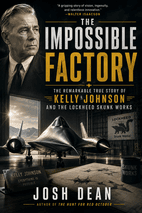
Josh Dean's The Impossible Factory tells the story of Kelly Johnson and Lockheed's Skunk Works, tracing how a culture of radical innovation produced revolutionary aircraft from the P-80 to the SR-71 Blackbird. Drawing on rich narrative detail, it reveals the human costs and engineering triumphs behind America's most secretive aviation division, offering a case study in high-performance team dynamics for readers interested in Cold War history and the nature of breakthrough innovation.
Feature
Insta.Page
Blinkist
Shortform
Summary Depth
Full Chapter-by-Chapter
15-min overview
Section-by-section guides
Audio Narration
✓
✓
✓
Visual Mindmaps
✓
✕
✕
AI Q&A
✓
✕
✕
Quizzes
✓
✕
✕
PDF Downloads
✓
✕
✓
Price
$89.99/yr
$146/yr (PRO)
$199/yr
*Competitor data last verified July 2026.
1 Page Summary
In The Impossible Factory, Josh Dean tells the story of Kelly Johnson and the Lockheed Skunk Works, the secretive division that produced some of the most revolutionary aircraft in history. The central thesis is that Johnson created a culture of radical innovation by combining extreme speed, minimal bureaucracy, and a relentless focus on solving the hardest engineering problems. The book traces Johnson’s journey from his humble Michigan upbringing to his role as a legendary aircraft designer, showing how his creation of the Skunk Works—an autonomous unit operating outside Lockheed’s normal structure—became America’s innovation machine, producing breakthroughs like the P-80, U-2, A-12, SR-71 Blackbird, and F-117 Nighthawk.
What makes Dean’s book distinctive is the depth of its narrative, based on the chapter content that details Johnson’s personal life as much as his professional triumphs. The book covers not only the technical marvels—like the U-2’s ability to fly at 70,000 feet, the A-12’s Mach 3 speeds, and the F-117’s stealth—but also the personal costs, including Johnson’s marriages, health struggles, and the weight of secrecy. Dean reveals the Skunk Works as a human story of stubbornness, failure, and perseverance, including the shootdown of Francis Gary Powers, the tragic crashes of test pilots, and the bureaucratic battles that nearly killed programs like the YF-12.
The intended audience is readers interested in aviation, Cold War history, and the nature of innovation. The book offers a case study in how to run a high-performance engineering team, showing that the Skunk Works’ success came from principles like working with small teams, trusting engineers, and cutting red tape. Readers will gain an appreciation for the human side of technological progress, understanding that even a genius like Kelly Johnson could be wrong about projects like the F-90 or the C-130, and that his greatest legacy was not just the planes he built, but the culture of impossible problem-solving he left behind.
Chapter 1: The American Dream
Overview
Every great origin story has a twist, and Kelly Johnson’s begins with his father fleeing Sweden not for poverty or persecution, but because he refused to carry a gun. That act of principled stubbornness set the Johnson family on a path from the forests of Michigan’s Upper Peninsula to the cutting edge of aviation. This chapter traces Clarence “Kelly” Johnson’s early years—from a poor boy ashamed of his home to a brilliant student who designed his own airplane engine in secret. It’s a tale of grit, luck, and the kind of creative defiance that would define his entire career.
A Father’s American Gamble
Per Jonsson arrived in New York in 1888 with six hundred dollars and a dream of buying a ranch in Nebraska. Instead, he was scammed into a train ticket that dropped him in Marquette, Michigan, on the shores of Lake Superior—about as far from Nebraska as you can get without leaving the country. Rather than give up, Peter (as he was now called) laid railroad ties, taught himself bricklaying, and sent for his wife Christine. They settled in Ishpeming, a mining town that also happened to be the birthplace of organized skiing in America, thanks to its Norwegian settlers. Over the years, Peter and Christine had nine children. The seventh, born on February 27, 1910, was Clarence Leonard Johnson—soon to be known as Kelly.
Money was always tight. Clarence was so embarrassed by his family’s poverty that he took back alleys on his walk home from parades so his friends wouldn’t see where he lived. He vowed to return one day walking the main streets as a man of means.
The Boy Who Became Kelly
Clarence loved school so much that he’d race to be first in line at Ridge Street School. That enthusiasm got him bullied by a rich kid named Cecil, who called him “Clara.” One day, Clarence snapped. He tripped Cecil, jumped on him, and broke the boy’s leg. The teacher punished him by snapping a twelve-inch ruler across his knuckles—but Clarence didn’t cry. Impressed, his classmates decided he needed a tougher nickname. Someone suggested “Kelly,” after a song called “Has Anybody Here Seen Kelly?” (though Clarence always claimed it was “Kelly with the Green Necktie”). The name stuck.
Kelly was an inventor from the start. He built camps in the wilderness, watched iron ore trains rumble past, and once gave his entire summer earnings of thirty-one dollars to his mother. At twelve, he was earning ten dollars a week making laths and paying seven of that for room and board. A near-disaster with a toy arrow from his sister Helen left him with permanent damage to his left eye—damage that would later keep him out of the cockpit but push him deeper into design.
His real passion took hold at the Carnegie Library, where he devoured The Boys’ Book of Model Aeroplanes and the Tom Swift series. “I became convinced that I should be like Tom Swift,” he later said. By age twelve, he knew his future: build airplanes. He sketched designs, built models, and even leaped from fence posts with a makeshift glider on his back. His first documented design was the Merlin 1 Battleplane, a collage-and-sketch book he titled Aviation.
At thirteen, Kelly gave a speech to the Lions Club, standing on a chair to be seen. The local paper ran two columns on that “bright little lad,” reporting his prediction that the United States would lead the world in aviation. The audience applauded heartily.
From Flint to the University of Michigan
When Kelly was thirteen, the family moved to Flint, a booming automotive town. He attended Flint Central High, won twenty-five dollars in a model airplane contest, and took his first flight—a five-dollar ride that ended in an emergency landing when the engine cut out. “It was fun! It was noisy, it was drafty, it was great!” he remembered.
After high school, Kelly had six hundred dollars saved and planned to travel the world. But his French teacher, Miss Davis, talked him into enrolling at Flint Junior College instead. He also wanted to learn to fly, but the local flight school owner, Jim Bishop, refused his money. “You have good grades, you will go a lot farther if you go on to the university,” Bishop said. That advice, combined with the car crash that kept him from football tryouts, pushed Kelly toward academics. He later called that ditch “the best thing that ever happened to me.”
At the University of Michigan, Kelly threw himself into aeronautical engineering. He worked in the wind tunnel for Professor Edward Stalker, and even rented it after hours for freelance projects with his friend Don Palmer. They streamlined a Studebaker sedan, discovering that the headlamps alone ate 16 percent of the engine’s power. Kelly argued with his professors when he thought they were wrong—successfully getting a B changed to an A. He finished three years of study in two, lived on two doughnuts and a glass of milk per meal, and developed the first of many ulcers.
His reputation as a genius was already solid. Fellow student Carl Haddon recalled that when everyone else copied existing engine blueprints for a class project, Kelly designed his from scratch—and covered his drafting board with a square of paper so nobody could peek. “He was secretive even then,” Haddon said.
The Lean Years and a Lucky Break
Graduating in 1932 meant stepping into the Great Depression. Kelly and Don Palmer drove a borrowed Chevy to the East Coast, knocking on doors at Sikorsky, Martin, and Curtiss. No one was hiring. Kelly tried to enlist in the Army Air Corps, but the old arrow injury to his left eye disqualified him from flying—another stroke of luck, he later admitted, because it forced him to focus on design.
Broke and resourceful, Kelly and Don drove west, camping in fields and eating cheap sandwiches. To save gas, they drilled a small hole in the professor’s car’s intake manifold, adding a valve that boosted fuel economy by three to four miles per gallon. It was a small but telling example of the inventive, roll-with-the-punches mindset that would carry Kelly Johnson through the rest of his life.
Key Takeaways
Kelly Johnson’s father, Peter, fled Sweden to avoid military conscription and landed in Michigan by accident after being scammed—a story that shaped Kelly’s view of America as a place where you can reinvent yourself.
Kelly’s childhood was defined by poverty, a fierce work ethic, and an early, unwavering commitment to building airplanes after reading Tom Swift books.
A broken ruler across the knuckles—and a broken bully’s leg—earned him the nickname “Kelly,” which replaced his given name Clarence forever.
Near-misses (the arrow to his eye, the car crash before football tryouts, disqualification from flight school) steered him away from sports and piloting and toward engineering.
At the University of Michigan, Kelly excelled by blending bold confidence with meticulous secrecy, finishing his degree in two years and already functioning as a freelance aerodynamics consultant.
The Great Depression forced creative survival tactics—like modifying a professor’s car for better gas mileage—but never dented his ambition or belief that he could design the future of flight.
Key concepts: Chapter 1: The American Dream
1. Chapter 1: The American Dream
Father's American Gamble
Father Peter Jonsson scammed into Michigan instead of Nebraska
Laid railroad ties, taught himself bricklaying
Settled in Ishpeming mining town
Kelly born seventh of nine children in 1910
Poverty and Shame
Took back alleys to hide his home from friends
Vowed to return walking main streets as a man of means
Gave entire summer earnings of $31 to his mother
Becoming Kelly
Broke bully's leg, earned nickname 'Kelly'
Permanent left eye damage from sister's toy arrow
Devoured aviation books at Carnegie Library
Knew by age twelve he would build airplanes
Early Inventor
Designed Merlin 1 Battleplane at age thirteen
Gave speech to Lions Club predicting US aviation lead
Built models and leaped with makeshift glider
Path to University
French teacher convinced him to attend junior college
Flight school owner refused his money, urged university
Car crash kept him from football, pushed to academics
University of Michigan
Finished three years of study in two
Designed own airplane engine secretly in class
Argued with professors, got B changed to A
Lived on two doughnuts and milk per meal
Great Depression Luck
Graduated 1932, no jobs at Sikorsky or Curtiss
Eye injury disqualified him from flying
Forced to focus on design instead of cockpit
💡 Try clicking the AI chat button to ask questions about this book!
Chapter 2: The Rise of Lockheed
Overview
From the spark of the Wright brothers’ achievement, Allan Loughead and his brother Malcolm built seaplanes in a San Francisco garage, charging five dollars for rides and founding the Loughead Aircraft Manufacturing Company. Teenage Jack Northrop contributed design work, but a cancelled government order after World War I forced a pivot to tourism. The S-1 sport plane failed, Malcolm left to start a brake company, and Allan rebranded as Lockheed Aircraft Corporation in 1926, moving to Hollywood.
The Vega monoplane debuted on July 4, 1927, just as aviation fever gripped the nation. The disastrous Dole Race—in which a Vega named Golden Eagle vanished—ultimately boosted Lockheed when ace Arthur Goebel set a cross-country speed record in a Vega 5. Sales soared, and Lockheed moved to Burbank, went public in 1928, but was swallowed by the Detroit Aircraft Corporation in a hostile takeover. The Great Depression crippled DAC; by 1931 Lockheed was placed into receivership and shut down.
Rebirth came in 1932 when Robert Gross and a consortium of aviation enthusiasts bought Lockheed’s assets for $130,000. Inside an overgrown former pottery factory, with only an unpaid watchman and a bulldog mascot named Contact, the company started over. Money was so tight that engineers sat on grocery crates and the quality-control specialist used a Model T with a human counterweight. Every new Vega was tested by a random assembly worker flying with test pilot Marshall Headle—a terrifying guarantee of meticulous craftsmanship.
Design chief Hall Hibbard was tasked with creating a twin-engine metal-fuselage plane, the Model 10 Electra, envisioned as a safer alternative to single-engine aircraft. But the Electra had stability problems that made it unsafe. Robert Gross contacted the University of Michigan; Professor Stalker’s assistant, Kelly Johnson, ran wind tunnel tests and found a “kink in the stability curve.” Stalker signed off anyway, but Kelly wasn’t convinced.
In 1933, Kelly joined Lockheed as an $83-per-month tool designer, soon becoming Hibbard’s Swiss Army knife. He warned that the Electra was unstable, then drove east with a wooden wind tunnel model in his backseat. After seventy-two tests, he added controllable plates to the horizontal tail, removed wing fillets, and chose twin tails—a design that became Lockheed’s signature. Hibbard celebrated the discovery, and Kelly returned a hero.
On February 23, 1934, test pilot Eddie Allen took the Electra on its first flight, with Kelly in the right seat for all subsequent tests. During a dive test, the windshield blew in; Kelly redesigned it immediately. The Civil Aeronautics Authority granted an airworthiness certificate, and Kelly and Hibbard drove home smoking cigars—only to see Marshall Headle’s landing gear jam on approach. With no radio, ground crew waved frantically. Jimmy Doolittle proposed painting a message on his own plane: “Try landing at United—good luck.” Headle aimed for the longer runway and touched down safely.
The crisis hit just before delivery to Northwest Airlines. Lockheed was fragile, with no war chest. Gross laid off nearly everyone; those who stayed worked for free. Failure wasn’t an option. By July, Lockheed delivered the first Electra for $50,000. The celebration was a humble affair at Neil’s Drugstore: Gross played piano, and Kelly had his first-ever drink—bourbon tasting like “dregs from the bay.” The smaller Model 12 Electra followed, and both sold quickly. Lockheed flipped a $190,891 loss in 1934 into a $217,986 profit in 1935. Poland’s LOT bought four Electra 10s—the company’s first international sale. Lockheed was truly flying.
Early Beginnings: The Loughead Brothers
Allan Loughead was fourteen when the Wright brothers’ feat in 1903 ignited an obsession with flight. By 1910, he was airborne in a motorized box kite, and two years later, he and his brother Malcolm built a V-8-powered seaplane on a San Francisco Bay ramp. Their Model G seaplane, the largest of its kind at the time, took flight on June 15, 1913. They charged five dollars a head for rides, raising $3,000 to found the Loughead Aircraft Manufacturing Company. A teenage Jack Northrop contributed design drawings and stress analysis for their next project: the F-1, a twin-engine flying boat for ten passengers. A government order for fifty scout seaplanes evaporated with the end of World War I. The brothers pivoted to tourism, flying King Albert and Queen Elizabeth of Belgium in 1919. The S-1 sport plane failed commercially, and Malcolm left to start a hydraulic brake company. Allan, tired of people mangling his last name, rebranded as the Lockheed Aircraft Corporation in 1926 and moved to Hollywood.
The Vega and the Dole Race
In 1927, Lockheed unveiled the Vega, a high-wing monoplane. Aviation was now a cultural phenomenon—Lindbergh had crossed the Atlantic, and pineapple mogul James Dole offered $25,000 for the first flight from continental U.S. to Honolulu. Fourteen planes entered the Dole race, but only eight made it to Oakland’s starting line. The first three attempts ended in crashes. The fourth, a Lockheed Vega named Golden Eagle, took off but vanished forever. The winner was World War I ace Arthur Goebel, flying a Travel Air monoplane. In August 1928, Goebel set a cross-country speed record in a Lockheed Vega 5, flying from Los Angeles to Long Island in 18 hours, 51 minutes. The publicity boosted Lockheed’s sales. Allan moved the company to Burbank. Lockheed went public in 1928, but the Detroit Aircraft Corporation (DAC) took control in a hostile takeover in 1929. The Wall Street crash and Great Depression crippled DAC, and by 1931, Lockheed was its only functioning unit. On October 27, 1931, Lockheed was placed into receivership, and four months later, it shut down.
Rebirth from Bankruptcy
In May 1932, an ad in the Los Angeles Times announced Lockheed’s assets were for sale at $130,000. Robert Gross assembled a consortium of investors who loved aviation. On June 21, 1932, the Lockheed Aircraft Corporation was reborn inside a former pottery factory. The grass was overgrown, and the only employee was a watchman who hadn’t been paid. The first month’s sales were $1,622.94, including two checks from Amelia Earhart for $150 and $6. Money was so tight that engineering lacked a single calculating machine; workers sat on wooden boxes from the grocery store. Quality-control specialist Harvey Christen made lumber runs in a Model T that lifted its front end under a heavy load, so he brought the heaviest worker to ride shotgun as a counterweight. Test pilot Marshall Headle tested every new Vega by selecting a random assembly worker to fly with him—a terrifying experience that ensured meticulous craftsmanship. The factory mascot was a bulldog named Contact, who had a tab at the local sandwich shop, paid by Lockheed.
Hibbard and the Electra Vision
Lockheed’s design department was led by Hall Hibbard, born in 1903, who knew from childhood that he’d be around planes. After MIT and a job at Stearman Aircraft, he joined Lloyd Stearman and Bob Gross at Stearman-Varney. He was immediately put to work on a twin-engine metal-fuselage plane that would become the Model 10 Electra. When Gross shut down Stearman-Varney and moved to Burbank, Hibbard came along. This was the Lockheed that Kelly Johnson and Don Palmer found in summer 1932. Production manager Richard von Hake told them it wasn’t time to hire engineers yet and advised them to return to Michigan for more education. Kelly took the advice, earning a master’s in 1933.
The Electra Crisis and Kelly’s Breakthrough
Robert Gross had a bold vision for Lockheed but was in dire financial straits. In March 1932, he wrote to his brother that he had “a few cents over five dollars” in his pocket. Still, he believed the Electra could be a hit. The idea came to him in fall 1932 while watching passengers board a twin-engine Boeing versus a single-engine Lockheed Orion—the twin-engine plane was safer. He told Hibbard to focus entirely on the twin-engine design. The Electra had stability problems, and the design was unsafe. Gross and Stearman called Professor Stalker at the University of Michigan for help. Stalker’s assistant, Kelly Johnson, ran wind tunnel tests and found a “kink in the stability curve” that would cause pitch-up troubles. Stalker signed off on the design anyway, but Kelly wasn’t convinced.
In May 1933, Kelly finished his master’s and drove to Lockheed. He got a job as a $83-per-month tool designer under Hibbard. The engineering department had just five people, and Kelly was a Swiss Army knife. The company was focused
Key concepts: Chapter 2: The Rise of Lockheed
2. Chapter 2: The Rise of Lockheed
Early Beginnings: The Loughead Brothers
Allan Loughead inspired by Wright brothers' flight
Built Model G seaplane, charged for rides
Jack Northrop contributed design work
Rebranded as Lockheed Aircraft Corporation in 1926
The Vega and the Dole Race
Vega monoplane debuted in 1927
Golden Eagle vanished in disastrous Dole Race
Arthur Goebel set cross-country speed record
Sales soared, moved to Burbank
Takeover and Bankruptcy
Detroit Aircraft Corporation hostile takeover in 1929
Great Depression crippled DAC
Lockheed placed into receivership in 1931
Company shut down four months later
Rebirth from Bankruptcy
Robert Gross bought assets for $130,000 in 1932
Started in overgrown pottery factory
Mascot bulldog named Contact
Engineers sat on grocery crates
Designing the Model 10 Electra
Hall Hibbard tasked with twin-engine metal plane
Electra had dangerous stability problems
Kelly Johnson ran wind tunnel tests
Found 'kink in the stability curve'
Kelly Johnson's Fix and Twin Tails
Johnson joined Lockheed as tool designer
Drove east with wooden model for 72 tests
Added controllable plates and twin tails
Design became Lockheed's signature
First Flight and Financial Turnaround
First flight on February 23, 1934
Landing gear jammed, pilot landed safely
Delivered first Electra for $50,000
Loss flipped to profit by 1935
Chapter 3: You Gotta Start Somewhere
Overview
The fast-and-loose early days at Lockheed were defined by multitasking and scrappy innovation, a culture in which Kelly Johnson quickly flourished. His mentor, Hall Hibbard, taught him the delicate art of tempering intensity with persuasion—knowing when to use a carrot instead of a stick to lead the shop workers who initially bristled at his relentless drive. That drive extended beyond the factory floor. Kelly’s personal life took off when he pursued Althea Young, the assistant treasurer who called him a “snippy young kid.” Their romance—built on shared steak dinners, golf games she often won, and an adventurous test flight she pretended to enjoy—led to marriage in 1937, long trail rides in Malibu, and a shared dream of owning a ranch.
Lockheed’s Burbank headquarters became a magnet for the era’s most colorful aviators. Roscoe Turner showed up with a pet lion that chased Althea up the stairs, while Charles Lindbergh practically camped out in the plant. Wiley Post, the one-eyed world-record flyer, pushed Kelly to eke more speed from the Winnie Mae, leading to a bet over a slide rule that Post never paid. Post’s determination drove him to cobble together a dangerous hybrid plane—a Frankenstein that Kelly warned had insufficient elevator power. That warning proved tragically accurate when Post and Will Rogers died in a crash in 1935. Amelia Earhart was another close friend. Kelly modified her Vega for her solo Atlantic crossing and later wrote a meticulous memo on fuel estimates for her Electra around-the-world flight. When she vanished, Kelly’s own calculations convinced him that navigator Fred Noonan was the culprit—a belief he voiced bluntly decades later.
Then came Howard Hughes. The eccentric billionaire worked odd hours, drove a beat-up Chevy, and once borrowed Hibbard’s suit for a city meeting. But his greatest impact was commissioning the Constellation, the pressurized four-engine plane that would transform Lockheed from a small-timer into a major player. Kelly sketched the early designs, fought for hydraulically assisted power controls (convincing a skeptical boss by pointing at his own power-steering-equipped Chevy), and oversaw wind-tunnel tests across six facilities. The prototype’s maiden flight in January 1943 brought Hibbard and Robert Gross to tears—an emotional payoff for a gamble that tripled Lockheed’s production.
That gamble nearly ended in disaster when Hughes, eager to prove his flying chops, grabbed the controls during a training flight and stalled the plane, throwing an unbelted Kelly against the ceiling. Kelly ordered the pilot to take over, infuriating Hughes and then his own boss Gross, but Kelly went home and poured a whiskey to celebrate surviving. Hughes eventually practiced seventy near-perfect takeoffs and landings, then set a transcontinental speed record in the same Connie that later carried Orville Wright on his last flight. Credit for the Constellation’s design was hotly disputed: Kelly insisted Hughes contributed only as a buyer, while the more diplomatic Hibbard acknowledged Hughes’s useful input on landing gear. What mattered more was the plane itself—25% more powerful, faster, and longer-ranged than its competitor, yet cheaper to operate. The philosophy behind the leap was summed up by Kelly’s phrase “failure through timidity.” Great designs require giant risks, and as Hibbard wrote, you must start designing the successor long before the first design turns a profit.
Key Takeaways
The Constellation's maiden flight was a tearful triumph; Lockheed's production tripled as a result.
Howard Hughes's training flight nearly ended in disaster, leading to a clash between Kelly Johnson's engineering integrity and Robert Gross's customer relations.
After intensive practice, Hughes set a transcontinental record, and the same plane later flew Orville Wright on his last flight.
Credit for the Connie's design was disputed; Kelly insisted Hughes contributed only as a buyer, while Hibbard acknowledged some design improvements.
The Connie was a revolutionary leap—not an incremental one—and its success reinforced the principle that great companies must take big risks and start designing successors before the first design turns a profit.
Key concepts: Chapter 3: You Gotta Start Somewhere
3. Chapter 3: You Gotta Start Somewhere
Kelly Johnson's Early Career & Mentorship
Multitasking and scrappy innovation defined Lockheed's culture
Hall Hibbard taught him to temper intensity with persuasion
Learned when to use carrot instead of stick with workers
Married Althea Young after shared adventures and test flights
Colorful Aviators and Tragic Lessons
Roscoe Turner brought a pet lion to the plant
Wiley Post's hybrid plane crash killed him and Will Rogers
Kelly warned Post about insufficient elevator power
Amelia Earhart's disappearance blamed on navigator Noonan
Howard Hughes and the Constellation
Hughes commissioned the pressurized four-engine Constellation
Kelly sketched early designs and fought for power controls
Prototype's maiden flight in 1943 brought tears to executives
The gamble tripled Lockheed's production capacity
Near-Disaster and Design Disputes
Hughes stalled plane during training, throwing Kelly against ceiling
Kelly clashed with boss Gross over customer relations
Hughes later set transcontinental speed record in same plane
Credit disputed: Kelly saw Hughes as buyer, Hibbard acknowledged input
Philosophy of Bold Innovation
Constellation was 25% more powerful and cheaper to operate
Kelly's phrase: 'failure through timidity'
Great designs require giant risks, not incremental steps
Start designing successor before first design turns profit
Chapter 4: Lockheed Goes to War
Overview
In the early twentieth century, the U.S. government saw little strategic value in airplanes. President Calvin Coolidge famously suggested that one fighter plane could be shared by all pilots, and he remains the last president never to fly. Yet Coolidge also planted seeds for aviation’s military future by signing the 1926 Civil Aeronautics Act and creating the Army Air Corps. Robert Gross recognized the potential long before Washington did, but breaking into the military market proved elusive. So he set his sights on a foreign customer with a more urgent need: the United Kingdom.
The Hudson Bomber Takes Flight
When Hitler invaded Poland in 1939, global war became unavoidable. Britain needed a plane to hunt German U-boats that had devastated its shipping in World War I. A British delegation visited American manufacturers, but Lockheed wasn’t on their itinerary—until salesman Otto Graf intercepted them at the train station and convinced them to stop in Burbank. Hall Hibbard and Kelly Johnson scrambled to modify the existing Model 14 Super Electra into an anti-submarine version. Their wooden mock-up was only a rough guess, but after the British demanded changes, Kelly and his team rebuilt it over a weekend. The Brits were stunned by the speed and invited Lockheed to London.
The Hotel Room Redesign
Courtlandt Gross led a small team to England, including the twenty-eight-year-old Kelly Johnson. The Air Ministry promptly shredded Kelly’s design during a brief meeting. It needed a total overhaul. Rather than give up, Kelly asked for the holiday weekend. The team bought a drafting table and set up a design studio in a suite at the Hotel Mayfair Court. For seventy-two hours straight, Kelly worked without sleep or a change of clothes, redesigning every system. When he presented the completed plans on Tuesday, the British officers were astounded. But they had one more concern: they were uncomfortable trusting the technical word of someone so young. Courtlandt Gross vouched for his brother, promising that the plane would meet every spec.
The Lifesaving Contract
The result was a $25 million order for two hundred Hudson bombers—the largest peacetime foreign contract ever given to an American company. Lockheed had only $334,000 in cash and limited credit; this deal literally saved the company. Robert Gross scrambled to expand the workforce from fewer than two thousand, raising $1.25 million in short-term financing. Lines of unemployed workers stretched for blocks. The prototype flew in December 1938, and production aircraft soon followed. The Hudson earned the nickname “Old Boomerang” for its ability to survive heavy damage. It played a critical role at Dunkirk, scored the first American-built plane kill of the war, and even captured a German submarine by forcing it to surface.
Duffy’s Crash Course
The contract also came with revisions from the Australians, requiring a new engine installation. Jack “Duffy” Duffendack, just twenty-five and barely a year out of college, was drafted to lead the redesign. Kelly gave him a brutal deadline: fly the new power plant in three and a half months. Duffy worked around the clock, sleeping on his drafting board. To save time, he eliminated the step of having checkers review drawings, making lead engineers fully responsible. This approach—cutting layers without compromising quality—would later become a core principle of Kelly’s Skunk Works. Duffy made the deadline, and the first test plane flew on schedule.
Key Takeaways
Lockheed’s military breakthrough came not from the U.S. government but from Britain’s desperate need for a sub-hunter.
Kelly Johnson’s marathon hotel-room redesign proved that speed and competence could overcome skepticism about his youth.
The Hudson contract was Lockheed’s financial lifeline, forcing rapid expansion and innovation in manufacturing.
The practice of giving engineers full ownership of their designs, pioneered under pressure, foreshadowed the Skunk Works philosophy.
Key concepts: Chapter 4: Lockheed Goes to War
4. Chapter 4: Lockheed Goes to War
The Hudson Bomber Takes Flight
Britain needed a plane to hunt German U-boats
Salesman Otto Graf intercepted British delegation
Kelly Johnson rebuilt mock-up over a weekend
Brits invited Lockheed to London
The Hotel Room Redesign
Air Ministry shredded Kelly's initial design
Kelly worked 72 hours without sleep
Redesigned every system in hotel suite
Courtlandt Gross vouched for his brother
The Lifesaving Contract
$25 million order for 200 Hudson bombers
Largest peacetime foreign contract for US company
Lockheed had only $334,000 in cash
Hudson earned nickname 'Old Boomerang'
Duffy's Crash Course
Australian revisions required new engine installation
Josh Dean is an American journalist and author known for his narrative nonfiction works, including *The Taking of K-129*, which details a top-secret CIA mission to recover a lost Soviet submarine. He has also written *Show Dog: The Charmed Life and Trying Times of a Nearly Perfect Purebred*, exploring the world of dog shows. Dean’s expertise spans investigative reporting and true adventure, with his writing featured in publications such as *Outside* and *Popular Mechanics*.
Frequently Asked Questions about The Impossible Factory
What is The Impossible Factory about?
This book chronicles the life and career of Clarence 'Kelly' Johnson, the legendary aeronautical engineer who built the Skunk Works at Lockheed. It covers his rise from a poor Michigan childhood to designing revolutionary aircraft like the P-80, U-2, SR-71 Blackbird, and the F-117 stealth fighter. The narrative details the intense secrecy, impossible deadlines, and audacious engineering that defined his work, along with his personal struggles with health, marriage, and the changing military-industrial complex.
Who is the author of The Impossible Factory?
The author is Josh Dean, a journalist and writer who has extensively chronicled the history of the Skunk Works. He draws on personal diaries, interviews, and declassified documents to tell the inside story of Kelly Johnson and his team. Dean's reporting gives readers unprecedented access to the triumphs and tragedies behind the world's most secret aircraft.
Is The Impossible Factory worth reading?
Absolutely. This book offers a gripping, behind-the-scenes look at some of the most audacious engineering projects in history, told through the lens of a brilliant but flawed genius. It is a masterclass in innovation, leadership, and the sheer force of will required to achieve the impossible. Anyone interested in aviation, Cold War history, or how breakthrough ideas actually happen will find it unputdownable.
What are the key lessons from The Impossible Factory?
The most important lesson is the power of a lean, flat, and autonomous team—the Skunk Works model—that rejects bureaucracy and empowers a small group of obsessive problem-solvers. Johnson proved that 'one miracle per program' is a rule worth breaking, but that every miracle demands relentless iteration and a willingness to start over. The book also shows that even the greatest visionaries can be humbled by politics, personal tragedy, and their own stubbornness, and that true innovation often requires sacrificing comfort for speed.
📚 Explore Our Book Summary Library
Discover more insightful book summaries from our collection