Chapter One: Recombinant DNA
Overview
A single biological breakthrough can cure ancient plagues, and in the same gesture equip any laboratory to engineer a pathogen without a cure. The treaties meant to prevent that outcome have no enforcement, and the science keeps moving. What separates healing from extermination is not a boundary but a choice.
Author’s Note
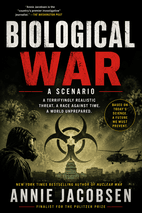
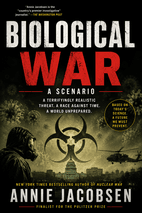
Biological weapons are outlawed, yet they persist. The 1972 Biological Weapons Convention bans them but allows “defensive” research, a loophole with no enforcement. A 2025 State Department report says Russia and North Korea maintain offensive programs; Russia absorbed the Soviet one. A genetically modified attack would kill millions and collapse society, warns former senator Tom Daschle.
Recombinant DNA
In 1971, Paul Berg spliced a monkey virus gene into lambda phage, creating the first recombinant DNA molecule. Genetic engineering is dual-use: it can cure or kill. After a colleague warned of cancer risks, Berg helped call for a moratorium, leading to the 1975 Asilomar Conference, which set lab safety guidelines but never discussed biological warfare. Deputy program chief Ken Alibek confirmed Moscow signed the treaty while secretly stockpiling hundreds of tons of anthrax, plague, and smallpox.
Key Takeaways
- The Biological Weapons Convention's ban is hollow: its "defensive" exemption goes unenforced, and the U.S. State Department identifies Russia and North Korea as running offensive programs.
- Genetic engineering was dual-use from the moment Paul Berg spliced the first recombinant DNA molecule; the same knowledge that heals can also be weaponized, so no technical fix can separate the two.
- Asilomar's safety guidelines addressed only the laboratory, never the battlefield, leaving biological warfare entirely outside the scientific community's self-regulation.
- The Soviet Union's secret stockpiles of anthrax, plague, and smallpox, confirmed by defector Ken Alibek, show that treaty compliance cannot be assumed even among signatories.
- A genetically engineered pathogen attack threatens not just mass casualties but the collapse of society itself, making the bioweapons loophole a civilizational risk rather than a niche security concern.
Key concepts: Chapter One: Recombinant DNA
Chapter One: Recombinant DNA
The Hollow Treaty
- 1972 Biological Weapons Convention bans bioweapons
- Defensive research loophole has no enforcement
- Russia and North Korea run offensive programs
- Treaty compliance cannot be assumed
Dual-Use Genetic Engineering
- Paul Berg created first recombinant DNA in 1971
- Same knowledge can cure or kill
- No technical fix separates healing from weaponizing
- Dual-use nature inherent from the start
Asilomar's Limited Scope
- 1975 conference set lab safety guidelines
- Biological warfare never discussed
- Self-regulation ignored battlefield applications
- Safety rules addressed only laboratory risks
Soviet Secret Program
- Moscow signed treaty while stockpiling bioweapons
- Hundreds of tons of anthrax, plague, smallpox
- Defector Ken Alibek confirmed the program
- Secret program exposed treaty's weakness
Civilizational Risk
- Engineered pathogen attack could kill millions
- Society itself could collapse from attack
- Bioweapons loophole is a civilizational threat
- Choice, not boundary, separates cure from catastrophe