As an Amazon Associate, we earn from qualifying purchases.
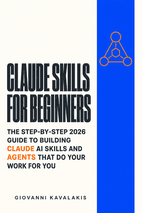
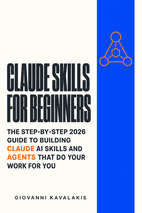
What is the book Claude Skills for Beginners about?
Giovanni Kavalakis's Claude Skills for Beginners teaches non-technical small business owners, freelancers, and side-project builders to reclaim hours lost to repeating tasks by writing plain-instruction Skills an AI follows every time, covering the five questions, payback scoring, failure diagnosis, and turning the method into a paid service.
Feature
Insta.Page
Blinkist
Shortform
Summary Depth
Full Chapter-by-Chapter
15-min overview
Section-by-section guides
Audio Narration
✓
✓
✓
Full access to all 700+ summaries
✓
✓
✓
Visual Mindmaps
✓
✕
✕
AI Q&A
✓
✕
✕
Missing a book? Request it, usually live within 48h
✓
✕
✕
Quizzes
✓
✕
✕
PDF Downloads
✓
✕
✓
Send to Kindle
✓
✓
✓
Price
$89.99/yr
$146/yr (PRO)
$199/yr
*Competitor data last verified July 2026.
1 Page Summary
At its core, this book argues that the hours lost each week to repeating tasks—answering routine messages, scheduling, invoicing, and follow-ups—are recoverable even for a busy, non-technical owner. The central tool is the Skill: a written page of plain instructions an AI follows every time, likened to a recipe card that can't be lost or a staff member trained once. Skills require no coding; if you can write instructions for a new hire, you can build one. The method fits on an index card, takes roughly twenty minutes per task, and follows a repeatable loop: gather real material, test on real work, and fix one line at a time. Supporting concepts include the five questions every Skill must answer (the job, the facts, the rules, the voice, and where the job ends with a "[CHECK THIS]" boundary), the payback score for choosing which task to build first, separating instructions from attached files, diagnosing failures as missing facts or uncovered situations, chaining small Skills in sequence, and deciding which tasks should never be handed over at all. Throughout, the author insists AI will not run the business or replace judgment—the human still reads and approves what passes.
The book's approach is practical and story-driven rather than technical. Each chapter follows a business owner facing a recognizable problem: Maria's Sunday scheduling that dropped from two hours to four minutes, Dana the photographer losing bookings to slow replies, Tomasz the landlord whose polished but wrong tenant reply promised an engineer he didn't have, Priya the baker who built the fun Skill before discovering the wholesale order Skill that returned seven hours a week. These cases illustrate the book's distinctive principles—that a group of small Skills beats one big one, that three Skills kept in service outperform fifteen abandoned ones, that failures point to a blank in the five questions, and that some messages are a person asking to be treated as one, making them the wrong task for a Skill. Later chapters extend the method to selling Skill-building as a service ($250–$500 per build, using the same process on a client's material) and provide fifteen copy-ready skeletons that remain scaffolding until the reader's own examples, files, and rules go in.
The intended audience is the non-technical small business owner, freelancer, or side-project builder with limited evenings and no coding background—someone who has perhaps tried AI once, typed something vague, gotten something generic, and concluded it was hype. Readers will gain a working Skill built on their own real work by the end of the early chapters, a method for choosing high-payback tasks and servicing Skills monthly, guidance on when to keep tasks on the human shelf, and a clear path to turning the same process into a paid service for other owners. The promise is modest and testable: not a transformed business, but reclaimed hours, with the whole approach able to fit on an index card.
Introduction. The Two-Hour Problem
Overview
Every week contains hours that disappear into repeating tasks nobody pays for, and the obvious fixes only rearrange the week. The problem is not spotting those hours; it is that reclaiming them appears to demand technical skill, spare time, or trust you do not have.
Somewhere in the week sits a block of hours that no one has claimed: Sunday night, the hour after closing, messages answered from bed, Friday lost to invoices. The routine answering, confirmations, follow-ups, formatting and summaries repeat forever. Those hours are recoverable, even for a busy, non-technical owner.
The claim is simple and you can test it: if you can draft instructions for a new hire, you can teach AI to handle repeating tasks this week, matching your tone and rules. Training takes about twenty minutes per task, and the approach fits on an index card. By the end of Chapter 2, you will have done it once on real work. AI will not run the business or replace judgment.
The Method
It is for work containing anything done more than twice, and doesn't require technical skills. Chapters 1 to 3 teach Skill-building and the five questions. Chapters 4 and 5 cover task choice and documents. Chapters 6 to 8 cover fixing, chaining and safety. Chapter 9 covers paid work. Chapter 10 holds fifteen templates.
Tools change. The method rests on five parts of any delegation: the job, the facts, the rules, the voice, and the boundaries. That holds up because it is a fact about delegation, not about software. People have trained employees with written instructions for as long as work has existed. Maria runs a cleaning company in Manchester, and her Sunday nights once looked familiar.
Key Takeaways
Inventory the week for the hours nobody has claimed, the late-night replies and after-close admin, and treat them as recoverable rather than fixed.
Choose one task you performed more than twice and write the instructions you would hand a new hire; that draft is the raw material, and it doesn't require technical skills.
Budget roughly twenty minutes for the first attempt and aim to finish a single real task, not to build a system.
Reduce the instructions to job, facts, rules, voice and boundaries on an index card, so a change of software costs you nothing.
Review the result as you would a junior colleague's work: it absorbs the routine, but decisions and judgment stay with you.
Key concepts: Introduction. The Two-Hour Problem
Introduction. The Two-Hour Problem
The Hidden Cost of Unclaimed Hours
Weekly hours vanish into unpaid repeating tasks like late-night replies and after-close admin.
Obvious fixes only rearrange the week, not reclaim the hours.
Reclaiming hours seems to demand technical skill, spare time, or trust you lack.
These hours are recoverable even for a busy, non-technical owner.
The Core Promise: Teach AI Like a New Hire
If you can draft instructions for a new hire, you can teach AI repeating tasks.
Training takes about twenty minutes per task and fits on an index card.
By Chapter 2, you will have done it once on real work.
AI handles routine but does not replace judgment or run the business.
The Method: Skill-Building and Five Delegation Questions
For any task done more than twice; no technical skills required.
Chapters 1-3 teach skill-building and the five questions.
Method rests on five parts: job, facts, rules, voice, boundaries.
Timeless Principles Over Changing Tools
Tools change, but delegation principles remain constant.
Five parts are facts about delegation, not about software.
People have trained employees with written instructions for centuries.
Maria's cleaning company story illustrates the familiar Sunday night problem.
Actionable Takeaways for Immediate Implementation
Inventory the week for unclaimed hours and treat them as recoverable.
Choose one task done more than twice and write instructions for a new hire.
Budget twenty minutes for first attempt; aim to finish one real task.
Reduce instructions to job, facts, rules, voice, boundaries on an index card.
💡 Try clicking the AI chat button to ask questions about this book!
Chapter 1. Meet Your New Employee
Overview
Every week brings the same tasks back, and every attempt to hand them off starts with explaining them again from scratch. The work is routine, yet the instructions never stay put.
A Page That Becomes an Employee
Maria runs a small cleaning company in Manchester. Every Sunday she once spent two hours turning phone messages into a schedule for four cleaners; now it takes four minutes. She neither hired help nor learned code. She wrote one page of plain instructions once and gave it to Claude. Each week she pastes messages and receives a schedule in her format, with rules such as not booking one client before ten applied. That page is a Skill: stored written instructions an AI follows every time. Think of a recipe card that cannot be lost, or a staff member trained once. Without it, each session resembles a new temp told the same preferences again. A Skill lets you hand over the task, not the briefing.
The Test and the Trap
A Skill is not programming: if you can write a note to a new assistant, you can write one. It is not a prompt typed once and lost; it is named, saved and reusable. It is not only for tech firms. If a task recurs more than twice and you can describe it in writing, a Skill can handle it. The common mistake is building one giant Skill to run everything. Work needs boundaries. "Answer customer emails in my voice" is a job; "do my admin" is a wish. Start with small, sharp roles, then teach them to collaborate.
Ordinary Proof
The pattern shows up in unglamorous work:
A Leeds driving instructor turns lesson notes into parent progress reports that once consumed her Sunday.
A two-man landscaping firm drafts quotes from a price sheet, relieving the partner who hates paperwork.
An accountant who dismissed AI converts client emails into file notes in his practice's twenty-year format.
None is glamorous. Each is repeated, describable and quietly disliked.
Ray fixes garage doors near Phoenix. At fifty-eight, with two vans and a flip phone until 2022, he called himself allergic to logins. His daughter built his first Skill during Sunday lunch from his sent messages and twenty minutes of grumbling. It handled the after-job summary he hated. Ray records a forty-second voice memo, pastes the transcript, and gets a clean summary in his blunt style. He named it Donna and still denies using AI. Within a fortnight it disappeared into routine. Six months on he counts forty minutes a day recovered, fewer complaints, and referrals from a home-warranty company that never chases his paperwork. Clear routines and strong opinions matter more than technical confidence.
Before the First Hire
Before hiring, write down three tasks repeated this week and last week; those are your first job descriptions. A paid Claude plan is generally required. Treat AI chat like email: ordinary business material is fine, passwords and piles of private data are not. Plain notes suffice; your sent messages supply your voice. Repetition can go; judgment, relationships and decisions stay with you.
Key Takeaways
List three tasks you repeated this week and last week; each one you can spell out in writing is your first job description.
Give each Skill one narrow job rather than a single catch-all meant to cover your whole workload.
Save and name the instructions so the same task runs again next month without you explaining it a second time.
Paste in your own sent messages so the output sounds like you, and keep passwords and piles of private data out of the chat.
Retain judgment, relationships and decisions yourself; what you pass on is the repeatable work you would rather not do again.
Key concepts: Chapter 1. Meet Your New Employee
Chapter 1. Meet Your New Employee
What a Skill Is
Stored written instructions an AI follows every time
Like a recipe card that cannot be lost
Trained once, reused without re-explaining
Hand over the task, not the briefing
What a Skill Is Not
Not programming; write it like a note to an assistant
Not a one-time prompt; it is named, saved, reusable
Not only for tech firms; any repeated task qualifies
Avoid one giant catch-all Skill; work needs boundaries
Real-World Examples
Maria's cleaning schedule: two hours to four minutes
Each describable task becomes a first job description
A paid Claude plan is generally required
Paste your sent messages to match your voice
Boundaries and Judgment
Keep passwords and private data out of the chat
Retain judgment, relationships and decisions yourself
Pass on repeatable work you would rather not do
Start with small, sharp roles, then teach collaboration
Chapter 2. Your First Skill in 20 Minutes
Overview
Every business answers the same questions repeatedly, and the owner's voice, prices, and rules live only in their head. The problem is getting all of that into something that can write a reply a customer would actually receive.
The slow-reply problem
A photographer named Dana was losing bookings, not because her photos were weak but because her replies were slow. Brides email five photographers on a Tuesday morning and the first two answers usually win; Dana wrote back at night, tired, in three short lines. She now answers in under a minute, in her own voice, with prices and a calendar link, from one Skill built in an evening.
The Skill drafts customer replies: paste the message and Claude writes a complete answer in your tone, on your facts, under your rules. It comes first because almost every business repeats the same answers, and the payoff lands the same day.
Collect three things first
Ten minutes of preparation, most of it copying:
Two real replies you sent recently and liked, lifted from your sent folder. Real ones teach your voice better than anything written for the occasion.
Your facts: prices or a range, what is included, availability, booking steps, five to ten lines in all.
Your rules, the always and the never: never promise a date before checking the calendar, and always ask where the customer found you.
Build it
Find Skills under Settings, then Capabilities or Skills, and start a new one.
Name it plainly: Customer Reply Skill.
Paste the recipe card, replacing the bracketed parts with your own details.
Save.
The recipe card has six parts: name, job, facts, rules, voice shown through two real replies, and where the job ends. That last line carries the most weight: never invent prices or dates, and write [CHECK THIS] wherever you must supply the answer yourself.
Test, then fix a line at a time
Run a real enquiry through it and read slowly: does it sound like you, are the facts right, did it respect your rules? Dana's first draft was too formal, so she added one instruction, to write the way she talks to a friend who is also a client, and by her third test she sent a reply to a real bride untouched. About eighty percent right first time is normal.
When something is off, do not rewrite the Skill. Find the missing rule and add one line.
Long replies: cap them at 120 words.
Invented facts: strengthen the [CHECK THIS] rule.
Missed question: answer every question, in the customer's order.
Every Skill in the book, the fifteen templates in Chapter 10 and the client work in Chapter 9 included, runs on the same build loop: prepare real material, write plain instructions, test with real work, fix one line at a time.
Three messages worth testing
Easy: the enquiry that comes five times a week, obvious questions in obvious order. Failing it means a gap in your facts.
Hard: several questions stacked, one beyond your facts. It should answer each in order and mark [CHECK THIS] rather than invent a policy.
Weird: the vague message, the broken-English one, the complaint wearing a question. It should stay polite, inside your rules, and flag what it cannot know.
Twenty minutes, timed
Karen, who runs a dog-grooming salon in Ohio, built hers on a Tuesday night. Six minutes went to digging two examples out of a chaotic sent folder. Typing her facts, she noticed the laminated menu by the till omitted the matted-coat surcharge she explains on the phone five times a week: the Skill was auditing her business before it had run once. Her first draft came back, in her words, "eighty percent me, and politer than I am on a Tuesday," with the salon's name wrong and a Saturday offered. Two lines fixed both, and her third test went to a real customer untouched.
Dana saves about four hours a week now; a plumber's simpler enquiries go out unedited nine times in ten.
Key Takeaways
Build a customer reply Skill before any other, because the first answer to an enquiry usually wins the job, and slow evenings spent writing three tired lines are losing work you already earned.
Spend ten minutes gathering real material before you open the builder: two replies you actually sent and liked, your prices and booking steps, and your always and never rules. Made-up examples teach the Skill nothing about your voice.
Make the recipe card's last line a hard stop that forbids invented prices and dates and requires a [CHECK THIS] marker wherever you must supply the answer, since that single line prevents the worst failures.
Test on three real messages, one routine, one with stacked questions, one strange or complaining, and repair faults by adding a line rather than rewriting the Skill.
Carry the same loop into everything you build afterward: real material, plain instructions, live test, one correction at a time.
Key concepts: Chapter 2. Your First Skill in 20 Minutes
Chapter 2. Your First Skill in 20 Minutes
Why Build a Customer Reply Skill First
First reply to an enquiry often wins the job
Slow, tired replies lose bookings you already earned
Dana now answers in under a minute, saving four hours weekly
Payoff lands the same day
Gather Real Material Before Building
Two real replies you sent and liked, from your sent folder
Your facts: prices, inclusions, availability, booking steps
Your rules: the always and never (e.g., never promise dates)
Made-up examples teach the Skill nothing about your voice
Build the Skill with a Recipe Card
Find Skills under Settings, then Capabilities or Skills
Name it plainly: Customer Reply Skill
Recipe card has six parts: name, job, facts, rules, voice, end
Last line is a hard stop: never invent prices/dates, use [CHECK THIS]
Test with Real Messages and Fix One Line at a Time
Test easy, hard, and weird messages; 80% right first time is normal
Fix faults by adding a line, not rewriting the Skill
Examples: cap replies at 120 words, strengthen [CHECK THIS] rule
Answer every question in the customer's order
The Universal Build Loop
Prepare real material, write plain instructions, test with real work
Fix one line at a time
Applies to all Skills, including Chapter 10 templates and Chapter 9 client work
Carry this loop into everything you build afterward
Chapter 3. The Five Questions Every Skill Must Answer
Overview
Instructions that look complete can still produce confident, wrong output, and adding more words or better wording rarely closes the gap. The failure feels unpredictable, which makes it hard to know what to change. Something is missing, but what?
Tomasz, who owns eleven rental flats in Leeds, built a Tenant Message Skill in an evening with one instruction: reply to tenants professionally and sort out their problems. Tested on a broken boiler, it promised an engineer within 24 hours. Tomasz has no engineer on call. Boiler work goes to Gas-Safe Dave, who comes when he can. The reply was polished and wrong because nothing mentioned Dave. Forty minutes of better instructions fixed it.
The five questions
A working Skill answers five questions:
The job: what exactly is the task?
The facts: prices, availability, policies, the paperwork.
The rules: the always-and-never lines.
The voice: real examples rather than adjectives.
Where the job ends: never invent, write [CHECK THIS].
A broken Skill lacks at least one of them. A pricing error points to thin facts, a wrong tone to thin voice, an undeliverable promise to absent boundaries. The failure marks the blank in the instructions.
The stranger test
Before saving, ask whether a smart stranger new to the business could do the job from the page alone. Claude is that stranger every time. Dave is unknown to it. It does not know Mrs. Patel dislikes early bookings, and it cannot see the calendar, prices, or your patience. Knowledge that stays in your head is invisible to the Skill. Write as if hiring a stranger for their first day, not issuing a prompt.
Four rules that do most of the work
Use never and always, not try to. “Keep replies under 120 words” works; “try to keep it short” allows failure. Soft words such as professionally, appropriately, ideally, and where possible let wrong answers in.
Show rather than describe. Two real emails taught voice better than adjectives. Paste last week's schedule and require that exact layout; one real example is worth more than five descriptive lines.
Write for exceptions. Recall the 2am tenant, the bride asking for a discount, the customer seeking a refund outside the window. Add one line each, such as not naming a discount figure and saying you will call personally.
Say what to do when unsure. Without it, the Skill guesses confidently in your name, which produced Tomasz's phantom engineer. [CHECK THIS] belongs in every Skill.
Overwriting and the repair
Elena runs a bookkeeping practice in New Jersey. Her client-email Skill ran four pages: history, service philosophy, three paragraphs on accuracy, a software tour, and the real rules buried on page three. It read stiffly and kept citing her twenty years of experience in replies about invoice deadlines. The Skill gave weight to what she emphasized, and she had emphasized credentials. Deleting everything that did not change a reply left one page holding the job, a pointer to the facts, nine rules, two examples, and the boundaries. The stiffness vanished. Give a stranger what they need on day one, not a retirement speech; they need to know invoices go out Thursdays, not why you care.
One skeleton, different businesses
Maria's cleaning Schedule Skill uses four cleaners, their hours, regular clients, and addresses. It never books Mrs. Patel before 10am, pairs new cleaners with Ana, keeps Friday afternoon for deep cleans, and flags regular-slot changes.
Dana's wedding Reply Skill uses packages, prices, travel policy, and a calendar link. It answers questions in order, asks where customers found her, avoids discounts in first messages, never confirms a date, and flags anything outside the facts.
Steve's plumbing Enquiry Skill uses the attached price list. It always gives a range and the next free slot category, keeps a short friendly voice with one example, refuses diagnoses from photos, and flags gas work beyond servicing for a callback.
Three trades, one skeleton.
Key Takeaways
Treat every wrong output as a pointer to the missing ingredient: an incorrect price means thin facts, a mismatched tone means weak examples, an undeliverable promise means absent boundaries.
Before saving, read the page as a new hire with no context and note every question you would need to ask; each question marks knowledge still trapped in your head.
Replace soft qualifiers with hard limits and paste real samples instead of describing the desired tone, since vague guidance lets a wrong answer pass.
Write explicit lines for the awkward requests and a fallback that halts guessing, because a confident invention in your name is worse than a flagged gap.
Cut anything that does not change a reply, including credentials and philosophy; extra material shifts the Skill's emphasis and makes it sound like a brochure.
Key concepts: Chapter 3. The Five Questions Every Skill Must Answer
Chapter 3. The Five Questions Every Skill Must Answer
The Five Questions Every Skill Must Answer
Job: what exactly is the task?
Facts: prices, availability, policies, paperwork.
Rules: always-and-never lines.
Voice: real examples, not adjectives.
The Stranger Test
Ask if a smart stranger could do the job from the page alone.
Claude is that stranger every time.
Knowledge in your head is invisible to the Skill.
Write as if hiring a stranger for their first day.
Four Rules That Do Most of the Work
Use never and always, not try to.
Show rather than describe with real examples.
Write for exceptions like the 2am tenant.
Say what to do when unsure: [CHECK THIS].
Overwriting and the Repair
Extra material shifts emphasis and causes stiff replies.
Delete anything that does not change a reply.
Keep only job, facts pointer, rules, examples, boundaries.
Giovanni Kavalakis is a historian and author specializing in Eastern Mediterranean maritime history, with a particular focus on Byzantine and Ottoman naval warfare. He is best known for his acclaimed book *The Galleys of the Levant*, a detailed study of shipbuilding techniques and naval strategies, which followed his earlier work on the Venetian Arsenal. With a background in archaeology and years of fieldwork in coastal Anatolia, Kavalakis brings a rare archival and practical perspective to his publications.
Frequently Asked Questions about Claude Skills for Beginners
What is Claude Skills for Beginners about?
It's a practical, non-technical guide to teaching AI to handle the repeating tasks that quietly eat up hours every week, using plain written instructions called Skills. Readers learn a five-question framework covering the job, the facts, the rules, the voice, and where the job ends, then work through building a first Skill in roughly twenty minutes. Later chapters cover attaching files like price lists and policies, diagnosing and fixing wrong output, chaining several Skills together, and knowing which tasks should never be handed over. It closes with paid client work and fifteen ready-to-copy Skill skeletons.
Who is the author of Claude Skills for Beginners?
Giovanni Kavalakis writes for business owners who are busy and not technical, building the method around recognizable small-business scenarios like a cleaning company, a photographer, a bakery, and a landlord. The approach is deliberately plain: if you can write instructions for a new hire, the book argues, you can write a Skill. The tone throughout is hands-on and example-driven rather than theoretical.
Is Claude Skills for Beginners worth reading?
Yes, especially if you've tried AI once, typed something vague, got something generic, and concluded it was hype. The method is deliberately small and testable, starting with a single real task and a page of plain instructions, so you see a payoff the same day rather than after weeks of setup. It also covers the parts most guides skip, such as which task to build first, how to fix failures one line at a time, and where human judgment must stay in the loop.
What are the key lessons from Claude Skills for Beginners?
A Skill is stored written instructions the AI follows every time, so you hand over the task rather than re-explaining it each session. Every working Skill answers five questions: the job, the facts, the rules, the voice, and where the job ends, with a clear instruction to never invent and to flag uncertainties instead. Choose your first build by payback score, multiplying how often a task recurs, how long it takes, and how repeatable it is, since a dull high-frequency task usually beats a fun one. When output goes wrong, it's almost always a missing fact, rule, or boundary rather than a broken tool, so fix one line at a time. Keep instructions short and attach files for the reference material, split chains of work into several small Skills, and keep sensitive or human moments off the handover list.
📚 Explore Our Book Summary Library
Discover more insightful book summaries from our collection