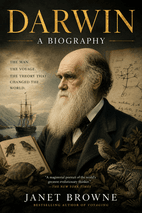
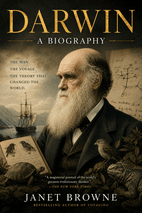
Janet Browne's Darwin presents a deeply human portrait of the man behind evolution, revealing how a mild, unassuming Victorian gentleman gradually assembled evidence for his revolutionary theory. Written for general readers and students of history of science, it shows Darwin as a reluctant revolutionary shaped by personal relationships, ill health, and meticulous research.
Feature
Insta.Page
Blinkist
Shortform
Summary Depth
Full Chapter-by-Chapter
15-min overview
Section-by-section guides
Audio Narration
✓
✓
✓
Visual Mindmaps
✓
✕
✕
AI Q&A
✓
✕
✕
Quizzes
✓
✕
✕
PDF Downloads
✓
✕
✓
Price
$89.99/yr
$146/yr (PRO)
$199/yr
*Competitor data last verified July 2026.
1 Page Summary
This biography of Charles Darwin by Janet Browne presents a deeply human portrait of the man behind the revolutionary theory of evolution by natural selection. The book’s central thesis is that Darwin’s life was a gradual, often reluctant, journey toward a radical idea that he knew would shake the foundations of Victorian society. Browne emphasizes that Darwin was not a firebrand revolutionary but a mild, unassuming gentleman who spent decades assembling evidence, plagued by ill health and personal doubts, before finally publishing On the Origin of Species. The narrative reveals how his theory emerged from a confluence of personal experiences: his privileged upbringing in a scientifically curious and abolitionist family, his transformative five-year voyage on the Beagle, his meticulous research into barnacles and pigeon breeding, and the profound intellectual shock of reading Malthus, which gave him the mechanism of natural selection.
Browne’s approach is distinctive for its rich, novelistic detail and its focus on Darwin’s inner life and personal relationships. Rather than a purely scientific biography, the book immerses the reader in Darwin’s world, from his childhood beetle-collecting and his agonizing seasickness to his loving but intellectually fraught marriage with the devout Emma Wedgwood. The author gives equal weight to the scientific breakthroughs and the human dramas—the devastating illness that struck his household just as Alfred Russel Wallace was about to forestall his theory, his careful campaign to manage the public reception of the Origin, and the profound personal toll of writing The Descent of Man. By weaving together Darwin’s scientific notebooks, personal letters, and the social context of Victorian England, Browne creates a vivid and comprehensive portrait that explains how a quiet, country gentleman came to produce one of the most disruptive and enduring ideas in human history.
The book is intended for a broad audience of general readers interested in biography, history of science, and the Victorian era, as well as for students seeking a thorough yet accessible account of Darwin’s life and work. Readers will gain not just an understanding of the development of evolution by natural selection, but a profound appreciation for the personality, pain, and perseverance of the man who formulated it. Browne reveals Darwin as a systematic and obsessive scientist, a devoted family man, and a reluctant revolutionary who carried the weight of his ideas with a mixture of pride and trepidation, forever changing how humanity understands its own place in the natural world.
Introduction
Overview
Charles Darwin didn’t set out to shake Victorian England to its core—yet his theory of evolution by natural selection, what he called “descent with modification,” did exactly that. On the Origin of Species provided a coherent answer to the biggest natural history puzzles of the day and ignited a firestorm of debate about whether living beings were specially created by a divine force. Darwin stepped onto the cultural stage as a radical thinker, yet in person he was mild, modest, and thoroughly unassuming—not the sort to sway a nation’s beliefs. Nevertheless, his proposals struck Victorians where it hurt most: unsettling ideas about God, nature, and the origin of humankind. Could humans really have descended from apes? Was the Bible being denied? Darwin wasn’t the first to advance such arguments, but he became the most famous naturalist in the country, his name forever linked with evolution and the broader shifts in public opinion that gained momentum as the century drew to a close. Even Alfred Russel Wallace, who independently formulated the same idea, declared that Darwin “has given the world a new science.”
The impact didn’t stop in the 1800s. Literature, poetry, economics, history, philosophy, and religious belief were all transformed. In the late century, genetics emerged alongside alternative evolutionary theories; social Darwinist ideas swept through industrializing economies; imperialism consolidated around a so‑called science of race; and arguments for eugenics appeared that would later dictate horrific national policies. Biology and anthropology shifted away from mere classification; ecology and environmentalism affirmed the interconnections of all life; paleontology revealed Earth’s long history. This is often called a Darwinian revolution, yet the revolution was far broader than one man. Darwin’s ideas thrived in the age of empire, the age of capital, and on into the century of the gene. Today his face adorns T‑shirts and soap, a city in Australia bears his name, specimens from the Beagle voyage are cherished, and his home in Kent is a museum. Evolution—however understood—stands as a central narrative of modernity.
The Man Behind the Theory
For all his fame, Darwin remained an approachable, good‑natured person, greatly loved by family and friends. He was an eager naturalist, a lover of dogs, a husband and father, an employer as well as a traveler, author, experimenter, and thinker. He enjoyed strolling around his garden discussing compost with neighbors. Less often noted, he had a large private income from the industrial revolution and never needed a job. Soon after returning from the Beagle, he married his cousin Emma Wedgwood, who gave him the secure comforts of an upper‑class existence. They moved to Down House in Kent, where he took part in local affairs and carried out a wide range of natural history experiments—some delightfully eccentric. Over the years they had ten children; three died before reaching adolescence. Darwin knew grief and anxiety alongside contentment, and was for many years plagued by ill health. His close circle included his cousin William Darwin Fox, his brother Erasmus, Joseph Hooker at Kew, Thomas Henry Huxley, and the geologist Charles Lyell. These men supported each other through the turbulence his book caused, each furthering a long‑standing push toward scientific rationalism. At the bitter height of the controversy, Darwin confessed to Huxley: “If I had been a friend of myself, I should have hated me.” In the end he became, as Leslie Stephen put it, “a noble old hero of science,” and was buried in Westminster Abbey.
A Revolutionary in Victorian Society
Darwin published at a time when attitudes to religious commitment were in flux—in Britain and abroad. Long‑established Anglican belief mostly held firm among the traditionally minded gentry and at Oxford and Cambridge, but nonconformist worship raised difficult theological questions and pressed for reform. Liberal, rationalist thinking was on the rise, as works like Essays and Reviews and Ernest Renan’s Life of Jesus assaulted biblical literalism. Darwin became a figurehead for these crusades, even though he once or twice said he never meant to attack belief in a heavenly Creator. His aim was to demonstrate a mode of origin for species that required no divine intervention, and by the end of his life his own religious feeling had waned to almost nothing. Emma worried about his irreligious turn yet still felt he was a good man who endorsed Christian values. The matter became crucial after he published The Descent of Man. Most nineteenth‑century readers could not give up a divine foundation for humanity, even if they had relinquished belief in a literal Adam and Eve. They could accept evolution but not the loss of the human soul. Some found competition and selection problematic; others saw in nature a reiteration of industrialized manufacturing. Old friends like Lyell could not go “the whole orang,” as he put it. A succession of Victorian thinkers added God back into the mix to make Darwin’s ideas palatable. All this for a man who did not use the word “evolution” in its modern sense until the sixth edition of the Origin, and who wondered whether earthworms could hear a bassoon.
The Biographical Approach
This volume aims to show Darwin as a social being embedded in the dynamic changes of Victorian Britain. He inhabited a society stratified by class, race, and gender, and those social phenomena were instrumental in generating the opportunities he encountered. The book is an abridged, revised version of the two‑volume biography Voyaging and The Power of Place, updated to place Darwin more firmly within the expanding British empire and national economy. Biographically, his life is treated as a multilayered story full of friends and family. A leading feature is the attention paid to the networks that united individual figures into larger groups of scientific practitioners, the institutions that brought them together, the journals and publications that broadcast their work, the circulation of ideas through overlapping circles of friendship and correspondence, and the reward systems in play. To a large extent, this volume deals less with scientific details and more with the cultural conditions that shaped a scientist as remarkable as Charles Darwin. The outlines of his life are familiar: the Beagle voyage, the popular travel book, the elite community of gentlemen scientists, two decades of gathering information, the joint paper with Wallace, the rush to publish the Origin, the later books on humans and domestication, the fame and notoriety. Yet this fresh look dwells on his public and private lives, supported by the magnificent Correspondence of Charles Darwin and the Complete Work of Charles Darwin Online, which have transformed research into his life and times.
Key Takeaways
Darwin’s theory of evolution by natural selection rocked Victorian society, challenging religious beliefs and ideas about human origins, even though he was personally mild and modest.
The impact of his work extended far beyond science, influencing literature, philosophy, economics, politics, and eventually leading to genetics, social Darwinism, eugenics, and ecology.
Darwin lived a privileged, family‑centered life at Down House, supported by a network of friends and a large private income, and he faced both grief and chronic illness.
Religious controversy was central to his legacy; many contemporaries accepted evolution only by retaining some form of divine involvement.
This biography emphasizes Darwin’s social embeddedness—the networks, institutions, and cultural conditions that shaped him—and updates earlier accounts by placing him more firmly within the British empire.
Key concepts: Introduction
1. Introduction
Darwin's Revolutionary Impact
Theory of evolution by natural selection shook Victorian England
Ignited debate on divine creation vs. natural origins
Darwin became most famous naturalist despite mild personality
Ideas transformed literature, philosophy, religion, and science
The Man Behind the Theory
Approachable, good-natured, loved by family and friends
Wealthy from industrial revolution, married cousin Emma Wedgwood
Experienced grief from three children's deaths and ill health
Supported by close circle including Huxley and Lyell
Victorian Religious and Social Context
Anglican belief held firm but nonconformist worship raised questions
Liberal rationalism assaulted biblical literalism
Darwin's religious feeling waned, worrying his wife Emma
Many accepted evolution but not loss of human soul
Broader Legacy Beyond the 1800s
Genetics, social Darwinism, eugenics emerged from his ideas
Biology shifted from classification to ecology and paleontology
Evolution became central narrative of modernity
Darwin's face adorns pop culture; his home is a museum
Darwin's Personal Approach to Science
Conducted eccentric experiments at Down House in Kent
Did not use 'evolution' in modern sense until sixth edition
Aimed to show species origin without divine intervention
Wondered about trivial things like earthworms hearing bassoon
Controversy and Public Reception
Descent of Man caused crisis over divine foundation of humanity
Old friends like Lyell could not accept full human evolution
Some saw competition as problematic; others as industrial metaphor
Victorian thinkers added God back to make ideas palatable
The Biographical Approach
Chapter uses personal story to frame scientific revolution
Shows how one man's life intersected with cultural change
💡 Try clicking the AI chat button to ask questions about this book!
1 Bobby
Overview
The world Charles Darwin was born into looked like a scene from Jane Austen—a quiet Shrewsbury market town, a Georgian house called The Mount, and a family of sharp, affectionate sisters—but behind that pastoral calm lay a brutal reality of rural poverty, dispossession, and fortunes built on colonial slavery. The Darwins and their cousins the Wedgwoods were at the heart of England's industrial revolution, liberal and scientifically curious, skeptical of conventional religion, and passionately abolitionist. Into this privileged, intellectually charged household arrived Charles Robert Darwin on February 12, 1809, a gray-eyed boy with a stammer and a quiet demeanor who seemed no more remarkable than any other child. His father, Dr. Robert Darwin, was a prosperous physician and shrewd investor; his mother, Susanna Wedgwood, brought considerable wealth. The Mount and its grounds provided an idyllic playground for collecting pebbles, plants, and insects, and the young "Bobby" (as his sisters called him) showed a passion for collecting that would later define his scientific life.
Childhood fell apart when Susanna Darwin died of peritonitis in July 1817, when Charles was eight. He recalled almost nothing of her, only to later realize that the loss of his mother left a deep, unspoken mark—a lifelong fear of hereditary illness that would haunt his own chronic stomach ailments and color his anxieties about his children's health. His father never remarried, and his older sisters Caroline and Susan stepped in, while Charles was sent away to Shrewsbury School just a year later. The school was a grim place: inadequate food, cramped sleeping quarters with a morning stench that haunted him sixty years later, and a rigid classical curriculum that he considered a complete blank. He was deemed a very ordinary boy, below average in intellect. His one escape was sprinting home across the river, the familiar aroma and his sisters' faces offering a connection that kept "home affections" alive—though he later marvelled that he prayed for success in those runs rather than crediting his own speed.
The brightest light in Darwin's youth was his older brother Erasmus. Together, they set up a "Laboratory" in an outbuilding at The Mount, where they conducted chemical experiments using William Henry's Elements of Experimental Chemistry, analyzing minerals, coins, and tea leaves with a blowpipe and glassware bought with carefully saved pocket money. Chemistry in the 1820s felt visionary, a peek into an invisible world of elements, and Charles loved the gadgets, the precise measurements, the satisfaction of making an investigation work. At school, he continued his chemical hobbies, earning the nickname "Gas" from the other boys—until the headmaster publicly rebuked him, calling him a poco curante, a reproach that stung chiefly because he didn't understand what it meant. When Erasmus left for Cambridge in 1822, Charles carried on alone, following his brother's instructions, borrowing kitchen tools and paying off a nursery nurse for lost tools.
Seeing his son's indifference to classical studies and his genuine scientific enthusiasm, Dr. Darwin decided to remove Charles from school early. The plan was straightforward: Charles would follow his father and grandfather into medicine. In 1825, at sixteen, he left Shrewsbury School "for ever," as he gratefully put it, and prepared to accompany Erasmus to Edinburgh Medical School. The brothers planned a sea voyage via Liverpool to Glasgow, and for the first time, his sisters stopped calling him "Bobby." The only cloud? If both boys went away, the family dog Spark might go to their married sister. This moment marked a decisive turning point—escaping an educational straitjacket and stepping into a new world where he could finally pursue the sciences that had always ignited his curiosity.
The Darwin-Wedgwood World
Charles Darwin was born into the England of Jane Austen, and his family could have stepped straight out of Emma—the four Darwin sisters sharply intelligent, their father as perceptive as Mr. Knightley, the boys full of easy charm and modest tastes. The Darwins lived in Shrewsbury, a quiet market town untouched by industrial change, encircled by the River Severn. Yet behind this costume-drama surface lay a harsher reality: rural poverty, dispossession, and the fortunes of the upper classes resting on colonial investment and the enslavement of African peoples. The Darwin family’s financial capital insulated them from these grim circumstances.
Their status in the neighborhood was high, anchored by two eminent grandfathers: Erasmus Darwin, the philosophical poet and medical thinker, and Josiah Wedgwood, the pioneering potter. Together they had energized the industrial revolution. The Darwin-Wedgwood circle was wealthy, cultured, and educated—socially progressive, liberal in politics, and largely skeptical about conventional religion. Many leaned toward Unitarianism, a rationalist wing of Protestantism that rejected the Trinity; Dr. Robert Darwin himself attended church only for formal occasions. High on their Whig agenda was the abolition of slavery, which the family passionately supported. Science, or natural philosophy, was woven into fireside discussions alongside current affairs, anatomy, and new pottery designs.
A Physician’s Fortune
Charles Robert Darwin was born on February 12, 1809, the fifth child of Robert Waring Darwin and Susanna Wedgwood, at The Mount, a Georgian house overlooking the River Severn. (Curiously, Abraham Lincoln was born the same day.) His father was a prosperous physician, one of three in Shrewsbury, and his mother brought substantial capital from the Wedgwood fortune. Dr. Darwin invested shrewdly: he purchased farmland, canal shares, and loans to local gentlemen, acting as a private banker. His income came only one-third from medical fees—about £3,000 in a good year—and by his death in 1848 his probate amounted to £223,759, an enormous sum. He owned three-quarters of Shrewsbury, it was said, and knew the medical secrets of the rest. The Mount itself, finished in 1800, was built on seven acres of land with gardens, terraces, and walks befitting this social prominence.
Childhood at The Mount
Into this affluent household came a gray-eyed, quiet, friendly boy called “Bobby.” He had a prominent nose and a stammer that made “white wine” a challenge worth sixpence. His childhood was unremarkable—he lay under the dining table reading Robinson Crusoe and seemed no obvious candidate for future achievement. He was surrounded by family affection: three older sisters (Marianne, Caroline, Susan), a brother Erasmus five years his senior, and a younger sister Catherine. The “sisterhood” filled a large part of his heart, but the rest belonged to Erasmus, a boy of powerful intellect and gentle character. Where Charles differed was in determination and physical energy; Erasmus idled away his bachelor life in London, while Charles worked relentlessly.
At age eight, Darwin was tutored by a Unitarian minister, the Reverend George Case, whose chapel his mother and sisters attended. His interests were those of the country gentry: riding, shooting, fishing, and—above all—collecting. He gathered pebbles, plants, birds’ eggs, wax seals from letters, and even apples from the orchard. “The passion for collecting which leads a man to be a systematic naturalist, a virtuoso or a miser, was very strong in me,” he later wrote. In a laborious nine-year-old hand, he labeled a piece of tile: “A piece of tile found in Wenlock Abi. C. Darwin, January 23, 1819.”
Dr. Darwin indulged his own gardening passion with a hothouse for scented plants, succulents, and bulbs, and kept a garden book recording the first flowering of each plant alongside daily temperature and weather. Young Charles occasionally helped: “Papa asked me to do this,” he noted, counting peony blossoms across three years. The doctor also took him along on medical calls in a single-seater carriage (a tight fit given his immense bulk), filling the time with anecdotes and observations. Charles later described his father as “the kindest man I ever knew,” with powers of observation and sympathy “neither of which have I ever seen exceeded or even equalised.” It was admiration, not antagonism, that linked them.
Family Bonds and Loss
This steady boyhood was broken by tragedy: Susanna Darwin died in July 1817, when Charles was eight. Chronic ill health had plagued her for years—rheumatic fever, headaches, violent stomach pains—and this final attack was peritonitis. Dr. Darwin had no hope. Charles remembered very little: “I recollect my mother’s gown & scarcely anything of her appearance. Except one or two walks with her I have no distinct remembrance of any conversations.” He was puzzled that his younger sister Catherine, only seven, recalled every detail while he suppressed nearly all memory of that day. Dr. Darwin never remarried. Caroline and Susan stepped in, ensuring Charles continued his education, knew his Bible, and attended St. Chad’s church. Caroline called him “my dear Bobby” and kept him close, filling the void his mother left.
Susanna Darwin's death haunted him for years. Darwin grew to worry that his own chronic stomach ailments and his children's frailties were inherited from her side of the family. The fear of hereditary disease became a constant worry tied to his "accursed stomach."
Key Takeaways
Charles Darwin was
Key concepts: 1 Bobby
2. 1 Bobby
Darwin's Early Life at The Mount
Born Feb 12, 1809 in Shrewsbury
Quiet boy with a stammer
Passion for collecting pebbles and insects
Nicknamed 'Bobby' by his sisters
Loss of His Mother
Susanna Darwin died in 1817 when Charles was 8
He recalled almost nothing of her
Left a lifelong fear of hereditary illness
Haunted his own chronic stomach ailments
Harsh School Years
Sent to Shrewsbury School at age 9
Grim conditions: poor food and cramped quarters
Rigid classical curriculum he found useless
Deemed a very ordinary, below-average boy
Brother Erasmus and Chemistry
Set up a 'Laboratory' in an outbuilding
Conducted experiments with William Henry's book
Earned nickname 'Gas' from schoolboys
Headmaster publicly rebuked him as poco curante
Leaving for Edinburgh Medical School
Father removed him from school early
Planned to follow family into medicine
Left Shrewsbury School 'for ever' in 1825
Sisters stopped calling him 'Bobby'
The Darwin-Wedgwood World
Family wealthy from industrial revolution
Grandfathers: Erasmus Darwin and Josiah Wedgwood
Socially progressive, skeptical of religion
Passionately abolitionist and scientifically curious
A Physician's Fortune
Father Dr. Robert Darwin was prosperous
Mother Susanna Wedgwood brought wealth
Financial capital insulated from rural poverty
Family status anchored by eminent grandfathers
2 From Medicine to Seaweed
Overview
From the moment Charles Darwin arrived in Edinburgh in 1825, his grandfather’s shadow loomed large. The first Erasmus Darwin had been a celebrated physician, poet, and daring evolutionary thinker who imagined life transforming itself without divine help. Charles knew that radical legacy well, but it took him years to find his own path. Initially, that path seemed clear: become a doctor. He threw himself into lectures, buying nine courses in anatomy, surgery, and chemistry. Thomas Charles Hope’s chemistry demonstrations thrilled him with displays of latent heat and theories of Earth’s origins, but the rest felt dusty and grim. Professor Monro’s anatomy lectures were so “dirty in person & actions” that Darwin skipped them, and nothing prepared him for the horror of watching operations on a child—the blood and screaming haunted him for years. He knew he could never face surgery regularly.
By the summer of 1826, he was desperate to quit medicine but terrified to tell his father. He dodged the conversation with walking tours, trips to the Wedgwood household, and a shooting spree that netted 177 birds. Returning to Edinburgh alone in his second year, the pressure eased once he realized he would inherit his mother’s fortune. He still attended classes, but now he was free to explore natural history. He enrolled in Robert Jameson’s course but found him a “dry old stick” obsessed with classification. However, the rivalry between Jameson’s water-based geology and Hope’s fire-based Huttonian theory sparked a lifelong debate in Darwin’s mind. Jameson’s museum and his network of colonial specimen collectors opened a window onto global natural history.
Outside the lecture hall, Darwin’s real education began. He joined the Plinian Society, a student natural history club where he heard radical materialist arguments that life could arise spontaneously. He met Robert Grant, a marine zoologist steeped in Lamarck’s transmutationism, who took Darwin on collecting trips and introduced him to the hidden world of seaweed and marine organisms. Darwin made his first scientific discovery: the free-swimming larvae of Flustra. But when he shared it with Grant, his mentor presented it to the Wernerian Society without crediting him. The betrayal stung deeply. Meanwhile, Darwin learned taxidermy from John Edmonstone, a formerly enslaved man whose quiet intelligence left a lasting impression. Yet even as he absorbed these dangerous ideas, Darwin kept his distance from Grant’s evolutionary theories, claiming later they “produced no effect on my mind.”
The Edinburgh experiment was over. Darwin finally told his father he would not become a doctor. But the seeds planted in those two years—geological debates, materialist whisperings, the craft of preserving specimens, the first taste of discovery and betrayal—lay dormant, waiting for a ship and a voyage to bring them to life.
The Darwin Legacy
The weight of ancestry hung over Charles and his brother Erasmus as they arrived in Edinburgh. Their grandfather, the first Erasmus Darwin (1731–1802), had been a physician, natural philosopher, botanist, abolitionist, and one of the most prominent evolutionary thinkers of his day. He believed in a self-generated transformation of the organic world, advancing living beings from inert matter to sophisticated organisms under independent laws. He expressed these ideas in popular poetry like The Loves of the Plants and The Temple of Nature, and in prose works like Zoonomia. His name became so associated with self-generating life that Mary Shelley claimed inspiration from his talk of preserving a piece of vermicelli until it moved voluntarily, leading to Frankenstein. He knew the era’s most distinguished figures—Boulton, Watt, Withering—and was close friends with Josiah Wedgwood, a relationship cemented when their children Robert and Susanna married in 1796. The first Erasmus Darwin died before his Shrewsbury grandsons were born, but his story was well known.
Edinburgh Medical Studies
Arriving in October 1825, Charles and Erasmus were earnestly committed to becoming doctors. Erasmus’s health was poor, so Dr. Darwin’s hopes rested on Charles, only sixteen. Though Charles would eventually reject medicine, Edinburgh introduced him to a world of biological inquiry. The city itself was intoxicating: a “modern Athens” with elegant New Town crescents and the Old Town’s tenements. The brothers lived together, attended lectures side by side, and shared political weeklies. Charles paid for nine courses, including anatomy, surgery, and chemistry. He was excited by Hope’s chemistry lectures, which drew over five hundred people and covered rival theories of Earth’s origin with thrilling visual displays. But other lectures were dull. He wrote to his sister: “Dr Duncan is so very learned that his wisdom has left no room for his sense.” He disliked Monro’s anatomy lectures so much he started missing classes. The turning point came when he first witnessed operations: “I also attended on two occasions the operating theatre... and saw two very bad operations, one on a child, but I rushed away before they were completed. Nor did I ever attend again... The two cases fairly haunted me for many a long year.” He felt sure he could never face blood and guts regularly.
Turning Away from Medicine
By the summer recess of 1826, he wanted to give up medicine but dreaded telling his father. He developed elaborate avoidance techniques: a walking tour in Wales, trips to the Wedgwoods, and a paroxysm of game shooting. His tally for that summer—177 hares, pheasants, and partridges—was recorded with pride. The topic of medicine remained unspoken. Returning to Edinburgh in October 1826, aged seventeen, he was alone: his brother Erasmus had graduated and moved to London. Darwin began to realize his father was wealthy; at twenty-one Erasmus inherited his portion of their mother’s fortune. Darwin understood he too would inherit a substantial sum. “My belief was sufficient to check any strenuous effort to learn medicine.”
Natural History and the Geological Debate
That second year, he enrolled in Robert Jameson’s natural history class. Jameson was a polymath covering zoology, botany, paleontology, and geology, with museum specimens and field trips. He had studied in Paris with Georges Cuvier and helped young doctors ship out as naturalist-surgeons, collecting specimens from around the globe. Yet Darwin was disappointed. He found Jameson an “old brown dry stick,” a caricature of a museum intellectual fixated on dehydrated specimens and pointless classifications. However, the contrast between Hope and Jameson influenced Darwin’s first impressions of geology. Hope followed James Hutton’s theory of internal heat; Jameson advanced Abraham Gottlob Werner’s doctrine that water, not heat, was active. Students relished the rivalry. Darwin was thus exposed to the great geological debate of the age.
Grant’s enthusiasm for Lamarck met with a curious silence from Darwin. Though he had read Lamarck’s Système des animaux sans vertèbres and his grandfather’s Zoonomia, Darwin remained unmoved. He later recalled listening “in silent astonishment” but claimed it left “no effect on my mind.” Yet the real reason may have been more personal. Darwin had made his first scientific discovery—the free-swimming larvae of Flustra—and rushed to share it with Grant, only to be told he was poaching on his mentor’s territory. Grant then presented the finding to the Wernerian Society without crediting Darwin. The betrayal soured the relationship, and their close collaboration lasted only a few months.
Shortly afterward, Darwin finally gathered the courage to tell his father he wanted to give up medicine. The Edinburgh experiment was over, but the intellectual seeds planted there—in geology, in the dangerous ideas of materialist philosophy, in the quiet craft of taxidermy with John Edmonstone, and in the hidden world of marine organisms—would lie dormant, waiting for the right conditions to germinate.
Key Takeaways
Darwin’s encounter with Grant’s transmutationism was muted not by ignorance but by a personal breach of trust over his first discovery.
The Plinian Society exposed Darwin to materialist views and the risk of straying too far from orthodox science.
Learning taxidermy from John Edmonstone, a formerly enslaved man, gave Darwin practical skills and a lasting appreciation for intelligent people from all backgrounds.
Despite vowing never to study geology again, Darwin absorbed foundational concepts about Earth’s history and extinction from Cuvier and Jameson—ideas that would later prove crucial.
Darwin’s decision to abandon medicine marked a turning point, freeing him to pursue natural history on his own terms.
Key concepts: 2 From Medicine to Seaweed
3. 2 From Medicine to Seaweed
The Darwin Legacy
Grandfather Erasmus was a famous physician and evolutionary thinker
Believed life transformed itself without divine help
Expressed ideas in poetry and prose like Zoonomia
His radical legacy loomed over Charles in Edinburgh
Medical Studies and Disillusionment
Charles arrived in 1825 committed to becoming a doctor
Excited by Hope's chemistry lectures on Earth's origins
Hated Monro's dirty anatomy lectures and skipped them
Horrified by child surgery, haunted for years
Turning Away from Medicine
Desperate to quit but terrified to tell his father
Dodged conversation with walking tours and shooting
Pressure eased knowing he would inherit mother's fortune
Finally told father he would not become a doctor
Geological Debates
Jameson's water-based geology vs. Hope's fire-based Huttonian theory
Jameson was a dry old stick obsessed with classification
Rivalry sparked a lifelong debate in Darwin's mind
Jameson's museum opened window to global natural history
Plinian Society and Radical Ideas
Joined student club hearing materialist arguments
Heard that life could arise spontaneously
Met Robert Grant steeped in Lamarck's transmutationism
Kept distance from Grant's evolutionary theories
First Scientific Discovery and Betrayal
Discovered free-swimming larvae of Flustra
Grant presented discovery without crediting Darwin
Betrayal stung deeply and left lasting impression
Learned taxidermy from John Edmonstone
Seeds for the Future
Edinburgh experiment ended with rejection of medicine
Geological debates and materialist whisperings planted seeds
Learned craft of preserving specimens
Ideas lay dormant waiting for a voyage
3 “An Idle Sporting Man”
Overview
Dr. Darwin’s frustration boiled over—shooting, dogs, and rat-catching were all his son seemed to care for, and he predicted disgrace. With medicine abandoned and academics unremarkable, the church became the only respectable path, and Darwin, after some theological soul-searching, convinced himself to accept the dogmas. Cambridge bound, he first needed to relearn Greek and Latin while sneaking off to shoot and visit his uncle Josiah Wedgwood’s estate. Arriving at Christ’s College in 1828, Darwin found himself among the social elite in a relaxed, sporting atmosphere where chapel was a mere formality. His closest friend, William Darwin Fox, shared his love of natural history, and together they plunged into a consuming passion for beetle collecting—a pursuit that brought Darwin his first published scientific credit and taught him to methodically employ assistants, a habit that would last a lifetime. The syllabus required William Paley’s works, which Darwin found genuinely useful for understanding design in nature, even as he would later replace that framework entirely. A surprising gift from musical friend John Maurice Herbert—a Coddington microscope—rekindled Darwin’s joy in microscopy, while his shooting passion remained equally intense; he practiced before a mirror and devised tricks to perfect his aim. That enthusiasm endeared him to Uncle Jos, who became a model of uprightness, and led to a romantic bond with Fanny Owen, the spirited daughter of a fellow shooting host. Their playful letters and a memorable afternoon lying together in the strawberry beds captured a free-spirited youth Darwin later called the most joyful of his happy life. Beneath the idleness and sport, Cambridge was quietly forging the collector, observer, and naturalist he would become.
Dr. Darwin was exasperated: “You care for nothing but shooting, dogs, and rat-catching, and you will be a disgrace to yourself and all your family.” With medicine off the table and his academic record unremarkable, the church emerged as the only viable profession. Darwin asked for time to consider. He had scruples about declaring belief in all the dogmas of the Church of England, though he liked the thought of being a country clergyman. He read divinity books and soon persuaded himself that the Creed must be fully accepted. It was quickly established that Darwin would go to Cambridge for an ordinary Arts degree. But he needed preparatory work—he had forgotten almost all his Greek and Latin. He lived at home, crammed by a private tutor, slipping away whenever possible to shoot and enjoy diversions at his uncle Josiah Wedgwood’s house.
Arrival at Cambridge
He arrived in Cambridge as a prospective theology student in January 1828. He later acknowledged the irony: “considering how fiercely I have been attacked by the orthodox it seems ludicrous that I once intended to be a clergyman.” Cambridge placed him among the social elite. Because he arrived halfway through the academic year, he took lodgings above a tobacconist until rooms once occupied by William Paley became free. Paley’s writings were a significant part of the syllabus, and Darwin expressed youthful admiration for them.
A Sporting Life at Christ’s
Discipline at Christ’s was attractively loose, and chapel services were scarcely more than a routine. Darwin made friends straightaway, principally William Darwin Fox, a distant cousin also expecting to become a clergyman. The two shared their days with unfeigned pleasure. Darwin’s syllabus included mathematics and classical texts. William Paley’s works were required reading; Darwin found the clear logic of his arguments gave him a framework to understand the structure of organic beings. He passed his exams better than expected, finishing tenth out of 178 candidates.
The Passion for Beetles
The main focus of Darwin’s undergraduate life was natural history. Fox introduced him to beetles: “No pursuit at Cambridge was followed with nearly so much eagerness or gave me so much pleasure as collecting beetles.” Several similarly minded students joined their insect-collecting expeditions. Darwin subscribed to James Stephens’s entomological work and sent him names of thirty-four beetles and one moth, none previously recorded in Cambridge. He devised ways for trapping insects, employing a labourer to scrape moss off old trees and collect rubbish from barges. One incident he remembered long after: under a piece of bark he found two carabi and caught one in each hand, then saw a sacred Panagaeus crux major. Unable to bear giving up either carabi, he gently seized one between his teeth—the little beast squirted his acid down his throat. He lost both carabi and Panagaeus. He learned a lot about collecting techniques and became accustomed to employing people to work for him, establishing the foundation of his later collecting routines.
Musical Surprises and the Gift of a Microscope
One undergraduate acquaintance was John Maurice Herbert, later a county-court judge. Herbert was musical, and sometimes they went to King’s College chapel. Herbert gave Darwin the greatest scientific surprise of his life. In May 1831 an unsigned letter and parcel arrived: a Coddington microscope. Darwin wrote to Herbert: “Do you remember giving me anonymously a microscope? I can hardly call to mind any event in my life which surprised & gratified me more.” It reunited him with the joy of working with a microscope under Robert Grant at Edinburgh.
The Shooting Passion
Shooting occupied those thoughts not given over to natural history. “I do not believe that anyone could have shown more zeal for the most holy cause than I did for shooting birds.” Every summer and autumn during his university days was dedicated to killing birds. He used to place his shooting boots open by his bedside so as not to lose half a minute in putting them on in the morning.
Key Takeaways
Dr. Darwin steered his son toward the church after medicine failed; Darwin reluctantly accepted after theological self-persuasion.
Cambridge placed Darwin among the ruling elite; Christ’s College offered a relaxed, sporting environment that suited him.
His friendship with William Darwin Fox and his beetle-collecting passion defined his undergraduate years, establishing methods of outsourced collecting he’d use for life.
The anonymous gift of a microscope from John Maurice Herbert rekindled his joy in microscopy.
Shooting was an equally consuming passion, teaching him close observation of birds.
Practicing the Shooter's Art
At Cambridge, Darwin took his shooting seriously enough to practice before a mirror, checking his form. He also devised a clever trick: having a friend wave a lighted candle while he fired a gun cap—the puff of air extinguishing the flame if his aim was true. This enthusiasm for field sports endeared him to his uncle, Josiah Wedgwood, who had transformed himself into a country squire at Maer Hall. Uncle Jos’s four sons lacked sporting inclinations, so he eagerly invited young Darwin for partridge and pheasant seasons. Darwin described his uncle as “the very type of an upright man with the clearest judgment.”
A Shropshire Romance
Closer to home lay Woodhouse, the estate of William Mostyn Owen. Mr. Owen shared Uncle Jos’s love of shooting and often asked Darwin over during university vacations. The Owen household held another attraction: two pretty daughters. Soon Darwin was utterly enchanted with Fanny (Frances) Owen, one year his senior, whom he described to his friend Fox as “the prettiest, plumpest charming Personage that Shropshire possesses.” The relationship blossomed through letters while Darwin was at Cambridge. Fanny invented playful nicknames and her letters were artless and warm. She also wanted to shine in Darwin’s sporting world. One day she picked up a gun and fired. Even in old age Darwin remembered the toss of her head, her impetuous courage, and how “the kick made her shoulder black and blue.”
The Strawberry Beds
A moment that captured their bond came one afternoon in June 1827, when they lay together in the sunshine at Woodhouse, grazing in the strawberry beds. The freedom of spirit was characteristic of the Owen household—accepting such behavior without scandal. But for Darwin, the thought of Fanny making “a beast of myself in the strawberry beds” was full of unimaginable prospects. “The three years which I spent at Cambridge were the most joyful in my happy life,” he later wrote.
Key Takeaways
Darwin’s shooting practice at Cambridge reveals a methodical side—even his leisure was approached with deliberate technique.
His relationship with Uncle Josiah Wedgwood provided both sporting companionship and a model of moral uprightness.
The romance with Fanny Owen shows Darwin as an emotionally open young man, deeply smitten and reciprocated in kind.
The freedom of the Owen household allowed a natural, affectionate bond that contrasted with strict societal conventions—and left Darwin with a memory that lasted a lifetime.
Key concepts: 3 “An Idle Sporting Man”
4. 3 “An Idle Sporting Man”
Dr. Darwin's Frustration and the Church Path
Father predicted disgrace over shooting and rat-catching
Medicine abandoned, church became the only respectable option
Darwin convinced himself to accept Anglican dogmas
Needed to relearn Greek and Latin for Cambridge
Arrival at Christ's College, Cambridge
Arrived in 1828 as a prospective theology student
Placed among the social elite in a relaxed atmosphere
Chapel was a mere formality with loose discipline
Rooms once occupied by William Paley became available
The Passion for Beetle Collecting
Fox introduced Darwin to consuming beetle collecting
Sent 34 previously unrecorded beetles to James Stephens
Learned to employ assistants for collecting techniques
Memorable incident: lost beetles due to acid squirt
William Paley's Influence on Darwin
Paley's works were required reading on the syllabus
Darwin found clear logic useful for understanding design
Framework later replaced by Darwin's own theories
Passed exams better than expected, finishing tenth
The Gift of a Coddington Microscope
Friend Herbert gave Darwin an anonymous microscope
Darwin called it the greatest scientific surprise of his life
Rekindled his joy in microscopy from Edinburgh days
Gift arrived in May 1831 with an unsigned letter
Intense Shooting Passion
Shooting occupied thoughts not given to natural history
Practiced before a mirror to perfect his aim
Every summer and autumn dedicated to killing birds
Kept shooting boots ready by bedside for quick starts
Romantic Bond with Fanny Owen
Fanny was spirited daughter of a fellow shooting host
Playful letters and strawberry bed afternoons together
Uncle Jos became a model of uprightness through shooting
Darwin later called this the most joyful time of his life
You've reached the end of the free chapters
Next chapter: “5 New Horizons” is locked
Keep reading Darwin — and unlock all 600+ book summaries with audio, mindmaps and AI Q&A.
$0.00 due today · 7 days free, then $89.99/year ($7.49/mo) · Cancel anytime before day 7
Janet Browne is a British historian of science known for her expertise in the life and work of Charles Darwin. She is the author of the acclaimed two-volume biography "Voyaging" and "The Power of Place," as well as "Charles Darwin: A Biography." Browne has served as a professor at the Wellcome Trust Centre for the History of Medicine at University College London.
Frequently Asked Questions about Darwin
What is Darwin about?
This biography traces Charles Darwin’s life from his privileged childhood in Shrewsbury through the transformative Beagle voyage and his decades of private research, culminating in the publication of *On the Origin of Species*. It delves into his personal struggles—from his mother's early death to his own chronic illness—and the intellectual journey that led him to formulate the theory of evolution by natural selection. The book also examines Darwin's relationships with family, friends, and fellow scientists, as well as the fierce public debates his ideas provoked in Victorian society.
Who is the author of Darwin?
Janet Browne is the author, a British historian of science renowned for her meticulous scholarship on Charles Darwin. She has held academic positions at Harvard University and the University of Cambridge, and her two-volume biography is considered the definitive modern account of Darwin's life and work.
Is Darwin worth reading?
Absolutely—this biography offers an extraordinarily rich and human portrait of one of history's most influential thinkers. Browne combines deep scientific understanding with vivid storytelling, revealing Darwin's doubts, triumphs, and the personal costs of his revolutionary work. It’s essential reading for anyone wanting to grasp not just what Darwin discovered, but who he was as a person.
What are the key lessons from Darwin?
One major takeaway is that scientific discovery is rarely a single ‘eureka’ moment—Darwin spent over two decades gathering evidence and refining his ideas before publishing. The book also highlights the importance of collaboration and honest intellectual exchange, as seen in his relationships with Hooker, Lyell, and even Wallace. Finally, it shows how personal experiences, like the loss of his mother and his own health struggles, deeply shaped Darwin's scientific questions and resilience.
📚 Explore Our Book Summary Library
Discover more insightful book summaries from our collection