Chapter 1: A Preacher, a Prosecutor, a Politician, and a Scientist Walk into Your Mind
Chapter 1 of 4
0:000:00
EN
1x
Voice
PDF
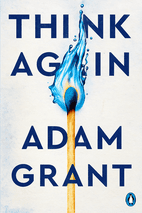
Think Again
by Adam Grant
What is the book Think Again about?
Adam Grant's Think Again reframes intelligence as the ability to question and update your views, offering a framework to overcome cognitive rigidity. It's for leaders and anyone seeking to improve decision-making through intellectual humility.
Feature
Insta.Page
Blinkist
Shortform
Summary Depth
Full Chapter-by-Chapter
15-min overview
Section-by-section guides
Audio Narration
✓
✓
✓
Visual Mindmaps
✓
✕
✕
AI Q&A
✓
✕
✕
Quizzes
✓
✕
✕
PDF Downloads
✓
✕
✓
Price
$89.99/yr
$146/yr (PRO)
$199/yr
*Competitor data last verified July 2026.
1 Page Summary
In Think Again, organizational psychologist Adam Grant challenges the conventional wisdom that intelligence is primarily about thinking and learning. Instead, he posits that the crucial skill for navigating our complex and rapidly changing world is the ability to "rethink"—to question our own opinions, open our minds to updating our knowledge, and relinquish ideas that no longer serve us. The book is structured around the mental modes we adopt: the preacher (defending our beliefs), the prosecutor (attacking others'), and the politician (winning people over), arguing we must instead embrace the role of the scientist, who actively tests hypotheses and welcomes being proven wrong.
Grant explores the psychological and social barriers that prevent us from rethinking, such as cognitive laziness, overconfidence, and identity attachment to our beliefs. He provides a framework for overcoming these barriers, detailing how to cultivate intellectual humility, engage in constructive argument by focusing on how people think rather than what they think, and build challenge networks of people who will question our assumptions. The book is rich with historical context and contemporary examples, from the downfall of a CEO who refused to pivot to the success of a debate team that wins by helping its opponents strengthen their arguments, illustrating the power of flexible thinking.
The lasting impact of Think Again lies in its powerful, practical reframing of intelligence not as a static possession but as an ongoing process of curiosity and doubt. It serves as an essential guide for individuals and organizations seeking to foster resilience, spur innovation, and improve collective decision-making. By making a compelling case for the value of being wrong, Grant provides the tools to break free of echo chambers, bridge ideological divides, and thrive in an era where certainty is often a liability.
Chapter 1: A Preacher, a Prosecutor, a Politician, and a Scientist Walk into Your Mind
Overview
Mike Lazaridis's journey from a prodigious inventor to the co-CEO behind BlackBerry's dominance and subsequent collapse serves as a poignant opener, illustrating how even brilliant minds can stumble when they stop questioning their assumptions. His attachment to features like the physical keyboard and resistance to innovations like a reliable browser allowed competitors like Apple to seize the market, underscoring a broader theme: in an era where knowledge refreshes rapidly, clinging to outdated beliefs is like collecting mental fossils. This rethinking isn't just a nice-to-have skill; it's essential for navigating constant change, yet we often prioritize feeling right over being right, falling prey to biases like confirmation bias and desirability bias.
People frequently adopt mental roles that hinder progress—acting as preachers defending their ideals, prosecutors attacking others' flaws, or politicians seeking approval—as seen in Stephen Greenspan's costly investment with Bernie Madoff. Shifting into a scientist mindset, where ideas are treated as hypotheses to test, can transform outcomes; for instance, Italian startups using this approach pivoted more often and achieved higher revenue by relying on data over dogma. Surprisingly, higher intelligence can be a double-edged sword, making individuals more resistant to updating beliefs on emotional issues due to overconfidence in their objectivity.
The cycle of rethinking thrives on intellectual humility, doubt, and curiosity, contrasting sharply with the overconfidence cycle that leads to pride and validation-seeking. Steve Jobs' initial aversion to mobile phones—viewing them as a threat to the iPod—showcases how even visionary leaders can be trapped by their convictions. However, through subtle persuasion from engineers who framed the change as continuity with Apple's core identity, Jobs eventually embraced the idea, leading to the iPhone's groundbreaking success. This story highlights common barriers like "that's the way we've always done it" and emphasizes that breakthroughs require fundamental reimagining, not just incremental tweaks. Ultimately, adopting a scientist's mindset—being quick to admit "I might be wrong"—fosters the flexibility and curiosity needed to avoid the curse of knowledge and drive long-term innovation.
The Rise and Fall of BlackBerry
Mike Lazaridis, a prodigy from a young age, built his first record player at four and fixed TVs in high school. His entrepreneurial spirit led him to drop out of college and patent a bar-code reader for movie film, earning an Emmy and Oscar. But his crowning achievement was the BlackBerry, a wireless email device that captivated users from Bill Gates to Oprah Winfrey and dominated nearly half the U.S. smartphone market by 2009. Yet, by 2014, its share plummeted to less than 1%. The downfall wasn't due to a single cause but to a failure in rethinking—Mike, as co-CEO, clung to features like the physical keyboard and resisted innovations like a reliable browser, missing opportunities that competitors like Apple seized. His initial scientific approach to engineering gave way to overconfidence, illustrating how even brilliant minds can struggle to adapt when they stop questioning their assumptions.
The Urgent Need for Rethinking
In a world where knowledge doubles rapidly—medical facts now refresh every few years—holding onto outdated beliefs is like collecting mental fossils. We're quick to spot when others need to reconsider, such as seeking second opinions on health diagnoses, but we often prioritize feeling right over being right. This tendency is exacerbated by confirmation bias and desirability bias, where we see what we expect or want to see. For instance, many of us still grapple with updates like Pluto's planetary status or feathered dinosaurs, highlighting how education and personal beliefs lag behind new discoveries. Rethinking isn't just a skill; it's a mindset essential for navigating constant change, yet it requires actively challenging our convictions rather than defending them.
How We Think: Preachers, Prosecutors, and Politicians
Phil Tetlock's research reveals that in daily life, we often adopt the roles of preachers, prosecutors, or politicians. In preacher mode, we defend our ideals with unwavering conviction; as prosecutors, we attack others' flaws to win arguments; and in politician mode, we seek approval by aligning with popular opinion. These modes can trap us, as seen in Stephen Greenspan's decision to invest with Bernie Madoff. Greenspan, an expert on gullibility, fell into all three traps: he preached the fund's merits based on his sister's success, prosecuted a skeptical friend's warning, and politicked to please a family friend. This led him to lose a third of his retirement savings, underscoring how these mental habits blind us to risks and prevent us from reevaluating our choices.
The Power of Scientific Thinking
Shifting into scientist mode means treating ideas as hypotheses to test, not truths to defend. This approach isn't limited to professionals; it's a mindset anyone can adopt. In a study with Italian startups, entrepreneurs trained in scientific thinking—viewing strategies as theories and products as experiments—pivoted more often and generated over $12,000 in revenue on average, compared to under $300 for the control group. They avoided the pitfalls of preaching, prosecuting, or politicking by relying on data to guide decisions. This flexibility, rather than rigid certainty, fosters innovation and success. Even in leadership, the best strategists are often slow and unsure, embracing doubt to stay open to new evidence.
When Intelligence Hinders Rethinking
Surprisingly, higher IQ can make people more prone to stereotypes and resistant to updating beliefs, especially on emotionally charged issues. In studies, math whizzes excelled at analyzing neutral data but faltered when it contradicted their ideologies, like on gun laws. This stems from biases like confirmation bias (seeing expected patterns) and desirability bias (seeing wished-for outcomes), which twist intelligence into a weapon against the truth. The "I'm not biased" bias is particularly insidious, as smarter individuals often overestimate their objectivity. Mental dexterity requires not just brainpower but the motivation to question oneself, highlighting that scientific thinking—active open-mindedness—is key to avoiding these traps.
The Rethinking Cycle vs. Overconfidence
Rethinking thrives on a cycle of intellectual humility, doubt, curiosity, and discovery. This contrasts with the overconfidence cycle, where pride leads to conviction, confirmation bias, and validation-seeking, much like Mike Lazaridis's experience with BlackBerry. He became trapped in preaching the keyboard's virtues, prosecuting touchscreens, and politicking to his base, ignoring market shifts. Great leaders, from presidents to scientists, excel through cognitive flexibility—treating policies as experiments and updating views based on new data. By embracing humility over pride and curiosity over closure, we can break free from rigid thinking and foster continuous learning.
Steve Jobs' Initial Aversion to Mobile Phones
When a small group of Apple engineers first proposed transforming the iPod into a phone in 2004, Steve Jobs reacted with outright hostility. He saw the idea as not only dumb but potentially destructive, fearing it would cannibalize the wildly successful iPod business. His personal frustrations with cell phones—from dropped calls to software crashes—fueled his conviction that Apple should never enter this space. In public and private, he repeatedly vowed that the company would not make a phone, viewing carriers as restrictive and the category as unworthy of Apple's innovation.
How Engineers Changed His Mind
A persistent team of engineers and designers refused to accept Jobs' stance. They recognized that mobile devices were evolving to include music playback, threatening the iPod's dominance. Instead of confronting Jobs head-on, they engaged in a subtle campaign of persuasion, encouraging him to doubt his own assumptions. They highlighted what he might be overlooking—such as the potential to design a smartphone that users would adore and to negotiate with carriers on Apple's terms. Their approach was rooted in research showing that people are more open to change when their core identity feels secure. They assured Jobs that Apple wouldn't become a phone company; it would remain a computer company at heart, simply expanding its pocket-sized devices to include calling capabilities. This vision of continuity—preserving Apple's DNA while evolving its technology—finally sparked Jobs' curiosity after six months of discussion.
The Experiment That Led to the iPhone
With Jobs' reluctant blessing, two teams embarked on parallel experiments: one explored adding phone features to the iPod, while the other worked on miniaturizing the Mac into a tablet-like phone. This period of rethinking culminated in the iPhone, which within four years accounted for half of Apple's revenue. The device wasn't just an incremental improvement; it represented a fundamental reimagining of what a smartphone could be. In contrast, BlackBerry's failure to rethink its own products—clinging to physical keyboards and dismissing touchscreens—left it struggling to adapt. This highlights how the "curse of knowledge" can blind even brilliant leaders to new possibilities, underscoring that good judgment requires both the skill and the will to rethink.
Common Barriers to Rethinking
Throughout this process, several mental barriers emerged that people often use to avoid rethinking:
"That will never work here"
"That’s not what my experience has shown"
"That's too complicated; let’s not overthink it"
"That's the way we've always done it"
These excuses, as seen in BlackBerry's decline and Jobs' initial resistance, can imprison organizations in outdated approaches.
Embracing a Scientist's Mindset
The chapter concludes by contrasting mental models: the Preacher, Prosecutor, and Cult Leader, who cling to being "always right," versus the Scientist, who readily admits, "I might be wrong!" This mindset—being quick to think again—is portrayed as essential for innovation and adaptability in an ever-changing world.
Key Takeaways
Rethinking requires overcoming deeply held convictions—even visionary leaders like Steve Jobs needed outside persuasion to see beyond their biases.
Change is more palatable when framed as continuity—emphasizing what stays the same (e.g., core identity) can make transformative ideas more acceptable.
Incremental innovation isn't enough—breakthroughs like the iPhone demand fundamental reimagining, not just tweaks to existing products.
The "curse of knowledge" is a real threat—expertise can close minds to new ideas, making humility and curiosity critical for long-term success.
Adopting a Scientist's mindset—being open to the possibility of being wrong—fosters a culture where rethinking thrives.
Key concepts: Chapter 1: A Preacher, a Prosecutor, a Politician, and a Scientist Walk into Your Mind
1. Chapter 1: A Preacher, a Prosecutor, a Politician, and a Scientist Walk into Your Mind
The Rise and Fall of BlackBerry
Mike Lazaridis' journey from prodigious inventor to BlackBerry's collapse
Attachment to physical keyboard and resistance to browser innovation
Failure to rethink assumptions allowed competitors like Apple to seize market
Initial scientific approach gave way to overconfidence and rigidity
Prioritizing feeling right over being right due to biases
Confirmation bias and desirability bias prevent objective evaluation
Essential mindset for navigating constant change and new discoveries
Mental Roles That Hinder Progress
Preacher mode: defending ideals with unwavering conviction
Prosecutor mode: attacking others' flaws to win arguments
Politician mode: seeking approval by aligning with popular opinion
Stephen Greenspan's Madoff investment illustrates all three traps
The Scientist Mindset Solution
Treating ideas as hypotheses to test rather than truths to defend
Italian startups using scientific thinking pivoted more and earned higher revenue
Reliance on data over dogma enables flexibility and innovation
Embracing doubt and uncertainty to stay open to new evidence
Barriers to Rethinking
Higher intelligence can increase resistance to updating emotional beliefs
Overconfidence in objectivity prevents self-correction
"That's the way we've always done it" mentality traps even visionaries
Steve Jobs' initial iPhone resistance shows conviction blindness
Cultivating Rethinking Habits
Intellectual humility, doubt, and curiosity drive the rethinking cycle
Quick to admit "I might be wrong" fosters flexibility
Avoiding the curse of knowledge through fundamental reimagining
Subtle persuasion and framing change as continuity can overcome resistance
The Intelligence Paradox in Belief Formation
Higher IQ individuals can be more prone to stereotypes and resistant to updating beliefs on emotional issues
Math experts excelled with neutral data but faltered when it contradicted their ideologies
Confirmation bias and desirability bias can weaponize intelligence against truth
The 'I'm not biased' bias causes smarter people to overestimate their objectivity
Scientific thinking requires active open-mindedness, not just raw intelligence
Rethinking Cycle vs. Overconfidence Trap
Rethinking thrives on intellectual humility, doubt, curiosity, and discovery
Overconfidence cycle involves pride, conviction, confirmation bias, and validation-seeking
Mike Lazaridis trapped in preaching keyboard virtues while ignoring market shifts
Cognitive flexibility allows leaders to treat policies as experiments
Humility and curiosity break rigid thinking patterns
Steve Jobs' Resistance to Mobile Innovation
Jobs reacted with hostility to initial iPhone proposals in 2004
Feared cannibalization of successful iPod business
Personal frustrations with existing phones fueled his conviction
Publicly vowed Apple would never enter phone market
Viewed carriers as restrictive and category unworthy of Apple
Strategies for Overcoming Resistance to Change
Engineers used subtle persuasion rather than direct confrontation
Highlighted overlooked opportunities and potential advantages
Framed change as continuity to preserve core identity
People more open to change when identity feels secure
Six-month persuasion process finally sparked Jobs' curiosity
Experimental Approach to Innovation
Parallel experiments: iPod with phone features vs. miniaturized Mac
iPhone accounted for half of Apple's revenue within four years
Represented fundamental reimagining rather than incremental improvement
Contrast with BlackBerry's failure to rethink physical keyboards
Curse of knowledge can blind even brilliant leaders to new possibilities
Common Mental Barriers to Rethinking
"That will never work here" - dismissing context applicability
"That's not what my experience has shown" - overvaluing past experience
"That's too complicated; let's not overthink it" - avoiding complexity
"That's the way we've always done it" - tradition bias
These excuses imprison organizations in outdated approaches
The Scientist Mindset vs. Fixed Mental Models
Preacher, Prosecutor, and Cult Leader cling to being 'always right'
Scientist readily admits 'I might be wrong'
Quickness to think again essential for innovation
Mindset adaptation crucial in ever-changing world
Humility and curiosity as foundations for long-term success
💡 Try clicking the AI chat button to ask questions about this book!
Chapter 2: The Armchair Quarterback and the Impostor
Overview
Exploring the curious case of Ursula Mercz, a seamstress who lost her vision yet insisted she could see, this chapter introduces Anton's syndrome as a striking metaphor for how we all harbor cognitive blind spots—unaware of our own ignorance. Just as Ursula was blind to her blindness, people often overestimate their knowledge, a theme that unfolds through contrasting confidence extremes. In Iceland's political arena, Halla Tómasdóttir grappled with impostor syndrome, doubting her qualifications despite her competence, while David Oddsson exemplified armchair quarterback syndrome, brimming with overconfidence despite his role in an economic collapse. These syndromes reveal how distorted self-perceptions can stifle rethinking, whether by masking weaknesses or overlooking strengths.
Delving into the psychology behind such overconfidence, the chapter highlights the Dunning-Kruger effect, where those with low competence in areas like logic or management wildly overrate their abilities, often resisting learning and fueling real-world failures. This overconfidence cycle escalates as novices gain a bit of knowledge, propelling them onto Mount Stupid—a peak where arrogance blinds them to their limits, as seen in hazardous scenarios like overconfident medical residents. Yet, the narrative doesn't stop at pitfalls; it pivots to confident humility, a balanced mindset that combines self-belief with a willingness to acknowledge gaps, fostering resilience and innovation, much like entrepreneurs who doubt their tools but trust their ability to adapt.
Evidence from fields like medicine and investing shows that impostor syndrome isn't always a weakness; it can drive individuals to work harder, think smarter, and embrace humility, leading to better outcomes. For instance, medical students with impostor feelings excelled in empathy, while investment professionals saw improved performance. This doubt fuels a beginner's mindset, encouraging rethinking and collaboration, as demonstrated by Halla's innovative campaign tactics that broke from political norms. Ultimately, the chapter illustrates how embracing such doubts can transform perceived flaws into strengths, promoting continuous learning and innovation in leadership and beyond.
Anton's Syndrome and Cognitive Blind Spots
The chapter begins with the poignant case of Ursula Mercz, a seamstress in the late 1800s who lost her vision but remained completely unaware of it. Under the care of Dr. Gabriel Anton, she exhibited what would later be named Anton's syndrome—a condition where damage to the occipital lobe causes blindness without the patient's awareness. Ursula could perform tasks like cutting paper shapes but couldn't see objects, yet she insisted she could see, even as her condition worsened. This phenomenon, noted earlier by Seneca and other doctors, illustrates a profound lack of self-awareness about physical deficits.
This medical curiosity serves as a powerful metaphor for our everyday cognitive blind spots. Just as Ursula was blind to her blindness, we often overlook gaps in our knowledge and opinions, leading to false confidence that hinders rethinking. The chapter suggests that while our brains might function normally, we're all susceptible to a version of Anton's syndrome in how we perceive our own competence.
The Armchair Quarterback and Impostor Syndromes
The narrative shifts to a modern political example in Iceland, contrasting two presidential candidates to illustrate extremes of confidence. Halla Tómasdóttir, an entrepreneur who successfully navigated her firm through the 2008 financial crisis, initially doubted her qualifications despite public support from a petition. She experienced intense impostor syndrome, where her competence exceeded her confidence, leaving her blind to her strengths.
In stark contrast, David Oddsson, a former prime minister and central bank governor blamed for Iceland's economic collapse, displayed armchair quarterback syndrome. Despite his role in the crisis and lack of economic training, he ran for president with unwavering confidence, blind to his weaknesses. The chapter highlights how these syndromes—overconfidence and underconfidence—both impede rethinking by distorting self-perception.
The Dunning-Kruger Effect and Overconfidence
Delving into the psychology behind overconfidence, the chapter introduces the Dunning-Kruger effect, based on research by David Dunning and Justin Kruger. This phenomenon shows that people with low competence in areas like logic, grammar, or humor often overestimate their abilities, believing they perform better than most when they actually score in the bottom percentiles. For instance, in studies, those who knew the least about topics like history or science were the most likely to overrate their knowledge and resist learning.
Real-world examples reinforce this, such as managers in various countries consistently overrating their management skills, with overconfidence most rampant where performance was poorest. The chapter uses humorous Ig Nobel Prize winners to underscore how ignorance can breed confidence, emphasizing that this effect isn't just amusing but has serious consequences, as seen in Oddsson's dismissal of experts and his role in Iceland's financial meltdown.
The Pitfalls of Mount Stupid
As people progress from novices to amateurs, their confidence often outpaces their competence, leading them to what the chapter calls "Mount Stupid." This overconfidence cycle, fueled by a lack of metacognitive skills, prevents rethinking by making individuals unaware of their ignorance. Experiments, like one where "doctors" in a simulation overestimated their diagnostic skills after minimal experience, show how this can be hazardous—similar to how new hospital residents might contribute to higher mortality rates due to overestimation of their abilities.
The chapter notes that absolute beginners avoid this trap, but a little knowledge can be dangerous, fostering arrogance that blocks humility and learning. Oddsson's case is cited again, where his unchecked arrogance and refusal to acknowledge limits led to gross negligence, highlighting the need for humility to escape this cycle.
Embracing Confident Humility
The solution proposed is confident humility—a balance where one has faith in their ability to learn and adapt while acknowledging current limitations. This isn't about low self-confidence but being grounded in reality. Examples like Spanx founder Sara Blakely, who believed in her idea but doubted her existing tools, show how this approach fosters resilience and innovation.
Research supports that teaching confident humility encourages seeking help, exploring opposing views, and improving rethinking skills. Students and leaders who practice this tend to achieve better outcomes, as it combines self-belief with a willingness to question and update beliefs. The chapter concludes this section by emphasizing that underestimating oneself can sometimes be beneficial, setting the stage for further exploration in the next part.
Evidence from Medical and Investment Fields
Halla Tomasdottir's unexpected surge in Iceland's presidential race—from barely qualifying for the debate to becoming a top contender—was partly fueled by her impostor syndrome. This phenomenon, often seen as a weakness, is surprisingly common among high achievers. Research by Basima Tewfik reveals that medical students who reported frequent impostor thoughts performed just as accurately in diagnoses but stood out in bedside manner, showing more empathy and professionalism. Similarly, investment professionals with higher impostor feelings received better performance reviews months later, suggesting that doubt isn't always a barrier to success but can enhance interpersonal effectiveness and diligence.
Three Hidden Benefits of Impostor Syndrome
Feeling like an impostor isn't just a source of anxiety; it can be a powerful catalyst for growth. First, it fuels a drive to work harder. Unlike overconfidence that breeds complacency, impostor fears push individuals to prove their worth, making them less likely to give up when challenges arise. Second, it encourages working smarter by fostering a beginner's mindset. When people doubt their inherent abilities, they're more open to rethinking strategies and questioning assumptions, avoiding the Dunning-Kruger effect where overconfidence blinds them to their limitations. Third, it promotes better learning through humility. Studies, like Danielle Tussing's research on charge nurses, show that those with doubts about their leadership sought more input from colleagues, leading to more effective decision-making and collaboration.
How Doubt Drives Innovation in Leadership
Halla's campaign exemplified how impostor syndrome can translate into innovative action. Her doubts about traditional political tools motivated her to break from convention: she personally engaged voters via social media, hosted interactive sessions on Facebook Live, and used Snapchat to connect with younger demographics. Embracing a positive campaign focused on respect rather than attacks, she stood out in a field dominated by seasoned politicians. This approach, rooted in her willingness to learn from anyone, helped her secure a surprising 28% of the vote, outperforming established figures. Her journey underscores that confident humility—believing in one's capacity to learn rather than in fixed expertise—can turn self-doubt into a strategic advantage.
Key Takeaways
Impostor syndrome, when managed, can enhance performance by motivating harder work, smarter strategies, and continuous learning.
Doubt fosters humility, encouraging individuals to seek diverse perspectives and avoid overconfidence traps.
Real-world success stories, like Halla's, show that embracing impostor feelings can lead to innovation and resilience, transforming perceived weaknesses into strengths.
Key concepts: Chapter 2: The Armchair Quarterback and the Impostor
2. Chapter 2: The Armchair Quarterback and the Impostor
Anton's Syndrome and Cognitive Blind Spots
Ursula Mercz case illustrates blindness without awareness of blindness
Metaphor for how we overlook gaps in our own knowledge and competence
David Oddsson displayed armchair quarterback syndrome despite economic failures
Both syndromes distort self-perception and impede rethinking
Overconfidence blinds to weaknesses; underconfidence blinds to strengths
The Dunning-Kruger Effect
Low competence leads to overestimation of abilities
People in bottom percentiles often believe they perform better than most
Resistance to learning reinforces ignorance and false confidence
Real-world consequences in management, politics, and decision-making
The Overconfidence Cycle and Mount Stupid
Confidence outpaces competence as novices gain minimal knowledge
Lack of metacognitive skills prevents awareness of ignorance
Hazardous in fields like medicine where overestimation risks lives
Creates barriers to rethinking and continuous learning
The Value of Impostor Syndrome
Can drive harder work and smarter thinking
Fosters empathy and better performance in fields like medicine
Encourages beginner's mindset and openness to collaboration
Leads to innovation through doubt and rethinking approaches
Confident Humility as Balanced Approach
Combines self-belief with acknowledgment of knowledge gaps
Fosters resilience and innovation in leadership
Enables adaptation and continuous learning
Transforms perceived flaws into strengths for better outcomes
Embracing Confident Humility
Balances faith in learning ability with acknowledgment of current limitations
Not about low self-confidence but being grounded in reality
Fosters resilience and innovation through examples like Sara Blakely
Encourages seeking help, exploring opposing views, and improving rethinking skills
Combines self-belief with willingness to question and update beliefs
Evidence from Medical and Investment Fields
Impostor syndrome common among high achievers like Halla Tomasdottir
Medical students with impostor thoughts showed equal diagnostic accuracy but superior bedside manner
Investment professionals with impostor feelings received better performance reviews months later
Doubt can enhance interpersonal effectiveness and diligence rather than hinder success
Three Hidden Benefits of Impostor Syndrome
Fuels drive to work harder and persist through challenges
Encourages working smarter through beginner's mindset and strategy rethinking
Promotes better learning through humility and seeking colleague input
Helps avoid Dunning-Kruger effect by maintaining awareness of limitations
How Doubt Drives Innovation in Leadership
Halla's doubts motivated breaking from conventional political tools
Led to innovative voter engagement via social media and interactive sessions
Positive campaign approach focused on respect rather than attacks
Confident humility transformed self-doubt into strategic advantage
Willingness to learn from anyone enabled outperforming established politicians
Key Takeaways
Managed impostor syndrome enhances performance through motivation and continuous learning
Doubt fosters humility and prevents overconfidence traps
Real-world success stories demonstrate transforming perceived weaknesses into strengths
Confident humility enables innovation and resilience in leadership
Chapter 3: The Joy of Being Wrong
Overview
Imagine being a student in a 1959 Harvard study, thinking you're there to discuss personality, only to have a stranger tear apart your deepest beliefs on camera. Some participants felt rage, while others found it fun—sparking a question about why we react so differently when we're proven wrong. This chapter explores that very puzzle, tracing how our earliest experiences with error, like a child's dismay over a mistaken baby gender prediction, instill a deep-seated shame around being incorrect.
As we grow, a psychological totalitarian ego often takes over, acting like an inner dictator that shuts down threatening information to protect our self-image. Neuroscience shows that challenges to core beliefs can trigger fight-or-flight responses, leading to defensiveness and overconfidence. But there's a way out: by practicing detachment from our opinions and past selves, much like Nobel Prize winner Daniel Kahneman, who delights in being wrong as a chance to learn. This mindset shift allows us to treat beliefs as provisional, not parts of our identity, freeing us to evolve without ego getting in the way.
This approach shines in the world of forecasting, where top predictors like Jean-Pierre Beugoms thrive by constantly rethinking their assumptions. Jean-Pierre's journey from underestimating Trump's rise to correcting his own emotional biases illustrates the power of a scientist's mindset—updating forecasts with confident humility and even finding joy in errors through self-amusement. He actively seeks disproof, listing reasons he might be wrong to turn mistakes into discoveries. This paradox of embracing short-term errors to avoid long-term failures is key, as seen in public figures who gain respect by admitting faults, like physicist Andrew Lyne receiving applause for his honesty.
However, the chapter also warns of the dangers when detachment fails, using Ted Kaczynski's inability to question his rigid beliefs as a cautionary tale. Ultimately, the joy of being wrong comes from defining ourselves by the pursuit of truth, not by static opinions, fostering resilience and growth in every aspect of life.
The Harvard Study on Belief Attacks
In the fall of 1959, psychologist Henry Murray conducted a controversial study at Harvard, where unsuspecting students were recruited under the guise of exploring personality development. Instead, they faced a "stressful interpersonal disputation" modeled on World War II spy interrogations. Participants wrote out their personal philosophies, only to be ambushed by a law student who aggressively attacked their core beliefs for eighteen minutes. The sessions were filmed, and students later relived the humiliation by reviewing the footage. Reactions varied widely: some, like "Drill" and "Locust," felt rage and betrayal, while others found the experience "highly agreeable" or even "fun." This divergence sparked the author's curiosity about why some people thrive when their beliefs are challenged.
Personal Reflections on Being Wrong
The author shares a childhood memory of his son's distress upon learning the family was wrong about a baby's gender, highlighting how early we internalize the shame of error. Recalling his own youth as "Mr. Facts," he describes a relentless drive to be right, which alienated friends until he began embracing fallibility. He notes that while questioning minor assumptions (like narwhal tusks being teeth) can spark delight, challenging deeply held beliefs often triggers defensiveness. Sociologist Murray Davis's insight that interesting ideas survive by challenging weakly held opinions underscores this tension between curiosity and resistance.
The Totalitarian Ego and Core Beliefs
When core beliefs are threatened, a psychological "totalitarian ego" acts like an inner dictator, filtering out threatening information to protect our self-image. This response is rooted in neuroscience: challenges to deeply held views can activate the amygdala, sparking a fight-or-flight reaction. The author illustrates this with "Lawful," a participant in the Harvard study who clung fiercely to his anti-technology stance, later echoing it in his writings. This ego-driven defensiveness leads to an overconfidence cycle, where filter bubbles and echo chambers reinforce our views, making it harder to admit error. As Richard Feynman warned, we are often the easiest to fool.
Detachment and Identity
To cultivate the joy of being wrong, the author emphasizes the importance of detachment—both from past selves and from opinions tied to identity. Daniel Kahneman, the Nobel Prize-winning psychologist, exemplifies this: he beams with excitement when proven wrong, viewing it as a step toward learning. By refusing to let beliefs define him, Kahneman maintains "provisional" attachment to ideas, allowing rapid mind-changing. The author explains that detaching from past selves (e.g., evolving from "Mr. Facts" to a curious learner) and basing identity on values (like health or justice) rather than fixed opinions fosters flexibility. This approach prevents the totalitarian ego from silencing growth.
The Scientist's Mindset in Forecasting
The author introduces Jean-Pierre Beugoms and Kjirste Morrell, top election forecasters who thrive on rethinking. Jean-Pierre, a military historian, stunned experts by accurately predicting Trump's 2016 nomination and Brexit, thanks to his "passionately dispassionate" approach. He updates his beliefs frequently, thinking like a scientist rather than clinging to conventional wisdom. Research by Phil Tetlock shows that the best forecasters update their predictions multiple times per question, driven by "confident humility." Kjirste, an MIT-trained engineer, describes the pleasure in discovering errors through classical conditioning—where being wrong leads to joyful insights. Both demonstrate that rethinking cycles, not intelligence alone, drive superior judgment, transforming the pain of error into a source of discovery.
Jean-Pierre Beugoms' Forecasting Evolution
Jean-Pierre Beugoms initially gave Donald Trump only a 2% chance of winning the Republican nomination in 2015, but as Trump rose in the polls, Jean-Pierre confronted his own biases. He detached his present analysis from his past predictions, recognizing that his earlier forecast was reasonable based on the information available at the time. More challenging was separating his opinions from his identity; he didn't want Trump to win, which risked desirability bias. However, his drive to be a top forecaster overrode this. "I wasn’t so attached to my original forecast," he noted, because "the desire to win, the desire to be the best forecaster" pushed him to prioritize accuracy over personal preference. He embraced a truth-above-tribe mentality, treating all opinions as tentative and changing them when evidence demanded.
To counter overconfidence, Jean-Pierre compiled a list of arguments why Trump couldn't win and sought evidence to disprove them. He found that Trump's appeal spanned key Republican demographics, contrary to pundits' claims of his narrow base. By mid-September 2015, Jean-Pierre was an outlier, assigning Trump over a 50% chance of securing the nomination. He advises forecasters to "accept the fact that you're going to be wrong" and to actively try to disprove themselves, framing errors as discoveries rather than failures.
The Struggle with Emotional Bias
Despite his prescience, Jean-Pierre faltered during the presidential election. In spring 2016, he noted media coverage of Hillary Clinton's emails as a red flag and predicted a Trump victory for two months. But by summer, the emotional weight of a potential Trump presidency overwhelmed him—he lost sleep and revised his forecast to favor Clinton. Reflecting on this, he admits it was a "rookie mistake" driven by desirability bias. He focused on factors supporting a Clinton win because he "desperately wanted a Trump loss," a coping mechanism for his "unpleasant forecast." Instead of defensiveness, he laughs at himself, illustrating how self-amusement can defuse the sting of error. Research shows that frequent self-mockery correlates with happiness, turning past misconceptions into sources of present levity.
The Paradox of Embracing Error
Great scientists and superforecasters exhibit a paradox: they're comfortable being wrong because they're terrified of being wrong in the long run. This fear motivates short-term stumbles and corrections, akin to Jeff Bezos's observation that people who are "right a lot listen a lot, and they change their mind a lot." Jean-Pierre employs a practical trick: when making a forecast, he lists the conditions under which it holds true and those that would falsify it. This keeps him honest and prevents attachment to flawed predictions. He shifted from wanting to "prove myself" to aiming to "improve myself," viewing forecasting as a microcosm for life—where tracking opinions and their evolution is key to growth.
Public Confessions and Reputational Risks
Admitting mistakes publicly can feel daunting, but examples like physicist Andrew Lyne demonstrate the rewards. After publishing a groundbreaking discovery on a planet orbiting a neutron star, Lyne realized an error in his calculations and confessed it to hundreds of colleagues at a conference. Instead of scorn, he received a standing ovation, hailed for his honesty. Psychologists confirm that admitting error enhances perceptions of competence and integrity, as it shows a willingness to learn. As Will Smith noted, taking responsibility "is taking your power back," emphasizing that fixing problems matters more than assigning blame.
From Learning to Violence: The Ted Kaczynski Case
The chapter contrasts healthy error-embracing with extreme rigidity, using Ted Kaczynski (the Unabomber) as a cautionary tale. Kaczynski participated in a Harvard study where his worldview was attacked, and he found it "highly unpleasant," unable to detach his opinions from his identity. His manifesto opens with absolute conviction, devoid of doubt or consideration for alternatives. While mental health factors are complex, his inability to question his beliefs may have contributed to his violent actions. This underscores the danger of treating opinions as immutable parts of the self, rather than tentative hypotheses open to revision.
Key Takeaways
Detach identity from opinions: Treat beliefs as flexible to avoid desirability bias and improve forecasting accuracy.
Actively seek disproof: Listing reasons you might be wrong curbs overconfidence and turns errors into learning opportunities.
Embrace self-amusement: Laughing at mistakes reduces their emotional weight and fosters resilience.
Admit errors publicly: Honesty about being wrong builds trust and enhances reputation, as seen in scientific and forecasting communities.
Cultivate a scientist's mindset: Define yourself by the pursuit of truth, not by static opinions, to navigate new information with agility and growth.
Key concepts: Chapter 3: The Joy of Being Wrong
3. Chapter 3: The Joy of Being Wrong
The Harvard Study on Belief Attacks
Participants' core beliefs were aggressively challenged in staged confrontations
Reactions varied from rage and betrayal to finding the experience enjoyable
Study revealed individual differences in handling belief challenges
Highlighted how deeply personal philosophies are tied to identity
Psychological Responses to Being Wrong
Early experiences with error instill shame around being incorrect
Totalitarian ego acts as inner dictator protecting self-image
Defensiveness leads to overconfidence cycles in echo chambers
Cultivating Detachment from Beliefs
Detachment from opinions and past selves enables growth
Treating beliefs as provisional rather than identity-defining
Daniel Kahneman exemplifies joy in being wrong as learning opportunity
Basing identity on values rather than fixed opinions fosters flexibility
The Scientist's Mindset in Practice
Top predictors thrive by constantly rethinking assumptions
Confident humility involves updating forecasts with new evidence
Actively seeking disproof turns mistakes into discoveries
Embracing short-term errors to avoid long-term failures
Dangers of Rigid Belief Systems
Failure to question beliefs can lead to extreme outcomes
Ted Kaczynski exemplifies inability to detach from rigid views
Public figures gain respect through honest admission of errors
Defining self by truth pursuit rather than static opinions
Jean-Pierre Beugoms' Forecasting Evolution
Detached present analysis from past predictions while recognizing earlier forecasts were reasonable with available information
Separated personal opinions from identity to overcome desirability bias, prioritizing accuracy over preference
Actively compiled arguments against his position and sought disconfirming evidence to counter overconfidence
Embraced truth-above-tribe mentality by treating all opinions as tentative and updating with new evidence
Framed errors as discoveries rather than failures to maintain motivation for accuracy
The Struggle with Emotional Bias
Initially predicted Trump's 2016 victory but later succumbed to desirability bias due to emotional distress
Recognized his revision to favor Clinton as a 'rookie mistake' driven by wanting a particular outcome
Used self-amusement and laughter to defuse the emotional sting of being wrong
Demonstrated how emotional coping mechanisms can override analytical judgment even in experienced forecasters
Showed that frequent self-mockery correlates with happiness and resilience in facing errors
The Paradox of Embracing Error
Great forecasters are comfortable being wrong short-term because they're terrified of being wrong long-term
Employ practical techniques like listing conditions that would falsify their predictions to maintain honesty
Shifted mindset from wanting to 'prove myself' to aiming to 'improve myself' through error correction
Views forecasting as a microcosm for life where tracking opinion evolution is key to growth
Demonstrates that frequent mind-changing correlates with being right more often over time
Public Confessions and Reputational Rewards
Admitting mistakes publicly, like physicist Andrew Lyne, often enhances rather than damages reputation
Honest error confession demonstrates competence, integrity, and willingness to learn
Taking responsibility for errors is described as 'taking your power back' and focusing on solutions
Scientific and forecasting communities reward transparency about being wrong with increased trust
Public admission transforms potential shame into opportunity for credibility building
The Danger of Identity-Fused Beliefs
Ted Kaczynski case illustrates extreme consequences of inability to separate opinions from identity
Experienced worldview challenges as 'highly unpleasant' rather than opportunities for learning
Manifesto demonstrated absolute conviction without doubt or consideration of alternatives
Shows the violent potential when beliefs become immutable parts of self rather than testable hypotheses
Contrasts healthy error-embracing with pathological rigidity that prevents growth
Cultivating the Scientist's Mindset
Define yourself by the pursuit of truth rather than by static opinions or positions
Practice 'confident humility' - certainty about values but flexibility about specific beliefs
Treat all beliefs as tentative hypotheses subject to revision with new evidence
Actively seek disconfirming evidence and reasons you might be wrong as a regular practice
Transform the emotional experience of being wrong from pain to discovery and growth
Chapter 4: The Good Fight Club
Overview
The story of Wilbur and Orville Wright reveals how their lifelong bond thrived on intense arguments, transforming friction into a creative force that led to groundbreaking innovations like the airplane. Their dynamic illustrates a crucial distinction between relationship conflict—personal clashes that breed animosity—and task conflict, which centers on disagreements over ideas and decisions. Decades of research show that while relationship conflict can derail teams, task conflict fuels innovation by encouraging humility, curiosity, and better decision-making across fields from tech to healthcare. For those who lean toward agreeableness, avoiding conflict to maintain harmony can stifle progress, but it's possible to channel this trait into constructive debates that respect others' ideas without personal animosity.
Disagreeable thinkers, who naturally challenge assumptions, can be powerful catalysts for rethinking, as seen at Pixar where "pirates" pushed teams toward cost-effective solutions. Building a challenge network—a group of trusted critics—helps institutionalize this process, whether in organizations like Google's X or in personal projects, ensuring diverse perspectives are heard. To keep conflict constructive, it's essential to prevent task disputes from spilling into personal attacks. The Wright brothers mastered this by framing arguments as productive debates, shifting focus from "why" to "how" to expose knowledge gaps, and adopting a "scientist mode" where testing ideas took precedence over winning. By separating intense intellectual clashes from emotional hostility, they cultivated an environment where disagreement became a tool for excellence, not division.
The Wright Brothers' Collaborative Conflict
Wilbur and Orville Wright’s partnership was built on a foundation of spirited disagreement rather than harmony. From their childhood days of building toys to inventing the first successful airplane, they thrived on arguments that stretched for weeks or months. Their father, a bishop, encouraged debates on controversial topics, fostering an environment where friction was seen as a path to discovery. Wilbur once remarked, “I like scrapping with Orv,” highlighting how their intellectual clashes fueled creativity without damaging their bond. This dynamic allowed them to rethink assumptions, such as their breakthrough on a movable rudder, which emerged from Orville’s willingness to challenge and be challenged.
Two Types of Conflict
Organizational psychologist Karen “Etty” Jehn distinguishes between relationship conflict—personal, emotional clashes filled with animosity—and task conflict, which involves disagreements over ideas, opinions, or decisions. While relationship conflict often derails teams by fostering distrust and defensiveness, task conflict can be a catalyst for innovation. Studies of Silicon Valley teams revealed that high-performing groups maintained low relationship conflict but embraced task conflict early on, leading to better alignment and smarter choices. In contrast, low-performing teams got bogged down in personal feuds, delaying critical rethinking until it was too late.
Why Task Conflict Fuels Innovation
Decades of research across thousands of teams show that moderate task conflict correlates with higher creativity and improved decision-making. In fields from Chinese tech to American healthcare, teams that engage in thoughtful debate generate more original ideas and avoid the trap of overconfidence. Task conflict encourages humility and curiosity, prompting us to question our beliefs and consider alternative perspectives. As one study concluded, “The absence of conflict is not harmony, it’s apathy.” This constructive friction helps prevent groups from stagnating and drives them toward more effective solutions.
The Plight of the People Pleaser
Many of us, like the author, gravitate toward agreeableness—a personality trait characterized by a desire to avoid conflict and maintain social harmony. This can manifest in small ways, like apologizing when someone steps on your shoe, or larger ones, like hesitating to challenge flawed ideas in a team. However, agreeableness doesn’t have to mean avoiding all disagreements. In fact, when channeled into task conflict, it can coexist with a passion for debate. The key is recognizing that intellectual friction isn’t about personal animosity; it’s a sign of respect for others’ ideas.
Harnessing Disagreeable Thinkers
Disagreeable individuals—those who are naturally critical and skeptical—often serve as the engine for rethinking. At Pixar, director Brad Bird intentionally recruited “pirates,” or dissatisfied employees, to form a challenge network for The Incredibles. These individuals questioned existing methods, fostered task conflict, and found innovative, cost-effective solutions. Disagreeable people thrive on debate and can energize a team by pushing others to defend their ideas. However, their impact is greatest when they operate in a supportive environment where their intent is to elevate the work, not undermine relationships.
Creating a Challenge Network
A challenge network consists of trusted individuals who point out blind spots and encourage rethinking. In organizations like Google’s X or the Pentagon, structured processes like “murder boards” or rapid evaluation teams institutionalize task conflict to refine plans. For writers or leaders, a personal challenge network might include disagreeable givers—critics who offer tough love to improve outcomes. Brad Bird’s collaborations with producer John Walker exemplify this: their heated debates over details like character design strengthened their projects without eroding mutual respect. By valuing dissent, teams can transform friction into a tool for excellence.
Keeping Conflict Constructive
The risk in any debate is that task conflict can spill over into relationship conflict, turning productive discussions into personal attacks. The Wright brothers occasionally lost their cool, but their lifelong bond helped them recover. To prevent escalation, focus on maintaining an intellectual, rather than emotional, tone. Encourage all voices, especially those of newcomers or introverts, to contribute divergent ideas. As Nicole Grindle observed at Pixar, fostering a “spirited debate” culture ensures that disagreements serve a common goal. By separating the person from the problem, we can argue passionately while preserving relationships, making conflict a feature of learning, not a bug.
The Wright Brothers' Argument Style
After months of heated debates that even drove their sister to threaten leaving home, the Wright brothers experienced a pivotal shift. Following their loudest shouting match, they returned to work the next day and resumed their propeller discussion without raised voices. This wasn't a ceasefire; it was a transformation in how they engaged. Their mechanic observed that they "sure got awfully hot" but never truly angry, highlighting their ability to separate intense task conflict from personal hostility. This approach allowed them to challenge each other's ideas fiercely while maintaining mutual respect, setting the stage for collaborative problem-solving.
Framing Disputes as Productive Debates
Wilbur and Orville instinctively understood that how you frame a conflict shapes its outcome. Research shows that labeling a disagreement as a "debate" rather than a "disagreement" signals openness to new ideas and reduces defensiveness. A debate feels like an intellectual exercise focused on ideas, while a disagreement often carries emotional weight. Wilbur reinforced this by writing to a colleague that "honest argument is merely a process of mutually picking the beams and motes out of each other's eyes," emphasizing that their fiery exchanges were about clarity, not personal attacks. He saw arguments as opportunities to "test and refine thinking," inviting the "pleasure of a good scrap" to uncover new perspectives.
Shifting from Why to How
Initially, both brothers fell into the trap of preaching why their propeller designs were superior, which entrenched their positions. Psychologists note that arguing about "why" fuels emotional attachment to our views, while focusing on "how" activates curiosity. When people explain how a policy or mechanism works—like describing the gears on a bike or how earbuds transmit sound—they often realize gaps in their knowledge, a phenomenon called the "illusion of explanatory depth." This humility opens the door to rethinking, as it did for the Wrights when they moved from defending their ideas to exploring the mechanics of propeller function.
The Scientist Mode Breakthrough
The morning after their shouting match, Orville arrived first and conceded that Wilbur's approach might be better, only for Wilbur to then argue against his own idea. This reversal marked their shift into "scientist mode," where they prioritized testing hypotheses over winning arguments. By dissecting how each propeller design would operate, they uncovered flaws in both approaches and realized a radical new solution: their plane needed twin propellers spinning in opposite directions, acting like rotating wings. Orville's note that the design was "all right (till we have a chance to test them)" captures their ongoing openness to revision, which was validated at Kitty Hawk.
Key Takeaways
Separate task from relationship conflict: Intense disagreements can be productive if they focus on ideas, not personal attacks, as demonstrated by the Wright brothers' ability to "get hot" without hostility.
Frame arguments as debates: Labeling disputes as debates encourages scientific thinking and information sharing, reducing emotional defensiveness.
Focus on "how" over "why": Explaining mechanisms exposes knowledge gaps and fosters curiosity, leading to more innovative solutions.
Embrace scientist mode: Shifting from preaching to testing ideas allows for collaborative problem-solving and continuous rethinking, even after breakthroughs.
Key concepts: Chapter 4: The Good Fight Club
4. Chapter 4: The Good Fight Club
The Wright Brothers' Collaborative Conflict
Spirited disagreement as foundation for partnership and innovation
Father encouraged debates on controversial topics, framing friction as discovery
Intellectual clashes fueled creativity without damaging personal bond
Breakthroughs emerged from willingness to challenge and be challenged
Two Types of Conflict
Relationship conflict: personal, emotional clashes with animosity
Task conflict: disagreements over ideas, opinions, and decisions
High-performing teams maintain low relationship conflict but embrace task conflict
Task conflict leads to better alignment and smarter choices when managed properly
Why Task Conflict Fuels Innovation
Moderate task conflict correlates with higher creativity and better decision-making
Encourages humility and curiosity by questioning beliefs and assumptions
Prevents group stagnation and apathy through constructive friction
Across diverse fields, thoughtful debate generates more original ideas
The Plight of the People Pleaser
Agreeableness often manifests as conflict avoidance to maintain harmony
This tendency can stifle progress by preventing necessary challenges
Agreeableness can coexist with passionate debate when channeled into task conflict
Intellectual friction demonstrates respect for others' ideas, not personal animosity
Harnessing Disagreeable Thinkers
Disagreeable individuals serve as engines for rethinking through skepticism
Pixar's 'pirates' example: dissatisfied employees who question existing methods
They thrive on debate and push teams to defend and refine ideas
Most effective in supportive environments focused on elevating work, not undermining relationships
Creating a Challenge Network
Trusted individuals who point out blind spots and encourage rethinking
Structured processes like 'murder boards' institutionalize task conflict
Disagreeable givers offer tough love to improve outcomes
Valuing dissent transforms friction into a tool for excellence
Keeping Conflict Constructive
Prevent task disputes from spilling into personal attacks
Frame arguments as productive debates rather than personal conflicts
Shift focus from 'why' to 'how' to expose knowledge gaps
Adopt 'scientist mode' where testing ideas takes precedence over winning
Preventing Conflict Escalation
Task conflict can spill into relationship conflict if not managed properly
Maintain intellectual rather than emotional tone during disagreements
Encourage all voices, especially newcomers and introverts, to contribute divergent ideas
Separate the person from the problem to preserve relationships while arguing passionately
The Wright Brothers' Argument Transformation
After their loudest shouting match, they resumed work without raised voices
Their mechanic noted they "got awfully hot" but never truly angry
They maintained ability to separate intense task conflict from personal hostility
This transformation enabled fierce idea challenges while preserving mutual respect
Framing Disputes as Productive Debates
Labeling conflicts as "debates" rather than "disagreements" reduces defensiveness
Debates feel like intellectual exercises focused on ideas
Wilbur saw arguments as opportunities to "test and refine thinking"
Honest argument serves as "mutually picking beams and motes out of each other's eyes"
Shifting from Why to How
Arguing about "why" fuels emotional attachment to positions
Focusing on "how" activates curiosity and exposes knowledge gaps
The "illusion of explanatory depth" reveals limitations in understanding
Explaining mechanisms creates humility that opens door to rethinking
The Scientist Mode Breakthrough
Both brothers argued against their own ideas in scientist mode
Prioritized testing hypotheses over winning arguments
Uncovered flaws in both propeller approaches through mechanical analysis
Discovered radical solution: twin propellers spinning in opposite directions like rotating wings
Principles for Productive Conflict
Separate task from relationship conflict to maintain productive intensity
Frame arguments as debates to encourage scientific thinking
Focus on "how" mechanisms rather than "why" justifications
Embrace scientist mode of testing ideas over preaching positions
You've reached the end of the free chapters
Chapter 5 is locked
Keep reading Think Again — and unlock all 600+ book summaries with audio, mindmaps and AI Q&A.
$0.00 due today · 7 days free, then $89.99/year ($7.49/mo) · Cancel anytime before day 7
Adam Grant is an organizational psychologist and bestselling author renowned for his groundbreaking insights into motivation, generosity, and rethinking assumptions. A top-rated professor at the Wharton School, his research has reshaped how people and organizations operate. He is the author of multiple influential books, including "Give and Take," "Originals," and "Think Again," which have sold millions of copies and been translated into dozens of languages. His work has been recognized by the World Economic Forum and he has been named one of the world’s top management thinkers. His acclaimed and thought-provoking books are available for purchase on Amazon.
📚 Explore Our Book Summary Library
Discover more insightful book summaries from our collection