As an Amazon Associate, we earn from qualifying purchases.
What is the book The Daily Laws about?
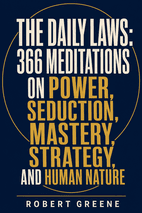
Robert Greene's The Daily Laws organizes a year of short daily readings into 19 thematic parts, moving from self-discovery to confronting mortality. Drawing on twenty-five years of research, it offers ambitious readers practical wisdom on power, mastery, strategy, and human nature through historical figures and anecdotes.
Feature
Insta.Page
Blinkist
Shortform
Summary Depth
Full Chapter-by-Chapter
15-min overview
Section-by-section guides
Audio Narration
✓
✓
✓
Full access to all 800+ summaries
✓
✓
✓
Visual Mindmaps
✓
✕
✕
AI Q&A
✓
✕
✕
Missing a book? Request it, usually live within 48h
✓
✕
✕
Quizzes
✓
✕
✕
PDF Downloads
✓
✕
✓
Send to Kindle
✓
✓
✓
Price
$89.99/yr
$146/yr (PRO)
$199/yr
*Competitor data last verified July 2026.
1 Page Summary
Robert Greene's The Daily Laws is organized as a yearlong sequence of short daily readings, divided into 19 thematic parts that progress from self-discovery to confronting mortality. The book's central thesis is that most people carry inherited, unexamined assumptions—about success, conflict, work, and themselves—that quietly drive their actions until reality answers with burnout, betrayal, and dead ends. Greene's remedy is to become a "radical realist," a person who silences outside voices, finds a genuine Life's Task, and learns to see through the false fronts others present. The book draws on twenty-five years of research across five previous books, and the year's arc moves through discovering a calling, submitting to an apprenticeship as a deliberate transformation of mind and character, surpassing mentors without merely copying them, sustaining creative work over long projects, and navigating power dynamics within hierarchies.
Greene's approach is distinctive in its compression and structure: each day presents a single law or meditation, often illustrated through historical figures and anecdotes—Temple Grandin, Glenn Gould, Leonardo da Vinci, Galileo, Henry Kissinger, Coco Chanel, Hakuin, Milton Erickson, Musashi, and many others—that dramatize a strategic or psychological principle. Recurring concepts include the Shadow and its repression, envy disguised as moral outrage, grandiosity distorting the scale of what we attempt, and the Sublime as a source of awe and urgency. The book insists that mastery requires discipline rather than drugs or madness, that deception is a developed art, that influence works best indirectly through soft sells and stories, and that facing death honestly is what makes a vivid life possible.
The intended audience is anyone seeking practical wisdom on power, seduction, mastery, strategy, and human nature, particularly readers ambitious within organizations or creative fields who want to understand workplace politics, manage superiors, build alliances, and navigate conflict without being consumed by it. What readers gain is a daily practice of self-scrutiny: tools for questioning borrowed beliefs, recognizing emotional distortion, turning limitations into creative direction, and maintaining outward focus on results and service rather than the need for approval. Greene promises not a shortcut to success but a yearlong discipline of realism, awareness, and emotional stability.
Part 1 - Chapters 1 to 13
Overview
People carry inherited assumptions about work, people, and themselves into careers and relationships, then meet behavior that contradicts them. They misread others, but they also fail to see themselves. The real problem is spotting that gap before it costs them.
The Reality Problem
Early humans survived by staying sharply alert to a dangerous world. One wrong move could kill you. Our brains still work that way, but now the dangers are subtler: people, social games, mixed signals. Meanwhile, culture fills our heads with false ideas:
credentials and connections determine success;
conflict and failure should be avoided;
work should be fun;
visible outrage proves truth.
These false beliefs drive our actions without us noticing, and reality answers with burnout, betrayal and dead ends. The fix is to become a radical realist. The material draws on twenty-five years of research across five books, a forthcoming The Law of the Sublime, interviews, talks and essays.
The Year's Arc
First three months: silence outside voices and find your Life's Task. Persistence and the desire to learn matter more than schooling or money. Failure and conflict teach.
Next three months: see workplace politics clearly, recognize toxic types, outwit manipulators.
Next three months: persuade by entering others' minds and appealing to self-interest. Strategize.
Final three months: study motivations, including your own. Facing mortality opens you to appreciating life.
January: The Life's Task
Uniqueness is genetic and shows up early as gut-level pulls. Marie Curie, at four, was transfixed by her father's laboratory instruments and later recognized her calling. Abraham Maslow called such attractions "impulse voices," less shaped by other people's desires. Robert Greene knew at eight that he wanted to write, but a magazine editor told him he wasn't writer material. He then worked some sixty jobs across Europe and Los Angeles. In 1995, in Venice, Joost Elffers asked for a book idea; Greene pitched The 48 Laws of Power. Change is constant, and loyalty belongs to the Life's Task, not a company.
Chasing money and status can supply focus, but the approach often backfires. Hyperintention describes the trap: desperately needing to sleep, deliver a talk or make friends creates anxiety that pushes the goal away. Relax and focus on something else, and the result comes more easily. Pleasure and success tend to arrive indirectly. Steve Jobs cared little for possessions and concentrated on original design; fortune followed.
Anomalies as Openings
V. S. Ramachandran, growing up in Madras in the late 1950s, felt different and collected seashells on the beach, especially the Xenophora, which camouflages itself with discarded shells. Strange finds like that can open new niches. He carried that appetite for oddity into medicine, becoming a professor of visual psychology at the University of California at San Diego. His experiments on phantom limbs yielded discoveries about the brain and a new way to relieve patients' pain.
Models and Oddness
John Coltrane, a serious North Carolina boy with unspoken spiritual longings, saw Charlie Parker play and found a way to voice his uniqueness. A decade of intense practice made him a great jazz artist. Mastery requires love for the subject and a connection bordering on religious.
Martha Graham, frustrated that words failed to make others understand her, saw dance and recognized a deep, wordless calling. She later reinvented the form.
Greene's 48 Laws of Power kept its strange sections, side quotes and shapes despite a publisher's wish for convention.
The pattern across all of them: oddness is a source of power, not a defect to sand off.
Key Takeaways
Check the beliefs you absorbed about credentials, conflict and visible outrage against what experience has actually shown you. Acting on them leads to exhaustion, broken trust and stalled effort.
Find the early pull that existed before other people's expectations, and build your work around it. Loyalty to that task beats loyalty to any employer.
When desperate effort makes the goal recede, shift attention to the craft itself. Let the result arrive as a byproduct of absorbed work.
Follow the peculiar interests that make you an outlier into unfamiliar territory. Strangeness can reveal openings that normal routes conceal.
Study masters in unrelated fields and note the deep pull that came before their breakthroughs. Let that pattern justify your own unconventional route.
Key concepts: Part 1 - Chapters 1 to 13
Part 1 - Chapters 1 to 13
The Reality Problem
Inherited false beliefs about work, success, and conflict drive unnoticed self-sabotage
Ancient survival instincts misfire on subtle modern social dangers
Become a radical realist: test beliefs against lived experience
The Year's Arc
First quarter: silence outside voices and discover your Life's Task
Second quarter: read workplace politics and outwit manipulators
Third quarter: persuade by entering others' minds and self-interest
Final quarter: study motivations, including your own, through mortality
January: The Life's Task
Uniqueness shows early as gut-level pulls, like Curie's fascination with instruments
Loyalty belongs to the Life's Task, not to any company
Hyperintention: desperate effort pushes goals away; relax and focus on craft
Anomalies as Openings
Peculiar interests mark outliers and reveal hidden niches
Ramachandran's appetite for oddity led to phantom-limb discoveries
Strangeness is a source of power, not a defect to sand off
Models of Mastery
Coltrane and Graham found wordless callings and reinvented their forms
Mastery requires love bordering on religious devotion plus years of practice
Greene kept his book's odd structure despite pressure to conform
💡 Try clicking the AI chat button to ask questions about this book!
Part 2 - Chapters 14 to 34
Overview
People are told to find a calling, yet the signals that seem to point toward one can be misleading. The problem is telling a genuine pull from a convincing substitute before years are committed to it.
Limits Point Toward a Calling
Temple Grandin's autism was diagnosed in 1950, when she was three, and a doctor recommended she be institutionalized for life. Speech therapy let her attend ordinary school, and an intense interest in animals and in autism itself carried her into science, where she explained the condition as nobody else had. A limitation met head-on can provoke a creative response no one has attempted before. When deficiency rather than inclination is what stands out, ignore the weaknesses, refuse to imitate others, and drill the one or two small things you already do well until confidence spreads outward from that center. Natural gifts can be a curse, since the gifted rarely learn diligence.
The False Path and the Shadow
Careers picked for money, fame or approval never match deep inclination, so fulfillment stalls and the work decays. The strategy is twofold: notice the error before confidence suffers, and rebel actively against the forces pushing you off course, including parents steering you toward something lucrative.
According to Jung, the shadow grows blacker the less it enters conscious life, and constant niceness costs more than showing it does. Six moves follow:
Respect your own opinions more, particularly inside your field of expertise.
Assert yourself daily and compromise less, at controlled, opportune moments.
Care less about what people think of you.
Accept that you will offend people who block you or criticize you unjustly.
Play the impudent child who mocks hypocrisy.
Flout conventions others follow scrupulously.
Purpose, Goals, Mastery
A calling supplies the direction organized religion once gave a secular world, and it is not selfish, because human evolution has depended on a wide diversity of skills. No calling outranks another: work inside an organization, physical craft, raising a family. Long-term goals bring clarity but also anxiety, so build a ladder of descending goals reaching down to the present, with daily or weekly microgoals, while returning periodically to the original vision and adjusting as experience accumulates. Lasting change happens internally, in accumulated skill and habit, not in the visible luck others seem to catch.
Mastery was long walled off as genius. The brain is the product of six million years of development shaped toward it, and the path is not linear: enter a field that roughly fits, learn, adjust toward the side routes that attract you, and recognize the right niche by the childlike excitement it stirs.
Trust the Process
Learning the piano begins as an outsider: the keyboard looks intimidating, the relationships between keys, chords and pedals make no sense, and the excitement of starting gives way to the realization of how much work lies ahead. The danger is surrendering to boredom, impatience, fear and confusion, at which point observation stops and the process halts. Manage those emotions and let time pass, and clarity arrives; keep practicing and basic skills become fluent enough to take on harder challenges, and connections invisible before come into view. Confidence grows from persistence. At some point the student becomes a practitioner, bringing individual style rather than only imitating others. Years of fidelity to the process produce the further leap to mastery, where the instrument is no longer external but internalized in the nervous system and fingertips, and the rules are known well enough to be broken or rewritten. Time is the essential ingredient.
Discovering a Life's Task
The Life's Task cannot be bypassed or expected to arrive on its own. For a few people it comes early or in a lightning-bolt moment, but most must reach it through continual introspection and effort. Experimenting with the skills and options that fit your personality and inclinations is the single most essential step toward a strong sense of purpose and mastery, and perhaps the most important step in life generally, because knowing your own uniqueness deeply makes the other pitfalls easier to avoid.
The Ideal Apprenticeship
The great masters all passed through a phase, lasting roughly five to ten years, in which their future powers were forming like a chrysalis, largely self-directed and receiving little attention because it holds no stories of achievement. Outwardly they were not yet distinctive; inwardly their minds were transforming. The pattern recurs across fields and constitutes an Ideal Apprenticeship. Treat your own apprenticeship as a voyage of youth and adventure rather than a drab indoctrination, seeking challenges past your comfort zone and using difficulty to measure progress. Anyone learning a new skill or changing careers later in life reconnects with that youthful, adventurous part of themselves.
Arriving in Paris at twenty-two after university, eager to display schoolroom French, German, Spanish and Italian, the author found the language learned over years was inadequate: Parisians spoke too fast and were unfriendly when the French was bungled, and basic expressions for ordering food had never been taught. Shyness kept him in his hotel room until he decided the desire to stay made fluency critical. He forced himself out, spoke with Parisians for several hours daily, avoided English and other Americans, listened closely, asked questions and took notes, absorbing phrases, intonations and gestures. A French girl he wanted to date raised the stakes again. Soon he was working as a hotel receptionist, growing more fluent by the day, discovering the Parisians were not unfriendly at all, and being invited into their homes. When people laughed at his mistakes he refused to take it personally and mocked himself instead, which earned appreciation for his effort and his love of the language. After a year and a half he emerged with a solid command of French he still has.
Three lessons followed. Motivation is absolutely key: at university the only stake was a good grade, so years of study yielded little, while in Paris, where his happiness and livelihood depended on it, his brain absorbed information far faster and one month taught him more than two or three years had. Intensity of focus matters: hours of daily practice, the language ringing in his ear, dreaming in French, produced rapid learning. Most important, you learn by doing rather than by reading books or taking tutorials. You must be out on the street, interacting, trying things, learning from mistakes, unafraid of ridicule. That pattern gave confidence that anything could be mastered, and it guided the writing of a first book and later interviews: daily discipline and excitement, intense focus, and the knowledge that repetition makes each attempt easier.
The instruction is direct: to write a book, write it; to be a musician, make music; to start a business, start it. Find a master and attach yourself to them, receiving an education at their feet by doing whatever tasks they assign, and immerse yourself in the world or industry you wish to master.
Key Takeaways
Experiment deliberately with skills and roles that fit your temperament, since sustained trial and self-examination, not waiting for revelation, is how a life's task becomes visible.
Anchor your path in the narrow strengths you already possess, then let small repeated wins build the confidence to extend them into a calling.
Notice early when money, fame, or approval is pulling you off course, and push back openly against anyone, including family, who steers you toward a life that does not fit; state your judgments more often, compromise less at chosen moments, and accept that this will sometimes offend people who block or unjustly criticize you.
Break a long-term aim into a chain of smaller goals that reaches daily and weekly actions, and return periodically to the larger vision to adjust it as experience accumulates.
Treat a new field as an apprenticeship: attach yourself to a master, learn in the actual environment rather than only from books or tutorials, seek challenges past your comfort, and keep practicing through boredom and confusion until fluency and then mastery arrive.
Key concepts: Part 2 - Chapters 14 to 34
Part 2 - Chapters 14 to 34
Limits as a Source of Calling
Limitations met head-on can provoke creative responses.
Ignore weaknesses; drill small strengths until confidence spreads.
Natural gifts can be a curse; the gifted rarely learn diligence.
Avoiding the False Path and Confronting the Shadow
Careers chosen for money, fame, or approval lead to decay.
Notice errors early and rebel against external pressures.
Integrate the shadow: assert yourself, care less about opinions, offend unjust critics.
Purpose, Goals, and Mastery
A calling provides direction once given by religion; all callings are equal.
Build a ladder of descending goals from long-term vision to daily microgoals.
Mastery is not linear: enter a field, adjust toward attractive side routes, recognize niche by childlike excitement.
Trusting the Learning Process
Manage boredom, impatience, fear, and confusion to keep observation alive.
Persistence builds fluency and reveals hidden connections.
Years of fidelity lead to internalized mastery and the ability to break rules.
Discovering a Life's Task
The Life's Task requires continual introspection and effort.
Experiment with skills and options that fit your personality.
Knowing your uniqueness helps avoid other pitfalls.
The Ideal Apprenticeship
Masters undergo a 5-10 year self-directed chrysalis phase.
Treat apprenticeship as a voyage of youth and adventure.
Language Immersion as a Model for Skill Acquisition
Classroom study without stakes yields little; real-world need drives rapid fluency.
Daily intense interaction, avoiding native language, accelerates learning more than years of study.
Embrace mistakes and ridicule; self-mockery earns respect and builds confidence.
One month of immersive practice can surpass years of formal education.
Part 3 - Chapters 35 to 57
Overview
When formal education ends, the next phase demands transformation, yet money, titles, and comfort are the visible rewards on offer. The problem is choosing where to work, whom to learn from, and what to give in return when the real payoff cannot be seen yet.
An apprenticeship is not a route to money, status or a title; it is a deliberate transformation of mind and character, the first stage on the way to mastery. The test for any placement is how much learning it permits, especially hands-on work with mentors who can teach. A low wage, even no wage, can be useful if it buys training and teaches you to live on less.
Learning by Submitting
Each field has a reality built from rules, procedures and traditions that practitioners inherit. The newcomer begins outside it, often impatient, and must submit to it long enough to absorb it before eventually rewriting it. Skills are the portable asset: acquire as many real ones as possible, because they let you adapt when work changes. Formal schooling encourages passive absorption; mastery comes from doing, repetition and feedback. Eiji Ichimura learned as a dishwasher, watching and repeating knife motions in off hours because no one would reveal sushi secrets. Sustained concentrated practice produces qualitative change in the brain. The recurring figure is 10,000 hours, roughly seven to ten years, the span of a traditional apprenticeship.
Mentors and Resistance
Mentorship is the quickest form of learning because a master's attention and feedback shorten trial and error. In 2006, nineteen-year-old Ryan Holiday offered to assist Robert Greene's research. He had already read the sources cited in the bibliographies to reverse-engineer the process, and he later improved the website. The exchange worked because he supplied real help and received training in research and writing. Resistance Practice reverses natural habits:
Become your own harshest critic, find weak elements, and practice those first.
Double your concentration, invent demanding routines, and set standards above others'.
Time and the Life's Task
Albert Einstein chose the Swiss Patent Office in Bern over a friend's well-paid insurance position, which would dull his thinking. The patent post paid modestly and demanded long hours reviewing applications, but those applications worked as puzzles that sharpened his reasoning. After a few months he finished in two or three hours and used the rest of the day for thought experiments; he published his first theory of relativity in 1905. Clear one commitment to protect time for the Life's Task.
Skipping steps, chasing formulas, or relying on talent or technology reverses a person's powers. According to the book, six million years of development cannot be wished away, and focused attention gives way to distracted scanning.
Creating Dependence
Renaissance condottieri won battles and were then banished or killed because they were replaceable and expensive. Necessity rules, so make others depend on you and entwine your fate with theirs.
Purposeful Energy
Coco Chanel, an orphan with few resources, knew by her early twenties that she wanted to design clothes. At twenty-five she attached herself to Arthur "Boy" Capel, a wealthy older English businessman who gave her confidence, taught her business, and guided her first decisions. He helped her build a lasting sense of purpose. She later sought people with skills she lacked, such as marketing and a feel for cultural trends, preferring pragmatic operators to charismatics and meeting them in person, not virtually.
Never Enough Knowledge
Napoleon Bonaparte read voraciously at military academy, treating strategy games and leadership books as serious study and knowledge as never sufficient. His knowledge impressed superiors and earned early responsibility. His apprenticeship ran at double or triple his peers' intensity, and he developed coup d'oeil, the ability to assess a situation at a glance.
Key Takeaways
Choose a placement by how much teaching it puts in front of you, not by its salary or title, and treat low or absent pay as tuition rather than a sacrifice.
Absorb your field's inherited rules and procedures fully before attempting to rewrite them, and keep accumulating concrete, portable skills that survive changes in the work.
Earn a mentor's attention by supplying help they actually need, and drill your weakest elements first instead of rehearsing what you already do well.
Set aside protected hours for the work that matters most, and give up income or comfort to keep them; surround yourself with people whose skills and confidence fill what you lack, and meet them in person.
Make others depend on your usefulness so you cannot be casually discarded, and study at double or triple the intensity of your peers until you can read a situation at a glance.
Key concepts: Part 3 - Chapters 35 to 57
Part 3 - Chapters 35 to 57
Apprenticeship as Transformation
Choose placement by learning potential, not salary or title.
Low or no pay is tuition for training and living on less.
Apprenticeship transforms mind and character toward mastery.
Learning by Submitting
Absorb field's inherited rules before attempting to rewrite them.
Acquire portable skills through doing, repetition, and feedback.
Sustained practice (~10,000 hours) produces qualitative brain change.
Mentors and Resistance
Earn mentor's attention by supplying help they actually need.
Practice weakest elements first; become your own harshest critic.
Double concentration and set standards above others'.
Time and Life's Task
Protect hours for the Life's Task by clearing commitments.
Avoid skipping steps or relying on talent or technology.
Focused attention, not distracted scanning, reverses powers.
Dependence, Purpose, and Knowledge
Make others depend on your usefulness to avoid being discarded.
Surround yourself with people whose skills fill what you lack.
Study at double or triple intensity to gain coup d'oeil.
Part 4 - Chapters 58 to 76
Overview
An apprentice under a brilliant mentor can get stuck copying them, yet breaking away too soon risks losing the knowledge that makes independence possible. The challenge is to learn from a mentor without just copying them, and become distinctly yourself along the way.
Surpassing the Mentor
An apprentice who only copies a brilliant teacher can end up stuck in that teacher's shadow. Three cases show another way:
Glenn Gould tried Alberto Guerrero's musical ideas, then subtly changed them to fit his own inclinations and made the difference more pronounced over the years. He took in what mattered and adapted it into a voice of his own.
Leonardo da Vinci began experimenting and asserting his own style while working for Verrocchio; the master's enthusiasm suggested the apprenticeship was nearing its end.
Louis XIV rejected the traditional royal palace and built Versailles, with new symbols and rituals that separated him from his predecessors.
Self-Directed Apprenticeship
No one will hand an apprentice direction, and starting at the bottom can tempt a person to accept limited access to knowledge. Reading beyond requirements, mingling with varied people, and adding outside schooling widen the horizon. In the computer age, it works better to build skills around deep interests, move by trial and error, and combine them later in a unique way than to follow one rigid career path. If you commit too early to one narrow path, you might hit a dead end or get bored by midlife.
The Creative Mind
Mastery means getting inside a subject until it lives in you, as a chessboard or piano becomes something you carry inside rather than something outside you. The craftsman's mindset, exemplified by Steve Jobs at Apple, keeps the work itself at the center rather than money or fame. Complacency, not age or lack of talent, is what kills the creative spark you were born with; staying curious and keeping your mind flexible counteracts that decline.
The creative process has four principles:
start without a fixed goal, letting yourself dream and follow emotional connections;
build wide knowledge across fields;
resist complacency and cultivate dissatisfaction and uncertainty;
slow down and fight the urge to rush.
Patience and the Long Apprenticeship
Impatience pushes people to rush, show something prematurely and seek attention. They end up with weak basics, no real vocabulary, and work that copies other styles or vents without meaning. Audiences sense the missing rigor and lose interest. Loving learning for its own sake works better: ten years absorbing, testing, mastering and personalizing a field's techniques and conventions yields a voice of your own and something unique.
Knowledge as Superior
What sets exceptional creators apart is practiced expertise and the motivation to keep using it over a lifetime, not some special power. Michael Faraday modeled humility before knowledge: science keeps advancing, the greatest theories are eventually disproven or altered, and the mind cannot see reality perfectly. A fresh, true-feeling theory will likely be ridiculed later, so do not grow too fond of your ideas.
Intensity of Focus
Marcel Proust seemed to waste time, but he gave intense attention to everything. He dissected books, analyzed them and absorbed their styles. He socialized to understand people's core motivations. He explored consciousness deeply enough to anticipate neuroscience findings about memory. His mother's death became material for writing, and his experiences became seeds for In Search of Lost Time.
Failure as Education
Henry Ford's mechanical mind made machine apprenticeships easy, but mass production demanded a second apprenticeship as a businessman. Practical intelligence from machines carried over: malfunctions expose flaws and improvements, and tinkering gets it right. Entrepreneurial mistakes educate similarly, revealing personal inadequacies, flaws visible only in execution, and the gap between what you intended and how the audience responded.
Key Takeaways
Treat a mentor's approach as raw material to adapt, not a template to copy, since your own voice comes from the changes you make.
Build your own direction deliberately: read past the assigned list, seek out people outside your immediate circle, and stack skills around genuine interests instead of committing early to one narrow track.
Protect your creative spark by staying dissatisfied and uncertain, keeping wide interests, and refusing to let comfort or premature confidence flatten your curiosity.
Accept that a decade of absorbing, testing and personalizing a field's conventions is what produces work an audience will actually trust; rushed output reveals its thin foundation.
Hold your strongest theories loosely, since even the best of them will look naive to later minds, and treat malfunctions and failed ventures as the cheapest route to seeing flaws that only execution reveals.
Key concepts: Part 4 - Chapters 58 to 76
Part 4 - Chapters 58 to 76
Surpassing the Mentor
Adapt mentor's ideas into your own voice, not copy them.
Glenn Gould subtly changed Guerrero's musical ideas over time.
Leonardo and Louis XIV asserted distinct styles while apprenticing.
Breaking away too soon risks losing essential knowledge.
Self-Directed Apprenticeship
No one hands you direction; actively seek broader knowledge.
Robert Greene wrote several New York Times bestsellers, including The 48 Laws of Power, The Art of Seduction, The 33 Strategies of War, and The 50th Law. His fifth book, Mastery, looks at figures from history such as Charles Darwin, Mozart, Paul Graham and Henry Ford to identify the traits and common elements behind their mastery. He studied at U.C. Berkeley and the University of Wisconsin at Madison, earning a degree in classical studies, and he lives in Los Angeles.
Frequently Asked Questions about The Daily Laws
What is The Daily Laws about?
This book lays out a year-long arc of short daily lessons, moving from the first discipline of becoming a "radical realist" who strips away inherited assumptions about work, people, and success, to finding your Life's Task, serving an apprenticeship, and eventually working with mastery and creative energy. Later sections focus on navigating power inside hierarchies, reading character, exerting influence and seduction, thinking strategically rather than tactically, and confronting the beliefs, Shadow, and mortality that distort how we see ourselves. Along the way it draws on historical figures such as Leonardo da Vinci, Galileo, Temple Grandin, Henry Kissinger, and Miyamoto Musashi to illustrate each law in practice. The material is built from twenty-five years of research across five books, along with interviews, talks, and essays.
Who is the author of The Daily Laws?
The author is Robert Greene, who has spent decades studying power, strategy, mastery, and human nature, synthesizing that work across five books, a forthcoming volume titled The Law of the Sublime, and years of interviews, talks, and essays. His writing leans heavily on historical case studies and biographies to make abstract ideas about influence, apprenticeship, and self-awareness concrete.
Is The Daily Laws worth reading?
It is worth reading because it compresses decades of research into short, actionable daily lessons, each anchored in vivid historical examples — from Leonardo experimenting under Verrocchio to Hitchcock outmaneuvering producers and Disraeli disarming Parliament with wit. The book addresses both outward problems, such as navigating workplace politics, managing superiors, and reading character beneath polished fronts, and inward ones, like examining borrowed beliefs and integrating the dark side of your personality. The short format makes it practical to revisit throughout the year rather than read once.
What are the key lessons from The Daily Laws?
First, adopt radical realism: question the inherited assumptions that credentials, connections, or visible outrage determine success, since culture quietly drives bad decisions and reality answers with burnout, betrayal, and dead ends. Second, treat a calling seriously — limitations and deficiencies, as in Temple Grandin's case, can point toward work no one else has attempted, while paths chosen for money or approval lead to shadow careers. Third, an apprenticeship is a deliberate transformation of mind and character rather than a route to status, so choose placements for learning, submit to the field's rules long enough to absorb them, then adapt a mentor's lessons into your own voice instead of copying them. Fourth, recognize that titles rarely reveal where power actually sits, that credit should flow upward while you earn respect by serving others' needs, and that stepping back to a strategic altitude is what separates strategists from tacticians. The closing lessons turn inward: most beliefs are borrowed, the Shadow grows stronger when repressed, and keeping mortality in mind supplies the urgency and equality that make a vivid life possible.
📚 Explore Our Book Summary Library
Discover more insightful book summaries from our collection