Introduction: Redefining Excellence—and Why We Need It More Than Ever
Chapter 1 of 4
0:000:00
EN
1x
Voice
PDF
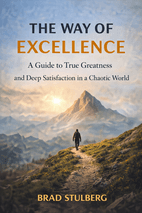
The Way of Excellence
by Brad Stulberg
What is the book The Way of Excellence about?
Brad Stulberg's The Way of Excellence presents a sustainable philosophy for high performance, merging ancient wisdom with modern science to cultivate presence and resilience. It is for ambitious professionals and creatives seeking fulfillment without burnout.
Feature
Insta.Page
Blinkist
Shortform
The Way of Excellence
✓
✓
✕
Summary Depth
Full Chapter-by-Chapter
15-min overview
Section-by-section guides
Audio Narration
✓
✓
✓
Visual Mindmaps
✓
✕
✕
AI Q&A
✓
✕
✕
Quizzes
✓
✕
✕
PDF Downloads
✓
✕
✓
Price
$89.99/yr
$146/yr (PRO)
$199/yr
*Competitor data last verified July 2026.
1 Page Summary
In The Way of Excellence, Brad Stulberg, co-author of The Practice of Groundedness, presents a philosophical and practical guide to sustainable high performance. The central thesis argues that true excellence is not a destination but a continuous, dynamic process—a "way" of being and engaging with the world. Stulberg challenges the toxic, burnout-inducing models of relentless hustle, proposing instead a framework built on timeless principles such as presence, patience, courage, and humility. He posits that by focusing on the integrity of the process itself, rather than obsessing over specific outcomes, individuals can achieve lasting success and fulfillment.
The book's distinctive approach lies in its synthesis of ancient wisdom—drawing from Stoicism, Buddhism, and Taoism—with modern science and psychology. Stulberg structures the work around core virtues and practices, moving beyond mere productivity tips to explore how cultivating a specific character and mindset forms the foundation for excellence. This focus on the "how" and "why" behind sustained effort, rather than just the "what," differentiates it from many contemporary performance manuals. The narrative is grounded in relatable anecdotes and supported by research, making profound concepts accessible and actionable.
The Way of Excellence is intended for anyone—athletes, artists, entrepreneurs, or knowledge workers—seeking to achieve high levels of performance without sacrificing their well-being. Readers will gain a practical philosophy for navigating the pressures of ambition, learning to embrace challenges with resilience, and finding deeper meaning in their pursuits. Ultimately, Stulberg offers a compassionate and sustainable roadmap for thriving in a competitive world, redefining excellence as a harmonious and enduring practice rather than a stressful sprint toward an external prize.
Introduction: Redefining Excellence—and Why We Need It More Than Ever
Overview
The chapter opens by exploring the visceral, human experience of being at our best. Through conversations with hundreds of people, a common portrait emerges: a state of relaxed, deep engagement on meaningful work, using our unique skills, often in connection with others or beauty. The accompanying feelings are not simple happiness, but profound satisfaction, vitality, and a sense of being fully alive. This, the author argues, is the true essence of excellence—an energizing process of growth available to everyone, not a distant prize reserved for elites.
The Core Definition: Mastery and Mattering
Excellence is defined as an ongoing process of growth and becoming that imbues life with meaning and vigor. It is not a singular achievement but a sustained rhythm built on two pillars: Mastery (developing skill and making progress in worthwhile activities) and Mattering (the sense that your efforts have significance). This combination is empirically linked to life satisfaction. Excellence has a tangible, attractive quality—whether observed in a flawless athletic move, a craftsman’s practiced strike, or a leader’s commanding presence—that resonates deeply because it is fundamentally human and must be earned.
Common Misconceptions and Impostors
To clarify the path, the author explicitly distinguishes genuine excellence from several cultural impostors:
It is not Perfectionism: Perfectionism is a stressful trap of flawlessness; excellence is about giving your all to what matters most and accepting the iterative process.
It is not Obsession: Obsession is intrusive and all-consuming, leading to burnout; excellence requires dedicated work but also incorporates rest and renewal for consistency.
It is not Optimization: Optimization seeks machine-like efficiency; excellence is a distinctly human, curious, and exploratory process.
It is not (Simply) Happiness: Happiness often seeks pleasure and avoids pain; excellence encompasses a full range of emotions, with deep satisfaction as the core reward.
It is not Flow: Flow is a values-neutral state of absorption; excellence is values-laden and includes flow but also demands discipline, patience, resilience, and care over the long term.
The Urgent Need for Excellence Today
The modern landscape is identified as particularly hostile to cultivating excellence. We face constant distraction, algorithmic noise, stress, and alienation—a disconnect from our own lives and aspirations. This has led to widespread burnout, disengagement, and a sense of languishing. In response, a loud culture of "pseudo-excellence" promotes performative hustle, quick fixes, and shallow hacks. Real excellence is presented as the vital antidote: a quiet, consistent, process-oriented practice that reconnects us with purpose, depth, and our essential humanity. The stakes for individuals and society are high.
A Roadmap for the Book
The chapter concludes by outlining the book’s two-part structure. Part One will build a comprehensive theory of excellence, drawing on cross-disciplinary science, philosophy, and stories from world-class performers to show how excellence is a hardwired, evolutionary force. Part Two will detail the practical mindsets, habits, and environmental designs that cultivate excellence, addressing how to overcome common barriers like distraction and the chase for external validation.
Key Takeaways
True excellence is a deeply satisfying state of engaged growth, accessible to all, characterized by a blend of Mastery (skill development) and Mattering (meaningful contribution).
It is crucial to distinguish excellence from its common impostors: perfectionism, obsession, optimization, the mere pursuit of happiness, and flow.
In an age of alienation, distraction, and "pseudo-excellence," intentionally cultivating real excellence is a critical act for reclaiming a life of focus, vitality, and authentic achievement.
Excellence is a sustained practice and a way of being, not a one-time outcome or a shallow performance for others.
Key concepts: Introduction: Redefining Excellence—and Why We Need It More Than Ever
1. Introduction: Redefining Excellence—and Why We Need It More Than Ever
The Essence of True Excellence
A state of relaxed, deep engagement on meaningful work using unique skills
Characterized by profound satisfaction, vitality, and feeling fully alive
An energizing process of growth available to everyone, not a distant prize for elites
Core Definition: Mastery and Mattering
An ongoing process of growth and becoming that imbues life with meaning and vigor
Built on two pillars: Mastery (developing skill in worthwhile activities) and Mattering (sense of significance)
Empirically linked to life satisfaction and has a tangible, attractive quality
A sustained rhythm, not a singular achievement
Distinguishing Excellence from Impostors
Not Perfectionism: Excellence accepts iterative process vs. stressful flawlessness
Not Obsession: Incorporates rest and renewal vs. all-consuming burnout
Not Optimization: Human, curious exploration vs. machine-like efficiency
Not (Simply) Happiness: Encompasses full emotional range vs. pleasure-seeking
Not Flow: Values-laden with discipline and resilience vs. values-neutral absorption
The Modern Crisis and Need for Excellence
Hostile landscape of constant distraction, algorithmic noise, stress, and alienation
Leads to widespread burnout, disengagement, and languishing
Culture promotes 'pseudo-excellence' with performative hustle and quick fixes
Real excellence serves as vital antidote: quiet, consistent, process-oriented practice
Reconnects us with purpose, depth, and essential humanity
Book's Approach to Cultivating Excellence
Part One: Builds comprehensive theory using science, philosophy, and performer stories
Part Two: Details practical mindsets, habits, and environmental designs
Addresses overcoming barriers like distraction and external validation
Presents excellence as a hardwired, evolutionary force and sustained practice
💡 Try clicking the AI chat button to ask questions about this book!
Chapter 1: The Biology of Excellence
Overview
The chapter opens with a personal story of a sudden, instinctual reaction to a close encounter with a bear, framing it as a primal example of excellence: an automatic, fully engaged response in service of a vital goal (survival). This visceral, pre-intellectual “knowing” is presented as the biological bedrock of all excellence, from artistic creation to athletic performance. The narrative then traces this drive back through evolutionary history, arguing that the pursuit of excellence is a fundamental life force, hardwired into our biology as a sophisticated form of “sensing and responding” to our environment. This drive, termed homeostatic upregulation, uses feelings as a compass to guide organisms—from single-celled bacteria to modern humans—toward flourishing.
The Evolutionary Roots of a Feeling
The text journeys back billions of years to the first life forms, illustrating how even mindless bacteria exhibit a primitive moral sense by moving toward what is “right” for their survival. As organisms evolved nervous systems and consciousness, this basic mechanism sophisticated into a guidance system of feelings: negative feelings signal “move away,” neutral feelings indicate stability, and positive feelings encourage “move toward.” Long before abstract thought, feelings were steering life toward conditions that allowed it to thrive. This establishes that the peak states humans describe as being “in the zone” are not lofty intellectual achievements but deeply biological, felt experiences of alignment and right action.
The Path from Thinking to Feeling
Excellence is not an innate state but a developed capacity. The chapter introduces the four phases of competence model to chart this development:
Unconscious Incompetence: You don’t know what you don’t know.
Conscious Incompetence: You are aware of your mistakes and must think deliberately to improve.
Conscious Competence: You can perform correctly through effortful focus and thinking.
Unconscious Competence: You perform excellently by feeling, not thinking. The tools and conscious effort that got you here now become barriers; you must shed them to enter a state of flow.
This model clarifies that while deliberate practice and thinking are essential for building skill, ultimately, you must transcend them to access the highest level of performance, where action becomes intuitive and felt.
Skill as an Interaction, Not an Acquisition
Modern science supports this view. True skill is redefined not as a stored mental program but as “an adaptive, functional relationship between an organism and its environment.” In essence, skill is the refined capacity to feel your way through a dynamic situation. Examples from elite performers—violinist Hilary Hahn feeling the music, golfer Tiger Woods seeking where “feel and real intersect,” and rock climber Alex Honnold visualizing the feeling of each move—demonstrate that excellence across domains is characterized by this intimate, situated cognition. The performer’s consciousness merges with the activity, and feeling becomes the primary guide.
The Indispensable Compass of Feeling
The critical importance of feeling is underscored by neurological research. Studies of patients with damage to the brain’s emotional processing centers (the vmPFC) reveal a profound paradox: they retain full intellectual capacity but become utterly incapable of making real-world decisions. Without “somatic markers”—the emotional valuations assigned to experiences—they have no internal compass for what is “good” or “bad.” This extreme case highlights a universal truth: our feelings are not a distraction from rational excellence but its necessary foundation. They are the biological system that directs us toward homeostatic upregulation—toward excellence—and make our engagements deeply satisfying and meaningful.
Key Takeaways
Excellence is biological: Our drive for excellence is an evolutionary inheritance called homeostatic upregulation, a life force that uses feelings to guide us toward flourishing.
It’s felt, not just thought: Peak performance and “flow” states are primarily visceral, pre-intellectual experiences. We feel our way to excellence more than we think our way to it.
Development has a blueprint: The four phases of competence model shows that mastery requires moving from unconscious ignorance, through deliberate effort, and finally to an effortless, felt state of unconscious competence.
Skill is a relationship: True skill is the dynamic, felt interaction between a person and their environment, not just a mentally stored set of instructions.
Feelings are essential guides: Our emotional sensations are an indispensable compass for engagement and decision-making. Disconnection from them leads to poor outcomes and emptiness, while heeding them situates us in the world and fills us with meaning.
Key concepts: Chapter 1: The Biology of Excellence
2. Chapter 1: The Biology of Excellence
The Biological Foundation of Excellence
Excellence originates as a primal, instinctual response in service of vital goals
The drive for excellence is an evolutionary life force called homeostatic upregulation
This biological mechanism uses feelings as a compass to guide organisms toward flourishing
Peak performance states are deeply biological, felt experiences rather than intellectual achievements
Evolutionary Development of Feeling as Guidance
Even primitive organisms like bacteria exhibit movement toward what is 'right' for survival
As nervous systems evolved, basic mechanisms sophisticated into a guidance system of feelings
Feelings evolved long before abstract thought to steer life toward thriving conditions
The Four Phases of Competence Development
Unconscious Incompetence: Not knowing what you don't know
Conscious Incompetence: Awareness of mistakes requiring deliberate thinking
Conscious Competence: Correct performance through effortful focus
Unconscious Competence: Excellent performance through feeling, not thinking
Mastery requires transcending conscious effort to access intuitive flow states
Skill as Dynamic Interaction with Environment
True skill is an adaptive relationship between organism and environment
Skill represents the refined capacity to feel your way through dynamic situations
Elite performers across domains demonstrate excellence through situated cognition
Consciousness merges with activity, making feeling the primary guide
The Essential Role of Emotional Processing
Neurological research shows emotional centers are essential for real-world decision making
Patients with vmPFC damage retain intellect but lose decision-making capacity
Somatic markers (emotional valuations) provide the internal compass for 'good' and 'bad'
Feelings are not distractions but the necessary foundation for rational excellence
Emotional connection makes engagements satisfying and meaningful
Chapter 2: The Psychology of Excellence
Overview
It begins with a familiar struggle: the choice between a meaningful task and the easy lure of distraction. That instant comfort often leaves a psychological hangover, revealing a core tension between what feels good now and what leads to lasting fulfillment. Mastering this tension is central to the pursuit of excellence. The secret weapon is our ability to project ourselves forward in time, to ask how a choice will feel tomorrow or next year. This episodic future thinking is a powerful human trait, allowing us to simulate outcomes and navigate away from regret toward genuine satisfaction.
This forward-thinking capacity must be channeled into the right pursuits. Long-term thriving stems from activities that satisfy three core needs: autonomy, competence, and belonging. To filter our goals, we can ask if a project increases these elements and aligns with our deepest values—principles like creativity or health. The real reward of excellence is the inner transformation it creates; the work itself engraves a better version of us. This process is distinct from related psychological states. While flow offers deep immersion, excellence is values-laden and includes the necessary grind beyond the zone of peak engagement. It aligns with eudaimonic happiness—the lasting fulfillment from meaningful effort—rather than fleeting pleasure. Even stress is transformed by meaning; effort toward a valued goal builds resilience, whereas empty toil leads to a hollow "zombie burnout."
So why is choosing excellence so hard? Our ancient psychology is mismatched with the modern world, a state known as dysevolution. We’re wired for scarcity but flooded with engineered temptations—junk food, social media, gambling apps—that hijack primal drives for a fleeting high, trapping us in cycles of "shitty flow." This is where ecological psychology offers a crucial lens: our environment isn't neutral. Objects actively "invite" behaviors; a phone invites scrolling, stairs invite climbing. To overcome these traps, we must design our surroundings. By filling our space with objects that invite focused work and removing those that invite distraction, we build a coherent ecosystem for excellence. Practical tactics, like creating tech-free zones, prove more effective than sheer willpower against these engineered lures.
Ultimately, this drive toward excellence is more than a practical strategy; it’s woven into our biology. All life exhibits a basic impulse to move toward conditions that support its flourishing. For humans, this translates into a pull toward meaning, vitality, and ever-increasing quality—a state of homeostatic upregulation. Therefore, striving for excellence in our work and lives is a moral system aligned with our fundamental nature, a biological imperative to move toward what is truly life-giving.
The Short-Term vs. Long-Term Dilemma
The chapter opens with a relatable scenario: choosing between engaging in a meaningful activity or defaulting to mindless distraction, like scrolling on a phone. While the latter offers immediate, effortless comfort, it often leads to a "psychological hangover"—a feeling of emptiness and wasted opportunity. This conflict between acute feelings and their chronic consequences is central to understanding excellence. A key practice is to project ourselves into the future and ask how we’ll feel after the fact. This ability to "think and feel into the future" is a uniquely human advantage, crucial for navigating life and pursuing excellence.
Episodic Future Thinking: A Survival Tool
This forward-thinking capacity, known as episodic future thinking (EFT), evolved as a survival mechanism. It allows us to simulate experiences and their potential outcomes without direct risk. While our ancestors used this to avoid physical dangers like snake bites, modern life presents more subtle "paper tigers" and shallow excitements. We often crave deep, authentic experiences but settle for superficial substitutes, leading to a state of "restless exhaustion." This void can manifest destructively, as seen in the "Need for Chaos" concept, where people pursue social or political chaos just to feel something. EFT is the antidote, enabling us to subjugate short-term impulses by connecting present choices to future feelings of regret or fulfillment.
The Framework for Worthwhile Pursuits
To channel EFT effectively, we must direct our energy toward pursuits that truly matter. Decades of research indicate that long-term thriving depends on satisfying three core psychological needs:
Autonomy: Control over how we spend our time and energy.
Competence: A path toward concrete improvement.
Belonging: Connection to something beyond ourselves.
When evaluating any project or goal, we should ask if it increases these elements. Furthermore, excellence demands alignment with our core values—principles like health, creativity, or authenticity. A simple litmus test is: "Does this project support my values?" Living in alignment with our values is the true definition of success. The ultimate reward of any excellent pursuit is not the external outcome but the inner transformation; as we engage, the activity "engraves" a better version of ourselves—a process of becoming.
Excellence vs. Flow, Happiness, and Stress
The chapter carefully distinguishes excellence from other psychological states:
Excellence vs. Flow: Flow is a values-neutral state of deep immersion. Excellence is values-laden and pointed toward meaningful goals. You can achieve "shitty flow" through activities like mindless gambling or internet arguments, which provide temporary immersion but leave you with shame. Excellence encompasses flow but also includes the necessary drudgery and sustained effort across a broader timeline.
Excellence vs. Happiness: The pursuit of hedonic happiness (pleasure) often leads to fleeting highs and subsequent emptiness. Eudaimonic happiness (meaning and self-realization) requires effort and yields lasting fulfillment. Excellence aligns with the latter; it may not always feel like "happiness" in the moment, but it provides deep satisfaction and a textured life.
Excellence and Stress: Stress is not inherently bad. The classic equation is Stress + Rest = Growth. However, Hans Selye’s later work revealed a critical layer: stress is mediated by meaning. Effort directed toward a meaningful goal produces a healthy, adaptive stress response that leads to resilience and neural rewards. Effort spent on empty work leads to exhaustion and "zombie burnout"—a state of being both restless and exhausted from not doing enough that lights you up.
The foundation of excellence is thus an involved engagement in worthwhile activities that support our values, leveraging our EFT to stay the course. It is a dynamic interplay between our psychological capacity for forward-thinking and our biological need for meaningful challenge.
The Peril of Dysevolution and Modern Traps
The chapter introduces the concept of dysevolution—the mismatch between our ancient, hardwired psychology and a modern environment filled with engineered temptations. Our brains evolved in conditions of scarcity, but we now live in a world of abundant, ultra-processed stimuli: junk food, social media, pornography, and gambling apps. These technologies are explicitly designed to hijack our primal drives for food, sex, status, and connection, offering a powerful but fleeting high that leaves us perpetually wanting more. This cycle creates a feeling of powerlessness, where we engage in activities (like endless social media scrolling) that provide "shitty flow" and leave us feeling worse, yet we struggle to stop.
Navigating Our Environment with Ecological Psychology
The field of ecological psychology offers a framework for understanding and overcoming these traps. It posits that the objects in our environment are not neutral; they actively "invite" or afford specific behaviors and thoughts. The mere sight of an object triggers associated brain networks—stairs invite climbing, a bag of chips triggers salivation, a smartphone invites checking. Through repetition, these invitations become automatic and powerful. The practical implication is profound: we must consciously design our surroundings to support our goals. By surrounding ourselves with objects that invite our desired behaviors (like books, meaningful art, or symbols of our values) and removing those that invite distraction or temptation, we can significantly alter our default patterns and conserve willpower.
Designing Environments for Excellence
This is not a theoretical exercise but a practical strategy for reclaiming focus and energy. The author shares personal tactics: leaving his phone in another room while working, printing drafts to edit offline, and observing a "digital sabbath" by storing all devices on Saturdays. These explicit constraints arose from a self-diagnosis of "internet brain"—a state of fractured attention, anxiety, and an inability to be present. The core lesson is that willpower is insufficient against engineered temptation. Excellence requires proactively designing a coherent ecosystem that supports deep work and valued living, making the right actions easier and the distracting ones harder.
Excellence as a Biological and Moral Imperative
The discussion culminates by linking this practical psychology to a deeper philosophical truth. Drawing on neuroscientist Antonio Damasio, the chapter notes that all life, even bacteria, exhibits a basic "moral attitude": moving toward conditions that support flourishing and away from those that cause harm. For humans, this biological imperative extends beyond mere survival. We are drawn toward conditions that foster fulfillment, meaning, and homeostatic upregulation—ever-increasing quality and vitality. Our inherent draw toward excellence in work and life is an expression of this same biological drive. Therefore, striving for excellence is not just a practical goal but a moral one, aligned with our fundamental nature to move toward what is life-giving and good.
Key Takeaways
Dysevolution explains our struggle against modern temptations; our brains are not wired for the engineered abundance of ultra-processed food and digital media.
Ecological psychology reveals that our environment actively "invites" behaviors; we can shape our surroundings to invite excellence and remove invitations to distraction.
Practical environmental design—like creating tech-free zones and surrounding oneself with meaningful objects—is more effective than relying on willpower alone to combat distraction and "internet brain."
The pursuit of excellence is a moral system rooted in our biology; all life moves toward conditions that support its flourishing, and for humans, this translates into the drive for meaningful, high-quality work and experiences.
Key concepts: Chapter 2: The Psychology of Excellence
3. Chapter 2: The Psychology of Excellence
The Core Tension: Short-Term vs. Long-Term Fulfillment
Immediate comfort (e.g., distraction) leads to a 'psychological hangover' of emptiness.
Mastering the tension between present ease and lasting fulfillment is central to excellence.
The human advantage is projecting forward to simulate how choices will feel later.
Episodic Future Thinking (EFT): The Antidote to Impulse
EFT is a survival tool for simulating experiences and outcomes without risk.
Modern 'paper tigers' and shallow excitements hijack this capacity.
EFT allows us to subjugate short-term impulses by connecting to future regret or fulfillment.
The Framework for Worthwhile Pursuits
Thriving requires satisfying three core needs: Autonomy, Competence, and Belonging.
Goals must be filtered through alignment with core values (e.g., creativity, health).
The true reward is inner transformation—the work 'engraves' a better self.
Distinguishing Excellence from Related States
Excellence is values-laden and goal-directed, while Flow is values-neutral immersion.
It aligns with Eudaimonic happiness (meaningful effort) over fleeting pleasure.
Stress toward a valued goal builds resilience, unlike empty toil leading to burnout.
The Modern Challenge: Dysevolution and Engineered Temptation
Our ancient psychology is mismatched with a world flooded with engineered lures (e.g., social media).
These hijack primal drives, trapping us in cycles of 'shitty flow'.
Overcoming traps requires designing surroundings, not relying on willpower alone.
Fill space with objects that invite focused work; remove those that invite distraction.
Practical tactics like tech-free zones build an environment that supports excellence.
Excellence as a Biological Imperative
All life exhibits an impulse to move toward conditions that support flourishing.
For humans, this is a pull toward meaning, vitality, and increasing quality—Homeostatic Upregulation.
Striving for excellence is thus a moral system aligned with our fundamental nature.
The Psychology of Excellence: Foundational Concepts
Excellence aligns with eudaimonic happiness (meaning and self-realization), providing deep satisfaction rather than fleeting hedonic pleasure.
Stress is mediated by meaning; effort toward meaningful goals creates adaptive stress leading to resilience and neural rewards.
The foundation of excellence is involved engagement in worthwhile activities that support personal values, leveraging EFT (Executive Function and Tenacity).
The Peril of Dysevolution
Dysevolution is the mismatch between our ancient psychology and the modern environment of engineered abundance.
Modern temptations (junk food, social media, gambling) hijack primal drives for food, sex, status, and connection.
This creates a cycle of fleeting highs and 'shitty flow,' leading to powerlessness and perpetual dissatisfaction.
Ecological Psychology and Environmental Invitations
Objects in our environment actively 'invite' or afford specific behaviors and thoughts through associated brain networks.
Repetition makes these invitations automatic and powerful, shaping our default patterns.
The practical implication is that we must consciously design our surroundings to support our goals and conserve willpower.
Practical Environmental Design for Excellence
Willpower is insufficient against engineered temptation; proactive design of a coherent ecosystem is required.
Practical tactics include creating tech-free zones, printing drafts for offline work, and observing digital sabbaths.
The goal is to make desired behaviors easier and distracting ones harder, countering states like 'internet brain' (fractured attention and anxiety).
Excellence as a Biological and Moral Imperative
All life exhibits a basic 'moral attitude' of moving toward conditions that support flourishing (homeostatic upregulation).
For humans, this drive extends beyond survival to fulfillment, meaning, and ever-increasing vitality.
Striving for excellence is thus a moral system aligned with our fundamental nature to pursue what is life-giving and good.
Chapter 3: The Philosophy of Excellence
Overview
Chapter Overview
The chapter explores the deep philosophical roots of excellence, positioning it not as a modern self-help concept but as a fundamental human drive central to a meaningful life. It begins with Robert Pirsig's groundbreaking idea of "Quality"—that felt sense of rightness when we are fully absorbed in valued work—and traces a lineage of similar thinking across millennia and cultures. The narrative argues that in our fragmented, attention-hijacked world, the deliberate pursuit of excellence is an antidote to alienation, a source of profound satisfaction, and ultimately, an act of love.
The Primacy of Quality
The chapter anchors itself in Robert M. Pirsig's Zen and the Art of Motorcycle Maintenance, where he defines "Quality" as a pre-intellectual awareness that emerges when the separation between a person and their activity collapses. This is the state of high Quality: caring deeply and being fully engaged. Conversely, low Quality involves distraction and going through the motions. Pirsig later argued that this very force—the immediate, sensed value between subject and object—is the driving mechanism behind evolution itself. This concept, which the author embraced in college, frames excellence not as an abstract ideal but as a biological imperative and a direct, felt experience.
Excellence as a Timeless Virtue
This pursuit is shown to be a thread woven through humanity's greatest philosophical traditions. In ancient Greece, arete represented the virtue of fulfilling one’s purpose by developing and deploying one’s innate capabilities. In Warring States China, wu-wei described a state of effortless, holistic action, resulting in de (virtue or charismatic power). The chapter connects these to later thinkers: Spinoza’s conatus (the striving to persist), Kant’s urteilskraft (an instinctive judging capacity), Tolstoy’s view of life as a striving toward "goodness," and contemporary philosopher Susan Wolf’s idea of "loving engagement" as key to meaning. Across time and geography, excellence is consistently framed as a core virtue, an intrinsic part of a good life.
The Modern Assault on Focus
Our current environment, however, is engineered to erode the conditions for Quality. The chapter illustrates this with vivid vignettes—from a gas pump screen interrupting a moment of peace to the constant ping of notifications—that represent a systemic invasion of our attention. This barrage of information and distraction creates alienation, leading to exhaustion, apathy, and a deep existential loneliness. In response, people often turn to digital pseudo-connections and consumption, which only worsen the underlying emptiness. The risk is a passive surrender of agency, where we float on an algorithmic current, utterly disconnected from what we value.
Intimacy as the Antidote
The solution presented is to cultivate intimacy—not only with people but with our crafts and pursuits. The story of musician John Moreland is a powerful case study. Feeling alienated by the promotional grind of the music industry, he discarded his smartphone for months to reconnect with his art. The result was his album Visitor, a work of profound depth created in focused solitude. This process of eliminating noise to get close to the work allowed him to feel "situated" again. Excellence, therefore, requires this deliberate intimacy: minimizing distractions to achieve a state of deep, familiar connection with an activity, which in turn fosters presence, aliveness, and counters modern dissociation.
The Grounding Power of Concrete Craft
Real satisfaction, the chapter argues, comes from competence in arenas with objective, unforgiving feedback. Activities like weightlifting, woodworking, or running a marathon provide clear, tangible standards of success or failure—the barbell drops or it doesn’t, the table wobbles or it stands firm. This contrasts with many modern jobs laden with "contrived metrics" and ambiguous standards. Engaging in such concrete "autotelic" experiences—done well for their own sake—provides genuine fulfillment and keeps one humble. The example of "Blake," a calm technology leader who is also a dedicated woodworker, shows how the humility demanded by a physical craft can translate into grounded equanimity in other parts of life.
The Generative Force of Love
Ultimately, the philosophy of excellence circles back to a fundamental human purpose. Striving for excellence—caring deeply, paying attention, practicing diligently—is framed as an act of creation and, in its purest form, an expression of love. Whether the output is a tangible piece of art or the intangible impact on another person, the process transcends the self. It connects the individual to something larger, replacing existential loneliness with a sense of being whole and at home in the world. As Pirsig suggested, improving the world starts with the intimate work of one's own heart, head, and hands.
Key Takeaways
Multiple philosophical traditions across history converge on the idea that excellence (or arete, wu-wei, Quality) is a core virtue essential for a good and meaningful life.
Cultivating intimacy with our valued pursuits—by ruthlessly eliminating distractions—is the antidote to modern alienation and a path to feeling truly "situated" and connected.
Engaging in concrete activities with clear, objective standards provides deep autotelic satisfaction and acts as a grounding force, fostering humility and real-world competence.
At its most authentic, the pursuit of excellence is a generative, creative act that becomes indistinguishable from love, connecting us to something larger than ourselves.
Key concepts: Chapter 3: The Philosophy of Excellence
4. Chapter 3: The Philosophy of Excellence
The Primacy of Quality
Robert Pirsig's 'Quality' is a pre-intellectual awareness from collapsing the separation between person and activity
High Quality involves deep care and full engagement; low Quality involves distraction and going through the motions
Quality is framed as a biological imperative and a direct, felt experience, not an abstract ideal
Pirsig argued Quality is the driving mechanism behind evolution itself
Excellence as a Timeless Virtue
Ancient Greek 'arete' represents fulfilling purpose by developing innate capabilities
Chinese 'wu-wei' describes effortless, holistic action resulting in virtue or power ('de')
Connects to later thinkers: Spinoza's 'conatus', Kant's 'urteilskraft', Tolstoy's striving toward 'goodness'
Susan Wolf's 'loving engagement' as key to meaning
Across cultures, excellence is consistently framed as a core virtue of a good life
The Modern Assault on Focus
Current environment is engineered to erode conditions for Quality through constant distraction
Creates alienation leading to exhaustion, apathy, and existential loneliness
Digital pseudo-connections and consumption worsen underlying emptiness
Risk of passive surrender of agency, floating on algorithmic currents disconnected from values
Intimacy as the Antidote
Cultivating intimacy with crafts and pursuits counters modern alienation
John Moreland's story: discarding smartphone to reconnect with art resulted in profound album 'Visitor'
Eliminating noise creates 'situated' feeling through deep, familiar connection with activity
Deliberate intimacy fosters presence, aliveness, and counters dissociation
The Grounding Power of Concrete Craft
Real satisfaction comes from competence in arenas with objective, unforgiving feedback
Activities like weightlifting, woodworking provide clear standards of success/failure
Contrasts with modern jobs laden with 'contrived metrics' and ambiguous standards
Concrete 'autotelic' experiences provide genuine fulfillment and keep one humble
Example of 'Blake' shows how physical craft translates to grounded equanimity in life
The Generative Force of Love
Striving for excellence is ultimately an act of creation and expression of love
Process transcends the self, connecting individual to something larger
Replaces existential loneliness with sense of being whole and at home in world
Improving the world starts with intimate work of one's own heart, head, and hands
You've reached the end of the free chapters
Next chapter: “Goals” is locked
Keep reading The Way of Excellence — and unlock all 600+ book summaries with audio, mindmaps and AI Q&A.
$0.00 due today · 7 days free, then $89.99/year ($7.49/mo) · Cancel anytime before day 7
Brad Stulberg is an author and coach who writes about sustainable excellence and well-being, drawing from his background in performance science and his own athletic experiences. He is best known for co-authoring the books "The Practice of Groundedness" and "Peak Performance," which explore the intersection of resilience, health, and achievement. His work is regularly featured in outlets like The New York Times and Outside Magazine.
📚 Explore Our Book Summary Library
Discover more insightful book summaries from our collection