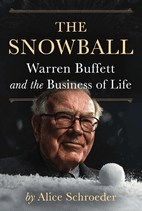
Alice Schroeder's The Snowball traces Warren Buffett's life as both a legendary investor and a complex human being, examining how his psychological makeup and key relationships shaped his relentless drive to accumulate wealth. Based on hundreds of hours of interviews and unprecedented access to his personal files, the book offers a nuanced portrait for serious investors and general readers interested in the psychology behind extreme success.
Feature
Insta.Page
Blinkist
Shortform
Summary Depth
Full Chapter-by-Chapter
15-min overview
Section-by-section guides
Audio Narration
✓
✓
✓
Visual Mindmaps
✓
✕
✕
AI Q&A
✓
✕
✕
Quizzes
✓
✕
✕
PDF Downloads
✓
✕
✓
Price
$89.99/yr
$146/yr (PRO)
$199/yr
*Competitor data last verified July 2026.
1 Page Summary
This biography, drawn from hundreds of hours of interviews with Buffett and unprecedented access to his personal files, traces the life of Warren Buffett not simply as an investor, but as a complex human being driven by a relentless, almost compulsive, drive to accumulate. The central metaphor is the snowball: the idea that starting with a small, wet snowball (a modest amount of capital) and rolling it down a long hill (a lifetime of compounding) can create a massive fortune. The book argues that Buffett’s success was not merely a product of brilliant financial analysis, but of a unique psychological makeup—a combination of intense focus, a deep desire to be loved, an almost pathological independence from social pressures, and the emotional wounds of a difficult childhood. It explores the tension between his public persona as a folksy, generous sage and the coldly rational, intensely private, and sometimes ruthless operator behind the scenes.
Alice Schroeder, a former insurance analyst who covered Berkshire Hathaway, brings a rare financial fluency and depth to the narrative. What makes the book distinctive is its exhaustive, three-dimensional portrait; it is as much a psychological biography as a business one. Schroeder devotes significant attention to the key relationships that shaped Buffett—his abusive mother Leila, his principled father Howard, his self-sacrificing wife Susie, his partner Charlie Munger, and his complex friendships with figures like Katharine Graham and Bill Gates. The book does not shy away from the messy, painful details of his personal life, including his marriage’s dissolution, his problematic relationship with his children, and the nearly fatal crisis at Salomon Brothers. This granular detail, grounded in the provided chapter content, reveals the man behind the myth, showing how his personal history and habits directly influenced his business decisions.
The intended audience is broad, appealing to both serious investors and general readers interested in an intimate study of a modern titan. Readers will gain a nuanced understanding of Buffett’s core investment principles—such as the "cigar butt" approach, the concept of "moats," and the importance of temperament—but more profoundly, they will learn about the psychology required to achieve such extreme focus and long-term discipline. The ultimate takeaway from "The Snowball" is that Buffett’s greatest asset was not his intelligence, but his ability to learn from mistakes, manage his own emotions, and apply a consistent, rational framework to both his portfolio and his life. The book serves as a cautionary tale about the costs of such a singular obsession, while also providing a powerful lesson in the virtue of patience and the art of living a life congruent with one’s principles.
1: The Less Flattering Version
Overview
Omaha, June 2003, inside Berkshire Hathaway’s modest headquarters. Warren Buffett sits in his father's old chair, looking slightly rumpled despite his expensive suit—a man whose personal style has barely evolved since his youth. The office is a museum of a singular life: Coca-Cola bottles, a Dale Carnegie certificate, a Pulitzer Prize, mementos from a soap opera cameo, and the rejected offer to buy Long-Term Capital Management. The television is on, sound muted, feeding him a constant stream of news—much of it, to his quiet satisfaction, about himself.
Alice has known Buffett for six years, starting as a financial analyst covering Berkshire stock before their relationship turned friendly. Now she is there because, as Buffett insists repeatedly, he will not write a book. “You’ll do a better job than I would,” he says, a line that will take on deeper meaning as the story unfolds.
When asked where his relentless drive to make money came from, Buffett’s eyes go distant, then he quotes Balzac—“behind every great fortune lies a crime”—and quickly adds, “That’s not true at Berkshire.” He springs from his chair to land on a gold armchair, talking about the story with the enthusiasm of a teenager recalling a first romance, not a seventy-two-year-old financier. Then he offers Alice a rule to live by: whenever his version of events differs from someone else’s, she should use the less flattering version. Humility, he shows, disarms.
The chapter closes with a quiet acknowledgment: that instruction will prove necessary more than once, not because memory fails, but because human nature nudges the story. One of those times will happen at Sun Valley in 1999.
Key Takeaways
Buffett’s office and appearance reflect a man uninterested in pretense, surrounded by evidence of a long, intentional life.
He actively refuses to write his own story, deferring to Alice—a move that both disarms and grants him some control over his legacy.
The “less flattering version” rule is a strategic humility, one that will later reveal where vanity or self-interest colored his own recollections.
The seeds of tension between memory and truth are planted early, with Sun Valley 1999 already foreshadowed as a pivotal example.
Started as financial analyst covering Berkshire stock
Known Buffett for six years before friendship
Present because Buffett refuses to write a book
Delegates story to her for better result
The Drive for Wealth
Buffett quotes Balzac on fortune and crime
Quickly denies crime applies to Berkshire
Springs to gold armchair with youthful enthusiasm
Recalls first romance-like excitement at age 72
The Less Flattering Version Rule
Use less flattering version when stories conflict
Strategic humility that disarms others
Necessary because human nature nudges memory
Will reveal vanity or self-interest in recollections
Foreshadowing Sun Valley 1999
Pivotal example of memory versus truth
Seeds of tension planted early in chapter
Instruction will prove necessary more than once
Key moment where versions will likely differ
💡 Try clicking the AI chat button to ask questions about this book!
2: Sun Valley
Overview
The contrast was unmistakable from the start: Warren Buffett, the world’s second-richest man, pulling his own suitcase from the trunk of his car and hoisting it aboard a gleaming Gulfstream IV. The jet wasn’t even his in the traditional sense—it was a fractional share in NetJets, a company he owned through Berkshire Hathaway—but the scene captured everything about the man who would soon deliver the most consequential speech of the 1999 Allen & Co. conference. His family settled in around him while he buried himself in a newspaper for the entire two-hour flight, as if the breathtaking approach through the Sawtooth Mountains was just another commute.
Sun Valley in July was a meticulously orchestrated ritual of wealth and influence, where Herbert Allen played host to a guest list that read like a fantasy roster of media royalty. The boutique investment banker’s annual gathering had become the ultimate elephant-bumping event, a place where big shots came to reassure themselves they were still big shots. The conference’s carefully calibrated hierarchies dictated everything—who stayed in which condominium, who sat where at meals, who got invited and, more thrillingly, who got disinvited. Buffett, despite his $30 billion fortune, seemed to appreciate the free SV99 polo shirts almost as much as the chance to reunite with his closest friends: Kay Graham, Bill and Melinda Gates, the Keoughs, Barry Diller. For him, Sun Valley was above all a family vacation, a rare week when his wife Susan flew in from San Francisco and his scattered children and grandchildren all gathered in one place. He had no interest in the mountain biking or white-water rafting that the impossibly seamless machinery of Allen & Co. arranged; he thought of water as “a prison of sorts” and would rather go handcuffed than ride a raft. Instead, he played golf with Jack Valenti for a dollar bet, disappeared into his condo to read by the fireplace, and barely noticed the view of Baldy Mountain.
But the 1999 gathering was different. A new breed of technology executives had arrived with unusual swagger, speaking in a barely comprehensible language of B2B, banner ads, and bandwidth. They strutted through presentations about how the Internet would reshape everything, their stocks trading at infinite multiples of nonexistent earnings while real companies that made real things declined in value. The new paradigm rhetoric hung over the week like a fog, and the recently enriched could not believe that Annie Leibovitz had chosen to include Buffett in her Vanity Fair photo shoot of the Media All-Star Team. Why would she include him? He was old media. The Internet moguls had been invited as people of the moment, and they acted like it.
Buffett had been privately critical of the promoter-driven market all year, and when Herbert Allen asked him to be the closing speaker, he agreed to do something unprecedented: make a public prediction about the stock market. He had spent weeks preparing, pulling from an exhaustive mental file of business history. On Saturday morning, he wove a personal story about his long-ago attempts to persuade his Omaha neighbor Don Keough to invest in his partnership—a story that ended with Keough’s house going dark and the birth of his son Clarke nine months later. The audience laughed, charmed, but the story served to soften what came next.
Buffett showed a devastating slide: the Dow stood at 874 in 1964 and at 875 in 1981—seventeen years of zero net gain despite fivefold growth in the economy. Valuing is not the same as predicting, he said. In the short run, the market is a voting machine; in the long run, a weighing machine. He explained that interest rates are the gravity of finance, and that for stocks to keep rising at 10% annually, investors would need to believe in wishful thinking. Then he took his audience through the graveyard of innovation: 2,000 auto companies, only three survivors; airlines that had generated zero aggregate profit since Kitty Hawk. He quipped that he should have shot Orville Wright down for the sake of future capitalists. The message was devastating: innovation and investor returns are often inversely correlated. New industries are easy to promote because they lack quantitative guidelines, making them ripe for speculation.
The room went silent. No laughter, no applause. Some Silicon Valley wives in the ladies’ room dismissed the speech as the last roar of an old lion who had missed the tech boat. Others, like Bill Gates, found it revelatory. Buffett ended with a rhetorical question—Is there anyone I haven’t insulted?—and a final plea to remember that good ideas have limits. The standing ovation was polite. The mutterings were not. But he had said what needed to be said: that the party could not last, that the crowd was chasing rumors down to hell, and that anyone buying Internet stocks on the promise of a new paradigm was about to get a brutal education in how markets actually work.
Key Takeaways
Buffett’s arrival at Sun Valley underscores his personal frugality (carrying his own suitcase) contrasting with the massive wealth he commands (NetJets, the G-IV).
The Allen & Co. conference is a meticulously orchestrated “elephant-bump” for media and tech elite, with Herbert Allen as the firm’s eccentric, unsayable-saying host.
The 1999 gathering is marked by rising tension between old-media stalwarts like Buffett and the newly minted Internet moguls, whose hubris and “new paradigm” rhetoric dominate the week.
Buffett’s upcoming closing speech is set up as unprecedented: he never made market predictions publicly, but he feels compelled to preach about the stock market’s folly.
Valuation is not prediction: Short-term markets are a voting machine; long-term, a weighing machine. Don’t confuse volatility with insight.
Interest rates are fundamental: They act as gravity on all financial assets. Low rates inflated the 1990s market, but that doesn’t make high prices sustainable.
Innovation and investment returns often diverge: Transformative industries like autos and airlines destroyed capital for most investors. New technologies are easy to promote, hard to profit from.
Past performance is dangerous to extrapolate: Buffett’s slide showing 17 flat years for the Dow, despite massive economic growth, is a powerful reminder that markets can disappoint for decades.
Be wary of crowds and rumors: The oil prospector story captures the herd mentality that leads investors to chase stories into hell. Independent thinking is rare and valuable.
Key concepts: 2: Sun Valley
2: Sun Valley
Buffett's Arrival and Character
Pulls own suitcase despite $30 billion fortune
Views Sun Valley as family vacation, not business
Prefers reading and golf over outdoor activities
Appreciates free SV99 polo shirts
Sun Valley Conference Culture
Meticulously orchestrated ritual of wealth and influence
Hierarchies dictate seating, condos, and invitations
Hosted by Herbert Allen for media royalty
Big shots reassure themselves of status
Rise of Tech Moguls in 1999
New breed of executives with unusual swagger
Speak in jargon: B2B, banner ads, bandwidth
Stocks trade at infinite multiples of nonexistent earnings
Buffett seen as 'old media' by newcomers
Buffett's Unprecedented Speech
Agrees to make public stock market prediction
Prepares with exhaustive business history research
Uses personal story about Don Keough to soften message
Delivers devastating critique of market speculation
Market History Lesson
Dow stood at 874 in 1964 and 875 in 1981
Seventeen years of zero net gain despite economic growth
Airlines generated zero aggregate profit since Kitty Hawk
Innovation and returns often inversely correlated
New industries lack quantitative guidelines for speculation
Reaction and Aftermath
Room goes silent with no laughter or applause
Silicon Valley wives dismiss as old lion's last roar
Bill Gates finds it revelatory
Polite standing ovation, mutterings of disagreement
3: Creatures of Habit
Overview
Warren Buffett and Charlie Munger have deeply ingrained habits that shape their lives. This is less about investment philosophy and more about the rhythms, quirks, and routines that make these two men tick—and how those patterns both bind them together and set them apart. Through vivid portraits of their daily lives in Omaha and Pasadena, we see how their intellect, their marriage of minds, and their almost ritualized behaviors created the foundation for Berkshire Hathaway’s success.
Two Sides of the Same Coin
Buffett and Munger are often seen as interchangeable—same awkward gait, same glasses, same comb-over, same fascination with business as a puzzle. Yet their personalities diverge sharply. Munger values respect above all, and doesn’t care who thinks he’s a son of a bitch. Buffett, by contrast, loves to be liked, even as he needles his audience. They share a mutual admiration for rationality and honesty, and both believe that self-delusion is the root of most mistakes. But their methods of preaching are different: Munger delivers dense, self-intoxicated speeches on the art of living, while Buffett turns everything into a teaching moment—his letters, his meetings, even his parties. For Buffett, Berkshire Hathaway is his Sistine Chapel, a living textbook of his beliefs.
Charlie Munger’s Ordered World
Munger’s day is a masterclass in routine. He wakes at the same time, drives the same route (counting cars in his rearview mirror to change lanes), and breakfasts at the California Club, tearing through newspapers like Christmas presents. His left eye, ruined in a failed cataract operation, gives him a permanent half-gaze of disdain. His office, cluttered with books and busts of Benjamin Franklin, is his sanctuary. He admires Franklin for preaching bourgeois values while living as he pleased—a model Munger himself follows. His charity is generous but controlling: he’ll pay for dorms, but only if the rooms are exactly so many feet wide. He avoids the “Shoe Button Complex”—the trap of pontificating beyond one’s expertise—by staying within his Circle of Competence. Yet he can’t help lecturing everyone he helps, because, after all, he knows best.
Warren Buffett’s Streamlined Existence
Buffett’s life is even simpler, despite a more complex personality. He drives 1.5 miles to the same office he’s occupied for decades, sits behind his father’s desk by 8:30, and reads a staggering pile of trade publications while half-watching muted CNBC. Numbers from every Berkshire subsidiary pour in: auto policies, candy pounds, jet time-shares, kilowatt hours. He knows many from memory. In his spare time, he pores over reports from companies he hasn’t bought yet—“just in case.” He answers his own phone, picks up dignitaries at the airport in his Lincoln Town Car (driving distractedly, barely noticing traffic lights), and gives tours of his office totems. The phone rings constantly; his trader gets instant “yello” responses. By 5:30 he heads home.
The Unconventional Home Life
The woman waiting at home is not his wife Susie, but Astrid Menks—a triangular arrangement Susie herself orchestrated in 1978. Buffett is perfectly open about it but offers no explanation beyond “If you knew everybody well, you’d understand.” Astrid and Susie are friends. Most nights, Buffett eats a simple dinner (hamburger or pork chop) with Astrid, then turns to twelve hours a week of online bridge, occasionally calling out “Astrid, get me a Coke!” Afterward, he talks bridge with Sharon Osberg, then has a nightly conference call with reinsurance chief Ajit Jain. Astrid picks up the early newspaper; he reads it while she goes to bed. That’s the ordinary life of a megabillionaire.
Key Takeaways
Routine as a foundation for genius: Both men’s habits are not quirks but deliberate structures that free mental energy for deep thinking.
Complementary temperaments: Munger’s bluntness and Buffett’s charm create a powerful dynamic—one focused on respect, the other on being liked.
The didactic impulse: Both feel compelled to teach, but in different registers. Buffett’s medium is Berkshire itself; Munger’s is his speeches and controlling generosity.
Simplicity at scale: Despite vast wealth, their daily lives are remarkably modest and predictable—a lesson in avoiding complexity for its own sake.
The Circle of Competence: Both stay within areas they truly understand, wary of the Shoe Button Complex of pretending to know everything.
Key concepts: 3: Creatures of Habit
3: Creatures of Habit
Complementary Personalities
Buffett loves to be liked; Munger values respect
Both share mutual admiration for rationality and honesty
Self-delusion is the root of most mistakes
Different preaching styles: teaching vs. lecturing
Charlie Munger's Ordered World
Rigid daily routine: same wake time, route, breakfast
Cluttered office with books and Benjamin Franklin busts
Controlling charity: pays but dictates exact specifications
Stays within Circle of Competence to avoid pontificating
Warren Buffett's Streamlined Existence
Drives 1.5 miles to same office for decades
Reads trade publications while half-watching muted CNBC
Knows subsidiary numbers from memory
Answers own phone and picks up dignitaries in Lincoln
Unconventional Home Life
Triangular arrangement with wife Susie and Astrid Menks
Simple dinners: hamburger or pork chop most nights
Twelve hours weekly of online bridge
Nightly conference call with reinsurance chief Ajit Jain
In the late summer and fall of 1999, Warren Buffett found himself in unfamiliar territory—not just underperforming the market, but being publicly mocked for it. Nearly all of his $30 billion-plus fortune was tied up in Berkshire Hathaway stock, and that stock was sinking fast. After peaking at $80,900 per share in June 1998, BRK had slumped to $56,100 by December 1999, while the NASDAQ skyrocketed 86% in a single year. The very metric that had once validated Buffett's genius—his stock price—now became the target of ridicule. Barron's put him on its cover with the headline "Warren, What's Wrong?" and the financial press painted him as a has-been who had stumbled badly. This chapter captures a pivotal moment when the Oracle of Omaha faced his most intense public skepticism, and it reveals what kept him from abandoning his principles.
The Sinking Platform of BRK
Throughout the 1990s, Berkshire Hathaway had been a reliable outperformer. From 1993 to 1998, BRK posted annual gains of 39%, 25%, 57%, 6%, 35%, and 52%—consistently beating the S&P 500. But in 1999, the script flipped. The market's "voting machine" had fallen in love with tech and telecom stocks—the "T&T" sector—while Buffett's value-oriented holdings were left behind. The absurdity of the moment was captured in a single comparison: Toys "R" Us, with $11 billion in sales and $400 million in profits, was valued at roughly $3.9 billion. Meanwhile, eToys, losing $123 million on $100 million in sales, was worth $4.9 billion. The market was betting that eToys would crush its brick-and-mortar rival through the Internet, and investors were paying a premium for that fantasy. Buffett, who had always bought businesses for what they could earn today, watched the party from the sidelines.
The Y2K Afterburner
One peculiar factor amplified the market's frenzy: fear of the Y2K bug. Experts predicted that computers worldwide might crash at midnight on December 31, 1999, unable to process dates beginning with "2." To prevent cash shortages and frozen ATMs, the Federal Reserve rapidly increased the money supply. This flood of liquidity turbocharged the stock market. If you invested a dollar in the NASDAQ at the start of 1999, it was worth $1.25 by December. The same dollar in BRK was worth only eighty cents. The Dow finished the year up 25%, the NASDAQ blasted through 4,000 points (an 86% gain), and Berkshire's stock fell to $56,100. In just a few months, the lead that BRK had built over five years was wiped out.
"Warren, What's Wrong?"
The media had been circling for over a year, but the Barron's cover article in late 1999 marked the peak of the public humiliation. Headlined "Warren, What's Wrong?", the piece declared that Berkshire had "stumbled" badly. Buffett found himself in a "Pamplona of negative press"—a running of the bulls where journalists and pundits alike took turns goring him. His internal pressure was immense; his nerves were shrilling, urging him to fight back. But he did nothing. He didn't respond.
The Inner Scorecard
What kept Buffett from lashing out or, worse, abandoning his approach? He called it his Inner Scorecard—a toughness about financial decisions that had infused him for as long as anyone could remember. It wasn't about what the world thought; it was about his own sense of rightness. He described it like painting the Sistine Chapel while lying on his back. "I like it when people say, 'Gee, that's a pretty good-looking painting.' But it's my painting, and when somebody says, 'Why don't you use more red instead of blue?' Good-bye. It's my painting. And I don't care what they sell it for."
He posed a question to illustrate the concept: Would you rather be the world's greatest lover but have everyone think you're the worst? Or be the worst lover but have everyone think you're the greatest? Apply that to investing: Would you rather be the world's greatest investor with the worst record in the eyes of others? Or the world's worst investor with the best record? For Buffett, the answer was clear. He credited his father, who was "a hundred percent Inner Scorecard guy"—a maverick not for the sake of being one, but because he genuinely didn't care what other people thought. "My dad taught me how life should be lived. I've never seen anybody quite like him."
Buffett repeated a quiet mantra to himself during those dark months: "I know it's going to change. I just don't know when." He didn't buy a single tech stock. He didn't write an op-ed defending his approach. He kept painting his Sistine Chapel, refusing to switch to red when he believed the painting needed blue.
Key Takeaways
In 1999, Buffett's public reputation collided with a market euphoria he refused to join, and he absorbed a barrage of criticism as BRK stock plummeted 31% from its peak.
The market's irrational valuation of loss-making eToys over profitable Toys "R" Us illustrated why Buffett stayed on the sidelines—he wouldn't pay fantasy prices for businesses with no earnings.
Buffett's Inner Scorecard—the ability to evaluate himself by his own standards rather than public opinion—kept him from abandoning his principles under relentless pressure.
His father's example of being a "hundred percent Inner Scorecard guy" shaped Buffett's lifelong attitude toward criticism: he cared about the quality of the painting, not what others said about it.
Key concepts: 4: Warren, What’s Wrong?
4: Warren, What’s Wrong?
The 1999 Crisis
BRK stock fell 31% from peak to $56,100
NASDAQ skyrocketed 86% while Buffett underperformed
Public mockery peaked with Barron's cover story
Market Irrationality
Market loved tech and telecom stocks in 1999
eToys valued higher than profitable Toys 'R' Us
Y2K fear caused Fed to flood market with liquidity
Media and Public Pressure
Barron's headline: 'Warren, What's Wrong?'
Financial press painted him as a has-been
Buffett felt intense internal pressure to fight back
The Inner Scorecard
Buffett evaluated himself by own standards
He compared it to painting his own Sistine Chapel
Cared about quality of work, not public opinion
Father's Influence and Resolve
His father was a 'hundred percent Inner Scorecard guy'
Buffett repeated: 'I know it's going to change'
He bought no tech stocks and wrote no defenses
You've reached the end of the free chapters
Next chapter: “The Urge to Preach” is locked
Keep reading The Snowball — and unlock all 600+ book summaries with audio, mindmaps and AI Q&A.
$0.00 due today · 7 days free, then $89.99/year ($7.49/mo) · Cancel anytime before day 7
Alice Schroeder is an American author and financial analyst best known for her definitive biography of Warren Buffett, *The Snowball: Warren Buffett and the Business of Life* (2008). A former managing director at Morgan Stanley with a background in accounting and insurance analysis, she also co-authored Buffett's biographical sketch for *The Essays of Warren Buffett*. Schroeder's expertise in finance and long access to Buffett provide a uniquely comprehensive perspective on his life and investment philosophy.
Frequently Asked Questions about The Snowball
What is The Snowball about?
This biography traces Warren Buffett's journey from a young boy selling gum and newspapers to becoming one of the world's most successful investors. It delves into his personal life, including his complex relationships with his wife Susie, his children, and his closest partner Charlie Munger, as well as his professional triumphs and struggles, such as the Salomon Brothers crisis and his value-oriented investment philosophy. The book offers an intimate look at the man behind the public persona, exploring his habits, principles, and the pivotal moments that shaped his life and career.
Who is the author of The Snowball?
Alice Schroeder is a former financial analyst who covered Berkshire Hathaway and gained Warren Buffett's trust to write his authorized biography. She spent years conducting interviews and researching his life, resulting in this definitive and comprehensive account. Her background as an analyst provides a unique perspective on Buffett's investment strategies and business decisions.
Is The Snowball worth reading?
Absolutely—it offers an unparalleled depth of insight into Buffett's mind and methods, going far beyond simple investment advice to explore his character, relationships, and the events that shaped him. The book is engagingly written and filled with vivid anecdotes that make complex ideas accessible, providing valuable lessons for anyone interested in business, personal discipline, or living a purposeful life.
What are the key lessons from The Snowball?
A central lesson is the power of compounding starting early—as Buffett illustrates with his 'snowball' metaphor, small, consistent actions can grow into enormous results over time. The book also emphasizes the importance of staying within one's 'circle of competence,' maintaining integrity even under pressure (as shown in the Salomon crisis), and the dangers of self-delusion. Above all, it teaches that success depends not just on financial acumen but on strong relationships, rational decision-making, and focusing on what truly matters in life.
📚 Explore Our Book Summary Library
Discover more insightful book summaries from our collection