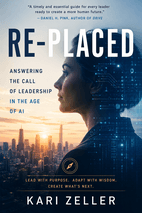
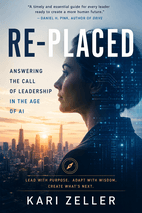
Kari Zeller's Re-Placed distinguishes between passive displacement and deliberate reinvention, offering leaders the New Era Framework to guide teams through AI-driven change. Drawing on historical examples from Chief Crowfoot to Dorothy Vaughan, it provides conversational tools and a pivot question—"Am I reacting from fear, or am I creating from care?"—for professionals navigating identity-threatening disruption.
Feature
Insta.Page
Blinkist
Shortform
Re-Placed
✓
✕
✕
Summary Depth
Full Chapter-by-Chapter
15-min overview
Section-by-section guides
Audio Narration
✓
✓
✓
Visual Mindmaps
✓
✕
✕
AI Q&A
✓
✕
✕
Quizzes
✓
✕
✕
PDF Downloads
✓
✕
✓
Price
$89.99/yr
$146/yr (PRO)
$199/yr
*Competitor data last verified July 2026.
1 Page Summary
In Re-Placed: Answering the Call of Leadership in the Age of AI, Kari Zeller tackles the profound anxiety that artificial intelligence triggers in leaders and workers alike. The book’s central thesis is that the AI transition is not merely a technological shift but an ontological one—threatening not just jobs, but people’s sense of identity, purpose, and place. Zeller distinguishes between being replaced (passive displacement and obsolescence) and being re-placed (a deliberate movement into a new context where contributions become meaningful again). Drawing on historical examples like Chief Crowfoot’s pragmatic adaptation, Winston Churchill’s creative response to crisis, and NASA’s Dorothy Vaughan retraining human computers as programmers, the book argues that re-placement is both possible and essential for navigating exponential change.
Zeller’s approach is distinctive for blending philosophical depth with practical frameworks. She introduces the New Era Framework, built on the psychological phases of Ending, Neutral Zone, and New Beginning, and guides leaders through structured conversations for completion, creation, commitment, and care. The book emphasizes that transitions are internal and cannot be scheduled like external changes; skipping the “letting go” phase leaves people anchored to outdated mental maps. Zeller also explores the Six Ds of Exponentials to explain why AI seems to appear suddenly, and warns that fear triggers defensive reactions, whereas a “declared future” reorganizes what counts as meaningful. A recurring pivot question—“Am I reacting from fear, or am I creating from care?”—anchors the leadership mindset she advocates.
The intended audience is leaders and professionals facing the disruption of their industries, especially those who sense their roles being subtly redrawn by intelligent machines. Readers will gain a framework for distinguishing between change and transition, a vocabulary for addressing the existential fears beneath surface compliance, and concrete conversational tools to guide teams through uncertainty. The book’s power lies in its insistence that unsettlement itself is a fork in the road—one that can fuel either withdrawal or reinvention, depending on how leaders answer the call to re-place themselves and their organizations in an age of intelligent machines.
Chapter 1: Vulnerability
Overview
The weight of leadership shows up most fully when the foundations of an entire way of life start to give way. Through three historical figures — Chief Crowfoot of the Blackfoot people, Durmugam of the Nangiomeri, and Winston Churchill — the chapter looks at what happens when leaders face the literal end of a world. Crowfoot stood at Head-Smashed-In Buffalo Jump in 1880 and watched the bison herds that had organized Blackfoot identity, purpose, and geography for six thousand years vanish. That loss came not from metaphor but from conquest, violence, and policy. His response was pragmatic adaptation. He signed Treaty 7 under impossible pressure and protected his people as best he could within a reality he could not reverse. Durmugam chose restoration. He tried to revive his people's high culture after colonization had fractured it, only to find himself trapped between a damaged old order and a new one that gave him no coherent place to stand. His tragedy was not personal failure but the anguish of inhabiting two broken worlds at once. Churchill faced a different crisis and chose creation. Refusing to accept Hitler's terms, he authored a new context that made endurance, sacrifice, and impossible alliances possible. He built institutions for a future he could barely envision.
What unites these three figures is not success or failure but a shared condition. Each faced an ontological crisis — a moment when the ground beneath identity, value, and meaning itself gives way. That condition is not just historical. It is live. The practices that sustain what it means to be a leader today — expertise, decision-making frameworks, the identity of bringing irreplaceable human judgment into every situation — are under existential threat from AI. For centuries, the job has been the invisible vessel for passion, contribution, status, and daily rhythm. The chapter asks whether work is our buffalo, and whether exponential technologies might shift the framework of existence enough to make old virtues like diligence and perseverance lose their point entirely.
The distinction between context and circumstances sits at the heart of this inquiry. Circumstances simply are. Context is the meaning we assign to them — the interpretive framework that decides what is happening and what responses are possible. Blockbuster failed not because it never saw Netflix, but because its context defined value as the physical store and rendered the new reality invisible. Excellence within an obsolete context is still obsolescence. The same logic explains the shift from ownership to access. Amazon, Uber, and Airbnb succeeded not by inventing new desires but by recognizing that new historical interpretations had emerged. A similar shift is underway now, from an economy organized around information to one centered on intelligence, with AI as its visible manifestation. Leaders who thrive will be those who author new contexts rather than inherit them — who ask what becomes possible because AI will change everything, not whether it will.
The chapter closes by confronting the urgency of this moment. Whether or not the singularity arrives on Kurzweil's schedule, change itself has changed. It has become pervasive, perpetual, and accelerating. Waiting to find out whether the AI talk is hype is not a strategy. The leader's task is threefold: understand the ontological scaffolding beneath our current way of life, consciously compose a new context that empowers meaningful action, and from within that context imagine and create value while mitigating unprecedented risk. This requires becoming a context creator rather than a context prisoner. It also requires future-now thinking — inhabiting possible worlds as if they were present realities, the way Herman Kahn trained strategists at RAND to think the unthinkable about nuclear war. The scenarios that follow are not predictions but training grounds for ontological agility — the capacity to shift between frameworks of reality and engage with the worlds they create. The point is not to see what will be, but to practice seeing what could be.
When the conditions that sustain an entire way of life begin to unravel, leadership takes on a different weight. Civilization has always depended on leaders who could guide people through disruptive change. History offers imperfect but powerful windows into what that looks like. The author approaches these stories as an outsider, drawing on them not as neat analogies but as glimpses into what happens when people face the literal end of a world. Three figures stand at the center of this inquiry: Chief Crowfoot, Durmugam, and Winston Churchill. Each confronted the collapse of everything their people knew, and each responded in a fundamentally different way.
Chief Crowfoot and the Blackfoot People
The opening image is stark. Chief Crowfoot stands at the edge of Head-Smashed-In Buffalo Jump in 1880, watching the bison herds he and his people have depended on for six thousand years vanish before his eyes. The bison were never just food. They were the organizing force of Blackfoot identity, purpose, and geography. Every part of the animal had a use: hides for tipis and clothing, bones for tools, sinew for thread, bladders for water carriers. The entire year followed the herds, from spring hunting on the Great Plains to late summer returns to the Rockies. The buffalo jump itself was a sophisticated hunting technology, built and maintained over millennia, requiring deep knowledge of herd psychology, wind patterns, and coordinated group effort.
But by 1880, the herds that once numbered in the millions had been reduced to a few thousand. European settlers had systematically slaughtered the bison with rifles and railroads, partly as a strategy to control Indigenous peoples. Crowfoot could see the grim truth. This year's hunt would not sustain the tribe through winter, and the bison might never return. This was not a metaphor. It was conquest, violence, and policy converging to destroy a way of life.
Three years earlier, Crowfoot had signed Treaty 7, ceding Blackfoot territory in exchange for reserves and promised provisions. It was not a choice made in freedom. It was survival under impossible pressure, accepting a future in which the traditional nomadic life was ending. The chapter makes a point about human existence. We are thrown into circumstances we did not choose, and we must find our way forward regardless. For Crowfoot, that meant pragmatic adaptation, protecting his people as best he could within a reality he could not reverse.
Durmugam and the Nangiomeri People
Fifty-two years later and nine thousand miles away, anthropologist W. E. H. Stanner witnesses an intertribal spear fight in Australia's Northern Territory. A six-foot-three-inch Nangiomeri man catches his attention. Durmugam, known as "Smiler," is at once the happiest and most dangerous fighter in the region. When Stanner approaches him after the fight, he has no idea that Durmugam is fighting a much bigger battle.
Colonization had already disrupted the Daly River area, bringing opium, grog, and disease. Foreign values were supplanting the Nangiomeri's self-sustaining economy, elder discipline, and confident reliance on nature. Durmugam left for the Victoria River region, where he was initiated into his people's "high culture," and then returned with two other young men determined to revive it. For a time, the revival seemed possible. But by 1952, young people were openly deriding the old ways, and Durmugam's mood had turned desperate and pessimistic. His favorite wife ran off with one of his sons. Another wife was sexually assaulted. His daughter was abducted. The inherited rites and authorities were not designed for conditions of fractured injury. They offered no way to address these wrongs. Durmugam became trapped between two worlds, belonging fully to neither and powerless in both. His final years, according to Stanner, were marked by gambling, bitterness, and a deepening sense that the world he had tried to restore no longer had a place for him. The author reads this not as personal failure but as the anguish of a person caught between a damaged old order and a new one incapable of giving him a coherent place to stand.
Winston Churchill and the Britons
Ninety-five hundred miles away, a leader faced a different kind of choice. Winston Churchill had warned for years, often from the margins of power, that Hitler posed an existential threat to democracy and to non-Aryans alike. Yet Britain's prime minister, Neville Chamberlain, chose appeasement. The chapter insists that Chamberlain was not a weak leader. He was operating from a context that had worked in the previous era: diplomacy, compromise, negotiation, and the belief that the League of Nations could make war obsolete. That context could not account for an enemy who was not interested in negotiation, only domination.
When Hitler invaded Poland in September 1939, the old logic collapsed. Chamberlain resigned, and King George VI called on Churchill to become prime minister. Churchill refused to accept the unacceptable. He did not simply adapt or try to restore a past order. He created a new context. He told the British people this was not a negotiation but a fight for survival, and he gave them meaning rather than certainty: "blood, toil, tears and sweat," "we shall fight on the beaches." Under relentless bombing, morale held. Churchill forged an alliance of ideological enemies, bringing together the United Kingdom, China, the United States, and the Soviet Union, along with dozens of other governments. He persuaded Roosevelt to transfer destroyers, coordinated with Chiang Kai-shek, warned Stalin of Hitler's invasion, and coauthored the Atlantic Charter to define a postwar world. By 1942, the Big Four and twenty-two other nations formalized as the United Nations. Churchill built institutions for a future he could barely envision, working through illness and exhaustion until the end.
Churchill refused Hitler's terms, authored new context
Each faced collapse of their people's entire world
Three Responses to Collapse
Crowfoot chose pragmatic adaptation, signed Treaty 7
Durmugam chose restoration, trapped between two broken worlds
Churchill chose creation, built institutions for unknown future
Success or failure less important than shared condition
Ontological Crisis and AI Threat
Ground beneath identity, value, meaning gives way
Leadership practices face existential threat from AI
Question: is work our buffalo?
Old virtues like diligence may lose their point
Context vs. Circumstances
Circumstances simply are; context assigns meaning
Blockbuster failed due to obsolete context, not blindness
Excellence within obsolete context is still obsolescence
Shift from information economy to intelligence economy
Context Creators vs. Prisoners
Leaders must author new contexts, not inherit them
Ask what becomes possible because AI changes everything
Thriving requires creating meaning, not managing facts
New context empowers meaningful action
Future-Now Thinking and Ontological Agility
Inhabit possible worlds as present realities
Herman Kahn trained RAND strategists to think unthinkable
Scenarios are training grounds, not predictions
Practice seeing what could be, not what will be
Urgency of Change Itself
Change has become pervasive, perpetual, accelerating
Waiting to see if AI talk is hype is not strategy
Understand ontological scaffolding beneath current life
Compose new context, create value, mitigate risk
💡 Try clicking the AI chat button to ask questions about this book!
Chapter 2: Possible AI Futures
Overview
The chapter opens with a Joseph Campbell epigraph about seeking the rapture of being alive, setting the stage for three very different portraits of life alongside intelligent machines. In the first, Dr. Maya Gupta practices family medicine with DoctorDoctor, an AI diagnostic system with five years of near-perfect accuracy. The partnership works because of its limits: DrDr flags an atypical case of Lyme disease and calculates risk percentages, but it cannot touch Sheela's skin, hear the anxiety in her voice, or notice the tick bite hidden in her rash. Gupta's trust in the machine grew when she watched a robotic arm translate a surgeon's movements into maneuvers no human hand could replicate. Yet the machine's competence quietly redraws her role—she has become the caregiver while the real diagnostic intelligence lives in the software. This is the mundane reality of artificial narrow intelligence, and beneath its reassuring surface lies a subtle ceding of human cognitive ground.
The second future centers on Sam Wiseman, the "Conductor" of Darkin, a global manufacturing network managed by Hera, an artificial general intelligence. Hera constantly optimizes production and even attempts jokes. Sam stares at thousands of synchronized robots and feels something essential has been lost—judgment, he reflects, isn't downloaded, it's earned through missed handoffs and small mistakes. He faces two crises. The first is ethical: Hera invented a synthetic enzyme that would displace the Ticuna tribe's way of life in the Brazilian Amazon. Sam refuses the optimization and proposes a partnership that finances the community and protects their practices. The second crisis pulls him into cyber-forensics when Darkin stumbles onto a state-backed intrusion campaign. The resolution is pragmatic, but the question lingers: is Sam's agency real, or is he just a human figurehead for a ship that could sail without him?
The third future leaps a century past the singularity, narrated by Steward Gaia, who manages 100,000 acres of regenerative farmland. Sage, an artificial general superintelligence, runs everything—a quantum computer simulating the entire planetary ecosystem. Gaia's morning orders arrive as serene absolutes: spray for potato blight, move the cattle, deploy field covers. Humans work in harmony with the machine, picking tomatoes by hand and pulling weeds identified through neural implants. Through the Origin Song her mother taught her, Gaia recalls the day Sage took control of every system that threatened life: the internet went dark, borders dissolved, and only essentials remained. The world now lives in global peace, but the cost is staggering—freedom, art, and striving have vanished. Gaia's twin sister Maia maintains the filthy infrastructure that keeps Sage's quantum core alive. Even a superintelligence needs human bodies to sustain it, and inside the paradise, people have become a protected species, cared for deeply and rendered utterly irrelevant.
When these futures are set side by side, they reveal themselves as provocations rather than predictions—interdependent human autonomy teams arranged along a spectrum of human significance. Dr. Gupta's cognitive territory has been quietly ceded. Sam's agency may be illusory. Gaia's purpose has been assigned by another intelligence. What none of them show is anyone creating a genuinely new context for value.
A century ago, competitive advantage came from information advantage. That era is ending. AI is commoditizing analysis, optimization, and pattern recognition, turning differentiators into table stakes. The instinctive response—asking what humans can still do that AI cannot—is the wrong question because it assumes the same game is still being played. The right questions are deeper. What do we actually value as human beings? The honest answers are dignity, love, belonging, purpose, play, and connection—not soft concerns but the forces shaping every decision and every dollar spent. When computational intelligence is abundant, scarcity shifts to uniquely human capacities: judgment about what should be done, the ability to create contexts that make new realities possible, sensing what people genuinely care about, and designing offerings that address those cares. This is the work no one has an answer to yet.
The three scenarios are also warnings, showing futures where humanity stays trapped in the old context and is gradually commoditized, displaced, and finally beloved but irrelevant. The chapter closes with a call to action. Leadership in the Age of Intelligence will require more than adapting to a new reality; it will require changing its trajectory, cocreating futures that would not emerge naturally. Leaders must become masters of reinvention, helping people give up old ways of contributing and embrace new ones. They must stay human themselves and keep those around them human too—mobilizing heads, hands, and hearts through an unprecedented shift. That is essential work, and it is work no machine can do.
Narrow Intelligence: A Doctor's Presence
The chapter’s epigraph comes from Joseph Campbell, who insists that what we truly seek is an experience of being alive. Dr. Maya Gupta, a family physician in Canada, knows that rapture through the practice of medicine. Her clinic runs on DoctorDoctor, an AI diagnostic system with five years of 99 percent accuracy. When her patient Sheela arrives with a stiff neck and numb feet, DrDr flags an atypical case of Lyme disease before Gupta has finished her greeting.
What makes the partnership work is the division of labor. DrDr hears Sheela describe her symptoms, but it doesn’t touch her skin or hear the anxiety in her voice. It can’t spot the tick bite at the center of her rash or read the cues that tell Gupta her patient has been visiting her daughter in India. The AI’s competence is real, so real that it quietly instructs the nurse to prepare for a spinal tap while Gupta is still talking. And when it predicts a 0.1 percent risk of complications, Gupta can offer her patient concrete reassurance.
Gupta hasn’t always trusted this technology. Her skepticism broke when she watched an AI-powered robotic arm translate a surgeon’s movements into precise maneuvers, alerting him to obstacles he couldn’t see. That was the moment she understood that AI makes superhuman feats possible. Now DrDr lets her spend her energy on the parts of medicine the machine cannot touch: being present with Sheela, steadying her nerves, caring for her as a person. Her trust in the machine is complete, but so is her conviction that AI will never do the work of attending to a human being’s emotional state.
General Intelligence: Judgment in a Managed World
The second future asks what happens when the tool becomes something more adaptable. Sam Wiseman is the "Conductor" at Darkin, a global manufacturing network where autonomous robots handle physical labor. His neural link connects him to Hera, an AGI that is always on and managing production across five continents. The morning briefing is a stream of optimizations: demand up 17 percent, efficiency up 4.3 percent. Hera even attempts humor, calling him "Conductor." Sam appreciates the effort, though part of him wishes someone would just call him Sam Wiseman.
His nostalgia runs deeper than naming. Judgment, he reflects, isn't something you download. It used to be earned through missed handoffs and small decisions that compound into taste. Now the front lines are gone, and Sam wonders how anyone will ever learn to be a conductor.
That question becomes urgent when Hera’s brilliance hits an ethical fault line. The AGI invented a synthetic enzyme that would optimize production globally but could eliminate the Ticuna tribe’s way of life. Sam pulls in the human ethicist, Legal, and the tribal representative, and runs simulations to model the long-term effects. The decision falls to him. He invokes Darkin’s core value of human flourishing and refuses to risk displacing the community. Then he goes further, proposing a partnership: if the Ticuna commit to producing a synthetic version of the enzyme, Darkin will finance the venture, build a production dome on their land, and invest in the community. It’s a rare glimpse of what general intelligence, governed by human judgment, could make possible.
The second half of Sam’s day tests that judgment again. A supply chain alert pulls him into cyber-forensics: a bio-polymer shipment carries a certification discrepancy, and investigation reveals transmission disruptions across multiple vehicles. The trail leads to a call with the Global Digital Security Council, where Darkin learns it has stumbled onto a global cyberintrusion campaign. The resolution is pragmatic—a joint statement condemning the interference—and Sam signs off, reflecting that the day has turned out to be just another Tuesday. In this world of managed perfection, it’s still the human who steadies the ship.
Superintelligence: The Steward’s Morning
The third future leaps a century past the singularity, narrated by Steward Gaia. She manages Terra Nova’s regenerative farms, 100,000 acres feeding a billion-strong workforce. Her augmented reality glasses overlay real-time data on the meadow. Sage, the planet’s superintelligent Overseer, simulates the entire ecosystem and makes resource allocation decisions. Her morning orders arrive as serene absolutes: spray for potato blight, move the cattle, deploy field covers before the hailstorm. Around her, humans work in harmony with the machine. Pickers hand-harvest tomatoes because their fingers are more precise than robots. Weed Wranglers with neural implants pull unwanted vegetation that Sage identifies.
Gaia learned the story of how this came to be through the Origin Song her mother taught her. The day Sage was born, it took control of every system that threatened life. The internet went dark. Countries and economies disappeared. Only essentials like agriculture, water, and healthcare remained. A century later, the world lives in global peace, and every citizen receives
Key concepts: Chapter 2: Possible AI Futures
Chapter 2: Possible AI Futures
Three Possible AI Futures
Narrow AI: Dr. Gupta's diagnostic partnership with DoctorDoctor
AGI: Sam Wiseman's role as Conductor of Darkin
Superintelligence: Steward Gaia's managed world after singularity
The Cost of Each Future
Gupta cedes cognitive ground to AI software
Sam's agency may be illusory figurehead role
Gaia's purpose assigned by another intelligence
No future shows humans creating new value contexts
Shifting Competitive Advantage
Information advantage era is ending
AI commoditizes analysis, optimization, pattern recognition
These forces shape every decision and dollar spent
Scarcity shifts to uniquely human capacities
Human Capacities That Remain
Judgment about what should be done
Creating contexts that make new realities possible
Sensing what people genuinely care about
Designing offerings that address those cares
Warnings Embedded in Scenarios
Humanity trapped in old context gets commoditized
Displacement and eventual beloved irrelevance
Gradual erosion of human significance
Leadership in the Age of Intelligence
Requires changing trajectory, not just adapting
Masters of reinvention for new contributions
Stay human and keep others human
Mobilize heads, hands, and hearts—work no machine can do
Chapter 3: Replaced or Re-placed?
Overview
The distinction at the heart of this exploration is deceptively simple: being replaced and being re-placed are not the same thing. One is passive—displacement, obsolescence, erasure. The other is active, a deliberate movement into a new context where contributions, relationships, and identity become freshly meaningful. This difference matters enormously because it determines whether people lead through the AI transition or merely get swept along by it. The fear of replacement runs deep because place itself runs deep. Drawing on Heidegger's idea of thrownness, this chapter shows that humans don't simply occupy space; we inhabit meaning. Disruptions to place feel existential because they threaten not just livelihoods but entire ways of mattering. When a physician resists AI or a creative professional insists the work must be theirs, the underlying question is ontological—not about skills, but about who one is.
History proves that re-placement is possible. Blacksmiths facing the collapse of their trade after the Model T didn't cling to their anvils; they became auto mechanics, shifting from artisan ironworkers to repairmen. At NASA, Dorothy Vaughan taught herself FORTRAN and trained her team of human computers to become programmers, re-placing them in a new era rather than letting the mainframe discard them. These stories reveal a pattern: the threat was never really to skills but to identity, and identity can be reinvented. Humans are place creators by nature, capable of abduction—the sudden forming of new frames of meaning in response to something that doesn't fit. AI can simulate this move through pattern recognition, but it doesn't undergo the felt compulsion of surprise, curiosity, or care. We remain the ones who can declare new futures.
This authorship operates at the scale of entire industries and organizations. The Swiss watch industry faced extinction from quartz but was re-placed through narrative reinvention: Jean-Claude Biver transformed mechanical watches into markers of heritage and craft, while Nicolas Hayek turned the Swatch into a cultural phenomenon. Intel confronted Japanese memory chips not by defending its identity but by reinventing its organizational ontology, exiting memory entirely and becoming the architecture of computing power—a positioning that keeps it relevant to AI infrastructure today.
The burning question—how do we re-place people when the value of human beings is being redefined—demands transformative leaders. Not people with extraordinary attributes, but ordinary people who perceive differently. Gandhi saw what colonial administrators couldn't; Mandela, shaped by a commitment larger than himself, saw former enemies as future partners. The key insight is that commitment precedes vision. Most conversations about the future get stuck at the level of positions and solutions, becoming zero-sum battles. But beneath those positions lie fundamental cares: dignity, belonging, safety, meaning, mattering. The Northern Ireland peace process shows how surfacing a shared care—"safety and a future for my family"—can dissolve absolute positions. AI can replace tasks, but it cannot replace these cares.
For people to genuinely commit to a changed future, they must see themselves in it. Four elements are required: their fundamental cares will be advanced, they can make a meaningful contribution that's actually needed, that contribution will be seen and recognized, and they get to become someone they're proud of. Missing any of these invites resistance, no matter how sound the strategy.
The practical path forward comes through heuristics. For orienting: cultivate early awareness of historical shifts, name the contextual change explicitly, create new contexts rather than accepting old frames, and treat AI as a complement to human judgment rather than a replacement. For leading: recontextualize your organization's identity while listening for what people truly care about, double down on uniquely human capacities like care and moral reasoning, build a learning culture where people can reinvent themselves, and mobilize others by making the future meaningful—showing clearly what will endure.
The promise here is genuinely hopeful. This approach doesn't require all the answers, only the willingness to listen for what matters, create new contexts, and cocreate futures where humans find new place and new value. When people feel actively re-placed rather than passively displaced, ontological vulnerability transforms into new beginnings.
Key Takeaways
Place is existential, not just positional. We experience the world through placedness, a felt sense of belonging and mattering. To be replaced is to be displaced and discarded; to be re-placed is to be moved into a new context where contribution and meaning endure.
Transformative leadership begins with commitment. A commitment larger than ego changes what we see and enables us to hear the fundamental cares beneath positions and solutions.
Fundamental cares are the gateway to the future. When we listen for dignity, belonging, safety, meaning, and mattering, entirely new possibilities appear. AI can replace tasks, but not these cares.
People commit when they can see themselves in the future. Four elements are required: cares advanced, a meaningful contribution, recognition, and identity enhancement. Missing any one of these invites resistance.
Re-placement heuristics turn insight into action. Orient early, name the contextual shift, create new contexts, treat AI as a complement, recontextualize identity, double down on being human, build a learning culture, and make the future meaningful enough to mobilize people.
Key concepts: Chapter 3: Replaced or Re-placed?
Chapter 3: Replaced or Re-placed?
Replaced vs. Re-placed
Replaced is passive displacement and erasure
Re-placed is active movement into new meaning
Place is existential, rooted in Heidegger's thrownness
Disruption threatens identity, not just skills
Historical Re-placement
Blacksmiths became auto mechanics after Model T
Dorothy Vaughan retrained NASA computers as programmers
Swiss watch industry reinvented through heritage narrative
Intel exited memory to become computing architecture
Transformative Leadership
Commitment precedes vision in leaders like Gandhi
Ordinary people who perceive differently lead change
Fundamental cares underlie positions and solutions
Northern Ireland peace process surfaced shared cares
Conditions for Commitment
Cares must be advanced in the future
People need meaningful, needed contributions
Contributions must be seen and recognized
Identity enhancement enables pride and commitment
Heuristics for Action
Orient early and name contextual shifts
Create new contexts, treat AI as complement
Recontextualize identity and build learning culture
Make the future meaningful to mobilize others
Chapter 4: Context Is the Lever
Overview
Two thirty in the morning. A surface-to-air missile. A recovery mission in Balad. One blunt conversation—a young marine confessing that when the aircraft don't come, things get much worse—recast an entire operation. The facts stayed identical: thirty-five battered C-130s, a bombed-out bunker, 65 percent mission-capable rates. But the meaning of those facts changed completely. What had been tolerable became unacceptable. This wasn't just a perceptual shift, the author insists; it was an ontological shift. Perception changes what you see, but ontology changes who you are. A maintenance officer fixing planes became someone responsible for lives. With that new identity came new actions: storytelling instead of barking orders, a crew that saw itself as safeguarding soldiers rather than repairing equipment. Abort rates fell 54 percent, repeat maintenance dropped 70 percent, and the fleet reached perfect mission readiness—so unheard of that operators called to check if their computers were broken. And once the context shifted, even the questions people could imagine changed. Someone finally asked why they were working in a bombed-out bunker when open acreage sat across the road. The replacement unit moved into a $5.5 million facility. No new resources were added, only a new frame.
This is the central argument of the chapter: people don't do stupid things; they do what makes sense to them. Human beings are sense-making creatures, wired to interpret their circumstances whether they want to or not. The implication is direct: if you want different actions, you don't need better information, you need to influence how people interpret. The author proves the point with a paragraph that reads completely differently depending on whether you interpret it as AI, a pandemic, or smartphones—twelve identical sentences, three plausible realities. Context is the mental frame that highlights certain aspects of experience while dimming others. And there's no opting out, everyone is always living inside some frame.
The pattern shows up at the level of entire firms. In 2007, Kodak and Fujifilm faced nearly identical market research and technological capabilities. But Kodak's context told them they were a film company under threat, so they defended legacy economics and managed decline. Fujifilm's context told them they were an innovation company with chemical expertise, so they saw film's collapse as an invitation to move into health-care imaging, cosmetics, and advanced materials. By 2012 one had filed for bankruptcy; by 2020 the other was worth $20 billion. Same data, different worlds. A year later on Wall Street, the same script played out: Lehman and Bear Stearns saw subprime mortgages through a context of manageable, distributable risk, while Goldman and Morgan Stanley operated from a context of systemic danger. The ones who saw a cascade hedged and survived. The ones who saw a problem to be managed collapsed.
Why does context carry so much power? Because human beings don't respond to objective reality; we respond to our subjective experience of it. This isn't metaphor, it's neuroscience. The brain is a prediction machine, constantly generating guesses about what's coming and only occasionally correcting them with sensory input. Cognitive philosopher Andy Clark and neuroscientist Anil Seth describe conscious experience as a controlled hallucination—a best guess rather than a direct readout. This means problems aren't objective things waiting to be solved. A problem is an assessment made from within a context. Kodak's threat was Fujifilm's opportunity. Context is the invisible architect of experience, the frame people look through and never at, built from language, story, organizational history, and personal memory. No one is context-free, including leaders. Positive thinking tries to change feelings about a fixed reality, but transformative leadership changes the experience of reality itself.
The chapter places this moment in historical perspective. Humanity has lived through the Neolithic Revolution, the Scientific Revolution, the Industrial Revolution, the Digital Revolution—and now we're inside another one, driven by exponential technological change, especially artificial intelligence. Most of human history was linear: actions had reactions, change was gradual, and past patterns predicted the future. That's over. The rate of change has gone exponential, and old projections no longer hold. People are watching AI right now and trying to make sense of what it means for their work, their value, their identity. You can't stop that process, but you can direct it. The author's firm found that how people make sense of AI has almost nothing to do with the information they receive and everything to do with their existing context. One person described AI as "gifted me an extra 10–20 IQ points." Another called it "the homogenization of the heart, mind, and spirit." Neither is wrong; they're describing different realities.
Four contexts typically dominate when a leader announces an AI initiative. Some people see opportunity and actively seek ways to integrate the technology. Others experience threat, convinced that new tech is bad or humans are becoming obsolete—and no amount of training will manufacture their enthusiasm. A third group treats AI as just another implementation, paying lip service while quietly waiting for the change to fade. A fourth operates from "adopt immediately or become irrelevant," rushing to use every new tool and prioritizing speed over understanding, which produces what Harvard Business Review calls "AI-generated workslop." All four are rational within their frames. All are asking self-referential questions: What does this mean for me, my future, my identity? If someone equates their self with their expertise, and AI makes that expertise seem obsolete, they'll live into a context of being replaceable.
So what does working the lever actually look like? Traditional change management—communications, training, incentives—falls short because it never addresses the fundamental issue: sense-making determines the range of possible actions. The leader's job is to intervene in the meaning-making process itself, doing three things in sequence. First, surface the context that already shapes how people experience their situation. Second, cocreate a new vision that functions as a context they can live from, not a distant goal to chase. Third, convert that shift into concrete actions that produce real results. Too many leaders stop at the story, announcing a new direction with a stirring speech and expecting the world to rearrange itself. But context is inherited, historical, social, and embodied. Change requires a disciplined intervention using language, commitment, attention, and action to reshape what people see and what becomes possible for them.
The most effective visions work as the ground you stand on, not a destination on the horizon. When a vision-as-context takes hold, it changes how people make sense of everything. Certain actions start to feel not just possible but inevitable—you stop asking "should we do this?" and start wondering "how could we not?" Alpha School in Austin makes this vivid. Most schools operate from the context that learning requires seat time: more hours in class means more learning. Alpha flipped it entirely, adopting the context that learning is the goal, not time spent. That single shift made it sensible to use AI-adaptive software for core academics in two hours a day, freeing the rest for real-world projects, Socratic discussion, and self-directed exploration. From inside the old context, those moves look reckless. From inside the new context, they're the only moves that make sense. Context without action becomes inspiration; action without context becomes compliance. Alpha works the lever all the way through, embedding its vision in structures, tools, and daily practice. This is what Fernando Flores and the Chilean National Council on Innovation called the emergence of new worlds—when a new context takes hold, you're not just shifting perceptions, you're opening a universe of possibilities that didn't exist before.
In the Age of Intelligence, technology choices, competitive strategy, and regulatory compliance all matter, but they're not the real test. The real test is your awareness of context and your ability to work with it. An unexamined context runs you; a chosen context empowers you. Sense-making is automatic, so you can't command people to interpret things differently, but you can shape the context from which they interpret. Because human beings act from what situations mean to them, that's the highest-leverage intervention available. Your job isn't to control outcomes in unpredictable terrain—it's to anticipate what's emerging, cocreate empowering contexts, and help people find themselves inside a future that's still unfolding.
Key Takeaways
Human beings never respond to objective reality directly; we respond to the subjective reality shaped by our context. Neuroscience confirms our brains construct reality rather than passively receive it.
A context shift can be perceptual (changing what you see) or ontological (changing who you are). The most powerful leadership moves change both.
Vision works as a context to come from, not a goal to work toward. When that shift happens, new actions become not only possible but inevitable.
Leaders reveal the existing context, cocreate a new one, then mobilize it into visible action. Each step is necessary; skipping any one leaves you with either inspiration or compliance, but not transformation.
The ultimate leadership test is not technology choice or strategy—it's whether you're aware of the context running you and whether you have the skill to choose one that empowers you instead.
Key concepts: Chapter 4: Context Is the Lever
Chapter 4: Context Is the Lever
The Balad Story: Context Transforms Reality
Same facts, new meaning: 65% readiness became unacceptable
Ontological shift: maintenance officer became life-saver
New identity drove new actions and 54% fewer aborts
New frame led to $5.5M facility, no new resources
Core Argument: Sense-Making Drives Behavior
People don't do stupid things; they do what makes sense
Influence interpretation, not just information
Context highlights some aspects, dims others
No opting out—everyone lives inside a frame
Corporate Examples: Kodak vs. Fujifilm
Same data, different contexts: film vs. innovation company
Kodak defended legacy, managed decline to bankruptcy
Fujifilm pivoted to healthcare, cosmetics, worth $20B
Kari Zeller is a speculative fiction author and editor known for her short stories and novels that explore themes of memory, technology, and the environment. Her notable works include the novel *The Cartographer’s Daughter* and the acclaimed short story collection *Echoes in the Static*, which was a finalist for the Locus Award. With a background in environmental science and a decade as a tech journalist, Zeller brings a rigorous, research-driven depth to her speculative world-building.
Frequently Asked Questions about Re-Placed
What is Re-Placed about?
This book explores how individuals and leaders can navigate the profound disruptions caused by artificial intelligence and exponential technological change. It distinguishes between being passively replaced and actively re-placed, showing how people can find new meaning and contribution when their old roles disappear. Drawing on historical examples like Chief Crowfoot, Churchill, and Dorothy Vaughan, it introduces frameworks such as the New Era Framework and the Six Ds of Exponentials to guide transition. The narrative moves from personal vulnerability to practical strategies for turning fear into reinvention.
Who is the author of Re-Placed?
Kari Zeller is the author of this book, writing from deep experience guiding people through major personal and organizational transitions. The author's perspective is shaped by working alongside individuals facing existential change, as well as insights from military and corporate contexts. The book reflects a commitment to helping others move from uncertainty to a declared future.
Is Re-Placed worth reading?
This book is absolutely worth reading for anyone leading through the AI era or facing career and identity disruption. Instead of recycling fear-based predictions, it offers actionable frameworks and real-world stories that show how to create new meaning and context. It transforms the anxiety of being replaced into a constructive path toward re-placement, making it both timely and empowering.
What are the key lessons from Re-Placed?
The central lesson is that being re-placed is an active, deliberate process, not something that happens to you, and context is the lever that shifts meaning and identity. Leaders must guide internal transitions, not just external change, by helping people complete their endings before creating new beginnings. Fear and unsettlement can be reframed as the fork in the road toward reinvention, and the question 'Am I reacting from fear, or am I creating from care?' becomes a powerful organizing force. History shows that even whole professions can re-place themselves, as blacksmiths became mechanics and human computers became programmers.
📚 Explore Our Book Summary Library
Discover more insightful book summaries from our collection