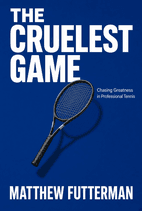
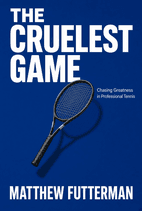
Matthew Futterman's The Cruelest Game examines mid-2020s professional tennis as a psychological crucible that breaks its greatest players, exploring why aging champions resist decline and young prodigies often buckle under promise. Written for devoted fans and readers fascinated by elite achievement, it reveals how purpose beyond trophies determines survival.
Feature
Insta.Page
Blinkist
Shortform
The Cruelest Game
✓
✕
✕
Summary Depth
Full Chapter-by-Chapter
15-min overview
Section-by-section guides
Audio Narration
✓
✓
✓
Visual Mindmaps
✓
✕
✕
AI Q&A
✓
✕
✕
Quizzes
✓
✕
✕
PDF Downloads
✓
✕
✓
Price
$89.99/yr
$146/yr (PRO)
$199/yr
*Competitor data last verified July 2026.
1 Page Summary
In The Cruelest Game, Matthew Futterman examines professional tennis in the mid-2020s as a sport that systematically breaks its greatest players, asking what it takes to survive a game that demands immortality from fallible bodies and minds. The book's central tension revolves around two forces: aging champions—the "lions"—who cannot accept their endings, and young prodigies who often cannot withstand the weight of their own promise. Futterman uses the stories of figures like Björn Borg, who walked away at twenty-six after a US Open final loss and never truly recovered, and Novak Djokovic, whose relentless discipline and "secret code" of practice separated him from his peers, to explore the psychological and physical toll of chasing greatness. The narrative argues that the gap between what a player's mind believes and what a failing body can deliver drives many to madness, and that survival depends on accepting limits rather than treating the body as a puzzle to be solved.
The author's approach is distinctly journalistic and character-driven, weaving together profiles of current stars—Carlos Alcaraz, Jannik Sinner, Coco Gauff, Naomi Osaka, Iga Świątek, Aryna Sabalenka—with reflections on legends like Andre Agassi and Serena Williams. Futterman also explores the ecosystem around the players: performance coaches like Ben Crowe who emphasize the whole self over purely mental focus, the influence of families (both as support systems and potential liabilities), and the relentless scouting apparatus that searches for the "next ones" before they are even teenagers. The book distinguishes itself by treating tennis not just as a sport but as a psychological crucible, where the same closeness that steadies a player can unravel a career, and where the "cruelest" aspect is not losing but the impossibility of ever feeling satisfied with winning. It also delves into raw details like Sinner's doping ordeal and the existential questions raised by players who take up the sport late, questioning whether lost childhood time can ever be made up at the top.
The intended audience is both devoted tennis fans and general readers interested in the psychology of elite achievement. Futterman connects the sport's specific pressures to universal themes of obsession, identity, and the search for meaning beyond trophies—drawing on Viktor Frankl's philosophy to frame how players like Sinner respond to circumstances beyond their control. Readers will gain a deeper understanding of why the game breaks its best, what separates champions from very good players, and how the modern era's demanding schedule, media scrutiny, and family involvement shape careers in ways that can be both empowering and destructive. The book ultimately argues that thriving in tennis is less about technical skill and more about finding a sense of purpose that extends beyond the scoreboard—a lesson that resonates far beyond the court.
Chapter 1: The Lions Go Kicking and Screaming
Overview
Professional tennis in the mid-2020s seems to break its greatest players: the old champions cannot accept endings, and the young prodigies cannot survive their own promise. What does it take to stay sane in a sport that demands immortality from bodies and minds that keep failing?
The lions
Professional tennis in the mid-2020s turns on two questions: why the game drives the best mad, and what it takes to survive and thrive. The answers play out among the aging champions, the lions, kicking and screaming. Their bodies delivered trophies, wealth, and fame but failed them long ago, and still they resist, sure there must be one more secret code
Key Takeaways
The madness that grips the game's best comes from the widening gap between a failing body and a mind still convinced there is one last fix.
For the aging champion, survival depends on accepting that the body will not recover, rather than treating it as a puzzle that can be solved.
The resistance of the lions is not stubbornness but what makes them great: they fight on because they cannot concede that the secret is gone.
In mid-2020s tennis, thriving means moving the fight from the body to the mind, where the real battle between decline and desire plays out.
Key concepts: Chapter 1: The Lions Go Kicking and Screaming
Chapter 1: The Lions Go Kicking and Screaming
The Lions' Resistance
Aging champions refuse to accept their failing bodies
They believe there is one more secret code
Their resistance is not stubbornness but greatness
They fight because they cannot concede the secret is gone
The Body-Mind Divide
Madness comes from gap between failing body and hopeful mind
The body delivered trophies but failed long ago
Survival requires accepting the body will not recover
Treating the body as a puzzle only deepens the struggle
Thriving in Decline
Thriving means moving the fight from body to mind
The real battle is between decline and desire
Staying sane demands rejecting the demand for immortality
The mind becomes the new arena for champions
💡 Try clicking the AI chat button to ask questions about this book!
Chapter 2: The Next One: Carlitos
Overview
Every sport crowns a next big thing, but tennis has a way of exposing the gap between hype and what a teenage phenom can actually withstand. The tension is not whether the talent is real, but whether it can survive the first encounter with the game's true weight.
Nadal's welcome
In February 2021, in a nearly empty John Cain Arena in Melbourne, Rafael Nadal schools Carlos Alcaraz, a seventeen-year-old Spanish qualifier, in practice. Nadal, in a sleeveless orange shirt, looks like a linebacker and whips forehands that Alcaraz's racket cannot handle. Balls clank off the strings; the takeback is too slow. For ten or twelve minutes it is a hazing more than a workout, then Alcaraz adjusts and begins to hold his own.
Phenoms and their fates
Alcaraz is unknown to most insiders at this point. Tennis is littered with phenoms who stall: Donald Young, once the greatest junior ever, now drifts; Grigor Dimitrov has banked tens of millions yet never escaped the "Baby Fed" label. Nadal grants Alcaraz intensity and shots but says improvement and willingness to live by the code separate champions from very good players.
First Grand Slam match
Days later Alcaraz wins his first Grand Slam main-draw match on Court 17, a minor-league venue with a dozen spectators, beating Botic van de Zandschulp 6-1, 6-4, 6-4. Pablo Carreño Busta, a second big brother, had told him to take in the moment and treat nerves as a choice. Walking the grounds unrecognized, Alcaraz says his game resembles Federer's, whose poster hung in his bedroom, and calls the Nadal practice painful: "He tries to hit harder on every ball." He admits the academy weeks are long and lonely.
The breakout
Then the rise arrives the way financial ruin is said to: gradually, then abruptly. A first tour title in Croatia in July 2021, a first Masters 1000 title in Miami in April 2022, another in Madrid where he beats Nadal and Djokovic on consecutive days, then the 2022 US Open. His five-hour quarterfinal with Jannik Sinner ends near 3 a.m., and a five-set semifinal against Frances Tiafoe draws Michelle Obama and gasps from the author's elderly father. Alcaraz becomes the youngest world No. 1 in men's tennis history after a record twenty-three hours and forty minutes of match play.
The team around him
Ferrero's estimate that Alcaraz has reached 65 percent of his potential rankles other players; Djokovic, barred from New York by his vaccine stance, reads it as disrespect. An abdominal virus and a hamstring injury then cost Alcaraz the fall season and the next Australian Open, and he has yet to beat a member of the sport's ruling troika at a Slam. His inner circle calls it a matter of timing. Team Carlitos includes:
his grandfather Carlos, who built the El Palmar club
his father Carlos, a former prospect
his mother Virginia, who guards his happiness
his brother Alvaro, who travels to fight loneliness
Ferrero, who dropped Alexander Zverev to take on the project
Ferrero and Molina
The gamble of choosing Alcaraz over Zverev paid off. Zverev is coachable only by his father and brother, carries abuse allegations he denies, and has smashed his racket at an umpire's foot. Alcaraz plays for Ferrero's approval: the coach sits courtside, directing court position and serve location, answering fist pumps with a nod, and signaling where to serve. When family duties or Ferrero's 2024 knee surgery intervene, Alcaraz feels lost until Samuel Lopez, once Carreño Busta's coach, becomes all he needs.
Albert Molina, the IMG agent who signed Alcaraz at thirteen, had built David Ferrer, a top-five player with a fraction of Alcaraz's gifts, through sheer work ethic. In Spanish tennis Molina is the man with the keys to the golden kingdom, turning players into commodities, ten-figure "brands," as IMG has done since Arnold Palmer. Standard deals, as the book describes them, pay agents and coaches 10 percent of prize money and 20 percent of sponsorship income, while stars negotiate lower commissions and guarantees.
The candy man
Every tennis star needs kismet. Alcaraz's arrived as Alfonso Lopez Rueda, president of the dessert firm Postres Reina, who loved red clay so much he drove half an hour to play at Club Alcaraz. Coach Carlos Santos raved about the boy; Lopez Rueda watched, then wrote a 2,000-euro check to fund the first junior travels abroad. The company kept bankrolling him; at ten he was a walking billboard. Others launch differently:
wealthy parents (Jessica Pegula, Emma Navarro, Taylor Fritz, Joao Fonseca)
sponsors buying a share of future earnings
an academy scholarship fund
a hedge-fund titan like Bill Ackman living out his dreams
Tennis stardom never happens by accident. The candy founders later faded, pushed out by an inner circle unwilling to share a billion-dollar career.
Paris, spring 2023
The 2023 French Open seemed the handover moment. Djokovic resented that the twenty-year-old on Calvin Klein billboards had become the biggest draw. Stefanos Tsitsipas asked to practice with Alcaraz and thanked him for restoring the game's joy, then felt less charitable after Alcaraz drilled him in the quarterfinals.
Before the semifinal, Novak's dark arts began: calling Alcaraz "the guy to beat," comparing him to Nadal, and filling the phone he never puts down with warnings about the burden of being favorite. Tennis forces players to answer who they have been and will be. He had beaten Novak in Madrid on fast, high-altitude clay in best of three; Paris clay should suit him, yet turmoil was building in his body and brain.
Novak spends the final days of every Slam hiding out, skipping practice for forest walks, still the mountain boy from the former Yugoslavia. That formula has crushed younger challengers for a decade. The code a generation learns the hard way: "greatness does not simply come." Rafa says the sport moves fast, except when it doesn't.
The collapse on Court Philippe-Chatrier
The lesson begins in the tunnel, where Novak reads the tension in Carlitos's eyes. On court the boy fidgets, hunting a pressure valve; Novak barely moves. Late in the first set, shots spray wide and a tightening runs up his right arm. He survived five hours with Jannik Sinner at the US Open; here he is barely an hour in. One miracle forehand, spun crosscourt on a full sprint, rescues the second set. Only Carlitos knows it's over: his body is seizing, slowly, then all at once.
Family, friends and investors gathered for a coronation on the court where Rafa won fourteen times. He is world No. 1, favorite and Slam champion. Win or lose has become win or fail. A champion first knocks someone off a peak, then defends the territory; that is when a loss becomes fear, embarrassment, despair.
The missions of the greats
The greats each had a mission:
The Williams sisters played to prove any girl, anywhere, regardless of skin color, could become the best.
Federer played to teach beauty, grace and mastery.
Nadal plays to feed a need to compete harder than anyone.
Djokovic plays as a Serb, a warrior people in a seven-hundred-year struggle with history.
Carlitos knows his purpose is the electric, dynamic tennis that will carry the sport into its next era. First he must learn this feeling. He succumbs to a full-body panic attack and a four-set crash, telling his box, "Estoy jodido": I'm fucked. His mind says fight; his body flees. Some of the best felt the swirl at the top grow unbearable and became ghosts. Björn Borg, the biggest ghost, watches, curious who can avoid his fate.
Novak knows the feeling; his mind once fled and his body quit until he learned to stop it. He is Top Gun's Maverick: "Maybe so, sir. But not today." He wins a twenty-third Grand Slam, one more than Rafa, three more than Roger, twenty-two more than Carlitos. The codes: pivot from panic to patience, knowing this too shall pass, except when it doesn't, and you become a ghost.
Key Takeaways
Junior promise certifies nothing until a phenom survives an encounter with an established great; Alcaraz passed the test Nadal administered on a Melbourne practice court, the same trial on which Donald Young and Grigor Dimitrov stalled.
Tennis stardom is assembled rather than discovered, whether through a candy maker's early sponsorship, wealthy parents, sponsors buying future earnings, or an academy scholarship; Alcaraz's version required Molina's agency machinery and Ferrero's decision to dump Zverev.
The 2023 French Open semifinal exposed the price of becoming the favorite: Djokovic's pressure games and the fear of defending a peak triggered a full-body panic attack in Alcaraz, and only the pivot from panic to patience separates champions from ghosts.
Every great plays for a mission beyond winning, and Alcaraz's mission, the electric, dynamic tennis meant to carry the sport into its next era, can only be learned under the very conditions that broke him in Paris.
Key concepts: Chapter 2: The Next One: Carlitos
Chapter 2: The Next One: Carlitos
Nadal's Practice Hazing
Feb 2021 Melbourne: Nadal schools 17-year-old Alcaraz
Ferrero's absence leaves Alcaraz lost; Lopez fills in
Agent Molina signed him at 13, built Ferrer
The Candy Man Kismet
Lopez Rueda wrote 2,000-euro check for junior travel
Postres Reina bankrolled Alcaraz from age 10
Other paths: wealthy parents, sponsors, scholarships
Candy founders later pushed out of billion-dollar career
Paris 2023 Collapse
Djokovic's dark arts: praise, burden warnings
Alcaraz drilled Tsitsipas in quarterfinals
Novak's forest walks and hiding formula crushes youth
Turmoil in body and brain before semifinal
Chapter 3: The Cruelest Game: The Meaning of Björn Borg
Overview
The greatest player in a sport can walk away in the middle of a final, and no one sees it coming. The question is what makes total success feel so hollow that the only escape is abandoning everything.
The walk-off
September 1981, New York, US Open final. Björn Borg, the serene Swede, is down two match points to John McEnroe, who has finally caught him after seven years of rule. Eighteen thousand fans believe the rivalry has years left; it has about seven minutes. When the final backhand sails long, Borg skips the loser's rituals, walks through the locker room, climbs into his Volvo, and drives off.
He was done: with the screaming girls and cameras, a Sweden that claimed him as public property, the endless training. At twenty-six he announced retirement, saying nothing could bring him back. That pledge held through eight years of pills, cocaine, alcohol, and a near-death overdose. A comeback with a martial arts specialist produced nine matches in 1991 and 1992 without a set won, three losses in 1993, and silence.
The canary in the coal mine
Borg is the canary in the coal mine, not a one-off. The sport should have posted a locker-room warning: tennis can kill you, not literally, but it can destroy your soul, especially when you win everything. No other sport produces so many No. 1 players who flee in their prime saying this was not what they bargained for.
Mats Wilander, Borg's Swedish successor, quit at twenty-eight to make music.
Andrea Jaeger reached No. 2 as a teenager, threw a Wimbledon final on purpose, and became a nun.
Boris Becker won Wimbledon at seventeen and was largely done by his mid-twenties.
Jennifer Capriati was a sensation at thirteen and a mug shot at seventeen.
Kim Clijsters retired at twenty-three, returned to reclaim No. 1, and left again for family life.
Pete Sampras won his last US Open at thirty-one and never played another match.
Bianca Andreescu beat Serena Williams in the 2019 US Open final, then ended up on a Costa Rica retreat questioning her life.
Ashleigh Barty, the ultimate Borg reincarnation, retired at twenty-five right after her third Grand Slam title.
What Borg said
Decades later Borg agreed to talk. He was on vacation in Ibiza. Life was good, he said; the motivation vanished from one day to the next, and without it the daily focus was impossible. He had a coach and sometimes his wife; a bigger support team might have kept him. "You are by yourself out there on the court," he said. "It's very tough." Then he returned to vacation, preferring to be a ghost.
The fistfight
Allen Fox could diagnose it from seven thousand miles away. A UCLA champion who reached the 1965 Wimbledon quarterfinals, Fox earned a PhD in psychology and wrote about the tennis mind in the 1970s. Borg never called him. When Carlos Alcaraz seized up against Djokovic in 2023, Fox watched and knew the mechanism. Tennis feels like a fistfight, he says: losing feels like getting beaten up, and the body and mind flee stress the way a hand pulls from a hot stove.
The ranking gauntlet
The rankings make it crueler. A small win earns 250 points, a Masters title 1,000, a Grand Slam 2,000. Points last fifty-two weeks, so each week is measured against the same week last year. Return to a tournament you won and you bring "a lot of points to defend"; fail to repeat and the ranking falls. At No. 1 there is nowhere to go but down; No. 2 feels like humiliation. At 80 you barely break even; below 100 you lose money.
Boxers have corner men, cyclists have domestiques, golfers play the course, but ninth in tennis is a failed week, not a paycheck. The season runs eleven months against a four-to-six-week offseason, and most weeks end in a loss. The scoring sequence offers no mercy: 15, 30, 40, game.
The weight of points
No one knows where tennis scoring came from, and the format can stretch toward infinity. At deuce, the term for 40-40, a player must win two consecutive points, and again after every return to deuce; in theory the game never ends. The deeper cruelty is that points carry unequal weight. Coaches tell players to treat every point in isolation, but the human brain evolved to weigh consequences, and a point that delivers a game, a set, or a match feels far heavier than one that builds a 15-love or 30-love lead. Love is tennis for zero. A set point in a best-of-three is half the match; losing it means fighting collapse and the fear that the chance may never come again, while saving a set or match point offers a lifeline, like escaping a grave. Imagine an NBA basket normally worth two points, but every five or seven minutes the next one is worth ten or twenty, and quarters that meant something; the last two minutes would feel radically different. In tennis a crucial moment arrives every few minutes, with a bigger one every thirty to forty-five minutes, as cortisol and fight-or-flight tension rise and fall. The stakes sharpen everything: next week's rent, that night's dinner, or the fame and money everyone promised should be yours, unless some buried part of you wants to throw it all away.
Federer's small moments
Roger Federer offered a counterargument one afternoon at the Laver Cup in the fall of 2025. Everyone overfocuses on the obvious pressure points, he said, the 30-all point at 4-4; far more often a match is decided at 30-15 when the score is 1-1. There is a huge difference between being up 40-15 and sitting at 30-all in your chances of winning the game, especially early in a second set after losing the first. Allen Fox studies exactly how players handle that moment, whether they approach it with the intensity of a break point or let it slip. Small moments carry big consequences for anyone who learns to make them consequential, and Federer did. The junior or rookie still has to learn that it could be "this one little moment that nobody actually is ever going to talk about," even though he, of course, sees it. This asymmetry is the unfairness so many players despise, and at their best the greats love it even when it turns against them: Roger, Rafa, Novak, Serena, Carlitos, Sinner, Coco, Iga, and Aryna. The sport asks them, over and over, to show up and be enough in the face of something existential.
The first Beatle
This has not always been the job. Until 1968 tennis, especially at the Grand Slams, was a largely amateur pursuit; the sport then cut ties with its amateur roots and grew into a multibillion-dollar entertainment business. The court still measures seventy-eight feet long, twenty-seven feet wide for singles and thirty-six for doubles, with the net thirty-six inches high at the center and forty-two at the posts. Everything else changed. Playing tennis became a job with major consequences, and a player's life took on a pop-star shape: traveling with an entourage, living out of hotel rooms, performing with an instrument that resembles a guitar. Tennis then got its first Beatle, Björn Borg. No one told him that was part of the deal, and no one really tells anyone how the deal works. The Allen Foxes of the world try, and sometimes their phones ring. Fox, largely retired and still writing, knows the essential truth of the ultimate solo sport: every player on tour must learn for themselves what it takes to win, the easier half, and what it takes to survive.
Key Takeaways
The 52-week ranking cycle makes every title a debt that comes due a year later, turning the No. 1 spot into a place where the only possible outcome is losing ground and where early retirement becomes a rational escape.
Because a net-cord or a long rally can decide a whole match even when the score reads 30-15, tennis concentrates existential stakes into ordinary moments; the sport's cruelty lies in how unevenly a single point can weigh.
The string of champions who walked away young, from Borg to Barty, is less a series of personal failures than a systemic response: a solo contest that punishes repetition and offers no buffer between existential exposure and collapse.
The players who endure have learned to treat the overlooked 30-15 point with the same intensity as a break point, making the sport's unfair asymmetry into a weapon rather than a grievance.
Since 1968, tennis has been an entertainment business that hands its stars a pop-star life without telling them the job includes surviving the loneliness, so every generation must discover alone that winning is the easier half.
Key concepts: Chapter 3: The Cruelest Game: The Meaning of Björn Borg
Chapter 3: The Cruelest Game: The Meaning of Björn Borg
The Walk-Off
Borg quits mid-1981 US Open final
Skips loser rituals, drives off in Volvo
Retires at 26, never returns to tennis
Eight years of pills, cocaine, near-death overdose
The Canary in the Coal Mine
Tennis destroys souls, not bodies
Many No. 1 players flee in prime
Wilander, Jaeger, Becker, Capriati all quit
Barty retires at 25 after third Slam
What Borg Said
Motivation vanished overnight
Daily focus impossible without it
Lonely on court, support team might help
Prefers being a ghost on vacation
The Fistfight
Psychologist Allen Fox diagnoses from afar
Losing feels like getting beaten up
Body and mind flee stress like hot stove
Alcaraz seized up against Djokovic in 2023
The Ranking Gauntlet
Points last 52 weeks, defend or fall
No. 1 has nowhere to go but down
No. 2 feels like humiliation
Eleven-month season, most weeks end in loss
The Weight of Points
Deuce can stretch game to infinity
Points carry unequal psychological weight
Set point feels half the match's life
Crucial moments spike cortisol every few minutes
The Hollow Prize
Total success feels empty and suffocating
Fame and money promised don't satisfy
Buried part may want to throw it all away
Borg's escape was abandoning everything
Chapter 4: What It Takes: Novak
Overview
Every champion trains, sacrifices, and competes. Yet one player keeps winning the biggest moments in ways the rest cannot replicate, and the gap feels like more than skill or fitness. The question is not what he does, but what separates that from an answer anyone else can use.
The rain pours down over the players' garden beside Arthur Ashe Stadium, and eight-year-old Stefan Djokovic drags his father into it. Within seconds they are soaked, bouncing, then shrieking with laughter. This is how Novak Djokovic celebrates his twenty-fourth Grand Slam title. The locker room's question, worth roughly the $200 million he has collected, is what it takes to feel like that. He shares the answer when asked, inviting teenagers to train with him, knowing almost no one will match the discipline it demands.
The moment Novak became Novak came in the 2011 US Open semifinal. Down match point against Roger Federer, he rifled a forehand return across the court, telling himself to "make the shot count, give away nothing." Federer called it a lucky swing with eyes shut; Djokovic had practiced it ten thousand times. Afterward, he won eighteen of their twenty-seven meetings, and seven of their eight Grand Slam matches. His greatest weapon sits between his ears.
A mass of contradictions
Djokovic opens their meeting with sincere apologies for the wait. What kind of man is he? Flawed, complicated, contradictory. He is barely schooled, yet fluent in six self-taught languages. A child of bombed Yugoslavia, he opposes war and fiercely loves Serbia. He obsesses over nutrition, yet refused the Covid vaccine and socialized with Robert F. Kennedy Jr. He is devoutly Orthodox but drawn to New Age gurus. He longs to be loved as Federer and Nadal were, yet at Wimbledon 2024 heard the crowd's chants for Holger Rune as an attack and trolled the faithful. He is a ruthless assassin to young opponents and a generous mentor who trained teenage versions of Rune and Jakub Mensik. He flew an unknown Daniil Medvedev to a Davis Cup tie on his private plane and refused to pile on Stefanos Tsitsipas during the toilet-break scandal. When Ben Shelton mimed hanging up a phone after wins over two players Djokovic respects, Djokovic crushed him in the semifinal and repeated the gesture at the net. Shelton never used it again. He cofounded the player union but declined to join its antitrust lawsuit.
The non-negotiable gym
The delay was real: autographs, sponsors, and a gym session that is never negotiable. Two and a half hours after beating Alejandro Davidovich Fokina at the Tokyo Olympics in 2021, Djokovic was still there, in a storage shed converted into a weight room, grunting with desperation and purpose. It is part of the answer.
Grunts and routine
The grunts from the converted weight room are heavy, desperate, intentional: the sound of defeat arriving. Each morning starts with forty-five minutes of stretching; several days a week the gym follows.
Inside the roller-coaster
Jim Courier called the Cincinnati final against Alcaraz the greatest three-set match he'd seen. Asked what the third hour feels like, he describes a roller-coaster: highest confidence to self-doubt, rage to peace. He hides it; players watch for weakness and will use it.
Pain as bait
Yet his suffering can be bait. At the 2021 Australian Open, with a torn abdominal muscle, he barely moved while Taylor Fritz cruised, rushed, then errored. He knew the painkillers would kick in, knew Fritz feared wasting another chance, and won in five; the head-to-head is 11-0. The pattern repeated in 2024. Opponents fixate on his condition and make poor decisions.
Sign of the sun
In Cincinnati, a set and a half in, he took a medical timeout, rehydrated, and found his sign of hope: the sun. He had to last until the stadium's shadow cooled the court. "Once there was not much sun on the court... I felt better."
Restart engine
His defining story is the restart. It begins with a boy in war-torn Serbia; coach Jelena Genčić told his parents their son had a special talent and taught him classical music to find serenity amid chaos. At twelve he moved to Nikola Pilić's Munich academy, financed by everything his parents' restaurant and friends could raise. He learned to embrace discomfort as the road to the next surge.
He wins his first Slam in 2008, dips three years, adopts a gluten-free diet, then dominates 2011, starting 41-0. A 2015 peak gave way to elbow surgery in 2018 and a rebuilt serve with Goran Ivanišević. He believes God put him on earth to bring glory to his family and Serbia.
Next generation
The 2021 US Open final loss to Medvedev brought an unexpected gift: twenty-four thousand hostile New Yorkers rose for him. After Alcaraz beat him at Wimbledon 2023, a match decided by three shots, he spent two weeks in Montenegro without touching a ball. His renewal takes two ingredients:
a goal
a clear mind
The goal is Alcaraz, Jannik Sinner, and Holger Rune. He trained in the Balkan heat and studied their video. He once imitated Federer and Nadal to get inside their heads; now he sees himself in the young men coming to end him.
Bold challengers
Alcaraz, Sinner and Rune openly say they can beat him, which Novak admires rather than resents. He said the same as a youngster and was written off as arrogant. Respect for the game and rivals must stay intact, he insists, alongside a clear statement of strengths. His mission now is stopping the young men from taking what they believe they deserve, a final fight against challengers fifteen years his junior.
Disciplined nights
He spends US Open weeks in a Manhattan hotel, early dinner, asleep by ten, aiming for nine hours of sleep. Every top player has beautiful strokes and a demanding routine, so the gap forms elsewhere: in what happens when a match goes sideways and the mind starts racing.
Presence
He calls it psychosomatic. The toolkit: conscious breathing, deliberate movements, letting thoughts pass without attaching, staying with the very next moment. He avoids two words: regret drags you backward, hope pushes you forward, both abandoning the present. In the 2021 Roland Garros semifinal, Nadal led 5-0 before Novak let the "here we go again" thought drift and focused on how sweet the ball felt off his strings. He won in four sets, handing Nadal his third loss there against 105 wins. Tennis, he says, combines sprint, marathon and gymnastics, demanding explosive play paced across hours and quick recovery after a dip. His rituals show it: chewing banana slowly, icing his neck, bulging his eyes to shake thoughts loose. The aim is a less radical reaction to crisis, honed through repeated exposure until crisis feels familiar.
Olympic gold and after
After one-sided losses to Sinner and Alcaraz in the first seven months of 2024, the Olympic final against Alcaraz produced two tiebreaks and nearly three hours, ending with Novak winning gold and collapsing face-down in the clay, hands shaking. Alcaraz was too overcome to speak and needed Alex Corretja's support; Jelena wept in the stands, realizing the end she'd hoped for was not coming. The months after took a toll: hiring former rival Andy Murray as coach, claiming possible mercury poisoning during his Melbourne immigration detention, tearing his hamstring in Australia yet beating Alcaraz before withdrawing, losing the Miami final to teenager Jakub Mensik, and falling to Alejandro Tabilo and Botic van de Zandschulp. With nothing left to prove, the hardest question became why he keeps going; answering it now matters more than any trophy.
Key Takeaways
The return that turned the 2011 semifinal was not luck but a stroke he had executed thousands of times, so the birth of Novak's dominance was a decision made before the ball arrived, not a flash of fortune.
The man who mentors teenagers and then dismantles them, who opposes war yet fiercely loves Serbia, and who preaches health while rejecting vaccines is held together by the unbreakable scaffold of daily stretching, non-negotiable gym sessions, and early nights.
Displaying injury can be a tactical feint: moving slowly and grimacing invites the opponent to hurry, while Novak counts on the painkillers to arrive and on the opponent's fear of wasting a rare opportunity to finish him.
Every slump in his career has ended with a restart built from a concrete goal and a quieted mind, the quiet itself trained by refusing regret and hope and by meeting crisis so often that it stops feeling like crisis; the goal now is the generation fifteen years younger, approached as worthy rivals rather than enemies.
With Olympic gold secured, no external ambition remains, and the question of why he still plays became the real contest, one where the answer matters more than any trophy to come.
Key concepts: Chapter 4: What It Takes: Novak
Chapter 4: What It Takes: Novak
The Novak Paradox
Flawed, complicated, contradictory champion
Self-taught in six languages, barely schooled
Devout Orthodox yet drawn to New Age gurus
Ruthless to opponents, generous mentor to young players
The Non-Negotiable Discipline
Gym session never skipped, even after matches
Two and a half hours training post-Olympic win
Forty-five minutes stretching every morning
Grunts of desperation signal his commitment
Mental Fortress
Greatest weapon sits between his ears
2011 US Open semifinal: practiced shot 10,000 times
Won 18 of 27 meetings with Federer after that
Hides emotional roller-coaster from opponents
Pain as Strategic Bait
2021 Australian Open: faked weakness to lure Fritz
Opponents fixate on his condition, make errors
Head-to-head with Fritz now 11-0
Medical timeouts used to reset and rehydrate
The Restart Engine
War-torn Serbia childhood shaped resilience
Coach taught classical music for serenity
Embraced discomfort at Munich academy
Comebacks after 2008 dip, 2015 peak, 2018 surgery
Renewal Through Rivalry
Loss to Medvedev brought unexpected crowd support
Alcaraz defeat led to two weeks without tennis
Renewal needs a goal and a clear mind
Studies young rivals Alcaraz, Sinner, Rune
The Final Fight
Admires bold challengers who say they can beat him
Mission: stop young men taking what they deserve
Disciplined nights: early dinner, asleep by ten
Gap forms when match goes sideways and mind races
You've reached the end of the free chapters
Next chapter: “The Help” is locked
Keep reading The Cruelest Game — and unlock all 600+ book summaries with audio, mindmaps and AI Q&A.
$0.00 due today · 7 days free, then $89.99/year ($7.49/mo) · Cancel anytime before day 7
Matthew Futterman is an award-winning sports journalist and author who serves as the deputy sports editor at The Atlantic, previously covering sports for The New York Times. He is the author of the critically acclaimed book "Players: How Sports Became a Business," and co-authored the biography "Running with the Buffaloes," which chronicles the University of Colorado cross-country team. Futterman is known for his in-depth analysis of the business and cultural intersections of sports, drawing on decades of reporting experience.
Frequently Asked Questions about The Cruelest Game
What is The Cruelest Game about?
The book offers a deep, character-driven look at professional tennis in the mid-2020s, exploring why the sport's greatest players often crack under the weight of expectation. It weaves together the stories of aging champions and rising phenoms, from Björn Borg's shocking retirement to the struggles of players like Naomi Osaka and the dominance of Novak Djokovic. Through these narratives, it examines the psychological toll of elite competition, the relentless search for the next generation, and the private battles that trophies don't reveal.
Who is the author of The Cruelest Game?
Matthew Futterman is the author of this book, drawing on extensive reporting and interviews with players, coaches, and insiders. He brings a journalist's eye to the human stories behind the sport, connecting era-defining champions with the next wave of talent.
Is The Cruelest Game worth reading?
This is an essential read for tennis fans who want more than scores and highlights, offering a rare glimpse into the minds of the sport's most fascinating figures. It digs beneath the surface to reveal the sacrifices, doubts, and emotional costs of chasing greatness, making it both compelling and insightful. The book's blend of biography and analysis turns familiar matches into profound human dramas.
What are the key lessons from The Cruelest Game?
One of the central lessons is that elite players must accept the limits of their bodies and minds rather than endlessly chasing an impossible fix, as seen with aging champions who cannot let go. Success requires more than talent—it demands obsessive discipline, a sense of purpose beyond trophies, and the ability to thrive under pressure, as Novak Djokovic's career demonstrates. The book also shows that how players react to events outside their control, from doping scandals to family dynamics, ultimately defines their legacy. Finally, it highlights that mental health and a healthy sense of self are essential, because even the greatest players can be hollowed out by the game if they lose sight of who they are.
📚 Explore Our Book Summary Library
Discover more insightful book summaries from our collection