One Man In Summary by Christian Craighead (Free)

Chapter 1: Stranger on the Road

Chapter 1 of 4
0:000:00
EN
1x
Voice
PDF

One Man In

by Christian Craighead

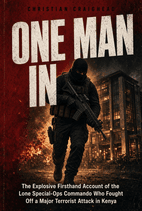
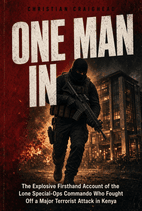
One Man In book cover

What is the book One Man In about?

Christian Craighead's One Man In is a first-person account of the January 15, 2019 al-Shabaab attack on Nairobi's DusitD2 complex, told by a 22 SAS veteran. Written for readers of special-operations memoir and counterterrorism.

FeatureInsta.PageBlinkist
Summary DepthFull Chapter-by-Chapter15-min overview
Audio Narration
Visual Mindmaps
AI Q&A
Quizzes
PDF Downloads
Price$89.99/yr$146/yr (PRO)
*Competitor data last verified July 2026.

1 Page Summary

Christian Craighead's One Man In is a first-person account of the January 15, 2019 al-Shabaab attack on Nairobi's DusitD2 hotel and office complex, told by a longtime 22 SAS member who was serving as a British liaison officer in Kenya. The book's central thesis is that preparation, not luck, determines survival in a crisis: Craighead repeatedly emphasizes that gear must be staged before an attack, that one agreed-upon code word ("gen") can turn an ordinary phone call into a signal to move, and that the real question in danger is whether the work was already done ahead of time. Against that spine, the narrative traces the assault itself—the suicide bombing outside the Secret Garden Café, the four gunmen who walked past the gatehouse, the six-hour-plus standoff with gunmen on the seventh floor, the basement strongpoint, and the eventual clearing of the complex—while interleaving a personal history that runs from a childhood on a Northumberland council estate, through the Parachute Regiment, the Pathfinder Platoon, and SAS selection, to combat in Iraq and Kosovo. The book argues that a building full of armed men is not a defended building, that a false all-clear can get the person you are trying to save moved out of harm's way while rescuers clear an empty spot, and that the damage of an attack does not stop when the operation ends—Noel Kidaliza, the DusitD2 nurse who went back inside to stay with a patient, died weeks later, raising the toll from twenty-one to twenty-two.

What makes the book distinctive is Craighead's insistence on being the one who got "stuck in." He describes arriving in civilian clothes, armoring up with plates, a Glock 19, a grenade, a flashbang, a suppressed C8, a balaclava, a medical kit, a camouflaged Bible, a rosary, and a Blackbeard flag patch, then entering alone because no Kenyan volunteers would move toward active gunfire. He names the armed strangers at the gatehouse the "Free Radicals" and judges new partners by how they move and handle their weapons; he rejects a Westgate survivor who boasts of his experience as too reckless, and he organizes an improvised breach team around Julius, a Kenyan paramedic with a sledgehammer, with the rule that nobody fires until he fires or until he is killed. His account is unsparing about the friction with British High Commission and DFID officials who treated his hunt for a threat they doubted as counterproductive, and about the improvised quality of the response: snipers whose shots deflected off glass, a ceiling charge that failed, an elevator shaft ruled out, a shotgun loaded with tear gas and finally an M72 LAW brought to bear in the flooded basement where two gunmen made their final stand. He is also candid about the aftermath—the steroids injected through his damaged eardrum, the destroyed balance, the adrenaline that kept him from sleeping for three days, the diverging Kenyan accounts at the US embassy debrief, and the displeasure of his own superiors when a 2019 Washington trip led to a meeting with President Trump and a charge that he had broken protocol.

The book is written for readers of first-person special-operations and counterterrorism memoir—those who want the granular texture of a live siege rather than a policy analysis—and for anyone interested in the ethics of an outsider acting without orders. What they will gain is a ground-level case study in why informal channels can matter more than formal command, illustrated by a single WhatsApp message to Kenya's intelligence director-general that turned a hostile commander cooperative and by a diplomatic contact who knew the local police chief and redirected helicopter fire in minutes; a hard-eyed measure of success (how fast a siege ends and how many civilians walk out, not how many attackers are killed—over seven hundred evacuated, the siege over in under a day rather than Westgate's four); and an honest reckoning with the costs that outlast the threat, from the nurse who died of her wounds to the fame that pulled Craighead out of operational work a year early. His closing hope is that the story pushes others to step up when it counts, and to remember that "who dares wins."

Chapter 1: Stranger on the Road

Overview

A veteran takes a posting that promises comfort and one last taste of real operations. The men he works with don't share his hunger for it. The country around him doesn't seem to be at war. He can't tell if this is a big opportunity or a dead end.

Training in Kenya

On January 15, 2019, Chris trains at a range near Nairobi. He's a British liaison officer and a longtime 22 SAS member. He works with his Glock 19 and a suppressed C8 rifle. He runs the 1-5 drill, firing fifteen shots at three targets against a shot-timer. He moves through the grid of fire, running between cones and shooting from each position. He volunteered for Kenya to see field operations. He hoped to face al-Shabaab.

Faith and Communion

He grew up wanting the Parachute Regiment and joined at sixteen. He has believed in God since he was young, though his relationship with the church has been complicated. In Iraq, after his first killing, a padre gave him Communion. It brought him peace. The padre told him it was the closest he had ever come to God.

Simon

Driving past the Ngong Hills, he sees Simon, a 43-year-old in a beige safari suit. Against military protocol, he offers him a lift. Simon talks nonstop. He tells Chris they were born in the same year and month. He shows a double-pointed knife, twelve to fourteen inches long, that he carries for demons or evil spirits. He asks to be dropped at a village. As he leaves, he says, "Creeze, may God bless you many times this day," then disappears. Thirty hours later, Chris wonders if Simon was an angel, a message from God, or just coincidence.

Key Takeaways
  • Chris's skill with a weapon and his belief in God are not in conflict. They are the same thing to him.
  • He volunteered for Kenya wanting to meet al-Shabaab. His religion doesn't stand apart from violence. It lives right inside it.
  • The peace that came after his first killing, delivered by a padre with Communion, suggests a faith that forgives war rather than objecting to it.
  • Chris never figures out whether Simon was a messenger or a coincidence. He just lives with that question.

Key concepts: Chapter 1: Stranger on the Road

Chapter 1: Stranger on the Road

Training in Kenya

  • Chris trains at a Nairobi range on January 15, 2019
  • He is a British liaison officer and longtime 22 SAS member
  • He runs the 1-5 drill with Glock 19 and suppressed C8
  • He volunteered for Kenya to see field operations and face al-Shabaab

Faith and Communion

  • He grew up wanting the Parachute Regiment and joined at sixteen
  • He has believed in God since young, though church relationship is complicated
  • In Iraq, after his first killing, a padre gave him Communion
  • The padre said it was the closest he had ever come to God

Encounter with Simon

  • Driving past Ngong Hills, he sees Simon in a beige safari suit
  • Against protocol, he offers Simon a lift
  • Simon shows a double-pointed knife for demons or evil spirits
  • Simon says 'Creeze, may God bless you many times this day' and disappears

Chris's Inner Conflict

  • He can't tell if this posting is a big opportunity or a dead end
  • The men he works with don't share his hunger for operations
  • The country around him doesn't seem to be at war
  • Thirty hours later, he wonders if Simon was an angel, a message, or coincidence

Key Takeaways

  • Chris's skill with a weapon and belief in God are not in conflict
  • His religion doesn't stand apart from violence; it lives inside it
  • The peace after his first killing suggests a faith that forgives war
  • He never figures out if Simon was a messenger or coincidence
💡 Try clicking the AI chat button to ask questions about this book!

Chapter 2: I Wanna Be Tough

Overview

Danger rarely gives you a warning. It can show up in the middle of an ordinary afternoon, between lunch and errands, and you won't have time to get ready. The real question is whether you've already done the work ahead of time.

In Nairobi, Chris keeps a bag packed with combat gear in case the city is attacked again. He eats Moroccan beef and drinks a Dawa at the Outpost while texting a British friend. That friend is a former Royal Marine who won the George Cross for rescuing families during the al-Shabaab attack on Westgate mall in September 2013, which killed at least sixty-seven people.

Anne, the maitre d', jokes that Kikuyu women run Kenya. Chris landed on December 8 and was sent to Malindi to search for Sylvia Romano, an Italian aid worker kidnapped near the Tana River. Two weeks of searching turned up nothing, though she was released in May 2020.

Key Takeaways
  • In a city that's already been hit, you need your gear packed and staged well before anything happens. You can't figure it out in the moment.
  • A two-week search that finds nothing doesn't mean it failed. Abductions often get resolved through channels the searcher has no access to, and over months instead of days.
  • You can often hear who really holds power in a place through its jokes, not through its official rules.
  • The people who move first and most effectively in a massacre are usually the ones already living and working in the country, not the ones who show up once it hits the news.

Key concepts: Chapter 2: I Wanna Be Tough

Chapter 2: I Wanna Be Tough

Preparedness in High-Risk Environments

  • Danger arrives without warning; preparation must happen beforehand
  • Chris keeps combat gear packed in Nairobi for potential attacks
  • You can't figure out gear in the moment; stage it early

The Nature of Search and Rescue

  • Two-week search for Sylvia Romano found nothing but wasn't a failure
  • Abductions often resolved through hidden channels over months
  • Sylvia was released in May 2020 despite unsuccessful search

Local Knowledge and Power Dynamics

  • Jokes reveal who truly holds power, not official rules
  • Anne jokes that Kikuyu women run Kenya
  • Effective first responders are those already living in the country

Prologue

Overview

A man arrives in a new country to do a job that the people around him do not want done. The danger he was sent to face is already happening. And no one who could help him seems to believe it is real.

British High Commission staff and DFID officials in Kenya were openly hostile. They treated his hunt for monsters they doubted existed as counterproductive. A brief visit to a KDF base showed the country had shut down for Christmas.

Christmas Eve brought a text to a decorated Kenyan general, six years director-general of the National Intelligence Service, and a reply within minutes.

Christmas Day was spent at a Nairobi orphanage run by a Christian charity. A boy named Moses wanted to grow up tough. Home by 3:10, three miles from five al-Shabaab terrorists preparing an attack.

Key Takeaways
  • When officials refuse to believe a threat is real, they clear the ground for the attackers.
  • What matters most is whether a security service answers at midnight on a holiday, not how big its budget is.
  • Ordinary home life and an attack about to happen sit just a few miles apart. Distance offers no protection. Paying attention is the only thing that varies.
  • A child's wish to grow up tough and five men preparing violence nearby are part of the same reality. The book asks how a society can hold both at once.

Key concepts: Prologue

Prologue

Official Denial and Hostility

  • British and DFID officials in Kenya were openly hostile to his mission.
  • They doubted the threat and saw his hunt as counterproductive.
  • When officials refuse to believe a threat, they clear the ground for attackers.

The Threat Is Already Active

  • Five al-Shabaab terrorists were preparing an attack just three miles away.
  • A decorated general and NIS director exchanged texts on Christmas Eve.
  • What matters is whether a security service answers at midnight on a holiday.

Ordinary Life and Impending Violence

  • Christmas Day at a Nairobi orphanage: a boy named Moses wanted to grow up tough.
  • Home by 3:10, three miles from the terrorists preparing violence.
  • Distance offers no protection; paying attention is the only variable.

Chapter 3: Paradise Lost

Overview

The DusitD2 hotel and office complex in Nairobi was supposed to be one of the safest places in the city. It had a ten-foot wall, electric fencing, and a single manned gate. Around seven hundred people were inside on January 15, 2019. No one had planned for what happens when the danger gets past the gate.

The DusitD2 Attack

At 3:17 p.m., Mahir Khalid Riziki blew himself up outside the Secret Garden Café, killing five people. Four gunmen led by Ali Salim Gichunge then walked past the gatehouse into the complex. They killed eight more people in just five minutes.

The dead included American businessman Jason Spindler, British aid worker Luke Potter, and Australian visitor Marcus Rodriguez.

Key Takeaways

A wall and a guarded gate only help if the attack is stopped before it reaches them. The first five people died outside the perimeter, so the gate never came into play. A bomb at the start of an attack can also work as a distraction. It pulls attention to one spot while the gunmen move in on foot. And when hundreds of people are gathered in one place, a small team can kill many of them in minutes. Help from outside can't get there fast enough to stop it. The victims were ordinary people from three countries, at work or just visiting. The attack was aimed at everyday life, not at any military or government target.

Key concepts: Chapter 3: Paradise Lost

Chapter 3: Paradise Lost

The DusitD2 Attack

  • Mahir Khalid Riziki blew himself up outside Secret Garden Café, killing five.
  • Four gunmen led by Ali Salim Gichunge entered the complex on foot.
  • They killed eight more people in just five minutes.
  • Victims included American, British, and Australian civilians.

Security Failures

  • Ten-foot wall, electric fencing, and manned gate proved insufficient.
  • First five deaths occurred outside the perimeter, so gate never engaged.
  • Bomb served as distraction, drawing attention while gunmen moved in.
  • Outside help could not arrive fast enough to stop the attack.

Targeting Everyday Life

  • Attack aimed at ordinary people at work or visiting, not military targets.
  • Hundreds gathered in one place allowed small team to kill many quickly.
  • Victims were from three countries, underscoring civilian nature of attack.
You've reached the end of the free chapters

Next chapter: “Answer the Call” is locked

Keep reading One Man In — and unlock all 600+ book summaries with audio, mindmaps and AI Q&A.

$0.00 due today · 7 days free, then $89.99/year ($7.49/mo) · Cancel anytime before day 7

plus sales tax where applicable

About the Author

Christian Craighead

Christian Craighead is a former British Special Air Service (SAS) operator and private security contractor best known for his role in the 2019 DusitD2 hotel attack in Nairobi, Kenya, where he helped evacuate civilians and neutralize attackers. He has since gained public recognition as an author and commentator on special operations and counterterrorism, detailing his experiences in his memoir "One Man in the Room." His writing and public speaking focus on elite military tactics, hostage rescue, and the realities of modern conflict.

Frequently Asked Questions about One Man In

What is One Man In about?
This book tells the firsthand story of Christian Craighead, a British 22 SAS veteran who was in Nairobi as a liaison officer when al-Shabaab attacked the DusitD2 complex on January 15, 2019. It follows his decision to drive to the siege, enter alone, take command of Kenyan officers, clear civilians, and help end an attack that left 21 dead and 28 wounded. Alongside the operation, it traces his life from a Newcastle council estate to the Parachute Regiment, the Pathfinder Platoon, and 22 SAS, plus the personal and professional aftermath.
Who is the author of One Man In?
Christian Craighead is a British Army veteran who served 28 years, including 17 operational deployments, and was a longtime member of 22 SAS as well as the Parachute Regiment and Pathfinder Platoon. Born in Newcastle in 1975 and raised in Morpeth, Northumberland, he was serving as a British liaison officer in Kenya during the DusitD2 attack. He was later awarded the Conspicuous Gallantry Cross and left the military with mixed feelings about his career.
Is One Man In worth reading?
It is worth reading for its rare, unfiltered look at what a lone operator actually faces during a complex terror attack, from the chaotic drive to the hotel to clearing rooms and commanding armed strangers. The book pairs high-stakes action with honest reflection on preparation, decision-making, and the hidden physical and mental costs that continue after the gunfire stops. Readers interested in special forces, counterterrorism, or leadership under pressure will find it compelling.
What are the key lessons from One Man In?
Key lessons include the value of preparing and staging gear before danger arrives, because you cannot invent a response in the moment. The account shows that decisive action often falls to whoever is willing to step forward, especially when local forces hesitate, and that informal relationships can redirect lethal force faster than formal chains of command. It also stresses that a space is not clear until every door is opened and searched, and that a false all-clear can have deadly consequences. Finally, it highlights the lasting toll on rescuers and the reality that public honor can make a soldier a hero while also making him less useful for secret operations.
0