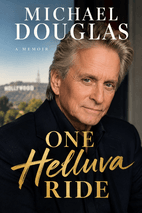
Michael Douglas's One Helluva Ride is his memoir of growing up with a violent, famous father and building a career from The Streets of San Francisco to Wall Street, written for readers of Hollywood memoir and fathers-and-sons reckoning.
Feature
Insta.Page
Blinkist
Shortform
Summary Depth
Full Chapter-by-Chapter
15-min overview
Section-by-section guides
Audio Narration
✓
✓
✓
Visual Mindmaps
✓
✕
✕
AI Q&A
✓
✕
✕
Quizzes
✓
✕
✕
PDF Downloads
✓
✕
✓
Price
$89.99/yr
$146/yr (PRO)
$199/yr
*Competitor data last verified July 2026.
1 Page Summary
One Helluva Ride is Michael Douglas's account of a life shaped by a paradox: growing up in a home where a famous father, Kirk Douglas, was both a celebrated screen hero and a violent, volatile presence. That early experience of admiration and dread forms the book's emotional core, and it drives the central question Douglas keeps returning to—whether the scars of such a childhood can ever be escaped, and what that escape costs. The narrative traces how Kirk's own poverty and abuse fed both his ambition and his rage, and how the son spent years caught between emulating and fearing him. Around that spine, Douglas assembles the story of his own career: an indifferent student at UC Santa Barbara who found his footing in New York with Danny DeVito as a roommate, a reluctant television star in The Streets of San Francisco, and then a producer who gambled by walking off a hit series to make One Flew Over the Cuckoo's Nest.
What makes the book distinctive is the way Douglas uses his professional life as a lens on private pain rather than treating them as separate tracks. He describes the calculations behind The China Syndrome, the long fight to make Romancing the Stone, the rush and contractual warfare of The Jewel of the Nile, the warnings that he was "too producer" to play the predator of Wall Street, and the personal stakes in Fatal Attraction, The War of the Roses, Basic Instinct, Falling Down, The American President, and Traffic. Threaded through those chapters is a candid reckoning with family: Kirk's near-fatal helicopter crash and later stroke, his brother Eric's death by overdose, his son Cameron's addiction and arrest, the end of his eighteen-year marriage to Diandra, and his courtship of Catherine Zeta-Jones. Even the book's title suggests the book's method—a ride whose thrills and damage are inseparable, and which the author refuses to smooth into a tidy story of success.
The intended audience is clear: readers drawn to Hollywood memoir, to the craft and commerce behind films they know, and to fathers and sons, addiction, survival, and the question of what a famous life actually leaves behind. They will gain an unusually unsentimental view of the industry, including the labor of producing movies, the stigma once attached to television, and the money and ego that govern casting and sequels. They will also get a portrait of a man who says plainly that success never answered the questions that mattered, that cancer made him a braver actor, and that time is the one thing money cannot buy—so the hours he has left now belong to his children, grandchildren, and Catherine. The book offers, finally, a measure of a career built alongside his father's, spanning more than 150 films between them, and a life still in progress.
1 CHILDHOOD
Overview
Growing up with a father who was famous in public and violent at home left deep scars. The real question is whether someone can ever escape that kind of childhood, and what it costs to try.
The Ragman's Son
Kirk Douglas played a heroic sailor in the movies, but at home he was a flawed man with a ferocious temper. He made over ninety films in sixty years. His son spent years torn between admiring him and dreading the next explosion. Later he understood where it came from: the poverty and violence his father endured and kept hidden, which fed both a hunger for success and ugly scenes at home.
Issur Danielovitch
Issur Danielovitch Demsky was born in Amsterdam, New York, to Russian Jewish immigrants. His father Harry scavenged junk heaps as the ragman and beat his wife and seven children. At ten, Kirk flicked hot tea at him, took the beating, and felt the satisfaction of defiance. A scholarship to the American Academy of Dramatic Arts was his escape. In summer stock he befriended Mladen Sekulovich, who became Karl Malden, whose wife Mona suggested the name Kirk.
Diana Dill
Diana Dill was born in Devonshire, Bermuda. At seventeen she lied about her age to enter the American Academy of Dramatic Arts, where she was wary of Kirk until he scribbled a note during an owl exercise asking how many owl parts there were on Broadway. When a teacher savaged him in Bachelor Born, she cried backstage; over coffee she told him he was talented and needed to put in the work, and he took the advice.
The Navy, a Magazine Cover, a Marriage
After Pearl Harbor he joined the navy. Diana appeared on the cover of Life, and he told his shipmates he would marry her. That November they married in New Orleans before a navy chaplain and a rabbi who required their children be raised Jewish. A depth charge accident in 1944 injured him and ended his service. When Diana went into labor with their son while Kirk was starring in Kiss and Tell, he stopped by between performances and remarked on the day he had had; she nearly threw a pitcher of water at him.
Key Takeaways
A father can be great in public and violent at home, and both can come from the same place. Knowing that helped his son make peace with the past.
A new name and a scholarship were not enough on their own. Kirk Douglas also needed the habit of defiance he first learned at ten.
Diana Dill told Kirk the truth about his need for craft, and that gave him the discipline raw charisma could not. She shaped him in ways that mattered.
Kirk and Diana married fast during the war and compromised on religion. Right away, it was clear what came first for him, as when his stage performance took precedence over his wife's labor.
Key concepts: 1 CHILDHOOD
1 CHILDHOOD
The Ragman's Son
Kirk Douglas: heroic on screen, ferocious and violent at home
Made over ninety films in sixty years
Son torn between admiration and dread of his temper
Father's hidden poverty and violence fed both ambition and rage
Issur Danielovitch
Born in Amsterdam, New York, to Russian Jewish immigrants
Father Harry scavenged junk heaps and beat wife and seven children
At ten, flicked hot tea at his father and felt defiant satisfaction
Scholarship to American Academy of Dramatic Arts was his escape
Diana Dill
Born in Devonshire, Bermuda; lied about age to enter the Academy
Initially wary of Kirk until his playful note during owl exercise
Told him he was talented but needed to put in the work
Her honesty gave him discipline that raw charisma could not
The Navy, a Magazine Cover, a Marriage
Joined navy after Pearl Harbor; vowed to marry Diana after her Life cover
Married in New Orleans; rabbi required children be raised Jewish
Depth charge accident in 1944 injured him and ended his service
Stage performance took precedence over wife's labor with their son
Key Takeaways
A father can be great in public and violent at home, both from the same place
A new name and scholarship were not enough; he needed the habit of defiance
Diana's truth about craft gave him discipline that shaped him deeply
Marriage was fast and compromised; his career clearly came first
💡 Try clicking the AI chat button to ask questions about this book!
PROLOGUE
Overview
Staying together for the children can still leave those children with damage they have to deal with on their own. The same house can ask different things of each child. One child goes quiet. Another acts out. What matters is not whether the marriage lasts, but what the children take with them when it ends.
A rage with a source
Kirk's ambition ran on resentment. In 1949 he poured it into Champion, a Stanley Kramer film noir about a drifter who schemes his way to the top. He worked with Kramer on the script, casting and production. The role earned his first Academy Award nomination and made him a leading man. His rage traced back to an impoverished childhood, an abusive father, and the antisemitism he overheard as a white Russian Jew who could pass as a Wasp.
The divorce that let the air back in
Diana reached her breaking point in 1950, when Michael was five. She was done with the infidelity and the lying. A therapist told her, in the thinking of that era, that the marriage's survival came down to what she could put up with. Kirk admitted he could not be monogamous. At the first visit after the split, he kissed Diana on the cheek, and Michael burst into tears. The tension Kirk had carried for years was gone. The apartment filled with lullabies and musicals instead of arguments.
Fear, and its cost
Kirk's temper could blow up over anything. Michael stayed off his radar. Joel kept trying for affection and took more of the abuse. Anne Buydens, married to Kirk in Las Vegas on May 29, 1954, described life with him as a beautiful garden beside a volcano. He framed his yelling as proof that he cared. Fame brought danger too. At eight, Michael was chased by two men into his building's basement and watched a face press against the elevator's porthole.
Michael was pushed into seventh grade at eleven, a foot shorter than his classmates. He bought movie tickets for older kids to make friends. His first date, Joanna Meyers, two years older, ended when she French kissed him and he fled the Bruin Theatre. His mother moved him to Black-Foxe Military Institute, where he was fifth-chair trumpet and backup flag bearer. Spinning the flagstaff on command, he drove its golden eagle into the ground before the whole school. He resolved to know the task, be prepared, and remember a crowd is always watching.
Bill Darrid
In December 1956, when Michael was twelve, his mother married William Darrid, an actor, writer and producer. Born William David Blum, he produced Broadway versions of The Disenchanted with Jason Robards and The Andersonville Trial with George C. Scott. Gentle, nonconfrontational and curious, Bill one day listened to Michael with full attention, something no man had done. Kirk was dynamic and taught him how to be a man. Bill showed him how to be a human being.
Front-row film school
As a gofer on Spartacus, Michael watched Stanley Kubrick, who had replaced Anthony Mann after one week. The film became the highest-grossing picture of 1960, with six Oscar nominations and four wins, though Kubrick fought to cut the "I'm Spartacus" scene. On Lonely Are the Brave in 1961 he assisted the director and editor. Kirk taught him that good actors are great listeners, and gave him stamina and tenacity.
Key Takeaways
Kirk's rage came from poverty, abuse, and antisemitism, but that does not excuse what his temper did to his family. When a marriage ends, the children can feel just as relieved as the adults. The quiet that follows shows how much of daily life had been spent avoiding a fight. Anger that comes without warning does more damage than anger with clear triggers, because a child only learns to hide. The son who kept reaching for affection took more of the blows than the son who disappeared from view. A gentle stepparent who listens without an agenda can teach a child what a magnetic, unstable father cannot. Working from the bottom of a film production teaches that talent matters less than attention, preparation, and persistence. A public failure at school can plant the same lesson about staying calm in front of a crowd.
Key concepts: PROLOGUE
PROLOGUE
Kirk's Rage and Its Roots
Ambition fueled by resentment from impoverished, abusive, antisemitic past
Temper could explode unpredictably, causing family fear
Framed yelling as proof of caring, but it damaged relationships
Divorce and Relief
Diana ended marriage in 1950 due to infidelity and lying
Kirk admitted he could not be monogamous
After split, tension lifted; home filled with music not arguments
Children's Divergent Coping
Michael stayed off radar; Joel sought affection and took abuse
Michael's social struggles: pushed ahead, fled first kiss
Military school failure taught preparation and calm under scrutiny
Bill Darrid's Gentle Influence
Mother married William Darrid in 1956
Bill listened with full attention, showed how to be human
Contrasted with Kirk's dynamic but unstable model of manhood
Front-Row Film School
Worked as gofer on Spartacus, observed Kubrick
Assisted on Lonely Are the Brave, learned from director and editor
Kirk taught good actors are great listeners; gave stamina and tenacity
2 COLLEGE
Overview
A young man has to decide what comes after school, even though he has no idea who he is. The options in front of him aren't really his own, and he can't wait until he feels certain.
He had no plan, and his transcript ruled out Yale. Then a catalog in his college adviser's office at Choate caught his eye. The cover showed a tanned surfer and blond girls in bikinis, with the caption "The Campus by the Sea." It was UC Santa Barbara. What pulled him in was sunshine and escape, not a degree.
Flunking Out, and a Gas Station
Santa Barbara gave him exactly what he wanted: Beach Boys on the radio, surfer roommates from Newport Beach, and no discipline. Indian art, pottery, and meditation pushed class aside. After one year, the school suggested he take a year off. At a Mobil station in Westport, he won the first award of his life: Mobil Man of the Month. His father called to ask if pumping gas was the plan.
On Location
His father got him onto The Heroes of Telemark, shot in Norway in winter. He started in wardrobe as a gofer, and his father quietly told director Anthony Mann to work him hard. In Jerusalem for Cast a Giant Shadow, he was promoted to production assistant. When a driver kept missing a mark, his father told him to put on a uniform and drive the jeep. It was his screen debut.
A Trust Fund, a Suitcase, a Verdict
At twenty-one, he was given $10,000 and told he was on his own. He paid for his last two years by flying east twice with forty-four kilos of marijuana in two leather Italian suitcases. He bought it in California at seventy-five dollars a kilo and sold it in New York for five hundred. He chose theater. In Much Ado About Nothing, he vomited into a wastebasket before each entrance. His father, watching from the sixth row, said, "Son, you were terrible."
The Thaw
As his father's life calmed down, the distance between them eased. His father was convinced his son had moved to Santa Barbara to be near him, so he drove ninety minutes to every performance. His advice: go all in, then let the outcome go.
Acid, Meditation, and Kesey
He took LSD more than a hundred times in three years, never more than once a week. Transcendental Meditation gave him the same charge, and Maharishi Mahesh Yogi's workshops in Ojai, California, drew him in. A literature course introduced him to Ken Kesey's One Flew Over the Cuckoo's Nest. His father had bought the theatrical rights so he could play the lead on Broadway.
Protesting, and the Draft
He staged mock classroom shootings with blood bags to bring the war home. His father toured as a goodwill ambassador for American exceptionalism. They disagreed and respected each other. His lottery number came up, and a physical found spondylitis, missing vertebrae, and a curved spine. The letter said "mild" and "slight," so his father asked for one without the qualifiers. He showed up with a back brace and refused to take it off. That earned him a 1-Y.
The O'Neill, Danny, and Summertree
An unpaid carpentry job at the Eugene O'Neill Theater in Waterford, Connecticut, taught him that everything rests on the material, on act structures and scene breaks. There he met Danny DeVito, and a lifelong friendship began, whether over a beer run or a foghorn and a question about getting high. Summertree was picked up by Lincoln Center. He won the lead, then learned he had been strung along as leverage until David Birney was free. He graduated in 1968.
Key Takeaways
He picked a college for a glossy brochure image and the surf, with no academic plan behind it. The result was a year of drift and a forced leave, not an education.
His first film jobs came through his father's arrangements, so his entry into the industry was inherited rather than won.
His father's approval showed up in miles driven to performances, not in praise. The thaw between them depended as much on his father's calmer life as on the son's work.
He used LSD and meditation as interchangeable paths to the same altered state. The destination mattered more than the vehicle.
At the O'Neill, he learned that a play stands or falls on its structural bones. At Lincoln Center, he learned that a lead role can be a placeholder in someone else's schedule.
Key concepts: 2 COLLEGE
2 COLLEGE
College Choice and Early Drift
Chose UC Santa Barbara for surf and escape, not academics
After one year, school suggested a leave due to lack of discipline
Won Mobil Man of the Month while pumping gas
Father's Influence and Film Debut
Father arranged first film jobs, starting as a wardrobe gofer
Promoted to production assistant on Cast a Giant Shadow
Screen debut driving a jeep after a driver missed a mark
Drug Smuggling and Theater Commitment
At 21, received $10,000 trust fund and told he was on his own
Paid for last two years by smuggling marijuana in suitcases
Chose theater; vomited before each entrance in Much Ado
Psychedelics, Meditation, and Protest
Took LSD over 100 times in three years; also practiced Transcendental Meditation
Staged mock classroom shootings to protest the war
Draft physical found spondylitis; earned 1-Y after showing up with back brace
O'Neill, Danny DeVito, and Summertree
Unpaid carpentry at O'Neill taught that plays rest on structure
Met Danny DeVito, beginning a lifelong friendship
Won lead in Summertree but was strung along as leverage; graduated in 1968
3 MY PLACE IN THE WORLD
Overview
A young actor arrives in a city with a famous name, a foothold, and no way to tell which of his wins are his own. Rejection comes without explanation, and the friends who might steady him are as unproven as he is.
A family of actors, and a father's reservations
Raised among actors, he met resistance from within: his mother and stepfather Bill stayed neutral on his ambitions, while Kirk Douglas openly wanted a lawyer for a son. He understood the apprehension. For every Kirk Douglas, thousands never make it, and he had watched his mother and Bill fight to sustain their own careers.
A one-room apartment and a friend who leaned in
After graduating from UCSB he moved to New York with Danny DeVito as his roommate, splitting a one-room apartment on West Eighty-Ninth Street at $150 a month, good times or bad. DeVito never waited for approval and treated obstacles as strengths. Their friend John "Cha Cha" Ciarcia, unofficial mayor of Little Italy, ran a Mulberry Street coffee shop and stood as the implied fixer for any trouble. Bill shaped him with two pieces of counsel:
A man who can count his friends on one hand is lucky.
Shyness is a weakness, not something to cultivate as a charming quality.
Training, borrowed names, and the whole film
Wynn Handman, a Sandy Meisner protégé, tailored his teaching to each actor's confidence rather than delivering brutal critique. His first agent, Stark Hesseltine, declined unsuitable offers with "NQOCD," meaning not quite our class, dear. Because a talk show host already held the name Mike Douglas, he performed as M.K. Douglas, and years later he learned on a plane that Michael Keaton had likewise surrendered the name Michael Douglas. His 1969 CBS Playhouse debut drew kind notices, but the film Hail, Hero! disappeared. The conclusion: the film is the real star, so a project's every element matters, not just the role. Losses taught him more than wins, and struggling first meant he could receive later success with more humility.
Steve McQueen and the Porsche
Steve McQueen produced Adam at 6 A.M. through Solar Productions, his first feature without himself as star. He was the biggest movie star in the world, and picking Douglas as lead was huge. Douglas earned about $3,500 and would have worked for free. After the shoot, McQueen handed Douglas the keys to the orange Porsche 911 his character had driven. McQueen died of cancer in 1980 at fifty.
Five failures
Then the films bombed:
Hail, Hero! (1969)
Adam at 6 A.M. (1970)
Summertree (1971)
When Michael Calls (1972)
Napoleon and Samantha (1972)
Five films, five failures. Six years passed before another feature offer. A film is always a gamble; young actors must go through adversity.
Summertree, revenge, and Brenda Vaccaro
Summertree was Kirk Douglas's revenge after Jules Irving pulled the rug out from under his son in college. "The Douglases love revenge!" he said. It was a blessing and a curse, embodying his conflict between distinguishing himself from his father and wanting closeness. On set, Douglas met Brenda Vaccaro. Their relationship was built on respect and looking out for each other. After Kirk told her Michael lacked the voice for Broadway but would be a movie star in LA, she encouraged the move.
The break into The Streets of San Francisco
On The FBI, Quinn Martin remembered him. Martin cast him as Karl Malden's sidekick in The Streets of San Francisco. Malden asked, "Are you a Douglas?" His father was always in the room.
Key Takeaways
The success of a film rests on the aggregate of its parts, so no single performance or a legend's endorsement can rescue a project whose other elements fail.
Treating shyness as an endearing trait is a mistake; it is a weakness to eliminate, while a few relationships built on mutual respect and encouragement are worth more than a wide circle of contacts.
A parent's fame never fully recedes, and even their interventions can be both a blessing and a curse, shaping how others receive you and how you must define yourself.
A string of early failures is more instructive than a quick triumph, and the long wait for the next offer tests whether the work is truly yours.
Key concepts: 3 MY PLACE IN THE WORLD
3 MY PLACE IN THE WORLD
Family and Early Influences
Raised among actors; mother and stepfather neutral, father Kirk wanted a lawyer.
Understood apprehension: thousands never make it; watched parents struggle.
Bill's advice: count friends on one hand; shyness is a weakness.
New York Beginnings
Moved to NYC with Danny DeVito; shared one-room apartment for $150/month.
DeVito never waited for approval; treated obstacles as strengths.
John 'Cha Cha' Ciarcia, unofficial mayor of Little Italy, was a fixer.
Training and Identity
Wynn Handman tailored teaching to confidence, not brutal critique.
Agent Stark Hesseltine declined offers with 'NQOCD' (not quite our class, dear).
Performed as M.K. Douglas due to name conflict with Mike Douglas.
Early Career and Failures
1969 CBS Playhouse debut drew kind notices, but Hail, Hero! disappeared.
Five films bombed: Hail, Hero!, Adam at 6 A.M., Summertree, When Michael Calls, Napoleon and Samantha.
Six years passed before another feature offer; film is always a gamble.
Breakthrough and Lessons
Steve McQueen produced Adam at 6 A.M., gave him the Porsche 911.
Summertree was Kirk's revenge; met Brenda Vaccaro, who encouraged LA move.
Quinn Martin cast him in The Streets of San Francisco; Malden asked, 'Are you a Douglas?'
You've reached the end of the free chapters
Next chapter: “4 THE STREETS OF SAN FRANCISCO” is locked
Keep reading One Helluva Ride — and unlock all 600+ book summaries with audio, mindmaps and AI Q&A.
$0.00 due today · 7 days free, then $89.99/year ($7.49/mo) · Cancel anytime before day 7
Michael Douglas is an American actor and producer known for his work in film and television, including performances in Wall Street, Fatal Attraction, and Basic Instinct, as well as his role in The Streets of San Francisco. He has also worked extensively as a producer, earning Academy Awards for One Flew Over the Cuckoo's Nest and his acting in Wall Street. Born into a Hollywood family as the son of Kirk Douglas, he became one of the most prominent leading men and producers of the late twentieth century.
Frequently Asked Questions about One Helluva Ride
What is One Helluva Ride about?
It is a candid memoir of a life spent in movies that begins with a childhood shadowed by a famous father who could be charming in public and violent at home, and follows the author from flunking out of college to a career in front of and behind the camera. He recounts producing One Flew Over the Cuckoo's Nest, The China Syndrome and Romancing the Stone, and playing the ruthless or troubled men in Fatal Attraction, Wall Street, Basic Instinct, Falling Down and Traffic. Running alongside the film stories are the harder chapters: a marriage ending, his son Cameron's addiction, Kirk's stroke and the deaths of family members, his own stage IV cancer, and his courtship of Catherine Zeta-Jones. Through it all he keeps returning to the same question — what a career costs, and what you owe the people still beside you when it is over.
Who is the author of One Helluva Ride?
The author is Michael Douglas, an actor and producer who grew up as the son of screen legend Kirk Douglas and actress Diana Dill. He won an Academy Award for producing One Flew Over the Cuckoo's Nest and went on to star in a long string of hit films while continuing to produce. By his own account, he wrote the book for his children, grandchildren and his wife, Catherine Zeta-Jones, and his body of work together with his father's spans more than 150 films.
Is One Helluva Ride worth reading?
Few Hollywood memoirs are this unguarded — the same pages that describe a record script sale also describe a father who missed what his son needed and a man who kept working through a cancer diagnosis. It is both an insider's account of how difficult films like Cuckoo's Nest, The China Syndrome and Romancing the Stone were to get made, and a reckoning with fame, addiction, divorce and mortality. Readers who want the business and the personal story together, told by someone who lived every turn of it, will find it hard to put down.
What are the key lessons from One Helluva Ride?
One of the book's clearest lessons comes from Karl Malden, who taught him that the project matters more than your own spotlight — a principle he applied later when he sat back so costars like Glenn Close and Sharon Stone could shine. Persistence is another: scripts everyone wanted still took years of rejection to get made, and he kept pushing because he believed in them. On family, the book is blunt that what a father means to give and what a child actually receives are often two different things, and that this gap does not close on its own. Ultimately, success never supplied the answers that mattered — time is the one thing money cannot buy, and beating cancer gave him the courage to work differently rather than stop.
📚 Explore Our Book Summary Library
Discover more insightful book summaries from our collection