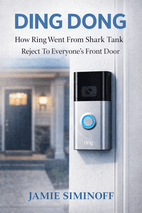
Jamie Siminoff's Ding Dong details the gritty, iterative journey of building Ring from a rejected Shark Tank pitch into a home security giant, emphasizing resilience and customer-driven innovation for aspiring entrepreneurs and startup founders.
Feature
Insta.Page
Blinkist
Shortform
Summary Depth
Full Chapter-by-Chapter
15-min overview
Section-by-section guides
Audio Narration
✓
✓
✓
Visual Mindmaps
✓
✕
✕
AI Q&A
✓
✕
✕
Quizzes
✓
✕
✕
PDF Downloads
✓
✕
✓
Price
$89.99/yr
$146/yr (PRO)
$199/yr
*Competitor data last verified July 2026.
1 Page Summary
In Ding Dong: How Ring Went From Shark Tank Reject To Everyone's Front Door, Jamie Siminoff, the founder and "Chief Inventor" of Ring, delivers a candid and motivational account of the company's improbable journey. The book's central thesis is that entrepreneurial success is rarely a straight line, but rather a grueling process defined by relentless iteration, near-fatal setbacks, and an unwavering focus on solving a real customer problem. Siminoff details the evolution from his initial invention, the "Doorbot," through the humiliating but pivotal rejection on Shark Tank, to the eventual multi-billion dollar acquisition by Amazon, framing it as a masterclass in resilience and customer-driven innovation.
Siminoff's approach is distinctly personal and transparent, setting this business memoir apart from polished, hindsight-driven success stories. He openly shares his moments of desperation, including mortgaging his house multiple times and the severe financial strains that pushed the company to the brink. The narrative is less about grand strategy and more about the gritty, day-to-day hustle of a founder who was deeply embedded in product development and community feedback, highlighting how direct user input—like from early customers on crowdfunding platforms—directly shaped Ring's iconic doorbell cameras and security ecosystem.
The book is primarily intended for aspiring entrepreneurs, startup founders, and anyone fascinated by the behind-the-scenes reality of building a hardware tech company. Readers gain not just an inspiring underdog story, but a practical, unvarnished look at the emotional and financial toll of entrepreneurship. Siminoff emphasizes that breakthrough ideas often come from simply trying to solve one's own problem (in his case, knowing who was at the door), and that perseverance, coupled with a willingness to publicly fail and adapt, can ultimately lead to world-changing success.
Chapter 1 - Failure Is an Option
Overview
The chapter opens in the heart-pounding moments before a Shark Tank pitch, as inventor Jamie Siminoff's entire venture hangs on a single malfunctioning prototype of his DoorBot, a WiFi video doorbell. This crisis is the culmination of a long, scrappy journey. Siminoff was a perennial inventor with a history of near-misses, constantly developing ideas that were either modest successes or foreshadowed massive companies built by others. The DoorBot was born from personal frustration in his garage, but its potential became clear when his wife's reaction highlighted its core benefit: safety and the feeling of being "always home."
Driven by his hustle, he used the doorbell as the flagship product to launch his own crowdfunding platform, Christie Street. The pre-sale was a shocking success, generating over $300,000 and immediately swapping the problem of funding for the immense pressure of actually delivering a complex hardware product. His small, bootstrapped team faced brutal technical and financial hurdles, leading to a tough-love intervention from a friend who demanded he focus his "maniacal attention" solely on the doorbell and abandon other distractions.
Amidst this grind, a chance meeting led to an application for Shark Tank, and a producer’s belief secured him a spot—a major opportunity that came with the daunting, self-funded task of building a fake housefront for his demo. Siminoff prepared with obsessive rigor, studying every Shark and rehearsing relentlessly until he could distill his product's value into a perfect ten-second pitch. On the day of filming, however, preparation met chaos. After a competing record-breaking deal deflated his confidence, a catastrophic technical failure left three of his four demo units dead, with only minutes to solve the problem before facing the Sharks. The entire grueling journey—the years of hustle, the sleepless nights of development, the financial gambles, and the meticulous preparation—all came down to one final, untested prototype and a single push of a button.
A High-Stakes Breakdown
The narrative opens in a state of high anxiety backstage at Shark Tank. With moments to go before taping, inventor Jamie Siminoff’s engineer, Mark Dillon, is drenched in sweat, reporting that three of their four demo units have failed. The producer’s earlier warning—that “failure can play better than success” on TV—offers little comfort as they pin their hopes on a single, seemingly non-magical fourth doorbell.
The "Best Invention Yet" and a History of Near-Misses
The product in jeopardy is DoorBot, a WiFi-enabled video doorbell. Its origin was personal: Siminoff, working from his garage in Pacific Palisades, kept missing deliveries. Assuming a solution existed, he was shocked to find none on the market. His homemade prototype, a jury-rigged WiFi camera in a 3D-printed housing, solved his problem and unexpectedly thrilled his wife, Erin, who said it made her feel safe—a reaction that hinted at its larger potential.
This moment stood out against a long history of inventive projects that never quite hit. Siminoff recounts a series of ideas—from an early email unsubscriber to voicemail-to-text services, traffic monitors, and even a cooled blanket—that were either modestly successful, failed, or were later executed billion-dollar companies like Skype and Eight Sleep. He portrays himself as a perpetually hustling inventor with ADHD, constantly hitting "singles or 500-foot foul balls" but never stopping.
Focusing on the Front Door
The doorbell idea intersected with broader discussions with his friend, entrepreneur Diego Berdakin, about disrupting the home security industry. While they had brainstormed a full-system called HouseNinja, the immediate, tangible success of the DoorBot prototype began to shift focus. Despite having an "incubator" of other ideas like modular gardens and leak detectors under the Edison Jr. banner, encouragement from Erin and Diego pushed him to concentrate on this one product.
Launching on Christie Street
To fund his various ideas, Siminoff created Christie Street, a crowdfunding platform for inventors, named after Thomas Edison's lab. He needed a flagship product to launch it. After demoing several concepts for influential friend Loic Le Meur, the immediate and emphatic feedback was: "Ze doorbell." At Le Web conference in Paris in 2012, Siminoff pitched DoorBot to great interest, simultaneously announcing its pre-sale on Christie Street. His immediate fear was that he had just shown his underfunded idea to a room full of people capable of stealing it.
The Grind of Making It Real
The pre-sale was a shocking success, bringing in over $300,000 and creating a new pressure: they now had to actually build and deliver a complex hardware product. Siminoff assembled a scrappy, "well-fed but not well-funded" team dubbed the "Siminoff Brothers" in his garage. They faced massive technical hurdles, primarily creating a battery-efficient HD camera that could "wake up" when the button was pressed. Progress was slow, money was draining, and relationships were strained. A visit from Diego Berdakin resulted in a fiery intervention, demanding Siminoff drop the "C-minus ideas" and focus his "maniacal attention" solely on the doorbell.
The Hustle and a Shark Tank Opportunity
Amidst this stressful grind, Siminoff met with budding entrepreneur Adam Winnick as a favor. Feeling like he was having a professional midlife crisis while friends hit massive success, he reluctantly described DoorBot. Winnick’s enthusiastic response was to suggest Shark Tank. Skeptical but following his "never stop hustling" rule, Siminoff sent an email on the spot. To his shock, a producer called within 15 minutes. After navigating a massive "cattle call" application process, he received the news: they were approved to appear on the show. The initial elation was quickly tempered when the producer informed him he would have to personally fund the construction of a fake housefront for the demo.
Preparing for the Sharks
Armed with his producer’s directive to build a housefront set, Jamie undertook an Olympic-level training regimen. He meticulously analyzed every past episode of Shark Tank, studying the successful and failed pitches alike. He became a student of the Sharks themselves: Mark Cuban (tech, a prime target), Robert Herjavec (tech, but enigmatic), Lori Greiner (consumer products and QVC), Daymond John (fashion, less likely), and Kevin “Mr. Wonderful” O’Leary. He prepared hundreds of potential answers, knowing his valuation ask of $700,000 for 10%—based on a $3 million annual run rate—was high-risk, as only four companies had ever asked for a million or more, and none had closed a deal. He later learned his producer had used her one “Get Out of Jail Free card” with executives who initially dismissed DoorBot as “just a doorbell,” saving his spot on the show.
Assembling the Set and Rehearsing the Fight
In Los Angeles, Jamie hired renowned set builder “Dr. Wood” to construct a plywood house facade for $8,000, a major financial gamble. He turned his backyard into a rehearsal studio, with his wife Erin and neighbors playing the part of brutal Sharks. He drilled his pitch until he could flawlessly explain DoorBot’s core benefit in under ten seconds: “It’s a camera for your front door that tells you someone's there. So you're ‘always home.’” He prepared for tough questions about retail placement and the $199 price tag—ten times a standard doorbell—confident in his technology and market rationale. His team worked insane hours to squash final bugs, with engineer Mark Dillon flying in from New York.
The Day of Reckoning and a Critical Failure
On September 10, the facade was delivered to Sony Studios. The next day, moments before Jamie’s segment, the previous entrepreneurs secured a record-breaking $2 million deal from Mark Cuban, crushing Jamie's optimism. With only ten minutes to set up, a new crisis emerged: the first three DoorBot prototypes failed to connect to the studio’s congested wifi network. Mark Dillon, drenched in sweat, frantically worked as Jamie tried to project calm for the producers. With their backs against the wall, Jamie delivered a calm but urgent ultimatum to his engineer: “Mark... make it fucking work.” The fate of the pitch rested entirely on the fourth and final prototype.
Entering the Tank
Terrified but ready, Jamie entered the set, a “barbell of confidence and terror.” He launched into his pitch, asking for $700,000 for 10% of his company. He touched on the smartphone revolution and the antiquated doorbell. The pivotal moment arrived: he had to ring the final DoorBot and hope the live video feed would appear on the screen. With a sweaty hand, he pressed the button on prototype #4. Two agonizing seconds passed, with the entire venture hanging in the balance.
Key Takeaways
Preparation is non-negotiable: Jamie’s exhaustive research, from studying the Sharks’ psychology to rehearsing with a mock set, was his foundation for facing the high-pressure environment.
Crisis management is part of the journey: Even the most meticulous preparation can meet unforeseen technical failure. The real test is managing that crisis under extreme pressure without publicly unraveling.
Simplify your core value: A business must be explainable in seconds. Jamie’s crisp, benefit-driven explanation of DoorBot is a template for cutting through noise.
Fortune favors the bold (and prepared): Getting on the show required a producer to champion him against skepticism, highlighting that conviction can open doors others try to close.
The moment of truth is a test of everything: The actual pitch is the culmination of product, team, preparation, and resilience, often coming down to a single, make-or-break moment.
Key concepts: Chapter 1 - Failure Is an Option
1. Chapter 1 - Failure Is an Option
The High-Stakes Crisis
Shark Tank pitch begins with catastrophic prototype failure
Three of four demo DoorBot units are dead backstage
Entire venture hinges on one untested final prototype
DoorBot's Personal Origin
Born from Siminoff's frustration with missed deliveries
Wife's reaction revealed core benefit: safety and presence
Simple garage prototype using WiFi camera and 3D printing
History of Inventive Near-Misses
Perennial inventor with ADHD and constant hustle
Ideas foreshadowed billion-dollar companies like Skype
Pattern of 'singles or 500-foot foul balls' but no home runs
Crowdfunding Launch on Christie Street
Created own platform named after Thomas Edison's lab
DoorBot chosen as flagship product after key feedback
$300,000 pre-sale success created delivery pressure
The Brutal Reality of Product Development
Scrappy, underfunded 'Siminoff Brothers' team in garage
Major technical hurdles with battery-efficient HD camera
Friend's intervention demanded focus on doorbell only
Obsessive Shark Tank Preparation
Studied every Shark and rehearsed relentlessly
Distilled product value into perfect ten-second pitch
Self-funded construction of fake housefront for demo
Core Theme: Failure as Option
Producer's note: 'failure can play better than success'
Journey defined by technical and financial hurdles
Preparation meets chaos in ultimate test moment
💡 Try clicking the AI chat button to ask questions about this book!
Chapter 2 - Save Me
Overview
Jamie's high-stakes pitch on Shark Tank begins with promise but ends in a crushing, unanimous rejection from the panel. Convinced the segment will never air, he returns to his garage-based company dejected, facing a looming financial crisis with only a tiny, faithful skeleton crew holding operations together. This desperation leads to a deceptive fundraising move and a bitter, bridge-burning email to a venture capitalist. Yet, in the grind, small victories emerge—an investor charmed by homemade tacos writes a check, and on his birthday, Jamie gets the pivotal call that his "failed" pitch is scheduled for broadcast. This news triggers a frantic preparation for the anticipated sales surge, marked by his anxious back-and-forth with Shopify’s unflappable CEO, Tobi, who calmly assures him the platform can handle the traffic. The climax unfolds at a raucous backyard viewing party. As a drunken Jamie watches his televised rejection with friends, a moment of clarity hits: the national free advertising was the real prize all along. The chapter ultimately dismantles the idea of a magical rescue, arguing that success is built on process over a single savior, leveraging every opportunity, no matter how it first appears.
The Pitch and the Letdown
The doorbell camera image appears perfectly on screen, launching Jamie into his Shark Tank pitch. He delivers his rehearsed lines, even tossing money like confetti for dramatic effect, and handles early questions well, particularly deflecting Mark Cuban’s sarcasm about burglars with a confident, factual retort. The Sharks seem engaged as he details the product’s features, $199 retail price, $81.83 unit cost, and promising sales trajectory, including an upcoming launch at Staples. However, the mood shifts quickly. Lori Greiner is the first to bow out, feeling the product isn’t differentiated enough for its price. Mark Cuban follows, doubting he could add enough value to scale the company. Robert Herjavec and Daymond John also decline, citing concerns about it being a consumer hardware device, potential cybersecurity issues, and the high price point.
Left with only Kevin O’Leary, Jamie manages to reignite some discussion to create more TV material. O’Leary finally makes an offer: $700,000 for 5% equity plus a 10% royalty until his investment is recouped. Though desperately needing the cash, Jamie refuses, knowing the royalty would cripple the company’s future cash flow. The pitch ends with no deal. Dejected and convinced his short segment won’t air, he’s shocked when a producer enthusiastically tells him it was “great TV” and that he actually filmed for nearly an hour, not the ten minutes he perceived.
Aftermath and a Skeleton Crew
Back home, Jamie grapples with disappointment, feeling he’s let down his team and wasted precious time and resources. He reflects on the small, dedicated team holding the company together in his garage: Mark Dillon, the engineer commuting from New York; John Modestine, the young industrial designer who moved cross-country on a leap of faith; and August Cziment, the relentless marketing assistant hired for his insane work ethic. Their worried looks reinforce his need to project strength as the leader, even as pressure mounts.
The Desperate Fundraising Grind
The financial situation is dire. Jamie had hoped a Shark Tank deal would close a $1 million funding round, supplementing a promised $250,000 from First Round Capital and $50,000 from another investor. With that plan dead, he proceeds deceptively, telling First Round’s lawyer the rest of the round is secured to get their $250,000 wired. Chris Fralic from First Round immediately calls him out, but supports him despite the misrepresentation. This desperation fuels a bitter, bridge-burning email to another VC who rejected him for lacking a “strong lead,” an email that famously labels investors “whores” and gets circulated widely in VC circles.
Small Wins and a Birthday Miracle
A glimmer of hope arrives via tacos. Investor Steve Temes, visiting the garage, is so impressed by the nanny’s homemade tacos that he agrees on the spot to invest an additional $300,000. Another unlikely meeting follows with Ashton Kutcher and Mila Kunis in Kutcher’s trailer, but they ultimately pass on investing in a doorbell. As Jamie leaves this rejection on his birthday, feeling defeated, he receives the pivotal call: his Shark Tank segment is scheduled to air in two weeks. This news is the lifeline he needed, perfectly timed before the holiday shipping season and offering a chance to convert TV exposure into crucial sales. He immediately begins preparing for the anticipated surge by partnering with the e-commerce platform Shopify.
The Calm Before the Storm: Shopify's Assurance
The email exchange between Jamie and Shopify CEO Tobi reveals a stark contrast in mindset. Jamie, filled with pre-Shark Tank anxiety, bombards Tobi with increasingly urgent requests for guarantees that the website won’t crash under the anticipated traffic surge. He offers to pay double for extra infrastructure, haunted by the fear of losing a single sale from this unrepeatable opportunity. Tobi responds with unflappable, almost amused, confidence. He patiently explains that Shopify routinely handles the traffic spikes from Shark Tank, with the entire platform running on massive, robust infrastructure. His final, simple reassurance—“we got it :-)”—stands in sharp relief to Jamie’s panic. In retrospect, Jamie reflects on his own neediness and Tobi’s grace, wryly noting the astronomical value Shopify would later achieve.
A Drunken Revelation: The Viewing Party
The narrative shifts to the night of the broadcast. Jamie and his wife Erin host a large backyard viewing party, an event fraught with Erin’s anxiety about how the show might be edited. After a nerve-induced pre-game drinking session, Jamie receives crucial reassurance from his brother on the East Coast: the edit is favorable. This triggers a shift from anxiety to celebratory relief, and Jamie continues drinking. By the time friends arrive, he is thoroughly intoxicated. As the segment plays on a projector against a white bedsheet, friends offer sympathy for the “rejected,” emotional entrepreneur they see on screen. But Jamie, watching his own televised failure, simply smiles. In a moment of drunken clarity, he realizes no external force—not the Sharks, not the TV airing—was ever going to “save” his company. The true value was in the “greatest 12 minutes of free advertising any startup could hope for,” reframing perceived rejection as an undeniable win.
Key Takeaways
Expertise Over Anxiety: Trusting proven systems and expert partners (like Shopify) is crucial, especially when operating outside your own domain of knowledge. Panic often underestimates prepared capability.
Reframing "Failure": An event perceived as a rejection (no deal from the Sharks) can be transformed into a monumental asset (national advertising) based on perspective and context.
The Illusion of a "Savior": The chapter’s title, “Save Me,” is ultimately deconstructed. Success is rarely about a single, external rescue, but about leveraging opportunities, however they appear, and enduring through the process.
Key concepts: Chapter 2 - Save Me
2. Chapter 2 - Save Me
Shark Tank Pitch and Rejection
Promising pitch ends in unanimous rejection
Jamie refuses Kevin O'Leary's royalty-heavy offer
Producer reveals it was 'great TV' despite failure
Post-Pitch Despair and Team
Jamie returns dejected to financial crisis
Small skeleton crew holds company together
He feels pressure to project strength as leader
Desperate Fundraising Moves
Deceptively secures First Round Capital funding
Sends bitter 'investors are whores' email to VC
Bridge-burning email circulates widely in VC circles
Unexpected Wins and Turning Point
Investor commits $300k after tasting homemade tacos
Birthday call reveals Shark Tank will air
Perfect timing before holiday shipping season
Preparing for the Broadcast Surge
Partners with Shopify for e-commerce platform
Jamie panics about website handling traffic
Tobi calmly assures infrastructure can handle it
Viewing Party and Realization
Drunken backyard watch party with friends
Watches televised rejection with clarity
Realizes national free advertising was the real prize
Chapter's Core Message
Success built on process over a single savior
Leverage every opportunity, however it appears
No magical rescue, only persistent execution
Chapter 3 - The Best Worst Christmas Eve-Eve Ever
Overview
After the euphoric validation of Shark Tank, the flood of orders created a new, urgent reality. The money solved one crisis but exposed another: their novel doorbell was a deeply flawed product. Honest feedback from early users confirmed their worst fears—it was unreliable and, to some, just plain ugly. The team operated from a pirate ship office, a chaotic former recording studio where improvisation was a survival skill. With no budget for traditional hires, they built a gritty, loyal crew from Craigslist ads, discovering unexpected talent in the process.
But grit couldn't overcome systemic technical failures. From a whimsically-shaped "logo antenna" to a self-defeating aluminum case, the product's design was working against itself. The crisis culminated in a Christmas catastrophe when a massive shipment of "bricked" units arrived, each one rendered useless by a tragic software error. Facing ruin with nearly $1 million in worthless inventory, founder Jamie entered a state of eerily calm pilot mode.
Certain the dream was over, a desperate conversation with his wife and a painful vision of a future as a failed inventor only deepened his despair. Then, on the drive home, a midnight revelation struck: perhaps their old cloud software could salvage the broken video. It was a Christmas miracle—the Hail Mary worked. They averted immediate collapse, but the damage was done. Terrible reviews were piling up, and the near-death experience forced a brutal realization. They could no longer be the scrappy underdog; to survive and fulfill their mission of safety, they had to become world-class.
Jamie rallied the team around a complete rebuild, codenamed the F5 Manifesto, with a singular goal: a flawless product worthy of five-star reviews. They were no longer competing with other startups but with giants like Apple. This resolve was tempered by harsh new realities, from skeptical investors who dismissed them as mere reality TV stars to the understanding that a good idea means nothing without impeccable execution and design. The chapter closes with a team forever changed, staring at a mountain they now knew exactly how to climb.
The immediate aftermath of the Shark Tank airing was a tidal wave of validation and cash. Orders flooded in at a staggering rate—$100,000 a day—with Shopify easily handling the traffic. The long-tail effect of DVR recordings meant the revenue bump wasn't a spike but a new plateau, culminating in nearly $2 million by year's end. This lifeline erased the immediate cash crunch, but the team was soon swimming in the complexities of actually delivering their novel product.
A “Challenged” Product Meets Reality
The first 1,000 DoorBot units arrived from Asia. The team knew they were shipping a "challenged" product, taking solace in Reid Hoffman’s mantra about shipping an embarrassing first version. The initial excitement was tempered by blunt feedback from friends like neighbor Scott Marlette, whose wife declared it looked terrible. More critically, Scott pointed out its core failure: “A doorbell has one real function. You push the button and it rings. Half the time yours doesn’t.” This honest critique underscored the gap between their invention and a reliable consumer product.
The Pirate Ship Office
Operations had moved from Jamie’s garage to a 5,000-square-foot former recording studio in Santa Monica at 1523 26th Street. The space was a comically grim disaster: not up to fire code, with sand-filled walls from soundproofing, a perpetually leaky roof (repaired with trash bags and duct tape), and an attic office accessible by a dangerously non-OSHA-approved catwalk. It shared a wall with a mezcal company, whose late-afternoon happy hours became a source of bemused envy for the DoorBot team grinding into the night. The vibe was pure pirate ship—improvised, gritty, and fueled by Costco snacks and an eventual upgrade from Folgers to Starbucks.
Building a Crew from Craigslist
With no budget for pedigreed hires, Jamie built his team from Craigslist ads, valuing grit over credentials. Dave Savage, hired at $10/hour to pack boxes, was quickly promoted to manage shipping, procurement, and planning. Bill Veilleux, another $10/hour packer, was revealed to be a former JPL electrical engineer and was immediately reassigned to engineering. The philosophy was simple: if you were willing to work hard without BS, you had a place. The team grew to about 30, with a remote engineering team in Argentina. Operations were so seat-of-the-pants that CFO duties often fell to August, and his personal bank account was accidentally linked to the company's.
Mounting Technical Woes
As the holiday shipping rush intensified, the product's fundamental flaws became undeniable. The problems were systemic:
The “Logo Antenna”: During a factory visit in Taiwan, Jamie discovered the wifi antenna had been whimsically molded into the shape of the manufacturer's (Tatung) corporate logo, crippling its performance.
The Aluminum Shroud: Jamie's own design choice to encase the unit in premium-feeling aluminum actively blocked the wifi signal.
Random Chiming: Units would ding-dong inexplicably in the office at night, a haunting soundtrack to their troubles.
The “Clean Room” Farce: In a panicked, over-engineered response, they set up a tented "clean room" to fix units, which was entirely unnecessary and poorly maintained.
Customer complaints piled up, but the team managed the backlash with sunny emails, hoping their early-adopter customer base would be forgiving.
The Christmas Catastrophe
The crisis reached its peak just before Christmas. A new, much larger batch of DoorBots exhibited a catastrophic, universal flaw: the video feed was riddled with lines and was essentially unwatchable. Every single unit in this shipment was a "brick." The root cause was a tragic software error. A programmer, trying to improve video quality, had tested new settings on an unusually strong internet connection. Mistaking this local strength for a software fix, he sent the "random" settings to the factory, where they were permanently burned into a chip that could not be updated wirelessly.
Pilot Mode on the Eve of Disaster
On Christmas Eve-Eve, facing the reality of having shipped 5,000 useless doorbells worth nearly $1 million with no money for refunds or a recall, Jamie entered "pilot mode"—a state of eerily calm, methodical crisis management. The team ran through every conceivable fix, from reheating chips to jumping them with voltage. Every idea failed. That night, over dinner with his wife Erin and son Ollie at a cheerful Houston's restaurant, Jamie internally confronted the inevitable conclusion: the company was out of options and headed for a crash. The mountain was in sight, and they had no way to steer clear.
A Desperate Conversation and a Glimmer of Hope
The narrator, Jamie, is certain the company is finished. Over dinner, he explains the two catastrophic financial options to his wife, Erin, both involving massive losses and ruinous reputational damage. He feels his dream has ended almost as soon as it began. Erin, however, refuses to accept defeat and suggests mortgaging their house. The suggestion moves Jamie to tears, not only for its beautiful loyalty but because he knows it wouldn't cover their financial hole. He tries to resign himself to the end, but his mind, his "not-so-secret weapon," refuses to stop working on the problem.
The "Bartender Jamie" Fantasy
A vivid, painful daydream plays in Jamie's head: a scene five years in the future where he, now a bartender named Jamie, confesses to customers that he invented the video doorbell, only to be met with pity and disbelief as they credit a fictional billionaire successor. This fantasy underscores his fear of becoming a footnote, a failed inventor whose idea was perfected by someone else.
The Midnight Revelation and a Christmas Miracle
On the drive home, amidst his despair, a crucial technical possibility finally surfaces in his mind: perhaps the older, more expensive cloud server software they had recently replaced could process and correct the faulty video from the shipped DoorBots. He immediately calls his engineer, Mark Dillon, waking him with the Hail Mary idea. After a sleepless night for Mark, the call comes on Christmas Eve morning: it works. The superior software could clean up the video signal, turning a disastrous product into a functional one.
Damage Control and a New Resolve
Jamie sends a carefully worded email to customers, downplaying the issue as affecting only "a few" units. The immediate existential threat is averted—orders and money begin flowing again—but the damage to their reputation is real, with terrible reviews now online. This near-death experience forces a fundamental realization: they can no longer operate like amateurs. To survive and fulfill their mission of making people feel safer, they must become the best in every aspect of their business, from product quality to customer support.
The "F5" Manifesto and Raising the Bar
In the week between Christmas and New Year's, Jamie rallies the team around a complete rebuild of the product, codenamed "F5" for "fucking 5-star reviews." He argues they are no longer competing with other startups but with giants like Apple and Samsung. He drafts a detailed, confidential manifesto for "DoorBot V2," outlining stringent new requirements for speed, durability, power, and crucially, the addition of motion detection to fully deliver on the safety promise. The goal is a flawless launch by the next holiday season to secure their future.
Confronting Harsh Realities
The crisis teaches hard lessons about customer expectations. Feedback reveals that spouses often hate the product's look or functionality, highlighting that design and reliability are as important as the core idea. Furthermore, Jamie faces continued skepticism from the investor community, who view Shark Tank alumni as mere "reality TV stars" rather than serious entrepreneurs, making the capital needed for the ambitious F5 rebuild even harder to secure.
Key Takeaways
Perseverance in Crisis: Even when facing certain failure, the instinct to problem-solve can persist and lead to last-minute, life-saving solutions.
The Necessity of Professionalism: A "cute founder story" and scrappy origins only provide temporary grace; long-term survival demands obsessive commitment to quality in every single company operation.
Mission as a Guiding Force: Clarifying the core mission—making people feel safer—provides a clear benchmark for product decisions, like adding essential motion detection.
Competing with the Best: To win, a company must ultimately compare itself to the highest standards in the market, not just its direct competitors.
External Perception Matters: Overcoming a technical crisis is one challenge; overcoming reputational damage and investor bias is another, often more persistent, battle.
Key concepts: Chapter 3 - The Best Worst Christmas Eve-Eve Ever
3. Chapter 3 - The Best Worst Christmas Eve-Eve Ever
Post-Shark Tank Reality
Massive order surge creates urgent delivery crisis
Cash solves one problem but exposes flawed product
Early user feedback confirms unreliability and poor design
The Pirate Ship Operation
Chaotic former recording studio serves as office
Improvisation and grit become survival skills
Shared space with mezcal company adds surreal element
Now competing with giants like Apple, not startups
Chapter 4 - Yes, Mark Cuban, Burglars Ring Doorbells
Overview
Overview
This chapter captures a pivotal moment in the journey of creating a smart doorbell, blending insights into burglar behavior with the gritty realities of product development. It follows the author's transition from focusing on a single gadget to embracing a broader mission of neighborhood safety, all while navigating the pressures of an industry on the brink of a smart-home explosion. Set against the backdrop of a high-stakes trade show, the narrative reveals how a clear purpose can transform frustration into fuel for innovation.
The Psychology Behind the Ring
Burglars operate with a methodical cunning that's both obvious and clever. They typically strike during the day, preferring empty homes and avoiding confrontation. A key tactic is ringing doorbells—not just at the target house, but also at the neighbors on either side. If anyone answers, they'll likely abandon the attempt. This behavior underscores a fundamental truth: creating the illusion of presence is a powerful deterrent. For inventors, this cat-and-mouse game is endless; criminals adapt, so solutions must evolve continuously.
Between Two Products: The Agony of Transition
As the team prepared for the Consumer Electronics Show (CES) in 2014, a deep frustration set in. They were secretly developing "F5," a vastly improved video doorbell, but publicly they were still championing "DoorBot," the current model. This lag between vision and reality is a common pain point in product businesses—having to enthusiastically sell today's solution while knowing tomorrow's is far superior. Yet, DoorBot was still an engineering feat for its time, and self-criticism became a driving force to push for the next breakthrough.
A Mission Born on the Road
During the drive to CES, a conversation with engineer Luciano sparked a transformative idea. The doorbell could be more than a device; it could be the heart of a "network of neighborhoods." Imagine an app connecting communities, allowing shared vigilance and even enabling police to request video evidence privately. This vision shifted the goal from selling gadgets to providing safety, with customers recast as "neighbors." The author had an epiphany: their true purpose was to reduce crime in neighborhoods. This mission became the central guiding star, a rallying cry to be plastered on office walls and ingrained in every decision.
Making Waves from the "Dracula Space"
At CES, the team's late registration landed them in a dismal, low-trafficked booth dubbed "Dracula space"—far from the glittering main halls. Undeterred, they used creativity to stand out, opting for a cozy, retro setup with green turf and a live tree amid a sea of high-tech displays. They banned chairs, kept energy high, and aggressively pitched DoorBot to anyone passing by. Despite the humble surroundings, their efforts paid off with significant media coverage, a feature on BBC News, and winning Wired's "Best of CES 2014." This experience hammered home the urgency: they had to launch F5 by October 1 to own the emerging smart doorbell market before competitors caught up.
The Gathering Storm
Returning from CES, the mission was cemented with vinyl stickers declaring "TO REDUCE CRIME IN NEIGHBORHOODS" at the office entrance. The focus was now laser-sharp on execution. However, the industry landscape shifted dramatically a week later when Google acquired Nest Labs for $3.2 billion, signaling the impending gold rush in smart home technology and raising the stakes even higher.
Key Takeaways
Burglar behavior is predictable: Understanding habits like doorbell-ringing can inform effective security solutions that create perceived presence.
Innovation requires enduring the gap between current products and future visions, using self-criticism as a catalyst for improvement.
A clear mission transforms work: Shifting from selling products to solving a universal problem—like neighborhood safety—provides direction and motivation.
Resourcefulness triumphs over resources: Even in unfavorable conditions, creativity and relentless effort can generate attention and acclaim.
Timing is critical: In fast-moving markets, seizing a launch window can define leadership, especially as major players enter the space.
Key concepts: Chapter 4 - Yes, Mark Cuban, Burglars Ring Doorbells
4. Chapter 4 - Yes, Mark Cuban, Burglars Ring Doorbells
Burglar Psychology & Security Insight
Burglars ring doorbells to check for occupancy
They typically strike during the day at empty homes
Creating an illusion of presence is a powerful deterrent
Product Development Transition & Frustration
Secretly developing superior F5 while selling current DoorBot
Enduring the gap between vision and market reality
Using self-criticism as fuel for breakthrough innovation
Mission Transformation: From Gadget to Safety
Evolving from selling doorbells to reducing neighborhood crime
Vision of connected neighborhoods for shared vigilance
Customers recast as 'neighbors' in a safety network
CES Experience & Resourceful Marketing
Turning unfavorable 'Dracula space' booth into an advantage
Jamie Siminoff is an American entrepreneur and inventor best known as the founder and CEO of Ring, the smart doorbell company he started in 2013 and later sold to Amazon. His expertise lies in consumer hardware, connected home technology, and entrepreneurship, having also appeared as an investor on the television show "Shark Tank."
📚 Explore Our Book Summary Library
Discover more insightful book summaries from our collection