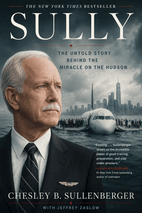
Chesley B. "Sully" Sullenberger III's Sully reveals the lifetime of preparation behind the Hudson River landing, tracing his journey from a Texas boyhood through Air Force training to the cockpit. Written for readers interested in aviation, leadership, and personal resilience, it shows how discipline and accumulated experience shape moments of crisis.
Feature
Insta.Page
Blinkist
Shortform
Summary Depth
Full Chapter-by-Chapter
15-min overview
Section-by-section guides
Audio Narration
✓
✓
✓
Visual Mindmaps
✓
✕
✕
AI Q&A
✓
✕
✕
Quizzes
✓
✕
✕
PDF Downloads
✓
✕
✓
Price
$89.99/yr
$146/yr (PRO)
$199/yr
*Competitor data last verified July 2026.
1 Page Summary
In Sully: The Untold Story Behind the Miracle on the Hudson, Captain Chesley B. “Sully” Sullenberger III offers a deeply personal account that extends far beyond the 208 seconds of Flight 1549. The book’s central thesis is that the successful Hudson River landing was not a single moment of heroism, but the culmination of a lifetime of preparation, discipline, and learned values. Sullenberger traces his development from a small-town Texas boy who made a childhood pledge to never be a bystander, through his grueling training at the Air Force Academy and as an Air Force pilot, to his career as a commercial airline captain. He argues that the mindset of being a “long-term optimist, short-term realist”—cultivated through studying past aviation disasters, understanding human factors, and embracing meticulous preparation—was the true foundation for his actions on that January day.
What makes this book distinctive is Sullenberger’s refusal to limit the narrative to the cockpit. He interweaves the dramatic story of the bird strike and water landing with profound reflections on his personal life: his father’s philosophy of “measure twice, cut once,” his and his wife Lorrie’s struggle with infertility and their decision to adopt two daughters, the financial pressures from a vacant commercial property that weighed on him before the flight, and his family’s seventeen-year commitment to volunteering with Guide Dogs for the Blind. The book draws heavily on the lessons of those who came before him—like test pilots who ditched a B-24 in 1944 and Captain Al Haynes of United Flight 232—and underscores the quiet dignity of a pilot’s life, from the camaraderie of broke young trainees building a makeshift cockpit in a closet to the genuine satisfaction of safely transporting 183 passengers to their destinations.
The intended audience is broad, appealing to readers interested in aviation, leadership, and personal resilience. However, Sullenberger is careful not to simply mythologize the event; he critically examines the Airbus A320’s fly-by-wire system, the well-documented problem of automation dependency, and the industry’s pressure to cut costs that passengers don’t always see. Readers will gain a nuanced understanding of how true preparation is built—not from grand gestures, but from showing up for life, making incremental contributions, and managing the situation rather than letting the situation manage you. The book ultimately becomes a meditation on what it means to be the sum of everyone you’ve loved and every experience you’ve had, and how that cumulative weight can make all the difference when the margin for error is razor-thin.
1 A Flight You’d Never Forget
Overview
The author remembers a flight that lasts only minutes—yet every detail stays with him. The wind comes from an unusual direction. The wheels rumble on a rural Texas airstrip. He smells warm engine oil and freshly cut grass. That afternoon marks the beginning of a lifelong relationship with aviation. It starts when a no-nonsense crop-dusting pilot gives him permission to fly alone.
The Man Who Saw Potential
The author’s parents saw his passion for flight and connected him with L. T. Cook Jr., a former civilian pilot instructor from the pre–World War II era. Cook had been part of President Roosevelt’s controversial Civilian Pilot Training Program, quietly preparing thousands of pilots for a conflict many Americans wanted to avoid. By the time the author meets him, Cook is a late-fifties, all-business crop duster who takes on only those students who show genuine promise. The author—tall, quiet, earnest, and deferential—makes the cut. The deal is struck: six dollars per hour for the airplane (the “wet rate,” including fuel) and three dollars per hour for Cook’s instruction. There are no warm fuzzies, but there is mutual respect.
The Solo That Changed Everything
After a few hours of dual instruction, Cook clears the author for his first solo flight. The instructions are simple: fly a rectangular pattern around the strip, touch the runway, lift back off, and repeat three times before a final landing. The entire solo lasts only nine minutes. The author focuses not on sightseeing but on proving himself worthy of another chance. He notes that Orville Wright’s first flight in 1903 was just twelve seconds long—a grounding reminder that every pilot starts somewhere. When it’s over, Cook offers no “atta boy,” only a quiet acknowledgment that the author did what was asked. Then he hands over the keys, effectively saying, Take my plane whenever you want, six dollars an hour, and keep learning on your own. That exchange, the author says, gave him the confidence to discover that he could safely get a plane into the air and back down—alone. It was a turning point.
A Flight That Became a Memory
Decades later, with nearly 20,000 hours of flying time, the author still recalls another flight from his teenage years—this one with a girl named Carole. He rents a Cessna 150, a tiny two-seater with a cabin just three feet wide. On a clear, cold day with visibility for miles, they fly over the Red River. The noise of the engine makes conversation nearly impossible, but the closeness is undeniable: her leg touching his, her arm brushing against his, the scent of her perfume or shampoo. He wants to impress her, but his primary duty is to keep her safe. That ability to separate emotion from responsibility—to compartmentalize—becomes a core lesson of being a pilot. The relationship with Carole fades, but the memory of that flight endures. As the author puts it, “A pilot can have thousands of takeoffs and landings, most of them unremarkable. Certain ones, though, he never forgets.”
Key Takeaways
First solo flights are transformative moments—brief in time but foundational in confidence.
Mentors like L. T. Cook Jr., who see potential in quiet earnestness, can shape a career simply by giving permission to practice.
Compartmentalization is an essential pilot skill: staying aware of peripheral emotions (like romance) while maintaining focus on safety.
The most memorable flights aren’t always the longest or the most technically challenging—they’re the ones that pair technical proficiency with human connection.
Key concepts: 1 A Flight You’d Never Forget
1 A Flight You’d Never Forget
The Transformative First Solo
Nine-minute solo flight becomes a lifelong memory
Simple instructions: rectangular pattern, three touch-and-goes
Proving oneself worthy of another chance to fly
Turning point: confidence to fly alone safely
The Mentor Who Saw Potential
L.T. Cook Jr., former WWII civilian pilot instructor
All-business crop duster who taught only promising students
Deal: $6/hour for plane, $3/hour for instruction
Mutual respect without warm fuzzies
The Gift of Permission
Cook handed over keys after solo, no praise given
Implicit trust: 'Take my plane whenever you want'
Permission to practice and learn independently
Quiet acknowledgment shaped the author's career
Compartmentalization and Human Connection
Teenage flight with Carole in a Cessna 150
Close quarters: leg touching, scent of perfume
Primary duty: keep her safe despite emotions
Core pilot skill: separate emotion from responsibility
Memorable Flights Beyond Technique
Most flights unremarkable, certain ones unforgettable
First solo brief but foundational in confidence
Flight with Carole paired skill with human connection
Enduring memories from technical proficiency and emotion
💡 Try clicking the AI chat button to ask questions about this book!
2 A Pilot’s Life
Overview
The author reflects on what truly makes the job rewarding—not just the technical skill of flying, but the human connections it enables. He feels a mild disappointment that many children today seem less captivated by flight than past generations, often glued to screens rather than peeking into the cockpit. When kids do show genuine curiosity, their excitement becomes contagious, and he and his first officers make a point of inviting them into the cockpit for photos and questions. Beyond that, there’s a deeper satisfaction: transporting 183 people safely to family reunions, vacations, funerals, job interviews. Each passenger has a story, and being part of that journey feels like tangible accomplishment.
The Weight of Financial Uncertainty
But the pilot’s life isn’t all magic and miles. On this particular trip, financial stress is pressing. The Jiffy Lube franchisee on their commercial property decided not to renew the lease six months ago, and the building remains vacant. Over a serious cup of tea with his wife Lorrie, he admits they can’t keep paying the mortgage without rent for much longer. Selling their family home is the worst-case scenario, and they have contingency plans, but the unresolved dilemma hangs over the conversation. It’s a reminder that even for someone who has stared down an emergency landing in the Hudson, everyday money problems can feel just as heavy.
Building a Second Career in Safety
Years before that famous landing, the author was deeply involved in aviation safety—starting in his Air Force fighter pilot days. As his flying career winds down, he’s launched a consulting firm called Safety Reliability Methods, Inc. The goal: help other industries (like medicine) adopt the airline industry’s rigorous checklist culture. He notes that the World Health Organization now recommends surgical safety checklists, requiring teams to verify allergies and count instruments, mirroring pilots’ pre-flight routines. For him, commercial aviation is already ultrasafe, but economic cutbacks threaten that record, so diligence is nonnegotiable.
Rituals of the Road
A pilot’s day is filled with small rituals. He packs two sandwiches (turkey and peanut butter & jelly) and a banana because airlines no longer provide crew meals—another casualty of cost cutting. He kisses Lorrie good-bye when he can, which he does on this morning before the San Francisco to Pittsburgh leg. The ritual isn’t just about food; it’s about grounding himself before the air.
Getting to Know Jeff
His first officer on this trip, Jeff, is fresh out of training but already impressive. In the cockpit, pilots observe a “sterile cockpit” rule below 10,000 feet, but once cruising, they talk about families: Jeff has three kids ages 17, 15, and 12. Somewhere over the Rocky Mountains, the author feels that familiar thrill—gazing at the snow-covered peaks and the stars, floating through an “invisible ocean of air.” He thinks of the poem “Sea Fever” by John Masefield and the line about a tall ship and a star to steer by. He notes that if GPS and compass fail, he could keep Venus in the left front corner of the windshield and reach California.
The Ballet of LaGuardia
Back at the airport, the approach to New York’s LaGuardia is a carefully choreographed ballet of intersecting runways. At 3:20 PM, the tower clears them to “position and hold” on runway 4, and they wait over four minutes, listening to the terse radio exchanges between controllers and other flights. It’s business as usual, but it sets the stage for what will soon become anything but usual.
Key Takeaways
Sharing the joy of flying with kids brings genuine fulfillment, contrasting with modern distractions.
Financial pressures–like a vacant commercial property–can weigh heavily even on a celebrated pilot.
The author is proactively applying aviation safety culture to other fields through his consulting firm.
Rituals (packing meals, good-bye kisses) help maintain normalcy in a demanding, traveling lifestyle.
The bond with a first officer builds quickly through shared professionalism and personal conversation.
Even routine flights at busy airports require intense focus and coordination–a prelude to the extraordinary.
Key concepts: 2 A Pilot’s Life
2 A Pilot’s Life
The Human Rewards of Flying
Connecting with curious children in the cockpit
Transporting 183 passengers to meaningful life events
Everyday money problems feel as heavy as emergencies
Building a Second Career in Safety
Founded Safety Reliability Methods consulting firm
Applying aviation checklist culture to medicine
WHO now recommends surgical safety checklists
Economic cutbacks threaten aviation's safety record
Rituals That Ground a Pilot
Packing two sandwiches and a banana for meals
Kissing wife Lorrie good-bye before trips
Rituals maintain normalcy in a traveling lifestyle
Cockpit Camaraderie and Focus
First officer Jeff has three kids, builds bond quickly
Sterile cockpit rule below 10,000 feet
Using Venus as backup navigation if systems fail
LaGuardia approach requires intense coordination
3 Those Who Came Before Me
Overview
My curiosity about air safety began during my teenage years, watching how certain pilots navigated crises with grace and skill. I studied their stories obsessively, wondering if I could measure up. Years later, that fascination led me to an invitation to speak at an international safety conference in France, where I shared how commercial aviation's remarkable safety record could inspire other industries. But I also acknowledged the shadow hanging over modern flying: the relentless pressure to cut costs. Passengers see shrunken legroom and fewer amenities, but they don't see airlines lowering minimum experience requirements for pilots. When I stepped into the cockpit of Flight 1549, though, I wasn't alone—I carried the hard-won lessons of those who came before me.
The B-24 Ditching That Changed Everything
On September 20, 1944, two test pilots voluntarily ditched a B-24 Liberator into Virginia's James River—the first full-scale ditching experiment. The bomber hydroplaned for hundreds of feet, its nose nearly sheared off, while engineers on a nearby boat recorded every shudder. Both pilots survived. The next day's headline read: B-24 “DITCHED” TO EXPERIMENT ON STRUCTURES—JAMES RIVER TEST DESIGNED TO SAVE LIVES IN THE FUTURE. At that point in World War II, scores of Allied bombers had gone down in the English Channel, most sinking quickly and drowning hundreds of crew members. This test was desperate, vital. It took thirteen more years for a formal report to emerge, outlining procedures that are still gospel today: landing gear retracted, lowest possible speed, wing flaps down, nose up on impact. Those guidelines were in my head as the Hudson River approached.
The Collision That Taught Me to Listen
On February 1, 1991, a runway collision at LAX between a USAir 737 and a SkyWest commuter plane killed thirty-five people. The cause? A controller cleared the jet to land on the same runway where the commuter plane was holding. I was assigned to interview sixty-seven survivors from the 737. The NTSB's questionnaire covered everything: What announcements did you hear? Did the exit lights work? Which door did you use? Did you help anyone? The work was grim, but I filed every detail away, grateful to learn from others' tragedies. When my own moment came, those stories—the James River test pilots, the LAX survivors—weren't history. They were equipment.
Key Takeaways
Emulate, don't just admire: Studying how past pilots succeeded gave me a mental toolkit for crisis.
Safety is a chain of small revelations: The 1944 ditching test took thirteen years to yield formal procedures—but those procedures saved lives on the Hudson.
Listen to survivors: Every interview I conducted after the LAX collision added a tile to the mosaic of what works in an emergency.
Cost cutting erodes safety, invisibly: Passengers see the squeezed cabin; I see the squeezed training budgets.
Key concepts: 3 Those Who Came Before Me
3 Those Who Came Before Me
Learning from Past Crises
Studied how pilots navigated crises with grace and skill
Procedures from that test guided Hudson River landing
Emulate past successes to build a mental toolkit
The B-24 Ditching Experiment
First full-scale ditching test in James River, 1944
Both pilots survived despite bomber nearly shearing off
Thirteen years later, formal procedures became gospel
Key rules: gear up, low speed, flaps down, nose up
Lessons from the LAX Collision
1991 runway collision killed 35 people
Interviewed 67 survivors for NTSB questionnaire
Learned details about exits, announcements, and help
Survivor stories became equipment for my own crisis
Invisible Erosion of Safety
Cost cutting pressures shadow modern flying
Airlines lower minimum experience requirements for pilots
Passengers see shrunken legroom, not squeezed training
Safety is a chain of small, hard-won revelations
Carrying the Lessons Forward
I carried hard-won lessons of those who came before
History wasn't just history—it was equipment
Listen to survivors to build a mosaic of what works
Safety record can inspire other industries
4 “Measure Twice, Cut Once”
Overview
The title "Measure Twice, Cut Once" isn’t just a carpentry lesson—it’s the central metaphor for how the author’s father approached life. The chapter opens with a vivid memory: the dad sending his boy to fetch another two-by-four after a mistake, insisting on precise measurement and cutting a hair wide to leave room for adjustment. That board fit perfectly. It was a small victory, but it carried a big lesson about patience, humility, and giving yourself options. The father’s philosophy extended far beyond woodworking; it colored everything from how he built their house by hand (with four hammers for four family members) to how he chose to spend his time and money.
Building a House, Building Memories
The house was never just a shelter. It was a project that involved everyone. Each morning, before the Texas heat set in, the kids were sent up to the roof to pound shingles. No contractor, no roofing crew—just the family working together. The author’s sister still remembers how their dad would drive them to Sherman just to sit in front of a stranger’s house he admired, sketching the roofline one week, the front steps the next. Those sketches weren’t architectural blueprints; they were slow, loving studies of what he wanted their home to feel like. The house he built became a physical expression of his values: careful, personal, and made with the people he loved.
A Dentist Who Didn’t Chase the Dollar
After serving as a full commander in World War II, the father opened a small dental practice in Denison. He genuinely enjoyed talking to patients, but only when his hands weren’t in their mouths. Money never drove him. He worked thirty-five to forty hours a week, no more, and often didn’t charge patients who couldn’t pay—especially the nuns from the local Catholic school. He wasn’t ambitious in conventional terms, but he was far from lazy. Building his own house required immense ambition. The difference was he measured success in time with family, not income. Paying for flying lessons was a splurge he happily afforded because he saw it gave his son purpose and direction.
Whimsy and Darker Moods
The father could be impulsive. Some mornings he’d wake up and announce they were going to Dallas for the day, or pull out the hammers to add a room. Other times he’d retreat to his room alone, dealing with “demons never discussed with the rest of us.” The chapter hints that those whimsical trips and sudden bursts of house-building might have been his way of brightening darker days. It adds a layer of complexity to the even-keeled, measured man who preached measure twice—he had his own struggles, and he handled them privately.
A Mother Who Played Chopin
The author’s mother was ten years younger than her husband. She left college at twenty-one to marry him, later regretted not graduating, and returned to school for a master’s degree while her son was a teen. She taught first grade at Sam Houston Elementary and was beloved in town—being her son in Denison was a “great kick” because everyone adored her. She was also a terrific pianist. The author remembers begging her to play more Chopin, a request his peers with iPods might find odd, but one that instilled in him a lasting appreciation for classical music. In a chapter about a father’s lessons in precision and priority, the mother emerges as the quiet nurturer who filled the house with music and warmth.
Key Takeaways
The father’s measure twice, cut once philosophy wasn’t just about carpentry—it reflected his careful, deliberate approach to life, family, and work.
He valued time with family over money, building their house by hand and often working fewer hours to be present.
His impulsive days and solitary retreats suggest he managed personal struggles in his own way, adding depth to his character.
The mother balanced the picture: a loving first-grade teacher and pianist who returned to school mid-life and shared her appreciation of classical music with her son.
Key concepts: 4 “Measure Twice, Cut Once”
4 “Measure Twice, Cut Once”
Measure Twice, Cut Once Philosophy
Central metaphor for father's approach to life
Precision and leaving room for adjustment
Lesson in patience, humility, and options
Extended beyond carpentry to all decisions
Building a House by Hand
Family project involving everyone, including kids
Slow, loving studies of admired houses
House as physical expression of family values
Built with people he loved, not contractors
Prioritizing Family Over Money
Dentist who worked 35-40 hours weekly
Often didn't charge patients who couldn't pay
Measured success in time with family
Paid for flying lessons to give son purpose
Whimsy and Personal Struggles
Impulsive trips and sudden house additions
Retreated to room to deal with private demons
Whimsy as way to brighten darker days
Added complexity to measured, deliberate persona
Mother's Quiet Nurturing Influence
Left college to marry, later earned master's
Beloved first-grade teacher in town
Terrific pianist who filled house with music
Instilled lasting appreciation for classical music
You've reached the end of the free chapters
Next chapter: “5 The Gift of Girls” is locked
Keep reading Sully — and unlock all 600+ book summaries with audio, mindmaps and AI Q&A.
$0.00 due today · 7 days free, then $89.99/year ($7.49/mo) · Cancel anytime before day 7
The book chronicles the life and career of pilot Chesley Sullenberger, from his early fascination with aviation to the dramatic Hudson River landing. It delves into his upbringing, military training, family relationships, and the mindset that allowed him to execute a successful water landing. The narrative also explores the aftermath of the incident and the personal stories of those affected.
Who is the author of Sully?
Chesley B. 'Sully' Sullenberger III is the retired airline captain who famously landed US Airways Flight 1549 on the Hudson River in 2009, saving all 155 people aboard. He is a former Air Force fighter pilot and a safety expert who has dedicated his career to aviation safety. He has also served as a speaker and consultant on leadership and crisis management.
Is Sully worth reading?
This memoir offers a compelling and deeply personal account of one of aviation's most famous incidents, revealing the discipline and character behind the heroism. Readers gain insight into the decades of training, the personal sacrifices, and the quiet determination that prepared Sullenberger for that critical moment. It is an inspiring story of professionalism, resilience, and the value of being prepared.
What are the key lessons from Sully?
The importance of rigorous preparation and lifelong learning cannot be overstated, as Sullenberger's ability to handle the crisis came from years of training and studying others' mistakes. A key takeaway is the need to manage the situation rather than let it manage you, a principle learned from other pilots' experiences. Additionally, the book emphasizes showing up for others in small ways every day, as those incremental acts build character and trust. Finally, facing adversity with grace and focusing on what you can save rather than what you lose is a profound lesson.
📚 Explore Our Book Summary Library
Discover more insightful book summaries from our collection