Sully Quotes
by Chesley B. Sully Sullenberger III
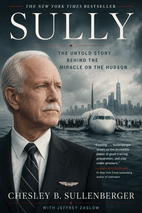
This collection brings together some of the most striking lines from Chesley Sullenberger's memoir. You will find reflections on duty, resilience, and the quiet heroism of everyday life. Sully writes with a pilot's precision and a philosopher's depth. His words are grounded in real experience, yet they speak to universal truths. The book is quotable because it balances technical wisdom with emotional honesty, offering insights that stick with you long after you turn the page.
Many of these quotes capture moments of profound clarity, from cockpit observations to life lessons learned over decades. They remind us that even in the most extraordinary circumstances, ordinary human qualities like preparation, humility, and care for others matter most.
Top Quotes from Sully
“My job is to reunite people with family and friends, to send them on long-awaited vacations, to bring them to loved ones’ funerals, to get them to their job interviews.”
Sully describes the deeper purpose of his work as a pilot.
This line humanizes the role of a pilot, showing that every flight carries profound personal significance for passengers, making the job feel deeply rewarding.
“It feels like we're floating through an invisible ocean of air, dotted with stars.”
Sully reflects on the sensation of flying over the Rocky Mountains.
This poetic image captures the mystical beauty and freedom of flight, evoking a sense of wonder that resonates with anyone who dreams of the skies.
“You can always make a board shorter. You can’t make it longer.”
Sully’s father teaches him carpentry after a mistake in measuring a two-by-four.
This practical advice about leaving extra length embodies a life lesson in humility and the value of leaving room for error.
“Sully,” she has said more than once, “life is not a checklist!”
Lorrie reminds Sully that his perfectionist, pilot-like approach doesn't always work in marriage.
This memorable line humorously and wisely critiques the tendency to treat relationships as tasks, urging balance and forgiveness.
“In stressful situations, your brain tells you what you want to hear and see, which is: ‘This ain't happening to me!’ And so you mentally deny that your plane is going down.”
Sully recounts his friend Jim Leslie's explanation of why pilots delay ejecting.
This brutally honest insight into cognitive denial under pressure is universally relatable and serves as a warning about the danger of wishful thinking in crises.
“You did your best. But as tragic as this outcome was, it would be even more tragic if a stressful situation allowed us to be distracted from our duties going forward.”
Captain Sully addresses his flight attendants after a passenger dies mid-flight, urging them to stay focused.
This line captures Sully's calm leadership and his ability to transform tragedy into a reminder of professional responsibility—a core theme of his character.
“It’s all part of how our society works: We briefly entrust our safety and the safety of our families to strangers, and then never see them again.”
Sully generalizes about the nature of modern life and air travel.
This observation resonates universally, highlighting both the fragility and the beauty of the trust we place in unseen professionals every day.
Themes Behind the Quotes
A central theme is the weight of responsibility and the discipline required to earn trust. Sully emphasizes that safety and reliability come from relentless preparation, attention to detail, and a mindset of constant vigilance. Even brief moments of crisis are shaped by years of training and a commitment to doing the right thing. This theme runs through his reflections on his career, his family, and the many strangers whose lives he briefly held in his hands.
Another recurring thread is the search for inner strength and meaning beyond professional accomplishment. Sully grapples with what it means to truly connect with others, whether through love, service, or simply showing up. He values humility, learns from his father's priorities, and finds growth in facing hard truths. The quotes reveal a man who sees life not as a checklist to complete, but as a journey of constant learning and quiet perseverance.
Quotes by Chapter
1 A Flight You’d Never Forget
“Tue FLIGHT LASTED just a few minutes, but so many of the details are rich and vivid to me.”
Opening line of the chapter, describing his first solo flight.
It captures the enduring impact of a brief but pivotal moment, resonating with anyone who has experienced a life-changing event.
“I remember the smell of the warm engine oil, and how it drifted into the cockpit as I prepared to take off.”
Sully recalls sensory details from his first solo flight.
This line evokes a powerful sensory memory, showing how flying engages all the senses and creates lasting impressions.
“Mr. Cook greeted me when it was all over, and as I shut down the engine, he said I'd done what he'd asked. There was no “atta boy,” but I knew I'd passed the test.”
After Sully's first solo flight, his instructor's understated response.
It highlights the quiet confidence of knowing you've succeeded without external praise, a relatable moment of self-validation.
“Now, at age fifty-eight, I have 19,700 hours of flying time under my belt. But I can trace my professional experience back to that afternoon. It was a turning point.”
Sully reflects on his career and the origins of his flying life.
This passage emphasizes how a single, short experience can shape an entire lifetime of achievement and purpose.
2 A Pilot’s Life
“All I ask is a tall ship and a star to steer her by.”
Sully recalls a line from John Masefield's poem 'Sea Fever' that he often thinks of when he sees Venus while flying west.
The line symbolizes the timeless romance of navigation and a pilot's reliance on nature, blending literature with aviation in a memorable and inspiring way.
3 Those Who Came Before Me
“This degree of safety requires tremendous commitment at every level of an organization and a constant diligence and vigilance to make it a reality.”
Sully speaking about the high level of safety in commercial aviation.
It captures the relentless efforts needed to achieve and maintain safety, emphasizing that it is not a one-time achievement but an ongoing discipline.
“Most passengers today select carriers based on price. If one airline's fare is five dollars less than a competitor's fare, the airline with the less costly ticket gets the booking.”
Sully discussing how consumer behavior drives airlines to cut costs.
This highlights the tension between market pressures and safety culture, reminding readers that price-based choices can undermine the resources allocated to safety.
“As the plane hydroplaned for several hundred feet, which almost completely severed the bomber's nose section, engineers watched from a nearby boat, collecting data on how it fared.”
Sully describing a 1944 voluntary ditching test of a B-24 Liberator.
The vivid image of engineers observing a deliberate crash underscores the sacrificial and empirical roots of aviation safety improvements.
“That report called for landing gear to be retracted rather than extended. It described why an airplane should fly as slowly as possible, and why wing flaps should be down for impact. It also called for the nose to be up in most cases.”
Sully recounting the procedural guidelines from a 1957 report on water landings.
These specific, actionable instructions show how hard-won lessons from past tragedies directly informed the techniques Sully used on Flight 1549.
4 “Measure Twice, Cut Once”
“Unlike a lot of men of his generation, my dad thought of being with his family as his priority; work was secondary.”
Sully reflects on his father’s values and priorities.
It challenges traditional gender roles and emphasizes the importance of family over career, resonating with modern readers.
“It was almost as if he wasn’t in dentistry to earn a living.”
Sully describes his father’s selfless approach to his dental practice.
This line captures a purpose-driven life where money is not the primary motivation, inspiring readers to consider deeper values.
“I'm not sure a lot of kids today, plugged into their iPods and cell phones, are calling out to their mothers for more Chopin.”
Sully recalls his mother’s piano playing and his childhood love of classical music.
It contrasts a simpler, more intimate childhood with today’s technology-saturated world, evoking nostalgia and reflection on family bonds.
5 The Gift of Girls
“You don’t get it, do you? I love you for what's on the inside.”
Sully responds to Lorrie after she asks why he never comments on her weight gain from fertility medication.
This line captures unconditional love and reassurance in a vulnerable moment, showing that true affection transcends physical changes.
“What can you say to a woman who has given you this kind of gift?” she wondered. “I don’t think there are any words.”
Lorrie reflects on what to say to their daughter's birth mother after the adoption.
It expresses the profound, speechless gratitude that comes from receiving the ultimate gift of a child, resonating with anyone who has experienced adoption or deep generosity.
6 Fast, Neat, Average
“It made me realize that if I dug deep enough, I could find strength I didn't know I had.”
Sully reflects on the summer training at the Air Force Academy.
This line captures a universal truth about discovering inner resilience through challenge, inspiring readers to push beyond their perceived limits.
“He was like a good trial lawyer who never asks a question without knowing the answer.”
Sully describes an upperclassman who tricked him during a shoe-shine bet.
The analogy is both clever and memorable, illustrating strategic thinking and the value of preparation in any competition.
“I had done hard things I didn’t know I could do. It was as if I had become a man, and my hometown seemed so much smaller to me than I had remembered.”
Sully returns home after his first year at the academy, feeling transformed.
These sentences powerfully convey personal growth and the shift in perspective that comes from overcoming adversity, making them deeply relatable.
“There’s no engine, it’s much quieter, and you're operating at a slower speed, maybe sixty miles an hour. You feel every gust of wind, and so you're aware of how light your airplane is, and how you are at the mercy of the elements.”
Sully describes the experience of flying a glider.
The lyrical description evokes the pure, vulnerable essence of flight, appealing to anyone who dreams of freedom or appreciates the beauty of simplicity.
7 Long-Term Optimist, Short-Term Realist
“Though I never saw battle, I spent years training hard, paying close attention, demanding a great deal of myself, and maintaining a constant readiness.”
Sully reflects on his career and preparation despite never facing combat.
This line encapsulates the theme of relentless preparation and self-discipline that defined his life, resonating with anyone who strives for excellence without guaranteed reward.
“At age fifty-seven, I was able to call upon these earlier lessons, and in doing so, answer the questions I'd had about myself.”
Sully links his lifelong training to the successful outcome of Flight 1549.
It powerfully connects past effort to a moment of truth, showing that preparation pays off even decades later, which inspires readers to trust their own accumulated experience.
“I felt like I was still in control, but I was wary, prepared for the possibility that my aircraft might betray me and I'd have to abandon it.”
Sully describes his mindset during a difficult landing after a gust of wind.
It captures the paradox of confidence and caution that defines expert decision-making, showing how true control includes constant readiness for the unexpected.
Photo Section
“My daughter Kate has trained two puppies, and I am so proud to watch both her and Kelly work with the dogs to make sure they are ready for their future owners.”
The author expresses pride in his daughter and her sibling training guide dog puppies.
This passage captures a parent's pride and the intergenerational impact of service, resonating with themes of family and purpose.
8 This Is the Captain Speaking
“It's likely that hundreds of thousands of people watched coverage of the Flight 1549 incident, not realizing that they had once placed themselves in my hands for a couple of hours.”
Sully reflects on the anonymity of pilots and the hidden connections between strangers.
It poignantly illustrates the invisible trust that underpins air travel, and how a moment of crisis can reveal a shared history no one knew they had.