Sully Key Takeaways
by Chesley B. Sully Sullenberger III
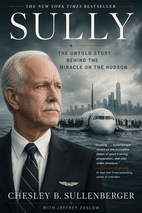
5 Main Takeaways from Sully
Preparation and discipline turn crisis into controlled emergency.
Sully's survival of Flight 1549 wasn't luck—it was the payoff of decades of deliberate training, studying others' accidents, and practicing energy management. He shows that long-term optimism (investing in skills when nothing is urgent) combined with short-term realism (acknowledging threats without denial) creates the muscle memory needed to act decisively under pressure.
Compartmentalize emotions to focus on what matters most.
Sully describes compartmentalization as an essential pilot skill—staying aware of peripheral emotions like fear or romance while maintaining absolute focus on safety. This principle applies beyond flying: in any high-stakes situation, you must acknowledge feelings without letting them hijack your decision-making.
Safety is a chain built from small, often invisible choices.
From the 1944 ditching test that took thirteen years to become procedure, to the squeezing of training budgets that passengers never see, Sully illustrates that safety erodes quietly. Every routine check, every moment of not being a bystander, and every investment in readiness adds a link to that chain—and one broken link can be catastrophic.
Humble yourself, or life will do it for you.
Sully's academy shoe-shine bet and the lesson about overconfidence taught him that attention to detail and humility are non-negotiable. Whether you're a pilot, a parent, or a professional, arrogance blinds you to risks. True expertise comes from knowing what you don't know and constantly learning from others' mistakes.
Gratitude transforms loss into purpose and connection.
After the Hudson landing, Sully could have fixated on the damaged personal items recovered. Instead, he chose gratitude—for family, first responders, and the 155 lives saved. He also channeled survivor's guilt into safety advocacy. The book's deepest lesson: how we interpret events—as burdens or gifts—defines whether we grow or stagnate.
Executive Analysis
These five takeaways converge on a central thesis: in a world full of unpredictable threats and eroding systems, true resilience is built through a lifetime of deliberate, humble preparation—not by heroic instinct. Sully’s story demonstrates that we can train ourselves to manage crises by adopting a pilot’s mindset: compartmentalizing emotions, investing in invisible safety chains, learning from past tragedies, and choosing gratitude over regret. The book argues that the same principles that saved 155 lives on the Hudson can save careers, relationships, and even our sense of self.
This book matters because it reframes leadership and survival as everyday habits rather than rare feats. Sullenberger bridges aviation memoir and self-help by grounding every insight in real-world consequences—the ditching test that saved lives, the financial pressures that distract a professional, the simple act of not being a bystander. It stands apart from other pilot memoirs by offering actionable frameworks (long-term optimism/short-term realism) and by humanizing the person behind the uniform. For anyone facing high-pressure decisions—whether in business, parenting, or personal crises—Sully provides a practical, emotionally honest blueprint for showing up when it counts.
Chapter-by-Chapter Key Takeaways
1 A Flight You’d Never Forget (Chapter 1)
First solo flights are transformative moments—brief in time but foundational in confidence.
Mentors like L. T. Cook Jr., who see potential in quiet earnestness, can shape a career simply by giving permission to practice.
Compartmentalization is an essential pilot skill: staying aware of peripheral emotions (like romance) while maintaining focus on safety.
The most memorable flights aren’t always the longest or the most technically challenging—they’re the ones that pair technical proficiency with human connection.
Try this: Replicate the transformative power of your first solo flight by deliberately seeking one new, high-stakes challenge per year that forces you to build foundational confidence.
2 A Pilot’s Life (Chapter 2)
Sharing the joy of flying with kids brings genuine fulfillment, contrasting with modern distractions.
Financial pressures–like a vacant commercial property–can weigh heavily even on a celebrated pilot.
The author is proactively applying aviation safety culture to other fields through his consulting firm.
Rituals (packing meals, good-bye kisses) help maintain normalcy in a demanding, traveling lifestyle.
The bond with a first officer builds quickly through shared professionalism and personal conversation.
Even routine flights at busy airports require intense focus and coordination–a prelude to the extraordinary.
Try this: Establish pre-flight rituals—like packing your bag, reviewing your priorities, and saying a focused goodbye—to create normalcy and presence before any demanding workday.
3 Those Who Came Before Me (Chapter 3)
Emulate, don't just admire: Studying how past pilots succeeded gave me a mental toolkit for crisis.
Safety is a chain of small revelations: The 1944 ditching test took thirteen years to yield formal procedures—but those procedures saved lives on the Hudson.
Listen to survivors: Every interview I conducted after the LAX collision added a tile to the mosaic of what works in an emergency.
Cost cutting erodes safety, invisibly: Passengers see the squeezed cabin; I see the squeezed training budgets.
Try this: Study three past failures in your field (accidents, bankruptcies, product disasters) as if you were the pilot, writing down one specific procedure you can adopt to prevent the same mistake.
4 “Measure Twice, Cut Once” (Chapter 4)
The father’s measure twice, cut once philosophy wasn’t just about carpentry—it reflected his careful, deliberate approach to life, family, and work.
He valued time with family over money, building their house by hand and often working fewer hours to be present.
His impulsive days and solitary retreats suggest he managed personal struggles in his own way, adding depth to his character.
The mother balanced the picture: a loving first-grade teacher and pianist who returned to school mid-life and shared her appreciation of classical music with her son.
Try this: Adopt your own version of 'measure twice, cut once' by triple-checking one critical decision each week, whether it's a budget, an email, or a family commitment.
5 The Gift of Girls (Chapter 5)
Love at first sight is not the only path; Sully and Lorrie’s relationship grew slowly from a hesitant start into deep mutual respect.
Marriage requires adaptation: Sully’s pilot-like perfectionism and economy of words must be balanced with intentional intimacy and conversation.
Infertility is a shared struggle that tests a couple’s resilience; acknowledging each other’s worth beyond physical changes can strengthen the bond.
Adoption transforms a painful situation into a profound gift; honoring the birth parents’ sacrifice is central to the family’s story.
Missing moments is inevitable in any demanding career, but gratitude for what you have can outweigh regret when you choose to see it.
Try this: Schedule a weekly 30-minute intentional conversation with your partner—no phones, no tasks—to balance your natural perfectionism with the intimacy marriage requires.
6 Fast, Neat, Average (Chapter 6)
Preparation beats instinct: The author’s homework on military aircraft—specifically counting helicopters—landed him the academy slot. Knowing your stuff in an interview can turn the tide.
You have more strength than you know: Summer training proved that pushing past perceived limits reveals hidden reserves. The author wouldn’t have discovered that without being forced.
Humble yourself, or life will do it: The shoe shine bet was a perfect setup. The upperclassman taught a lesson about attention to detail and the danger of overconfidence without coming across as cruel.
Homesickness ends when you grow: The author’s first six months were hard, but after facing academy challenges, returning home felt different. He had outgrown his old world.
Flight is freedom earned: The glider was the ultimate reward—pure, quiet, and requiring total awareness. It made the grueling years feel meaningful.
Try this: Prepare one obscure fact about your dream opportunity before an interview or pitch; your homework can turn the tide just as Sully’s helicopter count won him an academy slot.
7 Long-Term Optimist, Short-Term Realist (Chapter 7)
Long-term optimism means investing in training, discipline, and readiness even when nothing seems urgent. You’re betting that your future self will need those skills.
Short-term realism means acknowledging immediate threats without denial. It’s the split-second decision to eject, to change course, to admit the machine might fail.
Learn from others’ mistakes—they’re cheaper than your own. Sullenberger studied fatal accidents not out of morbid curiosity, but to internalize lessons before he needed them.
Denial is the enemy of survival. Whether it’s ego, fear of embarrassment, or wishful thinking, the refusal to accept a bad situation is often what makes it deadly.
Try this: Write down one worst-case scenario for a current project and then plan exactly how you would survive it—this builds short-term realism without killing your long-term optimism.
Photo Section (Chapter 8)
Seventeen years of volunteering with Guide Dogs for the Blind is a legacy measured in litters and lives changed.
The breeding dog Twinkle anchors this work, having produced four litters that will eventually serve as companions or guides.
Family participation deepens the mission: the author's daughter Kate trains puppies alongside Kelly, reinforcing a shared sense of purpose.
Photographs in this section freeze the often invisible labor of preparing dogs for their future owners—a reminder that every quiet moment of training holds immense weight.
Try this: Volunteer for a cause that requires repetitive, invisible labor (like training a guide dog) to remind yourself that quiet discipline is as valuable as public heroism.
8 This Is the Captain Speaking (Chapter 9)
The early years of an airline career are marked by intense training, financial struggle, and deep camaraderie—qualities that build the foundation for a disciplined professional life.
Aviation has shifted from a formal, service-oriented experience to a more casual, transactional one; the anonymity of the pilot remains a defining feature of the job.
In moments of crisis—whether a passenger dies mid-flight or the nation is attacked—leaders must rely on procedure and clear communication to keep crews grounded and focused.
The legacy of 9/11 is still present in airports for those who work there: quiet symbols like flags at departure gates serve as personal reminders of duty and loss.
The emotional weight of the job accumulates over decades, from handling death in the aisle to navigating the long, weary miles that separate a pilot from home.
Try this: When facing a crisis at work, announce the situation with a clear, calm phrase like 'we have a problem'—then delegate tasks using the same procedure-based communication Sully used after the bird strike.
9 Showing Up for Life (Chapter 10)
A single childhood vow to never be a bystander can shape a lifetime of actions.
Reputation is built through small, daily choices, not one grand gesture.
Airports and other busy places offer constant chances to help strangers in need.
Showing up for others sometimes means going against company rules or authority.
The cost of intervening can be personal friction, but it’s worth it to avoid being a bystander.
Try this: Perform one small, unsolicited act of help for a stranger in a public place today—airports, grocery stores, or sidewalks offer constant chances to keep your bystander vow.
10 Anything Is Possible (Chapter 11)
A simple walk can shift your entire perspective on problems, making the impossible feel possible again.
Finding physical activity you genuinely enjoy transforms exercise from a chore into a source of confidence and liberation.
Discipline includes knowing when to stop, even when the summit is in sight—safety and partnership matter more than reaching the goal.
Life is a mix of what we control and what we don’t; the art is learning to float in the middle of the river, trusting the current.
Try this: Go for a walk without your phone, letting your mind float; then write down one solution to a stubborn problem that felt impossible before you moved your body.
11 Managing the Situation (Chapter 12)
Survivor’s guilt can be channeled into purpose. Captain Haynes turned his trauma into a lifelong safety mission.
Luck plays a real role in survival. Favorable conditions, training, and timing all lined up at Sioux City.
Automation is a double-edged sword. It reduces workload in calm moments but can spike it during emergencies.
Technology changes the nature of errors, not their existence. We can now make precise, catastrophic mistakes.
The fire chief’s maxim applies everywhere: You must actively manage the situation—or it will manage you.
Try this: Ask yourself after any near-miss or failure: 'What could I have done differently that I can practice now?'—channel survivor's guilt into a small safety improvement for your team.
12 The View from Above (Chapter 13)
Airports are unique, and a pilot’s mental map of their details is a practical tool.
Flying offers intimate family moments—postcards, shared views, and rare chances to bring loved ones along.
Deregulation has trimmed employee travel benefits, making those shared journeys less common.
New York’s airspace exemplifies the heightened awareness required in complex flying environments.
Try this: Create a mental map of the three most complex environments you navigate regularly (your office, your city, your project timeline) and note one detail you previously overlooked.
13 Sudden, Complete, Symmetrical (Chapter 14)
The moment of crisis: within eight seconds of losing both engines, the crew shifted into a higher gear, executing protocols that normally allow time for checklists.
Glider experience was not the secret weapon—decades of disciplined energy management in jets was far more relevant.
Even experienced controllers had never faced a total thrust loss situation, underscoring how unprecedented Flight 1549 was.
Clear, concise communication between pilot and controller became the lifeline, even as options narrowed rapidly.
Try this: Practice saying 'Mayday, mayday, mayday' to yourself the next time a small problem escalates—use clear, concise language to narrow options rather than dwell on what you've lost.
14 Gravity (Chapter 15)
Elimination of options is not failure; it’s clarity. Sully didn’t waste mental energy on what he couldn’t do—he moved on to what he could.
The choice of words matters under pressure. “Brace for impact” was deliberate, designed to protect passengers physically and mentally without sowing panic.
Technical accuracy and instinct worked together. The final landing parameters—nose angle, speed, wing level—weren’t luck; they were the product of experience and composure.
Try this: When you face a moment of elimination (a cancelled flight, a lost deal), immediately shift focus to the single best remaining option instead of mourning what's gone.
15 One Hundred Fifty-five (Chapter 16)
Preparation saves lives – The passenger who read the emergency instructions after the bird strike knew exactly how to open the overwing exit.
Collective awareness – No one objected when rescue boats prioritized the passengers on the wings over those already in rafts. People grasped the bigger picture.
Selfless humanity – Ferry crews gave their own clothing to shivering survivors; bystanders acted with extraordinary bravery.
The count mattered – Mentally tallying 155 people was the only way to confirm success before the official word came.
Emotional aftershock – The brief call home revealed how deeply the ordeal affected loved ones, and how long it took for certainty to arrive.
Try this: Mentally count the people who depend on you today and, after a crisis, use that tally to confirm you’ve accounted for everyone’s safety before moving on emotionally.
16 Stories Heard, Lives Touched (Chapter 17)
The letters and stories shared with the author reveal the unexpected ways a single event can intersect with decades of personal history.
Trust from passengers is not given lightly; pilots carry the weight of that trust even when they are unaware of it.
The contrast between survival and loss is stark, but both experiences deepen the appreciation for the lives and connections that endure.
Try this: Write one letter to someone you've never met but who has shaped your life (a mentor, a stranger, a historical figure)—it will reveal how profoundly your story is intertwined with others'.
18 Home (Chapter 19)
The deaths of both parents reinforced for Sully that life is defined by our relationships, not our achievements.
His mother’s grace in the face of terminal illness became an unspoken source of strength during Flight 1549.
Kate and Kelly represent two very different emotional languages, and the Hudson event helped bridge the gap with Kate.
Lorrie’s resilience as a solo parent, and Sully’s frequent absence, reveal the hidden, ongoing costs of a demanding career—both before and after the famous landing.
Try this: Call a family member or close friend right now and simply say, 'I'm grateful you're in my life'—the emotional aftershock of a close call is best answered with direct connection, not silence.
19 The Question (Chapter 20)
The return of personal belongings, even damaged ones, can evoke either gratitude or fixation on loss—a choice we all face.
Listening to the cockpit voice recorder revealed details we didn’t remember, underscoring how training and teamwork can overdrive panic.
Effective crew coordination is a form of grace under pressure, turning a cacophony of alarms into a shared, focused effort.
Gratitude—for family, colleagues, and first responders—is as essential to survival as skill and courage.
Try this: When you recover something damaged (a relationship, a project, a keepsake), choose gratitude for what remains rather than fixation on what was lost—listen to your own 'cockpit voice recorder' to see how teamwork overrode panic.