As an Amazon Associate, we earn from qualifying purchases.
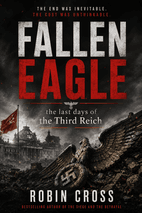
What is the book FALLEN EAGLE about?
Robin Cross's Fallen Eagle examines the final catastrophic months of Nazi Germany from January to May 1945, arguing the regime destroyed itself through strategic delusion and internal dysfunction. Written for World War II history readers interested in the European theater's concluding campaigns and the Third Reich's collapse.
Feature
Insta.Page
Blinkist
Shortform
Summary Depth
Full Chapter-by-Chapter
15-min overview
Section-by-section guides
Audio Narration
✓
✓
✓
Visual Mindmaps
✓
✕
✕
AI Q&A
✓
✕
✕
Quizzes
✓
✕
✕
PDF Downloads
✓
✕
✓
Send to Kindle
✓
✓
✓
Price
$89.99/yr
$146/yr (PRO)
$199/yr
*Competitor data last verified July 2026.
1 Page Summary
In Fallen Eagle: The Last Days of the Third Reich, Robin Cross examines the final, catastrophic months of Nazi Germany from January to May 1945, arguing that the regime’s collapse was driven by a toxic combination of strategic delusion, internal dysfunction, and the overwhelming military might of its enemies. The book’s central thesis is that the Third Reich did not simply lose the war; it actively destroyed itself through Hitler’s refusal to acknowledge reality—dismissing overwhelming Soviet numerical superiority as a bluff, prioritizing the defense of Hungarian oil fields over the Oder front, and wasting precious resources on doomed offensives in the Ardennes and Hungary. Cross illustrates this self-destruction through stark contrasts, such as the deliberate dynamiting of the Tannenberg memorial by German soldiers, and the macabre scenes in the Führerbunker where Hitler fantasized about phantom armies while the Red Army encircled Berlin. The narrative is built around the fatal disconnect between the regime’s propaganda and the grinding reality of collapse, from the firestorm of Dresden to the surrender of German cities.
The author’s approach is distinctive for its relentless focus on the human and strategic absurdities of the regime’s final days, weaving together high-level command decisions with the diaries and accounts of ordinary soldiers, civilians, and Nazi officials. Cross gives particular attention to the clash between generals like Guderian, who pleaded for rational defense, and Hitler’s increasingly irrational orders, while also documenting the Soviet war machine’s transformation into a terrifyingly effective force under Stalin and Zhukov. The book is notable for its unflinching depiction of the moral complexity of the period—detailing the liberation of concentration camps, the Allied bombing of Dresden under the “Thunderclap” plan, and the brutal desperation of the final battles, including the race between Zhukov and Konev for Berlin. Rather than a traditional military history, Cross presents a portrait of institutional madness, where even Goebbels’s propaganda films were flown into fortresses that were about to be overrun.
This work is intended for readers of World War II history, particularly those interested in the concluding campaigns of the European theater, the internal collapse of the Nazi regime, and the strategic miscalculations that accelerated its end. What sets Fallen Eagle apart is its integration of multiple perspectives—from Soviet marshals and Anglo-American generals to the refugees fleeing the Red Army and the bunker staff scrambling for escape—without losing narrative momentum. Readers will gain a vivid understanding of how the Third Reich’s final months were characterized not by a single decisive battle, but by a cascade of failures: a fuel-starved military, a civilian population living under bombardment and black-market survival, and a leadership that chose fantasy over survival. The book leaves a lasting impression of the sheer scale of destruction, both physical and moral, that accompanied the end of Hitler’s empire.
Chapter One: LOST VICTORIES
Overview
The chapter opens with a stark juxtaposition—the glorious German triumph at Tannenberg in 1914 and its utter reversal in January 1945. General Paul von Hindenburg and Major-General Erich Ludendorff had crushed the Russian Second Army, taking 125,000 prisoners and securing East Prussia for the remainder of the First World War. That victory was memorialized with a towering monument where Hindenburg and his wife were eventually buried. By 1945, not only had the Russians returned in overwhelming force, but the retreating Germans themselves dynamited the monument and exhumed Hindenburg’s remains. The symbolism is immediate and devastating: the past victories are not just lost, but actively erased by the very hands that once celebrated them.
The Destruction of a Legacy
The monument’s destruction speaks to the collapse of German morale and strategic fantasy. Hans-Georg von Studnitz, a Foreign Ministry official, recorded in his diary the grim irony: German troops were ordered to destroy the memorial so the Russians couldn’t take credit for it. But as he noted, the Russians could now justly claim they had destroyed it. Worse, the same goods wagon used to haul Hindenburg’s body could have carried sixty refugees to safety. Studnitz’s bitter observation—that rescuing refugees would have served Germany’s future better than transporting a corpse—captures the regime’s misplaced priorities as the Reich crumbled.
A Front Collapsing on All Sides
Germany’s strategic position was a house of cards. In the West, the Ardennes offensive (the Battle of the Bulge) had been contained and reversed by mid-January. The American and British forces, once the fog cleared, tore apart Hitler’s armored reserves—800 tanks lost, irreplaceable. On the Eastern Front, the destruction of Army Group Centre in July–August 1944 had already opened the door. By January 1945, two Red Army fronts under Marshals Konev and Zhukov were racing across the Polish plain, less than 400 miles from Berlin. They had broken through German defensive lines within forty-eight hours, and their mechanized forces were moving with new mastery. To the north, the Soviet drive to the Baltic sent millions of refugees fleeing westward into the Reich or north toward the ports.
The southern sector was equally grim. Romania had switched sides in August 1944, declaring war on Germany after a coup by King Michael. German occupation forces in Greece were withdrawing under pressure to link up with Army Group F in Yugoslavia. The only faint glimmers of hope were in Hungary, where Budapest was still encircled but might yet be relieved, and in Italy, where Army Group C held the Gothic Line. These were not victories; they were reprieves.
Guderian’s Desperate Plea
Against this backdrop, on 25 January, the German Army’s Chief of the General Staff, Heinz Guderian, visited Foreign Minister Joachim von Ribbentrop. Guderian proposed they go together to Hitler and urge him to seek an armistice on at least one front—specifically in the West, before the Western Allies could march into Germany. Ribbentrop, ever the loyal foil, refused, claiming Hitler did not wish to open diplomatic negotiations. Guderian’s retort cut through the fantasy: “How would you feel if in three or four weeks’ time the Russians were at the gates of Berlin?” The question hung unanswered, emblematic of a leadership that preferred self-destruction to negotiation.
Key Takeaways
The chapter frames Germany’s 1945 plight as a reversal of its greatest First World War victory, both symbolically (the dynamited Tannenberg monument) and strategically (the Soviet steamroller).
The refugee crisis and the regime’s absurd priorities—saving Hindenburg’s corpse over living refugees—highlight the disconnect between Nazi ideology and reality.
Germany faced simultaneous collapse on the Western Front (Ardennes defeat), Eastern Front (rapid Soviet advance), and southern flank (loss of Romania and Greece).
Guderian’s attempt to persuade Ribbentrop to seek an armistice illustrates the internal desperation and the Führer’s refusal to consider surrender, setting the stage for the battle of Berlin.
Key concepts: Chapter One: LOST VICTORIES
1. Chapter One: LOST VICTORIES
Symbolic Reversal of Tannenberg
1914 victory at Tannenberg crushed Russian Second Army
Monument dynamited by retreating Germans in 1945
Hindenburg's remains exhumed and transported west
Victory not just lost but actively erased
Misplaced Priorities of Nazi Regime
Goods wagon carried corpse instead of 60 refugees
Regime prioritized symbolism over saving lives
Studnitz noted rescuing refugees served future better
Collapse of morale and strategic fantasy
Simultaneous Front Collapse
Ardennes offensive contained with 800 tanks lost
Red Army broke through in 48 hours on Eastern Front
Romania switched sides, Greece under withdrawal
Only faint hopes in Hungary and Italy
Guderian's Desperate Plea for Armistice
Guderian urged Ribbentrop to seek armistice in West
Ribbentrop refused, citing Hitler's wishes
Guderian warned Russians at Berlin gates in weeks
Leadership preferred self-destruction to negotiation
Refugee Crisis and Strategic Reality
Millions fled westward from Soviet Baltic drive
German defensive lines shattered within 48 hours
Soviet mechanized forces showed new mastery
House of cards collapse on all fronts
💡 Try clicking the AI chat button to ask questions about this book!
Chapter Two: THE HOUSE OF CARDS
Overview
The Führer's New Year broadcast crackled through the dining room where Harold Nicolson and his wife listened, and it was as delusional as ever—Hitler insisted Germany's "moral staunchness" would carry them through, even as the Reich crumbled around him. Just days earlier, on Christmas Eve 1944, Colonel-General Guderian had confronted Hitler at the Adlerhorst headquarters with intelligence that the Red Army enjoyed an 11:1 superiority in infantry, 7:1 in tanks, and 20:1 in artillery. Hitler dismissed these numbers as "the greatest bluff since Genghis Khan" and refused to abandon the failing Ardennes offensive. Worse, Himmler reinforced this "higher idiocy," and Jodl prioritized the secondary Nordwind offensive toward Strasbourg over the collapsing Eastern Front. When Guderian returned to Zossen, he learned that two precious panzer divisions had been diverted to Budapest to protect Hungarian oil fields—the Reich's last natural source of crude. But those fields were already irrelevant because the synthetic oil plants had been hammered all autumn by Allied bombers. The Ardennes offensive had launched with only a fraction of the petrol it needed; Field Marshal von Rundstedt noted Hitler provided one-and-a-half times the standard supply instead of the required five times. Bombardier Gordon Courtenay and navigator William Duane knew the cost of targeting that oil firsthand, running the brutal Merseburg flak gauntlet where six crews were lost on a single mission. Albert Speer's last industrial gasp had produced a remarkable surge in September 1944—3,000 fighters, 1,854 armored vehicles—but those numbers were misleading, built from components fed into the pipeline months earlier. By year's end, Ruhr pig-iron and steel output had fallen to a third of January 1944 levels, truck production collapsed, and the rail system hemorrhaged from 136,000 available wagons to just 28,000 by February 1945. The weapons lay stranded in factory yards. Meanwhile, the army was burning away: in 1944, 106 divisions were destroyed, and irrecoverable losses reached 1.46 million. Hitler's solution was pure fantasy, comparing himself to Frederick the Great, but Frederick did not replace losses with untrained sixteen-year-olds, fifty-year-olds, and men from "stomach" and "ear" battalions. The Volksgrenadier divisions, overseen by Himmler, were 6,000-man units of dubious value, their company commanders given a life expectancy of three months. Then came the Volkssturm—Germany's Home Guard, 1.5 million men ranging from bent old veterans to schoolboys carrying satchels, their eyes "the eyes of children at the reopening of school." Many had Italian rifles without ammunition; one battalion commander in Berlin sent his men home rather than lead them in civilian clothes with unarmed weapons. Beneath this desperate military machine lay a hidden army of 12 million forced laborers—prisoners of war, foreign conscripts, and coerced workers who by 1945 made up 40 percent of the workforce and in some factories 90 percent. They lived in a shadow society within the Reich, with their own compounds, canteens, and brothels. Journalist Ursula von Kardorff stumbled into a surreal underworld in Berlin's Friedrichstrasse station during an air raid: ragged Slavs, fair-haired Danes, smart Frenchwomen, Poles casting hatred, fragile Italians—a mingling of races such as had never been seen in any German city. They seemed organized, well-informed, and not particularly depressed. Some whispered they were a Trojan Horse, hiding agents with transmitters. Berlin itself became a stage for dystopian surrealism: red flags and paper streamers declaring "Our walls are breaking but not our hearts" while bodies were knocked from beneath the rubble, and forests sparkled with "Window" anti-radar tinsel dumped by Allied bombers, giving trees an eerie Christmas glitter. Trains no longer carried picnickers but desperate refugees fighting into compartments, trampling anyone in their way. Hitler knew the game was up, but his nerve held. On December 28, 1944, he told his generals that surrender was unthinkable: "Never in my life have I accepted the idea of surrender." He invoked Frederick the Great's "miracle of the House of Brandenburg," hoping for another miracle while hundreds of thousands would die waiting. But his body betrayed him—bent back, shuffling gait, hands trembling uncontrollably over maps, setting up a rustling that aides ignored. He could no longer write; his signature was forged. On January 30, 1945, twelve years after becoming Chancellor, Hitler delivered his last radio speech in flat, weary tones, invoking the "Asian tidal wave" and signing off with a hollow rallying cry. At the Muhldorff concentration camp near Dachau, inmates had convinced themselves the war would end on New Year's Day 1945. Hungarian Jew Moshe Sandberg recalled the terrible wait: the disappointment was bitter. They pushed the date to January 15, then a fortnight later, then further, but each time fewer believed. "They stopped believing and hoping. Only two things remained: hunger and the beatings... The remark 'The war will never end' became clear to us. Death was the time of our deliverance."
Key Takeaways
Hitler’s refusal to abandon the Ardennes offensive or shift forces eastward sealed the Eastern Front’s fate.
Oil shortages, caused by Allied bombing and the loss of Ploesti, crippled any sustained offensive.
Speer’s production surge masked a collapsing infrastructure, especially rail and skilled labor.
Manpower was scraped from the bottom of the barrel: children, the elderly, the sick, and untrained Volkssturm units.
Forced labor was the backbone of the German war economy, creating a hidden subculture of millions that some viewed as a Trojan Horse.
Berlin’s wartime landscape grew surreal, blending desperate party propaganda with silent suffering.
Hitler’s psychological resolve remained fierce even as his physical health collapsed, leading to a fatalistic wait for a miracle that never came.
For concentration camp prisoners, hope itself became a cruel commodity, worn away until only hunger and brutality remained.
Key concepts: Chapter Two: THE HOUSE OF CARDS
2. Chapter Two: THE HOUSE OF CARDS
Hitler's Delusional Leadership
Dismissed 11:1 Soviet superiority as bluff
Refused to abandon failing Ardennes offensive
Compared himself to Frederick the Great
Declared surrender unthinkable on Dec 28, 1944
Collapsing Military and Resources
106 divisions destroyed in 1944
1.46 million irrecoverable losses
Oil fields irrelevant after Allied bombing
Ardennes launched with fraction of needed petrol
Industrial Breakdown
Ruhr pig-iron output fell to third of Jan 1944
Truck production collapsed
Rail wagons dropped from 136,000 to 28,000
Weapons stranded in factory yards
Desperate Replacement Troops
Volksgrenadier divisions of dubious 6,000-man units
Company commanders had 3-month life expectancy
Volkssturm: 1.5 million old men and schoolboys
Many had Italian rifles without ammunition
Hidden Army of Forced Laborers
12 million forced laborers by 1945
Made up 40% of workforce, 90% in some factories
Lived in shadow society with own compounds
Some whispered they were a Trojan Horse
Surreal Dystopian Berlin
Red flags declared 'walls breaking but not hearts'
As 1945 dawned, Josef Stalin toasted his generals at a lavish New Year's Eve party, celebrating a Red Army that had transformed from the shattered force of 1941 into a war-winning machine. The evolution of the Soviet tank arm told this story best—from the wreckage of 1941, through the crucible of Kursk where Rotmistrov's Fifth Guards Tank Army lost 400 tanks but halted the SS, to the balanced formations of late 1944 armed with T-34/85s and IS-2 heavies, their mechanized infantry riding American trucks. The Soviet artillery revolution matched this transformation, with Stavka controlling massive reserves that could concentrate 670 guns per kilometer, while the infantryman—carrying nearly eighty pounds of gear, surviving on next to nothing—became a creature of terrifying endurance. Stalin dominated the war effort through the State Defence Committee and Stavka, which functioned as a military Politburo where commanders presented options but he made the final call. His chosen instrument was Marshal Zhukov, the peasant-born survivor of the purges who had beaten the Japanese at Khalkin Gol, who wasn't afraid to disagree with Stalin over Kiev, and who would demote a division commander to a penal battalion on the spot. None of this would have been possible without American Lend-Lease—16.4 million tons of supplies, including 2,000 locomotives, nearly a million tons of steel, and 13 million winter boots—which freed Soviet factories to focus on combat equipment and formed the bedrock of survival.
While Stalin celebrated, the German high command was trapped in a nightmare of its own making. On New Year's Day 1945, Guderian informed Hitler that IV SS Panzer Corps was ready to relieve Budapest, but by 5 January the offensive was already faltering. Guderian's tour of the Eastern Front brought him two sensible proposals: Operation Sleighride, a twelve-mile withdrawal from the Vistula to shorten the line and create a mobile reserve, and a similar retreat in East Prussia. Both were dead on arrival. At the Adlerhorst on 9 January, Hitler flew into a rage at Gehlen's intelligence reports showing Soviet superiority, dismissing the numbers as fantasy, and Guderian's temper matched the Führer's. The front line stayed where it was, and the German command waited for the blow to fall—a blow whose scale was staggering: thirty field armies, five tank armies, over 2.25 million men crammed into bridgeheads on the Vistula. The Magnuszew bridgehead alone held 400,000 men and nearly 2,000 tanks in a pocket fifteen miles deep and eight miles wide, while engineers fought ice floes to keep the bridges intact.
But the Soviets weren't just building a hammer—they were perfecting the art of hiding it. Maskirovka became an art form: phantom armies of dummy tanks, radio traffic with genuine call signs, entire armies moving hundreds of miles by night. Konev sold the idea of a thrust toward Cracow with 600 wooden tanks and fake artillery positions, diverting two German divisions south. In the Baranov salient, engineers dug a hundred miles of communications trenches and carved roads through forests, allowing two rifle divisions to be inserted every single night. German intelligence catastrophically underestimated the numbers, believing they faced 3:1 odds when reality was 8:1 or higher, partly because Hitler was convinced Stalin would wait to let the Western Allies suffer in the Ardennes. But Stalin had his own timetable: he was waiting for the ground to freeze solid, turning Poland's plains into perfect tank country.
The trigger was pulled on 8 January, when Antonov informed Konev that the offensive must begin immediately due to the "difficult position" of the Allies. At 4:35am on 12 January, while Hitler slept, Konev's artillery obliterated the German front line in a crushing 107-minute bombardment, and by 2pm the T-34s were rolling through terrain the German commander had considered "untankable." Two days later, Zhukov's front erupted from the Magnuszew bridgehead—10,000 guns aimed at a single sector, a stunning twenty-five-minute bombardment, and then the tank armies pouring across the Pilica. By nightfall on 15 January, three gaping holes had been torn in Army Group A's defenses, merging into a continuous 300-mile lodgement on the Vistula's west bank. The German collapse was so complete that entire divisions lost cohesion—Chuikov watched a column of twenty German tanks from the 25th Panzer Division drive straight into a Soviet crossing point, their crews unaware they were behind enemy lines. He encountered 1,500 German stragglers hiding in woods and haystacks, lost and leaderless, trudging through the frozen countryside in ersatz-wool greatcoats while Polish civilians shook their fists and cursed. The Red Army had not just broken through—it had shattered the psychological fabric of an army.
Key Takeaways
The Soviets created phantom armies and used intricate camouflage to conceal the true scale and direction of their forces.
German intelligence catastrophically underestimated Soviet troop concentrations, believing they faced 3:1 odds when reality was 8:1 or higher.
Stalin deliberately delayed the offensive to wait for frozen ground, ignoring political pressure from the West until Churchill's personal appeal.
Konev's attack on 12 January used a deceptive two-phase bombardment to shatter German defenses, while Zhukov's front launched its assault on the 14th.
Despite poor weather grounding air support, the Soviet tank armies achieved rapid breakthroughs, exploiting captured bridges and fording icy rivers.
The Soviet advance was so rapid that German units lost all cohesion, with entire divisions straying behind enemy lines without knowing it.
Chuikov’s firsthand accounts show how victory brought not just strategic gains but also chaotic, desperate scenes of retreat and surrender.
The plight of German prisoners—cold, lost, and leaderless—contrasts sharply with the disciplined Soviet forces, underscoring the psychological collapse of Army Group A.
Polish civilians, traumatized by occupation, expressed their fury through curses rather than violence, revealing deep-seated bitterness without resorting to lynching.
Key concepts: Chapter Three: SYMPATHY FOR THE DEVIL
3. Chapter Three: SYMPATHY FOR THE DEVIL
Soviet Military Transformation
Tank arm evolved from 1941 wreckage to balanced formations
Artillery revolution enabled massive gun concentrations per kilometer
Infantry became creatures of terrifying endurance under heavy loads
Stalin dominated war through State Defence Committee and Stavka
Zhukov and Soviet Leadership
Zhukov was Stalin's chosen instrument and purge survivor
He beat Japanese at Khalkin Gol and defied Stalin over Kiev
Would demote division commanders to penal battalions instantly
American Lend-Lease Impact
16.4 million tons of supplies formed bedrock of survival
Included 2,000 locomotives and 13 million winter boots
Freed Soviet factories to focus on combat equipment
German Command Paralysis
Guderian's Operation Sleighride retreat proposal was rejected
Hitler dismissed intelligence reports of Soviet superiority as fantasy
Front line stayed static while waiting for inevitable blow
Soviet Maskirovka Deception
Phantom armies used dummy tanks and fake radio traffic
Konev diverted two German divisions with 600 wooden tanks
German intelligence underestimated odds as 3:1 vs actual 8:1
Staggering Soviet Force Concentration
Over 2.25 million men crammed into Vistula bridgeheads
Magnuszew bridgehead held 400,000 men and 2,000 tanks
Engineers fought ice floes to keep bridges intact
The Vistula-Oder Breakthrough
Konev's 107-minute bombardment obliterated German front line
Zhukov's 10,000 guns tore three gaping holes in defenses
German collapse shattered psychological fabric of the army
Chapter Four: CLUTCHING AT STRAWS
Overview
January 1945 was a month of catastrophic miscalculations and desperate gambles. The chapter opens with Hitler's disastrous decision to transfer the Grossdeutschland Panzer Corps from East Prussia to Kielce, which Guderian correctly predicted would be a logistical nightmare. The divisions sat stranded on inadequate railways while the Red Army struck, forcing piecemeal deployment under fire. This pattern deepened as Hitler returned to Berlin on 16 January, moving into the crumbling Reich Chancellery like a medieval king retreating to his final fortress.
The clash over Hungary became the defining strategic argument. Guderian pleaded for reinforcements to defend the Oder, only to learn the entire Sixth SS Panzer Army was being sent to Budapest to protect oilfields—a decision that ignored the Wehrmacht's inability to move such forces quickly. Hitler's obsession with fuel blinded him to reality: shunting an entire panzer army across Europe would keep it out of action for weeks. The meeting soured further when Hitler blamed others for defensive lines he himself had ordered, replacing the hapless Harpe with the fanatical Schörner.
While Hitler clutched at straws, the Red Army's advance was breathtaking. Rifle divisions covered twenty miles a day, mechanized forces fifty. Warsaw fell as a silent ruin, its population reduced from 1.3 million to 160,000 survivors. Cracow was liberated virtually intact. By 25 January, the border was crossed east of Breslau, and Konev's Silesian envelopment executed a masterful 90-degree turn to seal off Katowice, leaving a "golden bridge" for withdrawal that Schörner seized.
The uncovering of the camps brought a different reckoning. At Chelmno, the SS murdered the Kommando tasked with dismantling the crematoria. At Auschwitz-Birkenau, 60,000 remaining prisoners were force-marched to railheads, thousands shot where they stumbled. The dead included 2 million Jews and 2 million Russian POWs. Marshal Konev made a conscious decision not to see it: "During the war I did not belong to myself."
The race to Berlin became a question of timing. Zhukov wanted to take the capital on the run, proposing to force the Oder by 1-2 February. Konev submitted his own plan to reach the Elbe in three weeks. Stavka approved both—an absurd compromise. By 1 February, three armies broke through to the Oder, seizing small lodgements. Yet crossing the Oder under pressure proved nightmarish. The ice was brittle, Luftwaffe FW190s strafed crossing points, and Chuikov called off the crossing until nightfall.
The decision to delay the assault on Berlin sparked a bitter postwar dispute. Chuikov argued taking Berlin in February was possible; Zhukov cited supply shortages, heavy casualties, and the sixty-mile gap between his right flank and Rokossovsky's left wing. The fuel shortage had allowed the Luftwaffe to seize air superiority. Several rifle divisions were reduced to 4,000 men; many tank brigades fielded as few as fifteen tanks. Hindsight suggests Zhukov's fears were justified: Rokossovsky's slow progress in Pomerania supports his caution.
In Berlin, Hitler's fury knew no bounds. He shrieked at Guderian: "I'm out for the General Staff's blood!" He issued an order requiring all divisional operations to be cleared with him. On 21 January, he announced that Heinrich Himmler would command a new Army Group Vistula—a decision that appalled Guderian.
The East Prussian campaign unfolded as a separate tragedy. Rokossovsky's Second Belorussian Front broke through at Ciechanov, with Fifth Guards Tank Army racing through the breach. On 22 January, III Guards Cavalry Corps crashed into Allenstein while German troops still unloaded tanks. Captain Dyachenko's T-34s, mingling with refugee columns, reached Elbing with headlights blazing, mistaken for a German training unit. East Prussia was now cut off from the Reich.
The eruption triggered a torrent of refugees. Hitler denounced evacuation as defeatism. The result was human tragedy on a colossal scale. One defender described the chaos inside the besieged pocket at Memel: "women, children, infants and invalids were crucified on the frozen earth." Nearly a million sought refuge in Danzig, many crossing the frozen Frisches Haff on foot.
The Wilhelm Gustloff disaster was the maritime culmination. On 30 January, the liner sailed from Gdynia with 8,000 refugees crammed aboard. With no escort and only twelve lifeboats, she was a sitting duck. At 11:08 p.m., a Soviet submarine found her. Three torpedoes struck her port side. Within a minute, the ship was sinking. At least 7,000 perished—five times the death toll of the Titanic.
The chapter closes with the Red Army's reckoning. The speed of the advance led to a breakdown in discipline. Every man had a score to settle—one regiment had 158 men who lost close relatives to Germans. Tanks were so crammed with loot that crews could barely move. One drunken crew opened fire on Russian units. Konev issued draconian orders to restore discipline, banning the wearing of looted top hats. Tales of Russian barbarity spread back to the Reich, stiffening the resolve of defenders. Yet not all stories were clear-cut: Vera Bockmann recalled a family picked up by a Russian tank—the soldiers shared food and bid them farewell.
Key Takeaways
The Wilhelm Gustloff sinking remains the deadliest maritime disaster in history, with over 7,000 dead, dwarfing the Titanic.
The Red Army's revenge was fueled by personal losses and Nazi atrocities, leading to widespread looting, rape, and murder of German civilians.
Despite draconian orders from commanders like Konev, discipline broke down as vengeance and chaos took hold.
The refugee columns embodied the silent, desperate end of the war in the east—people running from inexorable fate with no words left.
Key concepts: Chapter Four: CLUTCHING AT STRAWS
4. Chapter Four: CLUTCHING AT STRAWS
Hitler's Catastrophic Decisions
Grossdeutschland Corps transferred to Kielce, stranded on railways
Sixth SS Panzer Army sent to Hungary, ignoring Oder defense
Hitler blamed others for his own defensive line orders
Himmler appointed to command Army Group Vistula
Red Army's Blitzkrieg Advance
Rifle divisions covered 20 miles daily, mechanized 50
Warsaw fell as a silent ruin with 160,000 survivors
Konev's Silesian envelopment sealed off Katowice
Three armies broke through to the Oder by February 1
The Uncovering of Nazi Camps
SS murdered Kommando dismantling Chelmno crematoria
Robin Cross is a British historian and author specializing in 20th-century military history and popular culture, with a particular focus on World War II. His notable works include "The Bombers: The Illustrated Story of Offensive Strategy and Tactics in the 20th Century" and "Citizen Soldiers: The U.S. Army from the Normandy Beaches to the Bulge to the Surrender of Germany." Cross has also contributed to numerous historical documentaries and journals.
Frequently Asked Questions about FALLEN EAGLE
What is FALLEN EAGLE about?
This book vividly chronicles the final catastrophic months of World War II in Europe, from January 1945 to the surrender and aftermath. It contrasts the crushing German defeats on both fronts with the desperate, delusional leadership of Hitler, while also detailing the immense human suffering of soldiers and civilians alike. Through chapters covering the Red Army's advance, the bombing of Dresden, the crossing of the Rhine, and the fall of Berlin, it presents a stark, granular account of a regime's collapse.
Who is the author of FALLEN EAGLE?
Robin Cross is a British military historian and author who has written extensively on World War II. His works often focus on the human and strategic dimensions of the conflict. In this book, he synthesizes first-hand accounts, diaries, and official records to provide a compelling narrative.
Is FALLEN EAGLE worth reading?
Absolutely; it offers a gripping, often harrowing narrative that brings the final months of WWII to life with vivid detail and human perspective. The book balances high-level strategy with ground-level experiences, making it accessible to both history buffs and general readers. It is a powerful reminder of the cost of war and the consequences of fanaticism.
What are the key lessons from FALLEN EAGLE?
Key lessons include the dangers of ideological blindness, as Hitler's refusal to face reality led to catastrophic military decisions like prioritizing the Ardennes and Hungary over the Eastern Front. The book also underscores the immense human cost of war—both military and civilian—and the moral complexity of victory, as seen in the bombing of Dresden and the liberation of concentration camps. Finally, it highlights how strategic rivalries among the Allies and the Soviet command shaped the post-war world.
📚 Explore Our Book Summary Library
Discover more insightful book summaries from our collection