FALLEN EAGLE Key Takeaways
by Robin Cross
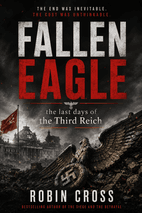
5 Main Takeaways from FALLEN EAGLE
Ideology over reality sealed Nazi Germany's fate
Hitler's regime consistently prioritized symbolic gestures like saving Hindenburg's corpse over saving millions of refugees, and refused to surrender despite overwhelming odds. This delusion, driven by fanatical belief in a miracle, caused catastrophic strategic blunders that accelerated collapse.
Massive intelligence failures doomed the Eastern Front
German intelligence underestimated Soviet troop concentrations by more than half—believing they faced 3:1 odds when the reality was 8:1 or worse. This allowed the Red Army to shatter German defenses through deceptive maneuvers and a two-phase bombardment that left entire divisions lost behind enemy lines.
War's true cost is measured in human suffering
From the Wilhelm Gustloff disaster killing over 7,000 to Dresden's firestorm suffocating thousands in train stations, the book shows that civilian misery often exceeded military loss. Refugees, prisoners, and concentration camp inmates endured a silent, desperate end marked by hunger, rape, and brutality.
Last-ditch gambles wasted irreplaceable resources
Hitler's Ardennes offensive (Operation Autumn Mist) cost 100,000 casualties and 800 tanks for negligible gain, while Operation Bodenplatte sacrificed the Luftwaffe's best pilots. These desperate moves bled the Eastern Front at the worst possible moment, proving that stubborn hope without realism is suicidal.
Political calculations shaped the final advance more than military logic
Eisenhower's decision not to race for Berlin was driven by Yalta zones, a phantom National Redoubt, and personal rivalries—not pure strategy. Meanwhile, Stalin expertly manipulated allies while secretly sprinting for the capital, showing how post-war politics overrode battlefield expediency.
Executive Analysis
These five takeaways collectively argue that Nazi Germany's collapse in 1945 was not a simple military defeat but a self-inflicted implosion fueled by ideological blindness, catastrophic intelligence failures, and a callous disregard for human life. The book demonstrates how Hitler's refusal to face reality—from saving a corpse over refugees to wasting armies on impossible offensives—created a downward spiral that no amount of last-ditch resistance could reverse. The human cost, from Dresden to the Gustloff, underlines that the war's end was as horrific as its conduct.
This book matters because it integrates high-command strategy with ground-level suffering, offering a holistic view of a civilization's final months. It stands out in WWII literature by contrasting German delusion with Soviet discipline and Allied political maneuvering, showing that the “endgame” was as much about ideology and human tragedy as about tanks and bombs. For the reader, the lessons are timeless: hubris, poor intelligence, and prioritizing symbols over substance lead to ruin. It is a stark reminder that decisions made in cushioned headquarters have devastating consequences for real people.
Chapter-by-Chapter Key Takeaways
LOST VICTORIES (Chapter 1)
The chapter frames Germany’s 1945 plight as a reversal of its greatest First World War victory, both symbolically (the dynamited Tannenberg monument) and strategically (the Soviet steamroller).
The refugee crisis and the regime’s absurd priorities—saving Hindenburg’s corpse over living refugees—highlight the disconnect between Nazi ideology and reality.
Germany faced simultaneous collapse on the Western Front (Ardennes defeat), Eastern Front (rapid Soviet advance), and southern flank (loss of Romania and Greece).
Guderian’s attempt to persuade Ribbentrop to seek an armistice illustrates the internal desperation and the Führer’s refusal to consider surrender, setting the stage for the battle of Berlin.
Try this: When facing a crisis, allocate resources to saving humans first—not symbols or legacy—or risk losing both.
THE HOUSE OF CARDS (Chapter 2)
Hitler’s refusal to abandon the Ardennes offensive or shift forces eastward sealed the Eastern Front’s fate.
Oil shortages, caused by Allied bombing and the loss of Ploesti, crippled any sustained offensive.
Speer’s production surge masked a collapsing infrastructure, especially rail and skilled labor.
Manpower was scraped from the bottom of the barrel: children, the elderly, the sick, and untrained Volkssturm units.
Forced labor was the backbone of the German war economy, creating a hidden subculture of millions that some viewed as a Trojan Horse.
Berlin’s wartime landscape grew surreal, blending desperate party propaganda with silent suffering.
Hitler’s psychological resolve remained fierce even as his physical health collapsed, leading to a fatalistic wait for a miracle that never came.
For concentration camp prisoners, hope itself became a cruel commodity, worn away until only hunger and brutality remained.
Try this: Audit your assumptions for survivorship bias and avoid scraping the bottom of the talent barrel just because production numbers look good.
SYMPATHY FOR THE DEVIL (Chapter 3)
The Soviets created phantom armies and used intricate camouflage to conceal the true scale and direction of their forces.
German intelligence catastrophically underestimated Soviet troop concentrations, believing they faced 3:1 odds when reality was 8:1 or higher.
Stalin deliberately delayed the offensive to wait for frozen ground, ignoring political pressure from the West until Churchill's personal appeal.
Konev's attack on 12 January used a deceptive two-phase bombardment to shatter German defenses, while Zhukov's front launched its assault on the 14th.
Despite poor weather grounding air support, the Soviet tank armies achieved rapid breakthroughs, exploiting captured bridges and fording icy rivers.
The Soviet advance was so rapid that German units lost all cohesion, with entire divisions straying behind enemy lines without knowing it.
Chuikov’s firsthand accounts show how victory brought not just strategic gains but also chaotic, desperate scenes of retreat and surrender.
The plight of German prisoners—cold, lost, and leaderless—contrasts sharply with the disciplined Soviet forces, underscoring the psychological collapse of Army Group A.
Polish civilians, traumatized by occupation, expressed their fury through curses rather than violence, revealing deep-seated bitterness without resorting to lynching.
Try this: Never underestimate an opponent's capacity for deception; invest in intelligence that challenges your own optimistic forecasts.
CLUTCHING AT STRAWS (Chapter 4)
The Wilhelm Gustloff sinking remains the deadliest maritime disaster in history, with over 7,000 dead, dwarfing the Titanic.
The Red Army's revenge was fueled by personal losses and Nazi atrocities, leading to widespread looting, rape, and murder of German civilians.
Despite draconian orders from commanders like Konev, discipline broke down as vengeance and chaos took hold.
The refugee columns embodied the silent, desperate end of the war in the east—people running from inexorable fate with no words left.
Try this: When revenge or chaos takes hold, enforce discipline through clear orders and accountability, or lose control of your own mission.
Next chapter: “THUNDERCLAP” is locked
Keep learning from FALLEN EAGLE — and unlock all 700+ book summaries with audio, mindmaps and AI Q&A.
$0.00 due today · 7 days free, then $89.99/year ($7.49/mo) · Cancel anytime before day 7
plus sales tax where applicable