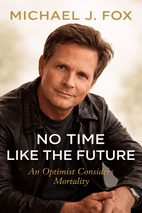
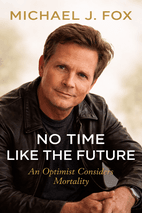
Michael J. Fox's No Time Like the Future offers a candid memoir on aging and resilience, moving beyond simple optimism to explore hard-won acceptance after new health challenges. It resonates with fans and anyone navigating chronic illness or life's unexpected turns.
Feature
Insta.Page
Blinkist
Shortform
No Time Like the Future
✓
✕
✓
Summary Depth
Full Chapter-by-Chapter
15-min overview
Section-by-section guides
Audio Narration
✓
✓
✓
Visual Mindmaps
✓
✕
✕
AI Q&A
✓
✕
✕
Quizzes
✓
✕
✕
PDF Downloads
✓
✕
✓
Price
$89.99/yr
$146/yr (PRO)
$199/yr
*Competitor data last verified July 2026.
1 Page Summary
In No Time Like the Future, Michael J. Fox offers a candid and reflective memoir that grapples with aging, resilience, and an evolving perspective on optimism. Written after a series of significant health setbacks—including a spinal tumor surgery and a devastating fall that shattered his arm—the book finds Fox questioning his long-held, almost reflexive, positive outlook. The central thesis explores the complex reality of maintaining hope and humor in the face of accumulating physical challenges and an uncertain future with Parkinson's disease, moving beyond simple inspiration to a more nuanced and hard-won form of acceptance.
Fox’s approach is distinctively personal and unflinchingly honest, blending his trademark self-deprecating wit with profound vulnerability. He recounts difficult episodes of recovery and dependency, the frustration of losing physical abilities, and the fear that his "optimism bucket" might have sprung a leak. The narrative is interwoven with anecdotes about family, friends, and his acting career, but the focus remains on his internal journey from a mindset of "grit and determination" to one that acknowledges limits and embraces gratitude for the present moment, even when it is painful.
The intended audience is anyone interested in human resilience, fans of Fox’s previous memoirs, and those navigating chronic illness or aging—their own or a loved one’s. Readers will not find a simplistic guide to positivity but will gain a deeply felt, often funny, and ultimately moving portrait of a man adapting to life’s unexpected and relentless turns. The book provides a powerful lesson in redefining hope not as a denial of difficulty, but as the courage to find joy and connection within it.
Introduction: Fall Guy
Overview
A sudden, devastating fall leaves the author helpless on his kitchen floor, unable to feel his left arm. It begins a reflection on vulnerability, resilience, and the mix of long-term illness and sudden injury. This incident introduces his thirty-year history with Parkinson's disease, a recent high-risk spinal cord surgery, and the fragile independence he was starting to regain. The moment sharply blends physical pain with emotional shame, challenging his usual ways of coping.
The Sudden Descent
On the morning of August 13, 2018, a swift and unexplained fall transforms an ordinary moment into a crisis. He describes the sensation of going from vertical to horizontal in an instant, twisting to protect his face as he hits the tile. His immediate realization that his left arm is completely unresponsive forces him into a desperate, one-armed crawl across the floor toward a wall phone, dragging his limp limb behind him. The initial shock gives way to a sharp, building pain that signals serious injury, contradicting his own theory that immediate pain is benign.
A Longstanding Dance with Parkinson's
The fall is part of a broader health journey. For three decades, he has managed Parkinson's disease through adaptation and resilience, a condition requiring constant negotiation. This delicate balance was disrupted by the discovery of a benign tumor on his spinal cord, which threatened paralysis and required dangerous surgery just four months prior. His recovery, moving from wheelchair to walker to cane to walking, was a hard-fought victory. The kitchen fall felt like a cruel betrayal of that progress.
The Illusion of Normalcy
In the days before the accident, he had been eager to reclaim his autonomy. After returning from a family vacation on Martha's Vineyard to New York City with his daughter Schuyler, he insisted he was ready to work alone, dismissing her concerns. Their conversation over take-out pasta reveals his confidence; he assured her he felt "normal again" and promised to avoid walking with his cell phone—a known hazard for his coordination. Her departure marked his first time alone in months, a milestone that made the subsequent fall all the more jarring.
Shame on the Kitchen Floor
As he waits for his assistant, Nina, to arrive, the physical agony is matched by a deep emotional low. He recalls the constant warning from doctors and loved ones: "You have one job: Don’t fall." Breaking that single rule fills him with embarrassment and shame, feelings more personal and cutting than simple frustration. References to old Hollywood advice—like Jimmy Cagney's note to avoid bumping into the furniture—underline his sense of failure. The chapter ends with a raw admission: his usual optimism and ability to "make lemons into lemonade" have left him, leaving only pain and regret.
Key Takeaways
A single moment can unravel months of recovery, highlighting the fragile nature of independence after a major health crisis.
Long-term illnesses like Parkinson's require a negotiated peace, but acute injuries can shatter that hard-won equilibrium without warning.
Emotional responses to physical trauma, such as shame and embarrassment, can be as debilitating as the pain itself.
The well-intentioned cautions from others can become heavy burdens, transforming a simple accident into a perceived personal failure.
Resilience is not a constant state; there are moments when even the most adaptive individuals feel utterly defeated.
Key concepts: Introduction: Fall Guy
1. Introduction: Fall Guy
The Devastating Fall
Sudden collapse leaves author helpless on kitchen floor
Immediate loss of sensation in left arm
Desperate one-armed crawl for help
Sharp pain contradicts belief about benign injuries
Health History Context
Thirty-year management of Parkinson's disease
Recent high-risk spinal cord tumor surgery
Fragile recovery from wheelchair to walking
Fall felt like betrayal of hard-won progress
Fragile Independence
Insisted on working alone against daughter's concerns
First time alone in months before accident
Confidently claimed to feel 'normal again'
Promised to avoid known hazards like walking with phone
Emotional Impact
Shame over breaking 'one job: Don't fall' rule
Embarrassment more cutting than frustration
Sense of personal failure despite warnings
Usual optimism and resilience completely abandoned him
Broader Themes
Single moment can unravel months of recovery
Acute injuries shatter negotiated peace with chronic illness
Emotional trauma as debilitating as physical pain
Resilience is not constant; moments of defeat occur
💡 Try clicking the AI chat button to ask questions about this book!
1. Family Man
Overview
Michael J. Fox’s evolution as a father unfolds against the dual backdrops of his early struggle with alcohol and his journey with Parkinson’s disease. It traces his family’s growth from the birth of his first son through the arrival of twin daughters and a fourth child, examining how his personal challenges and recovery shaped—and were shaped by—his role within the family.
Sam’s early years are framed by a father who was physically present but emotionally absent, his parenting often blurred by the “Miller Time” haze of his drinking. Fox reflects on performing the basic dad duties—teaching shoe-tying and bike-riding—while being disconnected, a state exacerbated by the turmoil following his Parkinson’s diagnosis. A pivotal moment comes not with anger from his wife Tracy, but with her bored exhaustion at his behavior, which shocks him into sobriety. This commitment to a 12-step program and therapy becomes the foundation not only for his recovery from alcoholism but for learning to live with Parkinson’s.
The story then moves to the expansion of their family. Against concerns from outsiders, Tracy and Michael decide to have more children after he achieves sobriety. The birth of their twins, Aquinnah and Schuyler, is complicated by a twin-to-twin transfusion, a dynamic Fox sees playfully reflected in their distinct personalities years later. With Parkinson’s now a normalized part of family life, they later welcome a fourth child, Esmé, whose confident, independent nature is highlighted by stories of her choosing her own summer camp.
The Theory of Time-Traveling Kids
Fox introduces a poignant family theory: children are time machines, propelling parents forward at a “cruel velocity” through life’s milestones until they find themselves in an empty nest surrounded by relics of childhood. He contrasts this forced march of time with the deliberate slowness imposed by Parkinson’s, which requires mini-conversations about every movement. In this, he finds a paradoxical gift: the disease forces him to take his time, so “time isn’t taking me.”
An Empty Nest and a Shifting Bond
The chapter closes with Fox grappling with his eldest son Sam’s departure for college and adulthood. He expresses a proud but shattered feeling, common to parents, when children successfully live independently. He details the special bond they share, built on shared interests in music, politics, and the absurd, and admits to feeling his absence deeply, “drowning in a sea of estrogen” at home with his wife and three daughters. This sense of loss and need for companionship sets the stage for what follows, hinted at by a bulletin board notice he spots on Martha’s Vineyard.
Key Takeaways
Fatherhood and personal recovery are deeply intertwined in Fox’s narrative; his commitment to sobriety was the necessary precursor to becoming a fully present parent and partner.
Parkinson’s disease became a normalized part of family life for his children, each absorbing it differently based on when they were born.
Fox frames time through two lenses: the rapid forward thrust of his children’s lives and the deliberate, slowed pace forced upon him by his disease, which he learns to appreciate.
The transition to an empty nest is portrayed as a bittersweet mix of pride, loss, and a confrontation with mortality, highlighting the evolving nature of parental bonds.
Key concepts: 1. Family Man
2. 1. Family Man
Early Fatherhood and Emotional Absence
Physically present but emotionally absent due to drinking
Parenting blurred by 'Miller Time' haze of alcoholism
Performed dad duties while being disconnected
Turning Point to Sobriety
Wife's bored exhaustion shocks him into sobriety
12-step program foundation for recovery
Sobriety prerequisite for becoming present parent
Family Expansion with Parkinson's
Decision to have more children after sobriety
Twins' birth complicated by medical condition
Parkinson's becomes normalized part of family life
Theory of Time and Parkinson's
Children as time machines propelling parents forward
Parkinson's imposes deliberate slowness on movement
Disease forces him to take his time intentionally
Empty Nest Transition
Eldest son's departure brings proud but shattered feeling
Special bond built on shared interests and humor
Confrontation with mortality and evolving parental bonds
2. Dog Years
Overview
The chapter opens by questioning the term "rescue dog," distinguishing between genuine animal rescue work and the more routine act of adoption. The author suggests adoption is a mutually beneficial arrangement, not an act of heroism. He then recounts his lifelong lack of a dog due to an itinerant childhood and early career, before introducing the two canine relationships that define the chapter: one fleeting, from his past in Thailand, and one profound, from his present life.
A Puppy Named Sanuk
While filming in Thailand in 1988, feeling lonely and missing his fiancée, the author encounters a neglected black-and-white puppy being shooed away by a local family. His driver implies the dog is seen as food, not a pet. Compelled by the underdog, the author buys the puppy for ten dollars, names him Sanuk (meaning "peace" or "wellbeing"), and nurses him back to health with a vet's help. When filming wrapped, bringing Sanuk to the U.S. was impossible due to quarantine laws. He left the dog in the care of a resort manager. Years later, a friend visiting the resort reported that Sanuk was happy and healthy, but had been given a new, joking name: Michael J. Fox.
Meeting Gus
Years later, on Martha’s Vineyard, the author and his wife Tracy independently spot the same flyer for a puppy named Astro. Their simultaneous notice feels fated. They meet and adopt the black-and-white Great Dane-Lab mix, quickly renaming him Gus. The author rejects the "rescue" label for this adoption, framing it simply as two beings finding each other.
Life with a Gentle Giant
Gus’s arrival coincides with a period where the author’s Parkinson’s disease has gradually limited his physical activities. Gus becomes a reason to stay active, with early morning walks in Central Park becoming a cherished ritual. The dog’s joyful, convivial nature forces engagement with the world, from chatty dog walkers to the chaotic dog run. Gus grows to an enormous size, drawing comments from neighbors. The relationship deepens into a wordless, communicative bond, characterized by sustained eye contact and an understanding of complex cues. The author relates to a scene in Once Upon a Time in Hollywood that captures this unique interspecies intimacy. He clarifies that Gus did not replace his son, but his steadfast presence helped ease the ache of his son leaving for college, keeping him moving, present, and honest.
Key Takeaways
The term "rescue" in dog adoption can be overstated; it is often a mutually beneficial partnership rather than a one-sided heroic act.
Canine companions can arrive in our lives through fleeting, poignant connections or through serendipitous, lasting bonds.
A dog's presence can provide structure, force engagement with the world, and offer profound, wordless companionship.
Such a relationship is not a replacement for human connection, but a unique and therapeutic form of interspecies communion that addresses different emotional needs.
Key concepts: 2. Dog Years
3. 2. Dog Years
Critique of 'Rescue Dog' Terminology
Distinguishes genuine rescue from routine adoption
Frames adoption as mutually beneficial partnership
Rejects heroic narrative for simple connection
Fleeting Connection: Sanuk in Thailand
Adopted neglected puppy while filming in 1988
Nursed back to health but couldn't bring to US
Left with resort manager, later renamed Michael J. Fox
Fated Meeting: Adopting Gus
Both author and wife spotted same flyer independently
Adopted black-and-white Great Dane-Lab mix puppy
Renamed him Gus, rejecting 'rescue' label
Gus's Therapeutic Role
Provided structure during Parkinson's progression
Forced engagement through walks and social interactions
Eased transition when son left for college
Nature of Canine-Human Bond
Developed wordless, communicative connection
Characterized by sustained eye contact and understanding
Unique interspecies communion, not human replacement
3. Act Too
Overview
Michael J. Fox's unexpected and revitalizing second act of acting began after his initial retirement from Spin City. It details his journey from fearing that Parkinson's disease had ended his professional life to discovering a profound new approach to his craft. By learning to incorporate his symptoms rather than conceal them, he found a path to playing complex, vulnerable characters, ultimately redefining himself as a character actor and earning critical acclaim.
A Turning Point on Scrubs
After two years of retirement, Fox felt a pull to return to acting. A call from his friend Bill Lawrence led to a guest arc on Scrubs as Dr. Kevin Casey, a neurosurgeon with obsessive-compulsive disorder. This role became a pivotal test. Instead of exhausting himself trying to suppress his Parkinson's symptoms as he had on Spin City, he invited them onto the set. He connected Dr. Casey's OCD compulsions—the handwashing, the tics, the hesitation—to his own physical experiences. This allowed him to focus on the character's internal life and vulnerability, not his own disability. The success of this experiment proved he could work again, co-opting his Parkinson's to serve the character, and he realized that every person has a "bear" they are wrestling with.
Embracing the Character Actor
This new confidence opened the door to a series of rich, supporting roles. On Boston Legal, he played Daniel Post, a billionaire with terminal cancer. The role required romantic and intimate scenes, demanding a physical confidence he had to rediscover. The experience, culminating in an Emmy nomination, solidified his love for being back at work. He reflects that he had transitioned from a leading man to a character actor—a shift he celebrates, as it allowed him to explore idiosyncratic roles free from the vanity of carrying a story.
Complex and Challenging Roles
His post-retirement career was defined by complex characters whose flaws resonated with his own experience. On Denis Leary's Rescue Me, he played Dwight, a bitter, paraplegic "shithead"—a role that required him to physicalize paralysis despite his own constant movement. The performance, which included a famously chaotic drunk-driving scene, earned him an Emmy. On Curb Your Enthusiasm, Larry David crafted a storyline where he accused Fox of faking Parkinson's to annoy him. Fox saw this potentially offensive premise as liberating, a chance to finally stop hiding and find humor in his condition.
The Mastery of Louis Canning
The most significant role of this period was Louis Canning on The Good Wife. Initially hesitant to play another wheelchair-bound character, he and the creators landed on tardive dyskinesia, a disorder with similar symptoms. Canning was a revelation: a ruthless lawyer who shamelessly exploited his own disability to manipulate juries and win cases. This allowed Fox to play a disabled character who was unsympathetic and cunning, subverting typical sentimental tropes. Crucially, he learned to use his own diminished facial expressiveness as Canning’s inscrutable, enigmatic asset—turning a deficit into a powerful tool.
Key Takeaways
Disability as a Creative Tool: Fox discovered that by stopping the futile fight to hide his Parkinson's symptoms, he could instead channel them into his characters, making the disability a part of their truth rather than a limitation on his performance.
The Power of Vulnerability: The most compelling characters he played shared a common trait: a deep vulnerability or "flaw" that was relatable. By focusing on his characters' internal struggles (their "bear"), his own condition could recede into the background.
The Freedom of Character Acting: Transitioning from leading man to character actor offered artistic liberation, allowing him to explore extreme, idiosyncratic roles without the pressure of being the straightforward hero.
Transforming Deficit into Asset: Professional challenges, like his less expressive face, were reframed as creative opportunities. What he had less of allowed him to explore a philosophy of "less is more," finding new depth in subtlety.
Key concepts: 3. Act Too
4. 3. Act Too
The Pivot on Scrubs
Tested new approach: invited symptoms onto set
Connected character's OCD to own physical experience
Proved he could work by co-opting Parkinson's
Transition to Character Actor
Moved from leading man to supporting roles
Found artistic liberation in idiosyncratic characters
Free from vanity of carrying a story
Playing Complex, Flawed Characters
Roles resonated with his own experience
Embraced vulnerability as relatable trait
Found humor in his condition on Curb Your Enthusiasm
Mastery in Louis Canning Role
Played unsympathetic character exploiting disability
Subverted sentimental disability tropes
Turned diminished expressiveness into enigmatic asset
Core Creative Philosophy
Disability as creative tool, not limitation
Transforming deficits into artistic assets
Focus on character's internal 'bear' over own condition
You've reached the end of the free chapters
Next chapter: “High Times” is locked
Keep reading No Time Like the Future — and unlock all 600+ book summaries with audio, mindmaps and AI Q&A.
$0.00 due today · 7 days free, then $89.99/year ($7.49/mo) · Cancel anytime before day 7
Michael J. Fox is a Canadian-American actor, author, and advocate, best known for his iconic roles in the *Back to the Future* film trilogy and the television series *Family Ties*. Following his diagnosis with Parkinson's disease in 1991, he became a leading activist, founding the Michael J. Fox Foundation for Parkinson's Research and authoring several memoirs, including *Lucky Man* and *No Time Like the Future*.
📚 Explore Our Book Summary Library
Discover more insightful book summaries from our collection