No Time Like the Future Key Takeaways

by Michael J. Fox
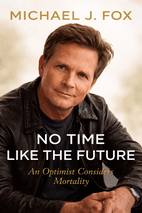
No Time Like the Future by Michael J. Fox Book Cover

5 Main Takeaways from No Time Like the Future

Chronic illness requires negotiated peace, not constant war.

Fox learns that managing Parkinson's is about accepting limitations and finding equilibrium, rather than fighting every symptom. This is seen in how he normalizes the disease for his family and uses it creatively in acting, turning deficits into assets.

Setbacks are inevitable; resilience is choosing to move forward.

Through multiple health crises, including a spinal tumor and a broken arm, Fox shows that recovery is non-linear. Resilience means acknowledging fear but continuing to take small steps, as illustrated in his grueling rehabilitation and moments of despair.

Support systems are vital, but independence must be balanced.

Fox highlights the tension between accepting help and maintaining autonomy. Examples include his wife Tracy's advocacy during surgery, the 'golf uncles' who provide joyful community, and the emotional burden of feeling trapped by constant care.

Redefine normalcy by focusing on what's possible, not what's lost.

Fox shifts from hiding his Parkinson's to incorporating it into his acting, and later uses a wheelchair to participate in life. This practical acceptance allows him to access joy and connection, as seen in family gatherings and the Parkinson's Foundation gala.

Sustainable optimism is built on active gratitude, not denial.

Fox confronts moments of despair but cultivates optimism by appreciating life's gifts, like family and shared humor. This is evident in his reflections on fatherhood, his recovery milestones, and the epilogue's focus on gratitude during global crisis.

Executive Analysis

No Time Like the Future" posits that the core challenge of chronic illness is not the physical symptoms but the psychological and emotional adaptation required to live fully. Michael J. Fox illustrates through his experiences with Parkinson's, a spinal tumor, and recovery from injuries that resilience is not a fixed trait but a daily practice of negotiating peace with one's body, leaning on community, and redefining success in small, meaningful terms. The interconnected takeaways reveal that sustainable well-being arises from balancing acceptance with action, and vulnerability with strength.

This memoir matters because it demystifies the lived experience of disability and aging, offering readers a blueprint for navigating their own hardships with grace and humor. Unlike purely clinical accounts, Fox's story emphasizes the human elements—love, laughter, and legacy—making it a pivotal work in the genre of illness narratives that encourages practical optimism and proactive engagement with life's uncertainties.

Chapter-by-Chapter Key Takeaways

Fall Guy (Introduction)

  • A single moment can unravel months of recovery, highlighting the fragile nature of independence after a major health crisis.

  • Long-term illnesses like Parkinson's require a negotiated peace, but acute injuries can shatter that hard-won equilibrium without warning.

  • Emotional responses to physical trauma, such as shame and embarrassment, can be as debilitating as the pain itself.

  • The well-intentioned cautions from others can become heavy burdens, transforming a simple accident into a perceived personal failure.

  • Resilience is not a constant state; there are moments when even the most adaptive individuals feel utterly defeated.

Try this: Acknowledge that recovery is fragile and allow yourself to feel defeated without shame, using those moments to rebuild resilience.

1. Family Man (Chapter 1)

  • Fatherhood and personal recovery are deeply intertwined in Fox’s narrative; his commitment to sobriety was the necessary precursor to becoming a fully present parent and partner.

  • Parkinson’s disease became a normalized part of family life for his children, each absorbing it differently based on when they were born.

  • Fox frames time through two lenses: the rapid forward thrust of his children’s lives and the deliberate, slowed pace forced upon him by his disease, which he learns to appreciate.

  • The transition to an empty nest is portrayed as a bittersweet mix of pride, loss, and a confrontation with mortality, highlighting the evolving nature of parental bonds.

Try this: Cherish the evolving roles within your family, finding pride in your children's growth even as you confront your own changing capabilities.

2. Dog Years (Chapter 2)

  • The term "rescue" in dog adoption can be overstated; it is often a mutually beneficial partnership rather than a one-sided heroic act.

  • Canine companions can arrive in our lives through fleeting, poignant connections or through serendipitous, lasting bonds.

  • A dog's presence can provide structure, force engagement with the world, and offer profound, wordless companionship.

  • Such a relationship is not a replacement for human connection, but a unique and therapeutic form of interspecies communion that addresses different emotional needs.

Try this: Embrace the therapeutic companionship of pets, recognizing that mutual care can provide structure and emotional solace without replacing human connection.

3. Act Too (Chapter 3)

  • Disability as a Creative Tool: Fox discovered that by stopping the futile fight to hide his Parkinson's symptoms, he could instead channel them into his characters, making the disability a part of their truth rather than a limitation on his performance.

  • The Power of Vulnerability: The most compelling characters he played shared a common trait: a deep vulnerability or "flaw" that was relatable. By focusing on his characters' internal struggles (their "bear"), his own condition could recede into the background.

  • The Freedom of Character Acting: Transitioning from leading man to character actor offered artistic liberation, allowing him to explore extreme, idiosyncratic roles without the pressure of being the straightforward hero.

  • Transforming Deficit into Asset: Professional challenges, like his less expressive face, were reframed as creative opportunities. What he had less of allowed him to explore a philosophy of "less is more," finding new depth in subtlety.

Try this: Channel your personal vulnerabilities into creative strengths, using perceived limitations as tools for deeper artistic expression and authenticity.

4. High Times (Chapter 4)

  • Bhutan’s guiding philosophy of Gross National Happiness prioritizes holistic well-being and cultural preservation over purely economic metrics.

  • The author experiences a profound but temporary and unexplained remission of his Parkinson's disease symptoms while in Bhutan, highlighting the complex mind-body connection.

  • A shared diagnosis creates a powerful, instant bond, as seen in the author's private conversation with a Bhutanese minister who also has Parkinson's.

  • The author's physical mishap and medical emergency starkly illustrate the fragility of his remission and the constant, looming presence of his chronic illness.

  • The chapter concludes with a jarring contrast between personal relief and universal suffering, underscored by the death of a fellow ER patient, which reframes the author's own ordeal.

Try this: Seek environments that prioritize holistic well-being, and remain open to the mind-body connections that can temporarily alleviate chronic symptoms.

5. Double Bogey (Chapter 5)

  • Progress, not perfection, can be a powerful motivator, especially when facing physical decline.

  • The right community—here, the "golf uncles"—can transform a challenging activity into a supportive and joyful experience by emphasizing shared struggle over individual performance.

  • Activities that demand full immersion can provide a vital mental escape from chronic health concerns.

  • The philosophies for managing a difficult game and a chronic condition often overlap, centering on resilience, adaptability, and accepting setbacks without surrender.

  • Finding humor in one's own limitations is a form of strength, turning frustration into connection and self-acceptance.

Try this: Engage in activities that demand full immersion, fostering community and humor to transform struggle into shared joy and progress.

6. Loco Motion (Chapter 6)

  • Movement as Identity: For the author, effortless physical motion was intrinsically linked to vitality, profession, and personal freedom. Parkinson’s directly attacks this core sense of self.

  • The Cognitive Burden: The disease transforms simple acts into complex cognitive puzzles. The immense mental effort required to plan and execute movement is often more exhausting than the physical action itself.

  • Therapy as Re-education: Physical therapy for Parkinson’s is as much neurological as it is muscular, focused on building new brain pathways through deliberate practice and dual-tasking challenges.

  • The Loss of Autopilot: A central struggle is the loss of unconscious, automatic movement. Every step must become conscious, turning a simple walk into a focused, strategic undertaking.

  • Humility and Adaptation: The condition is a lesson in humility, forcing a proud and physically adept person to accept help, move deliberately, and find victory in small, hard-won gains.

Try this: Practice deliberate movement exercises to rebuild neurological pathways, accepting that conscious effort is now required for tasks once automatic.

7. Unsafe at Any Speed (Chapter 7)

  • Advanced Parkinson’s disease can manifest as a severe loss of kinetic control, making movement itself dangerous and unpredictable, far beyond the better-known symptom of tremor.

  • Oliver uses Heisenberg’s Uncertainty Principle as a powerful metaphor for the Parkinsonian gait, illustrating the impossible conflict between determining position and momentum.

  • A poignant generational reversal occurs: while Oliver has had to relinquish activities like driving for safety, his ninety-year-old mother retains her independence and physical vitality.

  • The chapter challenges stereotypes of aging, presenting figures who remain energetic and self-determined in their nineties, offering a perspective that separates the passage of time from the progression of disability.

Try this: Reframe your relationship with mobility aids, seeing them as tools for safety and independence rather than symbols of decline.

8. Exile on Pain Street (Chapter 8)

  • A health crisis can turn a place of leisure into one of exile, physically separating a person from the shared joy of family and friends.

  • Chronic illness forces a change in one's identity within a family, often moving from an active participant to a more observational role. This can create intense feelings of missing out (FOMO).

  • Long-term partnership during a progressive illness is less about being an immovable "rock" and more about dynamic, responsive support—the willingness to "roll" and adapt without hesitation.

  • Familiar places can act as powerful, sometimes painful, benchmarks. They measure personal decline against the backdrop of a family's continued growth and change.

Try this: Communicate openly with loved ones about your changing role in shared spaces, balancing observation with participation to mitigate feelings of exile.

9. What to Expect from My Back in the Future (Chapter 9)

  • A Dual Battle: Fox confronts the rare and complex challenge of managing two serious, concurrent neurological conditions—Parkinson's disease and a progressing spinal tumor—where the symptoms dangerously overlap.

  • The Weight of Choice: The chapter powerfully depicts the terrifying decision-making process involved in high-risk surgery, where the choice is between the grave risks of intervention and the certainty of decline without it.

  • The Importance of Advocacy: Tracy’s role as a meticulous, insightful medical advocate is highlighted as indispensable, while the efficiency of Fox’s assistant, Nina, underscores the vital support system surrounding him.

  • Confronting Fear with Humor: Facing profound fear, Fox and his team consistently use levity and connection as tools to navigate grim medical realities, a testament to their resilience and partnership.

  • Clarity of Purpose: The surgical goal is framed with stark realism: to preserve remaining function and halt further damage, not to achieve a miraculous cure—a clear and realistic view of what "success" looks like in complex chronic illness.

Try this: When facing complex medical decisions, rely on a trusted advocate to navigate options and use humor to diffuse fear while maintaining clear, realistic goals.

10. Showing Some Spine (Chapter 10)

  • Major surgery is as much an emotional and psychological trial as a physical one, testing even deeply held optimism.

  • The strength of long-term partnership is revealed in crises, with devotion often manifesting as a quiet, steadfast presence.

  • Expert medical care involves not just technical skill but the human touch of reassurance and a cohesive team.

  • Postoperative delirium can be a terrifying, reality-bending side effect of necessary medical interventions, creating profound distress for both patient and family.

  • Recovery is non-linear, marked by small, fragile steps back toward normality, often mediated by humor and quiet understanding.

Try this: Prepare for the emotional toll of major surgery, leaning on your partner's steadfast presence and trusting in the human touch of your medical team.

11. Metaphysical Therapy (Chapter 11)

  • Recovery requires compliance, not defiance. The patient’s initial impulse to test limits is revealed as dangerous and shortsighted, threatening the delicate outcome of major surgery.

  • Understanding the stakes is crucial. The surgeon’s graphic explanation of the procedure’s risks and the spine’s fragility provides a necessary psychological shift from impatience to caution.

  • Risk-taking is a core part of Michael’s identity. His life choices, from sports to career, have been defined by a willingness to take proactive gambles, which framed his decision to have the surgery.

  • Rehabilitation is a grueling, non-linear process. It shatters fantasies of quick fixes, involving both physical pain and mental exhaustion as the body and brain relearn basic functions.

  • The ultimate challenge is internal. Despite an excellent support system, confronting a dual diagnosis becomes an “inside job,” where self-belief must confront burgeoning doubt.

Try this: Comply with medical advice during recovery, understanding the risks you took to get here, and confront the internal doubts that arise during grueling rehabilitation.

12. Walk This Way (Chapter 12)

  • Walking is a Complex Miracle: An act taken for granted is revealed as a staggeringly complex neurological and mechanical achievement, profoundly difficult to regain once lost.

  • The Dual Battle: Recovery must simultaneously address two distinct, compounding conditions: the mechanical/proprioceptive damage from spinal surgery and the progressive neurological challenges of Parkinson’s disease.

  • The Psychology of Mobility Aids: Using a walker, cane, or wheelchair involves significant emotional and psychological adjustment, confronting stigma, vulnerability, and a loss of autonomy.

  • Proprioception is Fundamental: The often-overlooked “sixth sense” of knowing where your body is in space is critical for stability and movement, and its impairment is profoundly disorienting.

  • Recovery is a Team Effort: Progress hinges not just on skilled therapists but on the unwavering emotional and practical support of family.

  • Humility and Humor are Essential: The rehab process is inherently humbling, requiring the acceptance of help for basic tasks. Maintaining a sense of humor, often through family banter, becomes a vital tool for resilience.

Try this: Relearn basic movements with patience, viewing mobility aids as temporary partners in recovery and celebrating small proprioceptive victories.

13. A Crowded House (Chapter 13)

  • The Psychology of Dependence: Recovery involves a profound psychological battle against the loss of privacy and autonomy, which can feel as confining as the physical disability itself.

  • The Contrast of Care: There is a significant emotional difference between care aimed at prevention (night aides) and care aimed at progress (daytime therapy), with the former often feeling more stifling.

  • Independence as a Milestone: Seemingly small acts—walking alone, closing a bathroom door—represent monumental victories in the journey back to self-sufficiency.

  • Incentive and Symbolism: Personal symbols, like the park bench, can serve as powerful, unconscious motivators for recovery, representing what is at stake.

  • The Long Haul: Physical recovery is a non-linear, endless process of maintenance requiring continuous effort, even after formal therapy ends.

  • The Healing Power of Connection: Shifting focus from one’s own struggle to the lives and joys of loved ones provides essential emotional relief and perspective.

Try this: Gradually reclaim privacy and autonomy after illness, using personal symbols as motivation and shifting focus to the lives of others for perspective.

14. Breaking Dad (Chapter 14)

  • Progress is fragile and non-linear. A period of significant recovery and regained independence can be obliterated in a single, unexpected moment.

  • The support of friends and family provides a constant, essential foundation through both triumphs and crises, even when one insists on self-reliance.

  • Personal pride in a child's achievements can momentarily eclipse one's own physical struggles, offering a powerful emotional lift.

  • The chapter starkly illustrates the conflict between the desire for autonomy and the real, persistent needs imposed by Parkinson's and recovery, a conflict that can have severe consequences.

  • The accident serves as a brutal reset, shifting the story from one of convalescence back into a state of acute medical crisis and uncertainty.

Try this: Balance the pride of regained independence with the humility to accept help, recognizing that setbacks are part of the non-linear recovery process.

15. A Wing and a Proverb (Chapter 15)

  • Setbacks Compound: A sudden, acute injury like a broken arm can be psychologically more devastating than chronic, slowly progressing conditions, forcing a complete reset of recovery.

  • The Need for Tangible Evidence: Fox’s compulsive sharing of his X-ray reveals a profound desire to make invisible suffering visible, a need unmet by Parkinson’s disease.

  • Optimism Tested: The chapter presents a raw crisis of faith in Fox’s trademark optimism. He confronts the potential hypocrisy of urging hope while privately grappling with despair, questioning if he has oversimplified the struggle for others and himself.

  • The Weight of Independence: The loss of his brief, unsupervised freedom highlights the ongoing tension between his desire for autonomy and the realistic need for care and precaution.

  • Guilt and Connection: The accident underscores how an individual’s health crisis ripples out, affecting family and friends, and imposes a heavy emotional burden of guilt on the patient.

Try this: When optimism wanes, validate your despair by making invisible suffering visible, and reconnect with your support system to alleviate guilt.

16. Homeland Security (Chapter 16)

  • Michael and his aide Brigid bond over a shared feeling of being trapped, one by geography and the other by his injured body.

  • The constant help and vigilance from others leaves Michael feeling a loss of independence and a sense of shame when he stumbles.

  • His physical recovery is complete, but the accident left him emotionally detached from his own life.

  • He realizes that overconfidence and ignoring past warnings led to his bad fall.

  • Michael decides he must now focus on healing his mind, not just his body.

Try this: Acknowledge the emotional detachment that can follow physical recovery, and consciously work to reintegrate into your own life with renewed mindfulness.

17. Head Games (Chapter 17)

  • Optimism can fracture: A foundational, lifelong mindset can be destabilized by seemingly minor setbacks, leading to feelings of numbness and weariness.

  • Escapism has its purpose: Passive distractions, like binge-watching old TV, can serve as a necessary mental respite from overwhelming reality.

  • Our consumption reflects our state: What we watch—and the advertisements forced upon us—can act as a mirror, revealing uncomfortable truths about our age, health, and stage of life.

  • Nostalgia is a double-edged sword: Revisiting the past can be comforting and entertaining, but it can also highlight a desire to escape a challenging present and confront anxieties about mortality.

  • Identity is multifaceted: A person can simultaneously be a cultural icon from the 1980s and a target for geriatric product marketing, embodying multiple, conflicting stages of life at once.

Try this: Use nostalgic entertainment as a temporary escape, but be mindful of how your consumption habits reflect and affect your current mental state.

18. Maryland, My Maryland (Chapter 18)

  • The Anatomy of Anxiety: Even with a plan for handling bad news, the real fear of a painful outcome is powerful and unavoidable.

  • Gratitude as a Two-Way Street: Being open about your struggles can help others in ways you don't see. Learning about that help can give you strength in return.

  • Relief and Fear Together: Good medical news doesn't instantly erase deep fear. Relief and worry can exist side-by-side, even after a victory.

  • Human Connection in the Ordinary: Meaningful, life-affirming moments can happen in the most ordinary places, offering clarity and strength for what comes next.

Try this: Share your struggles openly to foster mutual gratitude, and seek human connection in ordinary moments to bolster courage for future challenges.

19. The Only Thing to Fear (Chapter 19)

  • Fear operates on multiple levels: the visible and contained danger, the unseen but intuited threat, and the internal, existential dread of navigating personal vulnerability.

  • Known challenges, like a chronic illness, can become manageable territories we learn to navigate, whereas the anxiety of the unknown often holds greater power.

  • The most profound fears are frequently those tied to our own perceived limitations, the risk of harming ourselves or others, and the solitary journey through personal darkness.

  • True courage isn’t the absence of fear, but the acknowledgement of “the dark realities of the moment” while continuing to move forward.

Try this: Distinguish between known fears and the anxiety of the unknown, cultivating courage by acknowledging dark realities while continuing to move forward.

20. Father Time (Chapter 20)

  • Parkinson's cognitive symptoms, including memory lapses and the threat of dementia, represent a profound and legitimate source of fear that cuts deeper than physical limitations.

  • Daily mishaps—forgetfulness, confusion, technological blunders—take on a heightened significance, constantly prompting the question of whether they are normal or disease-related.

  • Moments of shared humor and connection, even in the face of decline and mortality, can provide essential relief and perspective.

  • The chapter posits that sustainable optimism in the face of chronic illness and mortality is not born of denial, but is actively forged through a practice of deep gratitude for life and relationships.

Try this: Confront cognitive fears with humor and connection, and practice daily gratitude to sustain optimism in the face of progressive illness.

21. All Things Considered (Chapter 21)

  • Progress is Relative: Improvement can be found in unexpected places, like feeling pain where there was numbness, and involves accepting a new "normal" rather than longing for a full return to the past.

  • Redemption is Possible: Professional and personal setbacks can find positive resolution, offering closure and mending old wounds.

  • The Experience Trumps the Performance: The value of an activity like golf lies not in perfect execution but in the camaraderie and joy of participation, especially when facing physical limitations.

  • Knowing When to Step Away is Wisdom: Recognizing one's changing capacities and gracefully retiring from a demanding career is an act of self-awareness and peace, not defeat.

  • Resilience is a Choice: Symbolic acts, like a tattoo, can serve as permanent reminders of the will to survive, chart one’s own course, and emerge from difficult periods with strength.

Try this: Measure progress against your new normal, finding closure in past setbacks and wisdom in knowing when to step away from demanding roles.

22. Shake It Off (Chapter 22)

  • Community is Transformative: Jimmy Choi's story illustrates how moving from isolation into a supportive community can radically improve life with Parkinson's, turning fear into purpose.

  • Patients Drive the Mission: The Foundation's success is deeply intertwined with the engagement of people with PD, who fundraise, advocate, and participate in research, embodying a patient-centric approach.

  • Progress from Perspective: The gala represents the tangible good that can emerge from personal adversity, offering a necessary reminder during times of individual struggle.

  • Shared Vulnerabilities: The quiet parallel between Gus’s aging and the author’s Parkinson's highlights universal experiences of physical decline, care, and the poignant negotiation with time.

Try this: Engage with supportive communities to transform personal adversity into collective purpose, drawing strength from shared vulnerabilities and advocacy.

23. Midnight in the Garden (Chapter 23)

  • Acceptance is Practical: Utilizing tools like a wheelchair is framed not as surrender, but as a pragmatic strategy for participating fully in life and accessing joy.

  • Redefining "Normal": Long-standing symptoms of illness can be absorbed into one's baseline, shifting the focus from what is lost to what is still possible.

  • Presence Over Paralysis: There is power in consciously separating the past (a source of wisdom), the present (to be dealt with and enjoyed), and the future (an inevitability not to be feared prematurely).

  • The Dual Embrace of Reality: It is possible to hold two truths at once: not wanting the struggles of a chronic condition while simultaneously cherishing the life one has, with all its beauty and love.

  • Gratitude as a Lens: Profound gratitude can extend even to the hardships, as they provide the necessary contrast that makes joy and love feel more vivid and earned.

Try this: Pragmatically accept assistive devices to enhance participation in life, holding simultaneous gratitude for both the struggles and the joys they enable.

Epilogue (Epilogue)

  • A global crisis can create a shared human experience, making personal struggles feel both small and universally connected.

  • The deepest loss in times of isolation is not missed events, but the human connections those events create.

  • Virtual tools are necessary, but often feel lacking for deeply human moments like grief, reminding us that physical presence is irreplaceable.

  • Lasting optimism is built on active gratitude, for frontline heroes and for unexpected gifts like stronger family ties.

  • Resilience looks like accepting a hard past, embracing the present, and choosing to advocate for a better future.

Try this: In times of crisis, focus on fostering human connections virtually and physically, building resilience through active gratitude for frontline heroes and strengthened bonds.

Continue Exploring