The Cruelest Game Quotes
by Matthew Futterman
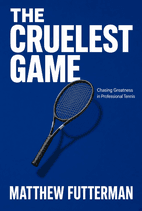
This collection pulls together some of the sharpest lines from Matthew Futterman's book about tennis and the people who chase greatness. You will find thoughts on winning and losing, on the loneliness of the sport, and on the strange mental game that happens between points. These are not just observations about tennis. They are about ambition, fear, and identity.
What makes the book so quotable is how honestly it captures the emotional cost of competition. Futterman gets close to the players and their private battles, then finds words that feel both personal and universal. The quotes here stick with you. They show why tennis can break someone down even as it builds them up.
Top Quotes from The Cruelest Game
“When you win, you believe you will never lose. So why stop when winning feels so good and there is more winning to be done? And when you are losing, you crave nothing more than one more rush.”
After Novak Djokovic wins Olympic gold at 37, the narrator reflects on why he still cannot walk away.
It captures the addictive, irrational loop of elite competition, where victory only feeds the hunger for more.
“So care deeply, but also don’t really care at all. Play. Always play. And know that the thing that matters most is what you do next.”
The narrator continues listing the contradictory mental codes required to survive at the top of tennis.
The rhythm and repetition make it a memorable mantra about holding passion and detachment together.
“No sport is crueler to its losers than tennis.”
Borg walks off the court immediately after losing the 1981 US Open final to John McEnroe.
It distills the book’s central idea that tennis punishes its losers more harshly than any other sport. The plain, brutal phrasing makes it unforgettable.
“Tennis feels like a fistfight, especially when you lose.”
The author describes the psychological reality of a tennis match.
It overturns the sport’s polite image and describes the combativeness players actually feel. Losing is the key qualifier—tennis’s cruelty is felt most in defeat.
“Father Time always wins in the end. He knows that, but he fights that battle differently, too, the way people with terminal cancer fight the disease. The cancer will get them in the end. That day will come, but they can still win this day, and the next one, and the one after that. And so can Novak.”
The narrator reflects on how Djokovic fights the inevitability of aging.
It turns the cliché of Father Time into a visceral metaphor. The terminal-cancer comparison is stark but inspiring: you can lose the war and still win each day.
“When I win I don't feel happy, I feel more like a relief. And then when I lose I feel very sad. And I don’t think that's normal.”
Osaka, reflecting on her emotional response to winning and losing.
It exposes the pain inside her success and makes her withdrawals from the sport feel like necessary protection.
“All of the greats have it—that ability to find quiet when there is noise all around them, to bring everything back to the smallest thing they can control, the breath.”
The narrator describes the inner calm that separates champions.
It distills elite performance into a universal mental skill. It also gives language to Sinner’s quiet superpower.
Themes Behind the Quotes
One clear theme is that tennis punishes you mentally more than physically. The scoring is unforgiving, and the solitude of the court leaves no one to blame or share the moment. Players must learn to lose, because loss is constant. The sport asks them to care deeply while also staying loose enough to move on.
Another theme is the search for a true self beneath the famous image. Many of these lines touch on the gap between who a player really is and who the world expects them to be. That tension shapes how they handle pressure. Time also hangs over everything, because careers are short and even the greatest must fight the clock while still trying to win the day.
Quotes by Chapter
Chapter 1: The Lions Go Kicking and Screaming
“They need to give themselves permission to lose. They will lose a lot on their way up the mountain—and even when they get to the top—and that needs to be okay.”
The narrator is explaining what may be the most important secret code for young tennis players.
It reframes losing as necessary rather than shameful, a counterintuitive insight for anyone chasing greatness.
Chapter 2: The Next One: Carlitos
“Phenoms are an archetype of tennis, something the sport has to have to sustain itself. It also may be the essential ingredient that turns this sport into the cruelest of games.”
The narrator reflects on tennis's endless cycle of hyping young players.
It distills the book's central theme of expectation and heartbreak in the sport.
“Most phenoms stumble early, hitting a ceiling once the big boys and grown women are standing on the other side of the net.”
The narrator explains what usually happens to tennis's next big things.
It delivers a harsh, unforgettable truth about the gap between hype and reality.
“He wants not just to win but to triumph with a dynamic and beautiful aggression that steals the breath of everyone who watches it.”
Describing Carlos Alcaraz's Federer-inspired vision of tennis.
It captures his rare ambition to combine winning with art.
“Over the next year and a half, Carlitos breaks out in the fashion of that age-old cliché about how people go bankrupt—slowly and then all at once.”
The narrator summarizes Alcaraz's sudden rise after the 2021 Australian Open.
The Hemingway echo makes his breakthrough feel inevitable and shocking at the same time.
Chapter 3: The Cruelest Game: The Meaning of Björn Borg
“You can do this sport, but it might kill you. Not in the literal sense, of course. Tennis is not auto racing. But it may very well destroy your soul.”
The author imagines a warning that tennis should have posted in every locker room.
It reframes tennis as an existential threat rather than a pastime. The escalation from “kill you” to “destroy your soul” is chilling.
“It means all points are not created equal.”
The narrator is explaining why tennis scoring makes every point different in weight.
It distills the chapter's core argument into a single aphorism, making readers reconsider a familiar sport.
Chapter 4: What It Takes: Novak
“What does it feel like to win like this, to be so much better than even the greatest of the greats? Only he knows. Probably, it feels like dancing in the pouring rain with your eight-year-old son.”
After Djokovic wins his 24th Grand Slam title, the narrator imagines what that kind of triumph feels like.
It turns an unprecedented athletic achievement into a private, tender image. That image is more memorable than any statistic.
“Novak's greatest weapon? It’s between his ears.”
The author argues that Djokovic’s real edge is mental, not physical.
It names his superpower in one clean, powerful image. The line reframes all his fitness and skill as secondary to his mind.
“Make this shot count, give away nothing, Novak told himself that day, like he always does when crunch time arrives.”
At match point in the 2011 US Open semifinal, Djokovic tells himself this before his legendary return against Federer.
It captures a champion’s ruthless focus in the highest-pressure moment. “Give away nothing” is a mantra for anyone facing a make-or-break challenge.
Chapter 5: The Help
“Chasing someone else's dream, pursuing someone else's desired identity, only leads to a bad answer when they have to answer the inevitable question in the crucial moment: Am I enough?”
Crowey explains why elite players must reject the identities imposed on them.
It distills the fear lurking beneath achievement into one raw, unavoidable question. Readers recognize the trap of performing for someone else’s expectations.
“Not the one on your résumé or in the bio on a website or the news release or the business card. Not the one that everyone around you has been concocting since you were nine years old. Not the one your agent is putting out on social media for you. The real one. The one that hurts. The one that explains who you are.”
Crowey describes the difference between a manufactured public story and a true one.
The anaphora builds from external labels to the painful, authentic self. It challenges readers to separate who they are from what others have scripted.
“The little girl who got abandoned fifteen years ago at a tennis club in Wuhan is never far away.”
The narrator reflects on Zheng Qinwen’s childhood sacrifice after detailing her rise.
It is a haunting image of a successful athlete still carrying her wounded inner child. It makes the cost of greatness visceral.
“Too many years of sadness. Too many years of missing her parents when she needed them the most. Too many losses followed by too many tears.”
Zheng Qinwen, asked whether she would go through her childhood journey again, says no and spells out why.
The parallel phrasing gives rhythm to her grief, making her answer feel beyond argument. It reveals the hidden emotional debt behind a champion’s success.
Chapter 6: “The Game Moves…”: Osaka
“This should be the most normal thing. Of course, it’s not. It's big and scary. Osaka was so much, and that just might not cut it anymore.”
The narrator on Osaka's return to a private tennis court after her long absence.
It makes an ordinary practice feel like a high-stakes drama, capturing the weight of her comeback.
“In the decision between fight or flight, she very sensibly fled.”
The narrator on Osaka's repeated withdrawals from tennis.
It reframes her absences as self-preservation rather than failure, adding complexity to the idea of quitting.
“He'd look you right in the eye, snap his fingers loud enough to fill a room, and say, “The game moves like that!””
Rafael Nadal snapping his fingers to show how quickly tennis changes.
It condenses the book's central warning: Osaka cannot simply recreate her old game because the sport has moved on.
Chapter 7: The “Sinner”
“He is the son of a cook and a waitress, forever and always. Do not forget that. He never does, keeping jars of his father's sauces stored in his freezer, ready for reheating with a bowl of fresh pasta.”
The narrator reflects on Sinner’s humble roots and how he stays grounded.
It makes his rise feel earned and human. The image of his father’s sauces in the freezer is intimate and unforgettable.
“The only thing that matters is what you do next, and that what's coming doesn’t always come so quickly.”
The narrator explains a core life principle Sinner already understood.
It captures the book’s theme of forward-looking patience. Anyone who has struggled to wait for results will feel this line.
“I'm the kind of player who needs just a little bit of time, you know?”
Sinner tells the author that he is still developing as a player.
It is a strikingly honest admission from a top tennis player. It foreshadows his eventual breakthrough and makes his later success more satisfying.
Chapter 8: “You Can Change the World with Your Racket”: Coco
“The forehand and the serve might get shaky. The legs never do. Speed never goes into a slump.”
After the protest delay, as Coco resumes her US Open semifinal, the narrator describes her resilience.
It turns her most reliable weapon—her foot speed—into a memorable credo. The rhythm makes it stick long after reading.
“Maybe it’s the most counterintuitive of all the codes for a solitary sport that in so many ways requires an unmatched level of selfishness: Can you get to the place where you understand that it’s not really about you?”
The narrator is describing what separates champions like Coco from merely great players.
It challenges the selfishness at the heart of individual sports and suggests true greatness lies in serving something larger. That inversion makes it linger.
“She says her prayers every night and before every match. Never to win, just to keep her and her opponent safe.”
The narrator explains Coco’s Christian faith and her pre-match ritual.
In a ruthless sport, her prayer is for mutual safety, not victory. It reveals a rare humility and generosity of spirit.