The Snowball Quotes
by Alice Schroeder
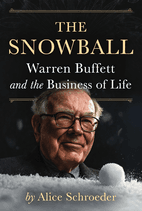
The quotes you will find here come from many moments in Buffett's life. They include investing wisdom, family stories, and self critical observations. Some are funny, some are sharp, and some reveal deep insecurity. They show a man who constantly questions himself and others.
This book is quotable because it does not try to polish its subject into a hero. Instead, it gives you the unvarnished truth. The quotes feel real and unguarded. They leave you with questions about your own habits, fears, and definitions of success.
Top Quotes from The Snowball
“Whenever my version is different from somebody else’s, Alice, use the less flattering version.”
Warren Buffett instructing the author on how to handle conflicting accounts of events.
Reveals Buffett's humility and willingness to be portrayed unfavorably, which is disarming and reflects his character.
“In the short run, the market is a voting machine. In the long run, it’s a weighing machine.”
Buffett explains the difference between short-term market speculation and long-term intrinsic value during his Sun Valley speech.
This aphorism distills the essence of value investing into a memorable metaphor. It resonates because it emphasizes that market popularity (voting) is fleeting, but fundamental worth (weighing) ultimately prevails.
“Tell me where I'm going to die so I won't go there.”
Munger illustrating inversion with a story of a wise peasant.
The vivid metaphor makes the abstract concept of inversion instantly memorable and practical for avoiding failure.
“I feel like I'm on my back, and there's the Sistine Chapel, and I’m painting away. I like it when people say, ‘Gee, that’s a pretty good-looking painting.’ But it’s my painting, and when somebody says, ‘Why don’t you use more red instead of blue?’ Good-bye. It’s my painting. And I don’t care what they sell it for. The painting itself will never be finished. That's one of the great things about it.”
Buffett describes his attitude toward investing while facing criticism and falling stock prices.
This metaphor powerfully conveys Buffett's unwavering commitment to his own principles and his focus on the creative process rather than external validation or market price.
“The big question about how people behave is whether they've got an Inner Scorecard or an Outer Scorecard.”
Buffett explains the central distinction in his personal philosophy.
This line succinctly captures the chapter's core theme and Buffett's lifelong approach to decision-making, making it a memorable and quote-worthy insight.
“Would you rather be the world’s greatest lover, but have everyone think you're the world’s worst lover? Or would you rather be the world’s worst lover but have everyone think you're the world’s greatest lover?”
Buffett poses a rhetorical question to illustrate the difference between inner and outer scorecards.
The provocative and humorous analogy makes the abstract concept of internal vs. external validation instantly relatable and unforgettable.
“Spend less than you make” could, in fact, have been the Buffett family motto, if accompanied by its corollary, “Don't go into debt.”
The author describes the Buffett family motto.
This succinct adage encapsulates Warren Buffett's core financial principle of frugality and saving. It resonates as a timeless, practical rule for personal finance.
Themes Behind the Quotes
One central theme is the distinction between living by an inner scorecard versus an outer scorecard. Buffett values his own judgment over public opinion, which shapes his investments and his life choices. Another theme is the importance of independence, whether financial or personal. Many quotes reflect his desire to control his own time and work.
A recurring thread is learning from failure and humility. Buffett often points out his own mistakes and the painful lessons from his family history. The quotes also emphasize simple principles like spending less than you earn and knowing the deal in advance. Underlying everything is a sense of personal accountability and a refusal to follow the crowd.
Quotes by Chapter
1: The Less Flattering Version
“Ne particularly large and messy finger- combed chunk takes off over his skull like a ski jump, lofting upward at the knoll of his right ear.”
Description of Warren Buffett's appearance in his office.
This vivid physical detail humanizes the legendary investor, showing his eccentric and untidy personal style, making him relatable.
2: Sun Valley
“He spoke of his success as being based on a few simple investing ideas and tap-dancing to work with enthusiasm every day, but if that was so, why had nobody else been able to replicate it?”
The narrator reflects on the paradox of Buffett's public image versus his unique success.
This line captures the central mystery of Buffett's genius—his apparent simplicity is deceptively unrepeatable, making readers question what truly sets him apart.
“W paradigm,” he sniffed. “It's like new sex. There just isn’t any such thing.”
Herbert Allen dismisses the tech-stock valuation craze of 1999.
Allen's blunt, cynical remark cuts through market hype with a memorable, earthy analogy that resonates with anyone skeptical of speculative bubbles.
“His public image was that of a simple man, and he seemed genuine. Yet he lived a complicated life.”
The narrator describes the contradictions in Buffett's persona.
This succinct contrast challenges the reader to look beyond the folksy facade, hinting at the hidden complexities of a billionaire's existence.
3: Creatures of Habit
“I’m not a creature of habit,” he said. “Now, Charlie—Charlie is a creature of habit.”
Buffett responding defensively when accused of being a creature of habit himself.
The line perfectly captures Buffett's self-awareness and ironic humor, while revealing how the two partners view each other.
6: The Bathtub Steeplechase
“Don't worry about food, Howard,” Ernest told him. “I'll just let your bill run.”
Ernest Buffett tells his son Howard after the stock market crash that he can let his grocery bill run.
It encapsulates the Buffett family’s pragmatic, unemotional approach to support, and Warren later repeats it as a defining memory of his grandfather's character.
“It was four months before my dad made his next sale. His first commission was five bucks. My mother used to go out with him at night on the streetcar, waiting outside when he would call on somebody, just so he wouldn't feel so depressed when he came home.”
Warren Buffett describes his parents’ struggle during the Depression, with his mother accompanying his father on sales calls to ease his depression.
It shows the quiet, steadfast partnership that sustained the family through hardship, and reveals the roots of Buffett’s resilience.
“It was always something that we did or said, and there would be this flash, and then it didn’t subside. All your past sins would be brought up. It was just endless.”
Warren recalls his mother’s verbal rages, which could erupt without warning and dwell on past grievances.
This raw, detailed account illuminates the emotional abuse that shaped Buffett’s need for control and objectivity, and explains the lasting damage to his soul.
7: Armistice Day
“He had learned a lesson: It might seem easier to go through life as the echo—but only until the other guy plays a wrong note.”
After Warren, playing the echo part in 'Taps' at school, panicked when the first trumpet player hit a wrong note.
This concise lesson captures the risk of relying on others and the value of being a leader, a theme that echoes through Buffett's life.
“I knew every player's history from every team and could have told you clearly every word in that book. I knew it in my sleep.”
Warren Buffett describing his prized book about the 1938 baseball season, given by his grandfather.
This shows his intense early ability to absorb and memorize details, a trait that later defined his investment approach.
“Only he and Russ would own the evidence that the cops would need to solve the crime.”
Warren and his friend Bob Russell were collecting license plate numbers, hoping to catch bank robbers.
It highlights Warren's childhood fascination with collecting, secrecy, and being uniquely valuable—foreshadowing his later strategic thinking.
8: A Thousand Ways
“I remember a woman named Virginia Macoubrie saying, ‘I'll take one stick of Juicy Fruit.’ I said, ‘We don’t break up packs of gum’—I mean, I've got my principles.”
Warren Buffett recalls his childhood refusal to break a pack of gum for a customer.
This early display of stubborn principle foreshadows Buffett's later investment discipline and unwillingness to compromise his rules.
“It could make me independent. Then I could do what I wanted to do with my life. And the biggest thing I wanted to do was work for myself. I didn’t want other people directing me. The idea of doing what I wanted to do every day was important to me.”
Warren Buffett explains why he wanted money as a young boy.
This passage captures Buffett's lifelong drive for autonomy and purpose, revealing that money was a means to freedom, not an end.
“As / went out, he put his arm around me and he said, ‘What stock do you like, Warren?’ “He'd forgotten it all the next day, but I remembered it forever.””
Sidney Weinberg, senior partner of Goldman Sachs, to young Warren Buffett after their meeting.
This moment shows how a small gesture of respect from a Wall Street titan planted a lasting belief in Buffett's own potential.
9: Inky Fingers
“I am God's child. I am in His Hands. As for my body—it was never meant to be permanent. As for my soul —it is immortal. Why, then, should I be afraid of anything?”
Howard Buffett carried this handwritten note in his pocket for years.
Reveals the deep faith underlying his political extremism, and contrasts with his fire-breathing rhetoric.
“Know what the deal is in advance.”
Warren's lesson after his grandfather paid him and a friend a pittance for shoveling snow.
Encapsulates a core Buffett principle of clear negotiation, learned from a childhood injustice.
“/ may have been the lowest-paid person to ever work in the grocery business. I didn’t learn anything—except that I didn’t like hard work.”
Warren reflecting on his jobs at his grandfather's store.
Shows his early aversion to manual labor and the self-awareness that shaped his career.
“Manual labor is for the birds.”
Warren after quitting a grueling job carrying feed sacks at his father's warehouse.
A pithy, humorous summary of his lifelong disdain for physical work, delivered with characteristic bluntness.
10: True Crime Stories
“Well, I was antisocial, in eighth and ninth grade, after I moved there. I fell in with bad people and did things I shouldn't have. I was just rebelling. I was unhappy.”
Warren Buffett describing his rebellious junior high years.
Reveals his vulnerability and honesty about his past, humanizing a legendary figure.
“I made up a letterhead from the American Temperance Union, Reverend A. W. Paul, President. I’d write letters to people on that letterhead saying that for years I’d lectured around the country on the evils of drink, and in these travels my appearances were always accompanied by my young apprentice, Harold.”
Warren describing a prank he played using a fake letterhead.
Showcases his early ingenuity and mischievousness, foreshadowing his later cleverness.
“My dad, who was always supportive of me, said, ‘I know what you're capable of. And I’m not asking you to perform one hundred percent, but you can either keep behaving this way or you can do something in relation to your potential. But if you don’t do it, you have to give up the paper routes.”
Howard Buffett's ultimatum to his son Warren.
Highlights the power of parental discipline and the importance of setting limits with love.
“But my dad never gave up on me. And my mother didn’t either, actually. Neither one. It’s great to have parents that believe in you.”
Warren reflecting on his parents' unwavering support.
A touching testament to the role of unconditional belief in overcoming troubled times.
11: Pudgy She Was Not
“He would lose these votes in the House, maybe 412 to 3. My dad would be among the three. And it just didn’t get to him. He was very much at peace. It would have gotten to me—I get mad when I lose. I can’t ever recall seeing him depressed or despondent. He just figured he was doing the best he could.”
Warren Buffett describes his father Howard's principled but often-losing voting record in Congress.
This passage captures Howard Buffett's unwavering integrity and emotional resilience, contrasting his calm acceptance of defeat with Warren's own competitive nature, revealing a core family value of principled independence.