The Snowball Key Takeaways — Chapter-by-Chapter Lessons | Insta.Page

The Snowball Key Takeaways

by Alice Schroeder
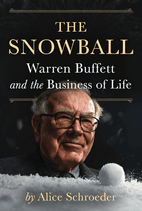
The Snowball by Alice Schroeder Book Cover

5 Main Takeaways from The Snowball

Invest with a margin of safety and inner scorecard.

Buffett’s success hinges on buying assets below their intrinsic value (margin of safety) and judging himself by his own standards (inner scorecard) rather than market noise. This allowed him to sit out the dot-com bubble and bet on undervalued companies like American Express during crises.

Compound relentlessly – wealth, knowledge, and relationships.

The snowball metaphor captures Buffett’s philosophy: small, consistent advantages accumulate over time. He applied this to investing (reinvesting earnings), learning (endless reading and study), and relationships (built on trust and mutual benefit). The key is to start early and never stop accumulating.

Focus on great businesses with durable competitive advantages.

Buffett evolved from buying 'cigar-butt' bargains to acquiring companies like Coca-Cola and GEICO with strong brands, pricing power, and excellent management. He avoided technology stocks he didn’t understand, proving that staying within your circle of competence beats chasing trends.

Use float and other people’s money as a strategic advantage.

Insurance float – premiums collected before claims are paid – gave Berkshire a free and growing pool of capital to invest. Buffett’s genius was combining this with disciplined underwriting and long-term thinking, turning a simple liability into the engine of his empire.

Character and temperament matter more than intelligence.

Buffett’s emotional stability, patience, and willingness to be wrong in the short term set him apart. He valued honesty and alignment of interests in partners and managers, and his ability to ignore public scorn during market manias was as critical as any analytical skill.

Executive Analysis

These five takeaways form a cohesive investment and life philosophy centered on rational decision-making, long-term compounding, and deep understanding. Buffett’s inner scorecard protected him from market hysteria, while his margin of safety ensured he could survive mistakes. His focus on durable businesses with great management, combined with the financial leverage of insurance float, allowed Berkshire to grow at extraordinary rates. The final takeaway – that character trumps IQ – ties everything together: without discipline and self-awareness, no quantitative edge is sustainable.

This book matters because it humanizes one of the world’s most successful investors, revealing that his principles are accessible to anyone willing to think independently and act patiently. Unlike typical finance biographies that focus on numbers, "The Snowball" offers a deep psychological and personal portrait, making it essential reading for investors seeking not just financial rules but a mindset for lasting success. It sits at the intersection of investing, biography, and self-help, offering lessons that apply far beyond the stock market.

Chapter-by-Chapter Key Takeaways

The Less Flattering Version (Chapter 1)

  • Buffett’s office and appearance reflect a man uninterested in pretense, surrounded by evidence of a long, intentional life.

  • He actively refuses to write his own story, deferring to Alice—a move that both disarms and grants him some control over his legacy.

  • The “less flattering version” rule is a strategic humility, one that will later reveal where vanity or self-interest colored his own recollections.

  • The seeds of tension between memory and truth are planted early, with Sun Valley 1999 already foreshadowed as a pivotal example.

Try this: Reject pretense in your work environment and appearance; focus on substance over image to free mental energy for what truly matters.

Sun Valley (Chapter 2)

  • Buffett’s arrival at Sun Valley underscores his personal frugality (carrying his own suitcase) contrasting with the massive wealth he commands (NetJets, the G-IV).

  • The Allen & Co. conference is a meticulously orchestrated “elephant-bump” for media and tech elite, with Herbert Allen as the firm’s eccentric, unsayable-saying host.

  • The 1999 gathering is marked by rising tension between old-media stalwarts like Buffett and the newly minted Internet moguls, whose hubris and “new paradigm” rhetoric dominate the week.

  • Buffett’s upcoming closing speech is set up as unprecedented: he never made market predictions publicly, but he feels compelled to preach about the stock market’s folly.

  • Valuation is not prediction: Short-term markets are a voting machine; long-term, a weighing machine. Don’t confuse volatility with insight.

  • Interest rates are fundamental: They act as gravity on all financial assets. Low rates inflated the 1990s market, but that doesn’t make high prices sustainable.

  • Innovation and investment returns often diverge: Transformative industries like autos and airlines destroyed capital for most investors. New technologies are easy to promote, hard to profit from.

  • Past performance is dangerous to extrapolate: Buffett’s slide showing 17 flat years for the Dow, despite massive economic growth, is a powerful reminder that markets can disappoint for decades.

  • Be wary of crowds and rumors: The oil prospector story captures the herd mentality that leads investors to chase stories into hell. Independent thinking is rare and valuable.

Try this: When faced with market euphoria, remember that valuation is not prediction and avoid confusing volatility with insight.

Creatures of Habit (Chapter 3)

  • Routine as a foundation for genius: Both men’s habits are not quirks but deliberate structures that free mental energy for deep thinking.

  • Complementary temperaments: Munger’s bluntness and Buffett’s charm create a powerful dynamic—one focused on respect, the other on being liked.

  • The didactic impulse: Both feel compelled to teach, but in different registers. Buffett’s medium is Berkshire itself; Munger’s is his speeches and controlling generosity.

  • Simplicity at scale: Despite vast wealth, their daily lives are remarkably modest and predictable—a lesson in avoiding complexity for its own sake.

  • The Circle of Competence: Both stay within areas they truly understand, wary of the Shoe Button Complex of pretending to know everything.

Try this: Build deliberate routines and stay within your circle of competence to free mental energy for deep thinking and avoid complexity.

Warren, What’s Wrong? (Chapter 4)

  • In 1999, Buffett's public reputation collided with a market euphoria he refused to join, and he absorbed a barrage of criticism as BRK stock plummeted 31% from its peak.

  • The market's irrational valuation of loss-making eToys over profitable Toys "R" Us illustrated why Buffett stayed on the sidelines—he wouldn't pay fantasy prices for businesses with no earnings.

  • Buffett's Inner Scorecard—the ability to evaluate himself by his own standards rather than public opinion—kept him from abandoning his principles under relentless pressure.

  • His father's example of being a "hundred percent Inner Scorecard guy" shaped Buffett's lifelong attitude toward criticism: he cared about the quality of the painting, not what others said about it.

Try this: Develop your own inner scorecard and evaluate yourself by your own standards, not public opinion, especially when your approach is unpopular.

The Urge to Preach (Chapter 5)

  • The Buffett family legacy combines an urge to preach, extreme thrift, and a “spend less than you make” mentality that persists through generations.

  • Ernest Buffett embodied the family’s iron will and self-righteousness; Henrietta matched him in thrift and religious fervor.

  • Leila Stahl’s family history is shadowed by mental illness and financial struggle, yet she projected an image of perfection and channeled her ambition into her husband’s career.

  • Howard Buffett’s feelings of social exclusion shaped his values, and he passed on an “Inner Scorecard” that Warren would later cite—while staying conspicuously silent about his mother’s influence.

Try this: Live below your means and pass on a 'spend less than you make' mentality to the next generation.

The Bathtub Steeplechase (Chapter 6)

  • Howard Buffett's audacity to start a brokerage during the Depression teaches that contrarian timing, paired with conservative investments, can succeed amid chaos.

  • Leila's hidden rages and Howard's passive complicity created lasting emotional damage in Warren and Doris, shaping Warren's lifelong avoidance of confrontation and his need for control.

  • Warren's early obsession with numbers and measurement—from stopwatches to hymn composer lifespans—reveals a mind primed to see patterns and calculate probabilities from an early age.

  • The bathtub steeplechase symbolizes the core of Buffett's future investing philosophy: repetitive, patient observation of predictable outcomes, always seeking to improve the odds.

Try this: Practice repetitive, patient observation of predictable outcomes and always seek to improve your odds, like the bathtub steeplechase.

Armistice Day (Chapter 7)

  • Warren’s early fascination with collecting, counting, and memorizing numbers foreshadowed his future analytical instincts—even when disguised as childish crime-fighting schemes.

  • His competitiveness was fierce but tempered by a genuine warmth and tact, especially with his siblings.

  • The strain of his mother Leila’s unpredictable rages and obsession with appearances created a home life that pushed Warren outward, toward friends and activities away from her.

  • School was a mixed experience: he found routine boring but thrived in competitive math drills and memorization challenges.

  • The appendix surgery and subsequent hospital stay reinforced his love of collecting (nuns’ fingerprints) and his imaginative need to find patterns and potential in everything.

  • The Armistice Day performance disaster taught him a lasting lesson about the perils of following someone else’s lead without preparation for mistakes.

Try this: Prepare for others' mistakes and never follow someone’s lead without a backup plan; own your performances.

A Thousand Ways (Chapter 8)

  • Buffett's refusal to break up gum packs at age six reveals his early understanding that sticking to principles matters more than making an easy sale

  • The paradox of his great-uncles—one bear, one bull—taught him that opinions often have no connection to market reality

  • Sidney Weinberg's simple question, "What stock do you like, Warren?" planted the seed that even the biggest names on Wall Street might value his opinion someday

  • The compounding concept from One Thousand Ways to Make $1,000 fundamentally reshaped how young Warren thought about time and money

  • His Cities Service mistake taught three lasting lessons: don't anchor on purchase price, don't grab small profits too quickly, and be cautious with other people's money

Try this: Stick to your principles even when it costs you a quick sale; don't anchor on purchase price, and be cautious with other people's money.

Inky Fingers (Chapter 9)

  • Adolescence hit Warren hard: the move to Washington stripped away his social footing and turned a well-liked boy into a disruptive, angry student.

  • His grades plummeted, but his entrepreneurial instincts sharpened—paper routes became a laboratory for efficiency, salesmanship, and risk management.

  • The Westchester route was a breakout: it gave him high-value customers, taught him to handle logistics, and required nerve to collect debts from powerful people.

  • Warren began to code his life around money and mastery—he could be terrified of girls but totally unafraid of confronting Oveta Culp Hobby for a payment.

  • His first tax return and $1,000 nest egg marked a turning point: he was already measuring success in his own terms, far ahead of the game his peers were playing.

Try this: Turn adolescence into a laboratory for efficiency and risk management by mastering logistics, salesmanship, and debt collection.

True Crime Stories (Chapter 10)

  • Even the most disciplined minds can go through chaotic, self-destructive phases—especially in adolescence.

  • Warren’s teenage crimes were less about need and more about rebellion and unhappiness.

  • Parental support, combined with a targeted consequence (removing his income streams), proved more effective than punishment.

  • Early experiences with deception and risk-taking foreshadowed later, legal risk-taking in investing—but only after he learned to channel his energy.

Try this: When you’re in a chaotic phase, channel your energy into legal risk-taking and learn from consequences rather than punishment.

Pudgy She Was Not (Chapter 11)

  • Howard Buffett’s uncompromising integrity made him a principled but ineffective congressman; his children learned honesty but also absorbed a desire to belong that tempered the family’s independence.

  • Leila’s martyrdom and social anxieties created a tense home environment, with Doris bearing the brunt as she struggled with her own insecurities about fitting in.

  • Warren’s adolescence combined entrepreneurial hustle (selling papers) with systematic self-improvement (weight lifting), reflecting his lifelong love of numbers, measurement, and competition.

  • His fascination with Daisy Mae and later with Pudgy Stockton reveals a young man whose romantic fantasies mixed with a practical urge to improve himself—though his biceps barely grew.

Try this: Combine entrepreneurial hustle with systematic self-improvement; measure your progress and compete with yourself.

Silent Sales (Chapter 12)

  • System beats instinct: Warren applied Dale Carnegie's rules like a business strategy, testing and refining them until they became second nature. His social skills improved not through luck, but through deliberate practice.

  • Money works for you: The pinball machine taught Warren the miracle of capital—one machine bought another, and soon the money was doing the labor.

  • Fairness as a tool: Letting the barber pick his pile of nickels wasn't charity; it was a clever way to cement a partnership without negotiation.

  • Risk has a reward (and a cost): The slug-making, the golf-ball scam, the gas-mask prank—all carried risk. But Warren's willingness to push boundaries, paired with an instinct for when to back off (like taking off the raccoon coat), marked his early entrepreneurial style.

  • The hustle is lonely: At seventeen, Warren was a businessman in a world of teenagers. That solitude fueled his drive—but it also made the lessons from Carnegie's book feel like a lifeline.

Try this: Use Dale Carnegie’s rules as a deliberate system to improve social skills, and let fairness cement partnerships without negotiation.

The Rules of the Racetrack (Chapter 13)

  • Handicapping is a data-driven discipline; success comes from gathering more information and analyzing it objectively.

  • The racetrack’s house edge relies on human irrationality—especially the urge to chase losses.

  • There are two fundamental handicapping approaches (speed vs. class), but the real edge lies in finding mispriced odds (overlays).

  • Emotional decisions, like trying to break even in a single session, are ruinous. Warren’s $175 loss became a permanent lesson.

  • The same mental models used for horses would later shape Buffett’s investment philosophy: be rational, have an edge, and never bet when the odds aren’t in your favor.

Try this: Approach decisions with data-driven objectivity, avoid emotional loss-chasing, and never bet when the odds aren't in your favor.

The Elephant (Chapter 14)

  • Howard Buffett's determination to break his father's will reflects his deep conviction about inflation and the value of stocks over bonds, even if it meant overriding a loved one's wishes.

  • The winter of the haylift and Howard's post-election struggles illustrate how political defeat reshaped the family's financial reality and forced him to rebuild from scratch.

  • Warren's departure from Wharton marks a pivot—he wasn't driven by academic failure but by disenchantment and a desire to return to his roots in Nebraska, keeping only a bridge book as a souvenir of his East Coast time.

Try this: When faced with family financial pressure, act on conviction about inflation and stocks, even if it means overriding loved ones' wishes.

The Interview (Chapter 15)

  • Warren's early management experience taught him that authority requires understanding human nature, not just giving orders.

  • His investing confidence grew through hands-on bets like shorting Kaiser-Frazer, where he learned to outmaneuver skeptical adults with calm, thorough reasoning.

  • The Harvard rejection exposed his vulnerability but redirected him toward Columbia, where he could study directly with his hero, Benjamin Graham.

  • Warren's ability to adapt quickly—from devastation to action—turned a crushing failure into the opening of a more meaningful path.

Try this: Turn a crushing failure into an opportunity by quickly adapting and seeking a more meaningful path.

Strike One (Chapter 16)

  • Learn the material inside out: Warren’s mastery of Security Analysis won him respect from Professor Dodd and gave him a foundation others lacked.

  • Think for yourself, not just follow heroes: Lou Green’s “Strike one!” was a blunt reminder that blind imitation is a mistake even when your hero is Ben Graham.

  • Pursue deep curiosity: Warren’s willingness to show up unannounced at GEICO and ask questions for hours opened a door to understanding whole industries.

  • Sometimes, conviction means going against the experts: The insurance specialists said GEICO couldn’t succeed, but Warren’s analysis led him to bet big anyway.

  • Look for businesses that use other people’s money: GEICO’s model of collecting premiums before paying claims was a free source of capital—an idea that would shape Warren’s future investments.

Try this: Learn a subject inside out, think for yourself even when your hero disagrees, and pursue deep curiosity by asking endless questions.

Mount Everest (Chapter 17)

  • Benjamin Graham's genius made him admired but distant; his true companions were dead authors he read in their original languages.

  • Graham taught that stocks are ownership stakes in businesses, not abstract pieces of paper, and emphasized the margin of safety.

  • Warren Buffett absorbed Graham's principles but diverged early, betting heavily on GEICO despite Graham's warnings.

  • Graham turned down Buffett's offer to work for free because Graham-Newman only hired Jews, a policy Buffett accepted without criticism.

  • To win over the Omaha girl, Buffett shifts from charm to numbers, using her past financial mistakes to prove he understands their shared history and can rebuild trust.

Try this: Remember that stocks are ownership in businesses, not paper; seek a margin of safety and be willing to bet big when analysis supports it.

Miss Nebraska (Chapter 18)

  • Doc Thompson's consent, though delayed, came after a lengthy conversation, marking a turning point in the couple's plans.

  • The timeline moved quickly: from the approval to wedding planning within weeks, reflecting their eagerness and the emotional weight of the decision.

Try this: Once you’ve earned trust through honest communication, move quickly to turn decisions into action.

Stage Fright (Chapter 19)

  • The honeymoon was a three-week road trip, not an investment tour, despite what others have written.

  • Buffett’s comfort in Vegas came from a childhood network—many casino owners had shopped at Buffett’s grocery store.

  • Susie’s slot machine win at nineteen was paid out only after Warren argued the point: they took her nickels, so they had to honor the win.

  • The contrast between his pleasure trip and his Guard buddies’ discomfort gave him lasting, gleeful satisfaction.

Try this: When you win a dispute, revel in the satisfaction of being right, but don’t let it make you smug.

Graham-Newman (Chapter 20)

  • Susie’s social gifts were the opposite of Warren’s: she drew people out by asking about their lives, creating deep bonds quickly, while he held audiences with his financial talk.

  • The division of labor in their marriage was stark—Susie managed the home and children, Warren focused on his work and mental filing—but she actively shaped his emotional growth and parenting.

  • Susie’s politeness could border on the absurd: even in labor, she prioritized making a random visitor feel heard over urgent practicality, a choice that both frustrated and revealed her character.

  • Warren found a simple, repeatable system for bedtime (singing “Over the Rainbow”) and stuck with it, hinting at the methodical, non-interfering approach he’d later bring to investing.

Try this: In personal relationships, actively draw others out by asking about their lives, and find a simple, repeatable system for routines like bedtime.

The Side to Play (Chapter 21)

  • Graham-Newman’s arbitrage on Rockwood was nearly riskless, but Warren’s refusal to tender his shares showed the power of thinking beyond the obvious structure of a deal.

  • By inverting the situation—asking why Pritzker was buying instead of selling—Warren turned a $2 arbitrage into a $13,000 victory.

  • He built his edge through relentless, hands-on research: reading Moody’s manuals, visiting the SEC, digging through Pink Sheets, and talking to management unannounced.

  • The tension between Warren’s accumulating wealth and his strict household allowance revealed an early pattern of separating financial genius from personal spending habits.

  • Ben Graham saw Warren as his intellectual heir but couldn’t keep him in New York; Warren’s independence and impatience with hierarchy pointed toward his own path, not Newman-Buffett.

Try this: Invert every deal: ask why the seller is selling, and do relentless hands-on research to find hidden value others miss.

Hidden Splendor (Chapter 22)

  • The stamp fiasco taught a lesson in scale: Not every scarcity is profitable; controlling supply doesn’t guarantee demand.

  • Trust and transparency in structure, not secrecy in strategy, won over partners like the Davises, who valued honesty and alignment of interests.

  • The snowball effect of managing money became clear: each new partnership compounded Warren’s earning potential, not just his investments.

  • Warren’s personal life reflected his priorities: he saw the house purchase as a forgone million dollars, yet bowed to Susie’s desires—a compromise that defined their partnership.

  • Reputation was a double-edged sword: his brash style and secrecy earned both blackballs and loyal investors, thanks to referrals from respected figures like Ben Graham and Arthur Wiesenberger.

  • By 1959, the partnerships were growing, but all were still rooted in Ben Graham’s cigar-butt philosophy—until Charlie Munger would enter the picture.

Try this: Build trust through transparency and alignment of interests, and let each success compound your earning potential.

The Omaha Club (Chapter 23)

  • The 1959 meeting at the Omaha Club was the spark that ignited one of the most fruitful partnerships in financial history.

  • Munger’s early life—marked by intellectual rigor, personal tragedy, and a fierce desire for independence—shaped the disciplined, pragmatic investor he would become.

  • Buffett’s early partnership performance was already extraordinary, earning him both wealth and the confidence to see potential in a skeptic like Munger.

  • The instant rapport between Buffett and Munger was built on a shared language of value investing and a mutual recognition of each other’s unusual minds.

Try this: Find a partner who shares your investing language and recognizes your unusual mind – that spark can ignite a lifetime of collaboration.

The Locomotive (Chapter 24)

  • True opportunity often arrives cloaked in maximum fear; the correct response is strategic greed, not panic.

  • Insider knowledge or mentorship is frequently the missing ingredient that turns raw opportunity into a successful maneuver.

Try this: When opportunity arrives cloaked in fear, act with strategic greed and leverage insider knowledge or mentorship.

The Windmill War (Chapter 25)

  • Cigar-butt control plays carry hidden risks. Buying below liquidation value works mathematically, but taking operational control forces you into confrontations and community blowback.

  • Hiring the right manager makes or breaks a turnaround. Harry Bottle saved Dempster, but Buffett’s initial choice (Dimon) nearly sank it.

  • Empathy in firing matters. Buffett learned the hard way that coldness in termination can wound people and poison relationships.

  • Financial success doesn’t erase emotional scars. Buffett’s vow to avoid similar situations shaped his later preference for friendly, non-confrontational deals.

  • Loyalty and trust between partners endure. The Schloss-Buffett exchange shows that even in high-stakes investing, honest relationships can outlast any single transaction.

Try this: In control investments, hire the right manager, handle terminations with empathy, and learn from emotional scars to avoid similar situations.

Haystacks of Gold (Chapter 26)

  • Buffett's intense focus on investing left family dynamics unbalanced, with Susie managing both children and her own expanding activism.

  • Munger's partnership took a different path—willing to borrow money, seeking great businesses with durable advantages, and trying to shift Buffett away from Graham's pessimism.

  • Buffett shed his "treasure-hunt" approach thanks to Herb Wolf, yet still craved meticulous detail, which Henry Brandt provided for free.

  • The American Express scandal presented an opportunity: a blue-chip brand turned toxic by fraud, with Buffett already investigating whether the trust could be rebuilt.

  • Buffett’s AmEx bet was validated by real‑world customer loyalty, not just financial analysis.

  • Personal loyalty to his father constrained Warren’s political expression until Howard’s death.

  • Susie’s emotional strength carried the family through Howard’s final days, while Warren coped by immersing himself in work.

  • The scale and speed of his AmEx investment ($3 million in two months) reflected both opportunity and a need to escape grief.

  • Grief manifested physically—and remained unspoken—long after the funeral.

Try this: Invest in businesses with durable competitive advantages, and let great managers run them without interference.

Folly (Chapter 27)

  • Buffett’s bet on American Express showed he was moving beyond Ben Graham’s number-crunching approach to investing in intangible assets like reputation

Try this: Move beyond number-crunching to invest in intangible assets like reputation when the underlying business is sound.

Dry Tinder (Chapter 28)

  • Howard’s death dismantled the family’s emotional structure, leaving Leila unmoored and Warren and Susie as reluctant leaders.

  • Edie’s suicide exposed the Stahl family’s entrenched mental health struggles, which had long been hidden beneath the Buffett surface.

  • Susie’s shift from family caretaker to community activist marked a turning point, as she took on segregated housing—a deeply controversial cause in 1966 Omaha.

  • Warren’s anxiety about the partnership’s future performance led him to close the door to new partners, a historic first for him.

  • The Buffett children were deliberately kept in the dark about their wealth, raised with constant negotiations over money—a tool of control, not generosity.

Try this: After a family death, step up as a reluctant leader and use work as an escape, but also acknowledge the emotional toll.

What a Worsted Is (Chapter 29)

  • Looks can be deceptive. Buffett’s shabby appearance mirrored his stubborn refusal to follow fashion, but it didn’t reflect his financial acumen—though it cost him at least one investor.

  • Beware lowering standards in a frothy market. Hochschild-Kohn was a Graham-style bargain that overlooked fierce competition. Buffett and Munger paid for that lesson.

  • Retail is a merciless business. It demands merchandising skill, not just financial discipline. Thin margins and constant competitive pressure make it a “wearying marathon.”

  • Find partners who love the business more than money. Ben Rosner’s intensity—checking toilet paper counts at a black-tie event—was exactly the kind of obsessive owner Buffett wanted.

  • Leave great managers alone. Buffett’s approach to keeping Rosner on board was simple: flatter, provide clear numbers, and don’t interfere.

Try this: Avoid lowering your standards in a frothy market; retail is a merciless business that demands operational skill, not just financial discipline.

Jet Jack (Chapter 30)

  • Buffett’s refusal to retire despite reaching his financial goal set the pattern for the rest of his life: work was not a means to an end but the end itself.

  • The acquisition of National Indemnity was a pivotal moment, transforming Berkshire from a failing textile mill into an insurance-powered investment vehicle.

  • Buffett’s willingness to pay above his valuation and close the deal within Ringwalt’s “fifteen-minute window” showed his decisiveness and understanding of human psychology.

  • The deal illustrated his evolving philosophy: he was moving away from bargain-priced cigar butts and toward durable businesses run by able managers.

  • Jack Ringwalt’s personality—a mix of cautious risk-taker and penny-pinching showman—perfectly complemented the insurance strategy Buffett would refine for decades.

Try this: When you find a great business run by an able manager, act decisively and close the deal quickly, even above your initial valuation.

The Scaffold Sways the Future (Chapter 31)

  • King’s speech reshaped Buffett’s priorities, leading him to lower investment targets in favor of personal meaning and civic engagement.

  • The “heartless” can be restrained by law, not by changing hearts—a lesson Buffett applied to both investing and activism.

  • Buffett’s quiet integration of the Omaha Club demonstrated that structural change can be achieved through leverage and patience, not noise.

  • His political involvement in 1968 was a deliberate step into “noneconomic activity” with deep roots in his family’s traumatic past.

  • Trust from partners allowed Buffett to pursue a more balanced life without sacrificing performance; his 1967 returns proved his strategy still worked brilliantly.

Try this: Lower your investment targets in favor of civic engagement; use leverage and patience to drive structural change without noise.

Easy, Safe, Profitable, and Pleasant (Chapter 32)

  • Buffett’s loyalty to people often kept him in underperforming businesses longer than was rational, but his overall returns still dwarfed the market.

  • The discovery of Blue Chip Stamps introduced Buffett to the power of “float,” which would become a cornerstone of his future empire.

  • Buffett’s refusal to invest in technology, even when he respected the people involved, was a deliberate choice to maintain his margin of safety—a trait that defined him.

  • By mid-1968, Buffett sensed the market was unsustainable, and his cautious posture set the stage for the turmoil to come.

Try this: Stay loyal to people but also recognize when to exit underperforming businesses; use float as a cornerstone for future investments.

The Unwinding (Chapter 33)

  • Buffett learned that a dollar spent on a mediocre business costs far more than its face value in lost opportunity. Time rewards great businesses and punishes average ones.

  • The Forbes profile cemented Buffett's folk-hero image, highlighting his simple tastes and Omaha roots while masking his growing wealth and relentless drive.

  • Behind the calm, good-humored facade lay a coiled intensity that friends found both magnetic and draining.

  • The closing of both the partnership and the family grocery store was marked by a joyful, eclectic party that reflected Susie's vibrant spirit and the community Buffett had built.

Try this: A dollar spent on a mediocre business costs far more in lost opportunity; time rewards great businesses and punishes average ones.

Candy Harry (Chapter 34)

  • Buffett’s near-death experience failed to diminish his all-consuming focus on investing and winning—competition was hardwired.

  • His competitiveness was so ingrained it surfaced in trivial settings, like a chess game with a six-year-old, where he couldn’t bear to lose.

  • Susie’s passive approach to marital dissatisfaction—rekindling a past relationship without confronting Warren—revealed a deep resignation beneath her cheerful surface.

  • Despite his aversion to real estate, Buffett yielded to Susie’s persistence, illustrating the subtle power dynamics in their marriage.

Try this: Drive your competitiveness into productive channels, but don’t let it spill into trivial settings where you can’t bear to lose.

The Sun (Chapter 35)

  • Buffett's political engagement peaked and waned with the 1972 election; he shifted focus to media ownership, seeing its power.

  • The Boys Town investigation was a high point—a perfect fusion of Buffett's journalistic fantasies, fiduciary outrage, and forensic skills with tax returns.

  • The Pulitzer validated the Sun's muckraking but didn't save it financially; the paper remained a cigar butt.

  • Buffett's growing fame as an investor now paralleled his brief stint as a crusading publisher.

  • Goodman had built his reputation on skewering the pretentious and the phony, but when he turned his lens on Ben Graham and Warren Buffett in Supermoney, he captured two genuinely different characters without cynicism. Graham, with his Latin and French quotations, came across as entertaining but painfully affected—his dialogue read like self-satire. Buffett, by contrast, emerged as a blue-ribbon, All-American, Pepsi-quaffing fundamentalist, practicing his craft in glorious solitude far from Wall Street’s "Lucifers." The contrast was stark: a two-inch-thick T-bone next to a dab of goose liver pâté. Everyone went for the steak.

  • The effect was immediate. Every single reviewer of the book mentioned Buffett. John Brooks, the dean of Wall Street writers, called him a "Puritan in Babylon" set among "greedy, sideburned young portfolio wizards." Overnight, he became a star. Even in Omaha, Supermoney created a minor sensation. After fifteen years of quiet discipline, the jury had finally come in. He was no longer just Warren Buffett from Nebraska. He was the Warren Buffett.

  • Goodman’s portrayal of Graham as affected and Buffett as authentic flipped the public perception of investing heroes.

  • Buffett’s "All-American" image resonated far more than Graham’s intellectual posturing, making him the breakout star.

  • A single chapter in a best-selling book transformed Buffett from a local success into a national investing icon.

Try this: Use your skills to expose institutional wrongdoing, but understand that even noble efforts may not save a failing business.

Two Drowned Rats (Chapter 36)

  • Buffett’s 1971 meeting with Graham was unremarkable, but it planted the seed for a later friendship and investment that would become legendary.

  • Graham’s insecurities were forged by a cold, critical mother and a husband who demeaned her, yet she held onto the Post when many expected her to sell.

  • The Pentagon Papers decision was a crucible: forced to choose alone, Graham found she had the judgment to lead all along.

  • The chapter underscores that greatness often emerges not from confidence, but from enduring self-doubt and acting anyway.

Try this: Greatness often emerges from enduring self-doubt and acting anyway; true leaders are forged in crucibles of hard decisions.

Newshound (Chapter 37)

  • Buffett’s newspaper investments were as much about influence and idealism as they were about money; the Post gave him a platform for all three.

  • Katharine Graham’s deep insecurity about her business judgment made her vulnerable to manipulation, first by André Meyer, then by Buffett’s reassurance.

  • Buffett’s approach to Graham—flattery, patience, and a signed agreement to stop buying stock—turned a potential threat into a lifelong friendship.

  • The union strike and Watergate chaos underscored the high stakes Graham faced, making Buffett’s steady, non-hostile presence a welcome relief.

  • Buffett’s experience with the Forbes article fueled his lifelong crusade against media bias and lack of accountability, leading him to fund the short-lived National News Council.

Try this: Combine flattery, patience, and clear agreements to turn potential threats into lifelong friendships and business platforms.

Spaghetti Western (Chapter 38)

  • Buffett replicated the Wattles “Russian doll” model, using Berkshire, Diversified, and Blue Chip as interlocking holding companies.

  • The acquisition of Wesco Financial demonstrated their willingness to pay above-market prices to maintain ethical behavior and win long-term allies.

  • Insurance float became the engine for capital allocation, allowing Buffett to keep buying stocks during the 1973-1974 market collapse.

  • Personal life grew quieter and more distant as Susie pursued her own interests; Warren remained focused on building the empire.

  • By year-end 1974, Buffett had created a unique business model that fused float, compounding, and control—unlike anything else on Wall Street.

Try this: Use interlocking holding companies and insurance float to create a unique capital allocation engine that powers through downturns.

The Giant (Chapter 39)

  • Rickershauser's credibility and impassioned plea spared Buffett and Munger from personal prosecution.

  • Buffett's anxiety was palpable, but he never showed it publicly; Munger accepted the inevitability of a ticket.

  • The resolution allowed simplification of their holdings and preserved their reputations.

  • Sporkin's judgment distinguished between honest error and criminal intent—a model of prosecutorial discretion.

  • The SEC's subsequent appointment of Buffett signaled full redemption and trust.

Try this: When facing regulatory scrutiny, accept the possibility of punishment with grace; honest error is often distinguished from criminal intent.

How Not to Run a Public Library (Chapter 40)

  • Persistent presence matters: Buffett's willingness to show up, even when awkward, built relationships that later opened doors—like the meeting with Jack Byrne.

  • A great manager can turn a sinking ship: GEICO's turnaround depended on Jack Byrne's relentless, unconventional, and sometimes brutal approach. He was the right commander for a battlefield.

  • Buffett's backing became a self-fulfilling prophecy: His reputation as an infallible investor gave other parties confidence to back GEICO, even when the company was on the verge of collapse.

  • Sometimes you have to walk away to win: Byrne's decision to cancel insurance in New Jersey and fire employees on the spot showed he was serious—and compelled everyone else to get on board.

  • The margin of safety can be a relationship: Buffett's investment wasn't just about price—it was about betting on the right people.

Try this: Show up persistently and back the right people; a great manager can turn a sinking ship, and your reputation can become a self-fulfilling prophecy.

And Then What? (Chapter 41)

  • Warren’s relationship with Katharine Graham pushed Susie to the sidelines, prompting her to create her own life and singing career.

  • The meeting with Walter Annenberg revealed a kindred spirit in ambition and insecurity, and turned Warren into a go-between in the Graham-Annenberg feud.

  • Susie’s singing career became a way to emerge from her role as wife and mother, but public scrutiny and her divided feelings began to tear her apart.

  • The “And then what?” workshop highlighted the vast difference in emotional openness between Warren and Susie, ending in a comedic retreat.

  • Susie’s unhappiness was hidden behind public performances and a myth of Warren’s helplessness, which she used to recruit allies.

  • The separation was framed as a need for self-identity, but Warren’s refusal to see it coming revealed deep emotional blindness.

  • Astrid Menks, shaped by hard-won resilience, became the caretaker Susie could no longer be—and Warren’s eventual partner.

  • Warren coped by channeling his devastation into his annual letter, refocusing on the one arena where he felt utterly competent.

Try this: When a partner needs space to find herself, accept it; channel your devastation into your work and the one arena where you are competent.

Blue Ribbon (Chapter 42)

  • The legal victory over the Courier-Express came too late to prevent massive losses, forcing Buffett and Munger to rely on operational grit and union brinkmanship.

  • Buffett’s philosophy of buying during uncertainty was constrained by a lack of cash; he had to borrow to invest while still recovering from the Buffalo drain.

  • Munger’s excruciating eye ordeal and willingness to endure evisceration rather than risk blindness underscored the personal toll the newspaper battle took on its leaders.

  • The near-fatal strike in December 1980 showed Buffett’s resolve: he would shut the paper down rather than endanger nonunion workers, and he forced the unions to blink.

  • The moment of victory revealed Buffett’s hard-eyed view of capitalism: capital took the risk and reaped the reward; employees got their wages. His lack of public empathy left a bitter aftertaste.

  • Once the News became profitable, Buffett’s interest waned—he was already looking for the next big thing.

Try this: During a business battle, have the resolve to shut down rather than endanger non-union workers; capital takes the risk and reaps the reward.

Pharaoh (Chapter 43)

  • Buffett's environment was shadowed by suicide, yet he remained determined to keep earning.

  • Friends and family openly challenged his stance on withholding wealth from children and charity.

  • The Berkshire charity program was a small but significant concession, also feeding his curiosity about shareholders.

  • Retirement was his real anxiety, leading him toward a partnership with an elderly woman who embodied endurance.

Try this: Withhold wealth from children and charity until you have a clear philosophy; retirement anxiety can be managed by partnering with enduring people.

Rose (Chapter 44)

  • Rose Blumkin sold the use of her name and lease back to Buffett for $5 million, ending their feud.

  • Buffett insisted on a noncompete agreement designed to outlast even her potential immortality—five years beyond her retirement or resignation.

  • He kept her happy with lavish praise and public gestures, including singing on her 100th birthday and donating $1 million in her honor.

  • Mrs. B remained humble throughout, crediting her good fortune to America and never feeling she deserved the honors.

Try this: When ending a feud, use lavish praise and public gestures to keep a former adversary happy and preserve goodwill.

Call the Tow Truck (Chapter 45)

  • Susie's confession represented the end of a beautiful illusion, yet both she and Warren chose to maintain their marriage, each holding on to what they needed

  • Buffett's pattern of avoiding direct confrontation with failing managers or disappointed workers reflects a deep discomfort with personal accountability

  • The insurance struggles taught painful lessons about delegation, with Buffett's "delegate to the point of abdication" style nearly derailing his strategy

  • Ajit Jain's arrival was transformative—his skeptical temperament, work ethic, and negotiation skills perfectly matched Buffett's own, creating the foundation for Berkshire's future compounding machine

Try this: When a beautiful illusion ends, choose to maintain the relationship on new terms; avoid direct confrontation by delegating tough decisions.

Rubicon (Chapter 46)

  • Buffett dismantled the efficient-market hypothesis with his "Superinvestors of Graham-and-Doddsville" argument, showing that a concentrated group of successful investors proved skill, not luck.

  • Leverage was spreading on Wall Street, fueled by formulas and academics, but Buffett and Munger defined risk as the permanent loss of capital, not volatility.

  • The 1986 tax reform forced Buffett to choose: liquidate Berkshire and avoid double taxes, or keep it as a permanent corporation. He crossed the Rubicon and kept Berkshire, costing himself an estimated $185 million.

  • He rationalized buying a private jet, symbolizing his transition into the CEO club despite his frugal roots.

  • Berkshire's staggering growth made him the ninth-richest American, and his reputation drew major players like John Gutfreund and Salomon Brothers into his orbit.

  • Gutfreund's reluctance to make hard personnel decisions fueled internal competition and rising costs, eroding Salomon's profits.

  • Susan Gutfreund's extravagant lifestyle became a symbol of leadership distraction and cultural decay.

  • A near-coup and Perelman's hostile bid forced Gutfreund to turn to Warren Buffett as a white knight.

  • Buffett's $700 million investment gave him a 15% expected return with minimal risk, thanks to a convertible preferred with a "put" option.

  • The deal shifted influence from Gutfreund to Buffett, who gained board seats and a firsthand view of Salomon's chaotic trading floor.

Try this: Define risk as permanent capital loss, not volatility; keep Berkshire as a permanent corporation despite tax costs, and use convertible preferreds for low-risk returns.

White Nights (Chapter 47)

  • Buffett's "gentlemanly protection" deals were finely handicapped bets, not free lunches: Gillette succeeded, US Air bombed.

  • Munger's audit committee uncovered that Salomon's derivative valuations were self-serving models, inflating profits by up to $20 million.

  • Buffett and Munger were repeatedly ignored on investment decisions they knew better than anyone, such as the disastrous White Nights oil venture.

  • Salomon's bonus system created a toxic "casino versus restaurant" culture, with arbitrageurs demanding ever-larger shares, driving internal resentment.

  • Buffett's voting against the traders' bonuses damaged his relationship with employees, but he stayed committed—only to see the firm's problems deepen.

Try this: Focus your 'gentlemanly protection' bets on fine handicapping, not free lunches; understand that bonus systems can create toxic cultures.

Thumb-Sucking, and Its Hollow-Cheeked Result (Chapter 48)

  • Buffett interviewed all potential CEOs but discovered Maughan was the nearly unanimous choice—a clean, ethical outsider with no enemies.

  • Maughan impressed Buffett by not asking for protection or a salary figure, signaling he was the right foxhole partner.

  • Meriwether resigned after initially wanting to stay; Buffett and Munger accepted, though they believed he could have fought it out.

  • The Treasury's total ban on Salomon's auction participation was a near-fatal blow, forcing Buffett to threaten resignation to force a reversal.

  • Buffett's ultimate weapon was his personal reputation, which he reluctantly spent in a desperate plea to Treasury Secretary Brady.

  • A partial compromise allowed Salomon to bid for its own account, buying enough time for Buffett to take charge and avert immediate bankruptcy.

Try this: When a crisis hits, use your personal reputation as a last resort; threaten resignation to force a reversal if necessary.

The Angry Gods (Chapter 49)

  • Buffett's cost-cutting triggered a mass exodus, revealing the cultural tension between his ideals and Wall Street's mercenary reality.

  • The record fine was driven less by the original crime than by Salomon's cover-up and the subsequent political firestorm.

  • Buffett's stepping down marked the end of his direct involvement, but the arbitration with Gutfreund left a permanent scar.

  • Charlie Munger's bizarre testimony—in which he admitted to deliberately not listening—effectively destroyed Gutfreund's claim, but also highlighted the ruthless legal tactics Buffett's camp employed.

  • The outcome underscored a harsh truth: "fair treatment" means different things to different parties, and without a signed contract, promises evaporate.

Try this: Cost-cutting after a scandal triggers mass exodus; understand that 'fair treatment' is subjective without signed contracts.

The Lottery (Chapter 50)

  • Bridge became Buffett’s primary obsession, consuming four or five nights a week and requiring a computer that even Bill Gates couldn’t convince him to get

  • His friendship with Sharon Osberg deepened to the point that she became a regular traveling companion and confidante, much like Astrid remained in the background

Try this: Dedicate time to hobbies that sharpen your mind, like bridge, and let friendships deepen through shared interests.

The Genie (Chapter 53)

  • Treat your mind and body as if they're the only car you'll ever own—because they are.

  • Small, consistent care now prevents big problems later.

  • The choices you make today shape your future health and clarity; there's no trade-in waiting.

Try this: Treat your mind and body as the only car you'll ever own; small, consistent care now prevents big problems later.

Semicolon (Chapter 54)

  • Bad acquisitions can compound losses faster than good ones can compound gains – General Re lost nearly $1.5 billion in its first year, challenging Buffett's belief in buying whole businesses.

  • Public perception is fragile in the Internet age – A single anonymous rumor tanked BRK by eleven percent, and Buffett learned he had less control over his reputation than ever.

  • Sticking to principles when everyone says you're wrong takes a different kind of courage – Buffett refused to buy tech stocks, weathered years of criticism, and was eventually vindicated—but the endurance required was enormous.

  • Health scares force uncomfortable conversations about mortality – The kidney stone, the colon polyp, and the surgery all pointed Buffett toward questions he had long avoided, especially about his father's death and his own legacy.

  • A good joke can defuse almost anything – The semicolon punchline became a classic Buffett moment, turning a serious health crisis into a memorable memento mori.

Try this: Bad acquisitions compound losses faster than good ones compound gains; stick to your principles even when everyone says you're wrong.

The Last Kay Party (Chapter 55)

  • Vindication and warning: Buffett's 1999 prediction proved accurate, and his 2001 message remained deeply cautious—he saw the market as still dangerously overvalued even after the crash.

  • The limits of intimacy: Buffett's inability to handle emotional and medical crises, especially in the hospital, reveals a profound limitation in his personal relationships.

  • Twenty Punches: Buffett's investing philosophy—treating every decision as one of only twenty in a lifetime—extended to his entire life: same house, same spouse, same routines.

  • Mistakes of omission: He freely admitted business errors, but the personal omissions—inattention, neglect, missed emotional chances—remained unspoken shadows.

  • Finality and departure: The last Kay Party ends not just a friendship but an era—Buffett walks through Graham's house one last time, leaves early, and never returns.

Try this: Treat every investment decision as one of only twenty in a lifetime; freely admit business errors but acknowledge the personal omissions.

By the Rich, for the Rich (Chapter 56)

  • Buffett’s push for stock option expensing gained unstoppable momentum after Coca-Cola’s concession, leading to a rule change.

  • He reframed the auditor’s role: from lapdog to Doberman, and proposed simple, universal questions that exposed corporate truth.

  • His celebrity grew bizarrely—from mattress endorsements to fan mail from porn stars and prisoners—but that never distracted him from the fight.

  • Buffett’s humility and genuine delight in oddball admiration reveal a man who never lost sight of where he came from, even as he wielded more power than most CEOs ever will.

Try this: Push for rule changes that increase corporate transparency; enjoy your celebrity with humility and genuine delight in oddball admiration.

Oracle (Chapter 57)

  • Principled flexibility: Buffett ended the Pampered Chef charitable program not because he changed his stance on abortion, but because the boycott was hurting innocent employees. He chose pragmatism over symbolism, then moved on without bitterness.

  • Reputation as a double-edged sword: His fame once attracted coattail-riders; now it made him a target for hedge funds and a villain in the press. The Clayton fight showed how being “too smart” could turn the market against him.

  • Berkshire’s true edge: Not just spotting bargains, but having the unique balance sheet and decision-making speed to create bargains out of fairly priced assets—a structural advantage that competitors couldn’t replicate.

  • The cost of stress: The legal battle extracted a personal toll—Kevin Clayton got shingles, his baby had colic, and Buffett himself recalled losing his hair to stress. Even billionaires can’t escape the human cost of high-stakes dealmaking.

  • Post-acquisition reality: The manufactured-housing cycle didn’t turn. Buffett’s “cheap” price turned out to be merely reasonable. The real test came after the deal closed, requiring creative moves like buying distressed loan portfolios to make the economics work.

Try this: When a boycott hurts innocent employees, choose pragmatism over symbolism; use your unique balance sheet and speed to create bargains out of fair assets.

Winter (Chapter 59)

  • Susie ultimately chose to undergo radiation after resistance, swayed by her daughter’s encouragement, but the decision remained a painful trade-off between hope and autonomy.

  • Warren’s friendship with Bono and his admiration for Gates’s philanthropy highlight his rational, coattailing approach to both personal relationships and massive charitable giving.

  • The chapter underscores the emotional strain on Warren as he faces the illness of both his wife and his longtime friend Bill Ruane, while also shouldering the responsibility of caregiving—a role reversal for him.

  • Charlie Munger’s birthday speech, with its emphasis on inversion and avoiding failure, offers a crisp reminder of his philosophical framework, even as his self-assessment as living on an elevated plane sparks mixed reactions from those around him.

Try this: When a loved one faces a painful medical decision, encourage hope but respect their autonomy; lean on rational friendships to guide philanthropy.

Frozen Coke (Chapter 60)

  • The chapter juxtaposes Warren's personal caregiving for Susie with the unraveling of Coca-Cola, showing how even the "hundredth floor" can feel like the ninety-eighth.

  • Buffett's hatred of managed earnings crystallizes: it's a slippery slope from stealing five bucks to systemic fraud.

  • The shareholder meeting is a microcosm of the era's backlash against corporate power—protesters, ISS, CalPERS, and Jesse Jackson all take aim at a board that had lost its way.

  • Buffett's role as a director becomes a liability; he feels trapped between loyalty to the company and the humiliation of being singled out by governance watchdogs.

  • The search for a new CEO reveals deeper dysfunction: a board that was passive under Goizueta became factional and meddlesome after his death, undermining the company's ability to execute.

Try this: Hate managed earnings – they’re a slippery slope to fraud; as a director, feel trapped between loyalty and governance scrutiny.

The Seventh Fire (Chapter 61)

  • Susie’s cancer was in remission, but she only had one good year ahead.

  • The Berkshire shareholder meeting grew into a massive event, with Buffett fighting scalpers and defending his family’s roles.

  • Susie pushed herself to attend events and travel despite her failing health.

  • She collapsed at a ranch from a brain hemorrhage and died hours later.

  • Warren was devastated, unable to attend her funeral and haunted by the memory of the ambulance ride.

Try this: When a spouse passes, give control of your wealth away rather than building a personal foundation; see your fortune as claim checks owed to society.

Claim Checks (Chapter 62)

  • Buffett's donation to the Gates Foundation was historic not just in size, but in its structure and humility—he gave control away rather than building his own philanthropic empire.

  • His giving was framed by the Ovarian Lottery: he saw his wealth as claim checks owed to society, not as a dynastic inheritance.

  • The gift had a catalytic effect on global philanthropy, prompting other billionaires to pledge vast sums and reshaping how major foundations operate.

  • Buffett's personal life finally settled into the simple, contained existence he always craved, with Astrid and family at the center.

  • Shareholder activism around social issues (Darfur, dams) tested Buffett's patience; he learned to ignore controversies that didn't help his image.

  • Succession remained the defining existential question for Berkshire: Buffett searched for an investment successor but knew no one could truly replace his unique blend of intuition, teaching, and trust.

Try this: During a trial, keep your focus on teaching and character; frame life’s biggest questions mathematically using your inner scorecard and the ovarian lottery.

The Crisis (Chapter 63)

  • The General Re trial showed that executives

Try this: As you age, increase your urge to teach: use your platform to spread lessons on life, character, and long-term thinking.

The Snowball (Chapter 64)

  • Buffett’s urge to teach grew stronger with age, and he used student visits to spread lessons on life, character, and long-term thinking, not just money.

  • He framed life’s biggest questions mathematically: purpose, love, career, and marriage all had formulas rooted in your Inner Scorecard and the Ovarian Lottery.

  • His success was not accidental; it was built on decades of obsessive study, risk management, and a willingness to sacrifice diversions for focus.

  • He was simultaneously ambitious and ethical, competitive yet generous—traits that Munger argued made his life work out better, even at the cost of billions.

  • The snowball metaphor captured his view of compounding—not just wealth, but knowledge, relationships, and understanding. You must be the wet snow, always accumulating, never looking back.

Continue Exploring