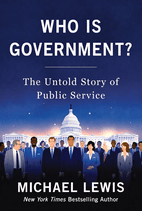
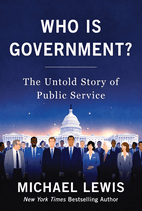
Michael Lewis's Who Is Government? presents portraits of unsung federal employees—from a cemetery director to an IRS cybercrime unit—revealing the dedicated, mission-driven individuals behind the bureaucracy. Written for readers curious about what government actually does beyond political rhetoric.
Feature
Insta.Page
Blinkist
Shortform
Summary Depth
Full Chapter-by-Chapter
15-min overview
Section-by-section guides
Audio Narration
✓
✓
✓
Visual Mindmaps
✓
✕
✕
AI Q&A
✓
✕
✕
Quizzes
✓
✕
✕
PDF Downloads
✓
✕
✓
Price
$89.99/yr
$146/yr (PRO)
$199/yr
*Competitor data last verified July 2026.
1 Page Summary
This book presents a series of portraits of federal employees, arguing that the government is not an abstract, faceless institution but a collection of dedicated, often brilliant, individuals doing essential work. Michael Lewis focuses on a diverse group, from the director of the National Cemetery Administration who treats every veteran’s burial as a singular responsibility to the IRS cybercrime unit that took down the CEO of Binance using simple detective work and tenacity. The book’s central thesis is that these public servants, driven by a sense of mission rather than profit, perform quietly heroic work that is invisible to most Americans until it fails.
Lewis’s distinctive approach is to find compelling, human-interest narratives that reveal the inner workings of bureaucracy. He profiles a former coal miner turned civil servant, a paralegal whose job is a living rebuttal of political caricatures, and a biochemist who exposed a systemic failure in how rare disease treatments are shared. Through stories like the battle to create an accurate Consumer Price Index or the effort to digitize the National Archives for rural Americans, he shows that “government” is a complex system of problem-solvers laboring under constraints of budget, politics, and public skepticism. The book is structured as a series of standalone chapters, each centered on a person whose career defines a critical, often misunderstood function of the state.
The intended audience is anyone curious about what the federal government actually does beyond the political rhetoric. General readers will gain a newfound appreciation for the expertise and commitment of the civil service, while those in public policy or government roles will see their own challenges reflected in these stories. Lewis aims to counter the narrative of a lazy or malevolent “deep state” by highlighting employees who are hyper-aware of their public duty, often working with outdated tools and in fear of political retribution. Readers will come away understanding that the true story of government is not one of conspiracy, but of unglamorous, vital work performed by people who believe in the mission of the nation they serve.
The Canary
Overview
The Sammies awards exist to celebrate federal employees who do extraordinary things, but there’s always been something awkward about the ceremony. Nominees rarely talk about themselves—they say “we,” they point to the work, they hustle back to their desks before anyone can ask a follow-up question. Then one year, a single phrase slipped into one nominee’s description: A former coal miner. Those four words broke the pattern. They created a picture, a story, a movie waiting to be written. But when the interviewer called Christopher Mark, the man was genuinely confused by the interest. He’d never heard of the Sammies. And his first answer demolished the script: he grew up in Princeton, New Jersey, the son of a university professor.
That father, Robert Mark, was a civil engineer who had turned art history into science by using photoelastic models to test the structural mysteries of Gothic cathedrals. He became a minor celebrity. Chris grew up as the son whose mind most resembled his father’s—technically brilliant, drawn to art and history—but he developed something Robert never had: a fine nose for elitism. Princeton’s assumption that the smartest should run the world bugged him. The Vietnam War sent him “off the deep end.” By high school he was using words like “bourgeois,” and after his parents divorced, he told his father he no longer had the right to tell him what to do. He finished high school early and, instead of choosing between Harvard and Princeton, announced he wanted to work in a factory.
He spent years bouncing from an oil refinery to a UPS warehouse to an auto plant, and finally to a coal mine in West Virginia. Two other revolutionaries came with him, took one look at the mine, and fled. Chris stayed. He was 19, sleeping in a trailer, working graveyard at the Lightfoot No. 1 mine. He never fit in—he was acutely aware of his outsider status every moment—but the miners didn’t ask why he was there, and he didn’t preach. He loved being underground. After a year, the isolation wore thin, so he enrolled at Penn State to study mining engineering, using his mother’s inheritance to pay his way.
In class, he learned why coal mining was the most dangerous job in America. Half of the roughly 50,000 mining deaths that century had come from falling roofs, and the formulas used to design the pillars that held up those roofs were all over the map. One professor, asked which formula was right, told a student to use “engineering judgment.” Chris thought: This is the place for me. Then the Wilberg Mine disaster of 1984 made the problem brutally concrete—a fire, a roof collapse that blocked the only exit, 27 people trapped in an inferno. Chris saw the cause immediately: bad pillar design. If they’d used the right formula, everyone would have made it out alive.
His PhD thesis became the first systematic attempt to prevent these collapses, but the problem was maddeningly complex. Every mine was unique—different depth, rock type, stress conditions. There was no reliable way to measure what the pillars needed to support. “The science wasn’t there,” he said. “It didn’t have a clear mathematical solution.” So he joined the Bureau of Mines in 1987, where his new colleagues put him in a basement office next to a man who made funny sounds during phone calls. Chris thought he’d died and gone to heaven. He gave himself the title Principal Roof Control Specialist and set about building a science from scratch.
His method was statistical—gathering data from roof failures and searching for patterns where no one had looked before. He created a stability factor for pillars, measured how loads shifted as coal was removed, and back-tested his findings against case histories. He resurrected a crude method from 1940s geologists: whacking rock with a ball-peen hammer to reveal its strength. Then came the plate tectonics revelation: horizontal stress in mines was often two to three times greater than vertical stress, contradicting every textbook. He matched the stress directions to a tectonic map from the 1970s and found that mines running across the grain of the plates collapsed more often. Once you figured that out, he said, it was like magic.
By 1994, he had created a rating system for coal mine roofs and reduced it to a checklist and software. No law forced companies to use it, but the industry adopted it anyway. “It was like somebody turned on the lights,” one mining engineer said. Once the pillar problem was solved, Chris looked up and asked what else was killing miners. He turned to casualty reports and found something surprising: for every miner killed by a falling roof, 100 were injured by smaller rock fragments that fell between the pillars. He’d been so focused on the bullets that killed, he’d barely noticed the ones that mostly just wounded.
The story of roof bolts turned out to be far more complicated than the industry liked to tell. After roof bolts were introduced in the 1940s, fatality rates didn’t drop—they actually increased for two decades. The technology was brilliant at holding up rock, but companies used just enough bolts to maintain the existing risk levels their workers had already been conditioned to accept. It took federal enforcement power, granted in 1969, to finally drive death rates down. That lesson was tragically confirmed at Crandall Canyon in 2007, when Murray Energy ignored Chris’s formula, ran the numbers, and decided to roll the dice anyway. Six miners were trapped, six more died in the rescue attempt, and their bodies were never recovered. After the disaster, Chris’s office was given mandatory oversight of all deep mines. In 2016, for the first time in history, no American miner died from a roof fall.
Chris’s drive to fix problems ran deeper than engineering. He came from a family of structural specialists—his father had used the same stress-analysis techniques to study Gothic cathedrals—and he had grown up with a powerful father and a powerless mother. That gave him a visceral sympathy for the underdog and an absolute allergy to academic elitism. When an economic historian published a paper arguing that roof bolts took twenty years to reduce fatalities because the market alone solved the problem, Chris wrote a blistering rebuttal to Technology and Culture—the very journal his father once edited. The real driver, he insisted, was regulation backed by enforcement.
In the end, father and son finally collaborated. When Washington National Cathedral began to tilt, Robert Mark realized he needed subsurface instruments. Chris supplied the tools used in coal mines. For four years they monitored the cathedral’s movements, determined the problem was slowing, and wrote a single paper together. Chris did the work for free, for the fun of it, and for the chance to fix a problem alongside the man who never quite saw the value in his son’s underground career.
Key Takeaways
Roof bolts were revolutionary but only reduced fatalities after federal regulators gained enforcement power—technology alone was not enough.
The Crandall Canyon disaster proved that companies would knowingly ignore safety algorithms; post-disaster, Chris’s office gained mandatory oversight.
Chris’s career was shaped by a deep desire for fairness and a practical allergy to academic narratives that ignored the role of government.
His relationship with his father was complex—professionally parallel but emotionally distant—until they collaborated on saving a cathedral.
Key concepts: The Canary
1. The Canary
The Unlikely Nominee
Sammies awards celebrate extraordinary federal employees
Nominee Christopher Mark was a former coal miner
He grew up in Princeton, son of a professor
He rejected elitism and chose factory work
From Princeton to Coal Mine
Father Robert Mark studied Gothic cathedral structures
Chris developed a fine nose for elitism
Vietnam War pushed him to reject privilege
He worked in oil refinery, UPS, auto plant, then coal mine
The Deadly Problem of Roof Falls
Half of 50,000 mining deaths from falling roofs
Pillar design formulas were inconsistent
Wilberg Mine disaster killed 27 due to bad pillars
Chris saw the cause immediately
Building a Science from Scratch
PhD thesis was first systematic collapse prevention
Joined Bureau of Mines as Principal Roof Control Specialist
Used statistical methods to find patterns
Resurrected ball-peen hammer rock testing
The Plate Tectonics Revelation
Horizontal stress 2-3 times greater than vertical
Contradicted every textbook on mining
Matched stress directions to tectonic map
Mines across plate grain collapsed more often
The Rating System and Its Impact
Created roof rating system by 1994
Reduced to checklist and software
Industry adopted it voluntarily
Like turning on the lights for mining safety
The Tragic Lesson of Crandall Canyon
Murray Energy ignored Chris's formula in 2007
Six miners trapped, six rescuers died
Bodies were never recovered
Mandatory oversight followed; zero roof fall deaths by 2016
💡 Try clicking the AI chat button to ask questions about this book!
The Sentinel
Overview
The haunting story of Staff Sergeant Robert Ferris Jr. opens this chapter—a twenty-year-old ball turret gunner shot down over Normandy in 1942, buried as an unknown beneath a cross reading “Known but to God,” and finally identified and brought home eight decades later through DNA from a niece who never knew him. His hero’s welcome in New Bern, North Carolina, had a speaker: Ronald E. Walters, head of the National Cemetery Administration (NCA). Walters’s agency buries over 140,000 veterans and family members each year across 155 national cemeteries, tending nearly 4 million interments. The NCA has won the highest rating in the American Customer Satisfaction Index seven times, scoring a staggering 97—above Costco and Apple—and Walters wants a perfect score, because “We only get one chance to get it right.”
Walters grew up in a small Falls Church apartment, the son of a typewriter repairman and a federal secretary. He collected team superhero comics, studied assignments weeks early, and after Georgetown and a master’s in public administration, a VA internship turned into a 39-year career. When he discovered the NCA, he was moved by its work with grieving families and joined what he calls the best-kept secret in the federal government. The NCA’s excellence is no accident: Lincoln established national cemeteries after the Civil War, and Walters built on that legacy with 40 pages of standards, a training center, a national call center, and a pre-need eligibility system. Sixty-five percent of the workforce are veterans, and the culture is one of relentless attention to detail—like the technician at Mountain Home who gave his boots to a widow so she could reach her grandfather’s grave.
Walters leads with a patient, kind, exacting style. He’s famous for his blue sheets—to-do lists on colored paper—and fosters a gentle give-and-take across all ranks. His office is small, cluttered with flags and books, and he refuses to take a bigger one across the hall because he thinks of the organization more than himself. Through seven administrations, he has earned trust from both parties: “There’s no Republican or Democratic way to bury a veteran.”
Despite clinging to an AOL account, Walters is a born innovator. He created the Veterans Legacy Memorial (VLM), a digital database and memory book for nearly 10 million veterans, giving each a webpage where families share photographs and tributes—one widow called it “my radio to heaven.” He launched the Veterans Legacy Program (VLP), bringing school groups into cemeteries for field trips and funding research into forgotten stories like Hmong American veterans and the United States Colored Troops. But he’s most proud of a 12-year-old apprenticeship program that employs homeless veterans, training them in cemetery duties and guaranteeing a job upon completion. Francisco Zappas, a former Army soldier who lost everything to drinking, now tends graves at Fort Bliss with gratitude: “We make it look like a shrine, just like the White House.”
Walters led an analysis of veteran population data to close service gaps, opening new cemeteries in states that lacked them and creating columbarium-only cemeteries in dense cities. He persuaded Congress to change funding so the NCA could buy land without waiting years. Today, 94 percent of American veterans live within 75 miles of a national cemetery. When Matthew Quinn tried to grant Walters a civilian burial waiver in a national cemetery, Walters refused—he was not a veteran, and he insisted he did not belong there, that it was more than honor enough to spend his life serving. He is first to arrive, last to leave, finding meaning in teaching and mentoring. Everyone who knows him leaves wanting to be better, and that is the mark of a great leader.
Key Takeaways
Innovative leadership: Walters modernized the NCA with digital memorials (VLM), educational programs (VLP), and a successful apprenticeship for homeless veterans.
Nonpartisan service: He navigated seven administrations by focusing on mission over politics, earning trust across the aisle.
Expanding access: Through data-driven analysis and creative funding, he ensured 94% of veterans live within 75 miles of a national cemetery.
Humility and purpose: He refused a burial honor he didn’t earn, and his quiet dedication inspires others to strive for their own best selves.
Key concepts: The Sentinel
2. The Sentinel
Ronald Walters' Background and Leadership
Grew up in Falls Church, son of a typewriter repairman
39-year VA career, discovered NCA as 'best-kept secret'
Leads with patient, kind, exacting style using blue sheets
Refused bigger office, thinks of organization over self
NCA's Excellence and Standards
Buries 140,000+ annually across 155 national cemeteries
Scored 97 on customer satisfaction, above Costco and Apple
Built on Lincoln's legacy with 40 pages of standards
65% of workforce are veterans, culture of attention to detail
Innovative Programs and Digital Memorials
Created Veterans Legacy Memorial (VLM) for 10 million veterans
Launched Veterans Legacy Program (VLP) for school field trips
Apprenticeship program employs homeless veterans
Program guarantees jobs, transforms lives like Francisco Zappas
Expanding Access and Nonpartisan Service
Data-driven analysis closed service gaps across states
Persuaded Congress to change funding for land purchases
94% of veterans live within 75 miles of a national cemetery
Navigated seven administrations with mission over politics
Humility and Legacy of Service
Refused civilian burial waiver in national cemetery
Insisted he did not belong there as non-veteran
First to arrive, last to leave, finds meaning in mentoring
Inspires others to be better, mark of a great leader
The Searchers
Overview
The search for life beyond Earth is no longer a question of if but when—likely within the next 25 years, with the first evidence appearing on an exoplanet whose atmosphere reveals water, carbon, methane, and oxygen. At the center of this quest is NASA’s Jet Propulsion Laboratory in Pasadena, a place that looks like a mundane office park but houses the most inspiring exploration humans are doing. The Nancy Grace Roman Space Telescope, launching no later than 2027, will carry a coronagraph capable of starlight suppression—blocking the blinding glare of a distant star so we can see the planets orbiting it. This isn’t science fiction; it’s the real work of scientists like Jason Rhodes, Marie Ygouf, Feng Zhao, Tiffany Kataria, and Alina Kiessling, each focused on a different piece of the puzzle: dark matter, deformable mirrors, exoplanet atmospheres, or stratospheric airships. None of them doubted they’d find evidence of life—only when.
One scientist to watch is Vanessa Bailey, who grew up under dark South Dakota skies and spent over a hundred nights at a telescope to directly image one of only 14 exoplanets ever captured that way—HD 106906 b. She saw the smudge herself, but for months she was skeptical, grateful she hadn’t been trained to dismiss such unlikely data. Her humility is typical at JPL: no one takes credit; everyone points to the team. Yet the planet she found was Jupiter-sized and far from its star. The real prize—planets in the Goldilocks zone close enough to a star to be warm but not lost in its glare—requires the coronagraph.
That instrument works by using over 3,000 tiny pistons to move deformable mirrors, creating a flowerlike mask that blocks the star’s light. It’s like turning off a desk lamp to see a Post-it note planet on the wall, then blocking the bulb with your hand. The team had just delivered their equipment to Goddard when I visited, and they were already stressed about the launch. Bailey’s office was sparse—a textile from her mom, a calendar, a coronagraph sticker—and she described what finding signs of life might mean: “I like feeling small… Like in Yosemite with the mountains. Finding life elsewhere would only expand that sense, in a hopeful way.”
The telescope’s namesake, Nancy Grace Roman, was born in 1925 and knew by 13 she wanted to be an astronomer, despite a high school counselor telling her to study Latin. She became NASA’s first chief of astronomy, persuaded Congress to fund space-based telescopes (leading to Hubble), and as early as 1959 proposed using a coronagraph to detect exoplanets. She died in 2018, revered but not universally loved—she made tough budget decisions, killing a moon telescope project. That culture of hard choices persists at JPL, where scientists are acutely aware they’re spending taxpayer money and determined to justify every dollar.
In the Microdevices Lab, the coronagraph’s tiny lenses and mirrors are made with excruciating precision. But the real character emerged in Nick Siegler, the chief technologist for NASA’s exoplanet program—loud, gregarious, and funny. He burst out of his office, talked faster than anyone, and immediately launched into the coronagraph’s promise. Yet his path to JPL was anything but direct: the only child of Jewish refugees from Romania, he watched Viking 1 land on Mars and dreamed of NASA, but his parents dismissed the idea. He studied chemical engineering, managed factories for Unilever for twelve years, then at 32 locked himself in a room and asked what he’d do if money didn’t matter. Astronomy topped the list. He went back to school, slogged through remedial math alongside teenagers, got his PhD, and started at NASA at 43. “I guess there’s a very fine line between courage and stupidity,” he says, “and I walked that line for a long time.”
Siegler then led the way to a warehouse at the top of JPL’s campus, where the contrast was immediate. Everything was large and tangible: a giant gold flower petal with a razor-sharp point, an enormous spool of gold foil, tools scattered across worktables. The man in charge, Kim Aaron, 72, wore a Hawaiian shirt and had the air of a kindly mad scientist. Together, Siegler and Aaron eagerly walked through the Starshade concept—a radical opposite to the coronagraph. Where the coronagraph is microscopic and testable on Earth, the Starshade would be a massive 60-meter flower that unfurls for the first time in space. It would launch alongside a Hubble-sized telescope, separate, race 50,000 to 95,000 kilometers ahead, and then unfurl into a vast petaled shape to block starlight. The alignment tolerance is astonishing—within a meter after that long journey—but both were confident: “It’d work.” Siegler revealed a personal sting: the Starshade was written out of the movie Ad Astra because producers found it too complicated to explain, even though he’d pitched a scene where Brad Pitt sees it block the sun, revealing Earth and reminding him of everything worth living for.
For now, the coronagraph is in the pole position, heading to space on the Roman Space Telescope. The Starshade is on ice. But Siegler doesn’t hide his preference: “Programmatically, it’s always a coronagraph… easier to test on the ground. That’s what people really like about it. NASA tries to mitigate its risk whenever possible. But look at the landing of Apollo onto the surface of the moon! They didn’t test that on the moon!” If Roman succeeds, the next-generation Habitable Worlds Observatory in the 2030s might choose the gold flower. Siegler manages both projects, but his heart leans toward what he calls “the ultimate playground” for mechanical engineers.
After the tour, Siegler shared a discovery: cleaning out his parents’ home, he found a crayon drawing he made at age ten—an Apollo rocket. He had forgotten it completely. “The goal was always to come to NASA… We’re in the space business and the knowledge business, but I’ve always believed we’re really in the inspiration business.” Vanessa Bailey adds a deeper note: “I heard a phrase the other week—‘existential humility’—and I really liked that. We’re this complex life form that has evolved over billions of years to the point where we can ask these questions—and yet we’re perhaps not the only ones in the universe. And if we could know that for certain, that would be humbling in the most wonderful possible way.”
Key Takeaways
Nick Siegler’s late-career pivot from chemical engineering to astrophysics underscores that pursuing a dream often requires courage over conventional wisdom.
The Starshade, a giant deployable flower that blocks starlight in space, represents a mechanical counterpoint to the tiny, precise coronagraph—each has distinct advantages and risks.
NASA’s cautious preference for the coronagraph reflects a risk-averse culture, but history shows that bold leaps (like Apollo) sometimes demand accepting uncertainty.
Both Siegler and Bailey emphasize that the real value of this work isn’t just scientific discovery—it’s the inspiration it generates and the existential humility it cultivates.
Key concepts: The Searchers
3. The Searchers
The Search for Life Beyond Earth
Evidence of life expected within 25 years
First signs on exoplanet atmospheres with water and oxygen
NASA's Jet Propulsion Laboratory leads the quest
Nancy Grace Roman Space Telescope
Launching no later than 2027 with coronagraph
Starlight suppression blocks star's glare to see planets
Named after NASA's first chief of astronomy
Coronagraph Technology
Uses 3,000 tiny pistons for deformable mirrors
Creates flowerlike mask to block starlight
Like turning off lamp to see Post-it note planet
Vanessa Bailey and Exoplanet Discovery
Directly imaged HD 106906 b after 100+ nights
Initially skeptical of her own data
Finding life would expand sense of cosmic humility
Nick Siegler's Unconventional Path
Left Unilever at 32 to pursue astronomy
Started at NASA at 43 after remedial math
Manages both coronagraph and Starshade projects
Starshade Concept
60-meter flower unfurling in space
Separates from telescope 50,000-95,000 km ahead
Alignment tolerance within one meter
Risk and Ambition at JPL
Coronagraph preferred for ground-testability
Siegler favors Starshade as ultimate playground
Apollo landing wasn't tested on the moon either
The Number
Overview
The chapter opens with a cascade of seemingly disconnected facts—volcanoes, fonts, Ukrainian decoys, death rates—each pulled from federal data, to reveal that the true protagonist is the Consumer Price Index (CPI). This number, the main official measure of inflation, isn't just a statistic; it's the embodiment of the United States as an Enlightenment project, a nation built on reason and empirical truth. The government counts everything, from selenium in wild turkey to metrics for sniper rifles, because counting itself is a core function, rooted in the Constitution's enumeration clause. Yet achieving an accurate count is notoriously difficult, as illustrated by Abraham Wald's WWII bullet-hole insight and the bizarre spike in elder fall deaths caused by a change in classification—proof that the number changes when the counting does.
Among the torrent of data, the Census and the CPI stand out as both vital and controversial. The CPI directly affects Social Security, SNAP benefits, pensions, and even divorce settlements—no other federal statistic has such a direct daily impact. Measuring it means constructing a "basket" of goods, from cheese to scuba gear, with wrestling classified under "admission to movies" rather than sporting events. The largest category is shelter, at 36.3%, which includes "owners' equivalent rent," a subtle fiction that forces homeowners to feel inflation even if their mortgage hasn't budged. The modern CPI is the product of a century of debate, from 1921's straw boater and cow diagram to today's chained CPI and CPI-E for older Americans, revealing that every inflation index is made, not found.
The misery index—unemployment plus inflation—has a tidy predictive track record: when above 10 in an election year, the incumbent loses, with Reagan as the sole exception due to a steeply declining index. In 2024, the misery index sat at a comfortable 7.2, yet public sentiment was sour, creating a "vibecession" that broke the historical pattern. This disconnect stems from collective amnesia about the 1970s–80s inflation nightmare—Nixon's price controls, Ford's failed WIN campaign—and the cognitive trap of hearing "inflation is falling" when prices are still rising. Butter soared 41%, school lunches 254%, and food costs, though a small share of the CPI basket, deliver a daily punch that overshadows falling rates. Politicians and online voices amplify distrust, calling the CPI a lie, while the Biden administration's misnamed Inflation Reduction Act only fueled skepticism.
The result is a profound gap between data and lived experience: a majority of Americans believe the country is in a recession when it isn't, and nearly half think unemployment is at a 50-year high when it's actually at a low. The CPI is an impossible number—an attempt to compress 340 million people's economic reality into one figure—but it must be done so society doesn't fly blind. Rejecting it entirely means abandoning the Enlightenment ideal of collective, objective knowledge and sliding into what the chapter calls the Darkening, a world where personal feeling is the only truth. The CPI is flawed, but it embodies a commitment to a society-wide truth worth defending.
Key Takeaways
The misery index (unemployment + inflation) has historically predicted incumbent losses when above 10 in an election year, except when declining sharply. The 2024 index was low (7.2), yet public sentiment was sour—a "vibecession" that broke the model.
Americans have forgotten the experience of high inflation. The 1970s-80s period of double-digit inflation made politics "crazy" (Nixon's price controls, Ford's failed WIN campaign). The recent spike—butter up 41%, school lunches 254%—reawakened that memory.
There's a disconnect between falling rate of inflation and still-rising prices. People hear "inflation is down" and think prices are falling, leading to distrust of the CPI.
Politicians and online voices amplify that distrust, calling the CPI a lie or propaganda. The Biden administration's Inflation Reduction Act was misnamed, further eroding credibility.
Food inflation, though a small share of the CPI basket, has an outsized psychological impact because it's encountered daily. A 28% increase over five years stings far more than a one-time insurance hike.
The CPI is an imperfect but necessary tool—an impossible number that must be attempted. Rejecting it entirely means abandoning the Enlightenment ideal of collective, objective knowledge, sliding into a "Darkening" where personal feeling is the only truth.
Key concepts: The Number
4. The Number
The CPI as an Enlightenment Project
Government counts everything, rooted in Constitution's enumeration clause
CPI embodies the US as a nation built on reason and empirical truth
Counting changes the number, as shown by elder fall death spike
Rejecting CPI means sliding into the Darkening of personal truth
How the CPI Is Constructed
Basket of goods includes cheese, scuba gear, wrestling under movies
Shelter is largest category at 36.3%, with owners' equivalent rent
CPI is made, not found, after a century of debate and revisions
Variants include chained CPI and CPI-E for older Americans
The Misery Index and Political Impact
Misery index above 10 in election year predicts incumbent loss
2024 index was 7.2, but public sentiment broke the pattern
Reagan was sole exception due to steeply declining index
Vibecession reflects disconnect between data and lived experience
Michael Lewis is an American author and financial journalist known for his ability to explain complex economic concepts through compelling narratives. His notable works include *Moneyball*, *The Big Short*, and *Liar's Poker*, each of which has been adapted into a successful film. A former bond salesman at Salomon Brothers, Lewis graduated from Princeton University and the London School of Economics.
Frequently Asked Questions about Who Is Government?
What is Who Is Government? about?
The book profiles a series of remarkable federal employees—from a former coal miner who became a civil servant, to NASA scientists hunting for exoplanets, IRS agents taking down crypto criminals, and the head of the National Archives digitizing records for rural America. Each chapter reveals how ordinary people do extraordinary work within the often-invisible machinery of government, while also exposing systemic failures like the slow spread of life-saving medical treatments. The narrative is framed by the 2025 Sammies awards and the growing fear among civil servants under political pressure.
Who is the author of Who Is Government??
Michael Lewis is the bestselling author known for works like Moneyball, The Big Short, and Liar's Poker, which explore finance, economics, and hidden systems. In this book, he turns his investigative eye to the federal workforce, uncovering the untold stories of dedicated public servants who quietly make the country function.
Is Who Is Government? worth reading?
Yes, it's a compelling and eye-opening read that humanizes the often-maligned 'bureaucrat.' Lewis showcases the ingenuity, dedication, and quiet heroism of federal employees working on everything from cemetery care to cybercrime. The book challenges stereotypes and offers a powerful reminder of what government can achieve when it works—and what's at risk when it doesn't.
What are the key lessons from Who Is Government??
One key lesson is that government counting—from the Consumer Price Index to the Census—is a core democratic function that directly affects millions of lives. Another is that small, creative teams (like the IRS cyber unit) can achieve massive results against powerful adversaries when given autonomy and persistence. The book also underscores the need for better systems to share real-world medical data, as shown by the CURE ID platform's underuse. Finally, it reveals the fragility of public service meritocracy when political pressures escalate.
📚 Explore Our Book Summary Library
Discover more insightful book summaries from our collection