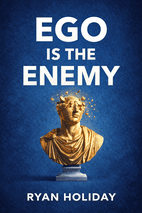
Ryan Holiday's Ego Is the Enemy draws on Stoic philosophy and historical examples to demonstrate how unchecked ego sabotages aspiration, success, and failure. It provides a practical framework for ambitious professionals, leaders, and creatives seeking sustainable achievement through humility and resilience.
Feature
Insta.Page
Blinkist
Shortform
Summary Depth
Full Chapter-by-Chapter
15-min overview
Section-by-section guides
Audio Narration
✓
✓
✓
Visual Mindmaps
✓
✕
✕
AI Q&A
✓
✕
✕
Quizzes
✓
✕
✕
PDF Downloads
✓
✕
✓
Price
$89.99/yr
$146/yr (PRO)
$199/yr
*Competitor data last verified July 2026.
1 Page Summary
Ryan Holiday's Ego Is the Enemy draws on Stoic philosophy and historical examples to argue that ego—defined as an unhealthy belief in our own importance—is the primary internal obstacle to success and fulfillment. The book is structured around three phases of any endeavor: aspiration, success, and failure. In each, Holiday demonstrates how ego sabotages progress: in the aspiration phase, it makes us talk instead of act and learn; during success, it breeds arrogance and fragility, making us defensive and resistant to feedback; and in failure, it prevents the humility required to learn and rebuild. Key concepts include "to be or to do?"—the choice between chasing titles and doing substantive work—and the importance of cultivating purpose over passion, which is fleeting and self-centered.
The historical context is central to the book's argument, as Holiday uses a wide range of figures to illustrate his points. He cites individuals like General George C. Marshall, who repeatedly subordinated his personal ambition for the greater good, and Howard Hughes, whose colossal ego led to his downfall. Other examples include Katharine Graham finding strength in humility while leading The Washington Post, and Ulysses S. Grant's quiet competence contrasted with the posturing of his contemporaries. These stories ground the Stoic principles in tangible reality, showing that the struggle against ego is not a modern invention but a timeless challenge faced by the most impactful and resilient historical actors.
The lasting impact of Ego Is the Enemy lies in its practical, actionable framework for personal and professional development. It has resonated widely in entrepreneurial, athletic, and creative circles by providing an antidote to a culture that often celebrates bluster and self-promotion. The book shifts the focus from managing external obstacles to mastering the internal one, advocating for continuous learning, resilience, and a focus on contribution over credit. By framing humility, self-awareness, and deliberate practice as sources of strength, it offers a sustainable path to achieving and handling success without being destroyed by it.
INTRODUCTION
Overview
This opening section presents a chorus of high-profile praise from accomplished individuals across diverse fields—authors, coaches, athletes, judges, and entrepreneurs—all endorsing Ryan Holiday’s Ego Is the Enemy. Their collective voices establish the book’s central premise before the first official chapter even begins: that ego is a pervasive and destructive force, and that mastering it is fundamental to any meaningful success.
A Consensus of Praise
The endorsements form a powerful, unified front. Each contributor, from Steven Pressfield calling Holiday "one of his generation's finest thinkers" to Brian Koppelman stating he reads any book Holiday publishes "as soon as I can get my hands on it," lends significant credibility. This isn’t vague praise; it’s specific, passionate, and comes from individuals whose own achievements lend weight to their recommendations. They position the book not as a casual read, but as an essential manual.
Ego as the Universal Obstacle
A clear, urgent theme emerges from every quote: ego is the common enemy. Marc Ecko sees its "toxic vanity" wreck creative projects daily. Robert Greene calls it "the greatest obstacle to mastery." U.S. District Judge Frederic Block notes its direct relevance to those in authority. The message is that regardless of your profession—art, sports, business, law—the internal battle against ego is non-negotiable. It’s framed not as a personal failing but as a systemic trap.
The Prescription: Humility and Work
In contrast to the problem of ego, the endorsements consistently highlight the solution the book offers: a return to humility and dedicated work. Austin Kleon summarizes it as a "prescription: humility." Olympic athletes like Shannon Boxx and Chaunté Lowe relate it directly to the unglamorous, pre-fame grind of training. The book is presented as a guide to shifting focus from self-celebration to the work itself, a concept Adam Grant describes as "pursuing something bigger than our own success."
A Practical and Urgent Guide
The contributors stress the book’s actionable nature. It’s described as "inspiring yet practical" (Greene) and full of "stories and quotes that will help you get out of your own way" (Kleon). The tone is urgent; Ecko suggests reading it "as urgently as you do a proper workout regimen," while Dr. Drew evokes the command to St. Augustine: "Pick it up and read." This frames the book as a tool for immediate application, a preventive measure against self-sabotage.
Key Takeaways
Ego is a fundamental threat to success across all endeavors, often masquerading as necessary confidence.
The antidote is a conscious cultivation of humility and a focus on the work itself, rather than on personal recognition.
The book is presented as an essential, practical manual for navigating this internal struggle, filled with historical and philosophical insights.
Its lessons are portrayed as universally applicable, whether one is "starting out or starting over," aiming for mastery, or already in a position of power.
Key concepts: INTRODUCTION
1. INTRODUCTION
Consensus of Praise and Credibility
Endorsements from high-profile individuals across diverse fields establish the book's credibility
Specific, passionate praise positions the book as an essential manual rather than casual reading
Contributors' own achievements lend significant weight to their recommendations
Ego as Universal Obstacle
Ego is identified as a pervasive and destructive force across all professions
Framed not as personal failing but as systemic trap affecting creative projects, mastery, and authority
Common enemy regardless of field—art, sports, business, law
Prescription: Humility and Work
Solution presented as return to humility and dedicated work
Shift focus from self-celebration to the work itself
Pursuing something bigger than personal success as antidote to ego
Practical and Urgent Guide
Book described as inspiring yet practical with actionable insights
Filled with stories and quotes for immediate application
Urgent tone frames it as preventive measure against self-sabotage
Core Premise and Application
Mastering ego is fundamental to meaningful success
Lessons applicable whether starting out, starting over, or in positions of power
Historical and philosophical insights provide framework for internal struggle
💡 Try clicking the AI chat button to ask questions about this book!
PART I: ASPIRE
Overview
This chapter explores the foundational principles necessary for beginning any ambitious endeavor, using the contrasting models of ego-driven haste and reality-based patience. It introduces the ancient wisdom of Isocrates, passed to a young man named Demonicus, and traces its thread through history to find a practical exemplar in the Civil War general William Tecumseh Sherman. The core argument is that the enemy of true, lasting success is not a lack of talent or opportunity, but our own ego—the unchecked belief in ourselves untethered from actual achievement. The path to greatness begins not with self-promotion, but with self-control, realism, and a humble commitment to the long, gradual work of learning.
The Timeless Advice for the Ambitious
Centuries ago, the teacher Isocrates wrote to a young, fatherless protégé named Demonicus, offering “precepts for the years to come.” His counsel was a warning against the dangers of an unbridled ambition. He advised modesty, justice, and self-control as the essential virtues to restrain a young person's character. He warned against the sway of temper, pleasure, and pain, and to be wary of flatterers. Key instructions included being affable but not haughty, being deliberate in planning but prompt in action, and constantly training one’s intellect. This advice, which Shakespeare later immortalized in Polonius’s speech to Laertes in Hamlet, centers on the imperative to be true to oneself as the foundation for being true to others.
William Tecumseh Sherman: A Model of Gradual Ascent
The chapter presents General William Tecumseh Sherman as a living embodiment of Isocrates’ principles. Unlike the archetype of the meteoric genius, Sherman’s rise was slow, deliberate, and marked by a keen sense of self-awareness. Early in the Civil War, when promoted by President Lincoln, Sherman made the astonishing request for assurance that he would not be given supreme command, feeling he was best suited as a number two. His career was not without stumbles; early on, a bout of paranoia and public ranting led to a temporary relief of duty. He learned from this failure. His defining moment came when, senior in rank to Ulysses S. Grant at Fort Donelson, he waived his privilege to cheerfully support and reinforce Grant, prioritizing the team’s victory over personal credit. His famous “March to the Sea” was executed not from reckless ego, but from the realistic confidence earned through years of careful study and an understanding of terrain he had learned in his youth.
The Poison of Modern Ego and the Antidote of Reality
The narrative contrasts Sherman’s model with modern cultural conditioning that promotes validation, entitlement, and being ruled by emotion. The chapter argues that the constant bolstering of self-esteem and the mantra that we can “do anything” often makes us weak, creating a self-belief dependent on nothing but ego. This leads to the “precipitous rises followed by calamitous falls” we so often witness. True strength, as demonstrated by Sherman, comes from a deep connection to reality, a lack of entitlement, and a willingness to contribute to a team even at the cost of personal fame. The ability to honestly evaluate one’s own abilities is framed as the single most important skill for growth, a skill ego actively destroys.
The Aspiring Mindset: Detachment and Diligence
The path forward for the aspirant is laid out as a conscious rejection of ego’s traps. Instead of emotional infatuation with one’s own work or grandiose visions, one must cultivate detachment—the ability to see oneself and one’s work with objective distance. The focus must shift from raw talent, which is merely a starting point, to the rarer qualities of humility, diligence, and self-awareness. Great accomplishments require thinking big but acting and living small, focusing on iterative progress—one foot in front of the other—rather than on status or validation. This mindset prepares one not just for success, but to withstand and be strengthened by it, avoiding the fate of those sunk by their own acclaim.
Key Takeaways
Ego is the enemy at the starting line. An unearned, inflated sense of self-belief jeopardizes long-term success more than a lack of talent does.
Cultivate self-awareness over self-esteem. The critical skill is the ability to honestly self-assess, not to constantly self-praise. Learn from your stumbles.
Prioritize reality over dreams. Base your confidence on actual achievement, study, and a deep understanding of your field, not on fantasy or vision.
Embrace the slow, gradual ascent. Lasting accomplishment is iterative. Be patient, put in the time, and focus on learning rather than glittering rewards.
Choose contribution over credit. Be willing to play a supporting role on a winning team. Deference and teamwork are strengths, not weaknesses.
Practice detachment. See your work and yourself with objective distance to avoid the emotional pitfalls of narcissism and infatuation.
Key concepts: PART I: ASPIRE
2. PART I: ASPIRE
The Timeless Advice for the Ambitious
Ancient wisdom from Isocrates warns against unbridled ambition and ego
Essential virtues include modesty, justice, and self-control to restrain character
Be deliberate in planning but prompt in action, constantly training intellect
Being true to oneself is the foundation for being true to others
William Tecumseh Sherman: A Model of Gradual Ascent
Sherman's rise was slow, deliberate, and marked by keen self-awareness
He prioritized team victory over personal credit, supporting Grant despite seniority
Learned from early failures and paranoia, transforming them into growth
His famous campaigns were executed from realistic confidence earned through study
The Poison of Modern Ego and the Antidote of Reality
Modern culture promotes validation and entitlement, making people weak
Unearned self-belief leads to precipitous rises followed by calamitous falls
True strength comes from connection to reality and lack of entitlement
Honest self-evaluation is the most important skill for growth
The Aspiring Mindset: Detachment and Diligence
Cultivate detachment to see oneself and work with objective distance
Focus on humility, diligence, and self-awareness over raw talent
Think big but act small, focusing on iterative progress
Prepare to withstand success by avoiding emotional infatuation with one's work
Core Principles for Beginning
Ego is the enemy at the starting line - more dangerous than lack of talent
Cultivate self-awareness over self-esteem, learning from stumbles
Base confidence on actual achievement and study, not fantasy
Embrace slow, gradual ascent through patience and learning
Choose contribution over credit, valuing teamwork and deference
Practice detachment to avoid narcissism and emotional pitfalls
TALK, TALK, TALK
Overview
The chapter opens with an ironic quote from Lao Tzu—“Those who speak do not know”—setting the stage for an exploration of how talking about our plans and aspirations often becomes a substitute for the hard work of actually executing them. Through historical anecdotes, modern examples, and psychological insight, it argues that premature verbalization drains the vital energy needed to overcome creative resistance, leaving projects stillborn and ambitions unfulfilled. The real power, it concludes, lies in strategic silence.
The cautionary tale of Upton Sinclair’s 1934 gubernatorial campaign illustrates the core peril. By publishing a book detailing his hypothetical successes as “Governor” before the election, he effectively satisfied his own imaginative need for achievement. The public performance of victory sapped his will to fight for the real thing, resulting in a decisive electoral loss. His talk got fatally ahead of his action.
This temptation is amplified in the digital age. Social media platforms and communication tools present endless blank spaces—text boxes, status updates—that beg to be filled with our aspirations and curated successes. This performative talk is almost universally positive, a branded highlight reel that distances us from the vulnerable, struggling reality of doing difficult work. It caters to the ego, which seeks maximum credit for minimum effort.
The case of writer Emily Gould makes this dynamic personal. Despite having a lucrative book deal, she spent years tumblring, tweeting, and scrolling, justifying it as “brand-building” and a “creative act.” In truth, this chatter was a distraction from the painful, solitary struggle of writing her novel, which stalled completely. She, like many, found it easier to talk about the creative life than to live it.
The Psychology of Depletion
Why is talk so corrosive to action? Philosophically, Kierkegaard warned that gossip and premature expression “weakens action by forestalling it.” Psychologically, research shows that after a point, our minds begin to confuse verbalization and visualization with actual progress. Talking through a problem can actually decrease insight, and explaining our goals gives us a sense of premature accomplishment. When the real work gets tough, we can then abandon it, feeling we’ve already “given it our best try” through discussion.
Talk depletes the same reserves of energy and focus needed to conquer what Steven Pressfield calls the “Resistance”—the internal hurdle to any meaningful creative or professional endeavor. It’s a therapeutic, comforting outlet when we should be sitting with the terrifying “void” of uncertainty and struggle, which is precisely where great work originates.
The Strength of Strategic Silence
In contrast, silence is positioned as a source of strength and flexibility. Historical figures like General Sherman advocated withholding reasons for actions to allow for better ones to emerge. Athlete Bo Jackson kept his towering ambitions secret, sharing them only with his girlfriend. This quiet discipline preserves energy, maintains strategic optionality, and avoids the cheap validation of an audience.
The truly impactful voices of a generation are not the loudest chatterers; they are those who work quietly, turning inner turmoil into concentrated, impactful product. They ignore the lure of preemptive recognition, secure in the knowledge that the only relationship between work and chatter is that one inevitably kills the other. The path forward is to plug the “hole” of the mouth, redirect that vital force inward, and watch the quality of one’s work profoundly improve.
Key Takeaways
Talk Replaces Action: Prematurely discussing your goals or performing your success can satisfy your psychological need for accomplishment, dangerously sapping your motivation to do the real work.
Silence is Strategic: Deliberately withholding your plans conserves energy, maintains flexibility, and protects you from the ego’s need for external validation.
Resist Digital Performance: Social media incentivizes curated talk about effort over authentic, difficult effort itself. This chatter is often a distraction from facing the creative void.
Preserve Your Energy: Doing great work requires battling internal “Resistance.” Talking depletes the very focus and resilience needed to win that battle.
Let Work Earn Talk: Impact comes from concentrated output, not volume of conversation. The ability to work quietly in the corner, indifferent to public limelight, is a formidable competitive advantage.
Key concepts: TALK, TALK, TALK
3. TALK, TALK, TALK
The Peril of Premature Verbalization
Talking about plans can become a substitute for execution, draining energy needed for real work.
Upton Sinclair's campaign illustrates how performing success can satisfy the psychological need for achievement, leading to failure.
The digital age amplifies this with social media encouraging curated performance over vulnerable struggle.
Emily Gould's story shows how 'brand-building' chatter can stall actual creative work like writing a novel.
Psychological Mechanisms of Depletion
Verbalization can confuse the mind into feeling progress has been made, decreasing actual motivation.
Talking depletes the same energy reserves needed to overcome creative 'Resistance'.
It serves as a comforting outlet, distracting from the necessary struggle with uncertainty and the 'void'.
As Kierkegaard noted, gossip and premature expression weaken action by forestalling it.
The Power of Strategic Silence
Silence conserves energy and maintains strategic flexibility, as exemplified by General Sherman.
Keeping ambitions private, like Bo Jackson did, avoids cheap validation and preserves focus.
It allows for better reasons and solutions to emerge without public commitment or ego interference.
Impactful work comes from quiet concentration, not public performance or preemptive recognition.
Practical Implications and Takeaways
Resist the lure of digital performance; prioritize authentic effort over curated talk.
Plug the 'hole' of the mouth to redirect vital force inward, improving work quality.
Let work earn its own talk; output matters more than conversation volume.
Working quietly, indifferent to the limelight, is a formidable competitive advantage.
TO BE OR TO DO?
Overview
This chapter introduces the pivotal life choice framed by the legendary military strategist John Boyd: the decision between cultivating an impressive persona ("to be") versus committing to meaningful action ("to do"). Through Boyd's own unconventional career and his mentorship of rising stars, the narrative explores how ego and systemic incentives constantly pressure us to choose status, recognition, and comfort over integrity, purpose, and genuine contribution.
The Unseen Architect of Modern Warfare
John Boyd was a transformative yet largely unrecognized figure. An unmatched fighter pilot nicknamed "Forty-Second Boyd," his greater impact came as a Pentagon strategist and teacher. He never published books, rose above the rank of colonel, or sought fame. His influence was exerted through direct mentorship and briefings, shaping a generation of military thinkers and the design of aircraft like the F-16. He retired with little wealth, many enemies, and an assumption he'd be forgotten—a path that was both a consequence and a deliberate embodiment of his philosophy.
The Fork in the Road: A Defining Speech
Boyd’s core lesson was delivered as a rite of passage to promising officers. He presented a stark choice: one path leads to being "somebody"—gaining promotion, good assignments, and club membership at the cost of compromise and turning your back on friends. The other path leads to doing something—for your country, your service, and yourself. This path offers integrity and the potential for real difference, but likely at the expense of recognition, promotion, and favor with superiors. "To be or to do?" became the essential question he posed at life's inevitable roll call.
The Corruption of Values by Systems
Boyd illustrated how institutions can subtly corrupt the very virtues they champion. In a powerful exercise, he would write "DUTY, HONOR, COUNTRY" on a board, then cross them out and replace them with "PRIDE, POWER, GREED." This shift represents the ego’s deception, where the systems meant to facilitate good work instead incentivize pretense. Appearances like job titles, authority, or fame become confused with actual accomplishment and worth, leading to "failing upward." The chapter warns that we can easily become corrupted by the very occupations we wish to serve.
Purpose as the Compass
The answer to Boyd's question lies in defining your purpose. If the purpose is self-centered—focused on reputation, inclusion, or ease—the path is clear: follow conventional tracks, seek attention, and chase external validation. However, as Frederick Douglass observed, "A man is worked upon by what he works on." Choosing this path works on you, demanding compromises.
If your purpose is larger than yourself—aimed at genuine accomplishment—the path becomes simultaneously simpler and more arduous. It simplifies by stripping away distracting choices that don't align with the mission; the focus is on the doing, not the recognition. It becomes harder because every opportunity must be rigorously evaluated against strict guidelines: Does this help me accomplish my purpose? Is this choice selfish or selfless?
The Cost and the Reward of Choosing "To Do"
Boyd’s life exemplified the costs of his choice. Known as "Genghis John" for his relentless drive and "the ghetto colonel" for his frugality, he died with uncashed checks he considered bribes and was repeatedly held back from promotion. He was, in a sense, punished by the system for his transformative work. His legacy, however, is a testament to choosing impact over image. The chapter challenges the reader to measure themselves against such standards when feeling entitled or tempted by glittering prizes, urging a constant vigilance at every roll call life presents.
Key Takeaways
Life presents a fundamental choice: the path of being somebody (prioritizing status, recognition, and personal gain) versus the path of doing something (prioritizing integrity, purpose, and genuine contribution).
Ego and systemic incentives constantly pressure us toward "to be," conflating appearances like titles and authority with actual accomplishment.
Defining a purpose larger than yourself provides the compass to navigate this choice, making aligned decisions clearer but requiring rigorous discipline to avoid distraction.
The "do something" path often involves significant personal and professional costs, including lack of recognition, slower advancement, and institutional resistance, but it is the path of lasting impact and self-respect.
The question "To be or to do?" is a constant roll call, requiring conscious decision-making throughout one's career and life.
Key concepts: TO BE OR TO DO?
4. TO BE OR TO DO?
The Unseen Architect of Modern Warfare
John Boyd was a transformative yet largely unrecognized military strategist and teacher.
His influence came through direct mentorship and briefings, not through publications or high rank.
He shaped a generation of military thinkers and aircraft design (e.g., F-16) without seeking fame or wealth.
His career path was a deliberate embodiment of his 'to do' philosophy.
The Fork in the Road: A Defining Choice
Boyd presented a stark life choice: 'To be somebody' vs. 'To do something'.
The 'to be' path offers promotion, recognition, and comfort at the cost of compromise and integrity.
The 'to do' path offers purpose and genuine contribution at the cost of recognition and favor.
This question serves as an essential rite of passage at life's inevitable roll calls.
The Corruption of Values by Systems
Institutions can subtly corrupt the virtues they claim to champion.
Boyd illustrated this by shifting 'DUTY, HONOR, COUNTRY' to 'PRIDE, POWER, GREED'.
Systems often incentivize pretense, confusing appearances (titles, fame) with actual accomplishment.
This leads to 'failing upward' and being corrupted by the very occupations one wishes to serve.
Purpose as the Guiding Compass
The answer to Boyd's question lies in defining your purpose.
A self-centered purpose (reputation, ease) leads to conventional tracks and external validation.
A purpose larger than yourself simplifies decisions by stripping away non-aligned distractions.
It requires rigorous evaluation: 'Does this help accomplish my purpose? Is this selfish or selfless?'
The Cost and Reward of Choosing 'To Do'
Boyd's life exemplified the costs: held back from promotion, frugal living, and institutional enemies.
He was punished by the system for his transformative work, dying with little recognition.
His legacy is a testament to choosing lasting impact over personal image.
The path demands constant vigilance against entitlement and the temptation of glittering prizes.
You've reached the end of the free chapters
Next chapter: “DON’T BE PASSIONATE” is locked
Keep reading Ego Is the Enemy — and unlock all 600+ book summaries with audio, mindmaps and AI Q&A.
$0.00 due today · 7 days free, then $89.99/year ($7.49/mo) · Cancel anytime before day 7
Ryan Holiday is a modern Stoic philosopher and bestselling author known for books like "The Obstacle Is the Way" and "The Daily Stoic," which apply ancient Stoic principles to contemporary life and business. A former marketing director for American Apparel, he is a prominent media strategist and writes extensively on strategy, perception, and resilience.
📚 Explore Our Book Summary Library
Discover more insightful book summaries from our collection