As an Amazon Associate, we earn from qualifying purchases.
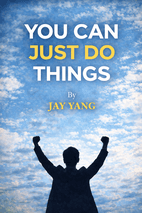
What is the book You Can Just Do Things about?
Jay Yang's You Can Just Do Things dismantles the habit of seeking permission, offering pragmatic strategies to bypass internal and external gatekeepers. It empowers stalled entrepreneurs, creatives, and career-changers to initiate projects and shape their lives through direct action.
Feature
Insta.Page
Blinkist
Shortform
Summary Depth
Full Chapter-by-Chapter
15-min overview
Section-by-section guides
Audio Narration
✓
✓
✓
Full access to all 700+ summaries
✓
✓
✓
Visual Mindmaps
✓
✕
✕
AI Q&A
✓
✕
✕
Missing a book? Request it, usually live within 48h
✓
✕
✕
Quizzes
✓
✕
✕
PDF Downloads
✓
✕
✓
Send to Kindle
✓
✓
✓
Price
$89.99/yr
$146/yr (PRO)
$199/yr
*Competitor data last verified July 2026.
1 Page Summary
In You Can Just Do Things: The Power of Permissionless Action, Jay Yang argues that the single greatest barrier to progress and fulfillment is the ingrained habit of seeking permission—from society, institutions, bosses, or even our own internal critic. The book's central thesis is that we live in a world increasingly designed for "permissionless action," where the tools to create, build, and connect are widely accessible, yet our mental models remain stuck in a gatekept past. Yang posits that by consciously adopting a mindset of agency and bypassing imaginary gatekeepers, individuals can unlock unprecedented personal and professional growth.
Yang’s approach is pragmatic and action-oriented, distinguishing the book from purely theoretical self-help. He blends philosophical reflection with practical strategies, using a combination of personal anecdotes, historical examples of innovators who acted without asking, and clear frameworks for overcoming the "permission reflex." The book is distinctive for its focus on the modern digital landscape, illustrating how platforms and technologies have dismantled traditional barriers, making this an especially potent time to embrace the principle that you don't need a resume, a credential, or an invitation to start meaningful work.
The intended audience is broad, encompassing aspiring entrepreneurs, creatives, career-changers, and anyone feeling stalled by bureaucratic hurdles or self-doubt. Readers will gain a liberating shift in perspective, learning to identify and dismantle internal and external permission structures. Ultimately, Yang provides a toolkit for moving from a mindset of "Can I?" to one of "How will I?", empowering readers to initiate projects, launch ideas, and shape their lives through direct action rather than waiting for validation.
Prologue
Overview
The Prologue opens on a moment of high tension: a teenager hesitates before sending an unsolicited pitch email to the CEO of a company he admires. This single, nerve-wracking act—hitting “send” without any traditional credentials—becomes the catalyst for a profound personal and professional transformation, introducing the core concept of “Permissionless” action.
A Leap Into the Unknown
The author, a 16-year-old high school student with no résumé or formal experience, crafts a detailed pitch to Tyler Denk, the co-founder and CEO of beehiiv. Despite intense self-doubt and fear of being ignored or ridiculed, he sends the email. The gamble pays off spectacularly, resulting in an internship and a fundamental shift in perspective. This experience shatters the illusion that opportunity requires external validation, revealing that many chances are simply waiting to be claimed by those willing to act.
The Limits of the "Well-Marked Path"
Prior to this, the author was the epitome of a traditional “model kid”—a straight-A student and athlete who meticulously followed all the rules. This path, while safe, felt increasingly confining and left little room for independent creation. Discovery of online communities like “Money Twitter,” filled with individuals building businesses on their own terms, ignited a desire for a different kind of life, though the initial path to get there was unclear.
The Experimentation Phase
Driven by this new inspiration, the author embarked on a series of ventures: a YouTube channel, a clothing brand, Instagram pages. None achieved conventional success or virality; they largely failed to reach an audience. Crucially, however, this period is reframed not as wasted time, but as essential experimentation. These “failures” were practical lessons in spotting opportunities, testing ideas, and adapting, building resilience and proving that action itself is the cure for doubt.
Building Momentum
The “Permissionless” approach became a repeatable strategy. A similar unsolicited pitch to entrepreneur Noah Kagan—this time including a detailed deck and fully created content—led to another significant opportunity. This began a snowball effect: by age 18, the author had started a marketing agency, worked with major clients, and grown a large social media audience, all while balancing high school. Life was no longer centered on the classroom but on a personally built venture.
The Foundation and the Philosophy
The author contrasts this journey with his upbringing in a disciplined, respectful Asian household that valued the “well-marked path.” He acknowledges this foundation while arguing that such traditional routes are designed for stability, not speed, and often lead to stagnation. The book is positioned not as a call for recklessness, but a guide for strategically breaking rules to create opportunity. It frames life as a maze where success goes to those who find or create their own entrances, rather than waiting at the main gate.
Key Takeaways
Opportunity is Claimed, Not Granted: You do not need a formal invitation, perfect credentials, or someone’s permission to begin. The most meaningful opportunities are often taken by those who act first.
Action Trumps Doubt: The simple act of taking a shot, even with a high risk of failure, is more valuable than waiting for perfect conditions or certainty.
"Failure" is Experimentation: Early attempts that don’t succeed are not wastes of time. They are essential learning experiments that build critical skills in testing, adaptation, and opportunity recognition.
Traditional Paths Can Limit Speed: Systems built on slow, linear progress promise stability but can cost agility and momentum. Creating your own path allows for accelerated growth.
The Only Permission That Matters is Your Own: The central thesis is that waiting for external validation is a trap. The power to start, contribute, and build begins with your own decision to begin.
Key concepts: Prologue
1. Prologue
The Permissionless Catalyst
Teenager sends unsolicited pitch email to CEO
Act without credentials leads to internship opportunity
Shows opportunity claimed, not granted
Breaking the Traditional Path
Author followed safe, well-marked path initially
Traditional routes felt confining and limiting
Online communities inspired different approach to life
Value of Early Experimentation
Early ventures failed to reach audiences
Reframed as essential learning experiments
Built resilience and opportunity recognition skills
Momentum Through Permissionless Action
Repeatable strategy with unsolicited pitches
Snowball effect led to agency and clients
Life centered on personally built ventures
Core Philosophy and Contrast
Traditional paths designed for stability, not speed
Strategic rule-breaking creates opportunity
Success goes to those who create their own entrances
💡 Try clicking the AI chat button to ask questions about this book!
Introduction
Overview
The introduction confronts a pervasive cultural myth: that we need external validation—from publishers, studios, or gatekeepers—to begin meaningful work. It argues that this ingrained habit of waiting for permission is the single greatest barrier to progress, regardless of one's career stage. The chapter introduces the book's central philosophy of "Permissionless Action," asserting that the tools for creation and sharing are now universally accessible, and the only approval required is your own.
The Tyranny of Waiting
Our lives are structured around a narrative of deferred gratification—work hard, follow rules, wait your turn, and eventual reward will come. This narrative is comforting but often false. The chapter posits that this passive waiting is a trap. True opportunity isn't found at the top of a prescribed ladder; it is created by those who stop waiting for a green light and decide to build their own road.
The Permissionless Pioneers
To illustrate this principle, the chapter presents vivid examples of individuals who achieved greatness not by asking for permission, but by acting:
Taylor Swift: Convinced her family to move to Nashville to pursue country music.
Sam Walton: Built Walmart by borrowing and improving ideas from competitors.
James Dyson: Endured 5,127 failed prototypes to reinvent the vacuum cleaner.
Kobe Bryant: Deconstructed the game of basketball by obsessively studying and "stealing" from past legends.
Jeff Bezos: Left a secure Wall Street career to found Amazon based on a belief others lacked.
Sidney Weinberg: Rose from a janitorial assistant at Goldman Sachs to its CEO.
The point is made clearly: none of these people started with perfect conditions, certainty, or a mandate from an authority. They started with doubt, fear, and a willingness to act despite it.
Redefining Failure
A central reframe addresses the fear of failure head-on. The chapter argues that failure is not the opposite of success but a fundamental part of it. Each example—Walton's early business losses, Dyson's thousands of prototypes, Bryant's missed shots—demonstrates that what separates high achievers is not a lack of failure, but resilience and the capacity to learn and persist. The critical question shifts from "What if I fail?" to "What happens if I never try?"
The Approach, Not a Tactic
This book distinguishes itself from typical self-help manuals. It is not a collection of shortcuts, guaranteed hacks, or a step-by-step playbook for overnight success. Instead, it focuses on the enduring principle of Permissionless Action. Citing Harrington Emerson, it notes that "tactics are many, principles are few." By understanding the core principle, you can develop your own methods. The book promises to bring this principle to life through historical stories, ideas, and challenges.
The Roadmap: Preparation and Creation
The introduction outlines the book's two-part structure, designed to guide the reader from internal groundwork to external action:
Part I: Preparation: The unglamorous, essential work of sharpening focus, building skills, and positioning oneself to spot and seize opportunities. This is the foundation that separates dreamers from doers.
Part II: Creation: The stage of bold moves, where one learns to bypass gatekeepers, stand out, and execute, even amid feelings of unreadiness.
The chapter concludes with a powerful, direct address to the reader: this book is a permission slip, but the authority to use it has always been internally held. The work begins not when someone else says so, but now.
Key Takeaways
The greatest barrier to achievement is not a lack of resources, but the ingrained habit of waiting for external permission.
Permissionless Action is the core principle for creating opportunities in a world that tells you to wait your turn.
Failure is integral to success; high achievers are distinguished by their resilience and willingness to persist through setbacks, not the absence of them.
This book focuses on a timeless principle, not fleeting tactics, empowering you to develop your own methods.
The journey is framed in two phases: the quiet, deliberate Preparation and the bold, external Creation.
Key concepts: Introduction
2. Introduction
The Permissionless Action Principle
Reject waiting for external validation to begin work
Tools for creation are now universally accessible
The only required approval is your own
The Trap of Waiting for Permission
Cultural myth of deferred gratification is a barrier
True opportunity is created, not found on a ladder
Passive waiting prevents progress at any career stage
Examples of Permissionless Pioneers
Taylor Swift, Sam Walton, James Dyson as case studies
All started with doubt and fear, not perfect conditions
Achieved greatness by acting without external mandates
Reframing Failure
Failure is not opposite of success but part of it
High achievers are distinguished by resilience
Critical question shifts from failure to never trying
Book's Approach and Structure
Focuses on enduring principle, not temporary tactics
Part I: Preparation through skill-building and focus
Part II: Creation through bold execution and standing out
1. DON’T BURN THE BOATS
Overview
This chapter dismantles the popular myth of the reckless, all-or-nothing entrepreneur. Instead, it argues that true, sustainable success is built not on blind leaps of faith, but on meticulous preparation and strategic positioning. The core idea is to build a solid foundation and prove your concept before you cut off your safety nets, transforming a potential gamble into a calculated move with a high probability of success.
The Philosophy of Preparedness
The chapter opens with a strategic principle from Sun Tzu, shifting the focus from trying to control external, unpredictable events (like an enemy's actions) to ensuring our own position is unassailable. This ancient wisdom is translated into a modern entrepreneurial and personal context: you cannot predict the future, but you can prepare for its many possibilities. The goal is to build a position of strength where "time becomes your ally," allowing you to capitalize on opportunities as they arise, rather than being a victim of circumstances.
Historical and Modern Blueprints
Real-world examples from iconic founders illustrate this principle in action. Mark Zuckerberg didn't drop out of Harvard the moment he coded Facebook; he waited, built momentum, and left only when the platform had over a million users and proven traction. Similarly, Elon Musk didn't launch Tesla and SpaceX from a position of financial desperation. He first sold his earlier companies, Zip2 and PayPal, using the capital from those successes to fund his ambitious, high-risk ventures. These weren't reckless bets; they were leaps from a secure platform. The chapter extends this thinking to athletes practicing plays, authors validating ideas through blogs, and startups testing concepts with minimum viable products.
Practical Application: Building Your Foundation
The narrative then provides a direct, actionable framework for applying this philosophy. It challenges the destructive "burn the boats" mentality, advocating instead for measured transition. A key tool is the concept of the "freedom number," popularized by entrepreneur Noah Kagan. This is the specific monthly income you need to generate from your side project to comfortably cover your core living expenses. The strategy is clear: don't quit your day job until you hit this number. The empowering message is that your position isn't fixed; every deliberate choice—saving money, learning a skill, building a network—pours concrete into your foundation. This quiet, unsexy work of preparation is what ultimately makes the bold, public leap possible and sustainable.
Key Takeaways
Success is a function of preparation, not prediction. Stop trying to foresee every twist of fate and focus on building a resilient position that can handle multiple futures.
Never make a high-stakes leap from a position of weakness. The most successful "risk-takers" like Zuckerberg and Musk leaped from platforms of proven traction or financial security.
Validate before you escalate. Test your ideas small (through blogs, MVPs, side projects) before committing massive resources.
Define your "freedom number." Calculate the income needed to cover your essentials and use it as a clear, non-negotiable milestone before leaving your primary safety net.
Your foundation is built daily. Every strategic choice you make in private strengthens your position for future public action.
Key concepts: 1. DON’T BURN THE BOATS
3. 1. DON’T BURN THE BOATS
Core Philosophy: Preparedness Over Prediction
Focus on building an unassailable position, not predicting events
Make time your ally through strategic positioning
Transform gambles into calculated moves with high success probability
Historical Blueprints of Strategic Leaps
Zuckerberg left Harvard only after Facebook had proven traction
Musk funded Tesla/SpaceX with capital from previous successful exits
Successful leaps come from secure platforms, not desperation
Practical Framework: The Freedom Number
Calculate monthly income needed to cover living expenses
Don't quit your day job until hitting this number
Use this as a clear, non-negotiable transition milestone
Validation Before Escalation
Test ideas small before committing major resources
Use blogs, MVPs, and side projects for validation
Build momentum and prove concepts before cutting safety nets
Daily Foundation Building
Every strategic choice strengthens your position
Quiet preparation enables bold public action
Your position isn't fixed—it's built through deliberate choices
2. DEFINE YOUR NORTH STAR
Overview
This chapter explores the transformative power of having a clear, compelling vision for your life—your North Star. Through the inspiring story of Arnold Schwarzenegger's relentless pursuit of bodybuilding greatness, it illustrates how clarity of purpose fuels perseverance, drowns out doubt, and turns obsession into achievement. Beyond mere motivation, the chapter provides practical, actionable steps to help you define what you truly want, identify what you must avoid, and embed that vision into your daily life so it guides every decision.
Arnold Schwarzenegger's Relentless Focus
In a small Austrian village, a young Arnold Schwarzenegger trained alone in a dim gym, his workouts a stark contrast to the slow-paced life around him. Driven by a deep-seated belief that there was more to life than average existence, he found his blueprint in bodybuilder Reg Park. Arnold immersed himself completely—studying anatomy, pushing through physical exhaustion, and even biking miles to the gym despite soreness so severe he once fell off his bike. While friends mocked his obsession, his unwavering vision of becoming the world's best bodybuilder propelled him to become the youngest Mr. Universe at age 20, followed by seven Mr. Olympia titles.
The Core Lesson: Clarity Over Motivation
Arnold's success underscores a critical insight: people often struggle not from a lack of motivation, but from a lack of clarity. Knowing exactly what you want—a vivid, specific North Star—creates an internal drive that makes sacrifices meaningful and obstacles surmountable. Without this clarity, efforts become scattered, leading to climbing the wrong mountains or chasing goals that aren't truly your own.
Crafting Your Own North Star
To build this clarity, the chapter outlines a simple yet profound process. Begin by vividly imagining your dream life. Picture your ideal day in detail—your environment, work, relationships, and even small elements like your car or weekend routines. Write it all down without seeking perfection; the goal is to create a first draft to refine.
Next, define your "anti-goals." Reflect on the life you find unbearable, whether it's a stifling job, empty prosperity, or poor health. These negative visions are equally important, acting as guardrails to steer you away from paths that don't align with your true desires.
Finally, make your North Star impossible to ignore. Integrate it into your daily routine through physical reminders: a sticky note on your laptop, a phrase in your journal, or a sentence on your phone's lock screen. Some commit so deeply they tattoo their goals on their skin, ensuring their vision remains a constant, guiding presence.
Embracing the Journey
Arnold's path wasn't linear; he faced ridicule, setbacks, and doubt. Yet, his clear purpose allowed him to persevere, indifferent to others' opinions. Defining your North Star isn't about guaranteeing an easy ride—it's about ensuring that every step you take is in the direction of a life you genuinely want, preventing the regret of reaching summits that never mattered to you.
The chapter concludes with a Permissionless Challenge: to write down your desires in vivid detail, specify what you're determined to avoid, and choose a place to display your North Star, keeping your vision at the forefront of your mind.
Key Takeaways
Clarity is your greatest driver. Knowing exactly what you want transforms effort into purposeful action, overcoming mere motivation.
Use vivid specificity. Define your dream life in concrete details—from daily routines to long-term aspirations—to create a tangible target.
Identify anti-goals. Understanding what you don't want provides crucial boundaries, helping you avoid unfulfilling paths.
Anchor your vision. Make your North Star visible in your daily environment through reminders that keep your focus sharp and consistent.
Purpose silences doubt. With a strong enough vision, external criticism and internal setbacks become manageable, as your focus remains on the goal.
Key concepts: 2. DEFINE YOUR NORTH STAR
4. 2. DEFINE YOUR NORTH STAR
The Power of a North Star
A clear vision fuels perseverance and drowns out doubt
Transforms obsession into meaningful achievement
Provides direction for every decision
Clarity Over Motivation
Lack of clarity, not motivation, causes struggle
A vivid, specific vision makes sacrifices meaningful
Prevents scattered efforts on wrong goals
Crafting Your Vision
Vividly imagine and write your ideal day
Define in concrete, specific details
Create a tangible target to refine
Identifying Anti-Goals
Define the life you find unbearable
Act as crucial guardrails for your path
Steer away from misaligned choices
Anchoring Your Vision
Integrate reminders into daily routine
Use physical prompts like notes or journals
Make your North Star impossible to ignore
You've reached the end of the free chapters
Next chapter: “BE A LEARNING MACHINE” is locked
Keep reading You Can Just Do Things — and unlock all 700+ book summaries with audio, mindmaps and AI Q&A.
$0.00 due today · 7 days free, then $89.99/year ($7.49/mo) · Cancel anytime before day 7
Jay Yang is a contemporary author and cultural critic known for his insightful explorations of modern Asian American identity and diaspora experiences. His notable works include the acclaimed essay collection "The Middle Distance" and the novel "Borrowed Ground," which examine themes of belonging and generational memory. Yang's writing is informed by his background in sociology and his work as a community organizer.
📚 Explore Our Book Summary Library
Discover more insightful book summaries from our collection