Who Is Government? Key Takeaways
by Michael Lewis
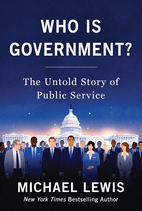
5 Main Takeaways from Who Is Government?
Government workers are unsung heroes solving real problems
From mine safety regulators like Chris to the IRS cyber sleuths and antitrust enforcers, the book reveals how dedicated civil servants apply their expertise to protect lives, fairness, and national security. Their quiet competence often goes unnoticed, yet they directly improve everyday life—preventing disasters, catching crooks, and keeping markets honest.
Innovation needs government oversight, not just technology
Roof bolts saved miners only after federal enforcers gained power; the Starshade's potential is held back by NASA's risk-averse culture. Technology alone fails without a regulatory backbone that compels compliance and dares to take bold, mission-driven leaps. Government can be the catalyst that turns invention into impact.
Public servants choose mission over money—and we depend on it
IRS cyber agents, cemetery directors, and astrophysicists like Nick Siegler all turned down far higher private-sector pay to serve. Their commitment keeps vital systems running, but the book warns that talent drain and student debt are eroding this pipeline, making it harder to recruit the next generation of idealists.
The current political climate threatens institutional knowledge
Hostility toward civil service has forced honorees to avoid the spotlight, and top officials like Dave Lebryk resign rather than betray citizen trust. Mass firings and funding cuts risk crippling agencies and losing decades of expertise—a danger the book documents as an existential threat to democratic governance.
Government work is invisible but essential—we must see it
Whether preserving family records at the History Hub, tracking rare diseases via CURE ID, or enforcing antitrust for fair fighter pay, the book pulls back the curtain on a hidden world. Recognizing this work builds trust in institutions and reminds us that the country we want is still possible—if we support the people who make it run.
Executive Analysis
These five takeaways converge on a single thesis: the federal government is not a faceless bureaucracy but a collection of extraordinary individuals whose daily work is critical, undervalued, and increasingly under threat. Michael Lewis shows that innovation, safety, fairness, and even existential humility depend on civil servants who choose mission over money and who operate best when given enforcement power, modern tools, and respect. The book’s central argument is that we ignore or attack these workers at our own peril, because they are the ones keeping the lights on, saving lives, and preserving democratic ideals.
This book matters because it reframes the debate about government at a moment when trust is low and hostility high. Lewis gives readers a concrete, human-centered lens to see what bureaucrats actually do—from sequencing deadly pathogens to designing starshades—and why their work deserves protection. In the genre of nonfiction that humanizes institutions (like his earlier 'The Fifth Risk'), 'Who Is Government?' stands out as both a celebration and a warning: an urgent, character-driven argument that the people we never see are the ones we can least afford to lose.
Chapter-by-Chapter Key Takeaways
The Canary (Chapter 1)
Roof bolts were revolutionary but only reduced fatalities after federal regulators gained enforcement power—technology alone was not enough.
The Crandall Canyon disaster proved that companies would knowingly ignore safety algorithms; post-disaster, Chris’s office gained mandatory oversight.
Chris’s career was shaped by a deep desire for fairness and a practical allergy to academic narratives that ignored the role of government.
His relationship with his father was complex—professionally parallel but emotionally distant—until they collaborated on saving a cathedral.
Try this: Chapter 1: Push for regulatory enforcement with real teeth after new technologies are introduced—companies will ignore safety algorithms until oversight forces compliance.
The Sentinel (Chapter 2)
Innovative leadership: Walters modernized the NCA with digital memorials (VLM), educational programs (VLP), and a successful apprenticeship for homeless veterans.
Nonpartisan service: He navigated seven administrations by focusing on mission over politics, earning trust across the aisle.
Expanding access: Through data-driven analysis and creative funding, he ensured 94% of veterans live within 75 miles of a national cemetery.
Humility and purpose: He refused a burial honor he didn’t earn, and his quiet dedication inspires others to strive for their own best selves.
Try this: Chapter 2: Modernize an organization by focusing on mission-first, data-driven decisions and creative partnerships, regardless of political turnover, to expand access and inspire loyalty.
The Searchers (Chapter 3)
Nick Siegler’s late-career pivot from chemical engineering to astrophysics underscores that pursuing a dream often requires courage over conventional wisdom.
The Starshade, a giant deployable flower that blocks starlight in space, represents a mechanical counterpoint to the tiny, precise coronagraph—each has distinct advantages and risks.
NASA’s cautious preference for the coronagraph reflects a risk-averse culture, but history shows that bold leaps (like Apollo) sometimes demand accepting uncertainty.
Both Siegler and Bailey emphasize that the real value of this work isn’t just scientific discovery—it’s the inspiration it generates and the existential humility it cultivates.
Try this: Chapter 3: Embrace high-risk, high-reward approaches in your field by championing bold alternatives (like the Starshade) even when established culture prefers safe, incremental choices.
The Number (Chapter 4)
The misery index (unemployment + inflation) has historically predicted incumbent losses when above 10 in an election year, except when declining sharply. The 2024 index was low (7.2), yet public sentiment was sour—a "vibecession" that broke the model.
Americans have forgotten the experience of high inflation. The 1970s-80s period of double-digit inflation made politics "crazy" (Nixon's price controls, Ford's failed WIN campaign). The recent spike—butter up 41%, school lunches 254%—reawakened that memory.
There's a disconnect between falling rate of inflation and still-rising prices. People hear "inflation is down" and think prices are falling, leading to distrust of the CPI.
Politicians and online voices amplify that distrust, calling the CPI a lie or propaganda. The Biden administration's Inflation Reduction Act was misnamed, further eroding credibility.
Food inflation, though a small share of the CPI basket, has an outsized psychological impact because it's encountered daily. A 28% increase over five years stings far more than a one-time insurance hike.
The CPI is an imperfect but necessary tool—an impossible number that must be attempted. Rejecting it entirely means abandoning the Enlightenment ideal of collective, objective knowledge, sliding into a "Darkening" where personal feeling is the only truth.
Try this: Chapter 4: When communicating economic data, acknowledge people's lived experience with prices rather than relying solely on falling inflation rates—the 'vibecession' shows feelings matter as much as facts.
Next chapter: “The Cyber Sleuth” is locked
Keep learning from Who Is Government? — and unlock all 600+ book summaries with audio, mindmaps and AI Q&A.
$0.00 due today · 7 days free, then $89.99/year ($7.49/mo) · Cancel anytime before day 7
plus sales tax where applicable