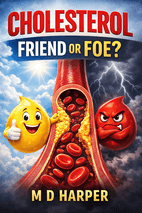
What is the book Cholesterol: Friend or Foe? about?
M.D. Harper's Cholesterol deconstructs the high cholesterol mythology, arguing the vital molecule is not the primary villain in heart disease. It critiques foundational studies and empowers readers questioning standard advice to understand cardiovascular risk more nuance
Feature
Insta.Page
Blinkist
Shortform
Summary Depth
Full Chapter-by-Chapter
15-min overview
Section-by-section guides
Audio Narration
✓
✓
✓
Visual Mindmaps
✓
✕
✕
AI Q&A
✓
✕
✕
Quizzes
✓
✕
✕
PDF Downloads
✓
✕
✓
Price
$89.99/yr
$146/yr (PRO)
$199/yr
*Competitor data last verified July 2026.
1 Page Summary
In "Cholesterol: Friend or Foe?", Dr. Harper challenges the long-standing medical dogma that directly links dietary cholesterol and saturated fat to heart disease. The book meticulously deconstructs what the author terms "high cholesterol mythology," arguing that the widespread fear of cholesterol is based on flawed and selectively interpreted science. Harper presents evidence that cholesterol is a vital molecule essential for hormone production, cell membrane integrity, and brain function, positioning it not as a villain but as a crucial component of human health.
The historical context is central to Harper's thesis, as he revisits foundational studies like the Framingham Heart Study and the work of Ancel Keys. He critiques the lipid hypothesis, suggesting that the correlation between cholesterol and heart disease has been overstated and that influential research ignored confounding factors. The book delves into how pharmaceutical interests and public health guidelines solidified a simplistic narrative, turning a complex biological marker into a primary target for intervention through statins and restrictive diets.
The lasting impact of Harper's work lies in its call for a paradigm shift. By presenting essential facts that contradict conventional wisdom, the book empowers readers to question standard medical advice and advocate for a more nuanced understanding of cardiovascular risk. It emphasizes the importance of inflammation, oxidative stress, and insulin resistance as more significant factors in heart disease than cholesterol alone, urging a move away from fear-based dietary policies toward personalized, evidence-based approaches to health and longevity.
Prologue
Overview
This chapter opens with a provocative medical study that challenges the very foundation of conventional health wisdom. It presents a startling paradox: healthy individuals who fasted for ten days saw dramatic improvements in weight, yet their cholesterol levels spiked to what modern medicine would deem "dangerous." This contradiction serves as the launching point for the book’s central mission—to question and unravel the oversimplified narrative surrounding cholesterol and heart disease.
The Study That Defies Logic
Researchers monitored ten healthy, non-obese adults during a ten-day, water-only fast. While they lost weight as expected, their bloodwork revealed shocking results. Total cholesterol rose by an average of 37.3%, and LDL ("bad") cholesterol skyrocketed by 66.1%. According to standard medical advice, these individuals had just severely increased their risk of heart disease through an act (fasting) historically associated with health and longevity. The chapter frames this as an evolutionary absurdity: why would the human body be designed to increase a presumed death risk precisely when food is scarce?
A Personal Dilemma
The narrative connects this clinical paradox to a common, frustrating real-world experience. You might work hard to lose weight, feel better, and see improvements in blood pressure and energy, only to have a doctor focus solely on a worsened cholesterol panel, potentially recommending medication. This moment of confusion underscores the central conflict: can something that makes you feel subjectively healthier actually be making you sicker? The chapter suggests this disconnect points to a fundamental misunderstanding of cholesterol's role.
A Promise of a New Perspective
The prologue concludes by outlining the book's journey ahead. It promises to move beyond simplistic "cholesterol is bad" dogma and instead explore cholesterol as an essential, complex molecule. Key questions are posed: Is rising cholesterol during weight loss a danger sign or a normal metabolic response? Could it be part of a healing process? The reader is invited to reconsider cholesterol not as a villain, but as a critical component of physiology that requires nuanced understanding, setting the stage for a deep dive into the science that follows.
Key Takeaways
A foundational paradox exists: activities like fasting, which improve many health markers, can cause dramatic spikes in cholesterol, directly contradicting standard medical warnings.
The common patient experience of improved well-being paired with worse cholesterol numbers highlights a troubling gap between conventional medical advice and personal health outcomes.
The evolutionary implausibility of the body increasing heart disease risk during famine suggests our understanding of cholesterol is flawed or incomplete.
This book will argue that cholesterol is not a simple toxin but an essential substance, and that interpreting cholesterol numbers requires a far more complex, holistic view of human health.
Key concepts: Prologue
1. Prologue
The Fasting Paradox
A 10-day water fast in healthy individuals caused dramatic cholesterol spikes despite weight loss
Total cholesterol rose 37.3% and LDL cholesterol increased 66.1% during fasting
Standard medical advice would label this as dangerously increased heart disease risk
Creates an evolutionary absurdity: why would fasting increase presumed death risk?
The Patient-Doctor Disconnect
Common experience: feeling healthier after lifestyle changes but facing concern over worsened cholesterol
Doctors may recommend medication based solely on cholesterol numbers despite other improvements
Highlights conflict between subjective health improvements and objective lab results
Suggests fundamental misunderstanding of cholesterol's role in health
Reconceptualizing Cholesterol
Cholesterol should be viewed as essential and complex rather than simply 'bad'
Questions whether rising cholesterol during weight loss is dangerous or a normal metabolic response
Explores possibility that cholesterol increases may be part of a healing process
Requires moving beyond simplistic 'cholesterol is bad' dogma to nuanced understanding
Book's Mission and Promise
To question and unravel oversimplified narratives about cholesterol and heart disease
Will explore cholesterol as a critical component of human physiology
Promises to provide a more holistic, complex view of cholesterol interpretation
Sets stage for scientific deep dive into cholesterol's true role in health
💡 Try clicking the AI chat button to ask questions about this book!
Introduction
Overview
The chapter opens with the author's own confounding health story: despite an exceptionally healthy lifestyle—no alcohol or smoking, a lean physique, a plant-forward diet, and daily exercise—he has consistently high cholesterol. This personal puzzle, compounded by observing similar patterns in his Eastern European community, challenges conventional wisdom and sparks the central question driving the book: Is high cholesterol always a danger, or could the standard narrative be incomplete or even flawed?
The Limits of Standard Medical Practice
The author critiques the systemic constraints of modern healthcare, where the average 13–16 minute doctor's visit often leads to a simplistic prescription for statins. While not blaming individual physicians, he points out that this model leaves no room for discussing nuances, emerging research, or personalized strategies. It fails to address a patient's deeper, lingering questions about population paradoxes, medication side effects, and the true role of diet.
Unpacking the Scientific Debate
Cholesterol is framed as one of medicine's most heated controversies. The chapter acknowledges the decades-old dogma linking it directly to heart disease but highlights how evolving science has complicated that story. It establishes cholesterol's vital roles in the body—from hormone production to brain function—and introduces key complexities: the weak link between dietary and blood cholesterol, the different types of LDL particles, and the growing understanding that cardiovascular risk involves inflammation and oxidative stress far beyond a single number.
The Book's Purpose and Approach
This section clarifies what the book is not: it is not medical advice, a recommendation to stop medications, or a dismissal of heart disease risks. Instead, it is presented as a guided journey through the evidence, contradictions, and unanswered questions. The goal is to equip readers to think critically, understand the science in accessible terms, and engage in more informed conversations with their doctors, ultimately making personal health decisions with greater clarity.
A Roadmap for the Journey Ahead
The author outlines the path the book will take, promising to explore cholesterol from multiple angles. These include its biological function, the history and politics of cholesterol research, the controversies in the literature, and management strategies that look beyond medication. The approach emphasizes open-minded examination of evidence, acceptance of uncertainty, and a rejection of oversimplification in favor of appreciating human biological complexity.
Key Takeaways
The conventional link between high cholesterol and poor health is being rigorously re-examined by new science, creating significant debate.
Standard medical practice often lacks the time to address the nuances and personal factors involved in cholesterol management, leading to a one-size-fits-all approach.
Cholesterol is a vital molecule for bodily function, and cardiovascular disease is a complex process influenced by many factors beyond cholesterol levels alone.
This book aims to provide the tools for critical thinking and informed discussion, not to offer prescribed medical advice or definitive answers.
Key concepts: Introduction
2. Introduction
Personal Puzzle and Central Question
Author's personal health story contradicts conventional wisdom
Healthy lifestyle with consistently high cholesterol
Observation of similar patterns in Eastern European community
Challenges the standard narrative about cholesterol danger
Critique of Modern Healthcare System
Systemic constraints of short doctor visits
Simplistic prescription approach without nuance discussion
No room for emerging research or personalized strategies
Fails to address patient questions about paradoxes and side effects
Cholesterol Scientific Controversy
One of medicine's most heated debates
Evolving science complicates direct heart disease link
Cholesterol's vital roles in hormone production and brain function
Complexities include weak dietary-blood cholesterol link and LDL particle types
Cardiovascular risk involves inflammation and oxidative stress beyond numbers
Book's Purpose and Methodology
Not medical advice or medication recommendation
Guided journey through evidence and contradictions
Equips readers for critical thinking about science
Enables informed conversations with healthcare providers
Helps make personal health decisions with greater clarity
Comprehensive Exploration Framework
Examines cholesterol from multiple angles
Covers biological function and research history
Explores controversies in scientific literature
Discusses management strategies beyond medication
Emphasizes open-minded examination and acceptance of uncertainty
CHAPTER 1
Overview
This chapter begins by addressing a common scenario: receiving a diagnosis of high cholesterol, typically framed as a dangerous condition requiring immediate dietary restriction and medication. It challenges this conventional view, proposing instead that cholesterol is a fundamentally vital and misunderstood molecule. The narrative aims to shift the reader's perspective by detailing the indispensable roles cholesterol plays in cellular integrity, hormone production, vitamin synthesis, digestion, brain health, and immune function, arguing that it is an essential biological hero rather than a simple villain.
The Misunderstood Molecule: What Is Cholesterol, Really?
The chapter defines cholesterol as a waxy sterol, a type of lipid present in every cell. It emphasizes that cholesterol is not a foreign toxin but a substance the body intentionally manufactures. A key, surprising fact is established: approximately 80% of the cholesterol in your bloodstream is produced internally, primarily by the liver, which synthesizes about 1,000 milligrams daily. Only about 20% comes from dietary sources. This production reality prompts a foundational question: if cholesterol were purely harmful, why would the body dedicate such resources to creating it? The implied answer sets the stage for the chapter’s core thesis—cholesterol is essential for life.
The Cellular Architect
Cholesterol is a fundamental architectural component of cell membranes. It is embedded among phospholipids, where it performs critical regulatory duties. It modulates membrane fluidity, ensuring it is neither too rigid nor too fluid—a "Goldilocks" principle essential for proper cellular function. Cholesterol also provides structural stability, helping cells maintain integrity under stress. Furthermore, it organizes specialized membrane regions called "lipid rafts," which act as communication hubs for cell signaling. Without cholesterol, the integrity and functionality of the trillions of cells in the body would be compromised.
The Master Precursor for Hormones
Cholesterol serves as the crucial raw material for synthesizing vital hormones. It is the precursor for all steroid hormones, including the sex hormones—testosterone, estrogen, and progesterone. These hormones govern reproduction, muscle and bone mass, mood, and cognitive function. Cholesterol is also the building block for adrenal hormones like cortisol, which manages stress response and metabolism, and aldosterone, which regulates electrolyte balance and blood pressure. This section underscores that without cholesterol, the body’s entire hormonal communication system would fail.
The Sunshine Connection
The narrative reveals a direct link between cholesterol and vitamin D synthesis. When ultraviolet sunlight strikes the skin, it interacts with a cholesterol derivative (7-dehydrocholesterol), initiating its conversion into active vitamin D. This "sunshine vitamin" is crucial for calcium absorption and bone health, immune function, inflammation regulation, cell growth, and neuromuscular activity. The chapter notes that low vitamin D levels are linked to numerous health issues, and this process highlights yet another non-negotiable, health-promoting role of cholesterol.
The Digestive Assistant
Cholesterol is a key ingredient in bile, a digestive fluid produced by the liver. Bile emulsifies dietary fats in the intestines, enabling the absorption of fats and fat-soluble vitamins (A, D, E, and K). This system also functions as a regulatory pathway, as excess cholesterol can be converted into bile acids and excreted from the body. This elegant recycling mechanism demonstrates how cholesterol is integrated into the body’s natural balance, actively participating in nutrition and waste management.
The Brain's Best Friend
The brain, making up only 2% of body weight, houses about 25% of the body’s cholesterol, indicating its supreme importance in neurological function. Cholesterol is a major component of myelin sheaths—the insulating layers around nerve cells that enable rapid and efficient signal transmission. It is also vital for forming synapses, the connections between neurons that underpin learning and memory. Notably, brain cells produce their own cholesterol locally due to the blood-brain barrier. The chapter references research suggesting potential links between very low cholesterol and increased risks of depression, anxiety, and cognitive issues, challenging the idea that lower cholesterol is always better.
The Immune Connection
Emerging research positions cholesterol as a contributor to immune defense. It is involved in the function of immune cells via lipid rafts in their membranes, which are essential for proper cell signaling and response to threats. Cholesterol also plays a role in producing inflammatory mediators and helps the body combat bacterial infections; lipoproteins can bind to and neutralize bacterial toxins. The chapter points out that cholesterol levels may temporarily rise during infection as part of the body’s defensive response, a nuance often overlooked in standard cholesterol interpretation.
The Vital Balance: Appreciating Complexity
The chapter concludes by synthesizing cholesterol’s multifaceted roles as a maintainer of cellular integrity, a precursor to hormones and vitamin D, a facilitator of digestion and brain function, and a supporter of immunity. It argues that the oversimplified "cholesterol is bad" narrative is as misleading as describing water solely in terms of floods. A balanced, nuanced understanding acknowledges cholesterol’s essential nature while recognizing that problems can arise when its metabolism or transport becomes dysregulated. This foundational perspective sets the stage for exploring cholesterol management strategies that respect its biological necessity.
Key Takeaways
Cholesterol is not a dietary villain but a biologically essential molecule, with about 80% produced by the body itself.
Its critical functions include maintaining cell membrane structure and fluidity, serving as the building block for sex and stress hormones, and enabling vitamin D synthesis.
Cholesterol is indispensable for digestion (via bile), optimal brain function (myelin and synapse formation), and supporting immune responses.
The "lower is always better" approach to cholesterol may be simplistic and can overlook its vital roles, particularly for brain and neurological health.
A balanced understanding of cholesterol—respecting its necessity while addressing genuine imbalances—is the foundation for intelligent health management.
Key concepts: CHAPTER 1
3. CHAPTER 1
The Misunderstood Molecule: What Is Cholesterol, Really?
Cholesterol is a waxy sterol, a lipid present in every cell, not a foreign toxin.
Approximately 80% of cholesterol is produced internally by the body, primarily by the liver.
Only about 20% of cholesterol comes from dietary sources.
The body's significant internal production suggests cholesterol is essential for life.
The Cellular Architect
Cholesterol is a fundamental architectural component of cell membranes.
It modulates membrane fluidity, ensuring it is neither too rigid nor too fluid.
It provides structural stability, helping cells maintain integrity under stress.
It organizes specialized membrane regions called 'lipid rafts' for cell signaling.
The Master Precursor for Hormones
Cholesterol is the crucial raw material for synthesizing all steroid hormones.
It is the precursor for sex hormones: testosterone, estrogen, and progesterone.
It is the building block for adrenal hormones like cortisol and aldosterone.
Without cholesterol, the body's entire hormonal communication system would fail.
The Sunshine Connection
Cholesterol is directly linked to vitamin D synthesis in the skin via sunlight.
UV light interacts with a cholesterol derivative (7-dehydrocholesterol) to initiate conversion.
Vitamin D is crucial for calcium absorption, bone health, and immune function.
This process highlights a non-negotiable, health-promoting role of cholesterol.
The Digestive Assistant
Cholesterol is a key ingredient in bile, a digestive fluid produced by the liver.
Bile emulsifies dietary fats, enabling absorption of fats and fat-soluble vitamins.
Excess cholesterol can be converted into bile acids and excreted, demonstrating a recycling mechanism.
Cholesterol is integrated into the body's natural balance for nutrition and waste management.
The Brain's Best Friend
The brain houses about 25% of the body's cholesterol, indicating its supreme neurological importance.
Cholesterol is a major component of myelin sheaths, enabling rapid nerve signal transmission.
It is vital for forming synapses, the connections between neurons for learning and memory.
Brain cells produce their own cholesterol locally due to the blood-brain barrier.
The Immune Connection
Cholesterol contributes to immune defense via lipid rafts in immune cell membranes.
It is involved in producing inflammatory mediators and helps combat bacterial infections.
Lipoproteins can bind to and neutralize bacterial toxins.
Cholesterol levels may temporarily rise during infection as part of the body's defensive response.
The Vital Balance: Appreciating Complexity
Cholesterol's roles are multifaceted: cellular integrity, hormone precursor, vitamin D synthesis, digestion, brain function, and immunity.
The oversimplified 'cholesterol is bad' narrative is misleading.
Problems arise when cholesterol metabolism or transport becomes dysregulated, not from cholesterol itself.
A balanced, nuanced understanding acknowledges cholesterol's essential biological necessity.
Cholesterol's Biological Necessity
Cholesterol is primarily produced by the body (about 80%), not just obtained from diet.
It is essential for maintaining cell membrane structure and fluidity.
Serves as the foundational building block for sex hormones (estrogen, testosterone) and stress hormones (cortisol).
Critical Physiological Functions
Enables vitamin D synthesis when skin is exposed to sunlight.
Essential for digestion through the production of bile acids.
Crucial for optimal brain function, including myelin sheath formation and synapse creation.
Reevaluating Cholesterol Management
The 'lower is always better' approach is overly simplistic and potentially harmful.
Adequate cholesterol levels are vital for neurological and brain health.
Health management should balance cholesterol's essential roles with addressing genuine imbalances.
Cholesterol and Immune Function
Plays a supportive role in immune system responses.
Its role in cell membrane integrity is crucial for proper immune cell function.
CHAPTER 2
Overview
This chapter unravels the sophisticated, self-regulating system your body uses to manage cholesterol. It moves beyond the simplistic "good vs. bad" narrative to explain the origins, transportation, and disposal of this vital molecule, emphasizing that your body is a prolific cholesterol producer. The narrative frames cholesterol metabolism as a complex, elegant balancing act involving production, absorption, and elimination, all finely tuned by genetic and environmental factors that make each person's metabolism unique.
The Body's Internal Production System
A key revelation is that nearly every cell in your body can synthesize cholesterol, with the liver producing roughly 80% (about 1,000 mg daily) of what circulates in your blood. This distributed, redundant system underscores cholesterol's essential role and means most blood cholesterol originates internally, not from diet. The multi-step production process is a biochemical marvel centered on a rate-limiting enzyme, HMG-CoA reductase. This enzyme acts as the body's cholesterol thermostat; when cellular cholesterol is high, enzyme production slows, and when it's low, production increases. This elegant feedback loop is the very mechanism targeted by statin medications.
The Limited Role of Dietary Cholesterol
Contrary to long-held beliefs, dietary cholesterol from foods like eggs and shellfish has a minimal impact on blood levels for about 75% of the population. The body's internal feedback system compensates for higher intake by reducing its own production. However, about 25% of people are "hyper-responders" whose blood cholesterol is more sensitive to dietary intake, highlighting the importance of individual variation over blanket dietary rules.
The Lipoprotein Transportation Network
Since cholesterol is waxy and repels water, it cannot travel freely in the bloodstream. It requires specialized carriers called lipoproteins. The chapter details this fleet of molecular taxis:
Chylomicrons: Large particles that transport dietary fats and cholesterol from the intestines after a meal; they are transient and cleared within hours.
VLDL (Very Low-Density Lipoprotein): Produced by the liver to transport triglycerides for energy; as they deliver this cargo, they transform into LDL.
LDL (Low-Density Lipoprotein): The primary carrier of cholesterol to tissues for vital functions. The common label "bad cholesterol" is a misnomer—LDL is a carrier, not cholesterol itself. Issues arise with abnormal quantity, quality, or when small, dense LDL particles become oxidized and penetrate artery walls.
HDL (High-Density Lipoprotein): Often called "good cholesterol," HDL is a lipoprotein responsible for "reverse cholesterol transport," carrying excess cholesterol from tissues back to the liver for recycling or disposal. It also possesses anti-inflammatory properties.
Lp(a): A genetically determined LDL variant linked to increased cardiovascular risk, not measured in standard tests.
Regulation, Elimination, and Individual Balance
The body maintains balance by eliminating cholesterol primarily through bile. The liver converts cholesterol into bile acids for digestion; most are recycled, but a small fraction is excreted in stool, providing a pathway for elimination that can be enhanced by soluble fiber. The entire system—production, absorption, elimination—is influenced by a host of factors including genetics, hormones (like thyroid and estrogen), liver health, insulin resistance, medications, age, and lifestyle.
This intricate interplay explains why universal recommendations often fail. Two people can follow the same diet but have wildly different cholesterol profiles due to their unique metabolic "fingerprint." The chapter concludes by contextualizing standard cholesterol numbers (Total, LDL, HDL, Triglycerides), noting their significant limitations—they measure cholesterol content within lipoproteins but reveal nothing about particle number, size, density, or function, setting the stage for a discussion of advanced testing.
Key Takeaways
Your body is the primary source. Internal production, not dietary intake, accounts for most of the cholesterol in your bloodstream, managed by a smart feedback system.
Transport is everything. Lipoproteins (LDL, HDL, etc.) are essential carriers, not cholesterol itself. Their function, size, and number are as important as the cholesterol they carry.
Balance is tightly regulated. Cholesterol levels are a dynamic balance of production, absorption, and elimination, influenced by genetics, hormones, and metabolic health.
Individual variation is the rule. There is no one-size-fits-all model for cholesterol metabolism or management; personal genetics and physiology dictate responses to diet and medication.
Standard tests are incomplete. Typical lipid panels provide a limited snapshot, missing crucial details about lipoprotein particle characteristics that better define risk.
Key concepts: CHAPTER 2
4. CHAPTER 2
The Body's Cholesterol Production System
Nearly every cell can synthesize cholesterol, with the liver producing ~80% (about 1,000 mg daily) of blood cholesterol
Production is regulated by a feedback loop centered on the enzyme HMG-CoA reductase, which acts as a cholesterol thermostat
This internal production system is the primary source of blood cholesterol, not dietary intake
The feedback mechanism is the target of statin medications
Dietary Cholesterol's Limited Impact
Dietary cholesterol has minimal effect on blood levels for ~75% of the population
The body compensates for higher intake by reducing its own production
About 25% are 'hyper-responders' with blood cholesterol sensitive to dietary intake
Highlights importance of individual variation over blanket dietary rules
Lipoprotein Transportation Network
Cholesterol requires specialized lipoprotein carriers to travel in the bloodstream
LDL is the primary carrier to tissues; 'bad cholesterol' label is misleading as LDL is a carrier, not cholesterol itself
HDL performs 'reverse cholesterol transport' from tissues back to liver and has anti-inflammatory properties
Problems arise with abnormal quantity, quality, or when small, dense LDL particles become oxidized
Lp(a) is a genetically determined LDL variant linked to increased cardiovascular risk
Cholesterol Regulation and Elimination
Balance is maintained primarily through bile elimination - liver converts cholesterol to bile acids
Most bile acids are recycled, but a small fraction is excreted in stool
Soluble fiber can enhance this elimination pathway
Entire system influenced by genetics, hormones, liver health, insulin resistance, medications, age, and lifestyle
Individual Variation in Cholesterol Metabolism
Universal recommendations often fail due to unique metabolic 'fingerprints'
Two people on the same diet can have wildly different cholesterol profiles
No one-size-fits-all model for cholesterol metabolism or management
Personal genetics and physiology dictate responses to diet and medication
Limitations of Standard Cholesterol Testing
Standard tests (Total, LDL, HDL, Triglycerides) measure cholesterol content within lipoproteins
They reveal nothing about particle number, size, density, or function
Provide only a limited snapshot of cholesterol metabolism
Advanced testing needed to better define cardiovascular risk
You've reached the end of the free chapters
Next chapter: “CHAPTER 3” is locked
Keep reading Cholesterol: Friend or Foe? — and unlock all 600+ book summaries with audio, mindmaps and AI Q&A.
$0.00 due today · 7 days free, then $89.99/year ($7.49/mo) · Cancel anytime before day 7
plus sales tax where applicable
If you like this summary, you probably also like these summaries...
M.D. Harper is a pseudonymous author known for crafting gripping psychological thrillers and suspense novels, with notable works including the acclaimed "The Girl in the Water" and "The Silent Patient's Daughter." Their background in forensic psychology informs their expertise in creating complex characters and intricate, unsettling plots.
📚 Explore Our Book Summary Library
Discover more insightful book summaries from our collection