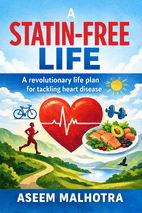
Aseem Malhotra's A Statin-Free Life critiques the widespread prescription of statins, arguing their benefits are overstated and side effects minimized while championing lifestyle medicine for genuine heart health, aimed at patients and practitioners questioning conventional cardiovascular advice.
Feature
Insta.Page
Blinkist
Shortform
A Statin Free Life
✓
✕
✓
Summary Depth
Full Chapter-by-Chapter
15-min overview
Section-by-section guides
Audio Narration
✓
✓
✓
Visual Mindmaps
✓
✕
✕
AI Q&A
✓
✕
✕
Quizzes
✓
✕
✕
PDF Downloads
✓
✕
✓
Price
$89.99/yr
$146/yr (PRO)
$199/yr
*Competitor data last verified July 2026.
1 Page Summary
A Statin-Free Life by cardiologist Dr. Aseem Malhotra is a provocative critique of the widespread prescription of statin drugs for cholesterol management and cardiovascular disease prevention. Malhotra argues that the benefits of statins for primary prevention (in people without established heart disease) have been dramatically overstated by pharmaceutical marketing and flawed interpretations of trial data, while the significant side effects—including muscle pain, increased diabetes risk, and cognitive issues—are often minimized. Central to his thesis is the concept that dietary cholesterol and saturated fat have been wrongly demonized, and that the relentless focus on lowering LDL cholesterol as the primary goal has diverted attention from more critical factors like chronic inflammation, insulin resistance, and overall metabolic health.
The book is grounded in the historical context of how diet-heart hypotheses became entrenched in medical guidelines from the 1970s onward, despite emerging contradictory evidence. Malhotra details how commercial interests have influenced public health policy, creating what he terms a "cholesterol conspiracy" that has misled both doctors and patients. He advocates for a paradigm shift away from a drug-centric model and toward lifestyle medicine, emphasizing the foundational importance of a whole-food, minimally processed diet (with a focus on reducing sugar and refined carbohydrates), stress management, adequate sleep, and physical activity as the most powerful tools for genuine heart health and longevity.
The lasting impact of Malhotra's work lies in its role as a catalyst for public debate and patient empowerment. It encourages individuals to question blanket prescriptions, seek personalized medical advice, and take greater ownership of their health through sustainable lifestyle changes. While controversial within the cardiology establishment, the book has resonated with a growing movement that questions the over-medicalization of chronic disease and champions food and lifestyle as the first line of defense, making it a significant contribution to the discourse on preventive healthcare.
Imprint Page
Overview
The imprint page serves as the formal front matter of the book, establishing its publication credentials, copyright, and critical legal disclaimers. It also acknowledges contributors and provides a complete table of contents, setting the stage for the author's investigative journey into heart disease, cholesterol, and lifestyle medicine.
Publication and Copyright Details
The book was first published in Great Britain in 2021 by Yellow Kite, an imprint of Hodder & Stoughton, which is part of Hachette UK. The copyright is held by Dr. Aseem Malhotra, who has formally asserted his rights as the author under UK law. The page lists the paperback and eBook ISBNs, along with the publisher's full London address.
Important Legal and Health Disclaimer
A prominent disclaimer clarifies that the book is for informational and educational purposes only and is not a substitute for professional medical advice. It strongly advises readers to consult healthcare professionals for diagnosis and treatment, especially if they are currently undergoing care or taking medication. The author and publishers explicitly state they are not liable for any losses incurred from using the book's information, framing it as a resource rather than a prescription.
Acknowledgments and Dedication
The author thanks Antonio Morinelli for contributing Italian-inspired recipes to the book, noting his restaurants in southern Italy and his adherence to Mediterranean diet principles. Malhotra dedicates the book to his patients, who inspire his activism for a healthier society. This personal touch connects the scientific arguments to follow with a sense of mission and real-world experience.
A Preview of the Book's Structure
The contents list outlines a clear progression: beginning with a foreword and introduction, it moves through chapters debunking cholesterol myths, examining statins, and exploring the real causes of heart disease. It then shifts to practical solutions involving diet, exercise, and stress management, culminating in a specific prevention plan and recipe section for breakfast, lunch, dinner, and sides.
Key Takeaways
The book positions itself as a serious work of investigative nonfiction from a established publishing house, with the author taking full responsibility for its content.
The comprehensive health disclaimer is crucial, as it anticipates the potentially controversial nature of the medical advice to follow and places the onus on the reader to consult professionals.
The dedication and acknowledgments reveal the author’s motivation—patient care—and highlight the importance of diet, specifically the Mediterranean model, which is reinforced by the subsequent recipe section.
The table of contents provides a logical roadmap, moving from critiquing established medical narratives to proposing a holistic, lifestyle-based alternative for heart health.
Key concepts: Imprint Page
1. Imprint Page
Publication and Copyright Details
Published by Yellow Kite, an imprint of Hodder & Stoughton (Hachette UK) in 2021.
Copyright held by Dr. Aseem Malhotra, who has asserted his rights as author.
Includes paperback and eBook ISBNs and the publisher's London address.
Legal and Health Disclaimer
Book is for informational/educational purposes, not a substitute for professional medical advice.
Readers strongly advised to consult healthcare professionals for diagnosis and treatment.
Author and publishers disclaim liability for any losses from using the book's information.
Acknowledgments and Dedication
Thanks Antonio Morinelli for contributing Italian-inspired Mediterranean diet recipes.
Dedicated to the author's patients, who inspire his activism for a healthier society.
Connects scientific arguments to real-world experience and personal mission.
Book Structure and Content Roadmap
Begins with foreword and introduction, then critiques cholesterol myths and statins.
Explores real causes of heart disease before shifting to practical lifestyle solutions.
Culminates in a specific prevention plan and recipe section for meals.
Overall Positioning and Purpose
Establishes the book as serious investigative nonfiction from an established publisher.
Anticipates controversial medical advice with comprehensive legal disclaimers.
Provides a logical progression from critiquing established narratives to proposing holistic alternatives.
💡 Try clicking the AI chat button to ask questions about this book!
Foreword
Overview
The Foreword, written by consultant cardiologist Dr. Ross Walker, establishes a central, empowering theme for the book: while our genes set the stage for modern diseases like heart disease, it is our lifestyle and environment that ultimately determine our health outcomes. It critiques the medical establishment's over-reliance on prescription drugs, particularly statins, and passionately advocates for lifestyle modification as the true foundation of preventing cardiovascular disease—the world's leading cause of death.
The Limits of Conventional Medicine
Dr. Walker opens with a stark critique of standard medical practice, which he describes as often being limited to prescriptions and procedures. He uses the common scenario of elevated cholesterol to illustrate this point, noting that a doctor’s typical response is to immediately recommend statin pills or an ineffective short-term dietary change followed by medication. He argues this approach overlooks the root causes of disease and fails patients by not prioritizing substantive lifestyle conversations.
A Critical Look at Statin Therapy
The summary presents a nuanced but highly critical examination of statins. While acknowledging a weak benefit for high-risk patients with existing vascular disease, it emphasizes that evidence for their benefit in people without such a history is "close to non-existent." More strikingly, it contrasts the low side-effect rates reported in clinical trials with the "real world" experience of practicing clinicians, where up to 20% of patients may suffer significant side effects like muscle pain, cognitive issues, and sleep disturbances. Dr. Walker concludes that statin therapy should constitute only a small fraction (about 10%) of a comprehensive health strategy.
The Foundation of Optimum Health
In direct contrast to a pill-focused approach, Dr. Walker outlines five core lifestyle principles that form the bedrock of genuine prevention:
Quitting all addictions.
Cultivating good-quality sleep.
Following sound nutritional habits.
Performing 3 to 5 hours of moderate exercise weekly.
Nurturing peace, happiness, and contentment.
He cites the MORGEN trial from Holland, which demonstrated a dramatic 83% reduction in cardiovascular disease risk for those adhering to these principles, framing this as a far more powerful intervention than medication for the majority of people.
A Call for Patient Advocacy
The chapter concludes by placing responsibility on both doctors and patients for the current overmedicalization. Doctors are incentivized to see patients quickly, and patients often seek a quick fix. Dr. Walker endorses Dr. Aseem Malhotra's book as a corrective to this, challenging the long-held dogma against saturated fat and the overpromotion of statins. He urges readers to become their own greatest health advocates by reading critically, asking their doctors for non-industry evidence, and committing to long-term lifestyle changes for a long and healthy life.
Key Takeaways
Genes vs. Lifestyle: You are not a victim of your genetics; your lifestyle choices are the primary trigger for genetic predispositions to disease.
Critique of Statins: The benefits of statins are vastly overstated for primary prevention (those without existing heart disease), and their significant side effects are commonly underreported.
Lifestyle as Primary Medicine: Adopting the five principles of optimum health—addressing addictions, sleep, nutrition, exercise, and mental well-being—can reduce cardiovascular risk by over 80%, far outweighing the marginal benefits of medication for most.
Systemic Failure: The healthcare system often prioritizes quick, billable interventions (like prescriptions) over time-consuming but vital lifestyle counseling.
Empowerment Through Knowledge: Patients must advocate for themselves by seeking evidence-based information and engaging in informed discussions with their doctors to prioritize sustainable lifestyle changes over quick pharmaceutical fixes.
Key concepts: Foreword
2. Foreword
The Central Thesis: Lifestyle Over Genetics
Genes set the stage for disease, but lifestyle and environment are the primary triggers.
Empowers the reader: health outcomes are determined by choices, not predetermined by genetics.
Establishes lifestyle modification as the true foundation for preventing cardiovascular disease.
Critique of Conventional Medical Practice
Standard practice is limited to prescriptions and procedures, overlooking root causes.
Illustrated by the typical response to elevated cholesterol: immediate statin recommendation.
Fails patients by not prioritizing substantive conversations about lifestyle changes.
Critical Examination of Statin Therapy
Benefits for primary prevention (people without existing heart disease) are close to non-existent.
Contrasts low side-effect rates in trials with real-world experience (up to 20% significant side effects).
Concludes statins should be only a small fraction (~10%) of a comprehensive health strategy.
The Five Pillars of Optimum Health
Quitting all addictions.
Cultivating good-quality sleep.
Following sound nutritional habits.
Performing 3-5 hours of moderate exercise weekly.
Nurturing peace, happiness, and contentment.
Evidence for Lifestyle as Medicine
Cites the MORGEN trial: an 83% reduction in cardiovascular risk from adhering to the five principles.
Frames lifestyle change as a far more powerful intervention than medication for most people.
Posits lifestyle as the primary medicine for genuine prevention.
A Call for Systemic Change & Patient Advocacy
Identifies a systemic failure: healthcare incentivizes quick fixes over lifestyle counseling.
Places shared responsibility on doctors (incentivized for speed) and patients (seeking quick fixes).
Urges readers to become their own health advocates through critical reading and informed doctor-patient dialogue.
Introduction
Overview
The Flawed War on Cholesterol
The chapter opens with a stark declaration: the decades-long global strategy to combat heart disease by lowering cholesterol through diet and drugs has failed. This is despite the widespread prescription of statins, a trillion-dollar industry. The author clarifies that this doesn’t mean cholesterol is irrelevant or that statins are completely ineffective. Rather, our understanding is flawed, the fear of cholesterol is largely unjustified, and the true, modest benefits of statins have been dramatically oversold. This exaggeration occurs alongside significant side effects that degrade quality of life, leading over half of patients to stop taking the medication within a few years.
The Corruption of Evidence-Based Medicine
The path forward begins with a core medical principle: evidence-based medicine (EBM). True EBM combines a clinician's expertise with the best available evidence while respecting patient values. However, the author argues this ideal is corrupted because much of the "best available evidence" is biased by commercial interests, particularly from the pharmaceutical industry. This bias creates an overly optimistic view of drug benefits while minimizing their harms. Furthermore, the process of true informed consent and shared decision-making is often absent, as doctors fail to transparently communicate the actual, often small, benefits versus the risks of treatments like statins. This undermines the fundamental goal of improving patient outcomes.
A System Under Influence
The author suggests we shouldn’t be surprised by this failure. The pharmaceutical industry's primary legal duty is to generate profit for shareholders, not to provide the best treatments. The problem is that the entities meant to protect patients and scientific integrity—doctors, regulators, academic institutions, and medical journals—are themselves under significant financial influence from this industry. Compounding this is the natural evolution of medical science. As one founder of EBM noted, much of medical knowledge becomes outdated quickly. The single-minded focus on cholesterol has, for decades, distracted the medical community from more current evidence and from researching the root lifestyle causes of heart disease.
The Promise of a New Paradigm
The author states the purpose of the book: to educate and empower readers with knowledge about the true origins of heart disease and how to prevent and combat it through feasible lifestyle changes. It also aims to provide a transparent, evidence-based look at statins and their side effects, enabling truly informed personal decisions. The chapter concludes with a call for a new era characterized by more informed doctors, more empowered patients, and better decision-making. By shifting the paradigm away from an outdated cholesterol fixation and toward addressing root causes, the author believes a rapid decline in heart disease is achievable within just a few years.
Key Takeaways
The global campaign to fight heart disease by lowering cholesterol has not succeeded, despite the widespread use of statins.
The benefits of statins have been exaggerated, their harms minimized, and a flawed understanding of cholesterol persists.
Medical evidence is often biased by commercial interests, corrupting the practice of true evidence-based medicine and informed consent.
A narrow focus on cholesterol and drugs has distracted medicine from addressing the root lifestyle causes of heart disease.
This book aims to empower readers with knowledge to make informed choices about statins and to prevent heart disease through lifestyle changes, heralding a needed paradigm shift.
Key concepts: Introduction
3. Introduction
The Flawed War on Cholesterol
The global strategy to combat heart disease by lowering cholesterol has failed despite widespread statin use
The fear of cholesterol is largely unjustified and our understanding of it is flawed
Statins' modest benefits have been dramatically oversold while significant side effects are minimized
Over half of patients stop taking statins within a few years due to quality of life impacts
Corruption of Evidence-Based Medicine
Commercial interests, particularly from pharmaceutical companies, bias medical evidence
This bias creates an overly optimistic view of drug benefits while minimizing harms
True informed consent and shared decision-making are often absent in clinical practice
Doctors frequently fail to transparently communicate small benefits versus risks of treatments
Systemic Influence and Distraction
Pharmaceutical industry's primary duty is profit generation, not optimal patient care
Entities meant to protect patients (doctors, regulators, journals) are under financial influence
Medical knowledge becomes outdated quickly, yet cholesterol focus persists for decades
Narrow cholesterol focus has distracted from researching root lifestyle causes of heart disease
A New Paradigm for Heart Health
The book aims to educate about true origins of heart disease and feasible lifestyle prevention
Provides transparent, evidence-based examination of statins and their side effects
Empowers readers to make truly informed personal decisions about heart health
Calls for shift from cholesterol fixation to addressing root causes for rapid disease decline
1 The great cholesterol con
Overview
Overview
This chapter challenges the long-held belief that cholesterol, specifically LDL-C or "bad cholesterol," is the primary driver of heart disease. It traces the origins of this conviction from the Nobel Prize-winning work of Brown and Goldstein, which led to the development of statins, to the present day where heart disease remains a leading killer. Through the lens of a cardiologist's personal journey and a revealing patient case, the chapter raises critical questions about the true effectiveness of statins, the prevalence of their side effects, and whether our focus on lowering cholesterol has distracted from more holistic approaches to heart health.
The Cholesterol Paradigm and Its Promises
For decades, the medical community has embraced the idea that lowering LDL cholesterol is crucial for preventing heart disease. This belief was solidified by the discoveries of Michael Brown and Joseph Goldstein, who identified cellular receptors that remove cholesterol from the blood. Their work, earning them a Nobel Prize, suggested that individuals lacking these receptors developed high cholesterol and premature heart disease, paving the way for statin drugs. These medications have been hailed as life-saving, prescribed to nearly a billion people globally based on large clinical trials showing they reduce heart attacks and death rates. However, a puzzling contradiction emerges: despite widespread statin use, there has been no convincing reduction in population-level death rates from heart disease. This disconnect prompts a deeper inquiry into cholesterol's role and the real-world impact of statins.
A Personal Path to Cardiology
The author's journey into cardiology began early, fueled by personal loss—his grandfather died from cardiac amyloidosis at 60, and his brother passed away from myocarditis at 13. This inspired a commitment to combating heart disease, leading him to specialize in interventional cardiology, a field focused on diagnosing and treating artery blockages through keyhole procedures. After qualifying from Edinburgh University in 2001, he underwent rigorous training across top hospitals, managing thousands of patients. Throughout this period, the standard practice was to prescribe high-dose statins to virtually every heart disease patient, no questions asked, based on guidelines that emphasized their life-saving benefits and downplayed side effects as rare.
The Revealing Case of Hemant Patel
In 2012, Mr. Hemant Patel, a 48-year-old heart attack survivor, presented with persistent chest pain and severe fatigue despite successful stenting. After ruling out new blockages with an angiogram, the author suspected statin intolerance—a possibility increasingly noted in clinical experience but underrepresented in trial data. Upon stopping the high-dose atorvastatin, Mr. Patel's symptoms vanished within days, restoring his quality of life. This case was a turning point, highlighting the gap between trial-reported side effects (suggesting less than 1% incidence) and the reality seen in practice. It also underscored the tension between patient well-being and the rigid adherence to statin therapy, as his GP warned that stopping the drug could be fatal, a claim the author found overstated.
Rethinking Statins and Heart Health
This experience led the author to question foundational assumptions: How strong is cholesterol as a risk factor? Does aggressively lowering it always help? The chapter suggests that the "lower the better" mantra may be flawed, and that statin benefits might be oversold while side effects are underreported. It argues that the medical obsession with cholesterol has potentially diverted attention from other critical factors in heart disease, such as inflammation, diet, and lifestyle. The author's reflection invites a more nuanced approach, one that balances medication with patient-specific considerations and explores broader strategies for prevention and treatment.
Key Takeaways
Heart disease remains the leading cause of death in the Western world, despite widespread use of cholesterol-lowering statin drugs.
The historical focus on LDL cholesterol as the primary culprit in heart disease is based on influential research, but population-level data does not show a clear reduction in death rates from statin use.
Side effects from statins, such as fatigue and muscle pain, appear to be more common in real-world clinical practice than reported in major clinical trials.
Individual patient cases, like that of Mr. Patel, demonstrate that a one-size-fits-all approach to statin therapy can sometimes cause more harm than good, necessitating personalized medical care.
The chapter calls for a critical reevaluation of the cholesterol hypothesis and encourages a broader perspective on preventing and treating heart disease.
Key concepts: 1 The great cholesterol con
4. 1 The great cholesterol con
The Cholesterol Paradigm: Origins and Contradictions
The belief that lowering LDL cholesterol is crucial for preventing heart disease was solidified by Nobel Prize-winning work on cellular cholesterol receptors.
Statin drugs, developed from this research, are prescribed globally based on trials showing reduced heart attacks and death rates.
A key contradiction exists: widespread statin use has not led to a convincing reduction in population-level death rates from heart disease.
The Author's Medical Journey and Standard Practice
Personal loss from heart-related conditions inspired the author's career in interventional cardiology.
Standard practice during training was to prescribe high-dose statins to virtually every heart disease patient without question.
Guidelines emphasized the life-saving benefits of statins while downplaying side effects as rare.
A Case Study Challenging the Standard Approach
Patient Hemant Patel experienced persistent symptoms (chest pain, fatigue) after a heart attack, despite successful stenting.
Stopping his high-dose statin led to the complete resolution of his symptoms, suggesting statin intolerance.
This case revealed a gap between trial-reported side effects (<1%) and the reality seen in clinical practice, and highlighted tension with rigid guideline adherence.
Critical Questions and a Call for Reevaluation
Questions the strength of cholesterol as a risk factor and the 'lower is better' mantra for LDL.
Suggests statin benefits may be oversold while side effects are underreported.
Argues the focus on cholesterol has diverted attention from other critical factors like inflammation, diet, and lifestyle.
Advocates for a more nuanced, personalized approach to heart health that balances medication with broader strategies.
You've reached the end of the free chapters
Next chapter: “2 What is cholesterol and how is it related to heart disease?” is locked
Keep reading A Statin Free Life — and unlock all 600+ book summaries with audio, mindmaps and AI Q&A.
$0.00 due today · 7 days free, then $89.99/year ($7.49/mo) · Cancel anytime before day 7
Aseem Malhotra is a British-Indian cardiologist and public health campaigner known for his influential work on diet and heart disease. He is a prominent critic of ultra-processed foods and sugar, co-authoring the book "The Pioppi Diet" and frequently contributing to public health debates. His advocacy focuses on promoting whole foods and challenging conventional dietary guidelines.
📚 Explore Our Book Summary Library
Discover more insightful book summaries from our collection