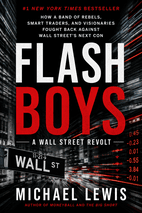
Michael Lewis's Flash Boys reveals how high-frequency traders rigged the U.S. stock market by exploiting speed advantages, following the unlikely team that built IEX to fight back. Written for general readers who want to understand Wall Street's hidden mechanics without financial jargon.
Feature
Insta.Page
Blinkist
Shortform
Summary Depth
Full Chapter-by-Chapter
15-min overview
Section-by-section guides
Audio Narration
✓
✓
✓
Visual Mindmaps
✓
✕
✕
AI Q&A
✓
✕
✕
Quizzes
✓
✕
✕
PDF Downloads
✓
✕
✓
Price
$89.99/yr
$146/yr (PRO)
$199/yr
*Competitor data last verified July 2026.
1 Page Summary
In Flash Boys: A Wall Street Revolt, Michael Lewis exposes how the U.S. stock market became a rigged game dominated by high-frequency traders (HFTs) who exploit speed advantages to front-run ordinary investors. The book’s central thesis is that the market’s physical and digital infrastructure—from fiber-optic cables to exchange data centers—was secretly redesigned to favor those who could trade milliseconds faster, creating a hidden tax on everyone else. Lewis follows an unlikely cast of characters, including Canadian banker Brad Katsuyama, Irish telecom engineer Ronan Ryan, and a secretive rebel named Dan Spivey, who together discovered the manipulation and built a new stock exchange (IEX) to neutralize the predators. The narrative also revisits the puzzling 2009 arrest of Sergey Aleynikov, the Goldman Sachs programmer charged with stealing HFT code, framing his case as a window into Wall Street’s strange new priorities.
Lewis distinguishes this book by making an arcane, technical subject feel like a detective thriller, weaving together engineering details, human drama, and investigative journalism. He starts with Spivey’s quest to build a perfectly straight fiber-optic line between Chicago and New Jersey—shaving three milliseconds off trading times—and then introduces Katsuyama, who first suspected something was wrong when stock orders he sent electronically seemed to vanish before reaching their destination. The author meticulously reconstructs how Katsuyama reverse-engineered the HFT “predators,” how Ryan decoded the hidden geography of speed, and how a tiny army of ex-Wall Streeters, computer scientists, and obsessive engineers came together at IEX. The book’s distinctiveness lies in its ability to explain complex market mechanics through the personal stories of people who felt betrayed by a system they helped build.
The intended audience is the general reader—not just finance professionals—who wants to understand how the stock market actually works and why it feels unfair. Lewis writes for people who have never heard of dark pools, co-location, or tick sizes, translating Wall Street jargon into plain language without sacrificing nuance. Readers will come away with a clear grasp of how HFTs profit by “seeing” orders before they execute, how the legal system struggles to police invisible crimes, and why a handful of determined outsiders believed they could fix a broken system. The epilogue reinforces this sense of moral clarity: the story follows a group of Pennsylvania cycling enthusiasts who unknowingly ride along the buried fiber-optic line that started it all, a physical reminder that the market’s hidden wiring affects everyone, from pension funds to small investors.
Introduction: Windows on the World
Overview
The introduction opens with the strange case of Sergey Aleynikov, the Russian programmer who worked at Goldman Sachs and, after leaving in 2009, was arrested by the FBI for allegedly stealing the firm’s computer code. What makes this incident so peculiar isn’t just the irony—that in the wake of a devastating financial crisis where Goldman played a central role, the only employee charged with a crime was the one who took something from the bank. It’s the government’s argument that the code, in the wrong hands, could be used to “manipulate markets in unfair ways,” which raises an uncomfortable question: if that’s true, are the right hands (Goldman’s) somehow immune to the charge of market manipulation? And more fundamentally, what exactly did Aleynikov do? His job title—“high-frequency trading programmer”—was meaningless to most people in 2009. The search for an explanation leads to a room overlooking the World Trade Center site at One Liberty Plaza, where a small army of unusually knowledgeable ex-Wall Streeters have gathered to declare war on the very system that Aleynikov helped build.
The Crash That Changed Everything
The author reflects on witnessing the 1987 stock market crash from the fortieth floor of One New York Plaza, then home to Salomon Brothers. That day—when the market lost 22.61 percent of its value and no one on Wall Street could explain why—was a turning point. It exposed the unreliability of human traders, who sometimes simply stopped answering their phones to avoid executing sell orders. In response, regulators began rewriting the rules to let computers take over. Over the following decades, this process accelerated until computers entirely replaced the human beings who once dominated trading floors. The old image of color-coded jackets and shouting in trading pits is now a museum piece.
The Black Box Market
Since roughly 2007, U.S. stock trading has moved inside “black boxes” in heavily guarded buildings in New Jersey and Chicago. The ticker tape scrolling across cable news screens captures only a tiny fraction of what actually happens. Public reports of market activity are fuzzy and unreliable—even experts can’t say exactly what occurs inside those boxes, or when, or why. The average investor logging into a brokerage account and clicking “Buy” has no real understanding of what happens next. If they did, they might think twice before pressing that button. The world clings to its outdated mental picture because it’s comforting, because the truth is hard to visualize, and because the few people who can visualize it have no interest in explaining it.
A Window into the New Wall Street
This book aims to draw that picture. It pieces together smaller portraits: of post-crisis Wall Street, of new forms of financial engineering, of computers programmed to behave in ways their creators never would personally, and of people who arrive on Wall Street with one idea of how it works only to discover it works very differently. At the center stands a Canadian whose willingness to throw open a window on American finance still takes the author’s breath away. And there is Aleynikov, blissfully unaware as he flies from Chicago to Newark in July 2009, about to be arrested—unable to see how high the stakes had become in the game he had helped Goldman Sachs play. To grasp the magnitude of those stakes, he needed only to look out his airplane window at the American landscape below.
Key Takeaways
The 1987 crash triggered a decades-long shift from human traders to computerized systems, culminating in a market that operates inside opaque black boxes.
High-frequency trading is poorly understood by the public and even by many professionals; the arrest of Sergey Aleynikov exposed how little outsiders know about Wall Street’s inner workings.
The official narrative—that Aleynikov’s stolen code could “manipulate markets”—casts doubt on the legitimacy of the same practices when used by the banks themselves.
Michael Lewis frames the book as an attempt to create a clear picture of the modern stock market, organized around a central figure who opened a window onto this hidden world.
Key concepts: Introduction: Windows on the World
1. Introduction: Windows on the World
The Aleynikov Case as a Window
Russian programmer arrested for stealing Goldman Sachs code
Irony: only employee charged took something from the bank
Code could 'manipulate markets'—but what about Goldman's use?
Case reveals hidden world of high-frequency trading
The 1987 Crash and the Rise of Computers
Market lost 22.61% with no explanation from humans
Human traders unreliable, sometimes refused to answer phones
Regulators rewrote rules to let computers take over
Trading floors now obsolete, replaced by machines
The Opaque Black Box Market
Stock trading moved to black boxes in New Jersey and Chicago
Public ticker tape shows only a tiny fraction of activity
Even experts cannot explain what happens inside
Average investor has no real understanding of trades
The Book's Mission: Drawing a Clear Picture
Pieces together portraits of post-crisis Wall Street
Focuses on new financial engineering and programmed computers
Centers on a Canadian who opened a window on finance
Aims to reveal hidden stakes in high-frequency trading
Key Takeaways from the Introduction
1987 crash triggered shift from humans to opaque computers
High-frequency trading poorly understood by public and professionals
Aleynikov's arrest casts doubt on banks' own practices
Book creates clear picture of modern stock market
💡 Try clicking the AI chat button to ask questions about this book!
Chapter 1: Hidden in Plain Sight
Overview
By the summer of 2009, a secret army of workers was digging a burrow for a hair-thin glass strand inside a black plastic tube. They were told to say "Just laying fiber" if anyone asked, and to report anybody digging nearby. They tunneled in isolated groups, grateful for a job during a near-depression, never knowing the line's true purpose. The man behind it all was Dan Spivey, a tight-lipped southerner who had seen fortunes made from speed on the Chicago Board Options Exchange. By 2007, trading was constrained only by how fast a signal could travel between Chicago and New Jersey—and he realized existing telecom routes were slower than physically possible. Verizon's "Gold Route" took 14.65 milliseconds, but the speed of light in fiber should allow roughly 12. Spivey studied fiber maps and spotted the problem: the Allegheny Mountains forced everything to zigzag. He drew "the straightest path allowed by law" across Pennsylvania, cutting over a hundred miles off the distance. In late 2008, he found no reason not to do it, so he crossed the line.
Getting the line built meant convincing former Netscape CEO Jim Barksdale to fund an estimated $300 million tunnel, disguised behind shell companies. Construction crews raced across Indiana and Ohio at two to three miles per day, but in western Pennsylvania they hit "blue rock" —hard limestone that slowed progress to a few hundred feet a day. Spivey micromanaged every slight curve, complaining that a right-angle road crossing cost "a hundred nanoseconds." He insisted on diagonals. He constantly feared someone else was already digging a similar line, but what he didn't anticipate was Wall Street's hesitation to buy it. Pricing was a wild guess: a consultant estimated a single bank could make $20 billion a year from the Chicago–New York spread, with about 400 firms competing. Spread Networks offered only 200 seats, settling on $300,000 a month plus $10.6 million for a five-year lease—about $14 million per firm.
The sales campaign began in March 2010, three months before completion, with extreme stealth. Spivey carried a four-foot-by-eight-foot map and finger-walked prospects through the tunnel. Traders were skeptical at first, then awestruck—one shouted, "SHIT, THIS IS COOL!" Others were hostile, realizing they had no choice but to pay up. "We have two hundred shovels for four hundred ditch diggers," Spivey said with pleasure. The big banks reacted with double standards: Citigroup wanted the line rerouted to lower Manhattan, defeating its purpose; Credit Suisse refused to sign a contract prohibiting sharing with brokerage customers, calling it "enabling people to screw their customers"; Morgan Stanley wanted language changed for "optics"; Goldman Sachs signed without complaint. The line was creating a private, exclusive space inside public markets, and the banks wanted in even if they didn't want to look like they did.
Obstacles piled up. Under the Calumet River near Chicago, workers failed six times to tunnel 120 feet before stumbling on a century-old abandoned tunnel. In Alpha, New Jersey, a landowner refused an amp site, fearing a terrorist target. The blue rock was worse than imagined. The Susquehanna River crossing seemed impossible—miles wide, with the only capable drill stuck in Brazil, costing $2 million to rent. At the last minute, bridge authorities allowed them to bore through concrete pylons and run cable under the bridge. That solved the technical problem, but then came the social ones. Leaving the bridge, the road split and dead-ended near a levee in Sunbury, blocked by two parking lots: one owned by Wirerope Works, the other by Weis Markets. Both owners were hostile. The wire rope guy stopped speaking; the Weis chairman rejected a low six-figure offer plus free high-speed internet because the line would pass too close to his ice cream plant. Going around would cost months, millions, and add four microseconds—enough to blow delivery deadlines.
"The whole state has been abused by coal companies," explained construction engineer Steve Williams. "When you say you want to dig, everyone gets suspicious." Then, in July 2010, the line stopped dead beneath the bridge. All that fiber unable to talk to each other. And then, mysteriously, the wire rope people softened. They sold the easement. The day after, Spread Networks issued its first press release: Round-trip travel time from Chicago to New Jersey has been cut to 13 milliseconds. They'd aimed for under 840 miles and beat it—827 miles. Spivey called it "the biggest what-the-fuck moment the industry had had in some time." Even then, no one truly knew how the line would be used. The biggest question—Why?—remained unanswered. All they knew was that Wall Street wanted it badly, and wanted to keep it exclusive. In one early meeting, a firm's boss asked the price, left to think, then returned with one question: "Can you double the price?"
Key Takeaways
The Susquehanna crossing was solved only by last-minute permission to use bridge pylons, avoiding a $2 million drill stuck in Brazil.
Community mistrust of digging (from coal company abuses) and personal hostility nearly derailed the project; the wire rope factory's sudden change of heart saved it.
The final line ran 827 miles, beating the 840-mile target, achieving 13 milliseconds round-trip—a record that stunned the industry.
Wall Street's appetite for the line was so intense that one firm asked to pay double the asking price, revealing its true value lay beyond mere speed.
Key concepts: Chapter 1: Hidden in Plain Sight
2. Chapter 1: Hidden in Plain Sight
The Straightest Path
Dan Spivey identified fiber route inefficiency
Allegheny Mountains forced zigzag paths
Proposed straight line across Pennsylvania
Cut over 100 miles off existing routes
Building the Secret Line
Disguised as shell companies, cost $300 million
Crews told to say 'just laying fiber'
Blue rock slowed progress drastically
Spivey micromanaged curves for nanoseconds
Wall Street's Dilemma
Traders awestruck but hostile to exclusivity
Banks showed double standards in negotiations
Goldman Sachs signed without complaint
One firm asked to double the price
Overcoming Obstacles
Calumet River required six tunneling attempts
Susquehanna crossing used bridge pylons
Wirerope Works suddenly sold easement
Community mistrust from coal company abuses
The 13-Millisecond Record
Final route ran 827 miles, beating target
Round-trip time cut to 13 milliseconds
Industry stunned by the achievement
True purpose remained unanswered
Chapter 2: Brad’s Problem
Overview
Brad Katsuyama arrived at the Royal Bank of Canada’s New York trading floor in 2002, part of a quiet expansion effort by a bank that was stable, virtuous, and almost entirely invisible on Wall Street. The culture shock was immediate—Americans lived beyond their means, and even the homeless ignored his leftover catering. He left a diversity meeting after saying the only time he felt like a minority was in that room, a characteristic resistance to being separated from any group. He didn't plan a career; he just landed on the trading floor, felt at home in the locker‑room energy, and was good at it.
By 2006 he was running equity trading, known internally as “RBC nice” and seen as the golden child destined to run the bank. Then his bosses panicked and bought Carlin Financial, a U.S. electronic trading firm whose CEO walked around with a baseball bat, hired traders with rap sheets, and organized Christmas parties with half‑naked cigar girls. The merger grafted a bucket shop onto a mild‑mannered Canadian bank, and soon after, Brad’s trading screens started lying. Offers that should have been solid vanished the moment he moved. In June 2007 a big trade in Solectron cost him a small fortune—it seemed the market knew what he was about to do before he did it.
He called tech support, then product people, then the developers—the Golden Goose from Carlin, a reclusive team of Indian and Chinese coders. He made them stand behind him and watch: he pointed at an offer on the screen, counted to five—nothing—then hit Enter, and the stock jumped. “I’m the event,” he told them. They promised to investigate and never returned. By the end of 2007 the difference between what should have happened and what actually happened was tens of millions in losses and fees. His bosses told him to figure out how to reduce trading costs.
Brad had taken exchanges for granted. After 2005, when the SEC forced them to become for‑profit companies, there were thirteen different exchanges, most in New Jersey, every stock trading on all of them, with no humans involved. The banks now sold algorithms, not stocks. Worse, a “maker‑taker” fee system was so complex that even professionals gave up. Brad assumed flat fees and thought he was clever directing orders to BATS, which paid takers. It was a total disaster.
He realized his problem wasn’t unique when a visit to SAC Capital confirmed their traders saw the same phantom market. The markets were rigged. To understand why, he needed a translator from computer language to human language. He found Rob Park, a legendary programmer at RBC. Together they built a scrappy team—Billy Zhao, John Schwall, Dan Aisen, and Allen Zhang, the lone gem from the Golden Goose—and convinced RBC to let them conduct science experiments, losing up to $10,000 a day. The question: why did the market vanish when he tried to buy? Rob discovered it wasn’t just an exchange’s matching engine; phantom orders didn’t exist. The illusion appeared only when orders went to multiple exchanges at once. Then came the shower epiphany: what if the problem wasn’t speed but simultaneity? The bar chart of travel times showed BATS in Weehawken was fastest, Carteret slowest. Allen built a program that deliberately slowed orders to faster exchanges so all arrived together. It worked. The screens lit up green for the first time.
The discovery carried a heavy implication: someone was exploiting time differences to front‑run orders. Brad took six seconds to decide. He chose not to play the same game. He would go on an educational campaign. He’d been living with the problem for nearly three years. “There’s no way I’m the first guy to have figured this out,” he thought. Along with the insight came a tool—the program that built delays into orders. They tested it on RBC’s own traders, who shouted, “OOOOOOO!” and “Holy shit, you can buy stock!” They named it Thor. It became a verb: “Thor it!”
Brad and Rob took Thor on the road. First stop: Mike Gitlin of T. Rowe Price, who already sensed that the market knew what you were going to do and moved against you. Brad laid out a detailed picture of screwed‑up incentives. Brokers got paid for sending orders to some exchanges and billed for sending them to others. Payment for order flow meant every online broker was auctioning off customers’ orders to high‑frequency trading firms like Citadel. Thor provided the first gauge of the invisible tax: a test on 10 million shares of Citigroup saved $29,000—less than a tenth of a percent. Scaled to the $225 billion daily volume, that was over $160 million a day. So insidious you couldn’t see it, happening at a granular level people couldn’t imagine.
The discovery also forced Brad to confront the market that no longer existed. The ticker tape on TV represented only a tiny fraction of trading; experts reported from an empty NYSE floor. To understand a stock like IBM, you’d need printouts from twelve other exchanges scattered across New Jersey plus dark pools—and there was no reliable printout. Only a yellowing photograph of a dead market. Brad knew front‑running was happening; he just didn’t know how. High‑frequency traders were the suspects.
Inside RBC, senior managers argued for a different path: create a Canadian dark pool and sell HFT firms access to it. Brad argued the only card left was honesty—launch a public information campaign and offer Thor as a defense. But he needed verification from inside the HFT world. He spent months cold‑calling, trying to find a disaffected strategist who could explain exactly how the money was made. Everyone who understood was making too much to talk. He needed another way in.
Key Takeaways
Brad confirmed his problem was systemic, shared by hedge funds like SAC Capital.
He built a team not from resumes but from people who truly understood the technology.
The key insight: orders arrived at exchanges at different times, allowing front-running.
Deliberately slowing orders to synchronize arrival times eliminated the illusion.
Brad chose to expose the market’s rigging rather than exploit it for profit.
Thor was more than a tool; it became a verb and a powerful diagnostic, revealing a hidden tax on every stock trade.
Payment for order flow and other perverse incentives had turned brokers into gatekeepers who profited by selling investor order flow to HFTs.
The invisible tax, though tiny per share, added up to over $160 million a day across the U.S. stock market.
Brad’s discovery forced a choice at RBC: join the HFT game or expose it—and honesty was the risky, lonely card.
Without an insider from the HFT world, Brad could only prove that something was broken, not exactly how.
Key concepts: Chapter 2: Brad’s Problem
3. Chapter 2: Brad’s Problem
Brad's Arrival and Culture Shock
Joined RBC's NY trading floor in 2002
Felt at home in locker-room energy
Known as 'RBC nice' and golden child
The Carlin Financial Merger
RBC bought Carlin, a bucket shop
CEO used baseball bat, hired criminals
After merger, Brad's trading screens lied
The Phantom Market Problem
Offers vanished when he tried to buy
June 2007 Solectron trade cost fortune
He was the event causing stock jumps
Building the Team and Discovery
Found programmer Rob Park as translator
Team included Billy, John, Dan, Allen
Discovered problem was simultaneity, not speed
Thor: The Solution
Delayed orders to faster exchanges
All orders arrived together, screens lit green
Named Thor, became a verb
The Invisible Tax
Test on Citigroup saved $29,000
Scaled to $160 million daily tax
Payment for order flow auctioned orders
Confronting the Rigged Market
Front-running exploited time differences
Brad chose education over playing game
Struggled to find HFT insider to explain
Chapter 3: Ronan’s Problem
Overview
Ronan didn’t look like a Wall Street trader—pale, stooped, bracing for the next famine—but he was desperate to belong. Born in Dublin, he moved to America at sixteen, saw how the other half lived in Greenwich, Connecticut, and fell in love. After college, no connections meant no finance job; he ended up at MCI, delivering pagers from a repair truck, learning telecom from the ground up. He discovered that telecom salespeople were often “more knowing than knowledgeable,” paid better than problem-solvers, so he switched into sales and climbed to Qwest and Level 3. By 2005 he was inside Goldman and Lehman, but always as a “boxes and lines guy”—the class divide was stark.
Then BT Radianz called. After 9/11, they built a secure data center in Nutley, New Jersey, and Ronan sold co-location to banks. A hedge fund in Kansas City had orders taking 43 milliseconds; Ronan moved their servers to Nutley and slashed latency to 3.8. Suddenly traders cared which rack they were in, how close to the exit pipe, even the type of glass in the fiber. Ronan watched the arms race escalate: servers wrapped in wire gauze to hide blinking lights, Toys “R” Us logos left on cages so rivals wouldn’t know they’d moved closer to the matching engine. He felt like a getaway driver—“Drive faster! Get rid of the airbags!”—but had no idea what the firms were actually doing. He knew Citadel and Getco were the smartest, big banks slow, and prop shops five geeks led by an arrogant version of that geek. By 2008, helping HFT firms exploit fragmented foreign exchanges, he made $486,000 but felt like Willy Loman. On New Year’s Eve in a Liverpool pub, he thought, “It’s never going to get any better.”
Then, in September 2009, Royal Bank of Canada called. Ronan was wary—“If you’re offering a tech job, I have no fucking interest.” The caller, Brad Katsuyama, insisted it was a finance job. Brad had spent a year studying HFT, and after an hour with Ronan learned more than six months of reading: the nanosecond competition, the wire gauze, the war for space. He offered Ronan a job as “High-Frequency Trading Strategist” at $125,000—a third of what Ronan made. Ronan took it without hesitation, even though he had no idea what he’d actually do. Brad began teaching him trading basics—“bid,” “offer,” “crossing the spread”—while Ronan taught Brad about technology. Their collaboration revealed a deeper problem: Thor, their tool for simultaneous signals, was inconsistent. Travel times to exchanges varied wildly because they had no control over the fiber paths.
Ronan brought in proprietary maps of New Jersey’s fiber networks, obtained by bluntly telling telecoms to “proprietarily fuck off.” The maps showed a twisted geography: signals from lower Manhattan to the NYSE might go through Brooklyn, while BATS in Weehawken was closest. That explained why Thor worked perfectly on BATS—it was where HFT firms parked tiny 100-share orders to glean information. Ronan had noticed HFT firms creating latency tables that measured how long orders from each brokerage took to reach each exchange. Brad realized these let HFTs identify which broker was behind an order, then pattern that broker’s behavior—whether a 1,000-share order was a whole block or part of one. This idiocy was encouraged by exchange kickbacks: brokers routed orders to exchanges that paid them, even if that meant buying 100 shares on BATS while a 100,000-share block vanished into HFT hands. The customer never knew.
Brad and Ronan designed their own fiber network and turned Thor into a sellable product. Brad gave Ronan a new title: Head of Electronic Trading Strategy. Ronan started walking into meetings with no preparation, just plain talk: “Don’t you understand you’re being fucked?!” One hedge fund president with $9 billion under management already knew he had a $300 million problem. After Brad and Ronan explained how brokers were auctioning off the informational value of his trades, he opened his personal account, entered a ticker, and the price jumped before he clicked Execute. The trade was executed by Citadel. Ronan was stunned by how insecure investors were—they rarely admitted ignorance, gasping when he explained co-location. He also found it baffling that they paid big banks who screwed them while only giving RBC a sliver of business. Over the next year, they met roughly five hundred professional investors controlling trillions, never using PowerPoint, just telling the truth. Even the most sophisticated—Fidelity, T. Rowe Price, David Einhorn, Dan Loeb, Bill Ackman—had no idea.
Then came the flash crash of May 6, 2010. The market plunged 600 points in minutes; Accenture traded for a penny, HP for over $100,000. The SEC blamed a single mistaken futures order. Brad searched the report for time units: eighty-seven mentions of “minute,” zero of “microsecond.” Regulators operated with a clock irrelevant to the market’s speed. After the flash crash, investors whose bosses were asking questions finally listened. Then in September 2010, tiny exchange CBSX inverted its fee structure—paying people to take liquidity, charging to make it. Volume exploded. Brad was confused until Ronan revealed the secret he’d held under a non-disclosure agreement: Spread Networks had just finished burying a fiber line between Chicago and New Jersey, flipping the switch two weeks earlier. The CBSX inversion paired perfectly: brokers sent customer orders to CBSX to collect rebates, then HFT firms using Spread Networks raced that order information back to New Jersey, front-running Chicago-based investors. When banks like Goldman and Morgan Stanley bought into Spread Networks, it became systemic.
Brad and Ronan’s roadshow became a litmus test. About 5% of investors didn’t want to hear it—often those feeding on HFT revenue. Another 5% were paralyzed with fear. But the 90% in between reacted like Mike Gitlin of T. Rowe Price: outrage mixed with betrayal. Brad became “the honest broker,” the only person on Wall Street saying the system was rigged. Trust earned him access to confidential data from the world’s largest investors. They shared where their trades actually got executed, revealing that dark pools run by Goldman, Credit Suisse, and others were executing nearly half of a customer’s orders, even though they represented less than 2% of all trading. Brokers stealthily matched orders inside their own pools, often against traders at the same firm. Without transparency, even T. Rowe Price couldn’t prove the conflict. As Gitlin said, if a firm that size couldn’t see what was happening, the small investor had no chance.
After only six months of Thor, RBC jumped from 19th to 1st in Greenwich Associates’ electronic trading rankings—a leap so unprecedented the firm called to ask what was happening. Brad never saw himself as a crusader, but he realized he was one of only a handful of people who could expose the rot. He kept talking, kept educating, hoping outrage could force change. One night he told his wife, “It feels like I’m an expert in something that badly needs to be changed. If I don’t do something right now—me, Brad Katsuyama—there’s no one to call.”
Key Takeaways
The CBSX pricing inversion, combined with Spread Networks’ new fiber line, created a pipeline for HFT firms to front-run Chicago-based orders in New Jersey—revealing a system-wide problem, not just a few rogue firms.
Most big investors were outraged once they understood the rigging; fear and ignorance had kept them silent. Brad’s willingness to tell the truth became his strongest selling point.
Dark pools allowed brokers to internalize customer orders at suspiciously high rates, with no requirement to disclose execution details—leaving even the largest clients in the dark.
RBC’s meteoric rise from 19th to 1st in just six months proved that transparency and integrity could win trust (and market share) in a broken market.
Brad’s reluctant sense of mission grew from the realization that he was one of the few people capable of exposing the system—and that inaction wasn’t an option.
Key concepts: Chapter 3: Ronan’s Problem
4. Chapter 3: Ronan’s Problem
Ronan's Background and Desperation
Irish immigrant desperate to belong on Wall Street
Started in telecom sales, not finance
Felt like a 'boxes and lines guy' at Goldman/Lehman
Made $486K but felt like Willy Loman
HFT Arms Race Discovery
Ronan slashed latency from 43ms to 3.8ms
Traders fought over rack proximity and fiber glass
Cages disguised with Toys 'R' Us logos
Ronan felt like a getaway driver for unknown firms
Brad Katsuyama's Offer
RBC called in September 2009
Brad learned more in one hour than six months reading
Job offered at $125K, a third of Ronan's pay
Ronan accepted without knowing his role
Thor's Inconsistency Problem
Thor tool gave inconsistent signals across exchanges
Fiber maps showed twisted geography in New Jersey
Signals from Manhattan to NYSE went through Brooklyn
BATS worked perfectly because HFTs parked orders there
Broker Auctioning and HFT Front-Running
HFTs created latency tables to identify brokers
Brokers routed orders to exchanges paying kickbacks
100-share orders on BATS while blocks vanished
Customers never knew their trades were exploited
Investor Ignorance and Truth-Telling
Ronan bluntly told investors they were being screwed
Hedge fund president saw price jump before clicking
Investors gasped at co-location explanations
Met 500 professionals controlling trillions without PowerPoint
Flash Crash and Spread Networks
Market plunged 600 points in minutes
SEC report mentioned 'minute' 87 times, never 'microsecond'
Spread Networks fiber line enabled systemic front-running
CBSX inversion paired with Spread Networks for exploitation
You've reached the end of the free chapters
Next chapter: “Putting a Face on HFT” is locked
Keep reading Flash Boys — and unlock all 600+ book summaries with audio, mindmaps and AI Q&A.
$0.00 due today · 7 days free, then $89.99/year ($7.49/mo) · Cancel anytime before day 7
Michael Lewis is an American author and financial journalist known for his ability to explain complex economic concepts through compelling narratives. His notable works include *Moneyball*, *The Big Short*, and *Liar's Poker*, each of which has been adapted into a successful film. A former bond salesman at Salomon Brothers, Lewis graduated from Princeton University and the London School of Economics.
Frequently Asked Questions about Flash Boys
What is Flash Boys about?
Flash Boys is a comprehensive guide that explores key concepts and practical insights. The book provides readers with actionable strategies and frameworks. It has become a must-read in its field.
Who is the author of Flash Boys?
Flash Boys is written by Michael Lewis, a renowned expert and thought leader in their field.
Is Flash Boys worth reading?
Yes, Flash Boys is definitely worth reading. It offers valuable insights and practical takeaways that can be applied immediately. Many readers have found it transformative.
What are the key lessons from Flash Boys?
The key lessons from Flash Boys include understanding fundamental principles, applying practical strategies, and developing new mindsets for success.
📚 Explore Our Book Summary Library
Discover more insightful book summaries from our collection