As an Amazon Associate, we earn from qualifying purchases.
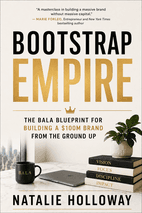
What is the book Bootstrap Empire about?
Natalie Holloway's Bootstrap Empire presents a counterintuitive blueprint for building a business without outside funding, teaching aspiring entrepreneurs how to turn constraints into competitive advantages through practical steps like launching first, refining later, and staying customer-obsessed. Written for those lacking venture capital connections who want sustainable success without selling their soul.
Feature
Insta.Page
Blinkist
Shortform
Summary Depth
Full Chapter-by-Chapter
15-min overview
Section-by-section guides
Audio Narration
✓
✓
✓
Full access to all 700+ summaries
✓
✓
✓
Visual Mindmaps
✓
✕
✕
AI Q&A
✓
✕
✕
Missing a book? Request it, usually live within 48h
✓
✕
✕
Quizzes
✓
✕
✕
PDF Downloads
✓
✕
✓
Send to Kindle
✓
✓
✓
Price
$89.99/yr
$146/yr (PRO)
$199/yr
*Competitor data last verified July 2026.
1 Page Summary
In Bootstrap Empire, Natalie Holloway presents a counterintuitive blueprint for entrepreneurship: that building a business without outside funding is not a limitation, but a competitive advantage. The book's central thesis, illustrated through the story of the founders' journey from a disappointing yoga class to selling two million pairs of Bala weights, is that bootstrapping forces founders to master every role, remain obsessively close to their customers, and treat every mistake as inexpensive tuition. This scrappy mindset—taught through years at an advertising agency and a life-changing shoestring trip to Tokyo—is framed not as a temporary hardship, but as the true foundation for sustainable success, making founders better delegators, problem-solvers, and stewards of a dollar.
Holloway's approach is distinctively practical and unromantic, offering a non-linear, messy blueprint for building from scratch. She distills the process into actionable steps, beginning with the imperative to "just start" and a problem-solving mindset, followed by eight essential launch categories covering research, legal, finance, branding, and operations. The guiding mantra is "launch first, refine later," with a heavy emphasis on bootstrapping-driven creativity: keeping a day job, negotiating everything, using free marketing channels, and avoiding premature hiring and shiny object syndrome. The book also tackles scaling without selling out by grounding decisions in financial clarity—breaking down EBITDA, CAC versus LTV, and pricing rules—while insisting that brand identity comes from the inside out, creating a feeling that is unmistakably yours.
The intended audience is the aspiring entrepreneur who lacks venture capital connections or is skeptical of the funded-startup narrative. Readers will gain a pragmatic, no-nonsense framework for turning a frustration or daily annoyance into a viable business, learning how to stay lean, customer-obsessed, and creatively resourceful through every stage of growth. Holloway's distinctive contribution is her insistence that the constraints of bootstrapping are not obstacles to overcome but the very curriculum that builds the resilience, financial literacy, and brand clarity needed to build an empire without selling your soul.
PART I: The Bootstrapper's Mindset
Overview
The story of Bala begins in Indonesia, where a disappointing yoga class sparked a conversation about reinventing wrist weights. That napkin sketch eventually sold over two million pairs, but the real foundation was laid years earlier at an advertising agency, where the founders learned to be scrappy, iterate endlessly, and build the toolkit for bootstrapping a business. The turning point came when a joke about quitting and traveling became real: they sold everything, bought one-way tickets to Tokyo, and duct-taped together a trip on a shoestring budget. That freedom gave them the headspace to dream, and the disappointing yoga class gave them the product idea.
Bootstrapping taught them lessons that funding never could. It forced them to know every role in the business—from steel manufacturing to influencer marketing—making them better delegators and problem solvers. It made them obsessed with their customer; for years, the founders read every DM and email, catching problems like damaged packaging before they became disasters. Starting small meant mistakes were inexpensive tuition—an early Kickstarter that wrongly positioned Bala as a "yoga weight" was quietly pivoted to "weights" for any activity, and nobody noticed. Understanding the value of a dollar became second nature when every cent had to earn its keep, catching a costly Amazon dimension error that would have bled profit. Bootstrapping also forced speed over perfectionism, letting them pivot from Sanskrit names to a lifestyle brand while only 100 customers were watching. And most importantly, it let them maintain ownership—raising capital from Shark Tank instead of a Series A, keeping 70% of the company and the freedom to build on their own terms.
The chapter then provides a complete tool kit to launch, emphasizing that the hardest step is simply starting. It covers e-commerce and storefronts like Shopify, paired with tools like SavedBy, TikTok Shop, Loop Returns, and Recharge. Design and branding tools like Canva, Figma, Looka, and Newbook help create consistent visual identity. Marketing and social media engines—Dash Hudson, CapCut, ShopMy, Breef—execute the five Ps of strategy. Customer relationship management tools—Gorgias, Klaviyo, Postscript, Okendo—help retain customers. Finance and operations tools like Kickfurther let entrepreneurs use other people's money for inventory without giving up equity. Essential tools like Gynger, Numeral, Gusto, and QuickBooks handle cash flow, tax compliance, payroll, and bookkeeping. Wholesale and B2B strategies—trade shows, Shopify Collective, Faire, Bulletin—turn retailers into brand ambassadors. Business infrastructure—Loom, Notion, Slack, Google Workspace, ChatGPT—lets the business run without you.
A crucial mindset shift frames grit, hard work, and persistence as the secret sauce. The hustle and grind is unglamorous—shipping 80,000 heavy units by hand from a Brooklyn apartment, living a double life between a day job and packing orders at night. Three turning points made the dream real: influencer Melissa Wood, Free People Movement discovering Bala, and a feature in Shape magazine. Then Shark Tank aired, the pandemic hit, and Bala sold out instantly—even as the founder worked from a hospital bed after giving birth. Determination is built like a muscle, essential for navigating crises like Trump tariffs that doubled cost of goods. That same grit that shipped boxes by hand is now needed again to raise prices or move operations, but each crisis becomes muscle memory. If nothing's happening, the answer isn't to quit—it's to pivot. Kendra Scott's hat shop failure preceded her billion-dollar jewelry empire; most entrepreneurs have at least one failure before success.
Finally, the chapter offers habits you can build today. Building a hustle culture means your energy as a founder sets the tone. Prioritizing deep work means blocking time for brand-building, product development, and vision. Doing the most challenging thing first—eating that live frog—frees mental space. Making quick, decisive decisions through walks or other rituals prevents business stalls. Mastering time management around your peak productivity hours lets you still have a life. Creating rules for yourself—scheduling wellness, saying no to coffee invites on Sundays—keeps you sane. The end goal of all these habits is freedom: financial, time, location, and the ability to structure your days however you want. The fear that success could disappear is harnessed into determination and joy. Entrepreneurship is a marathon, and the sacrifice now buys you the freedom to create on your own terms.
Key Takeaways
Come up with a hustle mantra for your early stages of business.
Entrepreneurship is a marathon, not a sprint.
Hustle in the early days so you can have freedom later on.
Harness your determination.
Be the model for grit and grind you want your employees to embody.
Don't agonize or stew; make the decision and move on.
Key concepts: PART I: The Bootstrapper's Mindset
1. PART I: The Bootstrapper's Mindset
Bootstrapping's Core Lessons
Forces mastery of every business role
Creates obsession with customer feedback
Makes mistakes inexpensive tuition
Teaches value of every dollar
Essential Tool Kit for Launch
E-commerce platforms like Shopify
Design tools: Canva, Figma, Looka
Marketing engines: Dash Hudson, CapCut
Finance tools: Kickfurther, QuickBooks
Mindset Shift: Grit and Persistence
Hustle is unglamorous but necessary
Determination built like a muscle
Pivot when nothing is happening
Failure often precedes success
Turning Points That Made It Real
Influencer Melissa Wood's endorsement
Free People Movement discovery
Feature in Shape magazine
Shark Tank airing and pandemic boom
Habits to Build Today
Build hustle culture as founder
Prioritize deep work for vision
Do hardest task first each day
Make quick, decisive decisions
💡 Try clicking the AI chat button to ask questions about this book!
PART II: Building Your Empire from Scratch
Overview
Building a business from nothing is messy and nonlinear. The first critical step is simply just start. Momentum feeds itself, so instead of waiting for a perfect idea, adopt a problem-solving mindset—look for daily frustrations or gaps in the market. Once you have a concept, the eight essential launch categories serve as a practical checklist: research (studying competitors, checking patents), product development (sketches, CAD files, prototyping), branding (a short memorable name and consistent guidelines), legal (LLC vs S-Corp, patents, trademarks, cofounder contracts), finance (hiring a CPA, bootstrapping or crowdfunding, opening a business bank account), business plan (using AI for SWOT and customer personas), marketing (defining personas, building social presence pre-launch, tracking KPIs), and operations—mapping every step from raw materials to customer support.
The guiding mantra is launch first, refine later. Real learning comes from customer feedback. Bootstrapping forces creativity—keep a day job, negotiate everything, and never sign multi-year contracts. Early marketing should be free: partnerships, affiliate programs, organic social. But growth brings traps. Premature hiring becomes a noose when the market cools. Shiny object syndrome leads to half-assed results. Inventory is safer when kept lean. Don’t delegate what you don’t understand, trust your gut, test retailer relationships with small orders, pad timelines, read contracts, avoid short-term loans, guard equity, and never neglect your mental health.
Pitching is sharing what you believe in. Always be pitching with a memorized spiel, a clear outcome, preparation, and control of the room’s energy. Rejection is a numbers game—the nos lead to yeses. Separate your self-worth from feedback. Problem-solving versus problem-avoiding is a daily choice. Start small, think big: act bigger than you are, use visualization, and celebrate wins.
Getting Started and Generating Ideas
Just start. Momentum isn’t about a perfect first step—it’s about doing something. If you don’t have an idea, adopt a problem-solving mindset. Make a list of daily frustrations. Look for experiences you love that aren’t available in your market. Inspiration can come from shows, podcasts, or even starting your own podcast.
The Eight Essential Launch Categories
1. Research
Google your idea to see if it exists. If it does, differentiate. Check for patents. Study competitors’ products, materials, and pricing. Talk to people about your concept.
2. Product Development
Start with a napkin sketch. Use a CAD file from Upwork. Find a manufacturer, send the CAD, and start prototyping. Expect a long back-and-forth. Visit the factory if you can. Don’t forget eco-friendly packaging.
3. Branding
Start with a short, memorable name. Design a logo—trade with a designer or use a website. Create brand and creative guidelines: mission, values, tone, colors, fonts. You can update later—just get to launch.
4. Legal
Talk to a CPA about LLC, S-Corp, or C-Corp. Register with the state, get an EIN. Draft a cofounder contract. Patent your product and trademark your logo early.
5. Finance
Hire a CPA with startup experience. Figure out how much you need and how to get it—Kickstarter is an option. Open a business bank account, set up QuickBooks. Always think three months ahead.
6. Business Plan
Use AI tools to structure it. Include SWOT, total addressable market, customer personas, financial projections, and marketing strategy. Even a rough plan gives direction.
7. Marketing
Define your customer persona. Set up social media before launch. Plan your content flow. Define KPIs upfront: traffic, conversion rate, customer acquisition cost, repeat purchase rate. Know your goal before you spend a dollar.
Operations: The Engine Behind Every Business
Operations covers everything from sourcing raw materials to customer support. Map out every step of the customer’s experience and eliminate pain points. You’ll learn as you go. Operations includes: creating SKUs, mapping your supply chain, choosing inventory management tools, planning fulfillment, and setting up financial workflows. Pick a realistic number of tasks per day and move forward.
Launch First, Refine Later
Launch a minimum viable version, then iterate based on real customer feedback. Your products will keep getting better. Break the mountain into baby steps. The goal is to get your idea into the world, not to wait for perfection.
Bootstrapping: Constraints Breed Creativity
Don’t quit your day job. Every dollar from the business goes back in. Everything is negotiable. Look for mutually beneficial arrangements. Triple-bid everything. Ask for discounts or extended trials. Never sign multi-year contracts. Offer commission instead of salary. Start with free marketing: partnerships, affiliate programs, organic social. Ship from your own garage. Learn Amazon yourself before hiring anyone.
Key Takeaways
Break operations into manageable pieces.
Launch a minimum viable version, then iterate.
Bootstrap by keeping a day job; negotiate everything.
Use partnerships, affiliate marketing, and organic social.
Prioritize commission-based compensation.
The Pitfall of Premature Hiring
Only hire when you absolutely need someone and can afford them long-term. Bala went from 1.5 to 30 people in eight months, then had to do three rounds of layoffs. Overthink every hire.
Saying Yes to Everything (and Burning Out)
Pick one or two projects and do them brilliantly. Say “maybe later” to the rest. Your focus is your most precious resource.
Inventory: Less Is Always Safer
Overbuying nearly broke Bala. You can always order more—you can’t un-buy what’s sitting in a warehouse.
Don’t Delegate What You Don’t Yet Understand
Get your hands dirty first. Nobody knows your business better than you do.
Trust Your Spidey Sense
If something feels off, listen. Your intuition is a data point.
Retailer Relationships: Test Before You Go Big
Start with a small purchase order to prove product-market fit. Never assume a big name will move your product.
Timelines Are Always Wrong
Pad your schedule by at least double. Keep release dates quiet until you’re sure.
Contracts: Read Every Line (or Let AI Do It)
Upload every contract into ChatGPT and ask for red flags. Never sign multiyear deals.
Short-Term Loans Are a Trap
Assume the worst-case scenario and give yourself a longer runway.
Guard Your Equity Like Gold
Spend cash instead of trading equity. Keep control of your company.
Do Your Research—Legally and in the Market
Patent in multiple countries if you can. Check that your brand name isn’t already taken.
Never Neglect Your Mental Health
Schedule your workout, therapy, and downtime. Your business needs you whole.
Mindset Shift: Learn and Keep Moving
Mistakes are inevitable. Extract the lesson and move forward. Give yourself grace.
The Painful Pivot: Layoffs and Letting Go
It was devastating. We had to fire people we believed in. We did three rounds of layoffs instead of one clean cut. But we survived. Because we only took money from our Shark Tank investors, the company was still ours. That ownership is a huge advantage.
Pitching Like Crazy
Pitching is sharing something you believe in. When you communicate with authenticity, people want to help. On Shark Tank, we got our dream team: Mark Cuban and Maria Sharapova. We walked away with $900,000 for 30%. That moment changed everything.
Always Be Pitching
Create Your Spiel. Have a 1-minute, 5-minute, and 30-minute version. Know the Outcome You Want. Decide what you want before any call. Be Prepared. Practice answering every possible question. Control the Room. Shift the conversation if something isn’t resonating. Ensure Your Message Is Crystal Clear. Record yourself and listen back. Create Your Confidence. Do what you need to build yourself up. Practice, Practice, Practice. Pitching is a muscle. Get Your Mind Right. Calm your nervous system before a pitch.
The Rejection Mindset
Rejection is a numbers game. Pitch to 100 retailers—90 might say no, but 10 might say yes. Don’t wait to be “ready.” The worst case is rarely that bad. Rejection builds momentum. Treat product launches as tests. Shoot for the stars. Ruthlessly put yourself out there.
Key Takeaways
Pitching is a state of mind.
Know your desired outcome before every pitch.
Confidence is built through preparation and practice.
Rejection is a numbers game.
Don’t wait to be ready.
Treat product launches as tests.
Ruthlessly put yourself out there.
Handling Rejection Without Letting It Derail You
Separate your self-worth from the feedback. If feedback can improve your product, take it in and adjust. If it’s just designed to hurt, throw it away.
The Mindset Shift on Rejection
Rejection is often a gift in disguise. Every “no” brings you closer to a yes or a better path.
Key concepts: PART II: Building Your Empire from Scratch
2. PART II: Building Your Empire from Scratch
Getting Started & Idea Generation
Just start; momentum feeds itself
Adopt a problem-solving mindset
List daily frustrations or market gaps
Find inspiration from shows or podcasts
Eight Essential Launch Categories
Research competitors, patents, and pricing
Develop product from sketch to prototype
Create short brand name and guidelines
Set up legal, finance, and business plan
Launch First, Refine Later
Launch minimum viable version quickly
Iterate based on real customer feedback
Break the mountain into baby steps
Avoid waiting for perfection
Bootstrapping & Constraints
Keep day job; reinvest all revenue
Negotiate everything; triple-bid costs
Use free marketing: partnerships, organic
Avoid multi-year contracts and debt
Common Growth Traps
Premature hiring leads to layoffs
Shiny object syndrome causes half-results
Overbuying inventory nearly breaks you
Don't delegate what you don't understand
Pitching & Handling Rejection
Always be pitching with a memorized spiel
Rejection is a numbers game
Separate self-worth from feedback
Control room energy and prepare outcomes
Operations & Mental Health
Map every step from sourcing to support
Pick realistic daily tasks and move forward
Guard equity and avoid short-term loans
Never neglect your mental health
PART III: Scaling Without Selling Out
Overview
Financial clarity is the foundation of scaling without losing your soul. One founder’s panic over not knowing what EBITDA stood for became the catalyst for mastering the numbers that drive every decision—not to become an accountant, but to gain the confidence to act on data rather than gut instinct. Breaking down startup costs, EBITDA targets, CAC versus LTV, and the art of pricing with room to grow reveals that profitability per order matters more than chasing top-line revenue. The “double, double, and buffer” rule for pricing, the obsession with cash flow timing, and the hard lesson that selling out beats overbuying inventory all point to a mindset shift: stop being scared of the numbers, dive in, and course-correct.
That same clarity extends to brand and storytelling. Coming from advertising, the founders saw that fitness equipment had zero identity—so they set out to merge fashion with fitness, evoking a feeling rather than just selling a product. Branding from the inside out means letting taglines evolve with the company’s culture, ensuring every touchpoint feels unmistakably yours. A fluid brand voice is fine; the real sin is being forgettable. Whether you differentiate through product, marketing, or ideally both, the goal is to inspire strong feelings—even if that means losing indifferent customers. Personal branding as a founder is no longer optional: consumers want to buy from people they know and trust, so sharing your story, inviting customers behind the scenes, and building a direct line to what they want directly impacts revenue.
Organic growth becomes your lifeline when budgets are tight. Affiliate marketing, gifting to micro-influencers, creating customer delight moments (like a yoga mat scrunchie that drove massive word-of-mouth), partnerships with bigger brands, real-life events, and daily organic social on two or three platforms—all these tactics compound. The right marketing tech stack lets a small team punch above its weight, and regularly auditing that stack keeps you nimble. Brand equity isn’t fluff; it’s the engine that makes customers see themselves in your product. When you are your own ideal customer, you instinctively know what resonates—and when customers feel seen, they choose you again and again. Polish your origin story and tell it everywhere; good marketing gives the audience something they crave before asking them to buy.
Hiring is where the rubber meets the road. Early hires need to be scrappy jack-of-all-trades types, not strategic experts. Ten clear signs tell you when it’s time to bring someone on—from being overwhelmed to becoming a bottleneck. Start with freelancers or contract roles to test fit before committing; the wrong full-time hire is expensive both financially and emotionally. Agencies can feel like an extension of your team without the risk of layoffs—they bring cross-client expertise and can be scaled up or down. The mantra “hire slow, fire fast” saves heartache. Hiring is a skill you’ll get better at over time; trust your gut, interview deeply, and don’t shy away from friends and family if you can have honest conversations up front.
Raising money without selling out means staying intentional. Bootstrapping works when possible, but when you need capital—for production runs, for example—options like Kickstarter, angel investors, or venture capital come with trade-offs. If you take VC, keep at least 51% and watch for liquidation preferences. Whether you raise or not, stay scrappy: question every dollar, negotiate everything, and prioritize organic marketing. The power of saying no becomes a superpower as you scale. Create a yes filter with clear criteria—ROI, customer excitement, team efficiency—and apply it ruthlessly. That includes walking away from gifting suite scams, saying no to FOMO, and pulling out of a lease days before signing (a decision that saved the company when tariffs hit). Every no is a “maybe later,” not a permanent door. Establish rules for your business and life: no more than two meetings a day, empower your team, protect deep work hours, and use habit stacking to maximize time. These guardrails create freedom, not rigidity.
Scaling momentum starts scrappy and builds through intentional planning. Map out a product roadmap years ahead, regularly evaluate growth levers and obstacles, and keep your customer base excited with surprise drops and community input. Domestic distribution and international markets open new lanes—wholesale, Amazon, Walmart, distributors abroad. When one media channel stalls, test another (like shifting from Meta to TikTok Shop). A brand refresh can reignite excitement, and partnerships with bigger brands give you access to their audience. The principles of momentum include engineering newness every month, sitting in silence to let big ideas surface (Bala was born during a trip to Asia), ignoring comparison, and knowing when to rest and reset. Harness that “let’s f*cking go” energy—don’t wait for permission. Your empire starts today, and the timing of every “yes” matters as much as the decision itself.
Key Takeaways
It’s never too late to say no, even at the signing table. Trust your gut over sunk costs.
Create a yes filter with clear criteria (ROI, customer excitement, team efficiency) to evaluate every opportunity.
Say no to FOMO—other people’s highlight reels are not your roadmap.
Establish rules for meetings, deep work, personal time, and team delegation. They create freedom, not rigidity.
Empower your team to own their roles—you’ll get back hours of your life and build loyalty.
Use habit stacking, outsourcing, and location efficiency to maximize time with what matters most.
Every no is a “maybe later.” You’re not closing doors—you’re protecting your path forward.
Think about the future as soon as possible—map out your product roadmap for at least five years.
If something isn’t working, there’s always a pivot to be made—try a new channel, a new retailer, a new partnership.
Keep your customer base excited and engaged through surprise drops, community input, and consistent newness.
Don’t be afraid to try new things—whether it’s a new ad platform or a collaboration with an unexpected brand.
Make time for silence so you can get creative—great ideas come when you’re not busy.
Key concepts: PART III: Scaling Without Selling Out
3. PART III: Scaling Without Selling Out
Financial Clarity
Master numbers to gain data-driven confidence
Profitability per order beats chasing top-line revenue
Use 'double, double, and buffer' pricing rule
Cash flow timing and inventory discipline are critical
Brand & Storytelling
Merge product with identity to evoke feelings
Evolve taglines with company culture
Differentiate through product, marketing, or both
Personal branding builds trust and drives revenue
Organic Growth Tactics
Use affiliate marketing and micro-influencer gifting
Create customer delight moments for word-of-mouth
Leverage partnerships, events, and daily organic social
Audit marketing tech stack to stay nimble
Smart Hiring
Early hires should be scrappy jack-of-all-trades
Test fit with freelancers before full-time commitment
Agencies offer flexibility without layoff risks
Hire slow, fire fast to avoid costly mistakes
Intentional Fundraising
Bootstrapping first; use Kickstarter or angels if needed
Keep at least 51% ownership with VC funding
Question every dollar and negotiate everything
Say no to protect focus and avoid FOMO
Scaling Momentum
Map product roadmap years ahead
Test new channels when one stalls
Engineer newness monthly to excite customers
Rest and reset to harness 'let's go' energy
Guardrails & Discipline
Create yes filter based on ROI and team efficiency
Limit meetings to protect deep work hours
Empower team and use habit stacking
Every no is a 'maybe later' for future opportunities
You've reached the end of the free chapters
Chapter 4 is locked
Keep reading Bootstrap Empire — and unlock all 700+ book summaries with audio, mindmaps and AI Q&A.
$0.00 due today · 7 days free, then $89.99/year ($7.49/mo) · Cancel anytime before day 7
Natalie Holloway is a contemporary fiction author specializing in emotionally resonant domestic dramas and stories of complex family dynamics. Her notable works include the novels *A Snowfall of Silver* and *The River Between Us*, which explore themes of love and forgiveness. She draws on her background as a creative writing instructor to craft authentic, character-driven narratives.
Frequently Asked Questions about Bootstrap Empire
What is Bootstrap Empire about?
This book explores the mindset and practical strategies behind building a business from scratch without external funding, using the real-world story of Bala wrist weights as a central case study. It covers everything from developing a bootstrapper's mindset and navigating the messy early stages of launching a product to scaling sustainably while maintaining financial clarity and brand identity. The narrative emphasizes learning by doing, obsessing over customer feedback, and using creative, low-cost approaches to overcome obstacles.
Who is the author of Bootstrap Empire?
Natalie Holloway is the author of this guide, drawing on the experiences of the founders of Bala, a fitness brand that grew from a napkin sketch to millions in sales without venture capital. Her background likely includes deep insights into entrepreneurship, branding, and the bootstrapping philosophy shared in the book.
Is Bootstrap Empire worth reading?
Yes, this book is valuable for aspiring entrepreneurs who want to build a business on their own terms without relying on outside funding. It offers actionable advice rooted in real experiences, from avoiding common pitfalls like premature hiring and shiny object syndrome to mastering the numbers that drive growth. The compelling story of Bala's journey makes the lessons relatable and easy to apply.
What are the key lessons from Bootstrap Empire?
A core lesson is to embrace a bootstrapper's mindset by staying lean, obsessing over customer feedback, and learning every role in the business to become a better delegator. Another key takeaway is to launch first and refine later, using customer reactions to guide improvements rather than waiting for perfection. Financial clarity is critical—understanding metrics like EBITDA, CAC vs LTV, and pricing with room to grow ensures you scale without losing control. Finally, differentiate your brand by being unforgettable, merging product and marketing to create a feeling that stands out in a crowded market.
📚 Explore Our Book Summary Library
Discover more insightful book summaries from our collection