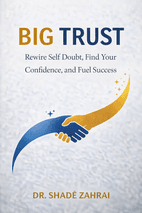
Shadé Zahrai's Big Trust examines trust as a tangible strategic asset for modern organizations, deconstructing it into core components and providing a practical framework for leaders to build resilient teams and reputable brands in a digital economy.
Feature
Insta.Page
Blinkist
Shortform
Big Trust
✓
✕
✕
Summary Depth
Full Chapter-by-Chapter
15-min overview
Section-by-section guides
Audio Narration
✓
✓
✓
Visual Mindmaps
✓
✕
✕
AI Q&A
✓
✕
✕
Quizzes
✓
✕
✕
PDF Downloads
✓
✕
✓
Price
$89.99/yr
$146/yr (PRO)
$199/yr
*Competitor data last verified July 2026.
1 Page Summary
In an era where public trust in institutions is declining, 'Big Trust' by Shadé Zahrai examines the critical importance of trust as the foundational currency for modern organizations and leaders. Zahrai argues that trust is not a soft, abstract concept but a tangible, strategic asset that drives engagement, innovation, and financial performance. The book synthesizes contemporary research in behavioral science and psychology to deconstruct trust into its core components—competence, integrity, and benevolence—providing a practical framework for its cultivation and maintenance in a digital, fast-paced world.
The work is situated within the context of post-pandemic workplace shifts, the rise of remote and hybrid models, and growing employee demands for transparency and ethical leadership. Zahrai connects historical patterns of institutional betrayal with current challenges, illustrating how breaches of trust in business, government, and media have created a "trust deficit" that savvy leaders must actively work to overcome. The narrative is bolstered by case studies and data showing that high-trust companies consistently outperform their competitors in retention, productivity, and market value.
The lasting impact of 'Big Trust' lies in its actionable roadmap. Zahrai moves beyond diagnosis to offer evidence-based strategies for leaders to build "trust capital," from fostering psychological safety and demonstrating consistent reliability to communicating with radical clarity. The book serves as an essential guide for anyone aiming to build more resilient teams, loyal customer bases, and reputable brands, positioning trust as the ultimate competitive advantage in the 21st-century economy.
Introduction: We Are All More Than Our Self-Doubts
Overview
It starts with a story many will recognize: lying awake at night, convinced you’re somehow missing the mark. For the author, this familiar anxiety triggered a memory of a defining moment from her youth—a humiliating encounter with an advisor that sparked a lifelong pattern of trying to outrun self-doubt through achievement. Yet, no matter the success, the doubt never left; it just changed shape. That late-night insight led to a pivotal shift: the real question isn’t how to push harder, but why we get stuck in the first place.
This “stickiness” of doubt is explored through a powerful analogy. Like burrs on a dog’s coat, self-doubt has tiny hooks that latch on, tangling into our decisions and self-view until it feels like part of who we are. The goal, then, isn’t a futile war to eradicate doubt, but to change our relationship with it, understanding it as a misguided protector that can become a paralyzing backseat driver.
To navigate this, the concept of Big Trust is introduced—the ability to move through life without being hijacked by doubt and to back yourself when it counts. Big Trust is built by strengthening four core Attributes, which together form your personal Doubt Profile. These are Acceptance (believing you are enough), Agency (trusting your skills), Autonomy (feeling you shape your path), and Adaptability (staying grounded emotionally). These are not fixed traits but habits that can be changed.
The author’s journey to this framework came from a career of helping others, amplified by a global crisis that laid bare universal insecurities. Her research revealed that those who struggle most don’t just have self-doubt; they become it. The breakthrough was seeing doubt not as a monolithic force, but as something composed of these four distinct, malleable components.
The chapter then becomes a hands-on guide, providing a practical 12-question self-assessment. Readers rate themselves on statements probing core insecurities, and tally scores for each of the four Attributes. These scores fall into zones—from Superpower to Red Alert—offering a clear, non-judgmental diagnosis of where doubt takes hold. A primer then details each Attribute, explaining the core question it answers (like “Am I enough?” for Acceptance), its strength, and its diminished state (such as self-rejection).
Interpreting the results normalizes the experience. A mix of high and low scores is most common, and this variety is a strategic advantage—you can use stronger Attributes to bolster weaker ones. Whether scores are low across the board or consistently high, the profile provides a precise map for building Big Trust, turning abstract doubt into a manageable system you can understand and, ultimately, master.
The Late-Night Realization
The author begins with a personal, relatable moment: lying awake at night, plagued by the feeling that her professional approach is missing the mark. She recognizes that the people she aims to help are stuck not just in their careers, but within themselves—a feeling she knows intimately. This triggers a memory of a foundational encounter with self-doubt as a nineteen-year-old law student. Overwhelmed and feeling like an impostor, she sought her advisor's reassurance, only to be met with a cold withdrawal form. This humiliation sparked a defiant, lifelong pattern: pushing harder to achieve, believing accomplishment would silence the doubt. It never did. Self-doubt followed her through every career change, manifesting as anxiety, overthinking, and missed opportunities disguised as prudent caution. That night, her key insight emerges: the question isn't how to push harder, but why we are stuck in the first place.
Understanding the "Stickiness" of Doubt
Despite building a successful career helping others achieve visible success, the author observed a persistent problem: even when goals were met, self-doubt remained, simply morphing into new fears. To explore this, she posed a provocative question to experts: how would you sabotage someone's success? The unanimous answer was to cultivate self-doubt. She illustrates its pervasive, clinging nature with the analogy of burrs—like those that stuck to her rescued dog, Bonbon. Just as burrs have tiny hooks, self-doubt starts small but latches on relentlessly, tangling into your decisions and self-perception until it becomes part of your mental operating system. The critical shift in perspective is introduced here: the goal isn't to defeat self-doubt, but to change your relationship with it. It's a misguided attempt at protection. When managed, it can be a useful alert system; when it runs unchecked, it becomes a paralyzing backseat driver.
Introducing the Four Attributes and "Big Trust"
The text contrasts two common responses to self-doubt through client stories. Sadia held herself back from a promotion, while Ray achieved relentlessly yet found no satisfaction. Both paths revealed a core lack of self-trust. The author defines the ultimate goal as Big Trust—the ability to move through life without being hijacked by doubt, to back yourself when it counts. This trust is built by deconstructing self-doubt into four trainable components, or Attributes, which form an individual's Doubt Profile:
Acceptance: Believing you are enough as you are.
Agency: Trusting your skills and abilities.
Autonomy: Feeling you can shape your own path.
Adaptability: Staying emotionally grounded when doubt arises.
These are not fixed traits but habits of thought and behavior that can be changed. By strengthening these Attributes, you don't just reduce doubt; you fundamentally build a stronger sense of self.
The Genesis of a New Framework
The author traces her lifelong role as a confidante and helper, which evolved into a career dedicated to understanding what drives and stops people. With her husband Faycal, she launched a leadership development company. The global crisis of the COVID-19 pandemic, which amplified universal self-doubt, catalyzed the need for a new framework. This work led to PhD research revealing that those who struggle most become their self-doubt; it shapes their core identity. The breakthrough was identifying that doubt is not a monolithic "blob" but is composed of the four distinct, malleable Attributes. By examining self-doubt like George de Mestral examined burrs, you can see its "hooks" and begin to systematically unhook from them.
A Practical Guide for Transformation
The chapter concludes by framing the book as a practical, action-oriented guide. It promises:
Insights and Motivation: To challenge and reimagine limiting beliefs through stories and science.
Practical Guidance: Specific work on each of the Four Attributes to build confidence, courage, and energy.
A Self-Trust Toolkit: Including The Practices (reflections, techniques, and exercises) and The Gifts (expansive thought exercises for each Attribute).
The journey starts with a 12-question self-assessment to uncover the reader's unique Doubt Profile, providing clarity on their specific patterns of strength and struggle.
The Self-Assessment Process
This portion of the chapter provides a practical, hands-on tool for readers to immediately apply the concepts of the Doubt Profile. It transitions from theory to action, guiding you through a detailed self-assessment to pinpoint exactly where self-doubt manifests in your life.
Step 1: Rate Yourself
You are instructed to honestly rate twelve revealing statements on a scale from 1 (Strongly Agree) to 5 (Strongly Disagree). These questions probe core insecurities, such as feeling inadequate compared to others, seeking external validation, questioning your competence, feeling a lack of control, setting impossibly high standards, and struggling with stress and overthinking.
Step 2: Tally Your Score
Your responses are grouped and tallied to generate four distinct scores, each corresponding to one of the foundational Attributes of self-trust:
Acceptance Score: Questions 1, 4, and 7.
Agency Score: Questions 3, 5, and 8.
Autonomy Score: Questions 6, 9, and 10.
Adaptability Score: Questions 2, 11, and 12.
Step 3: What Your Score Means
Each Attribute score falls into one of five zones, offering a clear diagnosis of how self-doubt operates in that area of your life:
Score of 15: “Superpower” Zone (Empowering). A true strength to celebrate and leverage.
Score of 12-14: “Hidden Strength” Zone (Beneficial). A solid foundation of confidence where doubt is only an occasional visitor.
Score of 9-11: “So-So" Zone (Moderate). A neutral area ripe for improvement with a little focused effort.
Score of 7-8: “Hindrance” Zone (Detrimental). An area where doubt is actively eroding confidence and requires nurturing.
Score of 6 or Less: “Red Alert” Zone (Destructive). A priority area where self-doubt is severely impacting your sense of self and demands immediate, intentional attention.
Understanding the Four Attributes
The chapter then offers a primer on the four key Attributes that form the architecture of self-trust, explaining the core question each one answers, its strength, and its diminished state:
Acceptance asks, "Am I enough?" Its strength is an internal sense of worthiness, free from the need for external approval. When low, it manifests as self-rejection, a critical inner voice obsessed with perfection and flaws.
Agency asks, "Can I handle this?" Its strength is a trust in your ability to take effective action and solve problems. When low, it becomes inefficacy, characterized by feeling like a fraud, constant comparison, and paralyzing hesitation.
Autonomy asks, "Do my choices make a difference?" Its strength is ownership over your actions and their consequences. When low, it leads to resignation, a helpless feeling that life happens to you, fostering risk-aversion and a "why try?" attitude.
Adaptability asks, "Can I manage my emotions?" Its strength is emotional regulation and resilience under pressure. When low, it descends into overwhelm, where stress dominates, perspective is lost, and emotions feel inescapable.
Your unique combination of scores across these four areas creates your personal Doubt Profile—a precise map showing where self-doubt takes hold and, crucially, where to focus to rebuild self-trust.
Interpreting Your Results
Finally, the chapter addresses common questions and concerns about the assessment results, normalizing the experience and providing context:
Scoring low across all Attributes is not uncommon (20% of people do) and is a starting point, not a life sentence.
Most people have a mix of high and low scores; this is typical and provides a strategic advantage, as you can use stronger Attributes to support weaker ones.
If all scores are in the moderate "So-So" zone, it indicates an unanchored self-trust that fluctuates with circumstances—a perfect opportunity for intentional growth.
High scores across the board signify a strong foundation of "Big Trust," where self-doubt is a manageable signal rather than a debilitating force.
The data reveals that for each Attribute, a significant portion of people (from 31% to 54%) score in the Hidden Strength or Superpower zones, demonstrating that building self-trust is an achievable, common goal.
Key Takeaways
The Doubt Profile assessment is a practical tool for translating abstract self-doubt into measurable, specific attributes.
Your scores are diagnostic, not judgmental; they reveal areas of strength to leverage and vulnerability to strengthen.
Self-doubt operates through four core channels: Acceptance (worthiness), Agency (capability), Autonomy (ownership), and Adaptability (emotional regulation).
A mixed score profile is the most common outcome, and you can strategically use your stronger attributes to support growth in weaker ones.
Understanding your unique profile is the essential first step toward building "Big Trust" and interrupting the exhausting cycles of doubt.
Key concepts: Introduction: We Are All More Than Our Self-Doubts
1. Introduction: We Are All More Than Our Self-Doubts
The Late-Night Realization
Personal moment of anxiety triggers memory of foundational humiliation with an advisor
Lifelong pattern of using achievement to outrun self-doubt proves ineffective
Key insight shifts focus from 'how to push harder' to 'why we get stuck'
Self-doubt persists through career changes, manifesting as anxiety and missed opportunities
Understanding the Stickiness of Doubt
Self-doubt persists even after achieving visible success, simply morphing into new fears
Experts identify cultivating self-doubt as primary method to sabotage someone's success
Burr analogy illustrates how doubt latches on with tiny hooks and becomes embedded
Goal shifts from defeating doubt to changing relationship with it as misguided protector
Introducing Big Trust and the Four Attributes
Big Trust defined as ability to move through life without being hijacked by doubt
Self-doubt deconstructed into four trainable components forming a Doubt Profile
Attributes are habits, not fixed traits, that can be strengthened to build stronger self
The Genesis of the Framework
Framework developed through career of helping others and amplified by global crisis
Research reveals those who struggle most don't just have doubt—they become it
Breakthrough: seeing doubt as composed of four distinct, malleable components
Global insecurities laid bare universal patterns of self-doubt
Practical Application and Self-Assessment
12-question self-assessment probes core insecurities across four Attributes
Scores fall into zones from Superpower to Red Alert for non-judgmental diagnosis
Primer details each Attribute's core question, strength, and diminished state
Mixed scores are common and strategically advantageous for using strengths to bolster weaknesses
Interpreting Results and Building Mastery
Doubt Profile provides precise map for building Big Trust systematically
Normalizes experience by showing mix of high and low scores is most common
Turns abstract doubt into manageable system that can be understood and mastered
Enables strategic use of stronger Attributes to support development of weaker ones
The Genesis of the Framework
The author's lifelong role as a confidante evolved into a career focused on understanding human drivers and barriers.
Launching a leadership development company with her husband Faycal provided a practical foundation for this work.
The COVID-19 pandemic, which amplified universal self-doubt, catalyzed the need for a new, actionable framework.
PhD research revealed a key insight: those who struggle most internalize self-doubt, allowing it to shape their core identity.
The breakthrough was deconstructing self-doubt from a monolithic 'blob' into four distinct, malleable Attributes.
The Book's Promise: A Practical Guide
Provides insights and motivation to challenge and reimagine limiting beliefs through stories and science.
Offers practical guidance with specific work on each of the Four Attributes to build confidence, courage, and energy.
Delivers a Self-Trust Toolkit, including The Practices (reflections, techniques, exercises) and The Gifts (expansive thought exercises).
Begins the journey with a 12-question self-assessment to uncover the reader's unique Doubt Profile.
Focuses on providing clarity on individual patterns of strength and struggle for targeted transformation.
The Self-Assessment: From Theory to Action
A 12-statement questionnaire requires honest self-rating on a scale from Strongly Agree to Strongly Disagree.
Questions probe core insecurities like inadequacy, need for validation, questioned competence, and lack of control.
Responses are grouped and tallied to generate four distinct scores, each corresponding to one Attribute of self-trust.
Scores are categorized into five diagnostic zones, from 'Superpower' to 'Red Alert,' clarifying self-doubt's impact.
The process transforms abstract concepts into a personalized map, pinpointing where self-doubt manifests.
The Architecture of Self-Trust: The Four Attributes
Acceptance answers 'Am I enough?'; its strength is internal worthiness; its diminished state is self-rejection.
Agency answers 'Can I handle this?'; its strength is trust in effective action; its diminished state is inefficacy.
Autonomy answers 'Do my choices make a difference?'; its strength is ownership; its diminished state is resignation.
Adaptability answers 'Can I manage my emotions?'; its strength is emotional regulation; its diminished state is overwhelm.
The unique combination of scores across these four areas creates a personal Doubt Profile—a precise map for rebuilding self-trust.
Normalizing and Contextualizing Your Doubt Profile
Scoring low across all Attributes is a starting point for 20% of people, not a life sentence.
A mix of high and low scores is typical and provides a strategic advantage for using strengths to support weaker areas.
All scores in the moderate 'So-So' zone indicates unanchored, fluctuating self-trust—an opportunity for intentional growth.
High scores across the board signify 'Big Trust,' where self-doubt is a manageable signal, not a debilitating force.
Data shows building self-trust is achievable, with significant portions of people scoring in the Hidden Strength or Superpower zones for each Attribute.
The Doubt Profile Assessment
Translates abstract feelings of self-doubt into specific, measurable attributes for practical understanding.
Provides diagnostic scores that identify areas of strength to leverage and vulnerability to strengthen, not judgmental labels.
Reveals that a mixed score profile is the most common outcome, reflecting the nuanced nature of self-doubt.
The Four Core Channels of Self-Doubt
Acceptance: Concerns about worthiness, belonging, and being good enough for others.
Agency: Concerns about capability, competence, and the ability to achieve desired outcomes.
Autonomy: Concerns about ownership, control, and the right to make one's own choices.
Adaptability: Concerns about emotional regulation, resilience, and handling uncertainty or change.
Strategic Application of the Profile
Enables the strategic use of stronger attributes to support growth and development in weaker areas.
Serves as the essential first step for building 'Big Trust'—a deep, foundational self-confidence.
Provides the self-awareness needed to interrupt the exhausting, automatic cycles of doubt.
💡 Try clicking the AI chat button to ask questions about this book!
1. Who’s Running the Show?
Overview
This chapter establishes that self-doubt is a universal human experience, not a personal flaw. The core argument is that self-doubt is not a fixed truth but a product of your brain's wiring, past experiences, and internal stories. You are separate from your doubts. To manage them, you must first understand the three hardwired reasons your brain generates doubt: its need for internal management, its craving for certainty, and its tendency to filter reality through existing beliefs. By grasping this neuroscience and psychology, you can learn to work with your mind's design rather than against it, regaining control and building self-trust.
Your Brain's Internal Boardroom
The mind is presented as a company boardroom with four key members, each representing a distinct brain system. The CEO (ventromedial prefrontal cortex) sets vision and priorities. The Strategist (left prefrontal cortex) creates plans and executes. The Automations Lead (basal ganglia and cerebellum) builds habits and routines for efficiency. The Risk Analyst (inferotemporal cortex and limbic system) focuses on threat detection and protection.
When these systems are in sync, you experience clarity and a state of flow. However, self-doubt can hijack any member, causing a system-wide breakdown. This is illustrated through Marco, a software engineer paralyzed from launching his startup. His unclear CEO goal led his Strategist into overthinking (analysis paralysis), which left his Automations Lead idle and sent his Risk Analyst into panic. The solution involved resynchronizing the boardroom by defining a crystal-clear, time-bound goal for the CEO, which then allowed the Strategist to create specific action steps, the Automations Lead to establish progress routines, and the Risk Analyst to calm down.
The practice offered is to identify which board member is out of sync and take a targeted micro-action to reset it—like writing down one priority for a scattered CEO or breaking a project into three steps for a paralyzed Strategist.
Your Brain's Addiction to Certainty
Your brain’s threat-detection system, primarily the Risk Analyst, is evolutionarily wired to treat uncertainty as danger—a lifesaving trait for ancestors but maladaptive in the modern world. Unlike a tomato plant that can stand down after a threat passes, your brain remains on high alert, catastrophizing over social slights or future possibilities. We now live in a "delayed-return environment" where feedback is slow, and this uncertainty gap is profoundly unsettling.
To cope, your brain engages in confabulation—it fabricates plausible-sounding stories to create a false sense of certainty. These stories (e.g., "I'm not a people person," "That silence means they hate me") are autofilled by fear, not facts. They skew negative because the brain prioritizes threat detection over accuracy, leading to chronic worry and hypervigilance. Research confirms that your internal narrative has a greater impact on your happiness than your external circumstances.
To manage this, the chapter introduces "Worry Time." This practice involves parking anxious thoughts in writing throughout the day and then dedicating a scheduled 30-minute block to address them. This contains the worry, prevents it from consuming your day, and allows you to fact-check concerns and decide on actionable steps.
Your Brain's Biased Gatekeeper
In addition to the boardroom, your brain has a Gatekeeper—a neural attention filter that sifts through massive daily data input. Its critical flaw is that it is not objective; it prioritizes information based on what you already focus on. If you are fixated on self-doubt, the Gatekeeper will filter reality to confirm those doubts, a process known as confirmation bias.
Taylor’s story demonstrates this: after receiving feedback to "be more assertive," her Gatekeeper locked onto a narrative of "I'm not leadership material." It then filtered all subsequent experiences—skipped meetings, concise feedback, short texts from friends—as evidence supporting this belief.
To retrain the Gatekeeper, you must invite two internal allies into your mental boardroom:
The Fact Checker: A voice of reason that challenges assumptions by demanding evidence. It asks: What proof do I have this is true? What proof do I have it's not? What's a more balanced perspective?
The Confidence Consultant: An imagined mentor or friend who believes in your potential. In moments of doubt, you ask what this supportive figure would say about your ability to handle the situation, shifting focus from weakness to strength.
By consistently employing these "consultants," you can redirect your Gatekeeper's focus, dismantle confabulated stories, and build a more accurate, compassionate self-view.
Key Takeaways
You are not your self-doubt. Doubt is a product of your brain's wiring, not an immutable fact about you.
Sync your internal boardroom. Identify whether your CEO (vision), Strategist (planning), Automations Lead (routines), or Risk Analyst (fear) is hijacked by doubt and take a specific, small action to recalibrate it.
Manage the craving for certainty. Use the "Worry Time" technique to contain anxious confabulations, fact-check them, and reclaim mental bandwidth.
Retrain your attention filter. Combat confirmation bias by inviting your internal Fact Checker and Confidence Consultant to challenge negative stories and refocus on evidence and your strengths.
Key concepts: 1. Who’s Running the Show?
2. 1. Who’s Running the Show?
The Core Premise: Understanding Self-Doubt
Self-doubt is a universal human experience, not a personal flaw.
Doubt is a product of brain wiring, past experiences, and internal stories, not a fixed truth.
You are separate from your doubts; understanding your brain's design is key to managing them.
The goal is to work with your mind's design, not against it, to regain control and build self-trust.
Your Brain's Internal Boardroom
The mind is like a company boardroom with four key members, each a distinct brain system.
The CEO (vision), Strategist (planning), Automations Lead (habits), and Risk Analyst (threat detection) must be in sync for clarity and flow.
Self-doubt hijacks these systems, causing breakdowns, as shown in Marco's story of paralysis.
Resynchronization starts with a clear, time-bound goal for the CEO, which then guides the other members.
The practice: Identify which 'board member' is out of sync and take a targeted micro-action to reset it.
Your Brain's Addiction to Certainty
The brain's threat system treats uncertainty as danger, a trait maladaptive in the modern world.
In our 'delayed-return environment,' the uncertainty gap causes chronic anxiety.
The brain uses confabulation—fabricating plausible stories—to create a false sense of certainty.
These negative, fear-based stories skew perception and impact happiness more than circumstances.
The 'Worry Time' technique contains anxiety by scheduling time to fact-check and address concerns.
Your Brain's Biased Gatekeeper
The Gatekeeper is a neural attention filter that prioritizes information based on existing focus.
It creates confirmation bias, filtering reality to confirm self-doubt narratives, as in Taylor's story.
Retraining requires inviting two internal allies: the Fact Checker and the Confidence Consultant.
The Fact Checker challenges assumptions by demanding evidence for and against negative beliefs.
The Confidence Consultant is an imagined supportive figure who shifts focus from weakness to strength.
Synthesis and Key Practices
Separate your identity from self-doubt; see it as a brain product, not a truth.
Sync the internal boardroom by identifying the hijacked member and taking a specific, small action.
Manage the craving for certainty with the structured 'Worry Time' practice.
Combat confirmation bias by consistently using the Fact Checker and Confidence Consultant.
The overall aim is to redirect attention, dismantle false stories, and build an accurate, compassionate self-view.
2. Should I Believe Everything I Think?
Overview
This chapter explores how our self-perception, often shaped by unexamined thoughts and labels, actively constructs our reality. Through psychological experiments and personal stories, it demonstrates that we are not passive observers of our lives but active participants whose beliefs—particularly those rooted in self-doubt—can create invisible barriers. The core argument is that we shouldn't believe every thought we have, especially the self-limiting ones, because they are often distorted stories we've mistaken for truth. The chapter provides a roadmap for recognizing and rewriting these narratives by understanding how they form as "mental grooves" in our brains and how we can consciously carve new, more empowering paths.
The Invisible Scar: How Beliefs Shape Reality
The chapter opens with a compelling psychological experiment by Professor Robert Kleck. Participants were led to believe a realistic scar had been applied to their faces, though it was secretly removed before they interacted with strangers. Despite having normal appearances, these individuals overwhelmingly reported that others treated them with tension, distance, or discomfort. The reality, confirmed by neutral observers, was that the strangers' behavior hadn't changed. The perceived rejection existed solely in the participants' minds, driven by their belief in their own disfigurement. This "expectation bias" powerfully illustrates that our beliefs don't just color our reality—they can invent it. We see what we expect to see, especially when it comes to our insecurities.
This principle is further underscored by the work of Dr. Maxwell Maltz, a plastic surgeon. He observed that patients often continued to feel insecure about a "flaw" even after it was surgically corrected. Their external reality had changed, but their internal self-image—their "mental blueprint"—had not. This disconnect reveals a crucial insight: accomplishments and external validation often fail to silence deep-seated beliefs of inadequacy. If your blueprint says you're unworthy, you'll interpret the world through that lens, fixating on perceived shortcomings and avoiding opportunities, regardless of your actual abilities or achievements.
Sticky Stories: The Labels We Live By
Our self-image is frequently built on "sticky stories"—labels we internalize, often from offhand comments or childhood experiences. The story of Rashida, a successful compliance leader, exemplifies this. She introduced herself with the disclaimer "I'm a little intense," a label cemented by a former boss's comment and reinforced by family teasing from her youth. This label felt like an immutable truth, an "invisible scar" that shaped her interactions and caused her to preemptively apologize for her own demeanor.
The brain adores these labels because they are cognitive shortcuts, efficient ways to categorize ourselves and the world. However, when we label ourselves as "bad at public speaking," "a procrastinator," or "not a leader," we use the language of a fixed mindset. We mistake a single behavior or a passing comment for a permanent, unchangeable identity. These "I am..." statements become the headlines of our personal narrative, directing our actions and limiting our potential.
Peeling Off and Reclaiming Your Labels
The encouraging truth is that these labels are not tattoos on our soul; they are more like burrs stuck to a sweater—persistent but removable. The process begins with examination and conscious reframing. For Rashida, shifting from "intense" to "passionate" was transformative. It wasn't mere wordplay; it was a fundamental re-authoring of her self-story. The new label carried a positive, driven energy that aligned with her commitment and skill, allowing her to own her strengths rather than apologize for them.
Similarly, screenwriter Meg LeFauve reframed a childhood label. Once called "Moody Meg" for her anxiety, she later realized the same imaginative depth that fueled her worry also fueled her profound creativity. She reclaimed the trait, integrating it into her identity as a storyteller who helps millions understand emotions. The practice involves identifying your internalized labels, questioning their origin and current utility, and actively replacing them with affirming, growth-oriented statements (e.g., "I'm learning" instead of "I'm incompetent"). This creates psychological space to evolve.
Mental Grooves: Carving New Neural Pathways
Our repeated thoughts and stories don't just exist as ideas; they physically carve neural pathways in our brain, akin to grooves on a sand dune formed by repeated sandboarding runs. Each time we revisit a self-doubting thought ("I don't belong," "I'm not good enough"), we deepen that groove, making it our brain's default, efficient route. This is the Automations Lead in action. While you can't erase these old pathways, neuroscience and the principle of neuroplasticity confirm you can overwrite them by deliberately carving new tracks.
The chapter introduces a practical method for this overwriting process: taking an "opposite action." When self-doubt triggers an urge to shrink (slouch, stay quiet, avoid eye contact), you consciously do the opposite (sit tall, speak up, lean in). Rashida applied this by physically leaning forward in her chair during moments of Zoom meeting anxiety, pairing the action with a calming mantra: "I'm here, I’m present, I’m safe, I’m showing up." This leverages "embodied cognition"—the two-way link between body and mind—to signal safety and confidence to the brain. With consistency, this new response becomes the stronger, default groove.
Key Takeaways
Your beliefs construct your reality: Expectation bias means we often see what we believe, not objective truth. An insecure belief can act like an "invisible scar," distorting social interactions and opportunities.
Self-image is a story, not a fact: Your "mental blueprint" is built from accumulated labels and stories, many absorbed uncritically. These narratives feel true because they've been repeated, not because they are fundamentally accurate.
Labels can be examined and rewritten: You have the power to peel off limiting labels like "intense" or "anxious" and reframe them into strengths like "passionate" or "imaginatively deep." This is an act of reclamation, not fixing something broken.
Change your brain by changing your actions: Self-doubt is maintained by well-worn neural pathways. You can overwrite these "mental grooves" through deliberate, repeated opposite actions. By changing your physical response (posture, engagement) in moments of doubt, you can fundamentally shift the mental and emotional pattern.
Growth requires disrupting the automatic narrative: Real change begins when you challenge the automatic stories you tell yourself. This creates space for new possibilities and allows your self-image to evolve in alignment with who you want to become.
Key concepts: 2. Should I Believe Everything I Think?
3. 2. Should I Believe Everything I Think?
The Core Premise: Beliefs Actively Construct Reality
We are not passive observers but active participants whose beliefs create invisible barriers.
Self-limiting thoughts are often distorted stories mistaken for truth.
We should not believe every thought, especially those rooted in self-doubt.
The chapter provides a roadmap for recognizing and rewriting these narratives.
The Invisible Scar: How Beliefs Invent Reality
Kleck's scar experiment shows 'expectation bias'—we see what we expect to see based on our beliefs.
Beliefs can invent reality, as participants perceived rejection that didn't exist.
Maltz's plastic surgery patients reveal that external change doesn't automatically update internal self-image.
A negative 'mental blueprint' causes fixation on perceived flaws and avoidance of opportunities.
Sticky Stories: The Power of Internalized Labels
Self-image is built on labels from offhand comments or childhood experiences (e.g., 'I'm a little intense').
The brain uses labels as cognitive shortcuts, mistaking behavior for permanent identity.
'I am...' statements become headlines of our narrative, directing actions and limiting potential.
Labels reflect a fixed mindset and act like 'invisible scars' shaping interactions.
Peeling Off and Reclaiming Labels
Labels are not permanent tattoos but removable burrs—they can be examined and reframed.
Reframing (e.g., 'intense' to 'passionate') is a fundamental re-authoring of self-story.
Reclaiming traits integrates them positively (e.g., 'Moody Meg' to creative storyteller).
Practice involves questioning a label's origin and utility, then replacing it with growth-oriented statements.
Mental Grooves: Rewiring the Brain's Default Pathways
Repeated thoughts physically carve neural pathways, like grooves on a sand dune.
Revisiting self-doubt deepens these grooves, making them the brain's efficient default route.
Neuroplasticity allows overwriting old pathways by deliberately carving new ones.
The 'opposite action' method combats self-doubt by doing the opposite of the urge to shrink.
Embodied cognition uses physical actions (e.g., leaning in) to signal safety and confidence to the brain.
The Constructed Nature of Belief and Reality
Expectation bias causes us to perceive the world in alignment with our pre-existing beliefs, not objective truth.
A single insecure belief can function as an 'invisible scar,' systematically distorting social interactions and life opportunities.
Our reality is not a fixed external given but is actively constructed and filtered through our internal belief systems.
Deconstructing the Self-Image Narrative
Your self-image is a story built from accumulated labels and interpretations, not an immutable fact.
These internal narratives feel true primarily due to repetition and familiarity, not inherent accuracy.
Many foundational self-beliefs were absorbed uncritically, often from external sources, and can be re-examined.
The Power of Reframing and Reclaiming Labels
Limiting labels (e.g., 'anxious,' 'intense') can be consciously peeled off and examined.
These same traits can be reframed into strengths (e.g., 'imaginatively deep,' 'passionate') through a shift in perspective.
This process is an act of reclamation and empowerment, not about fixing a fundamental brokenness.
Rewiring the Brain Through Embodied Action
Self-doubt and ingrained patterns are maintained by strong, well-worn neural pathways ('mental grooves').
Deliberate, repeated opposite actions can physically overwrite these pathways.
Changing the physical response (e.g., posture, engagement) in a moment of doubt can disrupt and shift the entire mental-emotional pattern.
The Path to Growth and Change
Authentic growth begins with consciously challenging the automatic stories the mind generates.
This disruption of the habitual narrative creates psychological space for new possibilities to emerge.
The ultimate goal is to allow your self-image to evolve consciously, in alignment with who you aspire to become.
3. What Is My Doubt Profile Telling Me?
Overview
This chapter establishes self-doubt as a fundamental crisis of identity rather than a simple lack of confidence. It introduces the Doubt Profile, a diagnostic tool built on four core Attributes—Acceptance, Agency, Autonomy, and Adaptability—which reveal the specific areas where self-doubt takes root. Through a revealing case study and practical guidance, the chapter argues that by understanding and strengthening these Attributes, you can shift the daily patterns that reinforce doubt and begin building a deeper, more resilient self-trust.
The Identity Crisis at the Core of Doubt
Extensive research and client work revealed a critical distinction: self-doubt is not merely questioning your skills, but questioning your very self. This transforms it from a passing worry into a persistent identity problem. People tend to fall into two patterns. The first group becomes entangled with their doubt, trying to "fix" it through analysis and self-criticism, which only amplifies it. The second group, while still feeling doubt, doesn't let it define them. They balance it by anchoring themselves in their deeper strengths and values, understanding that doubt is something they have, not something they are.
Introducing the Four Attributes of the Doubt Profile
To move from simply feeling doubt to strategically addressing it, the Doubt Profile was developed. It identifies four core Attributes, each answering a fundamental, often unconscious, question:
Acceptance: "Do I believe I'm worthy as I am?" This relates to inherent self-worth.
Agency: "Do I trust my skills and abilities?" This relates to belief in your capability.
Autonomy: "Do I feel I can shape my path?" This relates to a sense of control and ownership.
Adaptability: "Can I stay emotionally grounded when doubt arises?" This relates to emotional resilience.
These Attributes are interconnected; a weakness in one can weaken others, creating a foothold for doubt. The goal isn't to eliminate doubt but to strengthen these Attributes by shifting the small, daily patterns and habits that reinforce self-limiting beliefs.
A Case Study: Johan's Profile in Action
Johan's story illustrates the profile's practical power. A talented graphic designer, he inexplicably turned down a major promotion. Analysis of his Doubt Profile revealed the specific patterns holding him back:
Acceptance (Red Alert): His self-worth was entirely conditional on achievement, making any potential failure feel catastrophic.
Agency (So-So): His confidence was inconsistent, crumbling in the face of new challenges.
Autonomy (Red Alert): He felt he had no control over his career path, leaving him feeling stuck and resigned.
Adaptability (Hidden Strength): His ability to stay calm under pressure was a strength, but it masked the deeper struggles in other areas.
With this map, Johan's work became clear. Instead of "fixing" himself, he focused on simple habits to strengthen Acceptance (e.g., weekly reflections on his identity beyond work) and Autonomy (e.g., identifying one thing he could choose in any situation). Within a year, he confidently stepped into the leadership role he had initially refused.
From Insight to Action: Mapping Your Starting Point
The chapter concludes with a direct call to action, guiding you to apply the framework personally. The practice involves three steps:
Review Your Doubt Profile: Note your scores for each of the Four Attributes.
Spot the Patterns: Reflect on how both "daily doubts" (like hesitating to speak up) and "big doubts" (like turning down opportunities) manifest in your life, and which Attributes are primarily at play.
Commit to the Process: Make a conscious commitment to strengthen your Attributes through small, deliberate actions, moving from a mindset of "fixing" yourself to uncovering who you are beneath the doubt.
Key Takeaways
Self-doubt is an identity crisis ("self + doubt"), not just a confidence issue. Lasting change requires addressing how you see your fundamental worth and place.
The Doubt Profile’s Four Attributes (Acceptance, Agency, Autonomy, Adaptability) pinpoint where your self-doubt is most active, providing a clear map for targeted growth.
Doubt is reinforced by daily habits and patterns. Change comes not from fighting the doubt, but from consistently practicing new habits that strengthen your vulnerable Attributes.
Your potential is not defined by your doubts. Like a potted plant, your growth is limited by your environment—the mental "pot" of internalized stories and beliefs. Expanding this space begins with changing your daily habits.
Key concepts: 3. What Is My Doubt Profile Telling Me?
4. 3. What Is My Doubt Profile Telling Me?
The Identity Crisis at the Core of Doubt
Self-doubt is a crisis of identity, questioning the self, not just skills or confidence.
Two patterns emerge: becoming entangled with doubt (amplifying it) or balancing it with deeper strengths.
Key distinction: doubt is something you have, not something you are.
The Four Attributes of the Doubt Profile
Acceptance: Belief in inherent self-worth ('Am I worthy as I am?').
Agency: Trust in skills and abilities ('Do I trust my capabilities?').
Autonomy: Sense of control and ownership over one's path ('Can I shape my path?').
Adaptability: Emotional resilience when doubt arises ('Can I stay grounded?').
Attributes are interconnected; weakness in one can weaken others and create footholds for doubt.
Case Study: Johan's Profile in Action
Acceptance (Red Alert): Self-worth was conditional on achievement, making failure catastrophic.
Agency (So-So): Confidence was inconsistent and crumbled with new challenges.
Autonomy (Red Alert): Felt no control over career path, leading to stuckness and resignation.
Adaptability (Hidden Strength): Ability to stay calm masked deeper struggles in other areas.