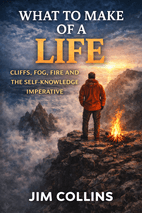
Jim Collins's What to Make of a Life presents a research-driven framework for finding meaning and achieving excellence by understanding one's innate encodings and navigating life's fractures. It offers practical concepts like simplex stepping for anyone reflecting on their career, transitions, or search for meaningful engagement.
Feature
Insta.Page
Blinkist
Shortform
Summary Depth
Full Chapter-by-Chapter
15-min overview
Section-by-section guides
Audio Narration
✓
✓
✓
Visual Mindmaps
✓
✕
✕
AI Q&A
✓
✕
✕
Quizzes
✓
✕
✕
PDF Downloads
✓
✕
✓
Price
$89.99/yr
$146/yr (PRO)
$199/yr
*Competitor data last verified July 2026.
1 Page Summary
In What to Make of a Life, Jim Collins presents a research-driven exploration of how individuals find meaning and achieve excellence, born from his own experience of a personal "cliff"—the emotional loss of his father. The book's central thesis is that a meaningful life is not about finding a single, preordained purpose, but about understanding one's innate encodings (deep, natural predispositions) and learning to navigate life's inevitable fractures and uncertainties. Through the study of "matched pairs" of individuals who faced similar disruptive events, Collins identifies patterns and practical concepts—such as operating in frame or out of frame, navigating the fog, and practicing simplex stepping—that describe how people can align their lives with their core wiring to do sustained, fulfilling work.
The book's distinctive approach lies in its systematic, comparative analysis of remarkable lives, moving beyond inspirational anecdotes to uncover repeatable dynamics. Collins illustrates his concepts through vivid, contrasting case studies, from the solitary brilliance of scientist Barbara McClintock to the collaborative mastery of Admiral Grace Hopper, and from the transformative second act of Charles Colson to the retrospective struggle of John Ehrlichman. This methodology allows the book to argue that extraordinary achievement can spring from vastly different circumstances, emphasizing that the key is not the specific path but how one responds—maximizing one's return on luck and finding a hedgehog focus that fits one's encodings, potentially at multiple stages of life.
Intended for anyone reflecting on their career, life transitions, or search for meaningful engagement, this book offers a framework for self-knowledge rather than prescriptive answers. Readers will gain a vocabulary and a set of catalytic questions to examine their own encodings, navigate periods of disorientation, and build a life where work is the goal itself, not just a means to an end. Ultimately, it provides the comforting, evidence-based insight that potential for contribution has no expiration date, and that a life of excellence is often built through a series of chapters, not a single peak.
1. A Life Transformed
Overview
This opening chapter explains the author's own motivation for a ten-year research project on what makes a life meaningful. It starts with a childhood "cliff"—the emotional loss of his father—and shows how he built a method to study how others handle similar fractures. The book's goal is not to give answers, but to share patterns from a wide range of remarkable lives.
The Author's Personal Fracture
The author grew up in Haight-Ashbury during the 1960s, an environment he found more frightening than loving. His family moved to Boulder, where they lived in poverty without his father. As a teenager, he took a final, disappointing visit to see his father in New Mexico. On the bus ride home, he accepted that his father would never be a real parent to him. He calls this his first major life "cliff." That fracture left him with urgent questions about how to find a path, grow up, and make the most of a single life.
Launching a Systematic Study
To answer these universal questions, the author started a large, systematic research project. His main method was to study "matched pairs" of people who faced a similar life-altering cliff. By comparing their responses, he hoped to learn how people rebuild their lives. Examples include Led Zeppelin's Robert Plant and Jimmy Page after their band ended, and congresswomen Cardiss Collins and Maryon Pittman Allen, who both inherited their husbands' seats after sudden tragedies.
The study covered 2,809 years of life data from 34 subjects in many fields. The author makes it clear he is not judging which lives were "better," since there's no single measure for a human life. He used famous subjects because their data was available, not because fame is a goal.
The Centrality of Cliffs and Fog
The research is based on the idea that "cliffs"—big events that change your life's path—force you to rethink everything. The author believes everyone faces cliffs eventually. He also found that "fog," periods of confusion after a cliff, is very common. A main goal of the book is to explore how people find their way through both.
Three Books in One
The book has three parts, each about a core challenge:
Coming Into Frame: How people find and commit to a path that fits their strengths, their need to make a living, and their passion.
Navigating Cliffs and Fog: How people survive major disruptions and the uncertainty that follows.
Feeding the Inner Fire Long and Late: How some people keep or even increase their energy and impact late in life, challenging the idea that creativity peaks early.
The author says different parts will speak to you depending on where you are in life, but the themes are all connected, just like life itself.
A Transformative Journey
The author found direction in his own life through key relationships—his marriage and a mentor who became like a father. He admits the research felt overwhelming at times, but it became a captivating ten-year project that changed him. By living inside the life stories of his subjects, he gained new views on life and relationships, and even found some forgiveness for his father. The chapter's title, "A Life Transformed," refers to the author's own change through studying these lives.
Key Takeaways
The urgent question "What to make of a life?" often comes from personal fractures, or "cliffs."
Studying how different people handle similar cliffs reveals powerful, useful patterns about resilience and starting over.
Life is not a straight line. It is often broken up by disruptive cliffs and confusing fog.
Meaningful paths are found where your natural ability, economic reality, and passion meet.
The potential for growth, creativity, and a strong sense of purpose can last—and even grow—late in life.
Understanding other people's journeys can deeply change your own life.
Key concepts: 1. A Life Transformed
1. A Life Transformed
The Author's Personal Cliff
Childhood loss of father created a major life fracture
Left with urgent questions about finding a path in life
This personal cliff motivated the entire research project
Research Methodology
Studied matched pairs facing similar life-altering cliffs
Analyzed 34 subjects across 2,809 years of life data
Compared how different people rebuild after disruption
Core Concepts: Cliffs and Fog
Cliffs are major events that force life path rethinking
Fog is the confusion period following a cliff
Everyone faces cliffs and fog eventually
Book's Three-Part Framework
Coming Into Frame: Finding a meaningful life path
Navigating Cliffs and Fog: Surviving disruption and uncertainty
Feeding the Inner Fire: Sustaining impact late in life
The Author's Transformation
Research project became a ten-year transformative journey
Gained new perspectives on life and relationships
Found personal healing and forgiveness through the study
💡 Try clicking the AI chat button to ask questions about this book!
2. One Big Thing
Overview
A young Barbara McClintock had incredible intensity. She didn't just study; she became so absorbed she could forget her own name. This deep focus was her encodings—her natural way of engaging with the world. She found the perfect fit in genetics, where her mind became an "organic decryption machine" for maize chromosomes. But her non-conformist brilliance clashed with academia. Called a "maverick," she found a home at Cold Spring Harbor Laboratory, where she discovered jumping genes. Met with decades of disbelief, she worked in isolation, never doubting her work. When the Nobel Prize finally came, it barely registered; the true reward was the "pure joy" of the work itself.
Grace Hopper's journey followed a similar arc, but looked very different. McClintock was solitary; Hopper was a master collaborator. After proving her compiler concept, she worked within corporate and military systems to reshape the computer industry, creating standards like COBOL. Her teaching encodings were legendary. She used vivid demonstrations, like the "nanosecond" wire, to make abstract ideas stick. Together, McClintock and Hopper show a clear pattern: both hit ceilings in traditional roles, left to work on their own terms, and then entered long periods of intense productivity, or "hedgehog mode." But their personal styles were total opposites, proving that the right path is unique to each person.
Their lives point to three keys for a meaningful life: discover and use your encodings, flip the arrow of money so it funds your work instead of being the goal, and focus your inner fire on what you find rewarding. Combining these three creates a personal hedgehog—your One Big Thing.
Research shows two main patterns in this pursuit. The first is The Single Hedgehog—a lifetime in one field, like McClintock and Hopper. The second is The Serial Hedgehog, seen in people like Alan Page. Page’s first hedgehog was as an NFL legend. He then built a second in law, becoming a Minnesota Supreme Court Justice. Later, he started a third act with the Page Education Foundation. His teammate, Carl Eller, also moved from football to addiction recovery advocacy, and later found a fulfilling new life as a ceramic artist.
These stories challenge the idea that life peaks early. They show that encodings can be found at different times, that inner fire is renewable, and that the end of one good path can start another.
Early Signs of an Unusual Mind
Even in college, Barbara McClintock could focus with trance-like depth. During a geology exam, she finished early but then sat for twenty minutes, unable to remember her own name. This intense absorption was a sign of her innate "encodings."
Finding a Perfect Arena in Genetics
McClintock's focus found its match in genetics. Invited into a graduate course as an undergrad, she found a complex puzzle in maize genetics that suited her mind perfectly. She followed this passion without a grand plan, driven by the joy of solving puzzles. She developed an intuitive, almost empathetic relationship with her subject, able to mentally "walk around" inside a cell.
A Maverick at Odds with Academia
McClintock's brilliance was clear, but her dedication and personality clashed with academia. As a professor, she faced limited chances and was told her job was insecure. Once, she climbed into a locked lab on a Sunday to work. She decided a university was no place for a "maverick" like her.
Breakthrough and Isolation at Cold Spring Harbor
At Cold Spring Harbor Laboratory, McClintock made her big discovery: mobile genetic elements, or "jumping genes." This radical idea was met with ridicule. Frustrated, she entered decades of professional isolation, calling it crossing a "desert alone." But she never doubted her evidence and used the time to work without interruption.
Nobel Recognition and Unchanged Passion
When the Nobel Prize recognized her work over thirty years later, McClintock was detached. She saw the prize as an honor but was almost baffled by the money. The real reward, for her, was the "pure joy" of the work. The award changed nothing about her simple, focused life, which she kept until she died at 90.
Introducing the Triad: The Elements of "One Big Thing"
McClintock's life shows three keys to a meaningful life:
Discover and Deploy Encodings: She trusted her innate skills—like deep focus and visualization—and built her work around them.
Flip the Arrow of Money: She never worked for money. She sought just enough resources to fund her research, making money an input, not the goal.
Focus the Inner Fire: She was so driven by her work that being paid for it felt unfair.
The Personal Hedgehog
Combining these three elements creates a "personal hedgehog"—your One Big Thing. It's what you are built for, what fuels you, and what you fund on your own terms. "Hedgehog mode" means directing much of your life's energy toward this pursuit.
Hopper's Unconventional Methods and Lasting Impact
Grace Hopper had a genius for working within institutions. After proving her compiler, she used that success to get corporate funding. This skill for creating leverage in bureaucracies defined her career. She positioned herself in the Navy to mandate standard languages like COBOL, using the Defense Department's buying power to change the industry.
Her teaching was just as powerful. She had a gift for making complex ideas tangible. Her famous "nanosecond" demonstration—using an 11.8-inch wire to show how far light travels in a billionth of a second—made abstract speed gains perfectly clear.
Side-by-Side: Commonalities and Contrasts
Looking at Hopper and Barbara McClintock together shows a clear pattern. Both hit career ceilings in their late 30s or early 40s. Both left those roles to work on their own terms. Both then had decades of highly productive "hedgehog mode."
But their personal styles were completely different. McClintock worked alone. Hopper built teams and communicated brilliantly. The lesson is clear: the right strategy depends on the person.
Two Patterns: The Single and The Serial
We see two main ways people pursue a "One Big Thing."
Pattern No. 1: The Single Hedgehog. Like McClintock and Hopper, some people find one main focus and stay with it for life.
Pattern No. 2: The Serial Hedgehog. Others successfully move to a second or even third primary focus over their lifetime.
Alan Page: A Case Study in Serial Mastery
Alan Page shows the serial pattern. His first "hedgehog" was as a legendary NFL defensive lineman. Knowing his football career would end, he consciously built a second.
The seeds of his hedgehog in law were planted early. A sense of injustice fueled him. While still playing, he earned his law degree, discovering a powerful set of intellectual encodings. His transition was deliberate; at retirement, he quoted Tennyson, shifting from using his head as a "battering ram" to using his brain as a legal scholar.
Page thrived in his second act as a Minnesota Supreme Court Justice for nearly 25 years. Then, in his 70s, he and his wife started a third major project: the Page Education Foundation.
The Hall of Fame as a Launching Pad
Alan Page used his Pro Football Hall of Fame induction as a platform. In his speech, he said helping children achieve their dreams would be his real contribution. He and his wife announced the creation of the Page Education Foundation, which gives scholarships that require mentoring.
Carl Eller's "Fifth Super Bowl"
Page's former teammate, Carl Eller, took a different path. He called his hard fight with addiction his personal "fifth Super Bowl." After that struggle, he turned his energy into a second
Key Takeaways
A meaningful pursuit, or "One Big Thing," rests on three elements: your unique **enc
Key concepts: 2. One Big Thing
2. One Big Thing
The Core Triad for a Meaningful Life
Discover and deploy your unique encodings
Flip the arrow of money to fund your work
Focus your inner fire on what is rewarding
The Personal Hedgehog (One Big Thing)
Combines your encodings, funding, and inner fire
Directs your life's energy into a focused pursuit
Is unique to each person's style and path
Barbara McClintock's Path
Solitary genius with trance-like focus (encodings)
Found perfect arena in maize genetics
Worked in isolation after breakthrough, driven by joy
Grace Hopper's Path
Master collaborator working within institutions
Used leverage and standards (COBOL) to reshape computing
Legendary teacher with vivid, tangible demonstrations
Patterns of Pursuit: The Single Hedgehog
Lifetime dedication to one primary field
Exemplified by McClintock and Hopper
Involves hitting ceilings and working on own terms
Patterns of Pursuit: The Serial Hedgehog
Multiple distinct, focused careers in a lifetime
Exemplified by Alan Page (NFL, law, philanthropy)
Shows encodings and inner fire can be renewed
Key Lessons from the Stories
Life does not necessarily peak early
The right path is unique to each person's style
The true reward is the pure joy of the work itself
3. A Constellation of Encodings
Overview
Imagine looking at a fixed constellation of stars in the sky. This represents the deep, inherent encodings each person is born with—their natural predispositions and capacities. The view of this constellation can change, however, depending on the frame through which you see it. When your life aligns with your brightest stars, you operate in frame, finding your work natural, energizing, and fulfilling. When you’re forced into areas that don’t align, you’re out of frame, leading to struggle and a sense of languishing.
This idea is illustrated by the parallel lives of astronauts John Glenn and Gordon Cooper. Both discovered their core encodings for flying early on—a feeling of instinctive alignment. They thrived on hyper-focus, calm under extreme pressure, and a willingness to volunteer for the next frontier. Their practice was transformative because it was spent directly in frame, activating pre-existing wiring. This highlights a crucial distinction: encodings are deeper than strengths. A strength can be built; an encoding is an innate affinity that makes certain activities feel instinctively right and sustainable.
Yet, a person's frame can shift across a lifetime. After his space career, John Glenn found a new alignment in the U.S. Senate, where his meticulous nature found a perfect home. But when he stepped out of frame to run for President—a role demanding a grand vision rather than cockpit-like focus—he floundered. Similarly, after NASA, Gordon Cooper explored ventures that aligned with his love for technology but never quite found an environment that fit him as perfectly as the cockpit had. Their stories show that even the most accomplished people languish when out of frame, and that finding a compatible hedgehog home—an environment that matches your encodings—is essential.
The principle extends far beyond astronauts. Novelist Toni Morrison discovered her literary encodings through a personal need to write the books she wanted to read. She developed a highly personalized system of operating modes that channeled her unique wiring. In stark contrast, historian Barbara Tuchman, equally masterful, operated from opposite encoded impulses. She wrote explicitly for readers, required absolute quiet, and organized her narratives on index cards. Both women demonstrate that exceptional work flows from translating an awareness of one’s encodings into a bespoke package of practices.
This trust in one’s encoded path can lead to profound, often unintended, impact. Tuchman’s The Guns of August provided President Kennedy with critical insights during the Cuban Missile Crisis. Morrison’s focus on literature centered on Black life reshaped culture. Geneticist Barbara McClintock’s encoded love for solving puzzles led to the discovery of mobile genetic elements, later foundational to cancer research. None began with the explicit goal of saving the world; their monumental contributions were byproducts of staying in frame.
Ultimately, this challenges common societal models. The path to a meaningful and impactful life isn't necessarily about first achieving success and then turning to significance. Instead, it’s an inside-out process: discover your encodings, learn to sense when you are in or out of frame, and commit fully to the path they illuminate. You can’t predict the final destination, but the act of committed, authentic execution is itself a deeply meaningful answer.
The Constellation Metaphor: Life "In Frame" and "Out of Frame"
The chapter introduces a guiding metaphor: a fixed constellation of stars represents a person’s deep, inherent "encodings." What changes is the "frame" through which one views this constellation. When engaged in activities that align with a bright cluster of encodings, you are operating "in frame." Life works best here. When deployed into areas poorly aligned, you are "out of frame," leading to struggle. Even exceptional people can be sidetracked by going out of frame and revitalized by coming back in.
John Glenn: The Path to Being "In Frame"
John Glenn's journey illustrates discovering and aligning with one's encodings. A childhood flight ignited a passion, but he felt lost in college. His life began to "click" when he seized an opportunity for pilot training.
Flying activated a profound alignment. He thrived on hyper-focused concentration, instinctive feel for the aircraft, and meticulous preparation. He discovered encodings for remaining preternaturally calm under extreme stress, whether in combat or during test flights. His heart rate during the countdown to his historic space launch was as calm as someone watching TV.
His career was propelled by a recurring encoded mode: a natural instinct to volunteer himself into the next frontier. He repeatedly put himself forward—for jet training, combat, test pilot roles, and the early space program. This culminated in his selection as an astronaut and his legacy-making orbital flight, where his "check-happy" nature and calm were vividly displayed.
Gordon Cooper: A Parallel Journey
Gordon Cooper's life followed a similar trajectory. Introduced to flying by his father, he found military aviation and described flying as coming "as naturally as breathing." Like Glenn, he progressed from fighter pilot to test pilot, thriving in high-stakes environments. He captured this alignment as discovering his "truest element."
Selected as an astronaut, Cooper shared Glenn's encoded calm, even falling asleep atop a fueled rocket. His orbital mission suffered a total power failure. Drawing on his skills, he manually piloted the capsule to a precise splashdown. His understated response epitomized the test pilot ethos.
Encodings Are Deeper Than Strengths
The stories highlight a crucial distinction: encodings are deeper and more fundamental than strengths. A strength can be developed. An encoding is a pre-existing natural affinity—the wiring that makes an activity feel instinctively right and sustainable.
The point is not greater talent, but that they found domains where their unique encodings made them more natural and effective. The key question shifts from "What are you good at?" to "What are you encoded for?" Glenn could have trained just as hard in chemistry, but that effort would have been spent "out of frame." Practice was transformative because it was expended directly in line with pre-existing encodings.
Finding Frame in the Senate
In the Senate, Glenn found a perfect environment for his encodings. It rewarded his "check-happy" nature, penchant for minutiae, and capacity for "grunt mode." He ran his office by checklist and thrived on unglamorous legislative work. His status as a national hero freed him from constant self-promotion, allowing him to focus on substance. He became a powerful, quiet force.
A Costly Step Out of Frame
Flush with success, Glenn made a critical error: he ran for President. The campaign required a grand vision, but Glenn offered complex, rambling answers. He also loathed fundraising. After poor primary showings, he withdrew within a year. He had been lured out of his effective frame and languished. Fortunately, he could return to the Senate, where he clicked back into frame.
The Persistent Encoder: Back to Space
Glenn’s aviator encodings never faded. At age 77, he orchestrated a return to space by proposing himself as a test subject for studying aging. He volunteered, passed the physical, and flew aboard the Space Shuttle. It was a triumphant reactivation of shelved encodings.
Gordon Cooper’s Explorations
After leaving NASA, Cooper faced his "What's next?" His life became a series of explorations deploying his core encodings for technology and pushing boundaries. He worked in R&D, explored alternative energies, consulted on technical projects, and pursued ventures from treasure hunting to aircraft conversion.
While his open nature sometimes led him into flawed partnerships, his exploratory fire never dimmed. "I'm not the kind of person who lives in the past," he said. "The best years are always coming."
Three Lessons from Side-by-Side Lives
Encodings are constant, but their framing shifts over a lifetime. Some appear early (flying), while others emerge later (Glenn's legislative skill). Some drop from view only to reappear decades later.
Even the most accomplished languish out of frame. Both had periods where they operated contrary to their encodings. Discovering what you are not encoded for is as vital as discovering what you are.
A "hedgehog home" is essential. To flourish, encodings need a compatible environment. Glenn thrived in the military, NASA, and the Senate. Cooper, while exploring aligned activities, never quite found a post-NASA environment that fit him as perfectly.
Toni Morrison’s Predawn Compulsion
Toni Morrison is a prime example of discovering encodings through attuned self-awareness. She did not aspire to be a writer. A divorced mother with a full-time job, she began writing at age 34 out of a personal need—to create a book where Black girls were central.
She discovered her encoded operating mode: writing best in the solitary predawn hours, but also possessing a rare ability to write in fragmented moments amidst chaos. Writing became a non-negotiable compulsion.
After five years, her first novel was published. She continued writing while editing, and it was only in her early 50s that she fully stepped into frame. She published major works like Beloved at 56, defying the myth that creativity peaks early.
Morrison’s Encoded Operating Modes
Morrison didn't follow generic advice; she developed
Key concepts: 3. A Constellation of Encodings
3. A Constellation of Encodings
The Constellation Metaphor
Encodings are innate, fixed predispositions like stars
Being 'in frame' means alignment with your encodings
Being 'out of frame' leads to struggle and languishing
Encodings vs. Strengths
Encodings are deeper than learned strengths
They create instinctive affinity for certain activities
Practice in frame activates pre-existing wiring
John Glenn's In-Frame Journey
Found profound alignment in flying and spaceflight
Encoded for hyper-focus and calm under extreme pressure
Natural instinct to volunteer for the next frontier
Gordon Cooper's Parallel Path
Flying felt as natural as breathing
Thrived in high-stakes, technical environments
Exemplified encoded calm and problem-solving under duress
The Hedgehog Home
Essential to find environment matching your encodings
Even accomplished people languish when out of frame
Frame can shift across a lifetime (e.g., Glenn to Senate)
Personalized Operating Modes
Exceptional work flows from bespoke practices
Examples: Morrison's personal need, Tuchman's reader focus
Translating awareness of encodings into daily systems
The Inside-Out Path to Impact
Impact is a byproduct of staying in frame
Not success then significance, but encoding first
Commit to the path your encodings illuminate
4. Flipping the Arrow of Money
Overview
To understand why a legendary rock singer would turn down tens of millions for a reunion tour, look at his journey. Robert Plant’s teenage passion for music led him through years of genuine hardship before forming Led Zeppelin. After the band ended, he spent decades as a relentless musical adventurer, consistently refusing lucrative reunions. For him, the work—the pursuit of musical excellence—was always the goal. Money was merely a tool to enable it.
This illustrates the chapter’s core idea: flipping the arrow of money. It means rejecting the notion that work is a means to a financial end. Instead, financial resources become the means to support the real work—the pursuit of excellence in one’s deepest passion. This is shown in the story of figure skater Carol Heiss. Her Olympic gold was the culmination of immense family sacrifice. To "close the circle," she used her subsequent movie earnings to pay for her siblings’ education and reimburse her coach.
Her story finds a parallel in her rival, Tenley Albright. While Heiss mastered economic scarcity, Albright’s challenge was overcoming polio, supported by family wealth. Their comparison reveals a critical insight: extraordinary achievement can spring from vastly different economic soils. What matters is making the most of the "luck of circumstance" you receive.
This leads to a research-backed framework. Funding a life aligned with your inner fire is rarely straightforward. The study identified 12 distinct economic streams that people creatively combine. Individuals typically used a median of four different streams over their lifetimes, proving there are multiple pathways to support a meaningful pursuit.
The chapter concludes with a crucial warning: avoid the Curse of Competence Doom Loop, where becoming skilled and well-paid in misaligned work permanently pulls you away from your true calling. The ultimate reward for flipping the arrow is the profound satisfaction found in the work itself.
Early Passion and Struggle
A question was posed to Robert Plant in his late fifties: would he accept tens of millions for a Led Zeppelin reunion? To understand his answer, look at his journey from a teenager captivated by American blues. He used paper route money to buy records and immersed himself in England's club scene.
His parents secured him an accounting traineeship, but it lasted only weeks. Plant chose music, leading to a period of significant hardship. He took labor jobs, lived in low-rent spaces, and resorted to stealing milk and fuel with drummer John Bonham to get by.
The Formation of Led Zeppelin
A major break came when Jimmy Page, seeking a vocalist, came to see him perform. After their meeting, Plant traveled to Page’s boathouse, where they bonded. Plant recommended Bonham, and Page brought in bassist John Paul Jones.
The first rehearsal was instantly transformative. Playing a 12-bar blues riff, they were stunned by their immediate, powerful chemistry. Plant described it as a moment of magical convergence. Within months, they renamed themselves Led Zeppelin and began recording.
Zeppelin's Peak and an Irreplaceable Loss
Over the next twelve years, Led Zeppelin became one of history's most successful bands. A key was what Page called the "fifth element": a collective dynamic where every member served the music of the band above individual stardom. This era ended tragically when John Bonham died in 1980. For Plant, Bonham was a beloved brother. The loss made continuing Led Zeppelin unimaginable.
The Unquenchable Musical Adventurer
Post-Zeppelin, Plant reconstituted his life around a relentless passion for musical exploration. He rejected being defined solely as a blues-rock singer, instead embarking on adventures to play in remote locations like the Sahara Desert.
Despite occasional collaborations with Page, Plant consistently declined offers for a lucrative full-scale reunion tour. He was engaged in new projects, like his Grammy-winning collaboration with Alison Krauss. A reunion tour felt like the antithesis of adventure. His driving force remained the quest for new musical experiences.
Flipping the Arrow of Money
This lifelong pattern illustrates the chapter's core concept: flipping the arrow of money. For Plant, work was never a means to money; money was a means to enable his work—his pursuit of musical excellence and adventure. This was true during his years of privation and remained true after he achieved wealth.
This principle extended to others in the study, like Jimmy Page. They all defined their true work as the pursuit of excellence in their "hedgehog," with financial gain being a secondary tool to support that pursuit.
Carol Heiss's story culminates in her triumphant victory at the 1960 Winter Olympics. Her family’s sacrifices echoed in the achievement.
Following her win, Heiss took a pivotal step to "close the circle." She accepted a lucrative movie contract, not for personal gain, but to intentionally flip the arrow of money back toward her family. She paid for her siblings’ education and reimbursed her coach for his years of unpaid dedication.
The Matched Pair: Tenley Albright
The story then introduces Heiss’s rival, Tenley Albright, as a powerful comparative case. Albright’s early adversity was not economic but physical: she contracted polio at age 11 and used skating as her rehabilitation.
Despite this different starting challenge, their competitive achievements were nearly identical. However, their economic circumstances were worlds apart. Albright grew up in an affluent family; her path was financially unencumbered.
This side-by-side comparison illuminates a core finding: extraordinary achievement can spring from vastly different economic soils. One athlete mastered scarcity through community sacrifice, while the other benefited from family wealth. Both received a form of "luck of circumstance." The critical commonality was that each “made the most of the lucky cards she got.”
The 12 Economic Streams
This leads to the research-driven framework of the chapter. Funding a life aligned with one’s “inner fire” is not a simple matter of "doing what you get paid for." In fact, only about half primarily relied on a traditional salary.
The research identified 12 distinct economic streams that people creatively combined to make their pursuits viable. Over a lifetime, individuals used a median of four different streams.
The 12 Streams are:
Mastering Scarcity: Using sacrifice and hard work during a lean phase.
Family Wealth: Using substantial family resources.
Spousal Economics: A spouse provides financial support.
Funding for Education/Training: Grants or scholarships for skill development.
Cross Funding: Using income from non-hedgehog work to fund the pursuit.
Salaried Hedgehog: The hedgehog itself is a traditional, paying job.
Creative Flywheel: Successful creative work generates more paid opportunities.
Business Flywheel: A profitable business fuels the hedgehog work.
Social Cause Flywheel: Impact attracts funding, which creates more impact.
Earned Earlier: Using savings from earlier in life.
Direct Personal Support: Financial help from community.
Special Sources: Other means like grants or prizes.
Avoiding the Trap and Claiming the Reward
The chapter concludes with a warning about a common life trap: The Curse of Competence Doom Loop. This is the cycle of becoming competent and well-paid in work that doesn’t align with one’s true calling, which pulls you further from your “inner fire.”
Yet, the research offers a powerful antidote. It is never too late to step into a hedgehog. The people in the study, once they clicked into frame, never let economics be the ultimate barrier.
The ultimate insight is that when work becomes the pursuit of excellence in an area of deep personal passion, the greatest reward is the work itself. The ability to continue doing it is the prize.
Key Takeaways
Exceptional achievement can be funded through multiple, often creative economic pathways, not just a direct salary.
The research identifies 12 economic streams that individuals combine to support their core pursuits.
A matched-pair analysis shows that similar greatness can emerge from radically different economic starting points. The key is maximizing the "luck" you are given.
Beware the Curse of Competence Doom Loop, where becoming good at something lucrative but misaligned can pull you permanently away from your true calling.
The ultimate reward for aligning your work with your inner fire is the profound satisfaction of doing the work itself. The goal is to flip the arrow of money to enable that work to continue.
Key concepts: 4. Flipping the Arrow of Money
4. Flipping the Arrow of Money
Core Concept: Flipping the Arrow
Work is the goal, not a means to money
Money becomes a tool to enable meaningful work
Pursuit of excellence in passion is the true work
Robert Plant's Journey
Chose music over accounting despite hardship
Formed Led Zeppelin through magical chemistry
Rejected lucrative reunions for musical adventure
Carol Heiss: Closing the Circle
Olympic gold built on family sacrifice
Used movie earnings to repay family and coach
Intentional redirection of financial resources
Tenley Albright: Contrasting Path
Overcame polio through skating as rehabilitation
Came from affluent, financially supportive family
Shows achievement from different economic soils
Multiple Economic Pathways
12 distinct economic streams identified in study
People combine median of four streams over lifetime
Multiple creative ways to fund meaningful pursuits
The Danger: Competence Doom Loop
Becoming skilled in misaligned work
Well-paid but pulled from true calling
Risk of permanent disconnection from passion
Ultimate Reward
Profound satisfaction found in the work itself
Financial gain as secondary to pursuit of excellence
Making the most of one's 'luck of circumstance'
You've reached the end of the free chapters
Next chapter: “Focus the Fire” is locked
Keep reading What to Make of a Life — and unlock all 600+ book summaries with audio, mindmaps and AI Q&A.
$0.00 due today · 7 days free, then $89.99/year ($7.49/mo) · Cancel anytime before day 7
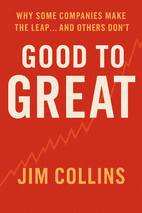
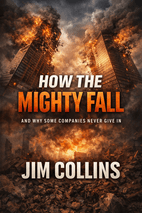
Jim Collins is a renowned author and management expert, celebrated for his influential research on company greatness and enduring success. His seminal work, *Good to Great*, has become a cornerstone of business literature, exploring how companies achieve and sustain exceptional performance. Collins is also the acclaimed author of *Built to Last*, *Great by Choice*, and *How the Mighty Fall*, which collectively have sold millions of copies worldwide. His rigorous, research-driven approach has established him as a leading voice on leadership, corporate culture, and strategic discipline. Jim Collins's books are widely available for purchase on Amazon, offering invaluable insights for leaders and organizations striving for excellence.
📚 Explore Our Book Summary Library
Discover more insightful book summaries from our collection