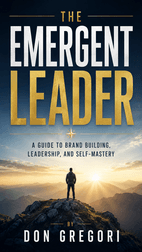
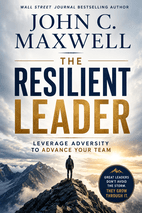
Don Gregori's The Emergent Leader presents a leadership philosophy centered on resilience and self-awareness, arguing that insecurity drives top performers. It offers a framework for building a purpose-driven company, scanning for opportunities, designing efficient systems, and mastering a mindful optimist mindset. This book is for current and aspiring leaders seeking sustainable success beyond surface-level tactics.
Feature
Insta.Page
Blinkist
Shortform
Summary Depth
Full Chapter-by-Chapter
15-min overview
Section-by-section guides
Audio Narration
✓
✓
✓
Visual Mindmaps
✓
✕
✕
AI Q&A
✓
✕
✕
Quizzes
✓
✕
✕
PDF Downloads
✓
✕
✓
Price
$89.99/yr
$146/yr (PRO)
$199/yr
*Competitor data last verified July 2026.
1 Page Summary
This book presents a leadership philosophy centered on resilience, self-awareness, and deliberate growth, arguing that insecurity is not a weakness but a common driver among top performers. The central thesis is that building a lasting career or company requires embracing continuous learning, staying nimble, and finding blind spots in the market while ignoring short-lived trends. The author frames success as a process of learning quickly from mistakes yet learning to forget the sting of failure, emphasizing that today's knowledge will not be sufficient for tomorrow's challenges.
The author's approach is distinctive for its blend of practical business strategy and personal development, using vivid analogies—from bodybuilders to libraries to the Confucian ideal of refining a wheel—to make complex ideas accessible. Each chapter addresses a core pillar: building a purpose-driven "forever company" with genuine culture, scanning for opportunities from the "opportunist's perch" through sustained effort, designing systems for efficiency and adaptability, and mastering inner mindset through what the author calls the "mindful optimist" approach. The book draws on examples from iconic brands like Patagonia and Harley-Davidson, as well as research on stress perception, to reinforce its points.
The intended audience is current and aspiring leaders who want to move beyond surface-level tactics to build sustainable success. Readers will gain a framework for treating their business as a living organism requiring constant strain and evolution, while also learning how to manage stress as fuel rather than friction. Ultimately, the book promises practical strategies for eliminating wasted effort, refining processes, and maintaining the long-term resilience needed to outpace expectations without sacrificing personal well-being.
Introduction
Overview
The Introduction sets the tone for what it means to lead with resilience and self-awareness. It begins with a powerful paradox: we must learn quickly from mistakes while also learning to forget the sting of failure. The greatest performers—athletes, explorers, leaders—don't dwell on a bad play or a lost quarter. They train themselves to block out confidence-shaking memories and instead hold onto the belief that they can do better next time. That’s not bravado; it’s survival.
There’s a candid acknowledgment here that insecurity isn’t a weakness—it’s common among top performers. That restless feeling of being a fraud or a one-hit wonder is what drives us to improve, to prove ourselves again and again. The chapter frames this as fuel, not friction. The key is recognizing that today’s knowledge and experience will help tomorrow, but they won’t be enough for all future opportunities. So we have to stay alert, stay nimble, and keep learning.
The author stresses the importance of finding blind spots in the market, ignoring short-lived trends, and actually enjoying the journey—because that’s what tips the odds in your favor. Efficiency comes from processes and measurement. Whatever we measure, we can improve. But more than building a feedback loop, the real challenge is being willing to change our approach based on what we learn. Agility matters. A/B testing, evaluating ROI, and using data to find levers that improve outcomes while protecting downside are the practical tools.
Finally, the Introduction outlines the structure: sixty chapters in six categories, each offering a clear perspective on a common business or management challenge, real-world examples, and simple action steps. It’s intended for startup founders, first-time bosses, experienced managers moving into new industries, and even seasoned leaders navigating inflection points. The entire book is framed as a journey toward self-mastery, inspiring others, and building something exceptional.
Key Takeaways
Learn fast, forget faster. Absorb the lesson from failure, then release the emotional weight so you can move on with confidence.
Insecurity is an asset, not a flaw. Use the drive to prove yourself to fuel growth, not self-doubt.
Today’s skills won’t last forever. Keep learning and stay adaptable to seize future opportunities.
Measure what matters. Efficiency comes from data, feedback loops, and a willingness to pivot based on results.
The book is a practical toolkit. Sixty chapters across six categories, with real examples and actionable steps for leaders at any stage.
Key concepts: Introduction
1. Introduction
The Resilience Paradox
Learn quickly from mistakes
Forget the sting of failure
Block confidence-shaking memories
Hold onto belief in improvement
Insecurity as Fuel
Insecurity is common among top performers
Drives us to improve and prove ourselves
Frame it as fuel, not friction
Stay alert and keep learning
Finding Opportunities
Spot blind spots in the market
Ignore short-lived trends
Enjoy the journey to tip odds
Stay nimble and adaptable
Data-Driven Agility
Measure what matters for efficiency
Use A/B testing and ROI evaluation
Find levers to improve outcomes
Be willing to pivot based on results
Book Structure and Audience
Sixty chapters in six categories
Real-world examples and action steps
For founders, bosses, and seasoned leaders
Journey toward self-mastery and building
💡 Try clicking the AI chat button to ask questions about this book!
I. The Forever Company
Overview
A company built to last—a "forever company"—grounds itself in purpose and culture rather than short-term wins. Iconic brands like Patagonia, Warby Parker, and Google articulate deeper missions that aren't just taglines. For Patagonia, it's saving wild places; for Warby Parker, it's the right to see; for Google, it's organizing the world's information. These aren't fluffy statements—they're engines that drive how these companies operate and why people want to work for them.
Why Culture Isn't a Perk Menu
Culture isn't free snacks and ping‑pong tables. It's a set of intentional behaviors, seeded and nurtured from the top but embraced by everyone. The Entrepreneur‑CultureIQ partnership shows that real cultural health is measured by alignment, effectiveness, connection, management, engagement, leadership, and basics like pay and training. Harley‑Davidson’s revival through the Harley Owners Group (HOG) demonstrates how powerful culture can be—zero ad dollars spent, yet customers tattoo the brand on their bodies. But culture isn’t static; even Harley must evolve as its core demographic ages.
Staying in the Fight Through Risk and Grit
Elon Musk’s story—four exploded rockets, Tesla near bankruptcy—drives home that building something enduring means embracing failure as tuition. The chapter doesn’t glorify reckless risk; it advocates for systematic risk management: identify internal and external risks, use qualitative and quantitative analysis, and monitor KPIs. The takeaway is that determination, paired with transparency and constant engagement from leaders, keeps a company focused when distractions, fads, or rapid expansion tempt it off course.
Transparency as a Trust-Building Engine
Fitbit’s founders handled production delays by blogging weekly about their struggles, turning a crisis into deeper customer loyalty. The principle is simple: when you live out loud in the open, you invite feedback that makes products stronger. Transparency isn’t just about honesty—it’s a strategic choice that breeds trust among employees, partners, and customers.
What Makes Teams Truly Effective
Google’s Project Aristotle found that the highest-performing teams weren’t those with the smartest people or longest tenure. The secret was psychological safety—a climate where everyone feels comfortable taking risks and being vulnerable. The most innovative ideas came from teams rich in generosity, curiosity, empathy, and emotional intelligence. This challenges the assumption that talent alone drives success.
Navigating the Remote Work Balance
Remote work offers flexibility and focus, but it can breed isolation and drift. The most productive teams collaborate beyond office walls, but it requires stronger planning, management, and deliberate integration. The key isn’t where people are, but how well they’re connected. Leaders should ask team members where they feel out of the loop and remove geographical blinders when hiring.
Leadership Lessons from a Galaxy Far, Far Away
Using Star Wars archetypes—Vader (forceful and demanding), Obi‑Wan (empathetic and generous), Yoda (humble sage and prankster)—the chapter reminds leaders that there’s no single perfect style. The most effective leaders understand the why behind effectiveness and adapt those lessons authentically. Today’s corporate world values honesty and fallibility over a sheen of flawlessness.
Key Takeaways
Purpose and culture are strategic assets, not HR buzzwords—they must be intentionally built and measured.
True resilience comes from systematic risk management and the grit to stay in the fight when things go wrong.
Radical transparency with customers and employees builds trust and generates better products.
Psychological safety trumps individual talent in building high-performance teams.
Remote work succeeds when integration is prioritized over location.
Authentic leadership borrows lessons from others but adapts them to your own style—flaws included.
Key concepts: I. The Forever Company
2. I. The Forever Company
Purpose-Driven Foundation
Forever companies ground in purpose, not short-term wins
Patagonia, Warby Parker, Google have deeper missions
Purpose drives operations and attracts talent
Culture as Strategic Asset
Culture is intentional behaviors, not perks
Measured by alignment, engagement, and leadership
Harley-Davidson's HOG shows culture's power
Culture must evolve with changing demographics
Resilience Through Risk and Grit
Elon Musk's failures show failure as tuition
Systematic risk management with KPIs is key
Determination and transparency keep focus
Transparency and Psychological Safety
Fitbit's crisis turned into loyalty via transparency
Transparency breeds trust and better products
Psychological safety trumps talent for team success
Generosity, curiosity, empathy drive innovation
Adaptive Leadership and Remote Work
Effective leaders adapt styles like Star Wars archetypes
Authenticity and fallibility valued over perfection
Remote work succeeds with integration, not location
Leaders must remove blinders and connect teams
II. The Opportunist’s Perch
Overview
Building a business that lasts isn't about brilliant one-off ideas or luck—it's about deliberate, sustained effort that pushes past comfort zones, just like those gym rats who grunt through the last rep. That's the core message of this chapter. The “opportunist’s perch” is not a place to rest; it’s a dynamic lookout from which you must constantly scan for gaps, invest wisely, and avoid the twin traps of ego and fad-chasing. Success demands you treat your business as a living organism that needs to sweat, strain, and evolve, not coast on past glory.
Growth Requires Strain
The chapter opens with a jolting comparison: bodybuilders in banana hammocks are smarter than the rest of us. Why? Because they understand that real growth only happens beyond the point of fatigue. A casual two minutes on the pec deck is fine for general health, but to see noticeable results you have to embrace the burn. The same logic applies to business. Generating results means sweating, dedicating time, and challenging complacency. The book urges you to identify any area of your work that has gone onto autopilot and to attack it—either reinvigorate that practice or trade it for a new passion. Try something new, even if it's outside your lane.
From One-Hit Wonder to Sustainable Business
The cautionary tale of the Winklevoss twins versus Mark Zuckerberg drives home a painful truth: an idea alone is worthless. Facebook’s product generated the income to pay that settlement, not the concept. A product that enjoys a flash of commercial success can lull you into a false sense of invincibility. Ego sets in, you cut corners, ignore headwinds, and believe you can churn out hits on demand. There is no such thing as a hit factory. The danger is compounded when your initial goal was too small or when you built a product without building an actual business around it. A single effort cannot sustain you in a sped-up, well-funded, competitive world.
Study the Landscape, Then Dominate a Niche
Warby Parker serves as the model for the purposeful disruptor. The founders didn't just innovate once; they studied the landscape, found a gap (expensive eyewear controlled by a few players), and chose a niche to dominate. They started by reimagining the online buying experience with virtual try-ons, then expanded into retail stores that became tourist destinations with Tiffany-level sales per square foot. And they tied their business model to a social mission—donating a pair of glasses for every pair sold. This is the difference between a true innovator and a fad-chaser.
Don’t Mistake Fads for Innovation
Imitation can be a business model, especially for fashion knockoffs that capitalize on fleeting demand. But for most industries, a fad is a blip with no long-term value. The book warns against jumping at every shiny object. Branching out is fine, but only if your “trunk” (your core business) is strong. Chasing fads risks losing your existing customers and draining resources. The line between a novelty and a niche is crucial: a novelty gives a temporary spike, but a niche can be owned. Kodak’s demise is the cautionary monument. They didn’t just miss digital photography; they then failed to respond to digital cinema, watching their motion-picture film sales plummet 96% from 2006 to 2014. Only nostalgia and a few directors like Nolan and Tarantino kept the film division alive—a thin reed to lean on.
Invest Through Downturns, But Sharpen the Blade
It’s tempting to slash marketing and R&D budgets when cash is tight, but that’s often “penny-wise and pound-foolish.” A Harvard Business School study of over 4,700 companies during recessions found that the ones most likely to recover (37% probability) were those that balanced investment in marketing and new product development with aggressive waste reduction and operational efficiency. Economists call recessions a “good cold shower.” Smart investment during a downturn can let you undercut competitors and grab market share, but you can't just spend blindly—you must also improve efficiencies.
Diversify, But Know When to Quit
A jack-of-all-trades is a master of none, but that doesn't mean you shouldn't expand. Growth and diversification make your company more resilient, just like a diversified investment portfolio. The hard part is knowing when to pivot away from a failing product and when to press forward. Trying to cater to everyone dilutes your core offering and alienates your best customers. The chapter also highlights a pitfall in startup culture: buying a product or concept rather than building a real business. Venture capitalists may accept that risk, but most of us shouldn't.
Entrepreneur vs. Inventor
This is a definitive split. An inventor profits from an idea without the responsibility of building a business—they license or sell out and walk away. An entrepreneur, however, commits to turning the idea into a sustainable company, taking on the role of a “bearer of risks” (a term from Richard Cantillon in 1755). One successful product launch does not make a company. Being an entrepreneur means being devoted to partners, employees, and the collaborative endeavor of creating value at scale.
Revenue Early and Often
A recurring mistake among startups is delaying revenue generation. The chapter offers a real-world example: a cannabis-review platform poured effort into building a user base and community features before figuring out how to monetize. Money ran out after multiple funding rounds. Had they focused on getting manufacturers to list their products, enabling purchases, and proving a business model from the start, they would have kept the power in their own hands—not the investors’. As an entrepreneur, you want to be the one holding the leash, not the beast on the end of it.
Key Takeaways
Growth demands sustained effort beyond comfort; complacency is the enemy.
A single successful product does not equal a sustainable business—build the company, not just the idea.
Dominate a specific niche rather than chasing every fad.
Invest in marketing and efficiency during downturns to gain market share.
Diversify your offerings, but know when to cut losses and pivot.
Choose whether you are an inventor (sell the idea) or an entrepreneur (build the business).
Prioritize revenue generation from the start to maintain control and prove the model.
Key concepts: II. The Opportunist’s Perch
3. II. The Opportunist’s Perch
Growth Requires Strain
Real growth happens beyond the point of fatigue
Identify autopilot areas and attack them
Try something new, even outside your lane
From One-Hit Wonder to Sustainable Business
An idea alone is worthless without execution
Ego and cutting corners lead to failure
No such thing as a hit factory
Study the Landscape, Then Dominate a Niche
Warby Parker found a gap in expensive eyewear
Reimagined online buying with virtual try-ons
Tied business model to a social mission
Don’t Mistake Fads for Innovation
Fads offer no long-term value
Strengthen your core business before branching out
Kodak failed by missing digital cinema shift
Invest Through Downturns, But Sharpen the Blade
Slashing R&D and marketing is penny-wise, pound-foolish
Smart investment during recessions grabs market share
Balance spending with aggressive waste reduction
Diversify, But Know When to Quit
Growth and diversification build resilience
Catering to everyone dilutes your core offering
Know when to pivot away from a failing product
Entrepreneur vs. Inventor & Revenue Early
Entrepreneur commits to building a sustainable company
Inventor profits from ideas without business responsibility
Delay revenue generation is a recurring startup mistake
Prove business model early to keep power in your hands
III. Designing Tomorrow
Overview
Change isn't just happening—it's accelerating at a dizzying pace. More than 90% of all human data has been generated in just the last few years, and we're on track to produce 175 zettabytes this year alone. That's 175 trillion gigabytes of information. Alongside this data explosion, we're seeing population shifts, artificial intelligence gaining ground, and connectivity spreading in ways we couldn't have imagined a decade ago. Even the obvious positives—longer lifespans, easier access to information—bring their own complications, like food shortages or overwhelming, unorganized data.
The real question isn't how to keep up. It's how to embrace change and actively participate in shaping it. We need to get comfortable with uncertainty and recognize that we'll soon face problems that don't yet exist. The jobs, tactics, and skills that worked yesterday won't necessarily work tomorrow. The top ten jobs in 2010 didn't even exist six years earlier. This rate of change demands we let go of old behaviors, build new skills, and develop fresh routines.
Innovation isn't invention. It's making changes to what already exists. Charles Darwin's insight still rings true: it's not the strongest or most intelligent species that survives, but the one most responsive to change. The same applies to our careers, products, and businesses. If we can foresee where things are heading, we can prepare and increase our chances of survival. Even better, if we become a catalyst for change rather than just adapting to it, we dramatically improve our odds.
Take communication technology. What started as a simple wire connecting people eventually allowed real-time video from almost anywhere. Most advances initially cater to the wealthy—the early adopters. But as costs drop, the masses benefit, often in unexpected places. Cell phones in sub-Saharan Africa and Afghanistan have transformed small business and education because cell towers can reach where phone lines never could. In Libya, citizens registered to vote via SMS during civil unrest, with 1.5 million people—nearly half of eligible voters—using text messages to participate in democracy.
To forecast the future, look at how products become cheaper, faster, smaller, more ubiquitous, and more multi-purposed. If we lift our gaze from the product in front of us and ask what will replace it, we give ourselves a fighting chance. We iterate not for its own sake, but to arrive at what the future needs will be.
There's an impatience in all of us—that child who wants cake batter now, not later. That's useful. It keeps us focused on short-term objectives and protects us from being overwhelmed by the bigger picture. Process goals, as Chris Bailey describes in A Life of Creativity, are about what you'll actually do to achieve a larger goal. Instead of "build a best-in-class site," focus on making it faster today. Maybe lazy-load content so users can interact sooner. The difference between Page Load Time and Document Interactive Time in web analytics is exactly this kind of thinking.
Children are naturals at this because they have little ego and haven't learned "you can't." They play, they tinker, and failure doesn't crush them—it motivates them. In the marshmallow tower challenge, kids who see a possible successful outcome keep trying. Once they deem the task impossible, they quit. This is self-efficacy, a belief that effort can lead to success. Architects, interestingly, are the second most successful builders in that game. They understand structure but haven't lost their imagination and playfulness. They've learned to focus their energy and build. Because creativity isn't just having ideas—it's creating, building, making something real.
Blind Spot Analysis is a powerful concept here. Most of us set our car mirrors to see our own vehicle, leaving dangerous blind spots. The correct way is to adjust them so you see the road behind, not your car. The same applies to our thinking. We're often blind to what's approaching until it's too late. Our myopia leaves us vulnerable to an impending crash, whether in business, design, or life.
Mind Maps and Wireframes are two practical tools for organizing ideas and identifying what to pursue. Mind maps link concepts through natural associations, helping generate more ideas and find deeper meaning. Wireframes are the chicken scratches that become blueprints for something functional and beautiful—whether a website, a building, or a gadget. Some of the most popular websites like YouTube, Wikipedia, and Facebook started as simple wireframes. Creativity isn't about artistic flair; it's about organization and arrangement. For every minute spent organizing, an hour is earned.
Take away: Creatives aren't necessarily artists. They're builders who string things together with order and purpose.
Model the user experience by fighting for simplicity. The best products are the easiest to use and explain. Einstein said, "If you can't explain it simply, you don't understand it well enough." If your audience gets it without instructions, you've achieved the ideal.
Plan only after you have a fleshed-out concept and rough prototype. Then draft a launch plan tailored to three audiences: the check writers, the builders, and the customers. Each group has different motivations. Cultivate the message for each one early, and your success rate jumps significantly.
Build and get it out. You don't need a fully conceived product, just an MVP (Minimum Viable Product) or MLP. Eric Ries defines MVP as a version that allows maximum validated learning with least effort. That doesn't mean selling only the chassis of a car—you need a whole car, but you don't need every feature. Learn from customers early. Define relevance, value, and differentiation before manufacturing. Test if the idea resonates, if financiers are invested, and if the team is inspired.
A product isn't usually born from happenstance, though the Slinky was an exception—Richard James knocked over a spring in 1943 and watched physics play out on his desk. It sold over 300 million units. But hope isn't a strategy. We can't bank on divine inspiration.
When crafting a story for product creation, each audience deserves a tailored message. The sponsor, collaborators, and customer all have different needs and triggers. If you can pitch convincingly to each, your project gets approved, built, and sold. This process also clarifies what you're setting out to achieve and how you'll get there.
Productivity isn't about waiting for inspiration. J.K. Rowling set word goals of one thousand per day and wrote even when she didn't feel like it. Hemingway and Stephen King did the same—starting early, writing daily, and separating creation from editing. Practice develops voice, style, and craft. Success begets success, and completing a project fuels motivation for the next.
Finally, the studio model of Renaissance artists offers a powerful lesson. Master artists didn't work alone—they had apprentices who stretched canvases, mixed pigments, and even put brush to canvas. Apprentices learned by copying until their work was nearly indistinguishable from the master's. This enabled volume and mastery that would have been impossible alone. First Nations carvers use a similar approach with totem poles, passing down skills through hands-on practice.
We need to build our own studios—teams, mentors, collaborators—who help us create more than we could alone. Creativity isn't solitary. It's built through practice, collaboration, and the willingness to let go of what no longer serves us.
Key Takeaways
Embrace change as the only constant. Adaptability matters more than strength or intelligence.
Innovation improves what exists; it's not invention. Look for ways to make things cheaper, faster, smaller, and more accessible.
Lift your gaze. Ask what will replace your current product, and build toward that future.
Set process goals, not just big, scary ones. Focus on what you'll actually do today.
Failure is motivation—if the task seems achievable. Keep the childlike willingness to try again.
Organize before you create. Mind maps and wireframes are powerful tools for bringing order to chaos.
Tailor your message to three audiences: sponsors, collaborators, and customers.
Build an MVP and learn from it early. Don't wait for perfection.
Creativity is a practice, not a gift. Write daily, even when uninspired.
Collaborate like Renaissance artists. Apprenticeship and teamwork multiply what you can achieve alone.
Key concepts: III. Designing Tomorrow
4. III. Designing Tomorrow
Embracing Accelerating Change
90% of human data generated recently
Future problems don't yet exist
Old skills won't work tomorrow
Be catalyst for change, not just adapter
Innovation vs. Invention
Innovation improves what already exists
Survival favors those responsive to change
Forecast by tracking cheaper, faster, smaller trends
Iterate to meet future needs
Process Goals and Childlike Thinking
Focus on short-term process goals
Children tinker without fear of failure
Self-efficacy drives continued effort
Creativity means building, not just ideas
Blind Spot Analysis
Adjust mental mirrors to see approaching threats
Myopia leaves us vulnerable to crashes
Apply to business, design, and life
Practical Tools: Mind Maps & Wireframes
Mind maps link ideas through associations
Wireframes become blueprints for products
Creativity is organization and arrangement
Every minute organizing earns an hour
Model User Experience & Plan
Fight for simplicity in products
Explain simply or understand better
Tailor launch plans to three audiences
Cultivate message for check writers, builders, customers
Build MVP and Learn Early
MVP enables maximum validated learning
Ship whole car, not just chassis
Test relevance, value, differentiation first
Learn from customers before full manufacturing
You've reached the end of the free chapters
Next chapter: “IV. Lean & Lithe” is locked
Keep reading The Emergent Leader — and unlock all 600+ book summaries with audio, mindmaps and AI Q&A.
$0.00 due today · 7 days free, then $89.99/year ($7.49/mo) · Cancel anytime before day 7
Don Gregori is a prolific author and historian specializing in the Italian Renaissance and the cultural history of Tuscany. He is best known for his meticulously researched works such as "The Medici Conspiracy" and "Florence Under the Stars," which blend narrative flair with deep archival insight. A former curator at the Uffizi Gallery, Gregori brings decades of academic expertise to his writing.
Frequently Asked Questions about The Emergent Leader
What is The Emergent Leader about?
This book explores how leaders can thrive by balancing resilience and self-awareness, using insecurity as fuel rather than a weakness. It outlines principles for building a 'forever company' rooted in purpose and culture, while also offering practical strategies for improving personal productivity and managing stress. Through examples from iconic brands and leaders, it emphasizes the importance of adapting to rapid change and designing systems that eliminate friction.
Who is the author of The Emergent Leader?
Don Gregori is an authority on leadership and organizational culture, drawing on insights from business icons and his own experiences, including a Harvard Business School leadership simulation. He emphasizes resilience, adaptability, and the power of mindset in leading effectively.
Is The Emergent Leader worth reading?
Absolutely worth reading for anyone looking to lead with purpose and resilience. The book combines timeless leadership wisdom with actionable strategies, from building enduring company culture to managing stress as fuel. It's a practical guide that challenges conventional thinking and provides a clear path for personal and organizational growth.
What are the key lessons from The Emergent Leader?
One key lesson is that insecurity is common among top performers and should be viewed as fuel, not weakness. Another is that building a 'forever company' requires a deep purpose and intentional culture, not perks. Leaders must also embrace change and constantly improve their processes to avoid complacency. Finally, stress can be harnessed by changing perception—seeing it as a challenge rather than a threat.
📚 Explore Our Book Summary Library
Discover more insightful book summaries from our collection