The Emergent Leader Quotes
by Don Gregori
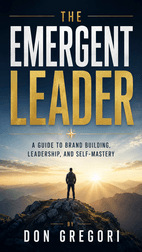
Welcome to a collection of quotes from The Emergent Leader by Don Gregori. Here you will find sharp insights that cut through corporate noise. The lines are direct, sometimes provocative, and always grounded in real world leadership. They challenge common assumptions about success and failure.
What makes this book so quotable is its blend of practical wisdom and surprising psychology. Gregori draws from sports, history, and business to deliver lessons that stick. These quotes are meant to be shared, debated, and applied. They capture moments of clarity that can shift how you think about leading.
Top Quotes from The Emergent Leader
“The greatest athletes do not linger on the previous play or recent loss. They have extremely short memories —actually, they learn to block out those distracting, confidence-shaking memories, and they believe in their ability to do it better the next time.”
The author describes the mindset of high performers in sports as a metaphor for leadership.
This line resonates because it reframes failure as something to be quickly forgotten, not dwelled upon, and ties success to a deliberate mental reset—a counterintuitive yet empowering message.
“Contrary to popular thinking, insecurity is widespread among the highest-performing leaders. It drives us to do better, to prove we are not frauds or one-hit wonders.”
The author challenges the stereotype of confident leaders by revealing insecurity as a common motivator.
Readers find reassurance in this admission because it normalizes self-doubt and transforms what is often seen as a weakness into a source of relentless improvement.
“Don’t believe the hype... ever. What is valuable today, if left alone, will be worthless tomorrow.”
The author warns against assuming past success will continue indefinitely.
This line cuts through overconfidence with a stark reminder that value is perishable, urging readers to stay alert and adaptive.
“Comfort is equivalent to apathy in the business world, and the other predators sense the opportunity.”
The author discusses the danger of resting on past achievements.
The vivid metaphor equates comfort with vulnerability, compelling readers to recognize that complacency invites competitive threats.
“IT IS NOT THE strongest of the species that survives, nor the most intelligent, but the one most responsive to change.”
The author quotes Charles Darwin to emphasize adaptability in the face of change.
This line reframes survival as a matter of flexibility rather than raw power or intelligence, making it a timeless call to embrace change.
“Initiative gets us noticed. Judgment gets us recognized. Trust gets us promoted.”
The author summarizes the progression of career advancement through specific behaviors.
Its rhythmic, three-part structure makes it memorable and provides a clear, actionable blueprint for professional growth.
“There is a glut of information available, but we are starving for wisdom. Trusting our guts may prove wise after all.”
The author reflects on the tension between data overload and intuitive decision-making.
This closing thought resonates in an era of information saturation, validating the role of experience and instinct without dismissing analysis.
Themes Behind the Quotes
The quotes revolve around resilience and adaptability. Leaders must have short memories for failure, embrace insecurity as a motivator, and constantly learn. Stress is not inherently bad; perception matters. Efficiency comes from measurement and organization. These ideas push for continuous improvement and forward focus.
Another theme is the intentional building of trust and culture. Listening, honesty, and fallibility are valued over perfection. The progression from initiative to judgment to trust outlines how leaders earn credibility. Ultimately, the quotes affirm that change is within our control. Leaders should own their path rather than feel trapped by circumstances.
Quotes by Chapter
Introduction
“We must be aware, be nimble, and constantly be learning.”
The author summarizes a key leadership principle for navigating uncertainty.
This concise trio of imperatives is memorable and actionable, capturing the essence of adaptive leadership in a way that sticks with the reader.
“Efficiency comes from processes and analysis. What we measure we can improve.”
The author emphasizes the importance of data-driven decision-making.
This pair of statements delivers a classic but powerfully framed truth about continuous improvement, appealing to both analytical and results-oriented minds.
I. The Forever Company
“Culture doesn’t just happen—it is seeded, cultivated, and nurtured.”
From the discussion on how culture is an intentional, ongoing process rather than a set of perks.
This line provides a clear, actionable metaphor for leadership, emphasizing that a strong culture requires deliberate and sustained effort.
“If we listen, we will breed trust, strengthen our products, and deliver amazing results.”
After recounting how Fitbit's transparency with customers built loyalty and engagement.
It distills the core value of listening and openness into a compelling promise of tangible business outcomes.
“The sheen of flawlessness is no longer the exemplar for the corporate leader: honesty and fallibility resonate.”
In the section on developing an authentic leadership style, referencing Yoda and other archetypes.
This quote challenges traditional ideals of perfection, advocating for vulnerability as a more relatable and effective leadership quality.
“Where we are is not the most important factor; how well we are integrated is what makes the difference.”
From the 'Neither Near nor Far' section discussing remote work and team collaboration.
It reframes the remote work debate by shifting focus from location to meaningful connection, a powerful insight for distributed teams.
II. The Opportunist’s Perch
“A clear dividing line separates an inventor from an entrepreneur.”
The author distinguishes between those who create ideas and those who build sustainable businesses around them.
This concise distinction clarifies two different mindsets and roles, helping readers decide which path aligns with their goals.
“As entrepreneurs, we want to be the owner holding a leash, not the beast of burden on the end of it.”
The author concludes a startup example about maintaining control over the business, not being controlled by investors.
The powerful imagery of leash and beast reinforces the importance of autonomy and leadership in entrepreneurship.
III. Designing Tomorrow
“If we can build the future now, our competitors will be left playing in the past.”
The author argues for proactive innovation rather than reactive adaptation.
It captures the competitive advantage of foresight and action, motivating readers to create rather than wait.
“Creativity is not relegated to the genius of invention; it is alive in everyone who can string a few disparate items or ideas together, just like a necklace made from string and Fruit Loops cereal.”
The author demystifies creativity by comparing it to a simple, accessible act of combining elements.
This inclusive definition empowers readers to see themselves as creative, breaking down elitist notions of artistic genius.
“For every minute spent organizing, an hour is earned.”
The author advises that planning and structure are foundational to effective creativity.
It is a memorable, pithy reminder that upfront effort in organization yields disproportionate returns, appealing to productivity-minded readers.
IV. Lean & Lithe
“Rushing to speak is rushing to judgment, and as leaders we should be looking to gather intelligence prior to acting.”
The author discusses the importance of active listening and slowing down to truly understand others.
It reminds leaders that thoughtful listening builds trust and prevents premature decisions, a timeless lesson in communication.
“We must continually scan the horizon for what is to come and pay little mind to what is in the rearview mirror.”
The author advocates for focusing on future opportunities rather than past achievements during organizational adaptation.
This line captures the essence of forward-thinking leadership, urging constant vigilance and a growth mindset.
“Force-fitting solutions will make a problem harder to solve.”
The author reflects on the importance of patience and fresh perspectives after discussing Nvidia's rapid data center build.
It concisely warns against stubborn problem-solving, encouraging openness and time for creative insights.
“Finish each day before you begin the next, and interpose a solid wall of sleep between the two.”
The author cites Ralph Waldo Emerson while emphasizing the critical role of rest in performance and health.
This poetic advice on work-life separation and sleep is both memorable and actionable for stressed professionals.
V. The Confucius Code
“We should instead be fanatical about improving how we accomplish our current tasks, determining how we can generate the same results, with the same quality, in less time.”
The author advises on shifting focus from pushing more work to refining processes.
This line challenges the common hustle mentality and promotes sustainable excellence, resonating with anyone overwhelmed by constant demands.
“If not, we help facilitate a totalitarian regime by playing the proletariat, like Boxer—working ever harder until we collapse and they send us to the glue factory.”
The author warns against ignoring self-interest, referencing the tragic horse from Animal Farm.
The vivid metaphor of exploitation and burnout strikes a chord with readers who fear being taken for granted or overworked without reward.
VI. The Mindful Optimist
“Not only are short bursts of stress good for us, but how we perceive stress dramatically alters the way in which our bodies respond. Perception absolutely matters.”
The author presents research findings on how stress perception affects health.
This line succinctly captures a core insight of the chapter: that our mindset can transform the physiological effects of stress, making it an empowering call to reframe challenges.
“Those individuals who expressed having had both high levels of stress and a negative association with stress had a 43% increased risk of premature death.”
The author cites data from a large-scale study analyzing stress and mortality.
The stark statistic makes the argument concrete and memorable, driving home the tangible health consequences of how we view stress.
“Further tests show that the cardiovascular profile of those who do not perceive the stress they are experiencing as negative follows the patterns of hearts when they experience joy.”
The author describes physiological research comparing stress responders to joyful states.
This vivid comparison reframes stress as potentially positive, linking it to a deeply human experience of joy and challenging common assumptions about anxiety.
“The power to change is completely within our control.”
The author reflects on his own ability to alter expectations and responses to stress.
Short and declarative, this statement offers a sense of agency and hope, reminding readers that they are not passive victims of stress.