The Emergent Leader Key Takeaways
by Don Gregori
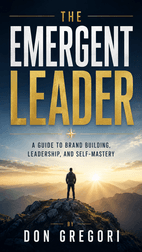
5 Main Takeaways from The Emergent Leader
Learn Fast, Forget Faster: Turn Failure into Fuel
Absorb every lesson from a setback, then deliberately release the emotional weight so you can move forward with confidence. The book shows how insecurity can drive growth if you treat it as motivation rather than a flaw, and how a childlike willingness to try again keeps innovation alive.
Build a Forever Company on Purpose and Safety
Purpose and culture are strategic assets that must be intentionally built and measured. Psychological safety trumps individual talent for high-performance teams, and radical transparency with customers and employees builds trust that generates better products.
Dominate a Niche but Always Prepare for Disruption
Focus on owning a specific market rather than chasing every fad, but simultaneously lift your gaze to ask what will make your current offerings obsolete. Invest in marketing and efficiency during downturns, and know when to cut losses and pivot before you're forced to.
Design Systems That Free You to Focus Forward
Organize your space, time, and meetings with systems you help create so you maintain the habit. Document your playbook to break complacency, respond to communications by day's end to prevent avalanches, and prioritize sleep and breaks to keep your judgment sharp.
Master Your Mindset: Stress Is a Choice, Failure Is Data
Your interpretation of stress determines its health impact more than the stress itself; narrow the gap between expectation and reality to reduce strain. Failure is motivation when the task seems achievable, and calibrating your intuition with experience and data lets you let go of the past and focus ahead.
Executive Analysis
These five takeaways form a cohesive thesis: leadership in a volatile world requires a radical blend of self-awareness, systematic resilience, and forward-looking design. The book argues that the emergent leader must treat failure as data, insecurity as fuel, and culture as strategy—all while building operational systems that free mental bandwidth for innovation. It connects mindset mastery (how you interpret stress and failure) with concrete practices (investing during downturns, documenting playbooks, designing meetings for employees) to create a leader who is both emotionally agile and operationally effective.
This book matters because it bridges the gap between abstract leadership theory and the daily decisions that shape a company's trajectory. Gregori offers a practical toolkit with real examples across sixty chapters, making it accessible to founders, managers, and executives at any stage. Its strength lies in its holistic approach: it doesn't just talk about culture or productivity in isolation but shows how they intertwine with risk management, stress physiology, and strategic foresight. For readers tired of one-note leadership books, The Emergent Leader provides a blueprint for building both a resilient self and a resilient organization.
Chapter-by-Chapter Key Takeaways
Introduction (Introduction)
Learn fast, forget faster. Absorb the lesson from failure, then release the emotional weight so you can move on with confidence.
Insecurity is an asset, not a flaw. Use the drive to prove yourself to fuel growth, not self-doubt.
Today’s skills won’t last forever. Keep learning and stay adaptable to seize future opportunities.
Measure what matters. Efficiency comes from data, feedback loops, and a willingness to pivot based on results.
The book is a practical toolkit. Sixty chapters across six categories, with real examples and actionable steps for leaders at any stage.
Try this: Absorb the lesson from every failure, then consciously release the emotional weight to move forward with confidence—and measure your progress with real data to stay adaptable.
I. The Forever Company (Chapter 1)
Purpose and culture are strategic assets, not HR buzzwords—they must be intentionally built and measured.
True resilience comes from systematic risk management and the grit to stay in the fight when things go wrong.
Radical transparency with customers and employees builds trust and generates better products.
Psychological safety trumps individual talent in building high-performance teams.
Remote work succeeds when integration is prioritized over location.
Authentic leadership borrows lessons from others but adapts them to your own style—flaws included.
Try this: Intentionally build your company's purpose and culture as strategic assets, foster psychological safety, and practice radical transparency with both customers and employees to generate trust and better products.
II. The Opportunist’s Perch (Chapter 2)
Growth demands sustained effort beyond comfort; complacency is the enemy.
A single successful product does not equal a sustainable business—build the company, not just the idea.
Dominate a specific niche rather than chasing every fad.
Invest in marketing and efficiency during downturns to gain market share.
Diversify your offerings, but know when to cut losses and pivot.
Choose whether you are an inventor (sell the idea) or an entrepreneur (build the business).
Prioritize revenue generation from the start to maintain control and prove the model.
Try this: Focus on dominating a specific niche while investing in marketing during downturns, prioritize revenue from the start, and know when to cut losses to pivot before you're forced to.
III. Designing Tomorrow (Chapter 3)
Embrace change as the only constant. Adaptability matters more than strength or intelligence.
Innovation improves what exists; it's not invention. Look for ways to make things cheaper, faster, smaller, and more accessible.
Lift your gaze. Ask what will replace your current product, and build toward that future.
Set process goals, not just big, scary ones. Focus on what you'll actually do today.
Failure is motivation—if the task seems achievable. Keep the childlike willingness to try again.
Organize before you create. Mind maps and wireframes are powerful tools for bringing order to chaos.
Tailor your message to three audiences: sponsors, collaborators, and customers.
Build an MVP and learn from it early. Don't wait for perfection.
Creativity is a practice, not a gift. Write daily, even when uninspired.
Collaborate like Renaissance artists. Apprenticeship and teamwork multiply what you can achieve alone.
Try this: Embrace change as constant, set daily process goals instead of only big scary ones, build an MVP early to learn from it, and tailor your message separately to sponsors, collaborators, and customers.
Next chapter: “IV. Lean & Lithe” is locked
Keep learning from The Emergent Leader — and unlock all 600+ book summaries with audio, mindmaps and AI Q&A.
$0.00 due today · 7 days free, then $89.99/year ($7.49/mo) · Cancel anytime before day 7
plus sales tax where applicable