As an Amazon Associate, we earn from qualifying purchases.
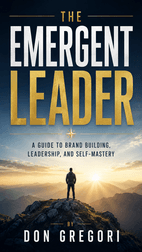
Don Gregori's The Emergent Leader presents a leadership philosophy centered on resilience and self-awareness, arguing that insecurity drives top performers. It offers a framework for building a purpose-driven company, scanning for opportunities, designing efficient systems, and mastering a mindful optimist mindset. This book is for current and aspiring leaders seeking sustainable success beyond surface-level tactics.
On Insta.page you also get an Apply This Book tool that lets you combine insights from up to 3 books to solve your specific situation.
Chapter mindmaps
Free preview: chapters 1–4 are fully interactive. Click any node to expand or collapse. Subscribe to unlock the rest.
Chapter 1: Introduction
Key concepts: Introduction
Introduction
The Resilience Paradox
Learn quickly from mistakes
Forget the sting of failure
Block confidence-shaking memories
Hold onto belief in improvement
Insecurity as Fuel
Insecurity is common among top performers
Drives us to improve and prove ourselves
Frame it as fuel, not friction
Stay alert and keep learning
Finding Opportunities
Spot blind spots in the market
Ignore short-lived trends
Enjoy the journey to tip odds
Stay nimble and adaptable
Data-Driven Agility
Measure what matters for efficiency
Use A/B testing and ROI evaluation
Find levers to improve outcomes
Be willing to pivot based on results
Book Structure and Audience
Sixty chapters in six categories
Real-world examples and action steps
For founders, bosses, and seasoned leaders
Journey toward self-mastery and building
Chapter 2: I. The Forever Company
Key concepts: I. The Forever Company
I. The Forever Company
Purpose-Driven Foundation
Forever companies ground in purpose, not short-term wins
Patagonia, Warby Parker, Google have deeper missions
Purpose drives operations and attracts talent
Culture as Strategic Asset
Culture is intentional behaviors, not perks
Measured by alignment, engagement, and leadership
Harley-Davidson's HOG shows culture's power
Culture must evolve with changing demographics
Resilience Through Risk and Grit
Elon Musk's failures show failure as tuition
Systematic risk management with KPIs is key
Determination and transparency keep focus
Transparency and Psychological Safety
Fitbit's crisis turned into loyalty via transparency
Transparency breeds trust and better products
Psychological safety trumps talent for team success
Generosity, curiosity, empathy drive innovation
Adaptive Leadership and Remote Work
Effective leaders adapt styles like Star Wars archetypes
Authenticity and fallibility valued over perfection
Remote work succeeds with integration, not location
Leaders must remove blinders and connect teams
Chapter 3: II. The Opportunist’s Perch
Key concepts: II. The Opportunist’s Perch
II. The Opportunist’s Perch
Growth Requires Strain
Real growth happens beyond the point of fatigue
Identify autopilot areas and attack them
Try something new, even outside your lane
From One-Hit Wonder to Sustainable Business
An idea alone is worthless without execution
Ego and cutting corners lead to failure
No such thing as a hit factory
Study the Landscape, Then Dominate a Niche
Warby Parker found a gap in expensive eyewear
Reimagined online buying with virtual try-ons
Tied business model to a social mission
Don’t Mistake Fads for Innovation
Fads offer no long-term value
Strengthen your core business before branching out
Kodak failed by missing digital cinema shift
Invest Through Downturns, But Sharpen the Blade
Slashing R&D and marketing is penny-wise, pound-foolish
Smart investment during recessions grabs market share
Balance spending with aggressive waste reduction
Diversify, But Know When to Quit
Growth and diversification build resilience
Catering to everyone dilutes your core offering
Know when to pivot away from a failing product
Entrepreneur vs. Inventor & Revenue Early
Entrepreneur commits to building a sustainable company
Inventor profits from ideas without business responsibility
Delay revenue generation is a recurring startup mistake
Prove business model early to keep power in your hands
Chapter 4: III. Designing Tomorrow
Key concepts: III. Designing Tomorrow
III. Designing Tomorrow
Embracing Accelerating Change
90% of human data generated recently
Future problems don't yet exist
Old skills won't work tomorrow
Be catalyst for change, not just adapter
Innovation vs. Invention
Innovation improves what already exists
Survival favors those responsive to change
Forecast by tracking cheaper, faster, smaller trends
Iterate to meet future needs
Process Goals and Childlike Thinking
Focus on short-term process goals
Children tinker without fear of failure
Self-efficacy drives continued effort
Creativity means building, not just ideas
Blind Spot Analysis
Adjust mental mirrors to see approaching threats
Myopia leaves us vulnerable to crashes
Apply to business, design, and life
Practical Tools: Mind Maps & Wireframes
Mind maps link ideas through associations
Wireframes become blueprints for products
Creativity is organization and arrangement
Every minute organizing earns an hour
Model User Experience & Plan
Fight for simplicity in products
Explain simply or understand better
Tailor launch plans to three audiences
Cultivate message for check writers, builders, customers
Build MVP and Learn Early
MVP enables maximum validated learning
Ship whole car, not just chassis
Test relevance, value, differentiation first
Learn from customers before full manufacturing
You've reached the end of the free mindmaps
Next chapter: “IV. Lean & Lithe” is locked
See every chapter of The Emergent Leader as an interactive mindmap — and unlock all 700+ book summaries with audio and AI Q&A.
$0.00 due today · 7 days free, then $89.99/year ($7.49/mo) · Cancel anytime before day 7