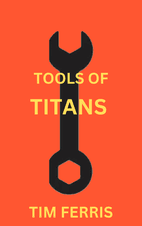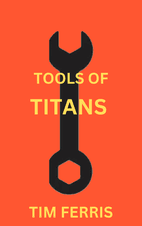
Tools Of Titans Summary

PART 1: HEALTHY

1/4
Lang
1x
Voice
PDF
0:00
0:00

Tools Of Titans Summary

by Timothy Ferris · Summary updated

Tools Of Titans Summary book cover

What is the book Tools Of Titans Summary about?

Timothy Ferriss's Tools of Titans distills actionable habits, routines, and strategies from over 200 top performers across his podcast. It serves as a curated toolkit in three sections—Healthy, Wealthy, and Wise—for readers seeking to optimize their personal and professional lives.

FeatureBlinkistInsta.Page
Summary Depth15-min overviewFull Chapter-by-Chapter
Audio Narration✓ (AI narration)
Visual Mindmaps
AI Q&A✓ Voice AI
Quizzes
PDF Downloads
Price$146/yr (PRO)$33/yr
*Competitor data last verified February 2026.

About the Author

Timothy Ferris

Timothy Ferriss is a renowned author, entrepreneur, and public speaker, celebrated for his groundbreaking work on lifestyle design and accelerated learning. He is best known for his #1 New York Times bestseller, "The 4-Hour Workweek," which has been translated into over 40 languages and revolutionized perspectives on productivity and business. His subsequent works, including "The 4-Hour Body" and "The 4-Hour Chef," further explore the themes of mastering skills and optimizing human performance. Ferriss's insightful methodologies and extensive research have established him as a leading voice in the self-help and business genres. His influential books and podcasts continue to inspire a global audience to challenge conventional limits. All of his published works are available for purchase on Amazon.

1 Page Summary

Tools of Titans by Timothy Ferriss is a comprehensive guide distilled from his popular podcast, The Tim Ferriss Show, featuring interviews with world-class performers across various fields. The book is divided into three sections—Healthy, Wealthy, and Wise—each focusing on habits, routines, and strategies that have propelled these individuals to success. Ferriss emphasizes actionable advice, including morning routines, productivity hacks, and mental frameworks, while also sharing personal anecdotes and insights from his own life. The book serves as a curated toolkit for readers seeking to optimize their lives, blending practical tips with philosophical reflections.

Historically, Tools of Titans builds on Ferriss's earlier works, such as The 4-Hour Workweek, which popularized the concept of lifestyle design. However, this book shifts focus from individual achievement to collective wisdom, compiling lessons from over 200 interviews with entrepreneurs, athletes, artists, and thought leaders. By synthesizing their experiences, Ferriss creates a mosaic of strategies for overcoming challenges, building resilience, and achieving excellence. The book also reflects the growing cultural interest in self-improvement and biohacking, trends that Ferriss has helped mainstream.

The lasting impact of Tools of Titans lies in its accessibility and diversity of perspectives. It democratizes high-performance strategies, making them applicable to readers from all walks of life. By distilling complex ideas into actionable steps, Ferriss empowers individuals to experiment and adapt these tools to their own circumstances. The book has become a staple in the self-help genre, inspiring readers to rethink their habits, embrace discomfort, and pursue mastery in their chosen fields. Its enduring relevance stems from its ability to bridge the gap between theory and practice, offering a roadmap for personal and professional growth.

Chapter 1: PART 1: HEALTHY

Challenging Conventional Health Narratives

Krishnamurti’s quote—“It is no measure of health to be well adjusted to a profoundly sick society”—anchors this section. The chapter argues that conformity to unhealthy societal standards (like overwork, materialism, or superficial success) is not true health but a form of spiritual sickness. True wellness, it suggests, requires questioning these norms and aligning with values that foster authenticity and balance. Lao Tzu’s opening line—“When I let go of what I am, I become what I might be”—ties into this idea, framing health as a dynamic process of shedding limiting identities to embrace growth.

The Role of Struggle in Personal Growth

Jodie Foster’s reflection—“In the end, winning is sleeping better”—and the anonymous mantra—“I’m not the strongest. I’m not the fastest. But I’m really good at suffering”—highlight perseverance as a cornerstone of health. The chapter reframes “suffering” not as a burden but as a skill: enduring discomfort to achieve meaningful goals. Foster’s quote underscores that true “winning” is internal—peace of mind, integrity, and alignment with one’s purpose. This section emphasizes resilience, arguing that health isn’t about avoiding pain but navigating it with intention.

Key Takeaways

  • Health transcends physicality—it’s about authenticity, resilience, and rejecting harmful societal norms.
  • Growth requires letting go of rigid identities (“what I am”) to embrace potential (“what I might be”).
  • True wellness involves discomfort; enduring struggle is a skill that leads to fulfillment.
  • “Winning” is defined by inner peace and integrity, not external validation.

Key concepts: PART 1: HEALTHY

1. PART 1: HEALTHY

Challenging Conventional Health Narratives

  • Conformity to unhealthy societal standards is a form of spiritual sickness, not true health.
  • True wellness requires questioning norms and aligning with values of authenticity and balance.
  • Health is a dynamic process of shedding limiting identities to embrace growth (inspired by Lao Tzu).
  • Krishnamurti’s quote anchors the idea that societal adjustment ≠ health.

The Role of Struggle in Personal Growth

  • Perseverance is a cornerstone of health—reframing suffering as a skill for meaningful growth.
  • True 'winning' is internal (e.g., peace of mind, integrity, purpose) rather than external validation.
  • Health involves navigating discomfort with intention, not avoiding pain.
  • Jodie Foster’s quote highlights that fulfillment comes from inner alignment, not superficial success.

Key Takeaways on Holistic Health

  • Health transcends physicality—it includes authenticity, resilience, and rejecting harmful norms.
  • Growth demands letting go of rigid identities to embrace potential.
  • Struggle is necessary for fulfillment; enduring discomfort is a skill.
  • Inner peace and integrity define true 'winning,' not societal metrics.
Scroll to load interactive mindmap
💡 Try clicking the AI chat button to ask questions about this book!

Chapter 2: Amelia Boone

Training and Recovery Tactics

Amelia’s edge comes from cutting-edge tools and unorthodox hacks:

  • Hydrolyzed Gelatin + Beet Root Powder: A joint-repair cocktail. She mixes Great Lakes hydrolyzed gelatin (green label) with BeetElite powder to mask the “cow-hoof” taste and boost endurance.
  • RumbleRoller: A foam roller’s evil twin. This recovery tool delivers deep tissue relief but demands caution—overuse leaves you feeling “swung against a tree.”
  • Golf Ball Foot Rolls: For hamstring flexibility. Pro tip: Use a towel under the ball to avoid launching it across the room.
  • Concept2 SkiErg: Her go-to for low-impact cardio during injuries. Post-knee surgery, this machine helped her maintain fitness en route to a championship win.
  • Dry Needling: A painful-but-effective muscle-release technique. Unlike acupuncture, it triggers muscle twitches for instant relief (but skip the calves unless you’re a masochist).
  • Sauna Endurance Hack: Regular sauna sessions mimic high-altitude training, a trick also used by cyclist David Zabriskie.
Mental Resilience and Rituals

Amelia thrives by embracing discomfort:

  • “Rehearsing the Worst-Case Scenario”: She trains in rain and cold, knowing competitors might skip it. This builds mental toughness for race-day chaos.
  • Pre-Race Pop-Tarts: A sugary ritual breakfast for fuel and familiarity.
  • Unbroken Double-Unders: Her 423-rep jump rope record (from third-grade skills) ended only because she peed her pants mid-rep.

Key Takeaways

  1. Embrace Discomfort: Train in harsh conditions to build resilience.
  2. Innovate Recovery: Tools like dry needling and the RumbleRoller can revolutionize rehab.
  3. Mind Over Matter: Amelia’s mantra—“No one owes you anything”—fuels her self-reliance.
  4. Rituals Matter: From Pop-Tarts to sauna sessions, consistency primes performance.
  5. Adaptability Wins: When injured, pivot (like the SkiErg) instead of pausing.

Amelia Boone’s legacy isn’t just trophies—it’s proving that relentless adaptation and a dash of weirdness can redefine what’s possible.

Key concepts: Amelia Boone

2. Amelia Boone

Training and Recovery Tactics

  • Hydrolyzed Gelatin + Beet Root Powder: Joint-repair cocktail with endurance benefits
  • RumbleRoller: Deep tissue relief tool requiring cautious use
  • Golf Ball Foot Rolls: Hamstring flexibility technique with a pro tip
  • Concept2 SkiErg: Low-impact cardio solution during injuries
  • Dry Needling: Painful but effective muscle-release technique

Mental Resilience and Rituals

  • Rehearsing the Worst-Case Scenario: Training in harsh conditions for mental toughness
  • Pre-Race Pop-Tarts: Sugary ritual breakfast for fuel and familiarity
  • Unbroken Double-Unders: Jump rope record showcasing persistence

Key Takeaways

  • Embrace Discomfort: Train in harsh conditions to build resilience
  • Innovate Recovery: Use cutting-edge tools for rehab
  • Mind Over Matter: Self-reliance mantra driving success
  • Rituals Matter: Consistency in habits primes performance
  • Adaptability Wins: Pivot strategies during setbacks
Scroll to load interactive mindmap

⚡ You're 2 chapters in and clearly committed to learning

Why stop now? Finish this book today and explore our entire library. Try it free for 7 days.

Chapter 3: Rhonda Perciavalle Patrick

Stem Cell Banking: Preserving Dental Pulp for Future Health

Dr. Patrick advocates for preserving dental pulp from wisdom or baby teeth through companies like StemSave or National Dental Pulp Laboratory. These stem cells—particularly rich in baby teeth—can be cryogenically stored (costing ~$625 upfront + $125/year) and later harvested for regenerative treatments. Potential uses range from repairing spinal cord injuries to treating traumatic brain damage, offering a biological “insurance policy” for future medical needs.

Hyperthermic Conditioning: Leveraging Heat for Performance

Patrick’s research into heat exposure reveals striking benefits:

  • Endurance Boost: A 30-minute post-workout sauna twice weekly for three weeks increased running endurance by 32%, linked to expanded plasma volume and red blood cell count.
  • Growth Hormone Surge: Sessions at 176°F–212°F spiked growth hormone (GH) levels up to fivefold, aiding muscle recovery and anti-aging.
  • Practical Application: The author (Tim Ferriss) combines 20-minute sauna or hot baths with ice baths (45°F), cycling heat and cold 2–4 times to maximize benefits while mitigating muscle soreness.

Prolactin release during heat exposure also supports tissue repair, though sessions should end before dizziness occurs, often marked by dysphoric “dynorphin release.”

Influential Figures in Dr. Patrick’s Work

Three researchers shape her current thinking:

  1. Dr. Bruce Ames: Renowned for nutrient research and the Ames test.
  2. Dr. Satchin Panda: Pioneering work on circadian rhythms.
  3. Dr. Jennifer Doudna: CRISPR gene-editing co-discoverer.

Their work informs her interdisciplinary approach to health optimization.

Key Takeaways

  • Banking dental pulp stem cells offers a personalized resource for future regenerative therapies.
  • Sauna use post-exercise boosts endurance (+32% in studies) and growth hormone (up to 5x), accelerating recovery.
  • Pairing heat exposure with ice baths may amplify benefits by alternating vasodilation and vasoconstriction.
  • Patrick’s science-driven strategies bridge cutting-edge research and actionable health practices.

Key concepts: Rhonda Perciavalle Patrick

3. Rhonda Perciavalle Patrick

Stem Cell Banking: Preserving Dental Pulp for Future Health

  • Preserve dental pulp from wisdom or baby teeth via companies like StemSave or National Dental Pulp Laboratory.
  • Cryogenic storage costs ~$625 upfront + $125/year for future regenerative treatments.
  • Potential uses include repairing spinal cord injuries and treating traumatic brain damage.
  • Acts as a biological 'insurance policy' for future medical needs.

Hyperthermic Conditioning: Leveraging Heat for Performance

  • 30-minute post-workout sauna twice weekly for three weeks increased running endurance by 32%.
  • Heat exposure (176°F–212°F) can spike growth hormone levels up to fivefold, aiding recovery and anti-aging.
  • Combining sauna/hot baths with ice baths (45°F) maximizes benefits and reduces muscle soreness.
  • Prolactin release during heat exposure supports tissue repair; sessions should end before dizziness occurs.

Influential Figures in Dr. Patrick’s Work

  • Dr. Bruce Ames: Nutrient research and the Ames test.
  • Dr. Satchin Panda: Pioneering work on circadian rhythms.
  • Dr. Jennifer Doudna: CRISPR gene-editing co-discoverer.
  • Their research informs her interdisciplinary approach to health optimization.

Key Takeaways

  • Dental pulp stem cell banking provides a personalized resource for future regenerative therapies.
  • Sauna use post-exercise boosts endurance (+32%) and growth hormone (up to 5x), enhancing recovery.
  • Heat exposure paired with ice baths amplifies benefits via vasodilation/vasoconstriction cycles.
  • Patrick’s strategies bridge cutting-edge research with actionable health practices.
Scroll to load interactive mindmap

Chapter 4: Christopher Sommer

The Foundation of Gymnastic Strength Training (GST)

Sommer’s GST system prioritizes strength across full ranges of motion, blending gymnastics principles with accessibility for all skill levels. Key to his methodology:

  • Addressing Weaknesses First: “If you want to be a stud later, you have to be a pud now.” Sommer insists on tackling embarrassing deficiencies (e.g., poor shoulder extension) to unlock overall progress.
  • Functional Movement Screen (FMS): A tool he recommends to identify mobility gaps.
Philosophy in Practice: Key Lessons from Coach Sommer
  • Flexibility vs. Mobility:
    • Flexibility is passive (e.g., stretching), while mobility requires active strength at end ranges (e.g., pike pulses).
    • Mobility work, like the J-curl or thoracic bridging, builds resilience and prevents injuries.
  • Consistency Over Intensity: Progress in GST often comes in sudden “stair steps” after months of plateauing. Sommer warns against rushing: “There are no old, stupid gymnasts… they’re all dead.”
  • “Eat and Train” vs. “Diet and Exercise”: Shift focus from aesthetics to functional goals.
Real-World Applications and Anecdotes
  • The “Failed Warmup” Seminar: At a 2007 seminar, advanced lifters collapsed during basic GST warmups due to poor mobility. Sommer’s takeaway: Neglecting foundational work leads to fragility, regardless of strength.
  • Olympic-Level Strength: Massive biceps in gymnasts stem from straight-arm ring work (e.g., Maltese holds). Beginners can replicate this with pulley systems or “iron cross trainers.”
Essential Movements and Goals
  • 3 Foundational Exercises:
    1. J-Curl: Builds core and hip mobility.
    2. Shoulder Extension: Improves overhead stability.
    3. Thoracic Bridge: Targets upper-back flexibility.
  • Progression Goals:
    • Beginner: Master the J-curl.
    • Intermediate: Straddle press handstand.
    • Advanced: Stalder press handstand.
Unconventional Recovery Tools

Sommer advocates for the Hitachi Magic Wand (plug-in version) to relax hypertonic muscles. Used on muscle bellies for 20–30 seconds, it’s effective for tension relief—though its appearance may raise eyebrows!

Key Takeaways

  • Confront Weaknesses: Progress starts with fixing what you’re worst at.
  • Mobility > Flexibility: Strength at end ranges prevents injuries and enhances performance.
  • Patience Pays: GST rewards consistency with sudden breakthroughs.
  • Train Functionally: Prioritize movements with clear goals over aesthetics.
  • Recovery Matters: Even unconventional tools (like a vibrator) can aid muscle recovery.

Key concepts: Christopher Sommer

4. Christopher Sommer

The Foundation of Gymnastic Strength Training (GST)

  • Prioritizes strength across full ranges of motion
  • Address weaknesses first to unlock overall progress
  • Recommends Functional Movement Screen (FMS) to identify mobility gaps

Philosophy in Practice: Key Lessons from Coach Sommer

  • Distinguishes between flexibility (passive) and mobility (active strength at end ranges)
  • Emphasizes consistency over intensity for long-term progress
  • Advocates shifting focus from aesthetics to functional goals ('Eat and Train' vs. 'Diet and Exercise')

Real-World Applications and Anecdotes

  • Illustrates the importance of foundational work through the 'Failed Warmup' seminar
  • Highlights how gymnasts develop Olympic-level strength through straight-arm ring work
  • Suggests scalable alternatives for beginners (e.g., pulley systems)

Essential Movements and Goals

  • J-Curl, Shoulder Extension, and Thoracic Bridge as foundational exercises
  • Progression goals: Beginner (J-curl), Intermediate (straddle press handstand), Advanced (Stalder press handstand)

Unconventional Recovery Tools

  • Recommends the Hitachi Magic Wand for muscle relaxation
  • Effective for hypertonic muscles when used on muscle bellies for 20–30 seconds

Key Takeaways

  • Confront weaknesses to enable progress
  • Mobility (strength at end ranges) is more valuable than passive flexibility
  • Patience and consistency lead to breakthroughs in GST
  • Functional training goals should take priority over aesthetics
  • Unconventional recovery tools can be highly effective
Scroll to load interactive mindmap

📚 Explore Our Book Summary Library

Discover more insightful book summaries from our collection

Self-Help(44 books)

Business(68 books)

The Infinity MachineThe Scaling CurveTurn Words Into WealthApple in ChinaThe SaaS PlaybookThe Growth EngineScale SoloVisionaryDing DongRunnin' Down a DreamSix Months to Six FiguresThe Curious Mind of Elon MuskPineapple and Profits: Why You're Not Your BusinessBig TrustObviously AwesomeCrisis and RenewalGet FoundVideo AuthorityOne Venture, Ten MBAsBEATING GOLIATH WITH AIDigital Marketing Made SimpleThe She Approach To Starting A Money-Making BlogThe Blog StartupHow to Grow Your Small BusinessEmail Storyselling PlaybookSimple Marketing For Smart PeopleThe Hard Thing About Hard ThingsGood to GreatThe Lean StartupThe Black SwanBuilding a StoryBrand 2.0How To Get To The Top of Google: The Plain English Guide to SEOGreat by Choice: 5How the Mighty Fall: 4Built to Last: 2Social Media Marketing DecodedStart with Why 15th Anniversary Edition3 Months to No.1Think BigZero to OneWho Moved My Cheese?SEO 2026: Learn search engine optimization with smart internet marketing strategiesUniversity of Berkshire HathawayRapid Google Ads Success: And how to achieve it in 7 simple steps3 Months to No.1How To Get To The Top of Google: The Plain English Guide to SEOUnscriptedThe Millionaire FastlaneGreat by ChoiceAbundanceHow the Mighty FallBuilt to LastGive and TakeFooled by RandomnessSkin in the GameAntifragileThe Infinite GameThe Innovator's DilemmaThe Diary of a CEOThe Tipping PointMillion Dollar WeekendThe Laws of Human NatureHustle Harder, Hustle SmarterStart with WhyMONEY Master the Game: 7 Simple Steps to Financial FreedomLean Marketing: More leads. More profit. Less marketing.Poor Charlie's AlmanackBeyond Entrepreneurship 2.0

Business/Money(1 books)

Business/Entrepreneurship/Career/Success(1 books)

History(1 books)

Money/Finance(1 books)

Motivation/Entrepreneurship(1 books)

Lifestyle/Health/Career/Success(3 books)

Psychology/Health(1 books)

Career/Success/Communication(2 books)

Psychology/Other(1 books)

Career/Success/Self-Help(1 books)

Career/Success/Psychology(1 books)

0