1. “If You Want to Gather Honey, Don’t Kick over the Beehive”
Chapter 1 of 4
0:000:00
EN
1x
Voice
PDF
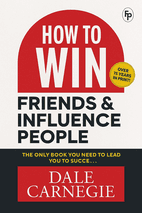
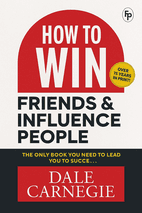
How To Win Friends & Influence People
by Dale Carnegie
What is the book How To Win Friends & Influence People about?
Dale Carnegie's How To Win Friends & Influence People distills timeless principles for building relationships and effective communication through genuine interest, active listening, and avoiding criticism. It remains essential reading for professionals, leaders, and anyone seeking to improve their interpersonal influence.
Feature
Insta.Page
Blinkist
Shortform
Summary Depth
Full Chapter-by-Chapter
15-min overview
Section-by-section guides
Audio Narration
✓
✓
✓
Visual Mindmaps
✓
✕
✕
AI Q&A
✓
✕
✕
Quizzes
✓
✕
✕
PDF Downloads
✓
✕
✓
Price
$89.99/yr
$146/yr (PRO)
$199/yr
*Competitor data last verified July 2026.
1 Page Summary
How to Win Friends and Influence People by Dale Carnegie, first published in 1936, is a foundational self-help book that distills timeless principles for building meaningful relationships and effective communication. Carnegie emphasizes the importance of genuine interest in others, active listening, and avoiding criticism to foster goodwill. Key concepts include praising others sincerely, seeing situations from others' perspectives, and making people feel valued—principles rooted in empathy and emotional intelligence.
The book emerged during the Great Depression, a time when interpersonal skills were crucial for professional survival. Carnegie drew from psychology and real-world examples to create practical advice for salespeople, leaders, and everyday individuals. His techniques, such as remembering names and encouraging others to talk about themselves, were revolutionary for their focus on human psychology over manipulation.
Over 80 years later, Carnegie’s work remains influential, shaping modern leadership, sales, and networking strategies. Its enduring popularity lies in its simplicity and universal applicability, proving that kindness and understanding are timeless tools for success. The book has sold millions of copies worldwide, cementing its place as a classic in personal development literature.
1. “If You Want to Gather Honey, Don’t Kick over the Beehive”
Overview
Even violent criminals like "Two Gun" Crowley and Al Capone reveal humanity's universal impulse for self-justification, where individuals rationalize harmful actions as necessary or noble. This tendency exposes the profound futility of criticism—psychologists prove condemnation triggers defensiveness, while kindness fosters change, as shown when safety warnings replaced scolding and compliance soared. Historical clashes like the Roosevelt-Taft feud demonstrate how criticism entrenches opposition rather than reforming behavior, with figures like disgraced Secretary Albert Fall refusing responsibility despite evidence.
Abraham Lincoln’s transformation epitomizes the alternative: after nearly dueling over an insult, he mastered restraint. During the Civil War, he famously withheld a blistering rebuke to General Meade, recognizing condemnation would only breed resentment. Modern icons like Theodore Roosevelt, Mark Twain, and test pilot Bob Hoover mirrored this wisdom—choosing empathy over blame preserved relationships and trust. The human cost of criticism surfaces tragically in creatives like poet Thomas Chatterton, driven to suicide, and novelist Thomas Hardy abandoning fiction after harsh reviews.
A father’s poignant awakening crystallizes the lesson: realizing his constant fault-finding toward his son stemmed from unrealistic expectations, he breaks down upon seeing the boy’s unconditional love. Kneeling beside his sleeping child, he vows to embrace empathy—"suffer when you suffer, laugh when you laugh"—and consciously repeat "He is nothing but
Criminals and Self-Justification
The chapter opens with the dramatic 1931 capture of "Two Gun" Crowley, a cop-killer who penned a letter during his standoff claiming, "Under my coat is a weary heart, but a kind one." Despite murdering a policeman in cold blood, Crowley insisted at his execution that he was merely "defending himself." This pattern of self-absolution extended to notorious figures like Al Capone and Dutch Schultz, who saw themselves as misunderstood public benefactors. Lewis Lawes, former warden of Sing Sing prison, observed that most inmates rationalized their crimes, believing they never deserved imprisonment.
The Futility of Criticism
John Wanamaker’s insight—"it is foolish to scold"—sets the stage for exploring criticism’s counterproductivity. Psychologists B.F. Skinner and Hans Selye demonstrated that rewards foster learning and cooperation, while criticism triggers defensiveness and resentment. An example from George B. Johnston, a safety coordinator, illustrates this: when he shifted from scolding workers for not wearing hard hats to kindly explaining their purpose, compliance soared without friction.
Historical Failures of Condemnation
The bitter feud between Theodore Roosevelt and President Taft split the Republican Party, enabling Woodrow Wilson’s election. After Taft’s devastating defeat, he tearfully maintained he "could not have done differently," proving Roosevelt’s criticisms only entrenched Taft’s self-justification. Similarly, during the Teapot Dome scandal, Secretary Albert Fall—jailed for bribery—never repented. His wife screamed he’d been "betrayed and crucified," highlighting how wrongdoers deflect blame.
Lincoln’s Hard-Won Wisdom
Abraham Lincoln learned the cost of criticism after a youthful insult nearly led to a deadly duel with James Shields. Post-incident, he abandoned ridicule. During the Civil War, when General Meade ignored Lincoln’s order to attack Lee’s trapped army—a lapse that prolonged the war—Lincoln drafted a scorching rebuke. Yet he never sent it, realizing condemnation would only provoke resentment and cripple Meade’s effectiveness. This restraint defined his leadership.
Modern Lessons in Restraint
Theodore Roosevelt and Mark Twain practiced similar restraint. Roosevelt consulted Lincoln’s portrait when facing dilemmas, while Twain vented anger in unsent letters. Benjamin Franklin attributed his diplomatic success to speaking "all the good I know of everybody." Test pilot Bob Hoover exemplified this when, after a mechanic’s error nearly caused a fatal crash, he reassured the distraught man rather than reprimanding him—strengthening trust.
The Human Cost of Criticism
Criticism’s toxicity is underscored by its impact on creatives: poet Thomas Chatterton died by suicide, and novelist Thomas Hardy abandoned fiction after harsh critiques. The chapter closes with "Father Forgets," a poignant editorial in which a parent reflects on nitpicking his child’s flaws—only to realize the boy’s unconditional love persisted despite constant reproach. Confucius’ adage resonates: "Don’t complain about the snow on your neighbour’s roof when your own doorstep is unclean."
Key Takeaways
Self-justification is universal: Even violent criminals rationalize their actions.
Criticism backfires: It triggers defensiveness, resentment, and rarely drives change.
Empathy disarms: Understanding others’ perspectives (as Lincoln did with Meade) builds cooperation.
Restraint empowers: Withholding criticism preserves relationships and influence.
Focus inward: Improving oneself is more effective and safer than attempting to "fix" others.
The Father's Awakening
A sudden moment of clarity strikes the narrator when his paper slips from his hands. Overwhelmed by "terrible sickening fear," he confronts his destructive habit of constant criticism toward his son. He realizes this fault-finding stems from unrealistic expectations—measuring the boy against adult standards while ignoring his youthful innocence. The child's spontaneous bedtime kiss surfaces as proof of his pure-hearted nature, contrasting sharply with the father's harshness.
Nighttime Atonement
Kneeling beside his sleeping son’s bed in darkness, the narrator feels profound shame. He acknowledges his failure to appreciate the boy’s true age—remembering how recently he was "in your mother’s arms, your head on her shoulder." Witnessing his son’s vulnerability in sleep, he makes a silent vow: Tomorrow begins true fatherhood. This means empathizing ("suffer when you suffer"), celebrating joys ("laugh when you laugh"), and suppressing criticism by ritualistically repeating: "He is nothing but a boy—a little boy!"
The Universal Lesson
This personal revelation expands into a life principle. The narrator condemns judgment, urging understanding others’ motivations instead. He argues this approach fosters "sympathy, tolerance and kindness," making it infinitely more valuable than criticism. Quoting "To know all is to forgive all" and Dr. Johnson’s wisdom that only God reserves judgment until life’s end, he crystallizes the core directive:
Key Takeaways
Unrealistic expectations poison relationships: Judging others (especially youth) by our own standards breeds resentment.
Break judgment cycles through conscious effort: Replace reactive condemnation with intentional compassion using mental reminders.
Principle 1 in action: "Don’t criticize, condemn or complain" transforms interactions when applied consistently.
Key concepts: 1. “If You Want to Gather Honey, Don’t Kick over the Beehive”
3. 1. “If You Want to Gather Honey, Don’t Kick over the Beehive”
Criminals and Self-Justification
Even violent criminals like 'Two Gun' Crowley rationalize their actions as noble or defensive.
Al Capone and Dutch Schultz viewed themselves as misunderstood public benefactors.
Lewis Lawes observed that most prisoners believe they don’t deserve punishment.
The Futility of Criticism
Criticism triggers defensiveness and resentment, while kindness fosters cooperation.
B.F. Skinner and Hans Selye proved rewards are more effective than punishment for behavior change.
George B. Johnston’s safety compliance improved when he replaced scolding with empathy.
Historical Failures of Condemnation
Roosevelt’s criticism of Taft entrenched Taft’s self-justification, splitting the Republican Party.
Teapot Dome’s Albert Fall never admitted guilt, reflecting criticism’s inability to reform.
Condemnation often hardens opposition rather than inspiring change.
Lincoln’s Hard-Won Wisdom
Lincoln abandoned ridicule after a near-duel taught him the cost of insults.
He withheld a harsh letter to General Meade, recognizing criticism would harm morale.
Restraint became a cornerstone of his leadership during the Civil War.
Modern Lessons in Restraint
Theodore Roosevelt consulted Lincoln’s portrait to avoid impulsive criticism.
Mark Twain vented anger in unsent letters; Franklin praised others openly.
Test pilot Bob Hoover strengthened trust by reassuring, not blaming, a mechanic after a near-fatal error.
The Human Cost of Criticism
Poet Thomas Chatterton’s suicide and Thomas Hardy’s abandonment of fiction show criticism’s destructive impact.
The 'Father Forgets' editorial reveals how nitpicking erodes relationships despite unconditional love.
Confucius’ adage warns against hypocrisy: focus on self-improvement before judging others.
Key Takeaways
Self-justification is universal; even wrongdoers see themselves as righteous.
Criticism backfires—empathy and restraint build cooperation.
Focus inward: changing others is futile without self-awareness.
The Father’s Awakening
A father realizes his constant criticism stems from unrealistic expectations of his son.
The child’s unconditional love contrasts with the father’s harshness, prompting remorse.
Vows to replace criticism with empathy: 'suffer when you suffer, laugh when you laugh.'
Nighttime Atonement
Profound shame leads to self-reflection when witnessing a child's vulnerability.
A vow to practice true fatherhood: empathizing with suffering and celebrating joys.
Suppressing criticism by reminding oneself of the child's youth and innocence.
The Universal Lesson
Condemnation of judgment in favor of understanding others' motivations.
Understanding fosters sympathy, tolerance, and kindness, surpassing criticism.
Quotes like 'To know all is to forgive all' emphasize the value of empathy.
Key Takeaways
Unrealistic expectations poison relationships when judging others by personal standards.
Criticism corrodes connections, while understanding and empathy heal them.
Breaking judgment cycles requires conscious effort and intentional compassion.
Principle 1 in action: 'Don’t criticize, condemn, or complain' transforms interactions.
💡 Try clicking the AI chat button to ask questions about this book!
2. The Big Secret of Dealing with People
Overview
This chapter explores the foundational principle that the only way to influence others is by awakening their desire to act. Coercion or threats yield fleeting compliance but breed resentment, while genuine motivation springs from addressing a universal human hunger: the craving for importance. Drawing from philosophers like John Dewey and psychologists like Sigmund Freud, the text positions this desire—distinct from basic needs like food or safety—as a core driver of human behavior, distinguishing humanity from animals.
The Universality of the Craving
Everyone seeks validation, from historical figures to everyday individuals. Lincoln’s pursuit of education, Dickens’ literary legacy, and Rockefeller’s philanthropy all stemmed from this urge. Conversely, criminals like Dillinger pursued notoriety for the same reason. The chapter illustrates how this desire manifests constructively or destructively through examples: Washington insisting on grand titles, Catherine the Great demanding imperial deference, and ordinary people feigning illness for attention. Even mental illness, as noted by a psychiatric expert, sometimes emerges when reality denies this fundamental need.
Appreciation Versus Flattery
True influence hinges on sincere appreciation, starkly contrasted with hollow flattery. Charles Schwab, among America’s highest-paid executives, attributed his success to praising colleagues generously and withholding criticism. His philosophy—"hearty in approbation, lavish in praise"—fueled productivity and loyalty. Andrew Carnegie and John D. Rockefeller similarly mastered this; Rockefeller commended a partner who lost millions, focusing on the 60% savings rather than the loss. Flattery, deemed "cheap praise" by King George V, is exposed as self-serving and easily detected. Authentic appreciation, however, forges trust and transforms relationships.
Everyday Applications
Neglecting appreciation has tangible costs: wives flee marriages over "lack of appreciation," employees underperform without recognition, and children languish without encouragement. Simple acts—thanking a chef, acknowledging a salesperson’s courtesy, or praising a janitor’s improvement—ignite motivation. The story of Stevie Wonder exemplifies this: a teacher’s acknowledgment of his hearing talent catalyzed his legendary music career. Pamela Dunham’s experience with an underperforming janitor further proves that public recognition outperforms ridicule. The text urges readers to "leave sparks of gratitude" daily, citing Emerson: "Every man I meet is my superior in some way."
Key Takeaways
Core Principle: The sole way to motivate anyone is to tap into their desire for importance.
Universal Craving: Beyond survival needs, humans possess an imperious need to feel valued—a force shaping history, creativity, and behavior.
Power of Sincerity: Honest appreciation (e.g., specific praise) builds loyalty and excellence; flattery erodes trust.
Actionable Insight: Regularly acknowledge others’ contributions. As Schwab demonstrated, encouragement fuels potential far more than criticism.
Life Philosophy: Withhold no kindness—expressed through the maxim: "I shall pass this way but once; any good... let me do it now."
Key concepts: 2. The Big Secret of Dealing with People
4. 2. The Big Secret of Dealing with People
The Core Principle of Influence
The only way to influence others is by awakening their desire to act.
Coercion breeds resentment; genuine motivation comes from addressing the craving for importance.
This desire distinguishes humans from animals and drives behavior (per Dewey, Freud).
The Universal Craving for Importance
Everyone seeks validation—historical figures (Lincoln, Dickens) and criminals (Dillinger) alike.
Manifests constructively (philanthropy) or destructively (notoriety).
Even mental illness can stem from denied recognition (psychiatric expert insight).
Sincere Appreciation vs. Flattery
True influence requires authentic appreciation (e.g., Charles Schwab’s praise-driven leadership).
Flattery is self-serving and detectable (King George V’s 'cheap praise' critique).
Examples: Rockefeller praised a partner’s 60% savings despite losses.
Practical Applications in Daily Life
Neglect costs: marriages fail, employees underperform, children languish without recognition.
Small acts (thanking a chef, praising a janitor) spark motivation (Stevie Wonder’s teacher).
Public recognition outperforms ridicule (Pamela Dunham’s janitor story).
Key Takeaways for Action
Tap into others’ desire for importance to motivate.
Acknowledge contributions daily (Emerson: 'Every man... is my superior in some way.').
Withhold no kindness ('I shall pass this way but once...').
3. “He Who Can Do This Has the Whole World with Him. He Who Cannot Walks a Lonely Way”
Overview
The chapter centers on a powerful truth: lasting influence comes from focusing on what others want, not what we want. It begins with a vivid fishing analogy—just as fish prefer worms over strawberries, people respond to appeals tailored to their own desires. This principle is illustrated through failures and triumphs across diverse situations. For instance, a young graduate's self-focused plea for basketball teammates fell flat because he ignored their potential motivations like fun or fitness. Conversely, Stan Novak got his reluctant son excited for kindergarten by highlighting activities the boy would enjoy, such as finger-painting.
In business, Barbara Anderson landed job interviews by emphasizing how her skills benefited banks, not her relocation needs. Similarly, a hotel owner facing a steep rent hike negotiated successfully by outlining pros and cons for the manager, like freeing the ballroom for profitable events. These contrast sharply with pitfalls like an advertising agency’s tone-deaf letter that boasted about its stature, breeding resentment. Even freight communication failed until reframed around the client’s operational gains.
Family dynamics further prove the point. Parents scolding an underweight boy about nutrition achieved nothing until linking vegetables to his burning desire: strength to "wallop" a bully. Another child’s bed-wetting stopped when his family appealed to his pride, letting him choose "grown-up" pyjamas and a bed. A toddler’s cereal resistance vanished when her father let her "make" breakfast herself, tapping her craving for autonomy.
The underlying philosophy—echoed by figures like Henry Ford and Andrew Carnegie—stresses seeing situations from the other person’s angle. Whether in sales, parenting, or negotiations, sparking cooperation means igniting an eager want in others. As shown in insurance pitches, framing a policy as "great news" doubled sign-ups versus passive mentions. Ultimately, this approach isn’t manipulation but mutual benefit: aligning goals with others’ deepest motivations—be it dignity, revenge, or self-expression—creates wins for everyone.
The Fishing Analogy and Core Principle
The chapter opens with a personal fishing analogy: Just as fish prefer worms over strawberries, people respond best when we address their desires—not our own. Lloyd George exemplified this during World War I, attributing his enduring leadership to "baiting the hook to suit the fish." The author asserts that discussing others' wants—not our own—is the only effective way to influence them, calling self-centered appeals "childish" and "absurd."
Illustrating Through Everyday Scenarios
Parenting: To deter smoking, show children how cigarettes hinder their goals (e.g., sports success), not adult concerns.
Emerson’s Calf: An Irish maid succeeded where Emerson failed by letting the calf suck her finger (fulfilling its need) while leading it into the barn.
Charitable Giving: Even altruism stems from personal desire—like the emotional reward of helping others.
Wisdom from Influential Figures
Harry Overstreet’s advice: "Arouse in the other person an eager want."
Andrew Carnegie’s tactics: He sparked his nephews’ prompt letter replies by mentioning (but not sending) $5, subtly tapping their anticipation.
Success Stories in Action
Stan Novak: Faced with his son’s kindergarten refusal, Stan listed fun activities Tim would enjoy (finger-painting, friends). By enthusiastically describing these, Tim eagerly awaited his first day.
Hotel Rent Negotiation: When facing a 300% rent hike, the author avoided demands. Instead, he outlined pros/cons for the manager: freeing the ballroom for lucrative events (pro) versus losing lectures that drew cultured crowds (con). The rent increased only 50%.
Barbara Anderson: Job-seeking in Phoenix, her letter highlighted how her banking skills would benefit banks, not her relocation needs. 11 of 12 banks interviewed her.
Pitfalls of Self-Centered Communication
Ineffective Letters:
An advertising agency’s letter focused on its stature, not recipients’ needs, breeding resentment.
A freight superintendent’s request for earlier deliveries emphasized terminal logistics, not the client’s gains. Mr. Vermylen noted it caused "antagonism."
Revised Freight Letter: Success came by opening with appreciation, explaining how earlier shipments sped up the client’s operations, and closing warmly.
Sales and Service Insights
Real Estate Agent: Ignored a client’s question about construction materials, pushing insurance instead—prioritizing his agenda.
Insurance Agents "Carl vs. John":
Carl passively mentioned a new policy.
John generated excitement by framing it as "great news," securing immediate sign-ups and doubled coverage.
Mike Whidden’s Service Station: To boost sales at a struggling station, Mike showed the manager a thriving Shell station. Inspired, the manager cleaned up, increasing sales and making Mike #1 in his district.
The Underlying Philosophy
Henry Ford’s secret—"see things from the other person’s angle"—is vital yet often ignored. Owen D. Young echoed this: Understanding others ensures future success. Crucially, influencing others isn’t manipulation; mutual benefit is key (e.g., Vermylen’s logistics win, Anderson’s job offer, John’s insurance sales).
The Basketball Example: A Failed Persuasion
The chapter illustrates ineffective persuasion through a young graduate's attempt to recruit basketball players. His plea focused entirely on his own desires: empty gymnasiums, getting a black eye, and his wish for companions. This approach failed because it ignored what others might want—such as improved energy, mental sharpness, or fun. The speaker neglected to connect basketball to his audience's intrinsic motivations.
Solving the Underweight Boy's Eating Problem
Parents initially scolded their underweight son about nutritional needs, but the boy remained indifferent. The breakthrough came when his father identified the child's burning desire: revenge against a neighborhood bully who stole his tricycle. By linking vegetable consumption to future physical strength needed to "wallop the bully," the boy willingly ate anything served. This demonstrated how aligning requests with another's passionate wants yields cooperation where demands fail.
Overcoming Bed-Wetting Through Pride
When conventional punishments failed to stop a boy's bed-wetting, his family cleverly appealed to his longing for maturity. They replaced his grandmother's nightgown with "grown-up" pyjamas and let him personally select and purchase his own bed from a department store. Sales staff treated him as "a little gentleman," inflating his pride. The child protected his new possession fiercely, stopping the habit immediately because his dignity was invested in the solution.
The Breakfast Cereal Breakthrough
Another father transformed his daughter's breakfast resistance by leveraging her desire to imitate adults. Instead of pleading, he let the three-year-old "make" the cereal herself while standing on a chair. Her proclamation—"I am making the cereal this morning!"—sparked enthusiasm. She ate two portions unprompted, proving that self-expression and feeling capable override coercion.
The Principle in Action and Reflection
These stories reinforce that successful influence requires viewing situations from others' perspectives. Whether dealing with children or adults, the key lies in uncovering what genuinely excites them and framing requests around those desires. The text emphasizes that this approach applies universally—from family dynamics to business negotiations—by letting others "stir the idea themselves" until they adopt it as their own.
Key Takeaways
Persuasion fails when focused solely on the speaker's needs (like the basketball plea).
Lasting change requires linkage between your objective and the other person's emotional drivers (e.g., the underweight boy's revenge fantasy).
Appeals to dignity and autonomy work where force doesn't (demonstrated by the bed-wetting solution).
Self-expression opportunities ignite intrinsic motivation (as with the cereal-making child).
Fundamental Principle: Always arouse an eager want in others rather than pushing your agenda. This aligns with core human needs: avoiding criticism (Principle 1), receiving appreciation (Principle 2), and pursuing self-directed goals (Principle 3).
Key concepts: 3. “He Who Can Do This Has the Whole World with Him. He Who Cannot Walks a Lonely Way”
5. 3. “He Who Can Do This Has the Whole World with Him. He Who Cannot Walks a Lonely Way”
The Core Principle: Appeal to Others' Desires
Fishing analogy: Use bait that suits the fish, not the fisherman
Lasting influence comes from focusing on what others want, not self-interest
Self-centered appeals are ineffective and 'childish'
Everyday Applications of the Principle
Parenting: Link behaviors to children's goals (e.g., smoking vs. sports success)
Emerson’s calf: Fulfill the calf's need (sucking a finger) to guide it
Charitable giving: People donate for emotional rewards, not pure altruism
Wisdom from Influential Figures
Harry Overstreet: 'Arouse in the other person an eager want'
Andrew Carnegie: Sparked nephews' letter replies by teasing $5
Henry Ford: 'See things from the other person’s angle'
Success Stories: Aligning with Others' Wants
Stan Novak: Got his son excited for kindergarten by highlighting fun activities
Hotel rent negotiation: Framed pros/cons for the manager, reducing hike to 50%
Barbara Anderson: Landed job interviews by emphasizing benefits to banks
Pitfalls of Self-Centered Communication
Ineffective letters: Boasting about stature breeds resentment
Freight superintendent’s failure: Focused on logistics, not client’s gains
Revised freight letter succeeded by aligning with client’s operational needs
Sales and Service Insights
Real estate agent: Ignored client’s question, pushing his own agenda
Insurance agents: 'Great news' framing doubled sign-ups vs. passive mentions
Mike Whidden: Inspired a service station by showing a thriving competitor
The Basketball Example: Why It Failed
Young graduate’s plea focused on his own desires (empty gyms, black eye)
Fundamental Principle: Arouse an eager want in others rather than pushing your agenda.
1. Do This and You’ll Be Welcome Anywhere
Overview
The chapter opens with a powerful analogy: dogs win universal affection through unconditional enthusiasm and genuine interest in humans—no ulterior motives, no transactional expectations. The author contrasts this with humanity’s self-centered tendencies, citing a New York Telephone Company study revealing "I" as the most spoken word. He stresses that seeking attention rarely builds real friendships, while giving sincere interest transforms relationships. Psychologist Alfred Adler’s insight anchors this: disinterest in others breeds failure and harm.
Illustrating the Principle
Authenticity in Action
Howard Thurston’s Magic: The legendary magician attributed his success to rehearsed showmanship and heartfelt gratitude toward audiences. Before each show, he repeated, "I love my audience," rejecting peers’ condescending views of crowds as "suckers."
Roosevelt’s Humility: Theodore Roosevelt greeted servants by name, inquired about their families, and celebrated small moments (like alerting a valet’s wife to a rare bird). His sincere regard fostered fierce loyalty, moving staff to tears.
Sales Turnarounds:
Edward Sykes salvaged a lost drugstore account when a clerk noted Sykes was the only salesperson who greeted staff warmly.
Charles Walters obtained confidential corporate data after gifting stamps for an executive’s son—leveraging shared interest to dissolve resistance.
Fuel salesman C.M. Knaphle reversed years of rejection by asking a chain-store executive for debate help (not sales), sparking a collaborative two-hour discussion and an eventual order.
Everyday Applications
Retired "Uncle George" Dyke befriended musicians across Pennsylvania through humble curiosity about their lives, finding joy post-retirement.
Birthdays & Small Gestures: The author meticulously tracked friends’ birthdays, sending timely greetings—often as the only person who remembered.
Phone & Service Interactions: Animated greetings ("tones that bespeak pleasure") and tellers’ kindness (e.g., inquiring about a customer’s hospitalized mother) built bank loyalty.
Profound Impacts
A lonely boy’s letter to the despised Kaiser post-WWI moved the monarch to invite him—and marry his mother.
A student nurse’s Thanksgiving companionship (staying off-duty to comfort a frightened child) created lifelong gratitude.
Dale Carnegie was a pioneering American writer and lecturer renowned for his groundbreaking work in self-improvement, corporate training, and interpersonal skills. He is the author of the perennial bestseller "How to Win Friends and Influence People," a landmark book that has sold millions of copies and continues to shape personal and professional development worldwide. His other influential works include "How to Stop Worrying and Start Living" and "The Quick and Easy Way to Effective Speaking." Carnegie founded the global training organization Dale Carnegie Training, which has empowered countless individuals and organizations to achieve greater success. His timeless principles on communication, leadership, and human relations remain profoundly relevant. His published works are widely available on Amazon.
📚 Explore Our Book Summary Library
Discover more insightful book summaries from our collection