How To Win Friends & Influence People Key Takeaways

by Dale Carnegie
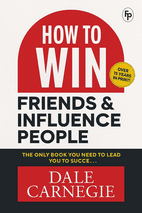
How To Win Friends & Influence People by Dale Carnegie Book Cover

5 Main Takeaways from How To Win Friends & Influence People

Replace Criticism with Sincere Appreciation to Build Loyalty and Trust

Criticism triggers defensiveness and resentment, while honest appreciation taps into the universal craving for importance, motivating others and fostering cooperation. For example, specific praise encourages excellence and loyalty, as demonstrated by leaders like Schwab who fueled potential through encouragement.

Focus on Others' Interests and Desires to Motivate and Influence Them

People act based on their own wants, so to persuade them, link your objectives to their emotional drivers. This involves talking in terms of their interests and arousing eager wants, as seen when appeals to dignity or autonomy succeed where force fails.

Listen Actively and Validate Others to Make Them Feel Important

By sincerely listening, remembering names, and asking about passions, you fulfill the deep need for significance. This disarms conflict and builds instant rapport, as highlighted in becoming a good conversationalist and making people like you instantly.

Use Empathy and Tact to Resolve Conflicts and Win Willing Cooperation

Avoid arguments by showing understanding, admitting your mistakes, and appealing to others' sense of fairness. This transforms resistance into collaboration, as shown in handling complaints, using the Socratic method, and letting others save face.

Encourage Progress and Highlight Strengths to Inspire Positive Change

Praise minor improvements and assign positive labels to motivate others to live up to them. This fosters growth without criticism, as demonstrated in spurring people to success, giving a dog a good name, and making faults seem easy to correct.

Executive Analysis

The five key takeaways interconnect to present a cohesive philosophy: human behavior is driven by deep-seated needs for appreciation, importance, and understanding. By replacing criticism with praise, focusing on others' desires, listening actively, employing empathy in conflict, and encouraging progress, Carnegie outlines a path to influence that respects these needs. This framework transforms interactions from transactional exchanges to meaningful connections built on mutual respect.

"How to Win Friends & Influence People" matters because it distills psychological insights into practical, everyday actions that anyone can apply. Its enduring relevance in business, leadership, and personal relationships stems from its focus on authentic empathy rather than manipulation, making it a cornerstone of the self-help genre that continues to deliver proven results in building trust and achieving cooperative outcomes.

Chapter-by-Chapter Key Takeaways

1. “If You Want to Gather Honey, Don’t Kick over the Beehive” (Chapter 1)

  • Self-justification is universal: Even violent criminals rationalize their actions.

  • Criticism backfires: It triggers defensiveness, resentment, and rarely drives change.

  • Empathy disarms: Understanding others’ perspectives (as Lincoln did with Meade) builds cooperation.

  • Restraint empowers: Withholding criticism preserves relationships and influence.

  • Focus inward: Improving oneself is more effective and safer than attempting to "fix" others.

  • Unrealistic expectations poison relationships: Judging others (especially youth) by our own standards breeds resentment.

  • Criticism corrodes, understanding heals: Seeking motives behind actions generates empathy, while fault-finding destroys connection.

  • Break judgment cycles through conscious effort: Replace reactive condemnation with intentional compassion using mental reminders.

  • Principle 1 in action: "Don’t criticize, condemn or complain" transforms interactions when applied consistently.

Try this: Consciously withhold criticism and seek to understand the motives behind others' actions before judging them.

2. The Big Secret of Dealing with People (Chapter 2)

  • Core Principle: The sole way to motivate anyone is to tap into their desire for importance.

  • Universal Craving: Beyond survival needs, humans possess an imperious need to feel valued—a force shaping history, creativity, and behavior.

  • Power of Sincerity: Honest appreciation (e.g., specific praise) builds loyalty and excellence; flattery erodes trust.

  • Actionable Insight: Regularly acknowledge others’ contributions. As Schwab demonstrated, encouragement fuels potential far more than criticism.

  • Life Philosophy: Withhold no kindness—expressed through the maxim: "I shall pass this way but once; any good... let me do it now."

Try this: Regularly express honest and specific appreciation for others' contributions to motivate and build loyalty.

3. “He Who Can Do This Has the Whole World with Him. He Who Cannot Walks a Lonely Way” (Chapter 3)

  • Persuasion fails when focused solely on the speaker's needs (like the basketball plea).

  • Lasting change requires linkage between your objective and the other person's emotional drivers (e.g., the underweight boy's revenge fantasy).

  • Appeals to dignity and autonomy work where force doesn't (demonstrated by the bed-wetting solution).

  • Self-expression opportunities ignite intrinsic motivation (as with the cereal-making child).

  • Fundamental Principle: Always arouse an eager want in others rather than pushing your agenda. This aligns with core human needs: avoiding criticism (Principle 1), receiving appreciation (Principle 2), and pursuing self-directed goals (Principle 3).

Try this: Frame your requests by highlighting how they benefit the other person's goals or emotional needs.

1. Do This and You’ll Be Welcome Anywhere (Chapter 4)

  • Selflessness Wins: Prioritizing others’ interests—without hidden agendas—builds deeper connections than self-promotion.

  • Observe and Act: Note details (names, hobbies, challenges) and act thoughtfully (birthday cards, helping with personal projects).

  • Sincerity is Non-Negotiable: Forced interest backfires; genuine curiosity enriches both parties.

  • Scale Doesn’t Matter: Tiny gestures (a warm greeting, a remembered preference) often yield the greatest loyalty.

  • Universal Applicability: From sales to leadership to personal crises, this principle bridges divides and transforms outcomes.

Try this: Prioritize others' interests by observing details about their lives and performing small, thoughtful acts without expectation.

2. A Simple Way to Make a Good First Impression (Chapter 5)

  • Authenticity matters: A sincere smile—reflecting inner warmth—outshines expensive attire or hollow grins in forging connections.

  • Ripple effects: Smiling transforms environments (e.g., tense waiting rooms, lonely offices) and influences unseen interactions (e.g., phone calls).

  • Mindset shapes reality: Choosing happiness through deliberate actions (like smiling) can alter emotional states and attract success.

  • Universal language: Smiles bridge social divides, conveying compassion and joy without words, making them indispensable in personal and professional life.

Try this: Cultivate a genuine smile that reflects inner warmth to connect with others and improve interactions.

3. If You Don’t Do This, You Are Headed for Trouble (Chapter 6)

  • Names as emotional anchors: A person’s name is their "sweetest sound," validating their uniqueness and worth. Forgetting or misspelling it signals disrespect.

  • Influence through intentionality: Systems like Farley’s (recording personal details) or Napoleon’s (repetition and visualization) turn recall into a superpower for building trust.

  • Universal applicability: From flight attendants to CEOs, using names transforms transactions into relationships, diffusing tension and inspiring generosity.

  • Legacy through recognition: Institutions like libraries and universities perpetuate donors’ names, proving humanity’s timeless desire to be remembered.

  • Action over excuses: Prioritizing name recall—despite busyness—distinguishes leaders like Roosevelt from those "operating on quicksand."

Try this: Make a deliberate effort to remember and correctly pronounce people's names, using techniques like repetition and association.

4. An Easy Way to Become a Good Conversationalist (Chapter 7)

  • Listening is active flattery: People crave being heard more than hearing others.

  • Defuse conflict with silence: Letting others vent fully resolves grievances faster than debate.

  • Ask, don’t tell: Questions about others’ experiences build deeper bonds than self-focused stories.

  • Validate feelings first: Acknowledge emotions before problem-solving (e.g., "I understand why you’d feel that way").

  • Ego transcends logic: A person’s minor concern (like a boil) feels larger than global crises—honor that perspective.

Try this: Practice active listening by letting others speak fully, asking open-ended questions, and validating their feelings before offering solutions.

5. How to Interest People (Chapter 8)

  • Prioritize others' passions: Research and discuss what excites them, not yourself, to build instant rapport.

  • Listen before leading: Identify interests through observation (e.g., framed checks, hobbies) to guide conversations.

  • Unlock generosity: People willingly exceed requests when their pride or enthusiasm is engaged.

  • Transform obstacles: Even "inaccessible" individuals soften when approached through their core motivations.

  • Mutual growth: Focusing on others' interests fosters richer connections and broadens your own worldview.

  • Principle 5: Talk in terms of the other person’s interests.

Try this: Research and talk about topics that excite the other person, rather than focusing on your own interests.

6. How to Make People Like You Instantly (Chapter 9)

  • Principle 6: Make others feel important—sincerely. This fulfills a core human need and forges instant connections.

  • Spotlight, Don’t Flatter: Focus praise on specific, genuine traits (e.g., "Your dedication to this project is inspiring").

  • Small Gestures, Big Impact: Courteous phrases ("Thank you for your help") validate others’ efforts daily.

  • Listen to Elevate: Asking about people’s passions (hobbies, achievements) signals their importance. As Disraeli noted, "Talk to people about themselves, and they’ll listen for hours."

  • Legacy Matters: Acknowledge others’ contributions and history—especially the overlooked—to awaken their sense of significance.

  • The Ripple Effect: Recognition costs nothing but yields loyalty, joy, and unexpected rewards, enriching both giver and receiver.

Try this: Spotlight others' genuine strengths and contributions through specific praise and by showing interest in their achievements.

1. You Can’t Win an Argument (Chapter 10)

  • Arguments are lose-lose: "Winning" breeds resentment; losing diminishes credibility.

  • Prioritize relationships over correctness: Preserving others’ dignity builds trust and influence.

  • Agree strategically: Acknowledging valid points disarms opposition and opens dialogue.

  • Listen and validate: Showing appreciation for others’ perspectives fosters collaboration.

  • Embrace tact, not tension: As Franklin noted, hollow victories sacrifice goodwill.

  • The core principle stands: The only way to truly win an argument is to avoid it entirely.

Try this: Steer clear of arguments by prioritizing harmony over being right, and if disagreement arises, acknowledge valid points to disarm opposition.

2. A Sure Way of Making Enemies – and How to Avoid It (Chapter 11)

  • Avoid absolute correctness: Telling others they’re wrong ignites defensiveness by threatening their self-worth.

  • Embrace humility: Begin discussions with "I may be mistaken" to invite collaborative problem-solving.

  • Prioritize understanding: Ask questions to uncover others’ viewpoints before offering alternatives.

  • Preserve dignity: As Benjamin Franklin demonstrated, replacing dogmatic language with modesty builds influence.

  • Core principle: Show respect for others’ opinions—never say, "You’re wrong."

Try this: Begin difficult conversations by admitting you could be mistaken, and use questions to explore differing viewpoints collaboratively.

3. If You’re Wrong, Admit It (Chapter 12)

  • Preempt criticism by admitting faults first; it disarms anger and often inspires generosity.

  • Self-criticism fosters respect, transforming adversarial interactions into cooperative ones.

  • Courage in accountability strengthens relationships, whether personal, professional, or cultural.

  • Historical and personal stories affirm that embracing blame—swiftly and emphatically—cultivates trust and resolves conflict more effectively than defense.

  • The principle transcends context: From policing to parenting, artistry to leadership, admitting error is a universal tool for connection.

Try this: When you're wrong, acknowledge it openly and without excuse to preempt criticism and build trust.

4. A Drop of Honey (Chapter 13)

  • Friendliness disarms conflict: Rockefeller’s speech and Black’s strike response show that kindness converts adversaries into allies.

  • Start with appreciation: Straub, Winn, and Connor succeeded by leading with empathy, not demands.

  • Reputation matters: Woodcock and Connor leveraged mutual respect to protect interests.

  • Gentleness outpaces force: Lincoln’s “drop of honey” maxim and the sun-and-wind fable remind us that patience and warmth unlock reason faster than anger.

  • Universal principle: Whether in labor disputes, courtrooms, or daily life, beginning with goodwill—not belligerence—creates lasting solutions.

Try this: Start interactions with goodwill and appreciation, even in disputes, to convert adversaries into allies.

5. The Secret of Socrates (Chapter 14)

  • Start with agreement: Open discussions by emphasizing shared goals, not disagreements.

  • Avoid triggering "no": A single "no" triggers psychological and physiological defensiveness, derailing collaboration.

  • Cumulative "yes": Secure multiple affirmative responses early to create momentum toward acceptance.

  • Reframe objections: Present solutions aligned with the other person’s interests (e.g., safety, savings) to transform resistance.

  • Socratic legacy: Influence through thoughtful questions that guide others to self-realization, not forceful correction.

Try this: Begin discussions by emphasizing shared goals and asking questions that guide others to say 'yes' repeatedly.

6. The Safety Valve in Handling Complaints (Chapter 15)

  • Listen to resolve: Allowing others to voice grievances fully dissipates anger and surfaces root issues.

  • Question, don’t preach: Ask open-ended questions to invite dialogue; silence your own agenda.

  • Empower through attention: People adopt solutions more readily when they feel heard.

  • Share the spotlight: In relationships, prioritize others’ narratives over your own triumphs.

  • Transform dynamics: Whether in boardrooms or living rooms, listening builds bridges confrontation burns.

Try this: Let others express their grievances completely without interruption, and use open-ended questions to understand their perspective.

7. How to Get Cooperation (Chapter 16)

  • Invite Input Over Issuing Orders: People support what they help create. Ask questions that guide others to "discover" solutions.

  • Seek Advice, Not Approval: Framing requests as collaborative ("What do you think?") builds investment and reduces defensiveness.

  • Credit Is Secondary to Results: Letting others take ownership of ideas amplifies their commitment and drive.

  • Universal Applicability: This principle works in boardrooms, homes, and global politics—anywhere human cooperation matters.

Try this: Instead of giving orders, ask for others' opinions and involve them in decision-making to foster ownership and commitment.

8. A Formula That Will Work Wonders for You (Chapter 17)

  • Replace judgment with curiosity: Ask, "Why might they feel this way?" to uncover motivations.

  • Empathy disarms defensiveness: Validate others’ experiences first (e.g., "I’d feel the same") before guiding change.

  • Listen to transform: Like Elizabeth Novak, let others express frustrations to build trust.

  • Prepare, don’t presume: Invest time envisioning conversations from others’ angles, as Donham advises.

  • Daily practice: Before any request, pause and ask, "Why should they want to do this?"

Try this: Before asking for something, pause to consider why the other person might want to do it, and frame your request accordingly.

9. What Everybody Wants (Chapter 18)

  • Empathy disarms conflict: The phrase "I’d feel the same in your position" validates emotions, dissolving defensiveness.

  • Circumstances shape behavior: Recognizing that people are products of their background fosters genuine compassion.

  • Sympathy isn’t surrender: Acknowledging others’ views builds trust, making them receptive to your perspective.

  • Patience enables connection: Delaying reactions (like Taft) and avoiding confrontation (like Norris) yield cooperative outcomes.

  • Universal craving: As Dr. Gates notes, self-pity and the desire for understanding are fundamental to human nature.

  • Core principle: Success in persuasion hinges on authentically aligning with others’ ideas and desires first.

Try this: Validate others' emotions by expressing that you'd feel the same in their position, which disarms defensiveness.

10. An Appeal That Everybody Likes (Chapter 19)

  • Assume nobility: People strive to be seen as honorable—frame requests around their self-image as just and principled.

  • Listen first: Validation disarms defensiveness, making others receptive to higher appeals.

  • Replace confrontation with empathy: As in Thomas’s story, acknowledging mistakes and trusting others’ judgment turns conflict into collaboration.

  • Universal applicability: From rent disputes to media negotiations, appealing to motives like fairness, family, or charity works because it aligns with core human ideals.

  • Experiment boldly: If current methods fail, this principle offers a low-risk, high-reward alternative. Even "tough" cases often respond when treated as trustworthy.

Try this: Frame your appeals around others' sense of honor, fairness, or charity to align with their ideal self.

11. The Movies Do It. TV Does It. Why Don’t You Do It? (Chapter 20)

  • Show, don’t just tell: Tangible demonstrations (like the Bulletin’s book or Boynton’s jars) make facts undeniable.

  • Emotion drives action: Sound, imagery, and surprise (e.g., scattering pennies) break through indifference.

  • Adaptability is universal: Dramatization works in sales pitches, parenting, romance, and bureaucratic hurdles—tailor tactics to context.

  • Simplify complexity: Replace jargon with relatable metaphors (e.g., a child’s "train" chore system).

  • Stand out creatively: In a noisy world, those who dramatize ideas seize attention and inspire results.

Try this: Use vivid examples, stories, or visual aids to make your points memorable and emotionally engaging.

12. When Nothing Else Works, Try This (Chapter 21)

  • Competition ignites effort: Framing tasks as friendly rivalries (like Schwab’s chalked numbers) taps into innate desires to outperform others.

  • Challenge overcomes fear: Questioning courage or capability (as with Roosevelt and Lawes) can transform reluctance into resolve.

  • Intrinsic drive triumphs: Meaningful work and opportunities to prove worth (validated by Herzberg) outlast external rewards.

  • Principle in practice: To persuade others, throw down a challenge—appeal to their pride, not just practicality.

Try this: Inspire effort by framing tasks as challenges that tap into others' pride and desire to prove themselves.

1. If You Must Find Fault, This Is the Way to Begin (Chapter 22)

  • Praise as psychological preparation: Sincere appreciation lowers defenses, making criticism feel like guidance rather than attack.

  • Specificity matters: Effective praise focuses on tangible traits (e.g., "clean factory," "accuracy with transactions"), not vague flattery.

  • Timing is strategic: Deliver critique only after establishing goodwill; the "pain" of feedback is dulled by prior affirmation.

  • Universal applicability: This principle works across contexts—from presidents to managers—proving that empathy disarms resistance.

Try this: Before offering constructive feedback, start with specific and genuine compliments to create a receptive mindset.

2. How to Criticize – and Not Be Hated for It (Chapter 23)

  • Indirect acknowledgment of mistakes preserves others’ dignity (e.g., Schwab’s cigars, Wanamaker’s silent service).

  • Symbolic actions can enforce standards more effectively than directives (Langford’s removed door).

  • Replace "but" with "and" to connect praise with growth areas, avoiding defensive reactions.

  • Model desired behavior to inspire imitation (Jacob’s cleanup, Kaiser’s haircut).

  • Hint at improvements through contextual suggestions (Abbott’s wife framing the sermon as written material).

  • Core principle: Criticize indirectly to foster cooperation and mutual respect.

Try this: Avoid direct blame by using symbolic actions, suggestions, or sharing your own experiences to guide improvement.

3. Talk about Your Own Mistakes First (Chapter 24)

  • Preempt defensiveness: Sharing your errors first makes criticism feel like shared growth, not an attack.

  • Humanize leadership: Vulnerability in authority figures (parents, managers, leaders) builds trust and models accountability.

  • Universal effectiveness: This strategy disarms conflicts across contexts—from family dynamics to high-stakes diplomacy.

  • Inspire change: Admitting unresolved flaws (e.g., Zerhusen’s smoking) can motivate others more powerfully than perfect examples.

  • Core principle: Always discuss your own mistakes before addressing someone else’s.

Try this: When addressing someone's error, first discuss a similar mistake you made to reduce defensiveness and encourage openness.

4. No One Likes to Take Orders (Chapter 25)

  • Direct orders trigger defensiveness and erode trust, while questions invite cooperation.

  • Framing requests as suggestions ("You might consider...") or collaborative inquiries ("What do you think?") preserves others’ autonomy.

  • Involving people in decisions—especially through open-ended questions—unlocks innovation and commitment.

  • Preserving dignity during corrections ensures long-term goodwill and prevents resentment.

  • Principle 4: Replace commands with questions to inspire willing action.

Try this: Frame directives as suggestions or inquiries, such as 'What do you think about...?' to make others feel involved.

5. Let the Other Person Save Face (Chapter 26)

  • Preserve dignity in conflict: Reassigning roles or reframing criticism (like Steinmetz’s title change) avoids humiliation.

  • Elevate difficult conversations: Highlight strengths during dismissals or reprimands to soften the blow.

  • Private correction > public blame: Mazzone’s boss restored her confidence privately; the vice president’s public attack bred resentment.

  • Empathy fuels loyalty: People remember how you made them feel—Granger’s compassionate layoffs inspired future cooperation.

  • Core principle: Protecting others’ self-worth isn’t weakness; it’s wise leadership that nurtures trust and growth.

Try this: During difficult conversations, highlight strengths and handle issues privately to avoid humiliation and maintain self-worth.

6. How to Spur People on to Success (Chapter 27)

  • Praise minor progress: Acknowledging small improvements builds momentum toward larger success.

  • Replace criticism: Condemnation demoralizes; encouragement unlocks potential.

  • Be specific: Highlight exact actions or qualities to make praise credible and meaningful.

  • Authenticity matters: Forced flattery fails—sincere recognition fosters lasting change.

  • Transform, don’t tweak: As Principle 6 states, "Praise the slightest improvement" to help others realize their latent capabilities.

Try this: Acknowledge and celebrate small steps of progress to build confidence and momentum toward larger goals.

7. Give a Dog a Good Name (Chapter 28)

  • Reframe identity: Presenting someone’s existing strengths as foundational traits (e.g., "natural leader," "outstanding mechanic") motivates them to align actions with that identity.

  • Replace criticism with affirmation: Acknowledging past successes or latent potential disarms defensiveness and sparks self-driven improvement.

  • Universal applicability: This approach works across contexts—workplaces, sales, education, and personal relationships—proving that dignity drives change more effectively than disapproval.

  • Subtlety triumphs: Small, sincere gestures (e.g., a note, a spoken truth) yield outsized impacts without added resources or time.

Try this: Assign positive labels or affirm existing good qualities to motivate others to align their behavior with that identity.

8. Make the Fault Seem Easy to Correct (Chapter 29)

  • Criticism paralyzes; encouragement mobilizes: Focusing on errors demoralizes, while highlighting strengths inspires effort.

  • Normalize the learning curve: Present challenges as minor adjustments ("a few new steps") rather than overwhelming overhauls.

  • Leverage existing strengths: Connect new tasks to proven abilities to build confidence (e.g., "bridge requires memory—your specialty!").

  • Celebrate micro-wins: Acknowledge small improvements to sustain motivation and transform reluctance into enthusiasm.

  • Belief is catalytic: Expressing genuine faith in someone’s potential unlocks perseverance they didn’t know they possessed.

Try this: Present corrections as minor adjustments connected to the person's abilities, and express belief in their potential.

9. Making People Glad to Do What You Want (Chapter 30)

  • Principle 9: Make others glad to act by emphasizing how it benefits them—whether through recognition, authority, or tangible rewards.

  • Reframing refusals or chores as opportunities for importance (e.g., promotions, titles) disarms resistance.

  • Leaders succeed by aligning tasks with individual motivations, not mandates.

  • This tactic, paired with Carnegie’s eight prior principles (like praise and indirect correction), creates a holistic framework for influence.

Try this: Align tasks with others' motivations by showing how actions bring recognition, authority, or personal gain.

A Shortcut to Distinction (Chapter 31)

  • Practical Skills Trump Academia: Adults sought immediate tools for influence, exposing education’s failure to teach real-world interpersonal dynamics.

  • Universal Need for Confidence: Stories like O’Haire’s and Meyer’s proved communication skills unlock leadership, regardless of background.

  • Economic Leverage: Carnegie’s training delivered tangible returns—Meyer saw a 1,000% annual ROI on his course investment.

  • Democratizing Influence: The course empowered diverse professionals (bakers, bankers, dentists) to amplify their impact in business and community.

Try this: Invest in learning and applying interpersonal skills, as they deliver tangible returns in leadership and professional success.

Continue Exploring