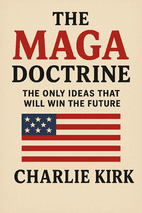
Charlie Kirk's The MAGA Doctrine outlines the America First political philosophy, defining its core tenets like economic nationalism and border security for readers interested in the populist conservative realignment within the Republican Party.
Feature
Insta.Page
Blinkist
Shortform
Summary Depth
Full Chapter-by-Chapter
15-min overview
Section-by-section guides
Audio Narration
✓
✓
✓
Visual Mindmaps
✓
✕
✕
AI Q&A
✓
✕
✕
Quizzes
✓
✕
✕
PDF Downloads
✓
✕
✓
Price
$89.99/yr
$146/yr (PRO)
$199/yr
*Competitor data last verified July 2026.
1 Page Summary
The MAGA Doctrine by Charlie Kirk outlines a political philosophy centered on the "America First" principles that defined Donald Trump's presidency. Kirk, founder of the conservative student group Turning Point USA, argues that this doctrine represents a fundamental shift away from decades of establishment consensus in both foreign and domestic policy. Key concepts include economic nationalism, securing national borders, deregulation, a strong military, and a rejection of globalism and identity politics in favor of a unified American national identity.
Kirk places the doctrine's emergence within a historical context of perceived American decline, arguing that prior administrations from both parties pursued policies of global engagement and free trade that eroded national sovereignty and harmed the American middle class. He posits Trump's 2016 election as a populist corrective to this trajectory, driven by a coalition of voters who felt ignored by the political and cultural elites. The book frames this not as a temporary political phenomenon, but as a durable realignment of the Republican party and American conservatism.
The lasting impact of the MAGA Doctrine, as presented by Kirk, is its redefinition of conservative priorities for a new generation. It champions a form of populist nationalism that prioritizes the interests of everyday citizens over international institutions and ideological movements. While deeply polarizing, Kirk contends the doctrine's influence will persist as a powerful force in American politics, shaping policy debates and electoral strategies for the foreseeable future by anchoring the right in a platform of national renewal and sovereignty.
Chapter 1: The Great Disruptor
Overview
Turning Point USA's Political Ascent
The chapter opens with a pivotal moment at Trump Tower shortly after the 2016 election, where a meeting with Donald Trump Jr. solidified a crucial alliance. Contrary to the author's fears of being dismissed post-victory, Donald Jr. proved to be a man of his word, publicly acknowledging and promoting Turning Point USA's role in his father's win. This endorsement, along with support from figures like Kimberly Guilfoyle, acted as a powerful catalyst. The organization's budget skyrocketed from $2 million to $20 million annually, expanding its presence to 1,600 campuses and drawing thousands to its conferences. This explosive growth was framed not just as organizational success, but as tapping into a generational shift—providing a long-overdue counterbalance to the liberal ideology that had dominated youth culture.
The Stagnant Two-Party Cartel
A central theme explored is the entrenched, self-serving nature of the pre-Trump political establishment. The Democratic and Republican parties are depicted as a comfortable cartel, more dedicated to preserving their own power and shared interests than serving the public. They engaged in a perpetual, theatrical battle every election cycle, but ultimately collaborated on expanding the welfare-regulatory state, increasing military spending, and deepening national debt. This created a political gridlock where genuine change was impossible, and the leadership of both parties became profoundly out of touch with their constituents. The chapter points to George H.W. Bush's vote for Hillary Clinton as a symbolic moment revealing that the elite families of both parties were part of one interconnected ruling class.
Trump's Ideological Disruption
The narrative positions Donald Trump as the definitive force that shattered this stagnant system. He is portrayed not as a traditional conservative, but as a populist disruptor who sensed a massive "market opportunity" created by the establishment's disconnect. Trump successfully rewrote the Republican platform, combining skepticism of endless foreign wars and a strategic approach to trade with a staunch defense of free speech and American national identity. This new formula—free speech/entrepreneurial/pro-peace—is presented as a marked improvement over the old Republican model of theocratic/corporate/warlike policies. The chapter argues that Trump’s movement exposed the "hollowness" of prior conservative efforts, particularly critiquing the neoconservative push for "American Empire" and "big-government conservatism."
The Backlash from the Right
An unexpected source of opposition highlighted is the resistance from the established right. Older conservative institutions and publications are described as viewing Trump and Turning Point USA with suspicion, accusing them of diluting intellectual principles for mere "clickbait." The author interprets this backlash not as a substantive critique, but as resentment from those who had grown comfortable with a losing stalemate and were threatened by a movement that was actually winning. This internal conflict is framed as a necessary part of the disruption process, echoing the adage that first they ignore you, then they ridicule you, then they attack you.
Key Takeaways
Donald Trump’s election victory and his family’s support were instrumental catalysts for the rapid growth and influence of Turning Point USA.
The pre-Trump political landscape was dominated by a "two-party cartel" that maintained power through theatrical conflict while collaborating on expanding government and national debt.
Trump fundamentally disrupted American politics by rewriting the conservative agenda, prioritizing populist issues like immigration, ending endless wars, and defending free speech over establishment dogma.
Significant and often vicious resistance to this new movement came from within the established conservative movement, which felt threatened by its success and populist appeal.
The "MAGA Doctrine" is presented as a necessary and positive disruption, liberating American politics from a stagnant, out-of-touch establishment and offering a last chance to counter the rise of socialism.
Key concepts: Chapter 1: The Great Disruptor
1. Chapter 1: The Great Disruptor
Turning Point USA's Political Ascent
Trump Tower meeting with Donald Trump Jr. solidified crucial alliance post-2016 election
Budget exploded from $2M to $20M annually with expansion to 1,600 campuses
Endorsements from Trump family and allies acted as powerful growth catalyst
Tapped into generational shift providing counterbalance to liberal youth culture dominance
The Stagnant Two-Party Cartel
Pre-Trump establishment depicted as self-serving political cartel
Parties engaged in theatrical conflict while collaborating on expanding government
Political gridlock made genuine change impossible
George H.W. Bush's vote for Hillary Clinton symbolized interconnected ruling class
Trump's Ideological Disruption
Trump shattered stagnant system as populist disruptor sensing 'market opportunity'
Rewrote Republican platform with skepticism of foreign wars and strategic trade approach
New formula: free speech/entrepreneurial/pro-peace vs old theocratic/corporate/warlike model
Exposed hollowness of prior conservative efforts and neoconservative 'American Empire' push
The Backlash from the Right
Established conservative institutions viewed Trump and TPUSA with suspicion
Accused movement of diluting intellectual principles for 'clickbait'
Backlash interpreted as resentment from those comfortable with losing stalemate
Internal conflict framed as necessary part of disruption process
The MAGA Doctrine Impact
Presented as necessary positive disruption liberating American politics
Created viable alternative to stagnant establishment politics
💡 Try clicking the AI chat button to ask questions about this book!
Chapter 2: The Outsider from the Inside
Overview
Overview
This chapter opens with a thought experiment, asking readers to envision a world where Hillary Clinton presided over a period of unprecedented economic growth and policy success. The narrative then pivots to reveal that every single achievement described—from record-low unemployment across diverse demographics to significant tax cuts and deregulation—was actually accomplished under Donald Trump’s administration. The core argument explores why these tangible successes are often met with skepticism or outright dismissal by the political and media elite. It suggests that Trump’s effectiveness stems from his unique position as an outsider who possesses an insider’s understanding of the systems he seeks to reform. The discussion is framed within a broader historical context, drawing parallels to figures like Cicero and Justinian to illustrate the timeless struggle between populist renewal and entrenched aristocratic power.
The Hypothetical and the Real
The chapter vividly contrasts a potential media narrative for a President Hillary Clinton with the actual reception of President Trump’s identical accomplishments. It lists a comprehensive set of economic and policy wins, including a surging stock market, historic lows in unemployment for minority groups and women, massive tax cuts, deregulation, energy independence, and foreign policy successes like the defeat of ISIS. The central question posed is why these outcomes, which would likely be hailed as a masterclass in governance if achieved by a conventional politician, are so frequently downplayed or criticized when attributed to Trump. This sets the stage for an examination of the underlying biases and fears within the establishment.
Understanding the Elite Backlash
The text delves into the psychology of Washington’s permanent class, suggesting their perplexity and alarm are not rooted in policy disagreements but in a threat to their very existence. Trump’s ability to achieve results without relying on the traditional network of lawyers, lobbyists, and consultants reveals that their roles are not indispensable. The elite’s definition of competence—polished appearances and risk-averse behavior—is fundamentally challenged by a leader who operates on instinct and direct appeal to the public. This section argues that the elite’s caricature of Trump as an unprincipled demagogue is a defense mechanism against someone who exposes the mechanisms of their power.
The Man from the Middle
Contrary to his portrayal as a philosophical blank slate, Trump is presented as a figure whose instincts are deeply informed by American tradition and his lived experience. His career as an entrepreneur provided a practical education in economics and the stifling nature of overregulation that surpasses theoretical knowledge. Having witnessed New York’s cycles of safety and crime, his stance on border security and law enforcement is framed as a reflection of mainstream, decent impulses rather than nativism. Most importantly, his history as a media figure and his business education at Wharton gave him an insider’s view of the media’s failings and corporate malfeasance, making him uniquely equipped to challenge these institutions from a position of authority.
Historical Parallels and Deeper Struggles
The narrative elevates the contemporary political conflict by comparing Trump to Cicero, the Roman orator declared an enemy of the state for warning that Rome was abandoning its republican principles. This analogy positions Trump not as a destroyer but as a restorer, targeted by a “Deep State” that mistakes itself for the guardian of the republic while actually contributing to its decay. The comparison to Kathy Griffin’s infamous photo stunt is used to underscore the violent symbolism often directed at him. Furthermore, the chapter references historian Victor Davis Hanson’s analysis of leaders like Emperor Justinian, who restored greatness through a return to foundational principles, fiscal responsibility, and strategic military engagement, suggesting Trump’s agenda is part of this long tradition of national renewal.
The Battle for America’s Soul
The final sections frame Trump’s presidency as the latest chapter in a centuries-old conflict between self-rule by the common people and the persistent claim to power by a self-appointed aristocracy. His critics are portrayed as fundamentally opposed to the principles of the Founding Fathers, viewing them with the same suspicion they reserve for Trump. The chapter expresses confidence that future historians will recognize his love of country, his defense of freedom, and his record of promises kept. It concludes with a call to action, emphasizing that the belief in inevitable decline is a self-fulfilling prophecy. True leadership, as exemplified by figures throughout history, requires the courage to dare for greatness and a return to the core values that built the nation.
Key Takeaways
Donald Trump’s administration delivered a wide array of measurable economic and policy successes that are often overlooked or minimized due to his unconventional style and outsider status.
The intense opposition from the political and media establishment is rooted less in policy disputes and more in a perceived threat to their influence and the Washington power structure.
Trump’s instincts are shaped by practical business experience and a deep-seated belief in core American principles, making him a unique threat to elite orthodoxies.
Historical parallels to figures like Cicero and Justinian illustrate that the struggle between populist renewal and entrenched power is a recurring theme in Western civilization.
The chapter argues that restoring national greatness requires a “reactionary nostalgia”—a deliberate return to foundational principles like fiscal responsibility, sound money, and transparent governance—and the courage to challenge the notion of inevitable decline.
Key concepts: Chapter 2: The Outsider from the Inside
2. Chapter 2: The Outsider from the Inside
Overview
Overview This chapter opens with a thought experiment, asking readers to envision a world where Hillary Clinton presided over a period of unprecedented economic growth and policy success.
The narrative then pivots to reveal that every single achievement described—from record-low unemployment across diverse demographics to significant tax cuts and deregulation—was actually accomplished under Donald Trump’s administration.
The core argument explores why these tangible successes are often met with skepticism or outright dismissal by the political and media elite.
The Hypothetical and the Real
The chapter vividly contrasts a potential media narrative for a President Hillary Clinton with the actual reception of President Trump’s identical accomplishments.
It lists a comprehensive set of economic and policy wins, including a surging stock market, historic lows in unemployment for minority groups and women, massive tax cuts, deregulation, energy independence, and foreign policy successes like the defeat of ISIS.
The central question posed is why these outcomes, which would likely be hailed as a masterclass in governance if achieved by a conventional politician, are so frequently downplayed or criticized when attributed to Trump.
Understanding the Elite Backlash
The text delves into the psychology of Washington’s permanent class, suggesting their perplexity and alarm are not rooted in policy disagreements but in a threat to their very existence.
Trump’s ability to achieve results without relying on the traditional network of lawyers, lobbyists, and consultants reveals that their roles are not indispensable.
The elite’s definition of competence—polished appearances and risk-averse behavior—is fundamentally challenged by a leader who operates on instinct and direct appeal to the public.
The Man from the Middle
Contrary to his portrayal as a philosophical blank slate, Trump is presented as a figure whose instincts are deeply informed by American tradition and his lived experience.
His career as an entrepreneur provided a practical education in economics and the stifling nature of overregulation that surpasses theoretical knowledge.
Having witnessed New York’s cycles of safety and crime, his stance on border security and law enforcement is framed as a reflection of mainstream, decent impulses rather than nativism.
Historical Parallels and Deeper Struggles
The narrative elevates the contemporary political conflict by comparing Trump to Cicero, the Roman orator declared an enemy of the state for warning that Rome was abandoning its republican principles.
This analogy positions Trump not as a destroyer but as a restorer, targeted by a “Deep State” that mistakes itself for the guardian of the republic while actually contributing to its decay.
The comparison to Kathy Griffin’s infamous photo stunt is used to underscore the violent symbolism often directed at him.
The Battle for America’s Soul
The final sections frame Trump’s presidency as the latest chapter in a centuries-old conflict between self-rule by the common people and the persistent claim to power by a self-appointed aristocracy.
His critics are portrayed as fundamentally opposed to the principles of the Founding Fathers, viewing them with the same suspicion they reserve for Trump.
The chapter expresses confidence that future historians will recognize his love of country, his defense of freedom, and his record of promises kept.
Key Takeaways
Donald Trump’s administration delivered a wide array of measurable economic and policy successes that are often overlooked or minimized due to his unconventional style and outsider status.
The intense opposition from the political and media establishment is rooted less in policy disputes and more in a perceived threat to their influence and the Washington power structure.
Trump’s instincts are shaped by practical business experience and a deep-seated belief in core American principles, making him a unique threat to elite orthodoxies.
Chapter 3: No More Accepting Decline
Overview
This chapter explores how the MAGA Doctrine extends beyond domestic politics to inspire global movements and challenge entrenched systems. It highlights the symbolic adoption of Trump-era ideals by protestors in Hong Kong, critiques the bloated U.S. military-industrial complex, and examines shifts in foreign policy and domestic regulation under Trump's leadership. The narrative emphasizes a rejection of decline through practical self-interest, skepticism of elite expertise, and a focus on revitalizing American strength without endless intervention.
Global Echoes of Freedom
Hong Kong protestors in 2019 embraced Make America Great Again hats and American flags, seeing them as emblems of Western liberty against Beijing's overreach. This mirrors historical moments, like Soviet youth covertly enjoying rock music, where symbols of freedom resonated across borders. The chapter contrasts this with American media's misplaced concerns about infiltration, arguing that the protestors' actions reflect a genuine recognition of values like free markets and individual rights, which Hong Kong once exemplified before its handover to China.
Questioning Endless Military Spending
Despite the Cold War's end, U.S. defense spending has surged by 44% since 1990, with nearly $1 trillion allocated in 2020 for departments like Defense and Veterans Affairs. The text points to wasteful expenditures, such as $14,000 toilet seats, as symptoms of a system fueled by defense contractors and ideological inertia. Trump's reluctance to escalate conflicts in Syria or Afghanistan is framed not as isolationism but as a push for peace, challenging a status quo that profits from perpetual war and misallocates resources that could benefit domestic priorities.
Rethinking Foreign Engagements
The chapter critiques decades of failed diplomacy, using North Korea as a case study where past agreements, like those under Clinton, proved hollow. Trump's personal outreach to Kim Jong-un is portrayed as a break from ineffective expert-led strategies, emphasizing direct engagement over bureaucratic paperwork. Similarly, the USMCA trade agreement is highlighted as a refinement of NAFTA, reducing tariffs and simplifying cross-border commerce while addressing labor rights, yet facing partisan delays from Democrats who previously criticized such pacts.
Domestic Deregulation and Economic Vision
Trump's regulatory freeze saved an estimated $23 billion annually, contrasting with the Obama administration's $245 billion in regulatory costs. The discussion ties this to a broader philosophical divide: Democrats' tendency toward overregulation, exemplified by Beto O'Rourke's contradictory gun control proposals, versus Trump's builder mindset that trusts market forces over government decrees. The gold standard is revisited as a potential anchor for monetary stability, challenging the post-WWII fiat currency system that empowers bureaucrats over individuals.
Contrasting Political Philosophies
The left's narrative of American decline is countered by Trump's optimism and actions, such as border wall efforts and internal agency reforms like reducing animal testing at the EPA. Democrats are depicted as eager to regulate daily life—from healthcare to light bulbs—while being permissive on border security. This hypocrisy underscores a fundamental clash: one side sees government as a solution, the other champions individual freedom and practical deal-making to spur growth and national confidence.
Key Takeaways
The MAGA Doctrine's ideals resonate globally as symbols of freedom, challenging authoritarian systems.
U.S. military spending is critiqued for waste and perpetual conflict, with Trump advocating for strategic disengagement.
Fresh approaches to diplomacy, like personal engagement with rivals, can bypass failed expert consensus.
Deregulation and trade reforms under Trump aim to boost economic growth and reduce government overreach.
A philosophical divide exists: Democrats favor top-down control, while Trump emphasizes individual liberty and pragmatic solutions to reject decline.
Key concepts: Chapter 3: No More Accepting Decline
3. Chapter 3: No More Accepting Decline
Global Resonance of MAGA Ideals
Hong Kong protestors adopted MAGA symbols as emblems of Western liberty
Parallels historical moments where freedom symbols crossed borders
Reflects genuine recognition of free markets and individual rights values
Contrasts with American media's misplaced concerns about infiltration
Military-Industrial Complex Critique
U.S. defense spending increased 44% since Cold War ended
$1 trillion allocated in 2020 for defense-related departments
Wasteful expenditures like $14,000 toilet seats highlight systemic issues
Trump's conflict reluctance framed as peace push, not isolationism
Challenges status quo that profits from perpetual war
Diplomatic Strategy Shifts
Critiques decades of failed expert-led diplomacy
North Korea as case study of hollow past agreements
Trump's personal outreach breaks from bureaucratic strategies
USMCA refines NAFTA with reduced tariffs and labor protections
Contrasts with Obama's $245 billion in regulatory costs
Builder mindset trusts market forces over government decrees
Revisits gold standard for monetary stability
Challenges fiat currency system empowering bureaucrats
Political Philosophy Contrast
Trump's optimism counters left's narrative of American decline
Democrats favor regulation in daily life but permissive on borders
Government as solution vs. individual freedom champion
Practical deal-making to spur growth and national confidence
Border wall and agency reforms exemplify action-oriented approach
Chapter 4: America First
Overview
This chapter examines the core principles of the "America First" philosophy within the MAGA Doctrine, framing it as a pragmatic alternative to decades of foreign interventionism. It argues that the U.S. government's track record of inefficiency at home makes it ill-suited to manage complex projects abroad, using vivid examples like the failed Kabul Grand Hotel to illustrate how well-intentioned efforts often devolve into costly boondoggles. The narrative champions a focus on domestic priorities and rational cost-benefit analysis over idealistic global ambitions, positioning this shift as essential for national stability and sovereignty.
The Kabul Grand Hotel Debacle
The chapter opens with a detailed account of the Kabul Grand Hotel project in Afghanistan, where $85 million in U.S. taxpayer funds were spent on a hotel intended to symbolize successful nation-building. Despite its prime location opposite the U.S. embassy, the project resulted in little more than an empty shell, with funds funneled through opaque offshore entities and monitoring efforts relying on unverified reports. To compound the failure, the abandoned structure required ongoing U.S. security to prevent its use as a terrorist staging ground, turning a symbol of hope into a monument to waste and mismanagement.
Systemic Reconstruction Failures
Beyond the hotel, the chapter highlights additional examples of wasteful spending in Afghanistan, such as a $750 million electrification project built on land not owned by the U.S., a $210 million ministry building with nonfunctional systems, and a multi-million-dollar natural gas station in a country with no demand for such infrastructure. These projects, overseen by agencies like SIGAR, reveal a pattern of poor planning, corruption, and a disconnect between intentions and outcomes, underscoring the broader ineptitude of foreign intervention efforts.
A Pragmatic Shift in Foreign Policy
The MAGA Doctrine is presented as a rejection of both left-leaning globalism and right-wing interventionism, advocating instead for a focus on American interests. It describes President Trump's approach as rooted in real-world feedback over diplomatic rhetoric, seeking diverse perspectives to avoid groupthink. This section contrasts Trump's skepticism of international organizations like the UN and NATO with the entrenched "foreign policy consensus" of post-WWII elites, arguing that decentralized decision-making leads to better outcomes than top-down control.
The Illusion of Global Leadership
Critics of "America First" are portrayed as favoring American submersion into international systems rather than genuine leadership, with institutions like the IMF and World Bank perpetuating dependency and risk. The chapter notes that the U.S. debt, exacerbated by foreign spending, undermines national strength, and it challenges the notion that charity abroad is sustainable when domestic infrastructure crumbles. By emphasizing sovereignty and pragmatism, the doctrine aligns with the intuition that local control yields more accountable and effective governance.
Key Takeaways
Government-led foreign projects often fail due to inefficiency, corruption, and a lack of accountability, as seen in cases like the Kabul Grand Hotel.
The MAGA Doctrine prioritizes domestic needs and cost-benefit analysis over idealistic intervention, arguing that the U.S. cannot afford to rebuild others while neglecting itself.
A pragmatic, "America First" approach fosters sovereignty and better decision-making by reducing reliance on flawed international institutions and elite consensus.
This philosophy does not advocate isolationism but rather a recalibration toward tangible national interests, echoing broader public frustration with wasteful spending and unaccountable power.
Key concepts: Chapter 4: America First
4. Chapter 4: America First
The Kabul Grand Hotel Debacle
$85 million taxpayer-funded hotel project resulted in empty shell
Funds funneled through opaque offshore entities with poor oversight
Abandoned structure required ongoing U.S. security against terrorist threats
Symbol of nation-building became monument to waste and mismanagement
Systemic Reconstruction Failures
$750 million electrification project built on land not owned by U.S.
$210 million ministry building with nonfunctional systems
Multi-million-dollar natural gas station in country with no demand
Pattern of poor planning, corruption, and disconnect between intentions and outcomes
SIGAR oversight reveals broader ineptitude of foreign intervention
Pragmatic Foreign Policy Shift
Rejects both left-leaning globalism and right-wing interventionism
Focuses on American interests through real-world feedback over diplomatic rhetoric
Seeks diverse perspectives to avoid groupthink in decision-making
Challenges post-WWII foreign policy consensus and international organizations
Advocates decentralized decision-making over top-down control
Critique of Global Leadership Illusion
International institutions like IMF and World Bank perpetuate dependency
U.S. debt exacerbated by foreign spending undermines national strength
Charity abroad unsustainable when domestic infrastructure crumbles
Emphasizes sovereignty and local control for accountable governance
Rejects American submersion into international systems
America First Philosophy Core Principles
Prioritizes domestic needs and cost-benefit analysis over idealistic intervention
Fosters sovereignty by reducing reliance on flawed international institutions
Not isolationism but recalibration toward tangible national interests
Addresses public frustration with wasteful spending and unaccountable power
Government inefficiency at home makes it ill-suited for complex projects abroad
You've reached the end of the free chapters
Next chapter: “Ending the Endless Wars” is locked
Keep reading The Maga Doctrine — and unlock all 600+ book summaries with audio, mindmaps and AI Q&A.
$0.00 due today · 7 days free, then $89.99/year ($7.49/mo) · Cancel anytime before day 7