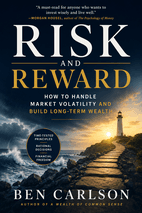
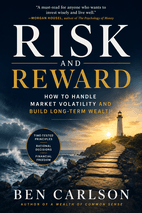
Ben Carlson's Risk and Reward argues that long-term, buy-and-hold investing is the most effective yet unglamorous strategy, reframing market volatility as the price of admission for gains. Written for disciplined investors needing a behavioral and historical framework to survive cycles without sabotaging their success.
Feature
Insta.Page
Blinkist
Shortform
Risk and Reward
✓
✕
✕
Summary Depth
Full Chapter-by-Chapter
15-min overview
Section-by-section guides
Audio Narration
✓
✓
✓
Visual Mindmaps
✓
✕
✕
AI Q&A
✓
✕
✕
Quizzes
✓
✕
✕
PDF Downloads
✓
✕
✓
Price
$89.99/yr
$146/yr (PRO)
$199/yr
*Competitor data last verified July 2026.
1 Page Summary
Based strictly on the chapter content provided, Ben Carlson's Risk and Reward argues that long-term, buy-and-hold investing is the most effective strategy despite being unglamorous and often mocked. The book’s central thesis is that market volatility is not a bug but a feature—it is the price of admission for long-term gains. The author draws a parallel between investing and a rap battle in 8 Mile, illustrating that the best strategy wins by acknowledging its own flaws rather than pretending to be perfect. He emphasizes that the hardest work in investing is often doing nothing, as the urge to "do something" during market panic leads to destructive choices.
The book is distinctive for its blend of historical analysis and behavioral finance, using vivid examples to reframe common investing pitfalls. It explores concepts like myopic loss aversion (checking portfolios too frequently amplifies pain), the "normal accident" theory of market crashes (failures are inherent to complex systems), and the reality of "lost decades" where stocks go nowhere for ten years. The author dissects major market events—from the Great Depression to Japan’s bubble and the 2000s—to show that diversification is an admission of ignorance, not a strategy for maximum returns. He also debunks day trading and market timing by showing how the odds are heavily stacked against these approaches, using statistics like 70% of retail forex traders losing money every quarter.
The intended audience is long-term investors who need a behavioral and historical framework to survive market cycles without sabotaging their own success. Readers will gain a deeply cynical but realistic perspective on why simple, disciplined investing is so difficult to maintain, and why "the first rule of compounding is to never interrupt it unnecessarily." The epilogue distills this into twenty personal beliefs, highlighting that the root of most market disagreements is differing time horizons and risk tolerances, and that the greatest challenge is not finding the right strategy, but sticking with it when greed and fear take over.
Introduction
Overview
This opening chapter draws a sharp parallel between investing strategies and a memorable rap battle from the film 8 Mile. The author argues that long-term, buy-and-hold investing gets a bad rap—it’s clumsy, imperfect, and often mocked—yet it consistently outperforms every other approach that has been tried. The comparison isn’t random; it reveals a deeper truth about how the best strategy often wins by acknowledging its own flaws rather than pretending to be flawless.
The Self-Deprecating Winner
The key scene has Eminem’s character, B‑Rabbit, facing off against Papa Doc. Instead of launching into typical insults, B‑Rabbit preempts his opponent by listing his own shortcomings: he’s a bum, he lives in a trailer with his mom. That vulnerability disarms the crowd and leaves Papa Doc with nothing to say. The author uses this to illustrate that buy-and-hold investing works the same way. It’s not glamorous, it’s not always wise, and it certainly isn’t perfect—but once you admit that, you steal the thunder from critics. There’s no clever rebuttal to “I know I’m not perfect, but I’m still the best option you’ve got.”
Why This Matters for Investors
The chapter’s point is deceptively simple: stop trying to find a flawless investment method. Every alternative—market timing, speculative trading, chasing hot sectors—has been tried, and each one collapses under its own hype. By openly embracing the imperfections of a long-term approach, you take away the ammunition that naysayers use. The crowd (the market) doesn’t need a genius; it needs honesty. And sometimes, the most powerful move is to say, “Here, tell these people something they don’t know about me” – because there’s nothing left to reveal.
Key Takeaways
Buy-and-hold is often derided as the worst strategy, but it has outlasted every other method when put to the test.
Admitting a strategy’s weaknesses (like B‑Rabbit’s self-deprecation) can be more effective than defending it.
The most resilient investment approach is not the one that pretends to be perfect, but the one that acknowledges its limitations and sticks around anyway.
Admitting weaknesses is more effective than defending
The best strategy sticks around despite limitations
💡 Try clicking the AI chat button to ask questions about this book!
1. It Was the Worst of Times
Overview
The chapter opens with a stark reminder that the stock market can be a terrifying place—especially when you’re watching your portfolio shrink month after month. Using the dramatic example of the 1930s, when the market lost nearly 40% in just two months, it sets the stage for a sobering truth: volatility isn’t an occasional inconvenience; it’s the price of admission. And it’s not just the big crashes that sting. The data shows that 20%-or-worse down months happen almost as often as 20%-or-worse down years. That lumpy, gut-wrenching ride is what you sign up for in exchange for the long-term compounding machine that stocks have proven to be.
Yet amid all that pain, there’s a counterintuitive reward: good returns tend to follow bad returns. History shows that investors courageous enough to buy during panics were handsomely compensated over the next one, five, and ten years. The key is to recognize that the worst times are often the best buying opportunities—if you can stomach the anguish.
The cruel math of down years
Table 1.3 lists the ten worst years for U.S. stocks, and the numbers are brutal. But here’s what really matters: after every single one of those disasters, the market eventually roared back. From 1928 to 2024, the S&P 500 still averaged 9.9% annually—despite including every worst day, month, and year. Stocks were positive roughly three out of four years, with average gains of about 21% in up years and losses around 14% in down years. The pattern is remarkably consistent: big losses are followed by bigger gains, if you hold on.
The 60/40 portfolio: a smoother ride
Of course, not everyone can just grit their teeth and do nothing. There are two main ways to manage stock market risk: diversify or extend your time horizon. The classic diversifier is bonds. During the 26 down years for stocks from 1928 to 2024, bonds averaged gains of 4.3%, outperforming stocks by nearly 18 percentage points in those years. That’s a powerful cushion for a portfolio.
Enter the 60/40 portfolio—60% stocks, 40% bonds. Historically, this mix has never had a negative 10-year return measured at calendar year-end. Could it happen? Absolutely. But the track record is impressive. Even the worst 20-year periods for a 60/40 portfolio (shown in Table 1.8) delivered positive total returns, reinforcing the value of diversification combined with patience.
Key Takeaways
Volatility is not optional—it’s the price you pay for the stock market’s long-term returns. Expect brutal drops.
Good returns follow bad returns. The worst years often set the stage for the best subsequent gains.
Bonds provide a reliable ballast during stock downturns, making a 60/40 portfolio far less painful.
A longer time horizon is your best friend. Even a 60/40 mix has never lost money over a 10-year period (as of calendar year-end).
Fear is the enemy. The ability to buy when everyone else is scared is what separates successful investors from the rest.
Key concepts: 1. It Was the Worst of Times
2. 1. It Was the Worst of Times
Volatility Is the Price of Admission
Market can lose 40% in two months
20%-or-worse down months happen frequently
Volatility is required for long-term compounding
Good Returns Follow Bad Returns
Worst years set stage for best gains
Buying during panics is rewarded
S&P 500 averaged 9.9% annually despite crashes
The Cruel Math of Down Years
Stocks positive roughly three out of four years
Average gains 21% in up years, losses 14% in down
Big losses historically followed by bigger gains
The 60/40 Portfolio: A Smoother Ride
Bonds averaged 4.3% gains during stock down years
60/40 mix never had negative 10-year return
Diversification plus patience ensures positive returns
Fear Is the Enemy of Success
Buy when everyone else is scared
Long time horizon is your best friend
Stomach anguish to seize buying opportunities
2. Doing Nothing Is Hard Work
Overview
The chapter opens with a deceptively simple idea: sometimes the hardest thing to do is absolutely nothing. An old parable about a locksmith and his apprentice sets the stage. The apprentice, eager to prove himself, lunges at the lock, picks frantically, and fails. The master locksmith sits quietly, listens, turns the lock gently, and opens it with ease. The lesson? Impatience is the enemy of precision, and in investing, the urge to “do something” can be your worst impulse.
This theme is reinforced with a striking set of statistics from penalty kicks in soccer. Goalkeepers feel immense pressure to dive—they dive 94% of the time—yet the best strategy is often to stay in the center. Strikers score more when they aim for the middle, but players avoid it because a missed attempt feels cowardly. The parallel to investing is clear: the most profitable course of action often feels like inaction, and that discomfort leads us to make moves we shouldn’t.
The chapter argues that this “doing nothing” is not laziness—it’s discipline. It requires building a plan before the panic sets in, so that when the market screams “act now,” your instincts are overridden by a pre-committed strategy. The best investors don’t have better intuition; they have better procedures. They make it look easy, but that ease is the result of hard work aimed at restraining the emotional brain.
The section closes with a teaser for the next chapter, hinting that the silent killer of your finances is still ahead—but for now, the takeaway is clear: resist the seduction of motion.
Key Takeaways
Action bias is costly – Both in soccer and investing, the urge to “do something” often leads to worse outcomes than standing still.
Plan before emotions strike – Pre-commit to a strategy that overrides fear and greed; don’t let headlines or impulses dictate your moves.
Doing nothing is a skill – It requires deliberate practice to sit on your hands when every fiber of your being says to move.
Make it look easy – The appearance of effortless patience is built on the hard work of setting rules and sticking to them.
Key concepts: 2. Doing Nothing Is Hard Work
3. 2. Doing Nothing Is Hard Work
The Parable of Patience
Apprentice fails by rushing the lock
Master succeeds by listening and waiting
Impatience is the enemy of precision
Action Bias in Soccer Penalties
Goalkeepers dive 94% of the time
Best strategy is often staying center
Strikers avoid middle due to fear of shame
Parallel to Investing
Most profitable action often feels like inaction
Discomfort leads to unnecessary moves
Market panic triggers costly impulses
Discipline Over Intuition
Doing nothing is not laziness—it's discipline
Best investors have better procedures, not intuition
Pre-committed strategy overrides emotional brain
The Hard Work of Inaction
Plan before panic sets in
Resist the seduction of motion
Effortless patience requires deliberate practice
3. The Great Inflation
Overview
The 1970s carved out a unique kind of misery for American investors—one that wasn't just about falling stock prices, but about the quiet, corrosive erosion of everything a dollar could buy. This wasn't a typical bear market. It was an economic fever that refused to break. The decade opened with a recession that stretched through most of 1970, then delivered a brutal downturn from late 1973 to spring 1975 that sliced the stock market in half and sent unemployment to nearly 9%. Just as things seemed to stabilize, inflation roared back, forcing the Federal Reserve to push interest rates into double digits. Mortgage rates hit almost 20% by 1982. It took two more recessions in the early 1980s—and unemployment peaking at nearly 11%—to finally kill the inflation beast. In total, the U.S. economy spent one-third of this period in recession. It was a lost decade in the most literal sense.
The Emptying Value of a Dollar
To grasp how deeply inflation scarred the national psyche, consider a single image from December 1970: Time magazine ran a cover story showing a dollar bill with a tear rolling down George Washington’s cheek. The caption read that the dollar was worth only 73 cents. By the end of the decade, that same 1970 dollar had shriveled to roughly 45 cents of purchasing power. This wasn't a subtle shift—it was a public, painful decline that made every saver feel poorer, and every borrower feel trapped. High inflation became a daily headline, and everyone hated it.
How Inflation Treats Stocks
Stocks are often called a hedge against inflation over the long run, but in the short term, rapidly rising prices hit equities like a wrecking ball. The chapter references a calculation of S&P 500 returns from 1928 through 2024, broken down by whether inflation was high, low, rising, or falling year over year (Figure 3.1). While the figure itself isn't reproduced here, the pattern is clear: stocks performed terribly when inflation was high and rising. Investors are not fond of watching nominal gains get devoured by shrinking real value. Warren Buffett has famously explained that inflation acts like a tax on capital—one that distorts corporate earnings, discourages investment, and punishes those who hold cash or fixed-income assets. The Great Inflation of the 1970s stands as the definitive case study of that painful lesson.
Key Takeaways
The 1970s were defined by persistent, high inflation that required two brutal recessions in the early 1980s to finally tame.
A dollar in 1970 lost more than half its purchasing power by the end of the decade, eroding savings and living standards.
Stocks are not a reliable short-term hedge against rapidly rising inflation; the data shows poor returns when inflation is high and still climbing.
The era serves as a lasting warning: inflation doesn't just hurt consumers—it fundamentally distorts the value of financial assets and punishes passive investors.
Key concepts: 3. The Great Inflation
4. 3. The Great Inflation
The Economic Crisis of the 1970s
Decade of persistent high inflation and multiple recessions
Stock market halved, unemployment hit nearly 9%
Mortgage rates reached almost 20% by 1982
Economy spent one-third of the period in recession
The Emptying Value of a Dollar
1970 dollar worth only 73 cents by December 1970
Purchasing power shriveled to 45 cents by decade's end
Inflation made every saver feel poorer
High inflation became a hated daily headline
How Inflation Treats Stocks
Stocks perform terribly when inflation is high and rising
Inflation acts like a tax on capital, says Warren Buffett
Nominal gains get devoured by shrinking real value
Great Inflation is the definitive case study of this lesson
The Cost of Taming Inflation
Federal Reserve pushed interest rates into double digits
Two more recessions in early 1980s were required
Unemployment peaked at nearly 11% to kill inflation
Brutal economic pain was necessary to restore stability
Key Takeaways for Investors
Inflation distorts value of financial assets fundamentally
Stocks are not a reliable short-term inflation hedge
Era serves as a lasting warning for passive investors
Inflation punishes holders of cash and fixed-income assets
You've reached the end of the free chapters
Next chapter: “The Three Best Inflation Hedges” is locked
Keep reading Risk and Reward — and unlock all 600+ book summaries with audio, mindmaps and AI Q&A.
$0.00 due today · 7 days free, then $89.99/year ($7.49/mo) · Cancel anytime before day 7
Ben Carlson is the Director of Institutional Asset Management at Ritholtz Wealth Management and the author of "A Wealth of Common Sense: Why Simplicity Trumps Complexity in Any Investment Plan." He is widely recognized for his expertise in behavioral finance, portfolio management, and retirement planning, and he also writes the popular blog "A Wealth of Common Sense." Carlson's work focuses on demystifying complex financial concepts for individual investors and promoting disciplined, long-term strategies.
Frequently Asked Questions about Risk and Reward
What is Risk and Reward about?
The book challenges common investing myths by arguing that long-term buy-and-hold strategies, despite their flaws, consistently outperform more complex approaches. It explores historical market downturns, including the Great Depression and Japan's asset bubble, to illustrate that volatility is a feature of investing, not a bug. The author emphasizes behavioral pitfalls like myopic loss aversion and the difficulty of doing nothing, while offering practical insights on inflation hedges, diversification, and the power of compounding.
Who is the author of Risk and Reward?
Ben Carlson is a financial writer and blogger known for his clear, behavior-focused insights on investing and market history. He regularly contributes to publications and runs the blog 'A Wealth of Common Sense,' where he explores the intersection of psychology, economics, and long-term investing. His work emphasizes practical wisdom drawn from historical data and real-world investor behavior.
Is Risk and Reward worth reading?
Yes, this book is worth reading because it strips away the glamour of market timing and complex strategies, revealing why simple, disciplined approaches work over time. It provides a refreshingly honest look at the emotional challenges of investing, backed by historical evidence and relatable analogies. Readers will gain a deeper understanding of why patience and humility are more valuable than trying to outsmart the market.
What are the key lessons from Risk and Reward?
The most important lesson is that long-term buy-and-hold investing, while imperfect and uncomfortable, consistently outperforms more active strategies. Another key takeaway is the importance of doing nothing when markets are volatile, as impatience often leads to poor decisions. The book also teaches that inflation is best hedged through a good job, home ownership, and stocks, and that embracing volatility as the price of admission is essential for long-term success. Finally, it warns against interrupting compounding and highlights the dangers of putting all your eggs in one basket.
📚 Explore Our Book Summary Library
Discover more insightful book summaries from our collection