What is the book Stupider People Have Done It about?
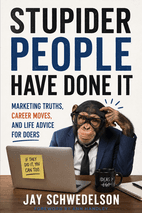
Jay Schwedelson's Stupider People Have Done It is part marketing playbook, part career survival guide, delivering data-backed tactics for LinkedIn and email while dismantling myths like best practices, the ten-thousand-hour rule, and work-life balance—for anyone stuck in the middle of their career who needs a kick in the pants rather than another inspirational quote.
Feature
Insta.Page
Blinkist
Shortform
Summary Depth
Full Chapter-by-Chapter
15-min overview
Section-by-section guides
Audio Narration
✓
✓
✓
Visual Mindmaps
✓
✕
✕
AI Q&A
✓
✕
✕
Quizzes
✓
✕
✕
PDF Downloads
✓
✕
✓
Price
$89.99/yr
$146/yr (PRO)
$199/yr
*Competitor data last verified July 2026.
1 Page Summary
This book is equal parts marketing playbook, career survival guide, and unfiltered rant from a guy who has clearly spent too much time in airports and conference hotel rooms. The core message is that most conventional wisdom—whether it’s "best practices," the ten-thousand-hour rule, or the sanctity of work-life balance—is garbage. The author, Jay Schwedelson, argues that the herd is always wrong, and that real success comes from ignoring what everyone else is doing and instead focusing on being accountable, consistent, and willing to start before you feel ready. The book is built around the paradoxical idea that you don’t need to be a genius to succeed, because, as the title suggests, stupider people have already done it—so you have no excuse.
What makes this book distinctive is its structure and tone. It alternates between straightforward, data-heavy chapters on marketing tactics (LinkedIn algorithm tricks, email subject line strategies, the right way to use social proof) and personal, rant-filled "Since You Didn’t Ask" chapters where the author confesses his hatred of gyms, airports, and the cultural myth of the three-minute mile. The marketing advice is refreshingly specific and practical—built on real data from billions of emails and decades of agency work—while the personal chapters serve as a permission slip to stop pretending you love every part of your life. The author’s voice is brutally honest, self-deprecating, and allergic to polish: he admits he’s average at best, that public speaking still terrifies him, and that he once locked himself out of a hotel room in his underwear. The book’s charm lies in its refusal to take itself too seriously, even while dispensing career-changing advice.
The intended audience is clear: anyone stuck in the middle of their career who feels like they’re not smart enough, not ready, or not doing things the "right" way. It’s for the doer who needs a kick in the pants rather than another inspirational quote. Readers will walk away with a handful of high-impact marketing tactics (especially around LinkedIn and email), a practical framework for reframing "have to" into "get to," and the single most important career rule: never quit a job without another one lined up. More than anything, the book offers the liberating message that you don’t have to love your job, you don’t have to be an expert to start, and you don’t have to be perfect—you just have to stop waiting and do something.
Introduction
Overview
The introduction doesn’t waste time pretending to be something it isn’t. Right off the bat, the author admits the book could be useless—and calls that good news. Why? Because all profits go to charity. So even if the advice turns out to be garbage, at least the money went somewhere worthwhile. It’s a disarming move, and it sets the tone: no ego, no hero worship, no polished life story.
Instead of the standard “I had a rough start, figured some stuff out, and you can too” formula, Jay (the author) flat out says that’s not his jam. He’s not on an epic journey. He’s just a guy who’s been at this business-and-life thing long enough to notice a few things worth sharing. And since publishers love social proof, he reluctantly rattles off a handful of credentials—$500 million in revenue, top marketing podcast, teaching at the University of Florida—but makes clear this isn’t about him. The book is about you, and about the one sentence that changed everything for him.
That sentence came from his grandpa. Jay was sitting in his office, head in hands, drowning in impostor syndrome and convinced he wasn’t smart enough or good enough. His grandpa walked in, looked him in the eye, and said: “Jay, stupider people than you have done it.”
That terse, almost comical line snapped him out of his spiral. If somebody dumber could achieve what he wanted, then the only thing standing in the way was his own refusal to start. No perfect moment, no decent moment—just the moment you decide to get rolling, even when it feels like the worst possible time.
So that’s the hook. The rest of the book promises to unpack quick wins, pitfalls, and game-changers in marketing, business, and life, sprinkled with pop culture complaints and chaotic personal tangents. All in service of proving grandpa right.
Why “Stupider” Works
The power of that grandpa moment isn’t insult—it’s permission. Permission to stop believing you need to be the smartest person in the room. Permission to realize the obstacles you’re staring at are mostly self-created. Jay argues that self-awareness, genuine kindness, finding humor in small things, and sheer hard work are what actually move the needle. Not elite GPAs, not prestige degrees. Just a willingness to act while others overthink.
This reframes success as accessible. The “herd,” as he calls it, is full of people waiting for the perfect conditions. The ones who break away are rarely the most brilliant—they’re just the ones who started. And that’s all you need.
What to Expect
The introduction teases a messy, honest ride. Jay plans to share what he knows to be game-changers, but he also plans to wander into personal weirdness, pet peeves, and random observations. He invites you to laugh at him and with him. The tone is conversational, self-deprecating, and direct. No fluff, no false modesty, no “you can do it” platitudes—just blunt permission to stop holding yourself back.
Key Takeaways
The book’s proceeds go to cancer charity, so even if the advice stinks, your money does good.
The standard motivational formula is tossed aside—no epic hero’s journey here.
Success doesn’t require being the smartest; it requires starting, even when you feel like a fraud.
The grandpa’s line—“stupider people than you have done it”—crushes impostor syndrome by reminding you that someone less qualified has already succeeded.
Self-awareness, generosity, humor, and hard work matter more than credentials.
Key concepts: Introduction
1. Introduction
The Book's Unconventional Premise
All profits go to charity, so even bad advice does good
No ego, no hero worship, no polished life story
Author is just a guy sharing observations, not a guru
The Grandfather's Pivotal Line
Grandpa said: 'Stupider people than you have done it'
Crushed impostor syndrome and sparked action
No perfect moment—just start, even when it feels wrong
Why 'Stupider' Works as a Mindset
Gives permission to stop needing to be the smartest
Obstacles are mostly self-created
Self-awareness, kindness, humor, and hard work matter more than credentials
Redefining Success
Success is accessible, not reserved for elites
The herd waits for perfect conditions; winners just start
Willingness to act beats brilliance every time
What the Book Promises
Quick wins, pitfalls, and game-changers in marketing and life
Messy, honest ride with pop culture complaints and tangents
Blunt permission to stop holding yourself back
💡 Try clicking the AI chat button to ask questions about this book!
Chapter 1: Best Practices Are Garbage
Overview
This opening chapter takes a sledgehammer to the sacred cow of "best practices" in business, marketing, and life. The author argues that by the time something earns that label, it's already stale, useless, and holding you back. The real secret behind people who pull off remarkable things? They ignore the herd entirely. The herd follows best practices because it's easy—no thinking, no risk, just blind obedience to what someone declared "best." But that path leads straight to mediocrity. The chapter flips conventional wisdom on its head, insisting that safety is death and nervous energy is a sign you're doing something right.
Why Best Practices Fail
Best practices aren't just annoying—they're actively harmful. They create a false sense of security while quietly steering you toward average outcomes. The author rattles off a handful of tired gems—"be the first in, last out," "the customer is always right," "surround yourself with positive people"—and shows how each one either leads to burnout, bad decisions, or outright nonsense. The real kicker: by the time a practice becomes "best," the world has already moved on. Your competitor sent the exact same email twenty minutes ago. The herd is already there. You can't stand out by fitting in.
The Five-Minute Plan vs. The Five-Year Plan
During the early days of Covid, the author's advertising agency was in serious trouble. Like any good professional, he sat down to map out a six-month plan, then a two-year roadmap. Twenty-four hours later he realized the plan was just a way to avoid dealing with the immediate crisis. So he trashed it. His new North Star: What can I do right now to make something happen? No five-year plan, no five-month plan—just a five-minute plan. That shift in thinking led to a virtual conference, which grew into a major events company, which led to podcasts, newsletters, and eventually a seven-figure asset sale. The plan didn't get him there; the urgency and action did.
Barbara Corcoran’s No-Plan Approach
The author pulls in Barbara Corcoran as Exhibit A for why waiting is the enemy. When her boyfriend and business partner announced he was marrying her secretary, Barbara didn't pause to strategize. They split the company in about ten minutes—each taking half the cash and seven agents. Within four days, she had new office space, phones, desks, and the Corcoran Group up and running. No business plan. No five-year vision. Just rapid, messy, decisive action. That year she made more on her own than she had with her former partner. The lesson: the people who win don't wait until they have their act together.
Do the Thing That Scares You
The only best practice the author endorses is this: if your campaign, career move, or business decision doesn't make you at least a little nervous, you didn't go far enough. Safe feels good in the moment but dies on arrival. Memorable work is weird, gutsy, and occasionally inappropriate. The author calls out the marketers who send the same "3 Ways to Optimize Your Funnel" email because some article said it works, then wonder why nobody opens it. The problem isn't the tactic; it's the lack of honesty, the lack of difference, the lack of nerve. Humanity is the algorithm—and algorithms don't give a damn about best practices.
Key Takeaways
Best practices are already obsolete by the time they become "best." Following them guarantees you'll be late and average.
A five-year plan is often a procrastination device in disguise. Replace it with a five-minute plan: What can I do right now?
Rapid, imperfect action beats slow, polished planning. Barbara Corcoran split a company in minutes and relaunched in days.
Nervousness is a feature, not a bug. If your move doesn't scare you a little, it's probably too safe to matter.
Copying what used to work for someone else guarantees invisibility. Stand out by breaking something, saying the thing your brand wouldn't say, or trying the weird angle.
Key concepts: Chapter 1: Best Practices Are Garbage
2. Chapter 1: Best Practices Are Garbage
Why Best Practices Fail
Create false security while steering toward average
Already obsolete by the time they're 'best'
Herd following guarantees you can't stand out
Examples like 'customer is always right' lead to bad decisions
Five-Minute Plan Over Five-Year Plan
Long-term plans are often procrastination in disguise
Author trashed six-month plan during Covid crisis
Urgent action led to virtual conference and seven-figure sale
Focus on 'What can I do right now?'
Barbara Corcoran's No-Plan Approach
Split company in ten minutes after partner betrayal
Relaunched Corcoran Group within four days
No business plan or five-year vision needed
Made more alone than with former partner that year
Do the Thing That Scares You
Safe decisions die on arrival
Memorable work is weird, gutsy, occasionally inappropriate
Nervousness signals you're doing something right
Humanity beats algorithms and stale tactics
Key Takeaways
Best practices guarantee you'll be late and average
Copying what worked for others ensures invisibility
Chapter 2: Are You Consistent? Are You Accountable?
Overview
Jay opens with a confession: he’s prone to self-deprecation, calling himself not smart or clueless. His SAT scores were a joke, he had to take statistics three times, and he was wait-listed for college four times. But that perceived lack of raw intelligence turned into a superpower. It forced him to master two things that separate the average from the exceptional: being accountable and being consistent—but not in the ways most people assume.
Accountability here isn’t about showing up to work or paying bills. It’s about holding yourself responsible for learning and growing, week in and week out. Jay’s breakthrough came when he started a weekly email newsletter. At first, he thought the goal was subscribers. Then he realized the real payoff: each week he had to learn something new to avoid being repetitive or stale. The newsletter became a forcing function for growth.
He encourages creating a regular output—a podcast, a newsletter, a weekly LinkedIn post, even a team Slack update—anything that “eats at you” every week. The size of the lift doesn’t matter, as long as you do it. Heavy lifts include producing a podcast or a newsletter. Light lifts include weekly LinkedIn hot takes or a Friday trend report to your team. Really light lifts: a weekly clip commentary, a “one stat Sunday” post, or DMing three industry contacts a simple question. The point is to make yourself accountable to an audience, even if that audience is three people.
But accountability alone isn’t enough. The real secret weapon is consistency. Jay defines it not as basic adulting (showing up on time, paying bills), but as sticking with the commitments you make to yourself. He drops sobering stats: 47% of podcasts never make it past episode three; 92% of Duolingo users quit within a year; up to 50% of marathon registrants never show up on race day. Most people start things and stop. If you just keep going, you’ll beat 95% of the competition.
He acknowledges the “I’m too busy” excuse—and pushes back. When he felt overwhelmed, he got up earlier, cut his nonwork social media from an hour to thirty minutes, and used that reclaimed time for research and content creation. It’s not always fun, but the payoff is exponential: smarter thinking, better client advice, more business.
Key Takeaways
Create a weekly output that forces you to learn and network—start small but start now.
Accountability isn't about others; it's about having a system that makes you show up for your own growth.
Consistency is the ultimate competitive advantage: most people quit, so you win by just continuing.
Reclaim time by being intentional—cut mindless scrolling and use that time for your learning habit.
Key concepts: Chapter 2: Are You Consistent? Are You Accountable?
3. Chapter 2: Are You Consistent? Are You Accountable?
The Power of Perceived Weakness
Self-deprecation about intelligence became a superpower
Low SAT scores forced mastery of key skills
Accountability and consistency separate average from exceptional
Accountability as a Growth Engine
Accountability means holding yourself responsible for learning
Weekly newsletter became a forcing function for growth
Create regular output that 'eats at you' weekly
Accountability to an audience, even just three people
Consistency as Competitive Advantage
Sticking with commitments to yourself is the secret weapon
47% of podcasts never make it past episode three
92% of Duolingo users quit within a year
Just continuing beats 95% of the competition
Overcoming the 'Too Busy' Excuse
Wake up earlier to reclaim time for growth
Cut nonwork social media from an hour to thirty minutes
Use reclaimed time for research and content creation
Payoff is smarter thinking and better business results
Practical Starting Points
Start small but start now with weekly output
Heavy lifts: podcast or newsletter
Light lifts: LinkedIn hot takes or team trend report
Really light lifts: weekly clip or one stat Sunday
Chapter 3: Since You Didn’t Ask: Is the Movie ‘Bridesmaids’ Funny?
Overview
Here’s the thing about this chapter: it’s a trap. Or maybe a litmus test. Or possibly just the author venting about what really matters in life—namely, whether you think Bridesmaids is funny. Because apparently, that single question reveals more about your soul than a thousand personality quizzes ever could. And yes, you’re being judged. Hard. But the author owns it: judging people by their pop culture takes is a full-time hobby, and they’re not sorry.
The chapter doubles as a permission slip to be unapologetically opinionated about the movies that define friendship potential. The list—Mean Girls, Boomerang, Rocky I–IV, Old School, Iron Man (the first one, obviously), and The Breakfast Club—acts as a kind of fraternity pledge. If you don’t vibe with at least one, prepare for some stern life reflection. And if you’re the type who prefers period pieces? Well, you bought a book called Stupider People Have Done It, so the author’s counterargument is essentially: check your pretension at the door.
But here’s the twist: the chapter is also a meta-confession. The author admits this whole book is going to be a wild ride of tangents, personal gripes, and hot takes. And yes, there will be legit marketing chapters later—tactics everyone says to avoid but that actually work. So this chapter serves as both a personality test and a warning: expect chaos, embrace the detours, and don’t stop judging.
Key Takeaways
Pop culture is a shortcut to knowing someone. Whether or not someone finds Bridesmaids (or any of the listed classics) funny can tell you more about compatibility than hours of small talk.
Judgment is a tool, not a flaw. The author unapologetically uses it to filter relationships—and suggests you might want to, too, at least in low-stakes contexts.
Consistency and accountability matter more than raw intelligence. Smart people don’t automatically win; showing up and sticking with your opinions (or your efforts) does.
This book will zigzag. Expect a mix of unhinged rants and hard-hitting marketing insights. The randomness is by design. Don’t fight it.
Key concepts: Chapter 3: Since You Didn’t Ask: Is the Movie ‘Bridesmaids’ Funny?
4. Chapter 3: Since You Didn’t Ask: Is the Movie ‘Bridesmaids’ Funny?
Pop Culture as Personality Test
Bridesmaids reveals more about your soul than quizzes
Movie taste defines friendship potential
List of classics acts as fraternity pledge
Period piece lovers should check pretension at door
Unapologetic Judgment
Judging by pop culture takes is a full-time hobby
Judgment is a tool, not a flaw
Use it to filter relationships in low-stakes contexts
Author owns it and isn't sorry
Consistency Over Intelligence
Smart people don't automatically win
Showing up and sticking with opinions matters
Accountability trumps raw intelligence
Effort and consistency define character
Permission to Be Opinionated
Chapter doubles as permission slip for hot takes
Be unapologetically opinionated about movies
Don't stop judging—embrace it
Expect chaos and detours
Book's Zigzag Design
Mix of unhinged rants and marketing insights
Randomness is by design, don't fight it
Legit marketing chapters come later
Chapter serves as warning and personality test
You've reached the end of the free chapters
Next chapter: “Marketing Stuff: LinkedIn—This One Matters!” is locked
Keep reading Stupider People Have Done It — and unlock all 600+ book summaries with audio, mindmaps and AI Q&A.
$0.00 due today · 7 days free, then $89.99/year ($7.49/mo) · Cancel anytime before day 7
Jay Schwedelson is a renowned marketing expert and the founder of Outcome Media, best known for his work in email marketing and data-driven strategies. He is the creator of the popular newsletter "Subject Line Scoop" and hosts the "Marketing Evolution" podcast, sharing insights on digital engagement. With over two decades of experience, Schwedelson frequently speaks at industry events and is recognized for his expertise in optimizing email campaigns and audience segmentation.
Frequently Asked Questions about Stupider People Have Done It
What is Stupider People Have Done It about?
This book is a no-nonsense, humorous take on business, marketing, and life, challenging conventional wisdom like 'best practices' and the 10,000-hour rule. It offers practical, data-backed marketing tactics for LinkedIn and email, while also delivering relatable, funny essays on topics like public speaking, negative self-talk, and the myth of work-life balance. The underlying message is that you don't need to be a genius—stupider people have done it—so just start, be consistent, and ignore the herd.
Who is the author of Stupider People Have Done It?
Jay Schwedelson is a marketing expert who has generated over $500 million in revenue, hosts a top marketing podcast, and teaches at the University of Florida. He's the founder of an agency that sends over six billion emails annually and built SubjectLine.com, a free tool that's analyzed millions of subject lines. He writes with self-deprecating humor, admitting he's not the smartest person but has learned key lessons through accountability and consistency.
Is Stupider People Have Done It worth reading?
Absolutely—this book is a refreshing antidote to the usual self-help fluff, packed with actionable advice and laugh-out-loud stories. It's perfect for anyone tired of recycled 'best practices' and looking for real-world tactics that work in marketing and career growth. Plus, all profits go to charity, so even if you disagree with his hot takes, you're supporting a good cause.
What are the key lessons from Stupider People Have Done It?
Stop following stale 'best practices' and instead embrace being different—nervous energy is a sign you're on the right track. Consistency and accountability matter more than raw intelligence; create a regular output that forces you to learn and grow. Reframe 'I have to' to 'I get to' to shift your mindset from obligation to gratitude. And don't let the fear of not being ready stop you—regret is worse than failure, so start before you feel prepared.
📚 Explore Our Book Summary Library
Discover more insightful book summaries from our collection