As an Amazon Associate, we earn from qualifying purchases.
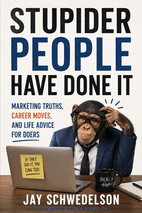
Jay Schwedelson's Stupider People Have Done It is part marketing playbook, part career survival guide, delivering data-backed tactics for LinkedIn and email while dismantling myths like best practices, the ten-thousand-hour rule, and work-life balance—for anyone stuck in the middle of their career who needs a kick in the pants rather than another inspirational quote.
On Insta.page you also get an Apply This Book tool that lets you combine insights from up to 3 books to solve your specific situation.
Chapter mindmaps
Free preview: chapters 1–4 are fully interactive. Click any node to expand or collapse. Subscribe to unlock the rest.
Chapter 1: Introduction
Key concepts: Introduction
Introduction
The Book's Unconventional Premise
All profits go to charity, so even bad advice does good
No ego, no hero worship, no polished life story
Author is just a guy sharing observations, not a guru
The Grandfather's Pivotal Line
Grandpa said: 'Stupider people than you have done it'
Crushed impostor syndrome and sparked action
No perfect moment—just start, even when it feels wrong
Why 'Stupider' Works as a Mindset
Gives permission to stop needing to be the smartest
Obstacles are mostly self-created
Self-awareness, kindness, humor, and hard work matter more than credentials
Redefining Success
Success is accessible, not reserved for elites
The herd waits for perfect conditions; winners just start
Willingness to act beats brilliance every time
What the Book Promises
Quick wins, pitfalls, and game-changers in marketing and life
Messy, honest ride with pop culture complaints and tangents
Blunt permission to stop holding yourself back
Chapter 1: Best Practices Are Garbage
Key concepts: Chapter 1: Best Practices Are Garbage
Chapter 1: Best Practices Are Garbage
Why Best Practices Fail
Create false security while steering toward average
Already obsolete by the time they're 'best'
Herd following guarantees you can't stand out
Examples like 'customer is always right' lead to bad decisions
Five-Minute Plan Over Five-Year Plan
Long-term plans are often procrastination in disguise
Author trashed six-month plan during Covid crisis
Urgent action led to virtual conference and seven-figure sale
Focus on 'What can I do right now?'
Barbara Corcoran's No-Plan Approach
Split company in ten minutes after partner betrayal
Relaunched Corcoran Group within four days
No business plan or five-year vision needed
Made more alone than with former partner that year
Do the Thing That Scares You
Safe decisions die on arrival
Memorable work is weird, gutsy, occasionally inappropriate
Nervousness signals you're doing something right
Humanity beats algorithms and stale tactics
Key Takeaways
Best practices guarantee you'll be late and average