Stupider People Have Done It Quotes
by Jay Schwedelson
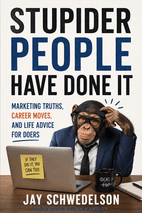
Here are the rawest, most unvarnished lines from Jay Schwedelson's book. You will find blunt reminders to stop overthinking and start doing, along with sharp jabs at the kind of safe thinking that leads nowhere. What makes these quotes so shareable is their honesty. Jay writes like he is calling you out over coffee, cutting through the excuses and the self doubt with a mix of humor and tough love. These are not polished motivational posters. They are the gritty, real talk you need to hear when you feel stuck or afraid to take the next step.
Top Quotes from Stupider People Have Done It
“Jay, stupider people than you have done it.”
The author's grandfather says this to him when he is feeling defeated and doubting himself.
This is the core mantra of the entire book—simple, unexpected, and instantly reframes self-doubt into motivation. It sticks with readers because it's both humorous and deeply liberating.
“I realized in that moment there was somebody out there who was, in fact, stupider than I was, and yet they were experiencing the exact success I wanted.”
The author reflects on the impact of his grandfather's words during a low point in his life.
This line captures the transformative insight that success doesn't require being the smartest—it requires action. It resonates because it normalizes insecurity and flips a common excuse into a call to start.
“The problem is, by the time something becomes a “best practice,” it's already an outdated, useless turd of an idea.”
The author argues that best practices are inherently stale and worthless.
The blunt, vivid language shatters the comfort of following conventional wisdom and makes readers question the value of anything labeled 'best.'
“The only best practice I believe in is this: /f your campaign, career move, or business decision doesn’t make you at least a little nervous to try, you didn't go far enough.”
The author offers his sole endorsed 'best practice' after dismissing all others.
It reframes discomfort as a signal of worthwhile risk, empowering readers to embrace the very unease they might otherwise avoid.
“The single biggest factor in why people of average intelligence (like me) can beat out super-smart people is consistency. That's actually it. You will beat out 95 percent of people just by being consistent.”
Jay explains the core reason average people can outperform geniuses.
This bold claim is both humbling and empowering, giving hope to those who don't consider themselves naturally brilliant. The specific 95% figure makes the insight stick and motivates action.
“Nobody has a clue. We're all just out there making stuff up and hoping it sticks.”
After citing failed predictions from Bill Gates, Steve Jobs, and Steve Ballmer.
This line delivers a humble and liberating reminder that even the most brilliant minds are guessing, which relieves pressure on everyone else.
“Your blessing in life is when you find the torture you're comfortable with.”
Jerry Seinfeld's quote cited by the author.
It reframes work as an acceptable trade-off rather than a passion project, validating the struggles people endure daily.
Themes Behind the Quotes
A major theme is the power of consistency and accountability over raw intelligence. The book argues that showing up every day and owning your actions matters far more than being the smartest person in the room. Another central idea is rejecting so called best practices because they often lead to mediocrity. Instead, the author pushes for taking risks that make you nervous, because comfort usually signals stagnation.
A third theme revolves around the value of starting imperfectly. Many quotes emphasize that you do not need to have it all figured out. Everyone is making it up as they go, so you might as well begin. There is also a persistent call to be genuine, especially on platforms like LinkedIn, where bragging fails but sharing real value can change your trajectory. Finally, the book celebrates finding a version of work you can tolerate, not some fantasy of effortless passion.
Quotes by Chapter
Introduction
“You just need to start—even if you feel like your head is in your hands and you're convinced you're about to blow it.”
The author emphasizes the book's main takeaway after recounting his grandfather's advice.
It's a direct, actionable push that validates the reader's fear while demanding they move forward anyway. The vivid imagery of feeling defeated makes the permission to start feel concrete and urgent.
“I stopped the endless spiral of self- doubt and all the “woe is me” garbage I'd been telling myself and got to work.”
The author describes how his grandfather's words changed his mindset from self-pity to action.
This line is brutally honest and relatable—many readers will recognize their own negative self-talk. It models a shift from paralysis to productivity, making it a powerful rallying cry.
Chapter 1: Best Practices Are Garbage
“You want to be average? Best practices will take you there. You want to be invisible? Best practices will carry you gently into the arms of mediocrity and tuck you in with a blanket labeled “Industry Standard.””
The author contrasts the promise of best practices with the dull reality they deliver.
The extended metaphor paints a memorable, almost humorous picture of mediocrity as a cozy trap, making the warning against conformity stick.
“Because if it feels safe, it’s already dead.”
The author explains why safe, conventional marketing campaigns fail.
This short, punchy line cuts through rationalization, instantly reframing safety as a liability rather than a virtue.
Chapter 2: Are You Consistent? Are You Accountable?
“I actually think knowing I wouldn't be part of the NASA space program has been a superpower for me. It forced me to figure out two of the most important things a person can do for their career, business, and, basically, life. Those two things? Be consistent and be accountable.”
Jay reflects on his average intelligence and how it led him to discover two key principles.
This line reframes a perceived weakness as a strength, showing that self-awareness can lead to powerful life strategies. It inspires readers to find their own superpower in apparent limitations.
“But if you don’t have something that eats at you every week and forces you to learn, grow, or network, you simply won't!”
Jay argues that weekly accountability is essential for continuous improvement.
The phrase 'eats at you' captures the necessary discomfort of self-imposed pressure, making the point memorable and urgent. It challenges readers to commit to a regular practice or risk stagnation.
“Is it super fun? Nope. Do I get smarter, and can I give better advice to my clients and get more business because of it? 100,000 percent.”
Jay answers his own question about the value of his weekly routine.
The blunt honesty about the lack of fun combined with the extreme payoff (100,000%) creates a memorable contrast. It validates the sacrifice while clearly showing the reward, encouraging readers to embrace short-term discomfort for long-term gain.
Chapter 3: Since You Didn’t Ask: Is the Movie ‘Bridesmaids’ Funny?
“Smart people don’t automatically win. Accountability and consistency are the secret sauce to kicking the smart people's butts!”
The author reflects on his grandpa's advice about persistence, stating that stupider people have succeeded because they don't stop.
This line encapsulates the book's core theme that effort and discipline matter more than raw intelligence, making it both motivational and rebellious.
“I judge people almost entirely by their opinions on pop culture-related things.”
The author admits his habit of judging others based on their taste in movies, framing it as a playful but firm personality trait.
It's a brutally honest, humorous confession that many readers will relate to or find shockingly relatable, setting the tone for the chapter's self-aware absurdity.
“Well, you bought a book called Stupider People Have Done It, sooooo... There, I just judged you.”
After listing movies he considers essential, the author directly addresses readers who disagree, turning the judgment back on them.
This line is a meta, cheeky punchline that reinforces the book's irreverent voice and makes the reader complicit in the joke.
“I’m really writing this book to get out my inner issues with all the things that drive me a little bananas, and also to share my horrible takes on pop culture.”
The author reveals the true, chaotic purpose of the book after questioning why this chapter exists.
It disarms the reader with transparency and self-deprecation, making the entire book feel like an honest, unfiltered rant rather than a polished guide.
Chapter 4: Marketing Stuff: LinkedIn—This One Matters!
“Linkedin is basically the last social network that’s not a disaster.”
The author argues why LinkedIn is worth the effort compared to other platforms.
It's a bold, relatable statement that cuts through social media fatigue and positions LinkedIn as a rare safe haven for professional networking.
“If you think Linkedin is just a place for your résumé or you don't like posting because social media isn't your thing or whatever other lazy/scared/ridiculous reason you want to use, then have fun living in the land of no growth.”
The author calls out common excuses people make for not being active on LinkedIn.
The blunt, no-excuses tone forces readers to confront their own inertia and makes the cost of inaction feel real and immediate.
“The fix is stupidly simple: Delete the characters in the URL back to the question mark (but leave the question mark itself).”
The author reveals the secret to getting organic engagement by sharing clean LinkedIn links.
It delivers a counterintuitive, actionable hack that feels almost too easy—making readers feel they've been handed a powerful, insider trick.
“If all you do is post “look at me” stuff, you suck and nobody will like you.”
The author criticizes self-promotional content and advocates for value-first posting.
The raw, unfiltered honesty sticks in the reader's mind and drives home the importance of giving before taking on LinkedIn.
Chapter 5: Since You Didn’t Ask: I Was Beyond Embarrassed!
“Posting on LinkedIn can change the direction of your life.”
The author sums up the chapter's main point about the importance of LinkedIn.
It's a bold, concise statement that encourages readers to take action on a platform often underestimated, making it highly motivational.
“All calories consumed when on work travel don't actually count in your body—that's a real thing.”
The author justifies eating a burger and fries while in his hotel room wearing only boxer briefs.
This humorous, relatable exaggeration about travel eating resonates with anyone who has used work trips as an excuse to indulge guilt-free.
“I said, “Hello, how are you?” In retrospect, I think silence would have been the right choice, but I can't shut up.”
The author, locked out of his room in just his boxer briefs, greets strangers in the elevator.
The self-aware humor about social awkwardness under embarrassing circumstances makes the moment both cringe-worthy and endearing.
Chapter 6: All-Time Stupid Advice
“But holy crap, some of that advice is coming straight out of people's butts!”
Author Jay's opening reaction to the prevalence of bad advice.
The crude, visceral imagery makes the point unforgettable, instantly conveying how much worthless advice people dish out.
“How is it possible that everyone has deep, meaningful advice on practically everything I ask? Well, here’s the secret: They don't! They're making it up.”
Jay explaining why most people seem to have answers for everything.
It exposes the uncomfortable truth behind advice-giving in a direct, relatable way, making readers question the advice they receive.
“When you see a category that's full of a zillion companies, that's exactly the business you should start!”
Jay countering the advice to avoid competitive markets.
It flips conventional wisdom on its head, encouraging readers to see crowded markets as proof of demand rather than obstacles.
Chapter 7: I Don’t Love My Job, and That’s Totally Fine
“The idea that “if you love what you do, you'll never work a day in your life” is nonsense. It’s living in pure LinkedIn fantasyland.”
The author debunks the popular motivational saying.
It perfectly captures the unrealistic pressure to love every minute of work and calls out the hollow, corporate version of that advice.
“You don’t have to like it. You just have to not hate it.”
A friend says this to the author during a burnout call.
This stripped-down wisdom offers relief to anyone who feels guilty for not loving their job, redefining a successful career as simply tolerable.