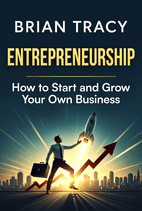
Brian Tracy's Entrepreneurship provides a practical, systemic framework for starting a business, covering market validation, bootstrapping, sales systems, and mindset shifts. Written for aspiring entrepreneurs who want a realistic guide to navigating the first few critical years without romantic fluff.
Feature
Insta.Page
Blinkist
Shortform
Entrepreneurship
✓
✕
✕
Summary Depth
Full Chapter-by-Chapter
15-min overview
Section-by-section guides
Audio Narration
✓
✓
✓
Visual Mindmaps
✓
✕
✕
AI Q&A
✓
✕
✕
Quizzes
✓
✕
✕
PDF Downloads
✓
✕
✓
Price
$89.99/yr
$146/yr (PRO)
$199/yr
*Competitor data last verified July 2026.
1 Page Summary
Based strictly on the provided chapter summaries, here is a concise summary of the book:
This book positions entrepreneurship as a learnable skill, not an innate trait, and a viable path to freedom from a bad boss. Brian Tracy grounds the discussion in his own journey from labor jobs to success, arguing that an entrepreneur is simply someone who spots a chance to serve others. The core premise is that human desire for better, faster, cheaper solutions is unlimited, driving the "ER factor" behind every successful business. The book debunks common myths, such as the high failure rate of businesses (blaming lack of preparation) and the necessity of venture capital, advocating instead for bootstrapping and calculated risk avoidance.
The author's distinctive approach is practical and systemic, debunking romantic notions of entrepreneurship in favor of disciplined preparation and execution. Tracy emphasizes the need to slow down and validate a market before spending money, using real proof of concept from paying customers. He stresses the importance of building a repeatable sales system over simply having a good product. The book covers the emotional foundation of choosing a business (you must love the product and the customer), the critical shift from an employee to an entrepreneurial mindset (self-responsibility over entitlement), and the necessity of creating a business plan that defines the transformation a product delivers, not just its features.
The intended audience is aspiring entrepreneurs who want a realistic, no-nonsense guide to starting and growing a business. Readers will gain a clear framework covering financing (the number-one reason for failure is running out of cash due to insufficient sales), hiring (the "Law of Three" and focusing on transferable results), and sales and marketing (the "four pillars" of specialization, differentiation, segmentation, and concentration). The book prepares readers for the gritty reality that everything takes three times as long and costs twice as much, while providing the principles to navigate the first few critical years.
One Welcome to the Entrepreneurial Age!
Overview
The chapter opens with the author’s own journey—dropping out of high school, working labor jobs, and feeling envy at others’ success. That led him to study entrepreneurial economics and a simple insight: an entrepreneur is anyone who spots a chance to serve others with a product or service people want, then delivers it at a price lower than what customers will pay. Human desires are unlimited—we always want things better, faster, easier, cheaper—which drives the ER factor, the engine behind every successful company. Jeff Bezos saw book buyers wanted convenience and lower prices, so he built Amazon around shipping books directly from publishers at a discount. The model was simple: sell, deliver, profit, repeat. Today, starting a business is easier than ever—with a laptop and a one-day seminar, you can launch an online business and start generating sales before sunset. Entrepreneurship is a learnable skill, no different from driving a car.
A crucial turning point came during the author’s door-to-door sales struggles. He asked the top performer why he made ten times more while working half the hours. The answer: a sales system. Establish trust first—be genuinely concerned about helping the customer. Ask questions, learn their needs, help them make good decisions. Once the author adopted that recipe, his sales multiplied tenfold. The lesson: there’s a success formula for everything, and you can learn it through trial and error, asking questions, and studying.
Security is the foundational human need. People fresh out of school take jobs for immediate income, then get stuck in the comfort zone of wages. But the most important work is thinking—especially about long-term consequences. A fifty-year Harvard study found that long-term thinking is the single biggest predictor of economic success. About 80% of entrepreneurs come from families where a parent was one; they absorbed the belief that you can build a business. Immigrants often become entrepreneurs because they arrive with nothing and must sell something to survive. The essence is always service: serve customers better than anyone else, and you deserve your success—the word “deserve” comes from Latin deservire, meaning to serve zealously. Steve Jobs and the iPhone illustrate this perfectly. Experts dismissed it as a toy, but Apple kept adding features. Ninety percent of iPhone owners said they’d buy another. Apple raised prices, profits soared, and the stock became the world’s most valuable. Meanwhile, BlackBerry, complacent in its comfort zone, went bankrupt.
So should you take the corporate path or the entrepreneurial path? Peter Drucker noted that 80% of businesses fail within two to four years, but 80–90% succeed when started by people with business experience. The best move is often to work for a company first, learn the ropes—marketing, selling, customer care—and get promoted until you can go out on your own. Even within a corporation, you can be an intrapreneur: constantly finding faster, better, cheaper ways to add value. Most people are better suited to specializing and cooperating with others. Organizations exist to emphasize strengths and make weaknesses irrelevant. The biggest mistake entrepreneurs make is slipping into a comfort zone and coasting. The 80/20 rule holds: 20% keep improving, 80% stagnate. Regarding automation? Boring, repetitive jobs get automated, but new opportunities constantly emerge. Automation of low-skill jobs isn’t a threat—it’s liberation. Every time a routine task gets mechanized, people are freed to do work that’s more interactive, creative, and enjoyable. The real joy in work comes from collaborating with others, being acknowledged, and growing in your field. That can’t happen on a production line. So automation makes room for a richer professional life.
The first turning point in the author’s life came when he was living in a cold, tiny apartment, working a labor job that barely covered rent. He took three buses each way, came home exhausted, and had no money to socialize. One night it hit him: he was responsible for his own life. Nothing would change unless he changed. That flash of insight was like a light bulb going off. From then on, he understood that taking charge of your life is the foundation of everything. Stephen Covey’s The 7 Habits of Highly Successful People starts with that. Until you accept responsibility, you drift—blaming your parents, your boss, the economy. Eighty percent of people spend their lives pointing fingers. But when you give up responsibility, you give up power. And without power, you never change. Your most valuable financial asset is your earning ability—your capacity to produce results that people will pay for. Increase that, and the money follows.
The single most important quality for success? Ambition. It accounts for at least 80 percent of success. If someone is driven enough, nothing will stop them. In America, if a business fails, you can start another the next day and people respect your grit. In Europe, failure is shameful. Someone once said, “The U.S. is made up of people who left; Europe is made up of people who stayed.” Leaving takes ambition. The second turning point in the author’s life was discovering goals. He was living on a friend’s floor, read that successful people have goals, grabbed a scrap of paper, and wrote down ten goals. Within 30 days his life had completely changed. Writing down goals makes you ten times more likely to achieve them. Only 3 percent of adults have written goals, and they earn on average ten times more than the 97 percent who only have wishes. Wealthy people decide to become wealthy. Once you decide, the only question is “How?”
The third turning point was realizing you can learn any skill you need. The biggest obstacle for most entrepreneurs is fear of rejection and failure. But everyone is in sales. Every time you persuade someone to cooperate with you, you’re selling. It’s a skill, like driving. Were you good at driving the first time? No—you were terrified. But you learned. Selling works the same way. The author learned by knocking on doors, reading books, attending seminars. Then he taught others—people in their twenties with no money, desperate, frustrated. Once they learned to sell, they overcame their fear. Many are millionaires today. A Fortune 500 company hired fresh graduates, terrified of selling, and taught them a system. They sent them out with experienced mentors, gave feedback, built confidence. Those salespeople generated millions. IBM did the same. They hired for personality and good grades, then taught the recipe. At one point IBM had 82 percent of the world computer market, and none of those salespeople could sell before they started. Don’t let fear of rejection hold you back. It’s just a feeling, and it disappears with competence.
The other indispensable quality—the bookend of success—is that you never quit. On an old TV show, four self-made millionaires who hit it big before age 25 were asked how many businesses they tried before succeeding. Their average: seventeen. They failed or nearly failed sixteen times, and the seventeenth struck gold. But did they really fail? No—they learned. Every difficulty comes not to obstruct, but to instruct. The superior person asks, “What did I learn?” The author did that with his own children. When they messed up, he’d say, “What did you learn?” They’d tell him, and he’d say, “Great. Scrinch up the mistake, throw it away, and keep the lesson.” A friend of his went through a business failure, lost everything, moved back in with his mother. He wrote down every lesson in a spiral notebook. That notebook became his bible. He started again, and by age 50 he was a multimillionaire. If you don’t document what you learn, you’ll repeat mistakes. But if you do, you guarantee your progress. Churchill captured this perfectly when a student asked him the most important lesson he’d learned. His answer: “Never give up. Never, never give up, except in situations of morals and values.”
The formula for building wealth boils down to five actions: decide exactly what you want, write it down, make a plan, get to work, and keep working until you succeed. Success is simply a decision to start and a commitment to never stop. Setbacks and reversals are inevitable, but you can program yourself to bounce back. Keep going until you succeed. Almost all great successes end up in a field completely different from where they started. They faced repeated failures, pivoted again and again, and finally landed somewhere unexpected. The common thread? They never gave up.
Key Takeaways
When problems arise, focus only on what you can learn—discard anger and blame.
The path to wealth is simple: define your goal, write it down, make a plan, and persist.
“Never give up” is the single most important lesson; setbacks are just springboards.
Most successful people ended up in a different field than they started—persistence made the difference.
Key concepts: One Welcome to the Entrepreneurial Age!
1. One Welcome to the Entrepreneurial Age!
The Entrepreneurial Mindset
Entrepreneurs spot opportunities to serve others
Human desires are unlimited, driving the ER factor
Entrepreneurship is a learnable skill like driving
Success formulas exist and can be learned
The Power of Systems
Top performers use proven systems, not just hard work
Sales system: build trust, ask questions, help decisions
Adopting a recipe can multiply results tenfold
Trial and error reveals success formulas
Long-Term Thinking and Security
Thinking is the most important work
Long-term thinking predicts economic success
Security is the foundational human need
Avoid getting stuck in the comfort zone of wages
Service as the Core of Success
Serve customers better than anyone else
Deserve comes from Latin deservire - to serve zealously
Steve Jobs and iPhone exemplify service-driven success
Complacency leads to failure like BlackBerry
Choosing Your Path: Corporate or Entrepreneurial
80% of businesses fail without experience
Work first to learn marketing, selling, customer care
Be an intrapreneur within corporations
Organizations emphasize strengths, make weaknesses irrelevant
Taking Personal Responsibility
You are responsible for your own life
Accepting responsibility gives you power to change
Your earning ability is your most valuable asset
80% of people blame others and drift
Ambition and Goal Setting
Ambition accounts for at least 80% of success
Written goals make you ten times more likely to succeed
Only 3% of adults have written goals
Wealthy people decide to become wealthy
💡 Try clicking the AI chat button to ask questions about this book!
Two Myths of Modern Entrepreneurship
Overview
Forget the common myths about entrepreneurship—the reality is far more grounded. The idea that ninety-five percent of all businesses fail is a myth; what actually kills ventures is a lack of preparation. The antidote is to slow down and answer three questions before starting: Is there a market? Is it large enough? Is it concentrated enough? Real proof of concept comes from customers writing checks before the product exists. Remember that everything takes three times as long and costs twice as much—plan for that. Venture capital isn't the only path; most successful entrepreneurs bootstrap by selling something, making a profit, and reinvesting. Having a good product alone guarantees nothing—customers only care about what's in it for them. You don't need a groundbreaking invention; most businesses solve an existing problem better, cheaper, or faster. Successful entrepreneurs are actually risk avoiders—they cut losses quickly and try ideas on a tiny scale. Entrepreneurship isn't something you're born with—it's natural to human instinct, but you have to develop it through study and practice. The real drive isn't just wealth; it's freedom from a bad boss. Finally, entrepreneurs do have personal lives—the most successful ones prioritize family and work hard to provide for loved ones.
Myth 1: Ninety-five Percent of All Businesses Fail
That 95 percent failure statistic is a myth. The real culprit is a lack of preparation. Entrepreneurs tend to be impulsive, racing into action before thinking things through. The antidote is to slow down and carefully examine every detail before you commit.
Three questions must be answered before you start:
Is there a market for your product or service? Will people actually give you money for it?
Is your market large enough? Can you build a profitable business from it?
Is your market concentrated enough? Can you reach customers efficiently without burning through your budget?
The biggest mistake is launching a product for which no substantial market exists. You need proof of concept—real customers writing checks before the product is available. A solid business plan forces you to think through pricing, costs, delivery, competition, and selling expenses. The rule I've lived by: everything takes three times as long and costs twice as much. If you think you'll break even in three months, plan for nine. Build that into your projections. Preparation is the mark of the professional. Check every number and get outside validation. Always replace financial capital with sweat equity when you can. Time is retrievable; money is not.
Myth 2: You Have to Have Venture Capitalists to Fund a Start-Up
Ninety-nine out of 100 applications to venture capitalists get tossed. Real funding comes from family, friends, and fools. Most successful entrepreneurs start by bootstrapping—selling something, making a profit, reinvesting it, and repeating the cycle. This forces creativity and hard work from day one. Expect to work sixty to seventy hours a week. Forbes described every start-up as a race against time: an airplane diving toward the ground. The crash is running out of money. Your job is to pull the plane out of the dive before you hit zero. The 80/20 rule applies: 80 percent of your success comes in the last 20 percent of the time you work. Many people quit just before that moment. The only solution is to decide you will never quit.
Myth 3: If Your Product or Service Is Good, You'll Be Successful
Customers have ice water in their veins. They don't care how much you love your product. They want to know: What's in it for me? Your product must be superior in the one attribute that matters most to them. When a customer says, "Let me think about it," they're really saying no. Krispy Kreme is a devastating example. The donuts had an addictive flavor that drove success. Then one article revealed they added inches to waistlines. The market vanished overnight. The product didn't change. The customer's perception of value did.
Myth 4: To Be a Successful Entrepreneur, You Need to Invent Something Novel and Groundbreaking
Most successful businesses aren't built on world-changing inventions. They solve an existing problem better, cheaper, or faster than the current options. Novelty is not a requirement—market fit is.
Key Takeaways
Myth 5: Most Entrepreneurs Are Wild Risk Takers. Successful entrepreneurs are actually risk avoiders. They practice proof of concept: try new ideas on a tiny scale, and if they fail, the loss is minimal. Cut your losses quickly. A friend who started as a dishwasher became a multimillionaire by checking his restaurant's trash cans every night. If customers threw away a dish, he'd remove it from the menu. That's real risk management.
Myth 6: Most Entrepreneurs Are Financially Successful. The formula: make customers happy. Ask them, "How can we do it better next time?" instead of "How was everything?" That simple shift opens the door to real feedback. Most companies never do this and stay in the struggling bottom 80%. The top 20% listen and adapt.
Myth 7: Entrepreneurs Are Born, Not Made. Entrepreneurship is natural to human beings. Kids do it instinctively. But like riding a bike, you have to develop the ability through study and practice. Study sales, marketing, and customer behavior. You can get better at making people happy for less time and money.
Myth 8: All Entrepreneurs Want to Be Rich. The real drive is freedom—especially freedom from a bad boss. Wealth doesn't happen by accident. You have to decide you're going to make money, then learn from those who've done it. A friend met an older businessman for lunch once a month and took notes. Today he owns thirty-one profitable magazines. The lesson: keep asking for advice.
Myth 9: Entrepreneurs Have No Personal Lives. Ask successful entrepreneurs what matters most, and they always say family. They work sixty-hour weeks to provide for loved ones. Money becomes a scorecard—important for tracking, but never the main story. Entrepreneurship, when done right, gives you the freedom to spend time with the people who matter.
Key concepts: Two Myths of Modern Entrepreneurship
2. Two Myths of Modern Entrepreneurship
Myth 1: 95% Failure Rate
Real cause is lack of preparation, not failure
Answer three questions: market, size, concentration
Get proof of concept before product exists
Everything takes 3x longer and costs 2x more
Myth 2: Need Venture Capital
99% of VC applications are rejected
Bootstrapping: sell, profit, reinvest, repeat
Start-up is a race against running out of money
80% of success comes in final 20% of effort
Myth 3: Good Product Guarantees Success
Customers only care about 'What's in it for me?'
Product must excel in one key customer attribute
'Let me think about it' really means no
Customer perception of value can vanish overnight
Myth 4: Need Groundbreaking Invention
Most businesses solve existing problems better
Market fit matters more than novelty
Improve on cheaper, faster, or better options
Myth 5: Entrepreneurs Are Risk Takers
Successful entrepreneurs are risk avoiders
Test ideas on tiny scale to minimize losses
Cut losses quickly based on real feedback
Myth 6: Entrepreneurs Are Born
Entrepreneurship is natural human instinct
Must develop through study and practice
Learn sales, marketing, and customer behavior
Myth 7: All Want to Be Rich
Real drive is freedom from a bad boss
Decide to make money, learn from successful people
Keep asking for advice and take notes
Three What Type of Business Should I Start?
Overview
Choosing what business to start isn’t a cold, logical calculation—it’s fundamentally emotional. The venture that will actually sustain you through the inevitable headaches is one that “grabs you” on a deep, personal level. That emotional pull is the foundation for loving the product enough to persevere when obstacles appear, as demonstrated by the overwhelming majority of Inc. 500 founders who started because they wanted the product for themselves. But that’s only one side of the barbell; true success also requires loving your customers and finding genuine joy in how your product improves their lives—not just in the money. The method of delivering that product must also be a right fit for your personality and values; if you hate the sales process or the work environment, you’ll never build a legendary company like the ones where employees can’t wait to show up. And once you’re clear on those intangibles, you have to protect them with integrity—never compromise on product quality or customer care, or the business will unravel, as the steakhouse chain learned. Practically, you’ll need to navigate business structures and legal advice, understanding that a sole proprietorship, LLC, S corp, or C corp each serves a different stage, and that skimping on a good lawyer or accountant is a false economy—they save you far more than they cost. Meanwhile, franchises offer a proven, turnkey system (just verify everything with existing franchisees), and multilevel marketing provides an ultra-low-cost entry point where the real test is selling. Selling is the engine of every business: you get up to sell more stuff, and your income is a direct reflection of how many conversations you have. The number one reason for success is high sales; low sales cause every other problem. Learn the skill, track your calls, and keep experimenting until you find a product people love and buy again and again.
The Emotional Core
The decision of what business to start is fundamentally emotional. It’s not about passion as an overused word, but about something that genuinely grabs you. Think of the woman who explained how she chose her house: “It grabbed you, honey, didn’t it?” Successful entrepreneurs feel the same pull toward their product or service. They love it on a personal level—they want it for themselves and their families first. That emotional hook is what sustains them through the inevitable obstacles and setbacks that come with building a business.
Loving the Product Enough to Persevere
The Inc. 500 list of fastest‑growing companies reveals a stunning pattern: 95 percent of founders said they got into their business because they discovered a product or service they personally loved. They wanted it so much that they produced, imported, or manufactured it for their own use, and then neighbors and friends said, “Can I get that?” One immigrant couple created a simple system that let their kids earn TV time by completing homework. Within months their children became top students, other parents begged for the system, and the business grew 14,800 times in three years. Pierre Omidyar started eBay just to trade Pez dispensers with friends. The lesson is consistent: if you truly love the product, you’ll never give up when difficulties hit. You’ll find a way to make it work.
Loving Your Customers
A successful business rests on a barbell of love—love for the product on one end, love for customers on the other. The real joy isn’t in making money; it’s in hearing how your product improved someone’s life. Great entrepreneurs talk about customer stories, not sales figures. They bring happy customers to celebrations. This holds true even in multilevel marketing, where the most sustainable companies are built on a product that actually works. People who succeed in MLM don’t lead with “get rich”; they lead with “try this, it helped me.” If you wouldn’t eagerly sell the product to your mother or best friend, something is off. The product must be efficacious. The most important question in all of business is simply: Does it work?
The Right Fit for Your Personality and Values
Beyond product and customer, the method of selling and delivering must harmonize with who you are. If you can’t stand street‑corner sales, don’t do it. The happiest, most legendary companies—like Google, Apple, Microsoft, Hewlett‑Packard—are places where employees genuinely love going to work. HP had to lock its doors on weekends because workers couldn’t stay away. Disneyland hires “cast members” who want to create magic; the entire park is spotless because executives will pick up a dropped French fry. Scripps hospitals redefined their purpose as giving reassurance, then ran the hospital like a first‑class hotel. Southwest Airlines is consistently profitable because it treats customers with genuine care. These companies don’t hire people and teach them to be nice—they only hire nice people.
The Cautionary Tale of Compromised Integrity
The opposite is just as instructive. A steakhouse chain that had been a favorite for twenty years was bought by new owners who immediately cut bun sizes, lowered food quality, and forced staff into cheaper uniforms. They assumed customers wouldn’t notice. Within a year, loyal diners walked away. The chain is dying. Integrity is the quality with which you do your work and treat your customers. Never compromise it. The moment you care more about profit than about those you serve, you’ve lost the very thing that made the business work.
Navigating Business Structures and Legal Advice
Once you’ve found the product and customers that grab you, you’ll need to choose a legal structure. The simplest is a sole proprietorship—you buy low, sell high, and report the profit. As you grow, a limited‑liability company (LLC) or an S corporation offers liability protection and tax advantages. Larger companies with many shareholders require a C corporation. Regardless of the stage, one rule stands: never try to save money on professional advice. A good lawyer is worth every penny when you’re starting out.
Almost every entrepreneur thinks about cutting costs on professional advice, but that’s a dangerous trap. A good lawyer or accountant doesn’t just take your money—they save you far more than they charge. I learned this the hard way when I tried to handle a contract myself to avoid a $500 fee and ended up losing thousands because I missed critical tax and structural changes. My lawyer told me plainly: not spending on legal fees is the worst loss of money you can have. The same goes for accountants, especially with complex tax laws. A medium-sized accountant familiar with small and medium businesses can flag issues like labor law pitfalls. In California, for example, firing an employee even with evidence of theft can trigger a $74,000 settlement if not handled correctly. A labor lawyer would cost money but save you a fortune. The rule of thumb: a good professional saves you $5 to $10 for every $1 you pay them. That said, for simple needs, services like LegalZoom work fine. They provide fill-in-the-blanks contracts at a fraction of a lawyer’s fee. Only when things get complicated with multiple people or liabilities should you involve a lawyer.
Now, let’s talk about franchises. A franchise is a proven money-making system. You’re buying a recipe that works, along with training and supervision. Whether it’s McDonald’s or a one-person sales training franchise, the key question is: does it work? Franchise law requires the seller to provide all data on existing franchises, so you can verify claims. Do your homework. Due diligence is critical. Never skip it.
Multilevel marketing (MLM) is another low-cost option, often starting for as little as $25. But here’s the core truth: all business is about selling. You get up to make more money, and you make more money by selling more stuff (SMS). The only time you’re working is when you’re selling. If you’re not selling, you might as well stay in bed. To double your income, talk to twice as many people. Track your numbers—how many people you speak to each day. That number determines your future.
Many people dislike selling because they’re not good at it, but you can learn anything. I learned to sell by studying and practicing six days a week. The more you talk to customers, the better you get, and your confidence grows. Sales is everything. The number one reason for business success is high sales; low sales cause all problems. If sales drop, don’t buy more advertising—just get out and talk to customers. Not everyone is your prospect; you need to find the right fit. Keep experimenting with different products and services. The more you try, the more likely you’ll find the one that clicks. The best entrepreneurs are aggressive, ambitious, and constantly testing until they find a product that people love and buy again and again.
Key Takeaways
Invest in professional advice—lawyers and accountants save you many times their fees.
For simple structures, use low-cost services like LegalZoom; involve a lawyer for complex situations.
Franchises offer proven systems, but require thorough due diligence; verify with existing franchisees.
MLMs are accessible low-cost entry points, but success depends on sales effort.
Selling is the core of every business; track your sales calls and constantly increase them.
You can learn any skill needed for business success; persistence and experimentation lead to breakthroughs.
Key concepts: Three What Type of Business Should I Start?
3. Three What Type of Business Should I Start?
The Emotional Core of Business Choice
Decision is fundamentally emotional, not logical
Find something that genuinely 'grabs' you
Emotional pull sustains through inevitable obstacles
Loving the Product Enough to Persevere
95% of Inc. 500 founders loved their product first
They wanted the product for themselves initially
Personal love for product fuels persistence through difficulties
Loving Your Customers
Success requires love for both product and customers
Real joy comes from improving customers' lives
Most important question: Does it work?
Right Fit for Your Personality and Values
Sales method must match who you are
Legendary companies hire nice people, not train them
Employees genuinely love going to work
Protecting Integrity at All Costs
Never compromise product quality or customer care
Steakhouse chain failed after cutting corners
Profit focus destroys what made business work
Business Structures and Legal Advice
Sole proprietorship, LLC, S corp, C corp serve different stages
Good lawyer and accountant save more than they cost
Skimping on legal advice is false economy
Selling as the Engine of Success
Every business depends on selling more stuff
Income reflects number of conversations had
High sales solve problems; low sales cause them
Four How Should I Finance My Business?
Overview
The number-one reason businesses fail is running out of cash, and the reason they run out of cash is simple—not enough sales. But that lack of sales usually traces back to failing to think through the core business questions: who will buy, why, at what price, and how will you deliver? The romantic idea that a great product will automatically find customers is a dangerous myth. Instead, you face the shock of how hard it is to get that first sale, especially when people are comfortable with what they already have. The author shares his own painful experience of selling his house, car, and furniture, borrowing from friends and family, and parking his car a block away so the bank wouldn’t repossess it. That gritty reality sets the stage for everything that follows.
The Central Problem: Cash and Sales
Most entrepreneurs start over-optimistic, expecting to sell truckloads immediately. The reality is far different. The author emphasizes that you’re in a race against time for the first two to four years. You lack the skills to combine products, services, people, and resources into something customers will pay more for than it costs to produce. This is why 90% of businesses started by people with experience succeed, while 80% started by novices fail. The core skill you must develop is the ability to manage money—to accumulate it, save it, deploy it, and turn it into more money. Until you demonstrate that ability, no bank or venture capitalist with sense will lend you a dime. You have to exchange financial equity for sweat equity: work, study, learn, and persist through disappointments.
Bootstrapping and the Power of Planning
Bootstrapping isn’t just a way to survive—it forces you to become smart fast. The author advocates for business planning as an insurance policy. It forces you to think through every aspect before committing resources, and often you discover you "can't get there from here." You may find that competitors already sell a similar product for less and have a reputation you lack. The key question: why would a customer switch from a known supplier to an unknown quantity? Human beings are skeptical and security-seeking. You must offer a real advantage. The author points to Apple’s iPhone as an example of a product so superior it transformed an entire market, but even that required massive confidence and persistence.
Obsession with Customers and Reputation
Tom Peters called the most important business principle an "obsession with customer service." The author agrees wholeheartedly. Successful companies obsess over customers and sales every single day. The least successful get distracted by meetings, new offices, product design, or golf games. A consulting firm that turned around over 6,000 troubled companies found the same root cause: the head of the company stopped selling. They forced them back to a single focus: customers from morning to night. Peter Drucker’s most important business number is free cash flow—the cash you actually have in your hand after everything. Reputation is your most valuable asset. Brands like Apple command premium prices because customers trust the reputation. Every customer interaction should increase goodwill.
The Four Key Questions for Investors
When seeking funding, you must answer four questions, even if investors don’t ask them aloud:
How much in? – What do you want me to put in?
How much out? – What will I get back?
How quick? – When will I see my money?
How sure? – What guarantees exist?
If any answer is unsatisfactory, the investor will pass. The author shares his own experience with a $380 million real estate development, where he and his partners refined these answers in every email. Money is cold and unemotional. You must be specific, not vague about "it'll be great." Angel investors are a good source—they bring money and expertise—but they will grind you on these four questions.
Cost Consciousness: The Secret to High Profits
A pivotal lesson came from the author’s big boss who owned 200 companies. The author was put in charge of a new business, and on instinct he rented cheap used furniture from auctions, bought used shelving, and kept offices small. When the boss visited, he remarked, "Small expenses mean high profits." That simple approach turned the division into $25 million in profits within 24 months. The formula: keep costs down and focus entirely on sales. Successful entrepreneurs don’t buy new cars or new furniture—they buy used, borrow, rent, or lease. They demonstrate they can handle money by not wasting it. If you can prove you can do well with small opportunities, every door opens. If you can’t, all doors remain closed.
Key Takeaways
Cash flow is king, and sales are the only way to generate it. Most businesses fail because they run out of cash due to insufficient sales.
Over-optimism blinds entrepreneurs to the difficulty of getting first-time customers. Business planning forces you to face harsh realities before investing resources.
Bootstrapping is a crucible that teaches discipline and smart money management. You must exchange sweat equity for financial equity.
Obsession with customer service and sales is the single most important success factor. Distraction is the enemy.
When seeking funding, clearly answer the four questions: How much in, how much out, how fast, how sure? Be specific and prove it.
Operating cheaply—buying used, renting, leasing—demonstrates financial capability and leads to high profits. Small expenses, big profits.
Key concepts: Four How Should I Finance My Business?
4. Four How Should I Finance My Business?
Cash Flow and Sales Are Everything
Running out of cash is the #1 business failure cause
Lack of sales traces to poor core business thinking
First 2-4 years are a race against time
Manage money to accumulate, save, and deploy it
Bootstrapping Forces Smart Discipline
Bootstrapping forces you to become smart fast
Business planning acts as an insurance policy
Discover if you 'can't get there from here' early
Exchange sweat equity for financial equity
Obsession with Customers and Sales
Successful companies obsess over customers daily
Failed companies stop selling and get distracted
Reputation is your most valuable asset
Every customer interaction should increase goodwill
Four Key Questions for Investors
How much in? What do you want me to put in?
How much out? What will I get back?
How quick? When will I see my money?
How sure? What guarantees exist?
Cost Consciousness Drives High Profits
Small expenses mean high profits
Buy used, borrow, rent, or lease instead of new
Keep costs down and focus entirely on sales
Prove you can handle money by not wasting it
You've reached the end of the free chapters
Next chapter: “Five Shifting from an Employee Mindset to an Entrepreneurial Mindset” is locked
Keep reading Entrepreneurship — and unlock all 600+ book summaries with audio, mindmaps and AI Q&A.
$0.00 due today · 7 days free, then $89.99/year ($7.49/mo) · Cancel anytime before day 7
Brian Tracy is a Canadian-American author and motivational speaker, best known for his expertise in personal and business success. He has written over 80 books, including *Eat That Frog!* and *The Psychology of Achievement*, which focus on goal setting, time management, and leadership. Tracy began his career in sales and real estate, drawing on those experiences to build a global reputation as a self-development authority.
Frequently Asked Questions about Entrepreneurship
What is Entrepreneurship about?
This guide takes you through the entire journey of starting and growing a successful venture, from shifting out of an employee mindset to understanding the real myths of entrepreneurship. It covers how to choose a business that genuinely excites you, how to finance it realistically, and how to create a repeatable sales system. The author emphasizes that entrepreneurship is a learnable skill and that the key is to focus on serving customers better, faster, or cheaper.
Who is the author of Entrepreneurship?
Brian Tracy is a well-known author and motivational speaker who dropped out of high school and worked labor jobs before discovering the principles of entrepreneurial success. He later studied economics and business, and has written many books on personal and professional achievement. His own struggles and victories give him a practical, no-nonsense perspective on what it really takes to build a business.
Is Entrepreneurship worth reading?
Absolutely—it cuts through common myths and provides a clear, step‑by‑step roadmap that any aspiring entrepreneur can follow. The advice is grounded in real‑world experience, not theory, and covers everything from mindset to hiring to sales. Whether you’re just starting or already running a business, the practical lessons on cash flow, customer focus, and systems will help you avoid costly mistakes.
What are the key lessons from Entrepreneurship?
Entrepreneurship is a learnable skill, not something you are born with, and the most important shift is from an employee mindset to one of self‑responsibility. Most businesses fail not because of bad ideas but because of lack of preparation, so you must test your market before investing heavily. Success comes from creating a repeatable sales system, hiring slowly and paying generously, and always focusing on solving a customer’s problem better or cheaper than anyone else.
📚 Explore Our Book Summary Library
Discover more insightful book summaries from our collection