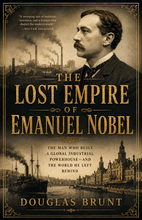
What is the book The Lost Empire of Emanuel Nobel about?
Douglas Brunt's The Lost Empire of Emanuel Nobel uncovers the forgotten story of the industrialist who built Russia's largest oil empire, only to see it destroyed by revolution. Written for readers of business history and Russian history, it reveals how political chaos proved more destructive than corporate rivalry.
Feature
Insta.Page
Blinkist
Shortform
Summary Depth
Full Chapter-by-Chapter
15-min overview
Section-by-section guides
Audio Narration
✓
✓
✓
Visual Mindmaps
✓
✕
✕
AI Q&A
✓
✕
✕
Quizzes
✓
✕
✕
PDF Downloads
✓
✕
✓
Price
$89.99/yr
$146/yr (PRO)
$199/yr
*Competitor data last verified July 2026.
1 Page Summary
Based solely on the provided chapter summaries, this book details the remarkable and largely forgotten story of Emanuel Nobel, the third-generation leader of the Nobel family’s Russian oil empire. The central thesis explores how this industrial titan built and managed a vast, vertically integrated petroleum company in Baku, navigating intense competition from the Rothschilds and Standard Oil while simultaneously cultivating crucial relationships with the Tsarist government. However, the book also reveals how this carefully constructed empire was systematically dismantled by the rising tide of revolutionary forces. The narrative argues that the political chaos—fueled by the inept rule of Tsar Nicholas II, the destabilizing influence of Rasputin, and the violent machinations of figures like Lenin and Stalin—ultimately proved more destructive to Nobel’s world than any corporate rivalry.
The author, Douglas Brunt, takes a distinctive biographical and narrative non-fiction approach, weaving the personal story of Emanuel and his family into the broader, tumultuous history of late Imperial and Revolutionary Russia. The book is structured like a historical thriller, using specific vignettes—such as Emanuel printing “Nobel Notes” in a resort town to solve a currency crisis or his family’s desperate escape from Bolshevik capture—to illuminate his character and the high stakes of the era. Instead of a dry business history, Brunt connects the fate of an industrial fortune to pivotal historical events, including the Crimean War, the assassination of Tsar Alexander II, the rise of Stalin from a seminary student in Georgia, and the Bolsheviks’ seizure of the Baku oil fields.
The intended audience includes readers interested in oil and business history, Russian history, and the fall of the Romanov dynasty. Readers will gain an understanding of the global importance of the pre-Soviet Russian oil industry and how its vulnerability contributed to larger geopolitical struggles. The book provides a unique perspective on the Russian Revolution by focusing on the losers—the industrialists and aristocrats who were forced to flee or were destroyed—rather than solely on the revolutionaries. Ultimately, it offers a portrait of a forgotten figure whose ingenuity built a world-changing industry, only to have it incinerated by the political firestorm he foresaw but could not stop.
Prologue
Overview
In the bitter cold of December 1918, Emanuel Nobel steps out of the Grand Hotel in Kislovodsk, a Russian resort town that has become an unlikely refuge for the remnants of the old empire. The civil war rages beyond the quiet streets, but here, aristocrats, ministers, and even relatives of the murdered Tsar Nicholas II rub shoulders, all waiting to see which way the wind will blow. Emanuel carries the weight of a life-changing decision: the new Soviet government has summoned him to Moscow, hoping to press him and his vast family business into service. Yet Stalin’s secret police have already arrested his two younger half-brothers, holding them in Petrograd’s Peter and Paul Fortress—a stark reminder of what happens to those who resist.
As he walks through the market, we see a man of composure and ingenuity. The town has run out of roubles, but Emanuel engineered a solution: a new local currency backed by the jewels and assets of the refugees. The shopkeepers call them “Nobel Notes,” and he pays for his bread with a smile. It’s a small, human moment that reveals his resourcefulness and the quiet dignity he maintains even as his world crumbles.
Back in his hotel suite, his loyal colleagues have prepared an escape plan—forged documents, a peasant disguise, a covered wagon to the Finnish border. They beg him to flee before Stalin’s armies close in. But Emanuel Nobel, one of the wealthiest men left in Russia, must now decide: run for his life, or face the Soviets and gamble everything.
Key Takeaways
Emanuel Nobel is trapped between the old world and the new, his family’s fortune and his own freedom hanging by a thread.
The “Nobel Notes” episode shows his ability to create order from chaos—a trait that will define his legacy.
The prologue sets a tone of imminent danger, contrasting the quiet civility of Kislovodsk with the brutal violence that has already claimed the Tsar and his family.
The choice Emanuel faces is not merely personal; it will shape the fate of the Nobel business empire in Russia.
Key concepts: Prologue
1. Prologue
Emanuel Nobel's Predicament
Trapped between old world and new Soviet regime
Summoned to Moscow by Soviet government
Half-brothers arrested by Stalin's secret police
Must decide to flee or face the Soviets
Setting: Kislovodsk in December 1918
Bitter cold and civil war rages beyond
Refuge for aristocrats and Tsar's relatives
Quiet civility contrasts with brutal violence
Waiting to see which way the wind blows
Resourcefulness: The Nobel Notes
Town ran out of roubles, Emanuel engineered solution
New local currency backed by refugees' jewels
Called 'Nobel Notes' by shopkeepers
Shows his ability to create order from chaos
Escape Plan and Colleagues' Plea
Forged documents and peasant disguise prepared
Covered wagon to Finnish border arranged
Colleagues beg him to flee before Stalin's armies
Emanuel must gamble everything on his decision
Stakes: Family and Business Empire
Family fortune and freedom hang by a thread
Choice will shape Nobel business empire's fate
Soviet government wants to press family into service
Resistance means prison like his half-brothers
💡 Try clicking the AI chat button to ask questions about this book!
Chapter 1: Prison or Russia
Overview
Immanuel Nobel was staring at a cell door in 1837 when he chose exile over debtors’ prison, slipping out of Sweden and leaving his wife Andriette to sell vegetables in a Stockholm market while raising their three young boys alone. It was a desperate gamble that paid off only when his undersea mine—a contact mine that blew up on impact with no underwater cables—impressed the Tsar’s brother in a dramatic test on the Neva River. By 1843 the family was reunited in Saint Petersburg, where Immanuel gave his sons the education he’d never had, and where he sized them up with startling accuracy: Ludvig the genius, Alfred the industrious chemist, Robert the bold speculator. The Crimean War turned the Nobel factory into a thousand-employee arsenal churning out marine engines and hundreds of improved cone-shaped mines. In the summer of 1854, Robert and Ludvig themselves anchored those mines around Kronstadt, and when a British admiral retrieved one for testing, he declared them "infernal machines" and turned his fleet around—saving the Russian capital. That triumph flooded Immanuel with orders, but he borrowed recklessly to expand, and the broader war was a disaster for Russia. The paranoid aggression that started it belonged to Tsar Nicholas I, a ruler forged by family assassinations and a mutiny on his first day. He believed a Russian tsar must be only the lion, established a secret police, and forced his son Alexander to watch a soldier flogged to death. When Nicholas died of pneumonia in 1855, Alexander II inherited a lost war and began testing whether a gentler, reform-minded approach could work—free-market reforms that seemed promising for Immanuel but signaled a new, unpredictable era that would soon threaten everything.
A Desperate Gamble
Immanuel Nobel sat in a cramped Stockholm flat, the winter of 1837 pressing against the windows, and faced the bitter truth: bankruptcy court had ruled against him. A creditor wanted him locked up. To stay in Sweden meant debtors’ prison, where he'd be useless to his family. To flee meant leaving his wife, Andriette, and their three young boys—Robert, Ludvig, and Alfred—behind with no money and no timeline for return. It was a brutal choice, but Immanuel chose to leave. By December 15, he'd slipped out of Sweden, heading first to Finland, then to the promise of the Russian Empire.
Andriette stayed behind, selling milk and vegetables at a market stall, working odd jobs for wealthy families. Her middle son, Ludvig, would later write of the "setbacks and sufferings" he watched her endure—a quiet tribute to the resilience that shaped him.
The Mine That Changed Everything
In Saint Petersburg, Immanuel’s reputation preceded him. He’d been tinkering with explosives and waterproof containers, and his breakthrough came in the form of a rudimentary undersea mine—a contact mine that detonated when a vessel struck it, not requiring a clumsy underwater cable. After impressing naval officers at a dinner party, he got his chance to prove it.
On October 12, 1840, in front of Grand Duke Mikhail Pavlovich and a skeptical crowd, a wooden barge drifted down the Neva River toward Nobel’s mine. Impact. A roar. Wood shards rained down. General Schilder, who had staked his reputation on the Swede, grabbed Immanuel in a bear hug and kissed him. The mine worked perfectly. The Grand Duke was ecstatic. But the Tsar’s bureaucracy dragged its feet for two years, wary of Western entrepreneurs. Only after a second demonstration in 1842 did Immanuel receive twenty-five thousand roubles to supply mines to the Russian navy—enough to send for his family.
The Second Generation Arrives
By 1843, Andriette and the boys were in Saint Petersburg, reunited with Immanuel. A fourth son, Emil, was born soon after. The Nobels joined a small Swedish immigrant community that helped them navigate Russia’s sprawling, autocratic empire—a landmass four times larger than the Roman Empire, bristling with adversaries and ruled by distance.
Immanuel gave his sons what he never had: tutors, a real education, and long hours working beside him in his factory. He called them the way he saw them: Ludvig had the greatest genius, Alfred the greatest capacity for industry, Robert the greatest courage for speculation. Ludvig was the magnetic charmer, Robert the quarrelsome pessimist, Alfred the socially awkward chemist. Their father's early read on them was uncannily prophetic.
War and the "Infernal Machines"
By the early 1850s, Tsar Nicholas I’s ambitions for a warm-water port in Crimea had drawn Russia into war against France, Britain, and the Ottoman Empire. The Crimean War put the Nobels to work. The factory swelled to a thousand employees, churning out marine engines and hundreds of improved contact mines—cone-shaped, each holding eight pounds of gunpowder, primed to detonate on impact.
In the summer of 1854, Robert and Ludvig—still in their twenties—deployed those mines around the fortress of Kronstadt, just twenty-five miles from Saint Petersburg. Ludvig climbed rooftops to signal placement; Robert commanded the small boats, anchoring the mines just beneath the Baltic surface. They worked fast. The British fleet, led by Admiral Sir Charles Napier, arrived and retrieved one of the mines for inspection. After testing it, Napier called them "infernal machines" and declared any attack on Kronstadt "entirely impracticable." He turned his fleet around. The Nobel mines had saved the Russian capital.
Napier's retreat marked a humiliating reversal for the British fleet, and his career crumbled upon his return. But for the Nobels, it was a triumph. The Russian leadership, desperate for any good news in a war going poorly, hailed Immanuel as a savior. A flood of new orders for engines and munitions arrived at his foundry, and he rode the wave of success by borrowing heavily to expand his factory.
The war's broader context, however, was grim. The Crimean War was the first modern conflict, defined by devastating artillery and innovative tactics that made the famed cavalry charge of the "Light Brigade" a tragic anachronism. Russia suffered decisive losses, revealing how dangerously obsolete its military had become. The Nobels' harbor defense was a bright spot, but it was quickly overshadowed.
The Lion and His Heir
The paranoid aggression that led Russia into the war was rooted in Nicholas I's brutal ascension. His grandfather and father were both murdered; he faced a mutiny on his very first day as Tsar. This trauma forged his philosophy: in Russia, a ruler must be only the lion. He established the Third Order of secret police and imposed a regime of absolute control, forbidding even praise of the Tsar in literature.
To drive his point home, the Tsar forced his son, Alexander, to witness the flogging of a deserter. The young heir watched as a soldier was beaten to death, the prescribed fifteen hundred blows continuing even after the man fell silent. The lesson was clear, but Alexander found himself haunted by Napoleon's counter-wisdom: a whipped soldier loses his honor.
Nicholas I's ambitions, much like Catherine the Great's, centered on the Crimean Peninsula and the ancient prize of Constantinople. He would not live to see his goals achieved. Pneumonia claimed him in 1855, leaving Alexander II to inherit the throne and a war his father had lost. At thirty-six, Alexander had already shown signs of a different temperament. He quickly sued for peace and signaled a less aggressive, more reform-minded approach. The new Tsar intended to test whether being something other than the lion could work in Russia. For a man like Immanuel, these free-market reforms appeared promising—but there were other policies on the horizon that would prove catastrophic.
Key Takeaways
Immanuel Nobel's fortune was built on a wartime boom, but it was financed with borrowed capital and tied directly to the Tsar's favor.
Nicholas I's brutal philosophy was forged by family assassinations and an attempted coup, leading to a regime of secret police and rigid control.
Alexander II inherited a failed war and a traumatized empire. His desire for reform signaled a new era—one that would bring both opportunities and existential threats to the Nobel business.
Key concepts: Chapter 1: Prison or Russia
2. Chapter 1: Prison or Russia
Immanuel's Desperate Choice
Faced debtors' prison in Sweden
Chose exile over imprisonment
Left wife Andriette and three sons behind
Andriette sold vegetables to survive
The Undersea Mine Breakthrough
Invented contact mine detonating on impact
Dramatic test on Neva River in 1840
Impressed Grand Duke Mikhail Pavlovich
Received 25,000 roubles after second demo
Family Reunited in Russia
Andriette and boys joined Immanuel by 1843
Fourth son Emil born soon after
Joined Swedish immigrant community in St. Petersburg
Immanuel gave sons education he never had
Immanuel's Assessment of His Sons
Ludvig: greatest genius
Alfred: greatest capacity for industry
Robert: greatest courage for speculation
Ludvig charming, Robert quarrelsome, Alfred awkward
Crimean War Fuels Nobel Factory
Tsar Nicholas I sought warm-water port in Crimea
Factory grew to 1,000 employees
Produced marine engines and improved cone mines
Each mine held eight pounds of gunpowder
Mines Save Russian Capital
Robert and Ludvig deployed mines around Kronstadt
British Admiral Napier retrieved and tested one
Called them 'infernal machines'
Turned fleet away, saving St. Petersburg
Tsar Nicholas I's Legacy and Aftermath
Nicholas forged by family assassinations and mutiny
Believed tsar must be 'only the lion'
Died of pneumonia in 1855
Alexander II inherited lost war, began reforms
Chapter 2: Reform, Repress, Repeat
Overview
The legacy of the Crimean War left Russia bankrupt and its new tsar, Alexander II, determined to modernize. But his first move—peace negotiations—destroyed the Nobel family’s fortunes when he refused to honor his father’s military contracts. Immanuel Nobel was forced into bankruptcy, returning to Sweden in disgrace. His sons stayed in Saint Petersburg to salvage the wreckage, but the experience scarred Ludvig, who learned never to trust a tsar’s promises. Ludvig’s personal life was equally chaotic: a scandalous affair with a married woman produced an illegitimate son, yet he eventually married his cousin Mina and rebuilt his career. Renting a small factory, he founded the Ludvig Nobel Machine Factory and thrived as Europe rearmed under Bismarck’s Prussia. Meanwhile, family tensions festered. Alfred, Robert, and even young Emil all fixated on the same woman, Pauline Lenngren, poisoning the brothers’ relationships. Robert drifted through failed businesses, while Alfred returned to Sweden, obsessed with his nitroglycerin experiments. Then came the 1864 explosion that killed Emil and devastated Immanuel. Alfred, undeterred, patented the blasting cap and founded his own explosives company, even hiring Robert to manage a factory.
Back in Russia, Ludvig’s fortunes soared as Alexander II pushed through sweeping reforms—most famously the emancipation of twenty-three million serfs in 1861. The Tsar, hailed as “Alexander the Liberator,” also expanded universities, eased censorship, and established local self-government. But freedom came without planning: illiterate serfs poured into cities, forming a desperate working class. Into that fertile soil fell the seeds of Marxism, socialism, and anarchism. Karl Marx called for a revolution by the proletariat; Mikhail Bakunin demanded no state at all. The Tsar’s own liberalization unwittingly created a coalition of bookish intellectuals and angry laborers, who began spreading radical ideas in pub corners and factory gates. Even literature joined the assault: Turgenev and others wrote novels that glorified the peasantry and criticized autocracy. Meanwhile, Charles Darwin’s On the Origin of Species, published in 1859 and quickly translated into Russian, delivered a direct blow to the divine right of the Tsar. If evolution could dethrone God, it could dethrone God’s anointed ruler. The intelligentsia seized on Darwin as a weapon.
The first crack came in 1866, when Dmitry Karakozov fired a pistol at Alexander II outside the Summer Garden. A peasant knocked his arm; the Tsar survived. But the bullet shattered the ancient belief that the Tsar was untouchable. Fyodor Dostoevsky, who had himself faced a mock execution under Nicholas I, understood the turning point. Running to a friend’s apartment, he shouted repeatedly, “They shot, they shot, they shot…” The mystique was gone. Alexander, once a reformer, now turned to repression: surveillance, censorship, bans on student groups. But halting reform only fueled the revolutionary fire. The movement had few guns—so it turned to dynamite, an unintended gift from the Nobel family. The pattern was set: reform, then backlash, then more terror. The tsar who freed the serfs had set a monster in motion.
Key Takeaways
Alexander II’s reforms inadvertently united Marxist intellectuals with a disgruntled working class, creating a potent anti-tsarist movement.
Darwin’s theory of evolution directly undermined the Tsar’s divine-right legitimacy, especially in a monarchy fused with the Orthodox Church.
Karakozov’s 1866 assassination attempt shattered the aura of invulnerability around the Tsar, shifting the threat from palace coups to populist terror.
Dostoevsky’s reaction captured the psychological turning point: the Tsar was now killable.
Alexander’s response—repression instead of continued reform—only deepened the conflict, pushing revolutionaries toward dynamite and terrorism.
Key concepts: Chapter 2: Reform, Repress, Repeat
3. Chapter 2: Reform, Repress, Repeat
Alexander II's Reforms and Their Consequences
Emancipated 23 million serfs in 1861
Expanded universities and eased censorship
Created a desperate working class in cities
Unintentionally fueled Marxism and anarchism
The Nobel Family's Rise and Fall
Immanuel Nobel bankrupted by Alexander II's peace
Ludvig rebuilt career with machine factory
Alfred obsessed with nitroglycerin experiments
1864 explosion killed Emil, but Alfred patented blasting cap
Intellectual Assaults on Autocracy
Darwin's evolution undermined divine right of Tsar
Turgenev's novels glorified peasants and criticized rule
Intelligentsia used Darwin as weapon against monarchy
The 1866 Assassination Attempt
Dmitry Karakozov fired at Alexander II
Peasant saved Tsar, but mystique of invulnerability shattered
Dostoevsky's reaction showed psychological turning point
The Cycle of Reform and Repression
Alexander turned to surveillance and censorship after attack
Halting reform only intensified revolutionary fervor
Revolutionaries adopted dynamite from Nobel family
Pattern set: reform, backlash, then more terror
Chapter 3: “Everyone Rushed for Everything at Once”
Overview
In May 1869, Ludvig Nobel's wife Mina died in childbirth, and their newborn daughter followed twelve days later. The loss shattered Ludvig, who had relied on Mina as his stabilizing force. Left with three young children, he remarried Edla Collin, a Swedish teacher, in 1870. The following year, the Nobel patriarch Immanuel died in 1872, passing leadership to the next generation. Meanwhile, Ludvig's older brother Robert, tired of working for Alfred in the glycerin business, accepted Ludvig's offer to return to Russia. Robert's first task was to procure walnut trees for rifle stocks, so in 1873 he traveled to the Caucasus with 25,000 silver roubles—but instead of hardwood, he found bubbling pools of crude oil in Baku, a city where natural gas had burned for centuries at Zoroastrian temples.
Just weeks before Robert's arrival, the Tsar opened thousands of acres of oil lands for private auction. Robert bought a refinery and oil-rich land from a Dutch captain, spending the entire sum meant for walnut trees without consulting Ludvig. Despite initial frustration, Ludvig soon saw the potential. The Nobels devised a vertical integration system modeled on John D. Rockefeller's Standard Oil: drilling, refining, and distribution all under one company. Robert, a talented chemist, improved refining techniques, and by 1876 the Nobel refinery shipped its first kerosene to Moscow, challenging Standard Oil's dominance.
In 1876, Ludvig brought his sixteen-year-old son Emanuel to inspect Baku firsthand. They studied Petrolia, a book on Pennsylvania's oil industry, and found a city half Eastern, half Western, covered in black smog and oily mud. Father and son resolved to build a global enterprise, and by August 1878 they launched the Nobel Brothers Petroleum Production Company—Branobel—with three million roubles in capitalization, Ludvig holding more than half and Alfred as the fourth-largest investor.
That autumn, nineteen-year-old Emanuel visited Alfred in Paris, where he met Alfred's new companion Sofie Hess, a young flower-shop girl. An awkward visit—Sofie reportedly invited Emanuel to stay the night, which he interpreted as an erotic solicitation—caused friction between the brothers. Ludvig refused to call on Sofie, warning Alfred that happiness wasn't found where he sought it. The affair strained but did not break the family bonds; Alfred's investment remained intact.
With fresh capital, Branobel tackled Baku's chaotic oil fields. Drilling gushers were deadly spectacles: when a well struck a subterranean pocket, a blast of crude, sand, rock, and poisonous gases could kill workers, destroy equipment, and ignite into a firestorm. The Nobels sent engineers to America to study capping techniques. Transporting oil from wells to refineries was equally primitive—leather sacks and wooden barrels on mule carts leaked, broke, and invited theft. Ludvig built a pipeline in 1877, despite violent harassment from coopers and carters, and erected eight watchtowers to protect it. His next breakthrough was the tanker ship. Traditional barrels cracked on rough seas, so Ludvig designed the Zoroaster, an 184-foot vessel with eight Bessemer steel cisterns in its hull, water jackets for fire prevention, and twenty-one watertight compartments. Shipbuilders declined his plan, so he built it himself; the Zoroaster began service in June 1878, and by the end of the decade he had a fleet.
Ludvig's vision extended to his workforce. He built Villa Petrolea, a park with imported soil, trees, fresh water from empty tankers, and amenities like a library, dining hall, and billiard room. Married workers got houses; singles got communal residences far nicer than Baku's norm. Ludvig shared equity, founded a bank for savings, supported free education, and banned child labor under twelve. Employees proudly called themselves Nobelites. In contrast to John Rockefeller's later philanthropy, Ludvig gave anonymously to scientific and educational organizations throughout the 1860s and 1870s—even when his own fortune was unsteady.
Despite his crucial role, Robert felt resentment that most credit went to Ludvig. His health declined and his management grew paranoid. In 1879, after the Zoroaster's launch, Robert left Baku for Switzerland, and Ludvig told associates he had typhoid—a likely cover story. Leadership of Russia's largest petroleum producer fell entirely on Ludvig and his twenty-year-old son Emanuel. The strain was enormous; Alfred wrote that none of them had health enough to manage Baku's "gigantic mechanism."
The Nobels' success rode on Tsar Alexander II's reforms, which had unleashed industrial growth but also social chaos. Millions of freed serfs flocked to cities like Baku, where unemployment, corruption, and a vast wealth gap fueled Marxist ideas. The extreme left plotted regicide; moderate liberals began sympathizing with terrorists. Alexander II faced a paradox: conservatives hated his reforms, liberals wanted more, and radicals wanted revolution. He tried rallying support with war against the Ottoman Empire in 1877, winning victories that brought his army within seven miles of Constantinople. But Britain threatened war, and Alexander backed down, settling for treaty gains. The popularity faded fast.
On April 2, 1879, a would-be assassin shot at Alexander during his morning walk—five shots, all misses. The Tsar responded by imposing martial law through military governors-general. Lady-in-waiting Maria Frederiks captured the conservative view: reforms had unleashed a "wild flow" that broke and burned everything in its path. Amid this turmoil, on December 18, 1878, a child was born in the Georgian town of Gori, straddling the trade route between the Caspian and Black Seas—the same region Robert Nobel had passed through five years earlier. That child, Ioseb Besarionis dze Jughashvili, would one day change his name to Joseph Stalin. His early years in Gori's gritty streets and the brutal oil fields of the Caucasus would set the stage for a future collision with the Nobel dynasty, particularly with Emanuel Nobel.
Key Takeaways
Russia’s industrial and technological successes under Alexander II came at a steep cost: political turmoil and rising opposition to the Tsar.
Joseph Stalin was born in Gori in December 1878, during a period of rapid change and unrest in the Russian Empire.
The Nobels’ expansion into the Caucasus oil fields coincided with Stalin’s early years, setting the stage for a future collision between the capitalist dynasty and the revolutionary who would challenge their world.
Key concepts: Chapter 3: “Everyone Rushed for Everything at Once”
4. Chapter 3: “Everyone Rushed for Everything at Once”
Personal Losses and Family Shifts
Ludvig's wife Mina died in childbirth
Immanuel Nobel died, passing leadership
Robert returned to Russia from glycerin business
Robert sent to Caucasus for walnut trees
Discovery of Baku Oil
Robert found bubbling crude oil in Baku
Tsar opened oil lands for private auction
Robert bought refinery and land without consulting
Ludvig saw potential despite initial frustration
Vertical Integration and Branobel
Nobels modeled on Rockefeller's Standard Oil
Robert improved refining techniques
First kerosene shipped to Moscow in 1876
Branobel launched in 1878 with three million roubles
Alfred's Companion and Family Tension
Emanuel met Alfred's companion Sofie Hess
Awkward visit caused friction between brothers
Ludvig refused to call on Sofie
Alfred's investment remained intact
Technological Innovations in Oil
Engineers studied American capping techniques
Ludvig built pipeline despite violent harassment
Designed tanker ship Zoroaster with steel cisterns
Built fleet by end of decade
Workforce and Social Reforms
Built Villa Petrolea with park and amenities
Shared equity and founded savings bank
Banned child labor under twelve
Employees called themselves Nobelites
Political Context and Strain
Tsar Alexander II's reforms unleashed chaos
Marxist ideas grew from inequality
Robert left Baku due to health and resentment
Ludvig and Emanuel bore enormous strain
You've reached the end of the free chapters
Next chapter: “From Well to Wick” is locked
Keep reading The Lost Empire of Emanuel Nobel — and unlock all 500+ book summaries with audio, mindmaps and AI Q&A.
$0.00 due today · 7 days free, then $89.99/year ($7.49/mo) · Cancel anytime before day 7
More ways to explore The Lost Empire of Emanuel Nobel
Douglas Brunt is a New York Times bestselling author and former CEO of the cybersecurity firm Authentium. He is best known for his historical biography *The Mysterious Case of Rudolf Diesel*, which delves into the disappearance of the famous inventor, as well as his novels *Ghosts of Manhattan* and *The Means*. With a background in technology and business, Brunt brings analytical depth to his narrative nonfiction and fiction.
Frequently Asked Questions about The Lost Empire of Emanuel Nobel
What is The Lost Empire of Emanuel Nobel about?
The book chronicles the rise and fall of the Nobel family's vast oil empire in Tsarist Russia, centered on Emanuel Nobel's struggle to preserve his inheritance amid revolution, civil war, and the Bolshevik seizure of power. It weaves together industrial espionage, family drama, and the geopolitical battle for global oil dominance involving Standard Oil, the Rothschilds, and Royal Dutch Shell. The narrative also explores the parallel rise of Joseph Stalin, the influence of Rasputin, and the tragic fate of the Romanovs, culminating in Emanuel's desperate escape and the loss of his fortune.
Who is the author of The Lost Empire of Emanuel Nobel?
Douglas Brunt is the author of this book. He is a historian and writer who has extensively researched the Nobel family and the Russian Revolution, drawing on primary sources to reconstruct this dramatic period.
Is The Lost Empire of Emanuel Nobel worth reading?
Absolutely—this is a riveting, meticulously researched account of one of history's most dramatic industrial dynasties and the cataclysm that destroyed them. The book combines high-stakes business intrigue with political upheaval, offering insights into the origins of modern oil geopolitics and the human cost of revolution. Brunt's storytelling makes complex history accessible and thrilling, perfect for fans of narrative nonfiction and Russian history.
What are the key lessons from The Lost Empire of Emanuel Nobel?
The book underscores the fragility of empires and the danger of trusting authoritarian regimes, as Emanuel Nobel's careful planning was undone by political instability and Bolshevik ruthlessness. It highlights the critical role of oil in global power struggles and the importance of vertical integration, as the Nobels built a 'well to wick' monopoly that briefly rivaled Rockefeller's. Finally, it shows that personal resilience and strategic alliances can only delay, not prevent, the collapse of a system built on unstable foundations.
📚 Explore Our Book Summary Library
Discover more insightful book summaries from our collection