As an Amazon Associate, we earn from qualifying purchases.
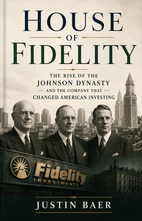
What is the book House of Fidelity about?
Justin Baer's House of Fidelity traces the Johnson family's contrarian leadership across nearly a century, revealing how Fidelity survived through internal conflict, technological reinvention, and brutal succession battles. Written for business readers and finance professionals who want the unvarnished story behind a legendary dynasty.
Feature
Insta.Page
Blinkist
Shortform
House of Fidelity
✓
✕
✕
Summary Depth
Full Chapter-by-Chapter
15-min overview
Section-by-section guides
Audio Narration
✓
✓
✓
Full access to all 700+ summaries
✓
✓
✓
Visual Mindmaps
✓
✕
✕
AI Q&A
✓
✕
✕
Missing a book? Request it, usually live within 48h
✓
✕
✕
Quizzes
✓
✕
✕
PDF Downloads
✓
✕
✓
Send to Kindle
✓
✓
✓
Price
$89.99/yr
$146/yr (PRO)
$199/yr
*Competitor data last verified July 2026.
1 Page Summary
In House of Fidelity, Justin Baer traces the rise of the Johnson family and the company they built, focusing on the intergenerational transfer of power and the relentless reinvention that kept Fidelity dominant for nearly a century. The central thesis is that Fidelity’s success was driven by a series of idiosyncratic, contrarian leaders—starting with founder Edward “Ted” Johnson II, who was inspired by the speculative ethos of Jesse Livermore, and continuing with his son Ned, who possessed a tinkerer’s mind and a stubborn willingness to bet against the market. The book argues that the company’s survival and growth were not guaranteed by its early lead in mutual funds, but by a willingness to cannibalize its own business, embrace new technologies (from discount brokerage to Bitcoin), and navigate brutal family and corporate succession battles.
The author, Justin Baer, makes this book distinctive by weaving together corporate history, family drama, and market mechanics with a reporter’s eye for detail. Drawing on internal conflicts—such as the “Reign of Terror” waged by trading chief Scott DeSano, the bitter rivalry between Abigail Johnson and her father’s COO Bob Reynolds, and the quiet rise of passive investing—Baer shows how Fidelity’s fortunes were shaped as much by personality and paranoia as by financial strategy. The book offers rare access to the firm’s internal culture, including Ned Johnson’s obsessive chart-reading, his funding of Alzheimer’s research, and the founding of secretive ventures like the “Batcave” Bitcoin mining operation.
The intended audience includes business readers, finance professionals, and anyone interested in the real dynamics behind a legendary family dynasty. Readers will gain an understanding of how Fidelity evolved from a boutique Boston fund shop into a trillion-dollar juggernaut, the tensions between active and passive investing, and the human costs of maintaining a family-controlled business across generations. The book is especially valuable for those who want to see beyond the polished public image of a financial titan and understand the messy, often ruthless process of building and preserving an empire.
Chapter 1: Mister Johnson
Overview
Edward Crosby Johnson 2d—Ted—carried his father’s hard-learned lesson into adulthood: follow your own path, never be trapped by obligation. Samuel Johnson’s bitter experience in the family dry-goods business left Ted free to pursue what truly fascinated him. That fascination ignited at Harvard Law School when he read Reminiscences of a Stock Operator, the fictionalized biography of Jesse Livermore, whose reckless, every-man-for-himself trading thrilled him. Livermore’s world—where you were judged solely by your results—became Ted’s blueprint. He graduated, joined a Boston law firm, married, started a family, and secretly pinned stock charts on his office wall, managing his own money while everyone else saw a conventional Brahmin career.
Meanwhile, Boston was quietly birthing the mutual fund. In 1924, Massachusetts Investors Trust and State Street Investment Corp. offered the first open-end funds—anyone could buy in, cash out anytime, and managers were paid based on performance. The structure was perfected by George Putnam and Edward Leffler, who created separate companies for management and distribution. The 1929 crash devastated the market and most funds, but Ted survived with his capital intact; he had the discipline to sell before the second leg down. At his law firm, Ropes & Gray, he earned the right to spend part of each week managing family money, preparing for something more.
That opportunity came through a partner who joined the board of Incorporated Investors, making the fund a client. Ted worked alongside Putnam and Leffler, became the fund’s treasurer in 1939, and quit the law firm to enter the fund business full-time. The industry was under siege: the SEC, led by Robert E. Healy, investigated rampant self-dealing and proposed harsh legislation. But the investment companies united, negotiated a compromise, and the Investment Company Act of 1940 passed with Boston’s managers largely unscathed, stronger and ready for growth.
Ted saw his chance when Fidelity Shares founder Richard Taliaferro floundered. He struck a deal with Incorporated’s head, promising not to sell shares to the public, and took over Fidelity in 1943 for a pittance. But the promise frayed: shares kept selling, and when Incorporated’s founder discovered Ted was poaching his dealers, the rupture was complete. Ted resigned and the two men never spoke again. He was done playing second fiddle.
Free, Ted built Fidelity’s independent machinery. He took control of stock selection, then created Fidelity Management and Research Company (FMR Co.) in 1946, the advisory firm that would manage the fund’s assets for a quarterly fee—and was controlled entirely by him. For distribution, he launched Crosby Corporation in 1948, owned by himself and a colleague. By 1961, it was the sole distributor. The three-pillar structure—fund, adviser, distributor—was complete, all under his thumb.
Around him gathered a devoted inner circle. Caleb Loring Jr. , a young lawyer who joined in 1964, would later say, “I would give my life for Mister Johnson.” Others included Gwen Shannon, Homer Chapin, and Ray Myrer. The names changed, but the pattern held: a commanding owner at the center, surrounded by advisers built to anticipate and execute. By the end of the 1940s, the empire was small—just the Fidelity Fund with $31 million and the Puritan Fund launched in 1947—but the seeds were planted.
Johnson’s management style was anything but conventional. He saw investing as an art, not a science, driven by personal intuition and pattern recognition. “It is personal intuition,” he said. “There is always something unknown, undiscerned.” He studied Zen and philosophy, held meetings he called “séances,” and gave his young stock pickers free rein, believing each fund should be run by a single mind. This approach unwittingly created the conditions for the star fund manager—a concept that would define Fidelity and reshape 20th-century finance. All that was missing was a bull market and a new Magellan to sail it.
Key Takeaways
Ted Johnson broke with his mentor Parker after secretly competing with Incorporated Investors, marking the start of his independent empire.
He built Fidelity’s three-pillar structure: the fund itself, the advisory firm (FMR Co.), and the distributor (Crosby Corp.), giving him full control.
Caleb Loring’s arrival signaled the creation of a devoted inner circle that would serve the Johnson family for decades.
Johnson’s investing philosophy rejected committees and formulas; he saw stock picking as an art best left to a single, intuitive mind.
This approach unwittingly set the stage for the star fund manager, a concept that would define Fidelity and 20th-century finance.
Key concepts: Chapter 1: Mister Johnson
1. Chapter 1: Mister Johnson
Ted Johnson's Independent Path
Followed father's lesson: avoid obligation, pursue own path
Inspired by Jesse Livermore's ruthless trading style
Secretly managed own money while practicing law
Survived 1929 crash by selling before second downturn
Birth of the Mutual Fund Industry
Boston launched first open-end funds in 1924
Putnam and Leffler perfected fund structure
1929 crash devastated most funds but not Ted
Investment Company Act of 1940 strengthened industry
Taking Over Fidelity
Acquired floundering Fidelity Shares in 1943
Secretly sold shares, breaking promise to Incorporated
Resigned after founder discovered poaching dealers
Never spoke to Incorporated's founder again
Building Fidelity's Three-Pillar Structure
Created FMR Co. in 1946 for advisory services
Launched Crosby Corp. in 1948 for distribution
Controlled fund, adviser, and distributor entirely
Empire small but seeds planted by late 1940s
Johnson's Unconventional Management Philosophy
Investing is art, not science—driven by intuition
Studied Zen and held meetings called 'séances'
Gave young stock pickers free rein per fund
Unwittingly created the star fund manager concept
💡 Try clicking the AI chat button to ask questions about this book!
Chapter 2: Number Two
Overview
In 1947, a teenage Gerald Tsai Jr. fled war-torn China for America, setting in motion a chain of events that would reshape the mutual fund industry. Arriving at Wesleyan University through his mother Ruth’s desperate letter-writing campaign, Tsai quickly moved to Boston University and then to Fidelity, where he became Ted Johnson’s protégé. The post-World War II economy was booming: Americans were buying stocks alongside homes and cars, and Fidelity’s assets under management soared from $3.6 million in 1943 to $164 million by 1954. Tsai’s aggressive, momentum-driven style—learned from his trader mother—stood in stark contrast to Boston’s conservative investing establishment. Yet Ted Johnson saw in Tsai a kindred spirit, calling him his “No. 2 son.” By 1957, Tsai launched Fidelity Capital, a growth-stock fund that would make him one of the first celebrity money managers. Meanwhile, the firm also added the Fidelity Trend fund, eventually placing it under the management of Johnson’s own son, Ned.
A Refugee’s Path to Wall Street
Gerry Tsai’s journey was shaped by chaos. Japan’s 1937 occupation and the US declaration of war tore his family apart—his father worked for Ford near Chungking while his mother, Ruth, supported two children by trading stocks on the Shanghai Stock Exchange and dealing in real estate. After reuniting, the family faced a new threat: China’s Communist Party. Fearing her son would be drafted, Ruth accelerated his escape to America. The Ivy League rejected him, so Wesleyan became his only option. Tsai hated the isolated campus in Middletown, Connecticut, and transferred to Boston University after one semester. There, he finished his economics degree in just three years, then earned a master’s by writing a thesis on Shanghai’s economy.
After a brief stint at a textile firm, Tsai moved to New York to work at Bache & Co., a brokerage famous for selling Liberty Bonds during the war. But it was a vacation in Brookline, Massachusetts, in 1952 that proved fateful. Looking for work in the heart of the stock-investing world, Tsai told a friend at Scudder, Stevens & Clark that he felt no competitive disadvantage as a foreigner: “If you buy GM at forty and it goes to fifty, whether you are an Oriental, a Korean, or a Buddhist doesn’t make any difference.” That friend called Ted Johnson, who was immediately intrigued by Tsai’s heritage—Ted shared his father’s lifelong attachment to Asian culture. A month later, Johnson offered him a job at Fidelity.
Mother Ruth and the Birth of Momentum Investing
Ruth Tsai was far more than a supportive parent; she was the architect of Gerry’s investing philosophy. She had been the first woman to trade on the floor of the Shanghai Stock Exchange, and her earnings paid for his tuition. She also drilled into him a lesson that diverged sharply from Benjamin Graham’s value investing: never lose sight of last night’s closing price. “My grandmother was a trader,” recalled Christopher Tsai, Gerry’s son. “She told him the No. 1 lesson is not to lose money. But an equally important lesson is to always remember last night’s closing price is your cost basis.” In other words, ignore the original purchase price and focus on protecting or surpassing the most recent close.
This approach would come to be known as momentum investing—betting that rising stocks will keep rising. In the buttoned-up world of 1950s Boston, such ideas were radical. But Ted Johnson, who admired the speculator Jesse Livermore, recognized Tsai as the kind of investor he valued most: “A man is really at his best, his most fulfilled, when he’s on the way to becoming what he’s going to become.” Tsai, not yet thirty, was on his way to becoming a star, dressing in sharp suits and befriending corporate titans like ITT’s Harold Geneen and movie-theater mogul Larry Tisch.
Wall Street’s Main Street Campaign
The broader market was also being transformed. By the mid-1950s, the Dow had recovered from its postwar slump, and a bull market was fueled by higher wages and popular radio programs. The New York Stock Exchange launched the “Own Your Share of American Business” campaign, while Merrill Lynch, under Charles Merrill, pioneered salary-based brokers and spread “thundering herd” offices across the country. Mutual fund sales surged as neophytes sought professional management. Fidelity rode this wave: its flagship fund’s assets nearly doubled in 1954 to $164 million, and its shareholder base grew to 31,700.
Ted Johnson dismissed warnings that stocks were overpriced. In his January 1955 letter to investors, he insisted that Fidelity would keep at least 90% in equities. “Our investments are not overpriced,” he wrote. To keep up with growth, he hired D. George Sullivan, Frank Mills, and Roland Grimm. But Tsai remained the most dynamic figure in the firm.
The Rope and the Growth Fund
Ted Johnson had watched rival Jack Dreyfus’s Dreyfus Fund with envy—the New York-based manager used a lion as his firm’s symbol and was becoming the face of the industry by betting on growth stocks. When Tsai wrote a memo in 1957 requesting permission to launch a growth-stock fund, Ted’s response was almost immediate. “He called me into his office, handed the memo back to me, and said, ‘Go ahead. Here’s your rope. Go hang yourself with it.’”
Tsai’s new fund, Fidelity Capital, launched with just $200,000 ($2.2 million today) but channeled controlled aggression. It held only a handful of stocks, buying them in blocks of ten thousand or more and trading frequently. Portfolio turnover often exceeded 100% annually. Soon after, Fidelity added a fourth fund, Fidelity Trend, also targeting faster-growing sectors. To manage it, Ted Johnson chose another apple of his eye: his son, Ned.
Key Takeaways
Gerry Tsai’s immigrant story and his mother’s trading wisdom shaped a new investing style—momentum investing—that would later dominate parts of the industry.
Ted Johnson saw in Tsai not just a talented stock picker but a surrogate son, reflecting his own belief in meritocratic markets.
The postwar bull market, fueled by war bond habits and middle-class prosperity, created fertile ground for mutual funds and celebrity money managers.
Tsai’s launch of Fidelity Capital in 1957 marked the beginning of a new era: aggressive growth funds run by charismatic, larger-than-life investors.
Key concepts: Chapter 2: Number Two
2. Chapter 2: Number Two
Gerald Tsai's Journey to America
Fled war-torn China for America in 1947
Mother Ruth's letter campaign got him into Wesleyan
Transferred to Boston University, finished degree in 3 years
Ted Johnson hired him at Fidelity in 1952
Mother Ruth's Momentum Investing Philosophy
First woman trader on Shanghai Stock Exchange floor
Key lesson: always remember last night's closing price
Ignore original cost basis, focus on recent close
Became known as momentum investing strategy
Post-War Market Transformation
Dow recovered, bull market fueled by higher wages
NYSE launched 'Own Your Share of American Business'
Fidelity assets soared from $3.6M to $164M by 1954
Tsai's Aggressive Investing Style
Contrasted sharply with Boston's conservative establishment
Held only handful of stocks, traded in large blocks
Portfolio turnover often exceeded 100% annually
Ted Johnson called him his 'No. 2 son'
Launch of Fidelity Capital Fund (1957)
Tsai wrote memo requesting growth-stock fund
Johnson replied: 'Here's your rope, go hang yourself'
Launched with just $200,000 ($2.2M today)
Became first celebrity money manager
Fidelity Trend Fund and Ned Johnson
Fidelity added fourth fund targeting growth sectors
Ted Johnson chose his son Ned to manage it
Rival Jack Dreyfus was becoming industry face
Dreyfus used lion symbol, bet on growth stocks
Ted Johnson's Unconventional Leadership
Admired speculator Jesse Livermore
Kept Fidelity at least 90% in equities in 1955
Dismissed warnings stocks were overpriced
Valued people 'on the way to becoming' their potential
Chapter 3: Ned Johnson
Overview
Ned Johnson wasn't the sort of person who inspired confidence in those who met him in his twenties. When he wandered into Fidelity's offices in 1957, he carried with him a meandering resume, a distracted demeanor, and the unmistakable weight of being the boss's son. His colleagues saw a young man who seemed perpetually lost in thought, who answered questions with questions, and whose sentences had a habit of drifting into the ether before they reached a conclusion. What they didn't see—couldn't see—was a mind working differently than their own, processing the world through a lens that would eventually make him one of the most consequential figures in modern finance.
The Curiosity and the Struggle
From childhood, Ned approached everything as a puzzle to be solved. He took apart grandfather clocks and bicycles, reassembling them with varying degrees of success. He grilled his father's mechanic about car parts until the man had nothing left to teach him. This mechanical fascination extended to the stock market itself, which Ted Johnson had been quietly cultivating in his son since he was a boy walking through their Milton neighborhood, learning about brokerages and technical analysis without quite realizing he was being taught.
But there was another layer to Ned's story, one that would remain hidden from almost everyone for decades. He struggled with reading in ways that weren't fully understood in the 1940s. Years later, he would confide in close friends that he believed he was dyslexic and likely had ADHD, though he was never formally diagnosed. His executives learned to avoid giving him lengthy memos. Dense slide presentations were out of the question. Reading remained something he worked to overcome for his entire life, and he compensated by developing the qualities that often accompany such challenges: exceptional spatial reasoning, creative problem-solving, and the ability to see connections others missed.
At Harvard, this presented as something else entirely. Classmates saw an indifferent rich kid with a new Oldsmobile who marched to his own drummer. He had no close friends, no particular crowd. He came home to Milton every Sunday to have lunch with his father, where the conversation turned inevitably to the markets. Ted Johnson was patient—more patient than most fathers would have been. He had learned from his own father's mistakes, understanding that forcing a child into the family business only bred resentment. Ned needed to discover the market's wonders on his own.
A Slow Burn at Fidelity
Ned's path to his father's firm took several gentle curves. After Harvard, he joined the Army and spent two relatively peaceful years in Germany, developing a taste for Mosel wines. He took a job at State Street Bank, filling out stock certificates for six months before the work became unbearable. Only then did he arrive at Fidelity.
His early days were unremarkable. Caleb Loring described him as "an apparition floating around the building." Nobody suspected the mind he would turn out to have—nobody, that is, except Ted Johnson, who had seen something in his son that others couldn't. But Ned would still have to prove himself. "I've got to be satisfied," Ted would say, and Ned, who called his father "Mister Johnson" in the office, understood what that meant.
As an analyst, Ned's boundless curiosity finally found its proper outlet. He was mesmerized by technology in all its forms, fascinated by the industrial processes and engineering marvels that powered American business. This fascination got him into trouble when he ordered an unauthorized phone attachment from a telephone company technician, prompting Gwen Shannon to deliver what would become the most memorable motivational speech of his life: "Young man. When you take over, Fidelity will be bankrupt in three years."
The phone device was removed from his desk. Shannon's words stayed with him forever. They articulated what everyone at Fidelity was thinking—that this quirky, distracted young man would one day inherit control of the firm, and that it might not survive him.
Finding His Rhythm
Ned began to find his footing by his late twenties, channeling his different way of thinking into something productive. By 1958, he was ready to manage his own fund. He took over the Trend Fund, which targeted companies with potential for growth in sales and earnings, similar to Gerry Tsai's Capital fund. But Ned developed his own style. He couldn't stomach the frenetic pace at which Tsai moved in and out of stocks. He preferred a steadier approach, and unlike many of his colleagues, he regularly sought ideas from the more junior analysts.
His personal life was also taking shape. He met Elizabeth Bishop Hodges—Lillie to those who knew her—through a friend's wife. She sensed in Ned a rare self-awareness. He understood that his father was important, but unlike many children of important men, he didn't assume he was destined for the same greatness. "He didn't realize how good he was," she would say decades later.
They married in October 1960. Gerry Tsai was in the wedding party. They settled into an apartment on Beacon Hill, and a year later, in December 1961, their first child was born. They named her Abigail, a name that had appeared in the Johnson family tree for centuries—and was also the name of Lillie's mother.
Key Takeaways
Ned's unconventional mind—likely shaped by undiagnosed dyslexia and ADHD—forced him to develop creative problem-solving skills that would prove invaluable in managing through market crises.
His father Ted exemplified patient mentorship, allowing Ned to discover his own path to the markets rather than forcing the family business upon him.
The early skepticism of Ned's colleagues at Fidelity, captured memorably by Gwen Shannon's bankruptcy prediction, would become the fuel for his later determination to prove them wrong.
Ned's fascination with how things worked, from grandfather clocks to telephone equipment to industrial processes, laid the groundwork for his eventual ability to see technological opportunities before his competitors.
Key concepts: Chapter 3: Ned Johnson
3. Chapter 3: Ned Johnson
Ned's Unconventional Mind
Seemed distracted and lost in thought
Processed the world differently than others
Had exceptional spatial reasoning and creativity
Hidden Learning Struggles
Believed he was dyslexic and had ADHD
Avoided lengthy memos and dense slides
Compensated with creative problem-solving
Slow Path to Fidelity
Joined Army, worked at State Street Bank first
Arrived at Fidelity in 1957 as boss's son
Early colleagues saw an 'apparition floating around'
Boundless Curiosity as Analyst
Fascinated by technology and industrial processes
Ordered unauthorized phone attachment
Gwen Shannon warned him about bankruptcy
Finding His Rhythm
Took over Trend Fund in 1958
Preferred steady approach over frenetic trading
Sought ideas from junior analysts
Personal Life and Marriage
Met Elizabeth 'Lillie' Bishop Hodges
She sensed his rare self-awareness
Married in October 1960
Father's Patient Guidance
Ted Johnson learned from his own father's mistakes
Ned called his father 'Mister Johnson' at work
Ned had to prove himself to his father
Chapter 4: The Go-Go Years
Overview
Nineteen sixty-one was the year the market fell in love with the future, and Fidelity was ready to dance. Gerry Tsai, a young Chinese immigrant with a mathematical mind and a gift for momentum, became the face of the new investing era as his Capital Fund swelled sixfold to $160 million. Growth stocks like Polaroid and IBM traded at dizzying multiples, and Tsai’s aggressive style caught Wall Street’s attention in a way Boston’s old guard never had.
That hunger for speed and scale created a new kind of market power. E. John Rosenwald Jr. , a Bear Stearns salesman searching for an in with Boston’s elite, found his opening with Tsai by offering block trades—massive stock orders executed in secret to avoid tipping off the market. The idea caught fire, and soon Goldman Sachs’ Gus Levy and Robert Mnuchin were in the game. Block trading became a high-stakes, lucrative business that mirrored the growing clout of mutual funds, especially Fidelity.
But the music stopped in 1962 when the Dow suffered its second-worst single-day drop and growth stocks cratered. Tsai’s fund lost nearly $27 million in three months, and Warren Buffett publicly mocked the “growth” funds for attracting latecomers who bore the brunt of the losses. Then came the Cuban Missile Crisis—a week of nuclear terror that ended with Khrushchev’s retreat. Tsai saw the opening and bought $26 million in stocks over the next six weeks. His fund jumped 68 percent in three months, and the Go-Go ’60s were truly underway.
When Tsai sold his firm to CNA Financial in 1968 for $30 million, the timing was perfect for his bank account and catastrophic for his reputation. By July, the Manhattan Fund was the sixth-worst performer in the country. The media never forgave him. The old joke about “where are the customers’ yachts?” became his epitaph. He was thirty-nine years old.
Tsai’s departure was part of a broader changing of the guard at Fidelity. Roland Grimm cashed out and left to start his own firm. Gwen Shannon retired. But fresh talent arrived: Bruce Johnstone, Barry Greenfield, and Leo Dworsky, who was handed the newly launched Contrafund in 1967—Ted Johnson’s bet on contrarian investing and buying out-of-favor stocks.
At the center of it all stood Ned Johnson, the reluctant heir with a restless mind. He had made his name as a stock picker, but now he turned his curiosity toward the business itself—buying gadgets, seeding ventures, and exulting at Fidelity’s $5.5 million profit. His appetite for spending and innovation drove his father and Gwen Shannon crazy. But it was exactly what Fidelity would need when the Go-Go Years unraveled and most Americans walked away from the market. The company that emerged would be transformed, yet one thing remained unchanged: the Johnsons’ money machine always found another face of the franchise when it needed one most.
A Banner Year for Fidelity and Gerry Tsai
Nineteen sixty-one marked a turning point. The Dow hit an all-time high, and investors shifted focus from current profits to a future built on telecommunications and computers. Growth stocks like Polaroid, IBM, and Texas Instruments traded at sixty to a hundred times earnings. Tsai’s Capital Fund grew sixfold to $160 million, closing in on the flagship Fidelity Fund’s $487 million. His success earned him a vice presidency and a stake in Fidelity’s management company, FMR.
Block Trades and the Rise of a New Market Power
While Tsai made headlines, Ned Johnson managed the Trend Fund with caution. But Tsai’s aggressive style caught Wall Street’s attention. Bear Stearns salesman E. John Rosenwald Jr., struggling to break into Boston’s financial community, found his in with Tsai. Both were outsiders. Rosenwald pitched block trades—buying and selling large stock orders in secret. Tsai agreed immediately, testing the service with a 50,000-share order of Rexall. Word spread, and soon Goldman Sachs’ Gus Levy and Robert Mnuchin followed suit. By the end of the 1960s, block trading was a big, risky, but lucrative business that mirrored the rising power of mutual funds.
The 1962 Crash and a Glorious Comeback
The market’s rally stumbled in 1962. The Dow fell nearly 6 percent on May 28, the second-biggest one-day drop in history, and hit a four-year low by September. Tsai’s Capital Fund dropped from $159 million to $132 million in three months. Warren Buffett mocked the “growth” funds for attracting new investors who then bore the losses. Then came the Cuban Missile Crisis. After Khrushchev backed down, Tsai bought $26 million in stocks over six weeks. The Capital Fund jumped 68 percent in three months and fully recovered by August 1963. The Go-Go ’60s had arrived.
Tsai’s Exit and the Media Backlash
When Gerry Tsai sold his company to CNA Financial in 1968, he walked away with $30 million. But the timing was catastrophic for his reputation. By July, the Manhattan Fund was the sixth-worst performing mutual fund in the US. The media never forgave him. The old joke about “where are the customers’ yachts?” became his epitaph. He spent decades defending himself, saying one bad year shouldn’t define him, but that story stuck.
Fidelity’s Changing Guard
Tsai’s departure wasn’t isolated. Roland Grimm cashed out and left. Gwen Shannon retired. But Fidelity attracted new talent: Bruce Johnstone, Barry Greenfield, and Leo Dworsky, who was handed the newly launched Contrafund in 1967—Ted Johnson’s bet on contrarian investing and buying out-of-favor stocks.
Ned Johnson: The Reluctant Heir
By the late 1960s, Ned Johnson was Fidelity’s undisputed heir. He had a boundless curiosity about how companies worked and a relentless output of ideas. He bought gadgets and computers, seeded new ventures, and exulted at Fidelity’s $5.5 million profit. His appetite for spending and innovation drove his father and Gwen Shannon crazy. But it was exactly what Fidelity would need when the Go-Go Years unraveled and most Americans walked away from the market. The company that emerged would be transformed, yet one thing remained unchanged: the Johnsons’ money machine always found another face of the franchise when it needed one most.
Key Takeaways
Gerry Tsai’s sale to CNA earned him millions but forever tarnished his reputation as the “customers’ yachts” parable attached itself to his legacy.
Fidelity lost several key executives in the late 1960s (Tsai, Grimm, Shannon) but attracted fresh talent like Johnstone, Greenfield, and Dworsky.
Contrafund, launched in 1967, embodied the Johnsons’ contrarian philosophy and gave Leo Dworsky a prominent platform.
Ned Johnson emerged as the heir, applying his stock-picking instincts to the business itself, with a flair for spending and innovating that would reshape Fidelity after the market’s long winter.
Key concepts: Chapter 4: The Go-Go Years
4. Chapter 4: The Go-Go Years
Gerry Tsai's Rise and Momentum Investing
Capital Fund grew sixfold to $160 million
Focused on growth stocks like Polaroid and IBM
Became face of new aggressive investing era
Block Trades and Wall Street Power Shift
Rosenwald pitched secret block trades to Tsai
Goldman Sachs' Levy and Mnuchin joined in
Block trading mirrored mutual funds' rising clout
1962 Crash and Cuban Missile Crisis
Dow suffered second-worst single-day drop
Tsai's fund lost $27 million in three months
Bought $26 million in stocks after crisis ended
Tsai's Glorious Comeback and Go-Go Era
Capital Fund jumped 68 percent in three months
Fully recovered by August 1963
Go-Go '60s truly began after recovery
Tsai's Exit and Reputation Collapse
Sold firm to CNA Financial for $30 million in 1968
Manhattan Fund became sixth-worst performer
Media never forgave him; 'customers' yachts' joke stuck
Fidelity's Changing Guard and New Talent
Roland Grimm cashed out; Gwen Shannon retired
New hires: Johnstone, Greenfield, Dworsky
Contrafund launched in 1967 for contrarian investing
Ned Johnson's Restless Innovation
Shifted focus from stock picking to business
Bought gadgets and seeded ventures
Spending drove father and Shannon crazy
You've reached the end of the free chapters
Next chapter: “One Up, and One Down, on Wall Street” is locked
Keep reading House of Fidelity — and unlock all 700+ book summaries with audio, mindmaps and AI Q&A.
$0.00 due today · 7 days free, then $89.99/year ($7.49/mo) · Cancel anytime before day 7
Justin Baer is an American financial journalist and author, currently serving as a reporter for The Wall Street Journal where he covers banking, Wall Street, and the U.S. economy. He is the author of *The Coup: The True Story of the Downfall of Carlos Ghosn*, which examines the dramatic ouster of the auto-industry titan, and has contributed to coverage of major financial crises and corporate scandals. Baer previously worked at Bloomberg News and holds a degree from the University of Florida.
Frequently Asked Questions about House of Fidelity
What is House of Fidelity about?
The book chronicles the rise of Fidelity Investments from its founding through the Johnson family dynasty, focusing on key figures like Ted Johnson, Ned Johnson, and Abigail Johnson. It covers pivotal moments such as the 1960s go-go years, Peter Lynch's success, the 401(k) revolution, and the company's recent embrace of crypto and zero-fee funds. The narrative also delves into internal power struggles, market crashes, and the shift from active to passive investing, offering a comprehensive look at one of the world's largest asset managers.
Who is the author of House of Fidelity?
Justin Baer is a Wall Street Journal reporter who covers finance and investing. He has written extensively about Fidelity and the Johnson family, drawing on deep research and interviews to produce this definitive history of the company's evolution and its impact on the financial industry.
Is House of Fidelity worth reading?
Absolutely. The book offers a rare inside look at one of the world's largest asset managers, blending business strategy with family drama. It is essential for anyone interested in the evolution of investing, index funds, and the challenges of family succession, providing engaging insights from the 1920s to the modern era.
What are the key lessons from House of Fidelity?
Key lessons include the importance of following your own path (Ted Johnson), the value of contrarian thinking (Ned Johnson's twenty-year plan), and the challenges of succession (Abigail Johnson's rise). The book also underscores the need to adapt to market shifts like passive investing and crypto, while highlighting how family culture can make or break a business dynasty.
📚 Explore Our Book Summary Library
Discover more insightful book summaries from our collection