House of Fidelity Mindmap: Visual Summary of All Chapters | Insta.Page

House of Fidelity — Interactive Mindmaps

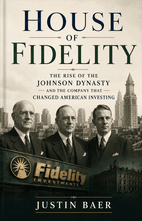
House of Fidelity by Justin Baer Book Cover

by Justin Baer

Justin Baer's House of Fidelity traces the Johnson family's contrarian leadership across nearly a century, revealing how Fidelity survived through internal conflict, technological reinvention, and brutal succession battles. Written for business readers and finance professionals who want the unvarnished story behind a legendary dynasty.

On Insta.page you also get an Apply This Book tool that lets you combine insights from up to 3 books to solve your specific situation.

Chapter mindmaps

Free preview: chapters 1–4 are fully interactive. Click any node to expand or collapse. Subscribe to unlock the rest.

Chapter 1: Mister Johnson

Key concepts: Chapter 1: Mister Johnson

Chapter 1: Mister Johnson

Ted Johnson's Independent Path

  • Followed father's lesson: avoid obligation, pursue own path
  • Inspired by Jesse Livermore's ruthless trading style
  • Secretly managed own money while practicing law
  • Survived 1929 crash by selling before second downturn

Birth of the Mutual Fund Industry

  • Boston launched first open-end funds in 1924
  • Putnam and Leffler perfected fund structure
  • 1929 crash devastated most funds but not Ted
  • Investment Company Act of 1940 strengthened industry

Taking Over Fidelity

  • Acquired floundering Fidelity Shares in 1943
  • Secretly sold shares, breaking promise to Incorporated
  • Resigned after founder discovered poaching dealers
  • Never spoke to Incorporated's founder again

Building Fidelity's Three-Pillar Structure

  • Created FMR Co. in 1946 for advisory services
  • Launched Crosby Corp. in 1948 for distribution
  • Controlled fund, adviser, and distributor entirely
  • Empire small but seeds planted by late 1940s

Johnson's Unconventional Management Philosophy

  • Investing is art, not science—driven by intuition
  • Studied Zen and held meetings called 'séances'
  • Gave young stock pickers free rein per fund
  • Unwittingly created the star fund manager concept

Chapter 2: Number Two

Key concepts: Chapter 2: Number Two

Chapter 2: Number Two

Gerald Tsai's Journey to America

  • Fled war-torn China for America in 1947
  • Mother Ruth's letter campaign got him into Wesleyan
  • Transferred to Boston University, finished degree in 3 years
  • Ted Johnson hired him at Fidelity in 1952

Mother Ruth's Momentum Investing Philosophy

  • First woman trader on Shanghai Stock Exchange floor
  • Key lesson: always remember last night's closing price
  • Ignore original cost basis, focus on recent close
  • Became known as momentum investing strategy

Post-War Market Transformation

  • Dow recovered, bull market fueled by higher wages
  • NYSE launched 'Own Your Share of American Business'
  • Merrill Lynch pioneered salary-based brokers nationwide
  • Fidelity assets soared from $3.6M to $164M by 1954

Tsai's Aggressive Investing Style

  • Contrasted sharply with Boston's conservative establishment
  • Held only handful of stocks, traded in large blocks
  • Portfolio turnover often exceeded 100% annually
  • Ted Johnson called him his 'No. 2 son'

Launch of Fidelity Capital Fund (1957)

  • Tsai wrote memo requesting growth-stock fund
  • Johnson replied: 'Here's your rope, go hang yourself'
  • Launched with just $200,000 ($2.2M today)
  • Became first celebrity money manager

Fidelity Trend Fund and Ned Johnson

  • Fidelity added fourth fund targeting growth sectors
  • Ted Johnson chose his son Ned to manage it
  • Rival Jack Dreyfus was becoming industry face
  • Dreyfus used lion symbol, bet on growth stocks

Ted Johnson's Unconventional Leadership

  • Admired speculator Jesse Livermore
  • Kept Fidelity at least 90% in equities in 1955
  • Dismissed warnings stocks were overpriced
  • Valued people 'on the way to becoming' their potential

Chapter 3: Ned Johnson

Key concepts: Chapter 3: Ned Johnson

Chapter 3: Ned Johnson

Ned's Unconventional Mind

  • Seemed distracted and lost in thought
  • Processed the world differently than others
  • Had exceptional spatial reasoning and creativity

Hidden Learning Struggles

  • Believed he was dyslexic and had ADHD
  • Avoided lengthy memos and dense slides
  • Compensated with creative problem-solving

Slow Path to Fidelity

  • Joined Army, worked at State Street Bank first
  • Arrived at Fidelity in 1957 as boss's son
  • Early colleagues saw an 'apparition floating around'

Boundless Curiosity as Analyst

  • Fascinated by technology and industrial processes
  • Ordered unauthorized phone attachment
  • Gwen Shannon warned him about bankruptcy

Finding His Rhythm

  • Took over Trend Fund in 1958
  • Preferred steady approach over frenetic trading
  • Sought ideas from junior analysts

Personal Life and Marriage

  • Met Elizabeth 'Lillie' Bishop Hodges
  • She sensed his rare self-awareness
  • Married in October 1960

Father's Patient Guidance

  • Ted Johnson learned from his own father's mistakes
  • Ned called his father 'Mister Johnson' at work
  • Ned had to prove himself to his father

Chapter 4: The Go-Go Years

Key concepts: Chapter 4: The Go-Go Years

Chapter 4: The Go-Go Years

Gerry Tsai's Rise and Momentum Investing

  • Capital Fund grew sixfold to $160 million
  • Focused on growth stocks like Polaroid and IBM
  • Became face of new aggressive investing era

Block Trades and Wall Street Power Shift

  • Rosenwald pitched secret block trades to Tsai
  • Goldman Sachs' Levy and Mnuchin joined in
  • Block trading mirrored mutual funds' rising clout

1962 Crash and Cuban Missile Crisis

  • Dow suffered second-worst single-day drop
  • Tsai's fund lost $27 million in three months
  • Bought $26 million in stocks after crisis ended

Tsai's Glorious Comeback and Go-Go Era

  • Capital Fund jumped 68 percent in three months
  • Fully recovered by August 1963
  • Go-Go '60s truly began after recovery

Tsai's Exit and Reputation Collapse

  • Sold firm to CNA Financial for $30 million in 1968
  • Manhattan Fund became sixth-worst performer
  • Media never forgave him; 'customers' yachts' joke stuck

Fidelity's Changing Guard and New Talent

  • Roland Grimm cashed out; Gwen Shannon retired
  • New hires: Johnstone, Greenfield, Dworsky
  • Contrafund launched in 1967 for contrarian investing

Ned Johnson's Restless Innovation

  • Shifted focus from stock picking to business
  • Bought gadgets and seeded ventures
  • Spending drove father and Shannon crazy
You've reached the end of the free mindmaps

Next chapter: “Chapter 5: Fidelity, Thy Name Is Ned” is locked

See every chapter of House of Fidelity as an interactive mindmap — and unlock all 500+ book summaries with audio and AI Q&A.

$0.00 due today · 7 days free, then $89.99/year ($7.49/mo) · Cancel anytime before day 7

Continue exploring House of Fidelity